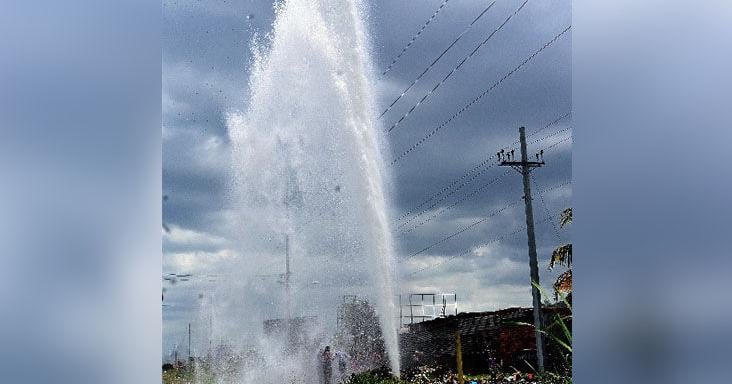
Just after 10 a.m. on Tuesday, an accidental rupture to a 30-inch booster transmission line operated by Trinidad’s Water and Sewerage Authority (WASA) triggered cascading disruptions, snarling traffic on the Beetham Highway’s eastbound carriageway and cutting water service to more than a dozen communities across the Port of Spain region. The incident, which sent thousands of gallons of water gushing onto the busy roadway, forced motorists to navigate hazardous, flooded conditions, leading to a widespread traffic pile-up that backed up travel for hours. Amid the sweltering early morning heat, some local Beetham residents took advantage of the unexpected fountain of water, stepping into the flow to bathe and cool off. The rupture, later confirmed by Public Utilities Minister Barry Padarath, occurred when Ministry of Works and Infrastructure crews conducting routine drainage clearance work on the Beetham waterway accidentally struck the main with heavy equipment. “Earlier this morning the Ministry of Works and Infrastructure was doing some works on the Beetham as it relates to drainage and water course clearance. They inadvertently through one piece of equipment ruptured a main, this resulted in thousands of gallons of water being spilled and lost,” Padarath explained in an interview with the Express. Immediately after the incident, WASA activated full emergency response protocols, dispatching senior leadership including acting CEO Dain Maharaj and distribution manager Marvin Miguel to the Beetham Gardens site to assess damage and coordinate repair work. Crews quickly worked to isolate the line, accessing and operating control valves to de-water the affected pipeline, a critical safety step before permanent repairs could begin. All required repair materials were mobilized from WASA’s central storage facilities and en route to the job site within hours of the rupture being reported. The broken line is a critical feed connected to the El Socorro Booster Station, whose operations were fully suspended after the incident to reduce line pressure and facilitate safe repairs. As of Tuesday evening, WASA confirmed that repair work was advancing steadily, with a target completion deadline of noon on Wednesday. The outage has forced water service disruptions across a wide swath of the greater Port of Spain area, including Knaggs Hill, Picton II Reservoir, Black River, Barataria, Laventille, Port of Spain, Morvant, East Dry River, St Barbs, Gonzales, Long Circular, Dundonald Hill, Dibe, Woodbrook, St James, Cocorite, Belmont, Cascade, and St Ann’s. Disruptions have also been reported along Boundary Road and Boundary Road Extension, Aranjuez Main Road, El Socorro Road and Don Miguel Road due to the shutdown of the El Socorro High Lift Station. Local lawmaker Kareem Marcelle, Member of Parliament for Laventille West, confirmed that while only a small number of homes were affected by flooding from the gushing water, no residents required emergency relocation. However, one wooden residential structure suffered significant flood damage that destroyed all of the occupants’ personal belongings. Marcelle announced that the San Juan/Laventille Regional Corporation’s Disaster Management Unit would deploy teams Wednesday to provide direct assistance to impacted households. Responding to the incident, Works and Infrastructure Minister Jearlean John confirmed that her ministry would work in full collaboration with WASA to complete repairs and address related drainage issues. The ministry is also responsible for ongoing desilting work on the major Beetham drain, which outfalls directly into the Caribbean Sea and is prone to flooding near the local market. “If it is a WASA leak we are there to help with the repair,” John stated. Marcelle struck a conciliatory tone regarding the accidental incident, noting that human error is unavoidable even for the most careful teams. “We understand that mistakes do happen, even the most prudent man is prone to mistakes, and therefore we will continue to support them in their efforts to continue cleaning up our community,” he said, commending public workers and contracted crews for their rapid response to the emergency. Padarath, who has received hourly updates from WASA’s leadership throughout the response effort, said he recognized public concern over the large volume of water lost in the incident, which was widely documented in viral social media videos shared by onlookers. The minister said he expects full water service to be fully restored to all impacted areas by Wednesday morning at the latest.
博客
-
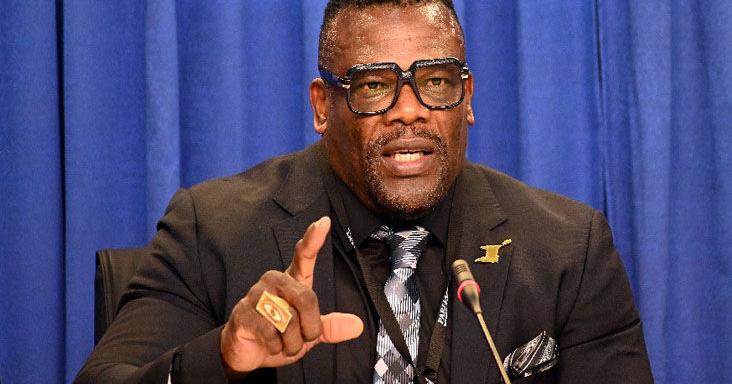
Alexander vows action against killers
In the wake of a shocking triple homicide in Belmont that claimed the life of a two-year-old boy and triggered opposition demands for his ousting, Homeland Security Minister Roger Alexander has pushed back firmly against calls for his removal, vowing to fulfill his mandate to tackle the nation’s deepening gang-related crime crisis.
Speaking in a phone interview with the Express on Thursday, Alexander gave a public guarantee that all individuals linked to the recent killings would face full legal consequences, while appealing directly to community members to share intelligence with local law enforcement to help crack down on criminal activity.
The minister launched a counterattack on the opposition People’s National Movement (PNM), the party that led the country for a decade before the current United National Congress Government took office one year ago. Alexander argued that the same figures now demanding his resignation are the same officials who allowed gang activity and organized crime to spread unchecked across the country over ten years in power. He called the PNM’s calls for his removal deeply ironic, noting that gangs grew in influence and territorial control during the party’s tenure.
Alexander also pointed to the opposition’s recent decision to block the Zones of Special Operations (ZOSO) Bill, a piece of legislation he said would have enabled targeted, direct intervention in high-crime communities that the opposition claims to represent. He accused opposition lawmakers of abandoning the very constituents who voted them into office, saying, “They have the audacity to speak about who should go and who shouldn’t go. They should have gone ten years ago. They left this problem for us.”
While the minister acknowledged that the current administration and law enforcement agencies have made tangible progress in reducing criminal activity, he admitted that decades of systemic neglect cannot be reversed overnight. Describing the nation’s crisis as a deeply rooted “disease”, Alexander stressed that the government is committed to ongoing, systematic treatment of the problem.
When pressed to address public anger over continued gang killings even as the country operates under a national state of emergency (SoE), Alexander clarified that officials never marketed the SoE as a one-size-fits-all solution to the crime problem. Instead, he framed the measure as just one critical tool in a broader, multi-pronged strategy designed to restore law and order to troubled communities.
Alexander explained that the emergency measures became necessary after the previous administration left the national crime-fighting infrastructure in a state of severe disrepair. He listed a litany of systemic failures inherited by the current government: crumbling physical infrastructure, critical shortages of police personnel, limited operational mobility, unreliable telecommunications systems, and minimal integration of modern crime-fighting technology. Rebuilding these broken systems to reach full operational capacity, he said, requires the government to secure significant new resources, and all components of the national security strategy must work in sync like a well-functioning clock. “A clock can’t work with parts missing so it’s my responsibility to fix it, and that’s what this Government is doing,” he noted.
Alexander pushed back on criticism that the current government has had enough time to turn the tide of crime, pointing out that the UNC has only held office for 12 months, compared to the PNM’s decade-long tenure. “In one year they wanted us to fix what they took their time to destroy and as it relates to crime what they fed and gave life to and encourage the gang culture,” he said.
Contrary to common public misunderstanding, Alexander said the SoE does not impose restrictions on civilian movement. Instead, it grants law enforcement expanded authority to collect intelligence and target high-risk criminal networks. He added that more suspects have already been detained under the current SoE than were held during the previous national emergency declaration.
Repeating his appeal for public cooperation, Alexander noted that multiple anonymous channels exist for community members to share tips about criminal activity. For residents too afraid of gang retaliation to come forward directly, he suggested passing information through contacts outside their communities or even through family and friends living abroad to ensure it reaches police safely.
While police have already received significant amounts of intelligence, Alexander explained that investigators require sufficient tangible evidence to bring strong cases against suspected criminals and secure convictions in court. He lamented the ruthless nature of modern gang violence, noting that gang members prioritize loyalty to their criminal organizations over the safety of their own families and loved ones. “Because you’re committing crimes and then going home to sleep. The other persons involved, other persons who are victims, who are targets, obviously they will target you and by extension, your family,” he said, highlighting the collateral harm that community-wide inaction allows to continue.
-

Dad, toddler among 3 shot dead in ambush: mom injured
A brutal early-morning ambush shooting in the quiet Belmont neighborhood of Port of Spain, Trinidad and Tobago, has left three people dead – including a toddler just two weeks shy of his third birthday – and a mother fighting for her life, sending shockwaves through the tight-knit community and amplifying long-simmering anger over persistent violent crime.
The attack unfolded at approximately 8:35 a.m. on Wednesday, when four people were traveling through the Holder Steps/Rifle Hill area off Upper St Francois Valley Road in a Toyota Aqua. Akil “Fats” Kafi, 30, the toddler’s father, and his companion Anthony “Monster” Wilson occupied the front seats, while Akil’s partner Antonia Cain-Kafi sat in the back holding their two-year-old son Akinni Kafi. Without warning, a second vehicle blocked the car’s path, and unidentified gunmen stepped out and opened a barrage of fire on the trapped vehicle.
Hit by gunfire, Kafi and Wilson fled the car but collapsed a short distance away, succumbing to their wounds at the scene. Cain-Kafi was struck four times in the back, and the toddler was also fatally hit. Despite her own critical injuries, Cain-Kafi refused to release her grip on her injured son. A neighbor who rushed to the scene after hearing the gunshots drove the pair to Port of Spain General Hospital. Only after reaching the hospital’s emergency department did Cain-Kafi hand over her child, before immediately collapsing from her wounds. Tragically, medical staff confirmed Akinni was already dead upon arrival.
As of Wednesday night, Cain-Kafi remained in critical condition at the hospital. The attack marks a second devastating loss for Akil Kafi: police confirmed he lost another son from a previous relationship to gang-related violence in Belmont just one year prior.
Senior Trinidad and Tobago Police Service officers, including Acting Assistant Commissioners Richard Smith and Suzette Martin, arrived at the crime scene within minutes to launch the investigation. Speaking to reporters at the scene, Smith expressed unreserved anger over the senseless killing of the toddler, calling the attack “quite ridiculous” and emphasizing that investigators would not treat the case lightly.
“This child would have turned three years in two weeks’ time,” Smith said. “What we are seeing here in this district, in the Port of Spain Division, is a series of homicides that we have been working on assiduously to bring these murders under control. Yes, we may not be omnipresent, but we have our patrols out on a 24/7 basis trying to keep the peace in these areas. We are quite concerned because it shows a blatant disregard for life and to the authorities, and we will do all that it takes to keep the country safe. We will go after all those who intend on committing these crimes and we continue to go after them, and let the chips fall where they may.”
Martin echoed Smith’s frustration, framing the rising violent crime rate as a national issue rather than a problem solely for law enforcement to solve. She urged community members to step forward with information about the attackers, emphasizing that police are available around the clock to accept tips, and warned against residents taking vigilante action.
“This is not just a police issue, this is a Trinidad and Tobago issue where people have to come together to make Trinidad and Tobago a safer place, so if you see something, say something,” Martin said. She also announced that the police service would ramp up targeted patrols across the Belmont area in response to the attack and a recent string of local homicides.
Local residents, who have grown increasingly weary of persistent violence in their neighborhood, shared their outrage and grief with reporters Wednesday. Multiple residents said many locals now avoid certain high-crime pockets of Belmont out of fear for their safety, and criticized community members who hold information about violent actors but refuse to cooperate with police.
“The innocent can’t even count to 1, 2, 3 as yet and they dead,” one local grocery worker said. “What are these young men fighting for? Are we not praying with them or counselling them because if my children are doing something wrong, I will tell them because at this stage, we really don’t know who is next. We should all feel that pain.”
Another long-time Belmont resident noted the neighborhood’s natural beauty and convenient location, but said young criminals have made the area unsafe for older residents, and that the silence of community members who know what is happening has enabled the violence.
“I know that people know what is taking place in their own homes and they are not speaking out, and now children are paying the price,” she said.
A friend of the Kafi-Cain family, who shared her grief on social media Wednesday, highlighted the years of struggle the couple went through to have their son. “My heart is completely shattered. To know the journey my friend travelled, the years of waiting and the miracle of finally having her son, only for it all to be stolen in a moment of senseless violence. A whole family gone. There are no words for this kind of pain. I am hurt. I am outraged and I am tired. How can we live like this? A father and a child wiped out on the side of the road like their lives meant nothing. FOR WHAT? When will the innocent stop paying the price? Our country is bleeding,” she wrote.
As of Wednesday night, the national murder toll for the current calendar year reached 130, underscoring the scale of the ongoing violent crime crisis facing the twin-island nation. No suspects have been arrested as of the latest updates, and police continue to appeal for public information to track down the gunmen responsible for the triple killing.
-
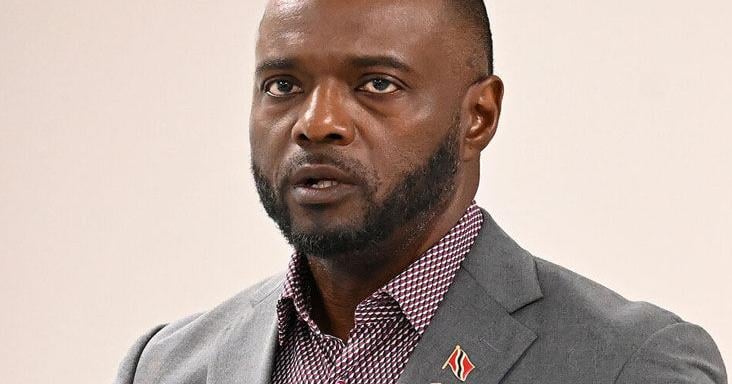
Call for ministers to resign
A second horrific mass killing in just two weeks has plunged Trinidad and Tobago into renewed outrage over the ruling administration’s failed national security policies, with senior opposition lawmakers demanding the immediate departure of the country’s top two security officials.
The latest tragedy unfolded in Belmont, where a triple shooting left a two-year-old child dead, two adult men killed, and a mother fighting for her life in critical care. This attack comes only 14 days after another mass shooting in Morvant that claimed four lives, including a nine-year-old child.
Stuart Young, opposition Member of Parliament for Port of Spain North/St Ann’s West, was among the first to issue a blunt call for resignations, targeting Minister of Defence Wayne Sturge and Minister of Homeland Security Roger Alexander. Young slammed the ruling Kamla Persad-Bissessar-led government over its singular approach to surging violent crime: repeated declarations of states of emergency (SoE).
“For most of this administration’s tenure, the country has been locked under some form of state of emergency,” Young noted. “We are now on the third iteration of a United National Congress state of emergency, and mass killings continue without any slowdown. This government has no actual plan to curb violence, and it is ordinary law-abiding citizens who bear the cost.” He called the killing of the innocent toddler “unforgivable,” adding that the government’s failure on national security is now undeniable to the entire population.
Young also lashed out at Phillip Alexander, a junior minister in the Ministry of Housing, over what he called a blatantly politicized Facebook rant targeting his Belmont constituents in the wake of the shooting. “This deranged official, paid by the prime minister using taxpayer dollars, is adding insult to injury for families already reeling from senseless loss of life,” Young wrote on his own Facebook page. “No amount of empty, foolish ranting from government officials will give citizens any sense of safety or reassurance right now.”
Kareem Marcelle, opposition MP for Laventille West, framed the back-to-back killings of children as part of a deeply alarming, terrifying trend that has numbed communities to unthinkable violence. “We have reached the point where even these heinous acts no longer shock us,” Marcelle wrote in a social media statement. “Our youngest children are being killed before they even get the chance to grow up and chase their dreams.”
Marcelle drew a direct line between the latest death and a recent child killing laid to rest just days prior: “Just this past Friday, we buried young J’Layna. Less than a week later, another family is now forced to bury two-year-old Akini, along with his unfulfilled dreams and hope for the future. My heart breaks for these families. We are heading down a road from which we cannot return if we do not act now.” He extended his deepest condolences to the loved ones of all three victims, and added his prayers for the wounded mother’s full recovery.
Marvin Gonzales, opposition MP for Arouca/Lopinot, joined the calls for Roger Alexander’s removal, describing the homeland security minister as an “embarrassment” and a “national failure” who has been distracted from his core duty of keeping citizens safe. Gonzales also pushed for an end to the ongoing state of emergency, arguing that the policy has become an empty charade. “As of 2026, we have spent 97 days under this current state of emergency, and the country has already recorded 130 murders this year,” he noted. “It is past time for the government to end this farce and restore the constitutional rights of the Trinidad and Tobago people.”
-
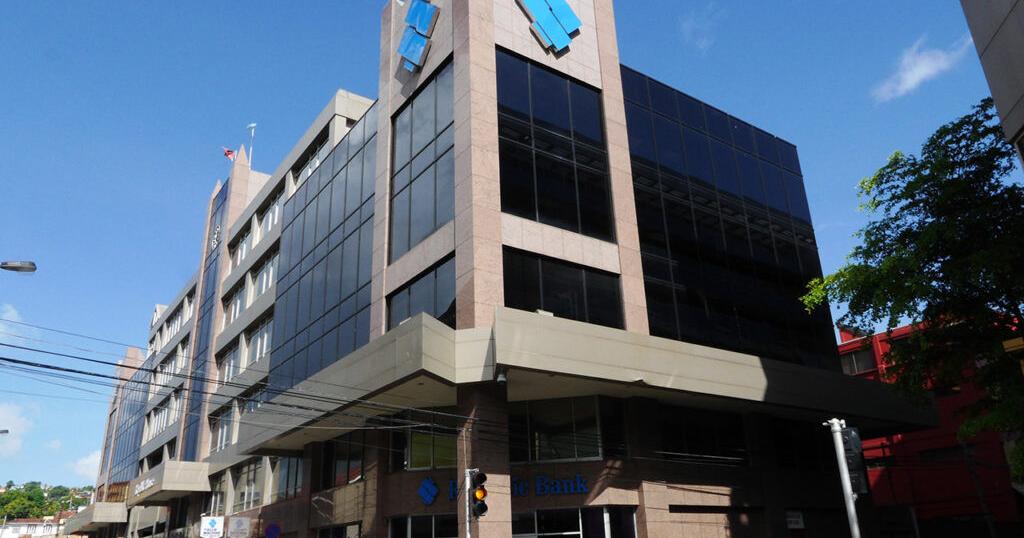
RBL pauses fee hike after pushback
Trinidad and Tobago’s largest commercial lender, Republic Bank Limited (RBL), has halted its planned broad fee increases scheduled to take effect May 1, pulling the updated fee schedule from its official website just days after widespread public and industry backlash over the changes. The decision to pause the rollout comes 24 hours after Central Bank Governor Larry Howai confirmed that the banking regulator was in active discussions with RBL to strike a fair balance between the institution’s revenue needs and the affordability of banking services for everyday consumers and businesses.
Last month, the bank unveiled a sweeping slate of fee adjustments affecting nearly every core banking service, ranging from routine day-to-day transactions to penalty charges for account mismanagement. The most notable proposed increases included a jump in non-sufficient funds (NSF) fees from $34.50 to $57.50, an identical hike to overdraft fees, and a doubling of some late loan payment penalties to a maximum of $100. Additional changes raised charges for paper-based services including cheque books, manager’s cheques and foreign currency drafts, a move the bank framed as an incentive to push customers toward cheaper digital banking platforms. New or adjusted debit transaction fees were also set to roll out across multiple popular account types, with the bank clarifying that only in-branch teller transactions would face the new charges — no increases were planned for ATM transfers, ACH transactions, online and mobile banking, or point-of-sale card payments.
In a public advertisement printed in national newspapers on the day of the pause announcement, RBL acknowledged that it had received widespread customer feedback and concerns about the planned changes. “At Republic Bank, we’ve been listening closely to the conversations and feedback regarding our updated service fees. We understand that any change to your banking costs causes concern, and we’ve noticed there has been some confusion about what these changes actually mean for you,” the bank’s statement read.
Citing customer input as the core driver of the pause, the bank confirmed: “Because we value your feedback, we have decided to pause the fee increases originally set for May 1, 2026 (notice of which was given on April 1, 2026). We will share the new implementation dates with you soon. We want to take this time to clear the air and ensure you have all the facts.” The bank added that its ultimate goal remains making banking “convenient, safe and—most importantly—affordable” for all account holders, and noted that the 90-day pause will give branch teams time to meet directly with customers, clarify misinformation, and help users identify the lowest-cost banking options for their needs.
In explaining the original rationale for higher paper service fees, RBL noted that fewer than 5% of its active customers regularly use cheques, and maintaining legacy paper-based banking systems creates significant unnecessary costs for the institution. “The world is moving away from paper cheques because digital payments are faster, safer, and much cheaper for you. While we need to recover some of those costs, our main goal is to help your transition to the free or lower-cost ‘anytime, anywhere’ digital options that save you a trip to the bank,” the bank’s original statement read.
As of the pause announcement, attempts by media to reach Republic Financial Holdings Ltd (RFHL) President Nigel Baptiste and Vice-President Karen Yip Chuck for additional comment were unsuccessful.
The Central Bank’s engagement with RBL began earlier this week, after customers and industry groups raised widespread alarms about the fee hikes. Speaking to reporters Wednesday following the inaugural FINLIT Live 2026 financial literacy event in Macoya, Howai confirmed that ongoing negotiations were focused on finding a balanced outcome. “I’m sure there are ways in which we would be able to find some kind of a balance between their need to ensure that they are properly compensated for the services that they offer and the cost that is passed on to the consumers,” Howai told reporters.
The governor explained that while the Central Bank lacks legislative authority to issue fines for routine bank price increases, it can push for revisions to fee structures that are deemed excessive or poorly communicated. “What we will do is engage with the banks, and the banks do listen to us and they do respond to us, and I am sure that going forward on the whole issue of fees that we will have a regime that customers will be comfortable with,” he said. Howai added that the core questions under discussion remain whether fee levels are justifiable, communicated clearly, and deliver fair value to consumers.
Since RBL first announced the fee changes on April 28, leadership of business chambers across the country have publicly voiced opposition to the plan, highlighting the disproportionate harm the higher fees would inflict on small and medium-sized enterprises, service sector businesses, and low-income households. While industry groups acknowledged the Central Bank’s intervention and RBL’s stated reasoning for the changes, they have raised ongoing questions about the fairness of the proposed fee structure amid the bank’s strong recent financial performance.
Financial filings show that RBL recorded a net profit of $1.07 billion for the first half of its 2026 fiscal year, which ended March 31. That figure represents a 5.4% increase ($54 million) compared to the $1.01 billion profit the bank posted in the same six-month period in 2025.
-
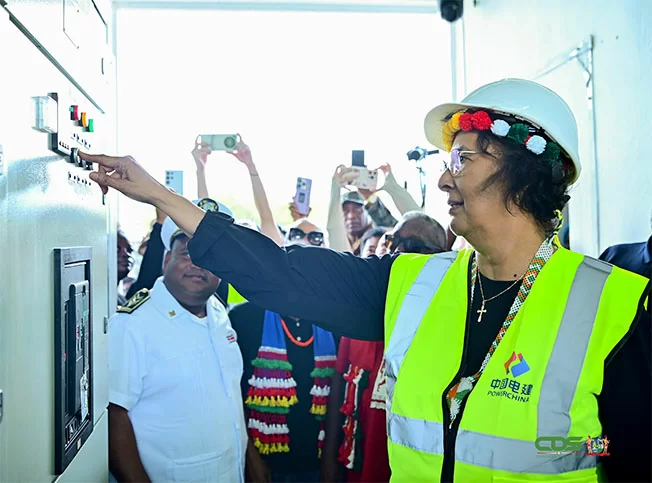
Galibi heeft 24 uur stroom met ingebruikname zonne-energiecentrale
On Thursday, May 8, Suriname President Jennifer Simons officially inaugurated a new hybrid solar energy power plant in the remote coastal village of Galibi, marking an end to decades of limited and unreliable electricity access for the local community and unlocking new opportunities for long-term regional development. The launch ceremony was attended by key stakeholders including Natural Resources Minister David Abiamofo, District Commissioner Marvin Vijent, sitting members of Suriname’s parliament, representatives of local traditional governance bodies, and delegations from the Caricom Development Fund and project partner PowerChina.
Before this facility came online, Galibi — a village famous for its protected nature reserve, rich Amazonian biodiversity, and growing ecotourism industry — never had access to consistent, 24-hour electricity. Connecting the remote village to the national grid run by Energie Bedrijven Suriname (EBS) was deemed geographically and financially unfeasible, leading regional and national leaders to pursue a renewable energy-focused alternative. Minister Abiamofo explained that relying exclusively on diesel generators to power the village would have cost the Surinamese government roughly 8.5 million Surinamese dollars annually, a recurring expense that made that model unworkable for long-term energy security.
The newly launched plant operates on a hybrid system that prioritizes clean solar energy, with a single diesel generator held in reserve to back up power supply during periods of low sunlight or peak demand. The village’s old, pre-existing diesel generators will not be decommissioned entirely; instead, they will be repurposed to expand the capacity of Galibi’s local water pumping station, bringing clean running water to all households across the village once upgrades are completed.
President Simons emphasized in her inauguration address that consistent electricity delivers far more than just basic power to homes — it creates foundational certainty for the entire Galibi community and opens new doors for educational advancement and inclusive economic growth. Most notably, she highlighted that local schoolchildren will now be able to study after dark and access digital learning tools including computers that were previously unusable due to limited power access, according to official statements from the Communication Service of Suriname.
District Commissioner Marvin Vijent echoed the president’s optimism, noting that the reliable new power grid is set to transform Galibi’s key economic sectors. With consistent electricity, local businesses can expand ecotourism infrastructure, improve hospitality services, and open new small enterprises that were impossible without reliable power. He added that the upgrade will also boost the quality of local healthcare services, as medical facilities will be able to reliably power refrigeration for vaccines, medical equipment, and lighting for after-hours emergency care.
Local parliamentary representatives welcomed the project as a long-awaited milestone for the community. Ines Pané, a member of parliament from the ABOP party, called the solar plant a critical breakthrough for Galibi, where electricity has been a scarce, limited resource for generations. She urged local residents to steward the new facility and work collaboratively with government and development partners to drive further progress across the region. Claudie Sabajo, an assembly member from the NDP party, echoed this support while calling for continued investment in Galibi, highlighting the need for additional support for local agricultural development, tourism expansion, and skills training programs to help local residents take full advantage of the new economic opportunities unlocked by reliable electricity.
-
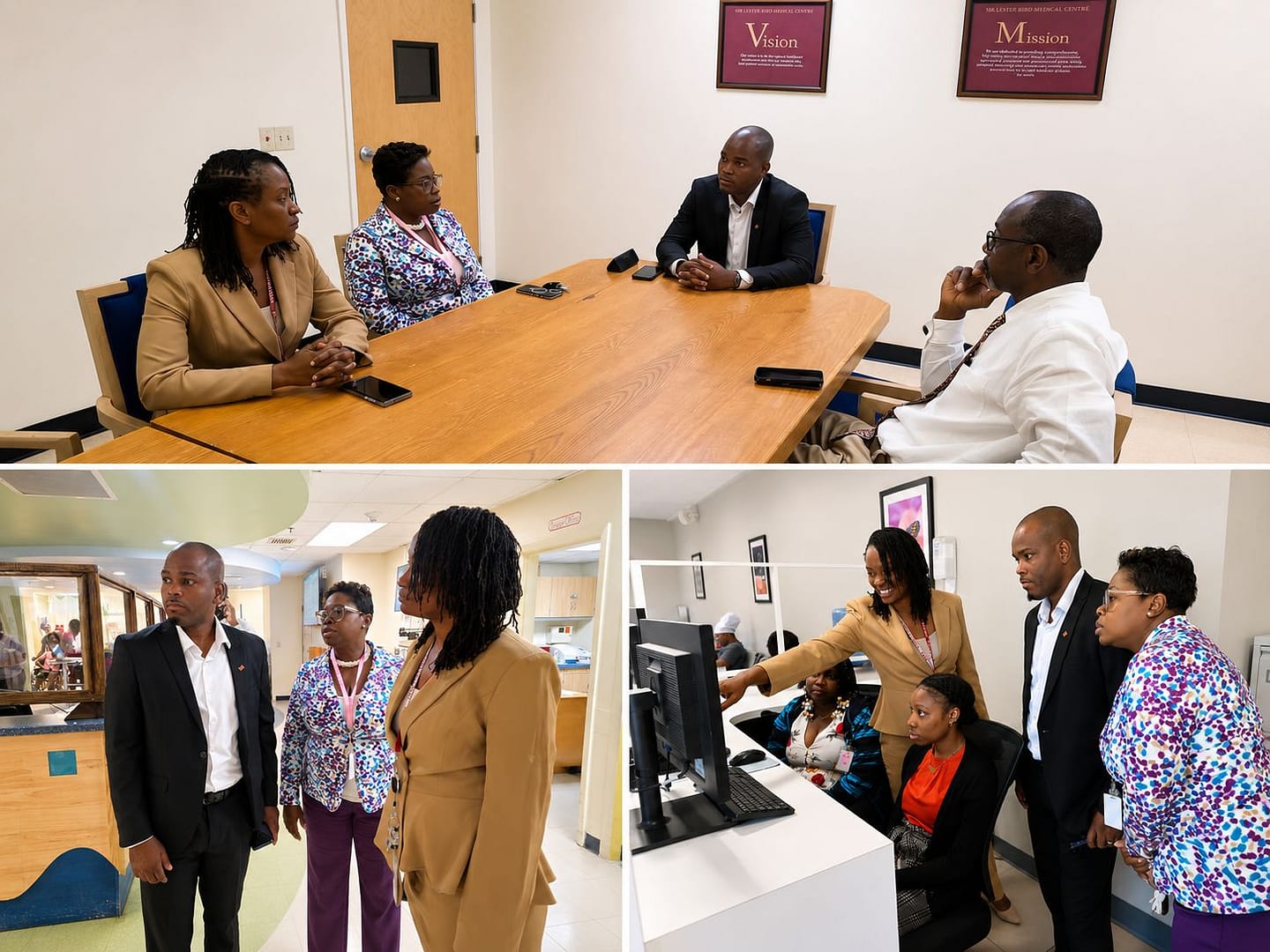
Minister of Health Conducts Introductory Visit to Sir Lester Bird Medical Centre
Fresh off his official appointment and a debut cabinet gathering, newly minted Minister of Health, Wellness, Environment, and Civil Service Affairs Michael Joseph formally launched his tenure in Antigua and Barbuda this week, launching an immediate push to assess core gaps in the country’s top public healthcare facility. Following his formal appointment on May 5, 2026, and his first participation in the national Cabinet Meeting a day later on May 6, the minister opened his first full day in office with a closed-door strategic planning session alongside Stacey Gregg-Paige, the Permanent Secretary of the ministry. The conversation centered on mapping out urgent priorities for the country’s broader public healthcare network and core public health service delivery frameworks, setting the tone for his policy focus ahead.
As his first on-the-ground official engagement, Minister Joseph traveled to the country’s flagship medical facility, the Sir Lester Bird Medical Centre, where he held in-depth discussions with hospital director Dr. Shivon Belle-Jarvis and the entire senior leadership team. The talks covered a wide range of pressing institutional needs: from ongoing operational bottlenecks that are slowing care delivery to planned infrastructure expansion projects, gaps in administrative support systems, persistent staffing shortages across departments, and actionable strategies to elevate the quality of care across every department of the facility.
After the closed strategy meeting, the minister embarked on a walking tour of the hospital’s high-priority departments, with a specific focus on the busy Emergency Room and its central triage zone. During the tour, hospital leaders walked him through current patient flow protocols, the emergency response protocols activated during mass casualty or public health events, and the existing care coordination systems designed to support consistent, high-quality treatment for every patient.
Minister Joseph also received a live demonstration of the digital software platform the facility has implemented to streamline patient intake and continuous monitoring. The integrated system enables clinical teams to digitally log patient arrival details, triage and document patient medical needs, track treatment progress in real time, coordinate ward placement for admitted patients, and streamline discharge processing to reduce wait times and administrative backlog.
Throughout his tour, the minister made a point of stopping to talk with frontline healthcare workers and administrative support staff, taking time to hear their on-the-ground concerns and publicly commend their unwavering dedication to serving the residents of Antigua and Barbuda. Closing out his first day of duties, Minister Joseph stressed that cross-stakeholder collaboration, intentional adoption of innovative care tools, and efficient system design are all critical to delivering high-quality patient care for all citizens. He also reaffirmed the national government’s unwavering commitment to investing in and advancing the country’s leading primary healthcare institution to meet growing population needs.
-
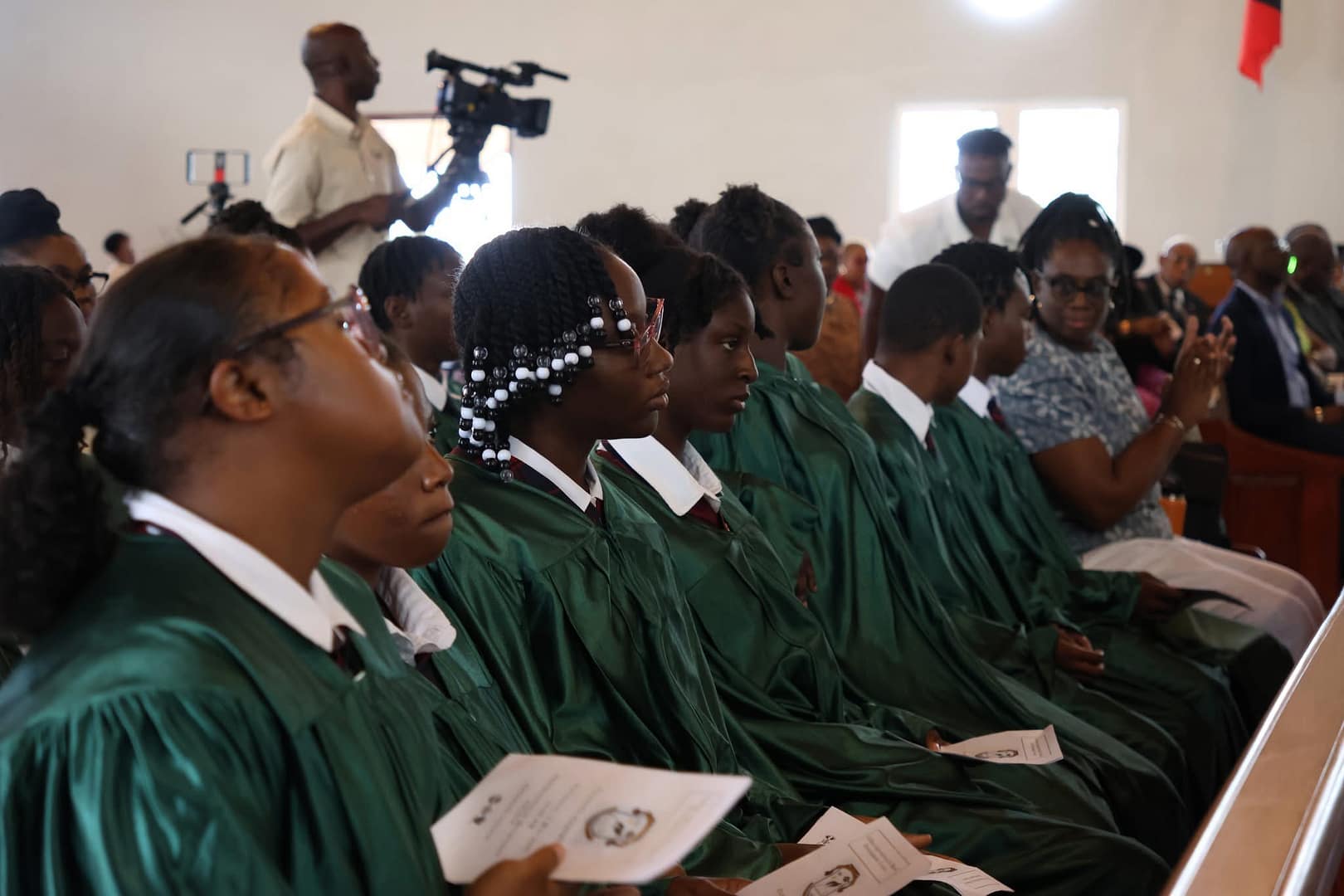
Students with Special Educational Needs Honored at Sir Novelle Richards Academy Closing Ceremony
A landmark moment for inclusive vocational education in Antigua and Barbuda unfolded on Wednesday, as the 2026 closing ceremony for the Special Educational Needs (SEN) Programme at Sir Novelle Richards Academy brought together cross-sector stakeholders to celebrate the achievements of trailblazing graduating students. Hosted at Freemansville Methodist Church, the event centered on recognizing young learners who had completed structured vocational training in three high-demand, community-focused fields: hydroponic agriculture, small-scale backyard gardening, and customer service.
Attended by a crowd of proud family members, experienced educators, local church leadership, sitting government officials and collaborating community partners, the ceremony stretched far beyond a simple certificate handout. Organizers emphasized that the gathering was fundamentally a celebration of the extraordinary determination, quiet resilience, personal growth and untapped potential that each participating student brought to the programme over their course of study.
In a show of official support for the initiative, Antigua and Barbuda’s Minister of Education, Science and Technology, the Honorable Daryll Matthew, joined the event as a guest of honor. During his appearance, Matthew reaffirmed the national government’s commitment to expanding inclusive education and accessible vocational development opportunities for learners of all abilities across the twin-island nation, aligning with broader efforts to build a more equitable education system.
Lead organizers from Source Gard Centre, the institution backing the programme, extended formal gratitude to the full network of contributors that made the 2026 cohort’s success possible. This includes the programme’s dedicated vocational instructors, on-site support staff, participating families, corporate and community sponsors, partnering local organizations, the leadership and congregation of Freemansville Methodist Church, and local media outlets that have amplified the programme’s mission.
In a closing address to the graduating class, organizers reflected on the years of hard work, incremental progress and unwavering perseverance that brought each student to this milestone. “We are proud of all you have achieved, and look forward to seeing you continue to grow, succeed, and inspire others across our community,” the address read. Warm congratulations were extended to all members of the 2026 SEN Programme graduating class as they embark on their next professional and personal chapters.
-

IMF Urges Antigua and Barbuda to Address Arrears, Tighten Spending and Expand Tax Base
Against a backdrop of uneven economic progress for the Caribbean twin-island nation, the International Monetary Fund has issued a clear call for additional fiscal policy overhauls, warning that unresolved payment arrears and persistently high financing requirements still put long-term debt stability at risk. In its newly published Article IV consultation report released this week, the global financial body acknowledged the meaningful strides Antigua and Barbuda has already made to cut public debt levels and shore up its overall fiscal standing, but flagged that long-outstanding payments owed to Paris Club creditors and domestic vendors remain a pressing unresolved issue.
“Persistent arrears and elevated gross financing needs are constraining access to longer-term financing and undermining debt sustainability,” the IMF Executive Board said in an official statement following its assessment. Board directors have pushed the Antiguan and Barbudan government to build a robust, all-encompassing strategic framework that can clear existing arrears, diversify the country’s sources of financing, and free up budget space for investments that strengthen the economy’s ability to absorb future shocks.
Beyond clearing backlogged payments, the IMF has laid out a suite of additional policy recommendations to shore up public finances. These include new measures to boost government revenue collection that will help rebuild depleted fiscal buffers and keep the country on track to meet its core fiscal goals. Top priorities outlined by the fund include expanding the overall tax base, rolling back unnecessary tax exemptions, capping growth in current public spending, and refining the targeting of social support programs to ensure aid reaches the populations that need it most.
Directors also emphasized the need for institutional upgrades, urging national authorities to strengthen fiscal governance structures and enhance oversight, transparency, and standardized reporting for both general government finances and state-owned public enterprises. These changes, the IMF argues, would reduce mismanagement risks and build greater investor confidence in the country’s fiscal trajectory.
The IMF’s report did highlight tangible recent progress for Antigua and Barbuda: between 2024 and 2025, the nation’s fiscal position strengthened notably, driven by improved tax enforcement and collection, higher capital inflows from the country’s popular Citizenship-by-Investment Programme, disciplined government spending, and controlled modest increases in capital expenditure. The fund projects that the nation will post a primary budget surplus of nearly 5 percent of gross domestic product (GDP) in 2025, an improvement that has helped drive significant debt reduction. Public debt has fallen sharply from a peak of 101 percent of GDP in 2020 to an estimated 68 percent of GDP in 2025, a decline directly tied to the stronger fiscal performance of recent years.
Even with these notable gains, the IMF stressed that significant headwinds remain. Persistent global economic uncertainty and long-standing structural debt vulnerabilities continue to create major downside risks for the small open economy, which relies heavily on tourism and foreign investment. To address these risks and prevent the accumulation of new arrears in the future, the fund has called for sweeping upgrades to the country’s cash flow management and debt governance practices.
-
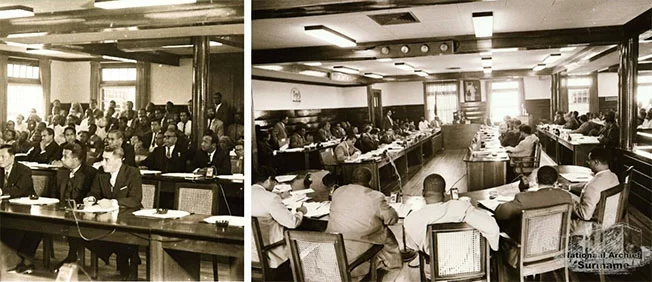
Column: 160 jaar volksvertegenwoordiging. Maar wie vertegenwoordigt het volk nog?
On May 8, Suriname marks a major historical milestone: 160 years of institutional popular representation. This occasion is rightly a source of national pride, but it also demands unflinching reflection. Beyond the formal ceremonies and celebratory speeches planned for Wednesday’s extraordinary public parliamentary session, a pressing, uncomfortable question lingers: Who truly represents the Surinamese people in 2026?
The trajectory of Suriname’s representative institution stretches back to the colonial-era Koloniale Staten established in 1866. After decolonization, it evolved into the Staten van Suriname, then the parliament of the independent Republic of Suriname, and today it exists as the National Assembly. Across all these iterations, the core mission has remained unchanged: to serve as a body that amplifies the public voice, oversees executive power, and guides the nation’s development. The 160th anniversary, therefore, is a natural moment to ask a fundamental question: How much of this original mission has been realized, and how much has slipped out of reach?
Today, what too often plays out in the National Assembly is not the pure practice of popular representation, but a perpetual political battlefield where governing coalitions and opposition factions hold one another in a constant stalemate. The governing bloc acts largely as an extension of the executive branch, and partisan loyalty consistently outweighs the broader public interest. Public parliamentary debates have devolved little more than scripted political theater, where positions are predictable before any representative takes the floor.
Recent years have only reinforced this grim picture. Political intrigue has become commonplace, with lawmakers frequently crossing the floor between factions. Backroom deals are rarely explained to the public, even as their impacts ripple across society. These trends have not strengthened public trust in representative institutions—they have eroded it dramatically. It is true that the assembly continues to formally function: laws are still passed, sessions are still held. But legislation itself is no achievement if it fails to improve the daily lives of ordinary Surinamese citizens. The question remains unanswered: How does this formal policymaking translate to tangible change beyond the walls of the parliamentary building?
For years, the most pressing daily concerns of Surinamese society have remained unaddressed: affordable public housing, accessible public healthcare, quality education, and reliable social services. These are not abstract policy talking points—they are concrete, urgent worries for working people. And it is on these issues that the public ultimately judges the performance of its representative body.
Equally fundamental is the National Assembly’s core oversight mandate. In theory, the body is the highest institution tasked with checking executive power. But in practice, the effectiveness of that oversight is increasingly open to question. Has the assembly truly forced the executive branch to deliver full transparency? Has it meaningfully improved governance across the country? Or has this critical role been weakened by the pressure of partisan loyalty and pre-negotiated coalition agreements?
For all these reasons, the 160th anniversary of popular representation is not an occasion for unbroken celebration and nostalgic pride alone. It is a moment to openly acknowledge what needs to improve—even what needs fundamental change. Reform begins with the standards we set for people entering parliament. It is past time to have a more serious conversation about the profile of effective representatives, moving beyond basic eligibility requirements to focus on core qualifications and accountability. A representative should be more than a partisan candidate or a party loyalist; they must demonstrate proven commitment to public service, broad life experience in civil society, strong general knowledge, and at minimum a solid educational background.
Even after candidates take office, the work of improving representation does not end. Every new cohort of parliamentarians should complete mandatory, structured training as a core part of their duties. Training in public administration, media engagement, and issue-specific preparation for sectoral committees is not an unnecessary luxury—it is a fundamental requirement. Without targeted knowledge and preparation, parliamentary oversight will always remain superficial, and legislation will always be vulnerable to gaps and misalignment with public needs.
Beyond individual qualifications, it is also time to re-examine the institutional structure of the National Assembly itself. Important steps toward modernization were already taken during the tenure of former speaker Jennifer Simons, and that progress must be continued. One critical question to consider: Should the speaker of the National Assembly be an independent figure, selected from a pool of candidates put forward by all contesting parties? This would be a figure who stands above partisan politics, meets strict standards of authority, expertise, and governing experience. Such a reform could significantly strengthen the quality of parliamentary leadership and the overall performance of the body as a collective political institution.
A parliament that only acts on partisan reflex quickly loses its meaning. A representative body that is out of touch with the concerns of the people it serves loses its legitimacy. That is why this 160th anniversary is less a celebration and more a critical wake-up call. The occasion is not just an opportunity to reflect on what popular representation has been over 160 years—it is a challenge to reclaim the original promise of the institution: to be the true voice of the Surinamese people, not the voice of parties and coalitions.