博客

  • Shelter moms

    Shelter moms

    As Jamaica prepares to mark Mother’s Day, most mothers across the island will wake to bouquets of flowers, warm hugs and intimate family celebrations honoring their role. But for a small group of women displaced six months ago by the devastating Category 5 Hurricane Melissa, this holiday will unfold far from the comfort of their own homes, each day a quiet test of endurance after months of living in temporary emergency accommodation.

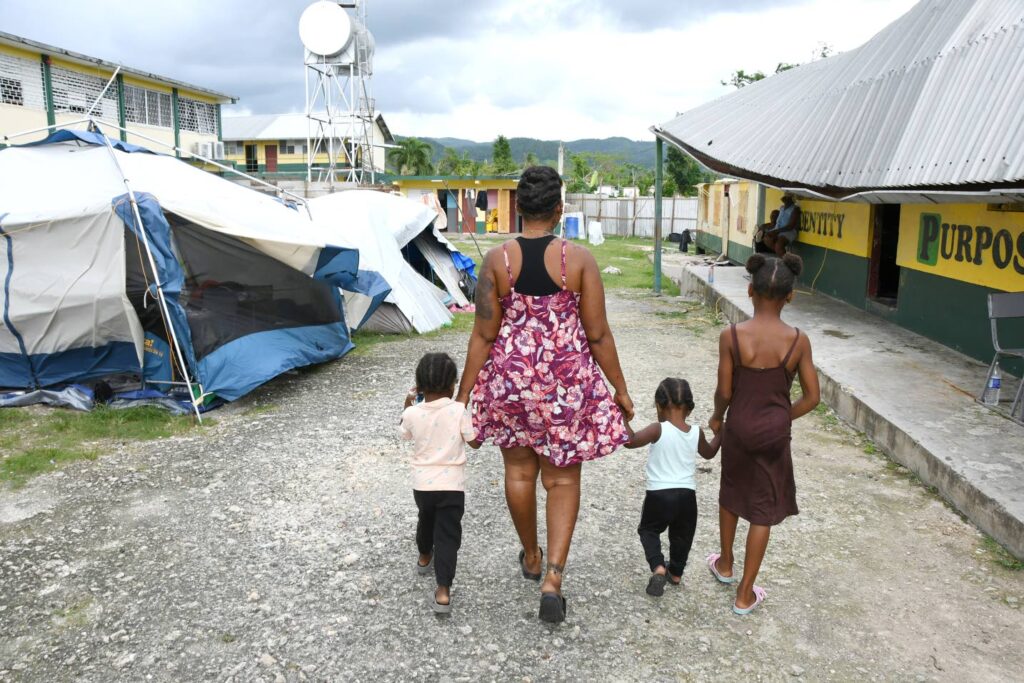
    After spending half a year sheltering in converted classrooms at Petersfield High School in Westmoreland, these 16 families — totaling 41 people including dozens of children — were only recently relocated to a repurposed teachers’ cottage in Shrewsbury. Yet even amid the uncertainty of their displacement, the exhaustion of making do with too little, and the heartache of watching their children grow up in cramped, shared temporary spaces, these mothers have refused to break. Bound by shared faith, mutual support and an unshakable commitment to their children, they cling to the stubborn hope that next Mother’s Day will find them back in permanent homes, living with the dignity they once took for granted.

    A visit from the Jamaica Observer on April 24 captured the quiet ingenuity with which these women transformed a space meant for learning into a makeshift home for their families. Desks built for student learning were repurposed as bed frames, tarpaulin cut to size served as privacy curtains, and mats were laid neatly at the foot of made-up beds, with every article of clothing folded and stacked in its own designated spot. One woman even playfully chided the reporter to avoid stepping on a decorative mat, a small, familiar touch of Jamaican matriarchal order that persisted even in chaos. Classroom corridors became open-air laundry lines, propped up with bamboo sticks to let the tropical sun dry hanging clothes. It was far from the ideal home, but the women carved out what normalcy they could, drawing on the resourcefulness that has long defined Jamaican community life.

    For Tishane Haywood, a 30-something mother of six, three of whom — all under 10 — have lived with her in the shelter since the storm, the past six months have stripped her of nearly everything she built: her home, her livelihood, and the privacy of family life. But she says her children are the anchor that keeps her pushing forward, helping her set aside the trauma that Melissa unleashed on the island.

    Even with barely any extra income, Haywood makes small, quiet sacrifices to bring her children moments of joy, setting aside what little she can spare to buy small toys to keep them occupied. “The strength that I get is just looking at my kids and knowing that they’re at peace and they’re happy, because if something do me right now, I know that no one’s going to love them the way that I love them, and no one’s going to take care of them the way that I take care of them,” Haywood told the Sunday Observer.

    “It doesn’t matter how little they may be, just to see them have a smile on their face, even when I don’t have it, to say, ‘Here’s a juice,’ or something. When they get excited and happy, I feel good. They’re the reason I’m still here, they’re the reason that I’m pushing — just to see them happy. Even though they irritate me, and I tell you they do irritate me, but they’re mine, and they give me hope,” she added.

    “Every time I wake up and hear my son say, ‘I love you, Mommy,’ it feels good. My daughter and I are the same person; we can’t agree because she’s my identical person when it comes to personality, but I tell her I love her, and she loves me, too. It’s good to know that somebody out there loves me. I went through trauma as a child growing up, and to have so many little people running around that love you, I feel like I’m a superwoman, because when it comes to them, nothing is impossible for me to do,” she shared, smiling as she spoke.

    Haywood says she also draws enormous strength from the network of other mothers and grandmothers in the shelter, turning to their decades of experience for advice and encouragement when her own resolve wavers. “As a young mother, they teach me a lot. They teach me that I don’t have to abuse my kids verbally, because when I’m upset I’ll use my words. They teach me that I can talk to my kids, put them one side, and talk to them… It’s nice to know that you have other people who love your kids and care about your kids as much as you do,” she said.

    For Haywood, Petersfield High School was never just a shelter — it was where she found the extended family she never had growing up. “Being around them makes me take comfort that I have a family that I never really had, because my people don’t get along, and we don’t agree, so to be around people that make me feel like I’m their own, I feel loved, and my kids feel loved,” she said.

    Sixty-two-year-old Jennifer Anderson, a mother of eight with three of her adult daughters living with her in the shelter, is no stranger to hurricane displacement: she first sought emergency shelter with a 12-day-old daughter when Hurricane Gilbert tore through Jamaica in 1988. Now, 38 years later, that same daughter is once again living with her in temporary shelter after Melissa’s destruction.

    Anderson recalls that in 1988, disaster aid reached affected communities far slower than it did after Melissa, noting that both government agencies and private donors moved far more quickly this time to deliver meals, clothing and basic supplies to displaced families. Though her three daughters in the shelter are adults capable of caring for themselves, Anderson has not stepped back from her role as matriarch: she still keeps their spirits up, prays with them, and carries the weight of their uncertainty even when she does not have answers.

    “I have to be talking with them because sometimes they will ask, ‘Mommy, when?’ And sometimes I get irritated because I don’t know, but I have to just stay calm for them and say, ‘We are waiting on the Lord for the day to come,’ ” she said.

    Anderson has been out of work since before the storm, having lost her job as a caregiver when the elderly woman she tended passed away. Two of her daughters have found part-time work, and the family is slowly working to rebuild their stability, but they have yet to find affordable permanent alternative housing. Night after night in the shelter, she lies on her makeshift bed beside her daughters, praying with them and talking through their plans for the future to keep hope alive.

    “We have plans about how we are going to build our lives and what we are going to do after we leave here, so those things keep motivating us. We talk a lot about things and ask God to keep motivating us and helping us to do the things that we want to do for when we leave out here,” Anderson said. “Sometimes with my big daughter, I will kiss her, and I will tap her on the bed and say, ‘Don’t worry, man, everything will soon be okay,’ ” she shared.

    Even as she prioritizes her children’s emotional and physical needs, Anderson carries her own quiet grief: she mourns the loss of her home, her privacy, and the small daily comforts that once made life feel stable. “I used to be at home, living comfortably. I would sit down at night, watch my TV, get my glass, and I drink my red wine and go to sleep, but I can’t do that anymore. Mother’s Day, I would cook and enjoy myself, and if I plan to go out, then I would go out, but now it’s nothing, I am just stuck here,” she admitted, a moment of defeat crossing her face before she regained her composure. She says she trusts God will see her family through this hardship.

    “I can’t afford to sit here and be sad, because if I am sad then they are going to be sad. As a mother, you have to always show up for your kids, so I keep showing up for mine,” she said.

    Like Haywood, Anderson draws immense comfort from the tight-knit community of displaced mothers in the shelter, proving the old adage that it takes a village to raise a child — even when the village itself has been destroyed by a storm. “We are good to each other. We share thoughts with one another and we cook with one another, and we share everything that we have. We chip in where we can to help out. We are a community in here,” she said.

    In a message to all mothers facing hardship this Mother’s Day, Anderson encouraged other women to hold fast to their faith and avoid taking their frustration out on their children. “Don’t be angry and don’t take your anger out on the kids. You have to just pretend like everything is okay, even when you know it’s not okay, and ask God to protect and guide your kids so that they may live to have a better life,” she said.


  • Mama’s Memories

    Mama’s Memories

    This year would have marked the 72nd birthday of Gloria Wright, the beloved mother of celebrated Jamaican reggae musician Nesbeth, who was known affectionately to family and friends as Mama Gloria. Wright lost her decade-long battle with cancer in 2013, when she was just 59 years old. To honor her legacy and keep her memory alive a decade after her passing, her son has unveiled a deeply personal new tribute track titled *Mama’s Memories* that channels his decades-long love and grief into art.

    In an exclusive interview with the Jamaica Observer, Nesbeth opened up about the core memories that shaped the song, focusing not on grand gestures but the quiet, unchanging warmth his mother brought to his life. “My fondest memories of my mother are really the simple moments; her love, her strength, and the way she always made me feel protected no matter what was happening around us,” he said. “I remember her sacrifices, her guidance, and the warmth she brought into our home. She had a spirit that could lift people up even while carrying her own burdens. Those memories stay with me every single day, and they continue to inspire me both personally and musically.”

    Nesbeth, who has earned global acclaim for hit tracks including *Drive By*, *Success Story*, *Board House*, and *My Dream*, described losing his mother as one of the most devastating challenges he has ever navigated. “Honestly, it was one of the hardest moments of my life. Losing a mother leaves a pain that words can barely explain. At the time, it affected me deeply emotionally, mentally, and spiritually. There were moments of sadness, and confusion. But music became one of my ways of coping and healing. Instead of hiding the pain, I chose to express it through my art. Even today, the loss still lives with me, because grief doesn’t truly disappear, you simply learn how to carry it.”

    Throughout Nesbeth’s rise in the reggae industry, Wright was one of his most consistent and passionate supporters. She never hesitated to encourage his creative ambitions, even as her own health declined. “Like any good mother, she wanted the best for her child, and she always encouraged me to stay focused and believe in myself. She understood my passion for music and believed I had a purpose,” Nesbeth shared. “It was heartbreaking to watch her fight cancer, but her strength through that fight still pushes me to work harder every day.”

    For the artist, who is widely recognized for his raw, authentic storytelling through song, *Mama’s Memories* was a fully personal creative project, with Nesbeth overseeing every step of the process from initial concept to final production. “From the concept to the final sound, I made sure every element aligned with the message. Being at the helm allowed me to ensure authenticity,” he explained.

    Beyond honoring his own mother, Nesbeth hopes the track resonates with listeners who have experienced the loss of a parent, creating space for them to process their own grief and find connection. “I want them to feel seen and understood. If they’ve lost someone, especially a mother, I want them to know they’re not alone. I want the song to take them through emotions — pain, love, reflection, but also healing,” he added.

    Looking forward to the next chapter of his creative journey, Nesbeth has already revealed plans for his next release, which will continue his focus on heartfelt, real-life familial themes. Titled *Daddy Love* and produced by DJ Teddy Productions, the upcoming track will shift focus to the impact of fatherhood, continuing the artist’s exploration of personal, universal human experience through reggae.

  • Garden Mums

    Garden Mums

    As 2026’s Mother’s Day approaches, the Style Observer is pausing to honor a remarkable group of women who have turned their lifelong devotion to gardening into a source of ongoing inspiration for readers of the outlet’s popular gardening section. For years, these women have shared their love for cultivating green spaces, weaving warmth, hard-won wisdom, and natural beauty into every page they’ve touched. What started as a quiet personal hobby has blossomed into a way of life that nurtures not only their own well-being, but everyone who steps into their vibrant outdoor sanctuaries. For Janice Grant Taffe, a recently retired former general counsel and corporate secretary of Sagicor Group Jamaica, gardening is both a creative outlet and a path to mindfulness. Her sprawling, lush garden sits perched above the Kingston & St Andrew metropolis, a quiet green escape that offers respite to friends and family weary of the chaotic pace of city life. Born and raised in Manchester, Taffe has carried a love for plants since childhood, but her curated outdoor retreat truly began to take shape eight years ago, when she moved into her current home with her husband Joe and daughter Jada-Rae. During a 2022 visit from the Style Observer team, Taffe described her garden as a living, energetic gathering space where loved ones can come together to mark life’s special moments. Today, the space boasts a stunning array of tropical blooms including dozens of orchid varieties, anthuriums, pink and red gingers, and bromeliads, alongside a dedicated herb section filled with edible staples like mint, thyme, and peppers. Karleen Smith, another lifelong gardening enthusiast, says tending to her plants has been a source of great comfort through every season of her life. When the Style Observer toured her immaculately designed property in 2021, she walked the team through a lush, abundant landscape overflowing with color, fragrance, and life. Her garden is home to an impressive collection of ornamental plants, fruit trees, edible vegetables, and a carefully curated collection of prized orchids. Vibrant swathes of roses, periwinkles, ferns, bougainvillea, 10 o’clocks, and crotons create a rich, textured tapestry across the property, while tropical fruit trees including sweetsop, mango, orange, and June plum infuse the space with distinctly Caribbean warmth. For Smith, the garden is more than just a collection of plants — it is a reflection of the values that define her life: patience, intentional care, and a deep appreciation for the quiet luxury of living surrounded by nature. Jacinth Byles has shared her passion for gardening with her husband for decades. The pair built their first home in Stony Hill, a region whose cool, mild climate proved ideal for growing a wide range of tropical plants. For years, they would spend every Sunday from dawn to dusk tending to their beds, and the satisfying results of their labor turned gardening into a lifelong shared hobby. Though Byles has since relocated from Stony Hill’s salubrious slopes, a 2021 visit to her new property confirmed her passion for cultivating plants remains as strong as ever. While she acknowledges she cannot replicate the perfect growing conditions of her former Stony Hill garden, she has still built a striking, eye-catching outdoor space, focused now primarily on bromeliads and orchids. Hardy, low-maintenance favorites including bougainvillea, periwinkle, areca palms, cascade palms, and multiple other palm varieties round out the lush landscape. For Angie Ammar, a deep love of orchids — particularly the bold, elegant vanda orchids that first caught her eye decades ago — has grown into a decades-long obsession. When the Style Observer caught up with Ammar in 2022, she reflected on the early days of her hobby, when orchid blooms were famously large and vivid, and cross-breeding was far less common than it is today. “They didn’t seem to need much care, as they had their wiry roots just hanging out, so I tried my hand at those,” she recalled of her first foray into orchid growing. Like any passionate hobbyist, Ammar learned through trial and error, and candidly admits she lost several early plants to underwatering. Rather than discouraging her, however, those early setbacks only deepened her fascination with the delicate blooms. Determined to master the art of orchid care, she joined the Jamaica Orchid Society (JOS), attending regular meetings and seeking guidance from experienced veteran growers. She also received invaluable support from family: her uncle, Dr Eddie Valentine, was a founding member of JOS, and his expertise helped nurture her growing passion. “From then, my obsession grew — or rather my addiction,” she laughed. Retired teacher Laurel Green has cultivated her dynamic upper St Andrew garden for more than 50 years, a living tribute to the diverse native flora she fell in love with while growing up in St Mary. When Green invited the Style Observer team to tour her garden in July 2025 for a two-part featured profile, the outlet was greeted with a breathtaking tropical escape brimming with quiet charm and natural beauty. Anchored by a towering, magnificent ficus tree, the garden unfolds in layered, visually stunning displays of orchids, anthuriums, crotons, and vibrant red gingers. Heliconias, monsteras, and blackberry lilies add extra depth and pops of color across the space, while edible produce including breadfruit, pineapples, and strawberries brings a welcoming farm-to-garden appeal that makes the space as functional as it is beautiful. Among the dozens of standout species in Green’s collection, the Floribunda rose and a range of rare orchid hybrids including Vanda Princess Mikasa and Papilionanda have emerged as fan favorites among gardening enthusiasts who have toured the space. Taken together, the gardens of these five extraordinary women are far more than collections of plants. They are spaces of renewal, connection, and joy — a fitting tribute to the nurturing spirit that Mother’s Day celebrates.

  • LEVEL UP

    LEVEL UP

    Jamaica’s women’s football ecosystem took a major step forward in early May 2026, when three leading regional football bodies joined forces to deliver a landmark two-day Capacity Building and Club Licensing Workshop focused on empowering coaches, club administrators, and aspiring young players across the country.

    Organized collaboratively by Professional Women’s Football Jamaica Limited (PWFJL), the Jamaica Football Federation (JFF), and the Confederation of North, Central America and Caribbean Association Football (Concacaf), the event was split across two venues in Kingston: the Courtyard by Marriott and the UWI-JFF Captain Horace Burrell Centre of Excellence. While the workshop covered a broad range of industry-critical topics from high-performance coaching techniques to match analysis and club licensing compliance, one of its most anticipated components was a dedicated college recruitment program designed to help Jamaican female players secure athletic scholarships at U.S. and Canadian post-secondary institutions.

    The comprehensive agenda was tailored to address unmet needs across all levels of the women’s game. For coaches and administrators, sessions broke down modern training planning frameworks, professional development benchmarks, and the step-by-step requirements of international club licensing. For players, the program demystified the often complex collegiate recruitment process, outlining key academic and athletic eligibility standards, detailing clear scholarship pathways, and clarifying what college programs expect from recruited athletes. The recruitment presentation was led by two of the region’s most respected elite football educators: Heather Dyche, head coach of the United States U-23 Women’s National Team and assistant coach of the U.S. senior women’s side, and Dr. Vanessa Martinez Lagunas, head coach of Mexico’s U-23 women’s team and a certified FIFA Elite Coach Educator.

    In opening remarks, PWFJL Chairperson Christina Hudson emphasized that intentional investment in people is the foundation of long-term growth for women’s football in Jamaica. “Creating access to education, international exposure, and career advancement has always been one of our core priorities,” Hudson said. “This college recruitment session was particularly transformative because it put direct, actionable guidance in the hands of young players who can use that knowledge to change the trajectory of their lives, both on and off the pitch.” She also extended public gratitude to both Concacaf and the JFF for their partnership in bringing the workshop to fruition, crediting their collaboration for the event’s success.

    Carlene Edwards, a member of FIFA’s Women’s National Teams Committee, framed the workshop as a key strategic milestone in ongoing efforts to strengthen Jamaica’s entire women’s football infrastructure through targeted education, professional upskilling, and cross-border collaboration. Speaking in an interview with the Jamaica Observer, Edwards noted that the high level of engagement from all attendees was a promising sign for the future of the Jamaica Women’s Premier League (JWPL). “Every session touched on core priorities that are non-negotiable for our long-term growth: club governance, professional development, and clear pathways to international opportunity,” Edwards explained. “It’s incredibly encouraging to see the entire community coming together to advance our coaches, our administrators, and our players.”

    Both guest presenters echoed that sentiment, highlighting the untapped talent across the Caribbean region and the critical gap that workshops like this fill. Dyche pointed out that even with abundant natural talent, many young athletes miss out on international opportunities simply because they lack access to clear, reliable information about the recruitment process. Lagunas added that these collaborative development events do more than just connect players to scholarships: they build the foundational support networks and pathways that strengthen women’s football across the entire region.

    For the JWPL and Jamaican women’s football as a whole, the workshop marks a concrete investment in sustainable growth, addressing systemic gaps while opening new doors for the next generation of female athletes.

  • BUT raises no objection to ministry’s school closure plan

    BUT raises no objection to ministry’s school closure plan

    The Barbados Union of Teachers (BUT) has publicly signaled that it holds no core opposition to a recent policy move from the Ministry of Education, which has approved early summer closure for a targeted group of primary schools across the island. The early shutdown is designed to create a clear window to carry out much-needed infrastructural improvement projects before the new academic term begins.

    In an official public statement, the teachers’ union emphasized that upgrading outdated learning environments has been a longstanding priority on its advocacy agenda. For years, the organization has pushed for government investment to modernize school facilities that directly impact the daily experiences of both learners and education workers. As such, the union says it fully endorses the comprehensive upgrade initiative, which aims to deliver safer, more functional spaces that support high-quality teaching and better learning outcomes for all stakeholders.

    Despite this broad backing, the BUT has not shied away from flagging a key potential risk that could trigger its opposition. The union’s core concern centers on project timelines: if contractors fail to complete all scheduled renovation and upgrade work by the end of the scheduled summer vacation period, the knock-on effect would disrupt the planned reopening of schools and throw off the delivery of planned instruction when the new academic year gets underway. The implicit message from the union is that it will hold both the Ministry of Education and contracted work teams accountable for meeting the established timeline to avoid negative impacts on students and staff.

  • Barbados warns of ‘false flag’ trend after Iran claims oil vessel capture

    Barbados warns of ‘false flag’ trend after Iran claims oil vessel capture

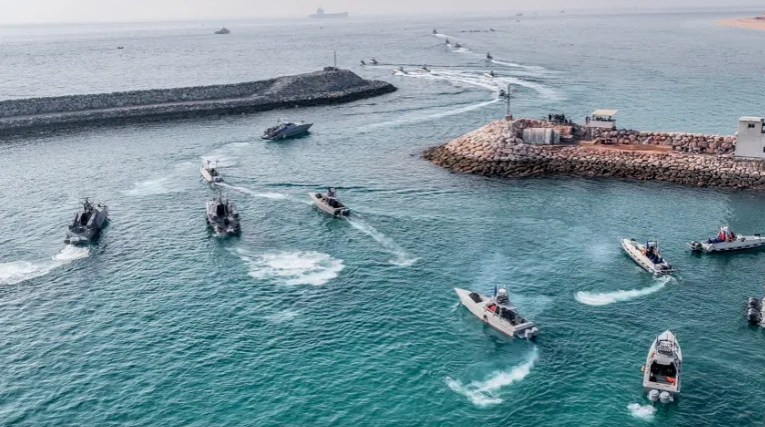
    Fresh regional tensions have flared in the strategically critical Gulf of Oman after Iranian naval forces seized a tanker reportedly flying the Barbadian flag, prompting Barbadian foreign officials to highlight a worrying global trend: ship owners deliberately using falsified flags to conceal their true identities and evade international sanctions.

    According to Iranian state media reports, the Islamic Revolutionary Guard Corps Navy carried out a targeted special operation to take control of the vessel, identified as the *Ocean Koi*, in the gulf. Iranian media, quoting an official military statement, accuses the tanker of undermining Iran’s national interests and disrupting its oil exports by taking advantage of heightened regional volatility. The *Ocean Koi* was previously placed under United States sanctions back in February, and Tehran confirmed after the seizure that the vessel was escorted to Iran’s southern coastline and turned over to national judicial authorities.

    But in Bridgetown, Barbados’ capital, senior foreign ministry officials push back on the claim that the tanker is legally registered in the country. Acting Foreign Minister Kerrie Symmonds told local outlet Barbados TODAY that his office has not received any formal notification of the incident. “I am unable to confirm the veracity of this claim and of course cannot even be sure that, if true, the ship is not sailing under a false flag which, unfortunately, is now a developing trend with vessels or ships’ owners who are evading sanctions and are trying to obscure their true identity and nationality,” Symmonds stated.

    This latest incident comes just months after another Barbados-registered vessel was attacked in the nearby Strait of Hormuz, a vital chokepoint that carries roughly 20 percent of the world’s daily oil trade. In March, the Barbados Maritime Ship Registry (BMSR) confirmed that the bulk carrier *Ocean Pretty* came under rocket and gunfire attack while transiting the strait, with no warning given before the strike. No crew members were injured in that attack, but the vessel has remained stranded off the coast of the Iranian southern port of Bandar Abbas ever since, waiting for Iranian inspection. The full extent of damage the ship sustained is still undisclosed.

    In a bid to reduce risk while traveling through the high-tension region, the crew of the *Ocean Pretty* had raised Chinese flags ahead of the incident, a common tactic used by commercial vessels to lower the chance of attack in the area. However, private security warnings shared among shipping industry groups have repeatedly noted that this precaution does not guarantee safe passage.

    Following both incidents, the London-based BMSR has ramped up monitoring of maritime security in the region, which has grown increasingly volatile amid ongoing escalating tensions between Iran, the United States and Israel. The registry has issued formal operational guidance for all Barbados-registered vessels transiting the Strait of Hormuz, and reaffirmed its position under the United Nations Convention on the Law of the Sea (UNCLOS): the strait is classified as an international passage that guarantees free navigation for all commercial vessels, and Iran has no legal basis to unilaterally close the waterway to global traffic. Barbados-flagged vessels retain full legal right to transit the area, the BMSR confirmed.

    Despite this affirmation of international legal rights, the registry has issued a strong advisory for ship owners, managers and captains to carry out comprehensive risk assessments before entering the region, and to avoid transiting the strait entirely whenever operationally possible to protect the safety of their crews. The BMSR has not yet issued a formal mandatory marine circular regarding the new *Ocean Koi* incident, but says it will continue to closely track developments in the region and update guidance as needed. Since regional tensions escalated earlier this year, a large number of commercial shipping companies have rerouted their vessels away from the strait entirely, while many others are holding at anchor in nearby waters waiting for conditions to stabilize before proceeding.

  • Hongarije: Peter Magyar beëdigd als nieuwe premier

    Hongarije: Peter Magyar beëdigd als nieuwe premier

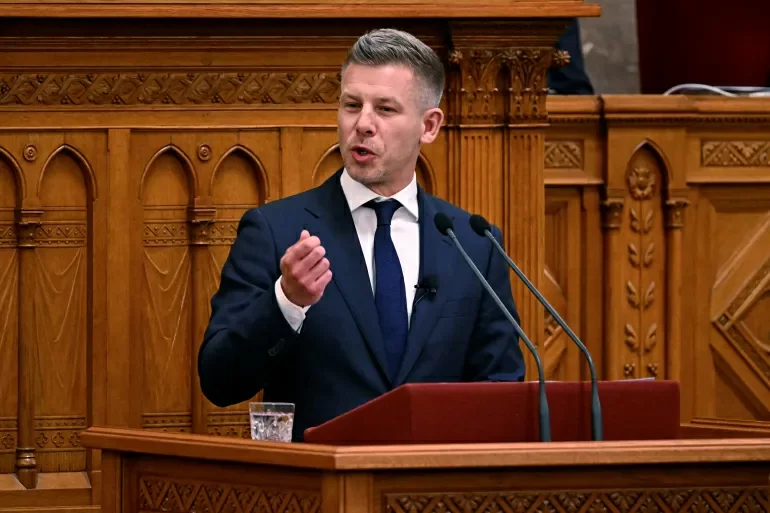
    On a historic Saturday in Budapest, Peter Magyar, leader of Hungary’s center-right Tisza Party, took the official oath of office as the country’s new prime minister, bringing an end to Viktor Orbán’s 16-year incumbency. Magyar’s decisive victory in the April 12 parliamentary elections secured his party a constitutional supermajority in the 199-seat National Assembly, where Tisza now holds 141 seats, clearing a path for sweeping political and institutional change after years of national stagnation.

    The 45-year-old new leader used his inaugural address to call on Hungarian citizens to step through “the gate to regime change,” promising Hungarians not just a new cabinet, but an entirely transformed governing system. “The Hungarian people have given us a mandate to put an end to decades of aimless drifting,” Magyar told lawmakers and assembled guests during the ceremony in Budapest’s parliament building.

    Magyar’s election win has been met with broad positive reaction both from domestic voters and international business communities. In immediate response to the transfer of power, the Hungarian forint climbed to its highest level against the euro in four years, while domestic bond yields dropped in a show of market confidence. Post-election public opinion polls have also recorded growing public support for the Tisza Party as the new administration takes office.

    Despite the early wave of optimism, Magyar inherits a set of pressing economic and geopolitical challenges that will test his new government from its first days in office. While Hungary has barely pulled out of a prolonged period of economic stagnation, it now faces new headwinds driven by soaring energy costs spurred by the ongoing Middle East conflict. As a heavily import-dependent Central European economy, these price pressures pose a significant risk to growth. Orbán’s pre-election spending spree has also left public finances in a fragile state: recent data shows that by April, Hungary’s budget deficit had already hit 71% of the full-year target, with Magyar warning that the deficit could reach 7% of gross domestic product by the end of the calendar year.

    One of the new prime minister’s top policy priorities is resetting Hungary’s Western alignment, a sharp reversal from Orbán’s administration, which increasingly tilted toward the Kremlin and openly opposed key EU initiatives supporting Ukraine amid its ongoing war with Russia. Magyar has made clear that restoring productive relations with Brussels is a core goal of his government.

    Domestically, Magyar has laid out plans for sweeping reform of Hungary’s public media sector, already announcing a temporary suspension of state media news broadcasts. He justified the move by noting that state outlets under Orbán consistently favored the former prime minister and effectively shut out critical political voices. He has also launched an ambitious nationwide anti-corruption program, and has set an aggressive deadline of May 25 to reach a deal with EU leaders to unlock billions of euros in frozen bloc funding, resources that Magyar calls critical to rebooting economic growth and stabilizing Hungary’s public finances.

  • Caribbean journalists invited to explore the issue of deep-sea mining through regional media fellowship

    Caribbean journalists invited to explore the issue of deep-sea mining through regional media fellowship

    As global momentum for expanding deep-sea mining operations accelerates, regional media voices in the Caribbean are being called on to deepen their reporting of this undercovered issue — one that experts warn could reshape the future of the region’s marine ecosystems, local economies, and coastal-dependent communities for decades to come.

    According to environmental reporting initiative Climatetracker.org, the Caribbean currently stands at a critical policy juncture. Decisions about deep-sea mining regulation and exploration that are being finalized in the coming months are projected to determine the health and accessibility of Caribbean marine resources for generations, making robust public awareness of the issue more urgent than ever.

    Despite the far-reaching stakes of deep-sea mining development, meaningful coverage of the topic remains scarce across Caribbean media outlets. Existing reporting often lacks the localized context, regional background, and community-focused framing needed to properly inform Caribbean audiences and encourage public engagement in decision-making processes, organizers of the new initiative note.

    To close this critical information gap, three regional environmental organizations — the Jamaican Environment Trust, RISE UP for the Ocean, and EcoVybz Environmental Creatives — have partnered to launch the Caribbean Deep Sea Mining Media Fellowship, a targeted capacity-building program for regional journalists.

    The fellowship is open to applications from all Caribbean-based media professionals, including full-time staff reporters, independent freelance journalists, and early-career media creators who focus on environmental, climate, and sustainable development beats.

    Program organizers designed the initiative specifically for journalists eager to produce high-impact, community-centered storytelling while strengthening their specialized reporting skills on a topic growing steadily in importance for the entire Caribbean region.

    As a fully virtual program, the fellowship will select 15 participating journalists to receive specialized training that builds nuanced understanding of deep-sea mining activities, their potential ecological risks, and their socio-economic impacts on Caribbean communities. Beyond training, fellows will develop and publish an original story on a deep-sea mining-related topic of their choice, tailored to their preferred media platform, and will have the opportunity to appear in a collaborative podcast episode exploring the issue’s regional relevance.

    The program also connects participating journalists with a network of regional subject-matter experts and trusted local sources, while providing ongoing one-on-one mentorship, editorial guidance, and logistical support throughout the duration of the fellowship. Selected fellows will also receive a monetary stipend to compensate them for their work on their published deep-sea mining story. Applications for the fellowship are open now via the program’s official portal.

  • Police find gun, ammo, suspected cocaine at murder victim’s home

    Police find gun, ammo, suspected cocaine at murder victim’s home

    A shocking fatal shooting has rocked the Caribbean nation of St. Vincent and the Grenadines, where a 37-year-old former national football player was gunned down in a public street Friday night. Now, law enforcement officials have launched a wide-ranging investigation into the killing, which has pushed the country’s 2025 homicide total to 15, marking a disturbing surge in violent crime in recent weeks.

    According to official police statements released Saturday, emergency dispatchers received the first report of the shooting at approximately 8:06 p.m. local time. First responding officers rushed to the incident site, located just steps from the local Anglican Church in the Calliaqua district, where they found Keith “Devon” James, a long-time resident of Golden Vale, Calliaqua, lying unresponsive on the left side of the roadway.

    Witness accounts collected by investigators suggest James had just returned to his neighborhood and was exiting his vehicle when the gunman opened fire. Local residents have told investigators they spotted an unregistered dark-colored vehicle speeding away from the area immediately after the shots rang out, leading to widespread speculation that the killing was a premeditated attack, with the suspect lying in wait for James before striking.

    A medical examiner who arrived at the scene shortly after the shooting pronounced James dead at the location. Forensic investigators working the case recovered five spent 9mm shell casings from the road and surrounding area, evidence that will be used to match against weapons recovered as part of the investigation. In a subsequent search of James’s private residence, law enforcement seized a Glock pistol, 10 live 9mm rounds of ammunition, an extra pistol magazine, a large cache of cash that included both local and foreign currency, and an undetermined amount of a controlled substance that field testing suggests is cocaine.

    In their official statement, police noted that all seized items are currently undergoing forensic examination as part of the active investigation, and investigators have not yet confirmed what connection, if any, the recovered materials have to the fatal shooting. “Investigators are pursuing several lines of inquiry and are examining all relevant circumstances that may assist in determining the motive and identifying the person or persons responsible,” the statement read.

    A post-mortem examination is scheduled to take place in the coming days to formally confirm the cause and manner of James’s death. The Royal St. Vincent and the Grenadines Police Force has extended formal condolences to James’s family and loved ones as they navigate this tragedy, while also urging the general public to avoid spreading unconfirmed speculation about the case. Officials asked that community members allow the investigative process to proceed unimpeded.

    Police are calling on any member of the public with information related to the shooting, no matter how small it may seem, to come forward to assist with the investigation. Tips can be submitted to the Criminal Investigations Department/Major Crimes Unit at 456-1810, Police Control at 457-1211, the emergency police line at 911 or 999, or any local police precinct. All submitted information will be kept completely confidential, per police policy.

    James’s killing marks a grim milestone for the small island nation: it pushes the total number of homicides recorded in St. Vincent and the Grenadines so far this year to 15, and James is already the fourth person to be killed by gunfire in the country in less than a month.

  • Global leaders reaffirm commitment to safe and orderly migration at UN forum

    Global leaders reaffirm commitment to safe and orderly migration at UN forum

    At the conclusion of the second International Migration Review Forum (IMRF) hosted at United Nations Headquarters in New York, national governments from every region of the globe have finalized four days of intensive negotiations on cross-border migration challenges and shared opportunities, unanimously approving a new Progress Declaration to guide collective action over the coming years.

    Negotiated directly by all participating UN Member States, the new declaration formally reaffirms the international community’s shared commitment to the Global Compact for Safe, Orderly and Regular Migration (GCM), the landmark non-binding global agreement on migration first adopted in 2018, according to an official statement released by the International Organization for Migration (IOM). Beyond restating this core commitment, the declaration takes stock of all progress made in implementing the GCM since the first review forum, and outlines clear priority action areas for member states through 2030. Key priorities highlighted in the text include upholding fundamental labor rights for migrant workers, expanding access to official legal identity documentation for all migrants, creating more safe and regular migration pathways, reducing preventable deaths along migration routes, and strengthening cross-border collaboration between nations connected by major migration corridors.

    H.E. Annalena Baerbock, who presided over the forum in accordance with existing UN General Assembly resolutions, emphasized that migration is a universal reality that touches every nation in some capacity. “Migration is an inevitable human reality. The question is not whether migration is good or bad. The question is whether we manage it well, and manage it together. As every country today is either a country of origin, transit, or destination – and most times even all three at once,” Baerbock told delegates. She added that coordinated international cooperation remains indispensable to tackling migration-related challenges, noting that “No state can manage migration alone. It requires cooperation, it requires international regulation. And that is precisely the purpose of the Global Compact. This is precisely the purpose of multilateralism.”

    Held from May 5 to 8, this second IMRF marked the second global progress review of the GCM, a voluntary agreement designed to address all forms of migration, guided by ten principle aligned with international law. Months before the forum opened, participating member states submitted 90 voluntary national reviews of their own GCM implementation efforts – a 30 percent increase compared to submissions ahead of the first forum in 2022, with submissions from every global region. Forum organizers note that these reviews represent the most detailed global snapshot of national migration compact implementation compiled to date.

    Amy Pope, Director General of the International Organization for Migration and Coordinator of the UN Network on Migration, highlighted a key takeaway from the forum’s deliberations: that national sovereignty and the human rights of migrants do not have to be mutually exclusive. “Every sovereign state has the right to set its own migration priorities. Every migrant has the right to be treated with dignity. This Forum showed that these two truths are not in tension – and that when countries work together, both can be upheld,” Pope said.

    In a nod to the GCM’s inclusive whole-of-society approach, organizers held an informal multi-stakeholder pre-forum hearing on May 4, one day ahead of the official plenary opening. The hearing brought together a diverse cross-section of stakeholders beyond national government delegates, including migrant representatives, civil society organizations, diaspora and faith-based groups, local government officials, private sector leaders, trade union representatives, parliamentarians, independent human rights institutions, delegates from the International Red Cross and Red Crescent Movement, academic researchers, media representatives, and UN partner agencies.

    Over the four days of official forum proceedings, delegates joined roundtable discussions, policy dialogues, and general plenary debates focused on advancing the agreed 2030 migration priorities, with conversations shaped by earlier consultations held at local, national, and regional levels across the globe. In addition to the Progress Declaration, the forum also saw a dramatic expansion of concrete commitments to support global migration action. Since December 2021, governments, UN agencies, and allied partner organizations have contributed more than 450 individual pledges to advance GCM goals, compared to just 158 pledges recorded ahead of the first review forum. These pledges cover a wide range of initiatives, from improving working conditions for migrant workers and scaling up digital civil registration systems to supporting nations hosting large displaced migrant populations and contributing funding to the Migration Multi-Partner Trust Fund established under the GCM framework.

    The United Nations Network on Migration, a coalition of 39 UN entities coordinated by IOM, has continued to support national governments in their GCM implementation efforts, providing support for resource mobilization, capacity building, and the development of national action plans. The next full International Migration Review Forum is scheduled to convene in 2030, in line with the GCM’s review timeline.