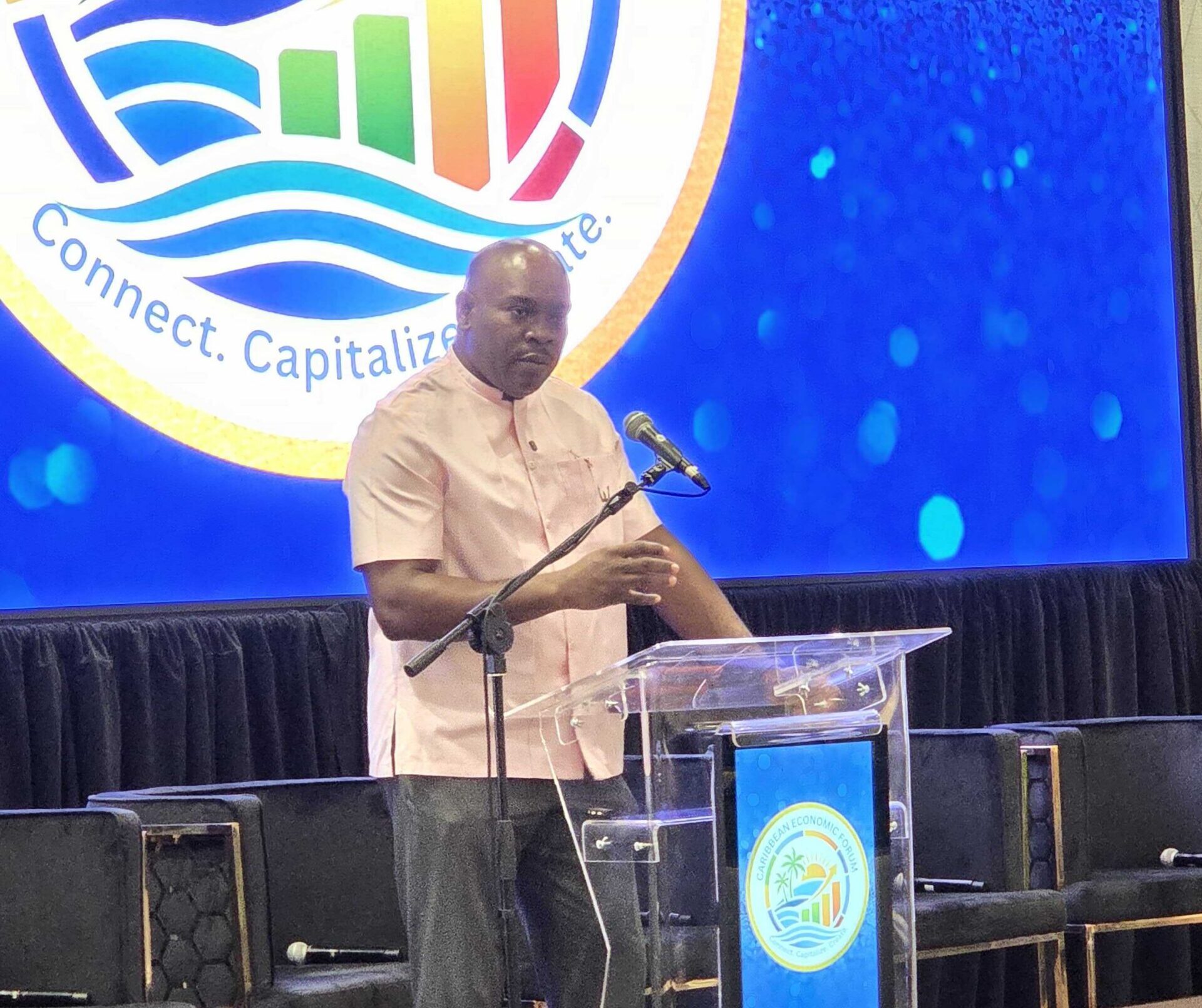
Speaking at the opening session of the Caribbean Economic Forum on Thursday, Barbados Finance Minister Ryan Straughn issued a urgent call for stronger, unified collaboration to unlock regional domestic capital and draw high-value international investment, framing the push as a non-negotiable step to close the persistent gap in investment returns between the Caribbean and developed global markets and deliver shared, long-term prosperity for regional residents.
Straughn outlined a stark, long-overlooked economic disparity shaping the region’s growth prospects: while Caribbean households maintain among the highest savings rates in the Americas, the investment returns generated from those savings regularly fall to less than half the levels that investors in North American and European markets routinely enjoy. To address this inequity, he argued that regional financial and governance institutions must overhaul their collaborative frameworks to more effectively aggregate and mobilize local savings, ensuring Caribbean citizens can access the same equitable financial rewards that investors in other advanced jurisdictions take for granted.
“We have a duty to work alongside regional institutions to mobilize regional savings and direct them toward productive local investment, so that Caribbean people can earn returns equal or comparable to what their counterparts see elsewhere,” Straughn told attendees. “Given our region’s unique history of economic disenfranchisement, we would be failing every one of our citizens if we do not build this functional, inclusive mechanism for economic empowerment.”
The finance minister emphasized that building broad economic resilience across the region cannot be separated from delivering direct, tangible benefits to ordinary working people. Creating a stable, transparent regulatory and policy ecosystem to attract reputable international financial partners, he explained, is not just a goal for policymakers—it is the foundation for unlocking untapped local talent and nurturing intergenerational prosperity.
“Generating durable wealth that can be passed from one generation to the next is a core pillar of building long-term societal and economic resilience for all people,” he said. “Every policy decision we make must be deliberate and intentional, because the future of our citizens and the future of the entire Caribbean depends on us building that right ecosystem to attract the right partners to work alongside our communities.”
Highlighting Barbados’s own progress in fiscal reform as a proof of concept for regional action, Straughn announced that the country has cut its national debt-to-GDP ratio dramatically in recent years, dropping from a peak of 178% to 93.3% by the end of March 2024. He noted that if not for widespread economic disruptions triggered by the COVID-19 pandemic, the ratio would have already fallen to 84%, a milestone that has created new fiscal space to develop safe, high-impact investment assets that blend private capital, multilateral development bank funding, and philanthropic resources.
Turning to pressing regional challenges, Straughn zeroed in on the rapidly rising cost of climate-related reinsurance, a burden that he says is disproportionately siphoning much-needed capital out of the Caribbean. The region, which sits on the frontline of accelerating climate change impacts, has seen premiums surge in recent years as global insurance pools reallocate capacity to high-risk markets in places like Florida and California. Straughn urged global insurance industry leaders and private sector stakeholders to partner with the region to redirect a share of these annual premium payments into critical climate-resilient regional infrastructure, including renewable energy projects, water security systems, and upgraded transportation networks.
“We feel climate change first-hand here on the frontline, but we also feel it directly on our national balance sheets, as insurance premiums climb higher year after year,” Straughn said. “Redirecting a portion of these premium flows into strategic investment will be critical to unlocking the capital we need to solve our most pressing challenges, from energy access to water security to transportation and beyond.”
Innovation in sustainable industry remains a central pillar of Barbados’s national economic strategy, Straughn added, pointing to emerging projects across the country’s iconic rum sector and agricultural industry as proof of concept. He highlighted an innovative initiative led by Sargassum that converts invasive seaweed waste into low-carbon biofuel, a project designed to insulate the Barbadian and broader Caribbean economy from volatile global oil prices and disruptive geopolitical shocks that roil energy markets.
Straughn closed by framing the Caribbean Economic Forum as a platform for tangible, deal-driven action rather than empty discussion, positioning the gathering as a key complement to the broader Bridgetown Initiative, which advocates for sweeping reform of the global international financial architecture to better support vulnerable developing nations.
“This is not a talk shop,” Straughn said of the forum. “It is a space for us to stand together with a firm commitment to solving problems on behalf of the Caribbean people. Sharpen your pencils, and let’s get these deals done for the benefit of all our communities.”