
In a response to growing public health and environmental concerns, the Belize City Council has mobilized specialized harvesting equipment to clear massive accumulations of invasive sargassum seaweed that has choked the shoreline at Sand Lighter’s Promenade, scheduled July 13, 2026. What once was considered an unpleasant odor nuisance has escalated into a major municipal cleanup challenge, as the trapped seaweed builds up in a natural cove that acts as a catchment basin, leaving ocean currents unable to flush the vegetation out to open water. According to Belize City Council Assistant Engineer Ramon Menjivar, the frequency of sargassum washing ashore has increased sharply in recent months, turning occasional incidents into a consistent hazard that demands urgent municipal intervention. “This is a very toxic, smelly material that it can even be detrimental to our health,” Menjivar explained in an on-site interview. “As the governing body for the city, we have to respond to all and any emergencies, and this is a major deposit that requires immediate action.” While the specialized sargassum harvester has proven efficient and fast at gathering the floating seaweed from coastal waters, the unique landscape of the promenade prevents crews from loading the vegetation directly onto trucks from the water. Instead, collected sargassum is first brought onto the shore, then transported to the city’s municipal landfill. At the disposal site, crews will spread the seaweed in a thin layer ranging from 6 to 8 inches thick, allow it to fully dry in the open air, then cover it with fill to eliminate odor and prevent runoff contamination. The current operation is framed as an immediate emergency response, as city officials continue researching and developing longer-term, sustainable solutions for recurring sargassum inundations that have impacted Belize’s coastal areas. This news report is adapted from a transcribed evening television broadcast, with all statements rendered accurately from original remarks.
博客
-

Jaguar Cub Video Renews Calls to Respect Protected Wildlife
In late 2026, a recently circulated viral video filmed in Belize’s protected Mountain Pine Ridge reserve has reignited urgent conversations about ethical wildlife interaction and enforcement of protected area rules, after footage showed a group of men cornering, approaching and making physical contact with a young jaguar cub. While many viewers who shared the clip framed the encounter as a once-in-a-lifetime, thrilling close-up experience with an elusive big cat, conservation leaders and wildlife experts have pushed back strongly, warning that the irresponsible actions seen in the footage put both the humans and the extremely vulnerable young animal at severe, potentially fatal risk. Jaguars, a species of high conservation concern across Central America, are granted full legal protection under Belizean national legislation, which requires all visitors to natural habitats to observe wild animals only from a safe, non-intrusive distance. To unpack the full scope of dangers posed by this interaction, local media spoke with Dr. Celso Poot, a respected wildlife ecologist and managing director of the Belize Zoo, who has decades of experience working with jaguars in captive and wild settings. Dr. Poot explained that wild jaguar mothers react to threats to their cubs the same way any parent would: any human approaching a newborn cub is immediately perceived as an aggressor, raising the immediate risk of a lethal defensive attack from the nearby mother, who would not distinguish between human intruders and other predatory threats. Beyond the immediate safety risk to the men involved, Dr. Poot emphasized that the encounter inflicted severe, potentially long-lasting physiological harm to the young cub, which his team estimates was only two weeks to one month old—one of the most vulnerable life stages for the species. “Wildlife professionals who handle young jaguars for research or conservation follow strict, carefully designed protocols to minimize stress, but these untrained members of the public had no regard for that,” Dr. Poot noted. He explained that extreme stress triggered by human handling can lead to a life-threatening condition called capture myopathy, where elevated stress hormones cause muscle rigidity and organ damage that can kill an affected animal even days after the encounter. “Just like humans, when an animal faces a life-threatening fright, it takes significant time to recover, if it recovers at all,” he added. While Dr. Poot was able to debunk the common myth that human scent on a cub will automatically lead the mother to abandon her young, he did note that replacing the mother’s natural scent with human odors removes a key layer of protection, leaving the cub more vulnerable to predators in the jungle. The incident has prompted conservation organizations across Belize to renew calls for better visitor education in protected areas, stricter enforcement of wildlife distance rules, and greater public awareness of how seemingly harmless “up close” wildlife encounters can have irreversible consequences for protected species. This public outcry comes as Belize works to maintain its position as one of the last strongholds for healthy jaguar populations in Central America, where habitat loss and human-wildlife conflict remain persistent threats to the species’ long-term survival.
-

Scratch & Win Delivers Big Prize in Orange Walk
On a routine Sunday trip to her local corner store in Orange Walk, an area resident walked away with a life-changing $15,000 prize from the Scratch & Win lottery, turning an ordinary day into a story of unexpected good fortune that has captured local attention.
The winner, who has chosen to remain anonymous, did not even purchase the winning ticket outright. Instead, she traded in three old non-winning tickets for three new $3 entries, a common practice for regular lottery players looking to stretch their play budget. She scratched off the first ticket right at the store counter and walked away with no payout, then scratched a second ticket after returning home, only breaking even by recouping the $3 cost of the ticket. It was only the final ticket in her set that held the life-altering surprise.
In an interview with local reporter Brianna Bennett, the winner described the moment of realization that still feels surreal days after the draw. “When I scratched this one I looked at it two times asking myself if it is true or not. So, I went and asked someone else to check it and confirm it, and they told me yes,” she shared.
A self-described regular player, the winner says she has built a small routine of picking up one or two $3 tickets every time she passes her local neighborhood store. Even days after claiming her prize, she says the excitement has not faded, and she has not yet processed what she wants to do with the unexpected windfall. When asked what plans she has for the $15,000, she simply responded, “Up to now, I don’t have no idea.” The winner added that she is still processing the win, and the reality of her good fortune has not fully set in.
Despite the uncertainty around her plans for the prize money, the first-time big winner says she would absolutely encourage other players to try their hand at Scratch & Win. “Well, yes I would because I’m now experiencing it in person now,” she said.
This report is adapted from a televised evening newscast covering community news out of Orange Walk, originally published on July 13, 2026.
-

Belize Volleyball Victorious and Belize Baseball’s Field of Dreams
As of July 13, 2026, Belize’s sports landscape is buzzing with both competitive upsets and long-term developmental progress, spanning volleyball, basketball, softball, and the rapidly expanding baseball program. Multiple elite teams earned impressive international and domestic wins over the past weekend, while infrastructure upgrades at the country’s iconic Rogers Stadium are laying the groundwork for a major shift in youth athletic development.
For the 2026 season, all top Belize City softball teams have temporarily relocated to rural community fields across the Belize District, a move prompted by the full closure of Rogers Stadium for large-scale renovations. Teams including the defending Belize City champion Belize Bank Bulldogs, four-time national titlist Beacon, and the up-and-coming Lady Wolfpack Softball Club have all competed at rural venues including Sandhill Community Field and facilities in Lord’s Bank Village over the past weekend, with all three squads currently without a permanent home base in the capital.
The renovations are far more than just routine maintenance: Belize Baseball Softball Federation president Marconi Leal Jr. outlined that the project will deliver two purpose-built new facilities: a national softball stadium and a regulation Little League baseball park. Work is already underway on perimeter fencing to prepare for the final construction phase, and the federation has already secured official charter status from Little League International, the global governing body for youth baseball.
The ultimate goal of the upgrade is to transition young male athletes from softball to baseball, a sport that opens far more international competitive and developmental opportunities for Belizean youth. “We started introducing Little League baseball in Belize City, and our focus is on building the sport from the bottom up with young kids,” Leal explained. “By joining the international Little League network, we gain access to critical developmental support to grow the sport across every region of Belize. We will soon meet with the National Sports Council to formalize the transition for boys from softball to baseball at both the primary and secondary school levels.”
The federation’s push for baseball expansion has received a major boost from high-level support: Belize’s Minister of Sports Anthony Mahler, a former youth baseball player himself, is backing the initiative. “Baseball was my first love growing up,” Mahler shared. “I truly believe that with the right facilities and proper training structures, Belize can compete at the highest level with other nations in our region.” The Rogers Stadium investment is just one of several recent investments the country has made to nurture elite baseball talent for future international competition.
Beyond infrastructure development, the past weekend delivered no shortage of dramatic on-field action across multiple sports. In the National Elite Basketball League (NEBL) Finals, the Belize City Defenders pulled off a tense game three win against the aggressive Orange Walk Rebels in front of a sold-out crowd at the Belize City Civic Center. Regular season most valuable player Nigel “Hoop Kid” Jones carried the offense, scoring 29 of the Defenders’ 72 total points to secure the win. While Francis Arana notched 20 points for the Rebels in the losing effort, the Defenders now hold a 2-1 series lead in the best-of-five championship matchup.
On the international volleyball stage, Belize’s national teams posted two historic wins over the weekend. In the third Central American Men’s Final Four Championship hosted by Costa Rica, Belize’s men’s squad defeated the host nation in a hard-fought five-set opening match, and was set to face Nicaragua the following day. Meanwhile, in Columbus, Ohio, Belize’s U-21 women’s national team picked up a three-set victory over the U.S. Virgin Islands at the NORCECA Pan American Cup, the highest-level international tournament Belize has ever competed in. Rising star Nisaan Martinez earned tournament-wide recognition as the Best Opposite Hitter, marking a historic individual achievement for Belizean volleyball.
In the ongoing Unified Belize District Fastpitch Softball Tournament, five matches were held at Sandhill Community Field over the weekend with two additional games hosted in Lord’s Bank. The Belize Bank Bulldogs and Beacon have continued to outpace other contenders, extending their decades-long rivalry as they push toward another championship matchup.
This weekly sports roundup is produced by the National Sports Council of Belize. Signing off is host Shane Williams, who reminded audiences that friendly sports competition unites communities, and for Belizean athletes, the love of the game is a way of life: “Keep balling Belize!”
-
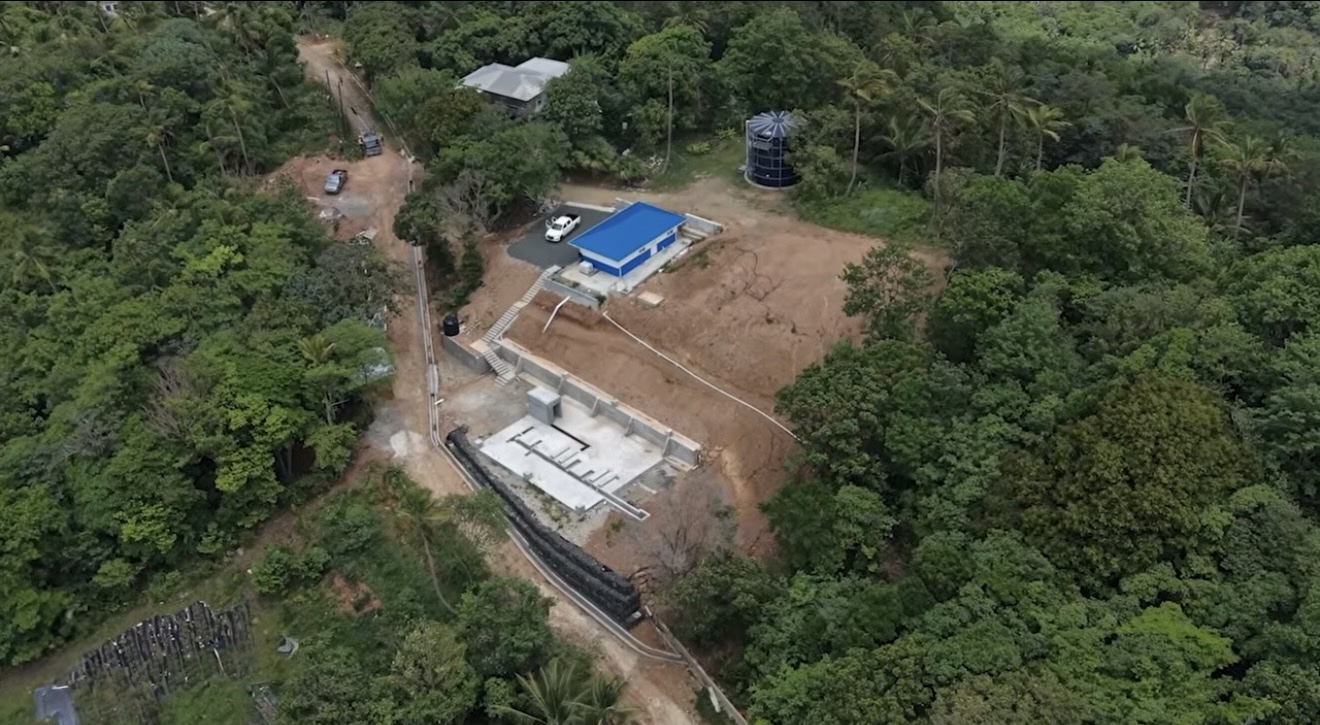
WASCO reports progress on Patience upgrade project
A landmark $2 million initiative designed to expand and upgrade access to clean drinking water for residents of Mon Repos and surrounding communities in Saint Lucia is moving steadily toward its 2026 completion deadline, with major construction milestones already crossed, project leaders have confirmed.
Funded by the Caribbean Development Fund and implemented by the Water and Sewerage Company (WASCO) of Saint Lucia, the Patience water supply redevelopment project aims to deliver a fully modernized, climate-resilient water treatment and distribution network built to accommodate the region’s growing population and long-term development needs. Unlike aging existing infrastructure, the upgraded system is engineered to withstand the increasing climate pressures facing small island Caribbean nations, from extreme weather events to shifting rainfall patterns.
Maurice Norville, WASCO’s project manager for the initiative, shared detailed updates on the construction timeline in recent remarks. He confirmed that the project’s critical river intake structure has been fully completed structurally, with only minor final works remaining. “The intake is completed structurally, and the only works left to do on this site would be to realign the river and do some boulder packing along the site,” Norville explained.
Progress is also advancing on the project’s pumping station, which is currently 75 percent finished, while crews continue laying out new pipe corridors that will form the backbone of the upgraded distribution network. All civil engineering works across the project site have been wrapped up, including the full completion of the foundation for the central water treatment plant, Norville added.
The next major phase of the project — installation of the treatment plant equipment — is on track to begin once the specialized machinery arrives from its manufacturing origin in Europe. Norville confirmed that the shipment is currently en route and is expected to reach Saint Lucia during the second or third week of July, clearing the way for installation to start immediately after customs processing.
Once fully completed in September 2026, the project is set to transform water access for local communities, delivering marked improvements to both the volume and quality of water available to residents. For small island developing states like Saint Lucia, reliable water infrastructure is a core component of public health and economic resilience, making this upgrade a high-priority public investment.
“Once the project is completed, which is scheduled for completion in September 2026, we can expect better supply in terms of both volume and quality of water to the residents of Patience and its surrounding areas,” Norville said.
The Patience redevelopment project is just one component of WASCO’s island-wide effort to modernize Saint Lucia’s entire water infrastructure network. The public utility is continuing to roll out targeted upgrades across the country to ensure consistent, long-term reliable water service for all Saint Lucian communities.
-

PM Browne addresses Global Maritime Security Symposium at The St James’s Club
Against a backdrop of growing international concerns over maritime security threats ranging from piracy and organized smuggling to territorial disputes and climate-driven disruptions to coastal infrastructure, Prime Minister Browne delivered a landmark address to attendees of the Global Maritime Security Symposium hosted at London’s prestigious St James’s Club.
The high-profile gathering brought together senior policymakers, military leaders, maritime industry executives, and international security experts from more than 30 nations to collaborate on crafting coordinated responses to shared challenges in the world’s vital sea lanes. In his remarks, Browne emphasized that maritime security is not a regional concern, but a global public good that underpins 90% of global trade, supports millions of livelihoods tied to fishing and coastal tourism, and remains critical to maintaining international stability.
He called for greater cross-border information sharing between maritime law enforcement agencies, increased investment in coastal surveillance infrastructure, and expanded joint training exercises to counter emerging threats, particularly the rise in drug trafficking and human smuggling operations that exploit unpatrolled coastal waters in many developing nations. Browne also highlighted the interconnected nature of climate change and maritime security, noting that rising sea levels and more frequent extreme weather events are damaging critical port infrastructure and exacerbating resource conflicts in already volatile regions. He urged developed nations to provide increased climate finance and technical support to small island developing states that are disproportionately vulnerable to these overlapping risks.
Symposium organizers noted that Browne’s address set a collaborative tone for the three-day event, which will conclude with a draft framework for collective action to strengthen global maritime governance. Attendees highlighted the importance of open dialogue between nations with differing geopolitical interests to prevent maritime disputes from escalating into broader conflict.
-

Leidinggevenden getraind om cyberrisico’s beter te herkennen
Paramaribo, Suriname – As government operations grow increasingly digital across the globe, Suriname’s e-Government Directorate (e-Gov) has taken a key step to boost national cyber resilience, hosting a second specialized cybersecurity awareness workshop for senior leaders across all national ministries. Held at Hotel Torarica, the workshop is part of a broader ongoing initiative designed to build threat awareness and strengthen protection for sensitive government data and digital infrastructure.
The series of training sessions is a joint effort between e-Gov and the Inter-American Development Bank (IDB), with instruction delivered by experienced IT professionals from leading local cybersecurity firms based in Suriname. The first workshop in the series, held on June 3, was targeted at IT staff and civil servants across a range of public agencies, expanding awareness to frontline public sector workers before the targeted session for top decision-makers.
Llydion Dalfour, Director of Suriname’s e-Government Directorate, opened the workshop by framing the dual reality of public sector digital transformation. He emphasized that widespread adoption of digital tools has unlocked major benefits for Suriname’s government, including more efficient public services, greater administrative transparency, and improved access to services for ordinary citizens. But Dalfour also stressed that growing digital dependence comes with unavoidable new responsibilities. “Every new digital service, every connected system, every new integration brings new vulnerabilities,” he explained, noting that cybercriminal networks continue to grow more sophisticated and organized each year.
Dalfour outlined the two core goals of the targeted workshop for senior leaders. First, the session aims to embed a culture of cyber awareness at the highest levels of government, where policy and budget decisions shape the overall security posture of public agencies. Second, the workshop provides practical, actionable technical guidance to help leaders identify emerging cyber risks early and implement effective mitigation measures across their departments.
Krish Dwarkasing, an IT security consultant at Suriname’s leading OMNI Information Security Consultancy N.V., emphasized the pervasive nature of modern cyber threats in his remarks. As both public and private organizations grow more reliant on data and digital workflows to carry out core operations, protecting that information from internal and external threats has become a core operational priority. “Cybersecurity is fundamentally about safeguarding the data that organizations depend on to function,” Dwarkasing explained. He noted that threats can originate both from outside actors seeking unauthorized access and from internal gaps in training or process, making organization-wide awareness just as critical as advanced technical defenses. To sustain long-term resilience, Dwarkasing added, organizations must also implement clear, formal cybersecurity policies that set consistent standards for all staff.
Marlon Roosveld, a member of the Suriname Customs management team, highlighted the immediate relevance of the training for his agency, which handles vast volumes of sensitive personal and commercial data on a daily basis. Roosveld noted that a successful cyber attack on customs systems would have far-reaching consequences for national trade, public safety, and citizen privacy, making ongoing staff training and awareness non-negotiable for the agency. “This workshop equips our leadership to address gaps and build a more resilient security posture that protects the critical information we manage every day,” Roosveld said.
-

Central bank orders alignment of spending caps amid user complaints
Barbados’ new instant payment platform BimPay has seen impressive early adoption, processing 750,000 transactions worth a total of $1.3 billion in its first full month since launching on June 12. But behind the strong uptake, the platform has been plagued by persistent operational problems that the governor of the Central Bank of Barbados, Dr. Kevin Greenidge, says stem largely from partner financial institutions. Now the regulator is stepping in with strict new requirements to resolve customer-facing delays and errors, while pushing institutions to align their BimPay practices with existing customer standards.
Dr. Greenidge confirmed that the platform has recorded a 0.2% failure rate since going live. While this figure may seem small, it has tangible impacts on everyday Barbadians: delayed salary deposits for workers, missed pension payments for retirees, and widespread customer frustration. Other commonly reported issues include inaccessible authentication tokens for account linking, arbitrary low spending limits, and general transaction processing delays. To address these harms proactively, the Central Bank has imposed a new mandate requiring financial institutions to issue provisional credits to customers affected by payment failures. Under the rule, if a salary or pension fails to process on time due to an institutional error, the bank must immediately credit the customer’s account before reconciling the error later. “You, as a person, should not have to wait on their systems, and that is the standard that we have set, and that is something that we continue to push,” Greenidge told reporters.
The governor added that this provisional credit requirement is already delivering improved outcomes for customers, and has explicitly banned institutions from charging late fees to customers for errors that originate from BimPay system delays. Greenidge also noted that some failures stem from preventable human error, such as incorrect account numbers entered during payroll submission, but the majority of ongoing issues trace back to financial institutions’ own systems and policies.
One particularly troubling practice the Central Bank is cracking down on is the imposition of artificially low spending limits on BimPay compared to banks’ own proprietary digital platforms. Greenidge explained that this inconsistent policy is unjustified: a customer with the same risk profile, same bank account, and same existing $2,000 daily spending limit on their bank’s native app may be capped at just $500 when using BimPay, the national instant payment platform. “Nothing about the customer has changed. The only thing that has changed is the app they’re using. It makes no sense. It is not correct,” he said. “Our position is this: a lower limit cannot simply be imposed because the customer is using the national payments app.” Going forward, any deviation from a customer’s existing spending limit for BimPay transactions must be formally justified and submitted to the Central Bank for official approval.
Two common transaction confirmation issues have also been traced to institutional processing gaps: in one scenario, funds arrive at the recipient’s bank but are not immediately posted to their account. In the other, the sending customer receives a confirmation that their transaction was successful, even though their bank never completed the transfer or debited their account. Greenidge emphasized that BimPay was designed from the start as an instant payment system, with all participating institutions having signed an agreement committing to complete transfers within a maximum of 10 seconds, with a target of five seconds. “Money should not be held in a suspended account or credited to a recipient as a pending credit letter. It must be instant,” he said, confirming that the Central Bank is conducting a full review of all institutions to eliminate any unnecessary queuing or processing delays.
A major onboarding friction point has also emerged: out of 24,000 users who downloaded and registered for the BimPay app, only 14,000 successfully completed the process of linking their bank account to the platform’s e-wallet. Greenidge said this 10,000-user gap is almost entirely due to poor design choices by financial institutions, many of which buried the BimPay token generation link deep within their digital banking channels, mislabeled the tool, or required customers to navigate multiple unnecessary layers of menus to access it. “If a customer can’t find the door, they can’t come in. It’s simple as that,” he noted. “Persons have therefore registered and downloaded [the app], interested in using it, they are trying to link, could not find their way, and just give up.”
To resolve this onboarding barrier, the Central Bank has released a unified customer access standard requiring all financial institutions to place the BimPay token generation button prominently on the homepage of their mobile banking apps and online banking portals, with clear labeling. As of the latest update, some institutions have already adjusted their platforms to meet the new rule, while others have been ordered to revise their access flow to comply with the regulator’s requirements.
-

Minister Dwayne George Inspects ARG Readiness Ahead of Carnival Events
As Antigua and Barbuda gears up for one of its most anticipated annual cultural celebrations, Minister of Sports and the Creative Industries Dwayne George has led an on-site inspection of the Antigua Recreation Grounds (ARG), the primary venue for this year’s Carnival activities, to evaluate the state of ongoing preparations.
Accompanying Minister George during the walkthrough were senior representatives from the Antigua and Barbuda Festivals Commission and the core management team responsible for the ARG venue. The collaborative inspection centered entirely on evaluating whether the space meets all required standards for full operational readiness ahead of the first Carnival events kicking off in the coming days.
During a post-inspection briefing, the minister outlined that the comprehensive review touched on every critical logistical component required to host large-scale public festivities. These included layered security arrangements designed to keep attendees safe, the ongoing construction of the main performance stage, professional lighting and sound system installations, crowd flow and management strategies, and a range of additional infrastructure and operational details that contribute to a seamless event.
Minister George shared that he left the inspection encouraged by the work completed so far, expressing clear satisfaction with the pace and quality of progress across all evaluated areas. He extended public commendation to the Antigua and Barbuda Festivals Commission, specialized technical crews on site, frontline security personnel, and all other cross-sector partners that have dedicated time and resources to get the venue ready.
Beyond praising current progress, the minister emphasized that proactive, detailed planning and ongoing open collaboration between all stakeholder groups are non-negotiable for delivering a safe, well-organized, and enjoyable experience for every person involved — from local and international festival patrons purchasing tickets to attend, to the performers taking the stage, and every vendor and organizer working behind the scenes.
A statement released by the Ministry of Sports and the Creative Industries following the inspection confirmed that the government body will maintain close coordination with all partners through the end of the festival season, with a shared commitment to ensuring the 2024 Carnival is a successful, memorable event for all participants.
-

Third Time’s the Charm: Orange Walk Woman Lands a $15K Pay Day
A regular player of the Scratch & Win lottery from Orange Walk has turned a routine ticket purchase into a life-changing $15,000 windfall, crediting her third try of the day for the unexpected big win, in a story that has captured the imagination of casual lottery players across the region.
The lucky winner shared that her first scratch-off ticket of the outing yielded no prize at all, while the second attempt only returned a small $3 payout. Unfazed by the initial lack of success, she decided to purchase one more ticket—and that choice delivered the six-figure (in local currency) prize that has left her still processing the good news.
In recounting the moment she revealed the winning combination, the winner explained that she had to double-check the ticket to believe what she was seeing. Uncertain that she had read the prize breakdown correctly, she brought the ticket to another official to verify the win, only receiving confirmation that she had indeed secured the top prize after a second check.
For the Orange Walk local, buying Scratch & Win tickets is far from a one-off flutter—it is a regular part of her daily or weekly routine. She has since encouraged people who have hesitated to try their hand at the lottery to go ahead and give it a chance, noting that luck can strike when least expected.
As of this week, the winner says she has not yet settled on a plan for how to use her $15,000 prize. Still reeling from the excitement of her weekend win, she is taking time to absorb the life-changing news before making any decisions about her new windfall.