博客

  • Should CoP recuse himself in intelligence review?

    Should CoP recuse himself in intelligence review?

    Three high-profile defendants – murder-accused Rajaee Ali, Earl Richards, and Canadian vlogger Christopher “Chris Must List” Hughes – have asked Trinidad and Tobago’s Police Service Commission (PolSC) to rule whether the national Commissioner of Police must step back from any probe or review into alleged violations of the country’s intelligence gathering and communications interception laws.

    In a formal July 16 letter addressed to PolSC chair Dr Wendell Wallace and Director of Public Prosecutions Roger Gaspard, SC, attorneys Criston J Williams and Blaine Sobrian of Quantum Legal are also pushing for the creation of an independent oversight body to examine compliance with mandatory reporting rules laid out in two key pieces of legislation: the Strategic Services Agency (SSA) Act and the Interception of Communications Act. Copies of the correspondence have also been circulated to Prime Minister Kamla Persad-Bissessar and Police Complaints Authority director David West, with the legal team requesting a confirmation of receipt within 72 hours and a formal substantive response by noon on July 27.

    The attorneys emphasize that their clients have been directly harmed by official actions that relied on intelligence and national security data collected by state agencies exercising covert statutory powers. In the case of Ali and Richards, public authorities publicly cited intelligence to justify moving the pair from the Maximum Security Prison to Teteron Barracks during a recent national state of emergency, followed by the issuance of formal Preventive Detention Orders. For Hughes, national security concerns, claims of links to organized criminal activity, and alleged communications with specific individuals were publicly used as evidence during ongoing criminal proceedings against the Canadian content creator.

    Importantly, the legal team stresses this action is not a challenge to legitimate intelligence gathering or intelligence-led policing, nor does it claim that any communications interception involving the three clients was inherently unlawful. Instead, the core of their complaint centers on whether state bodies granted these sweeping covert powers have followed the statutory safeguards put in place by Parliament, and whether the accountability mechanisms designed to oversee these powers have been allowed to fall into disuse without public explanation.

    The letter highlights a critical gap in oversight: the annual reports required under Section 13 of the SSA Act and Section 24 of the Interception of Communications Act have not been tabled before Parliament for multiple consecutive years. Since the start of 2024, the legal team has sent multiple inquiries to a range of senior public officials, including former national security ministers, the current Minister of Homeland Security, the Minister of Defence, the Clerk of the House of Representatives, and the Speaker of the House. While responses confirmed that at least one annual report was prepared and delivered to the responsible national security minister, none were ever presented to the full Parliament for scrutiny.

    These mandatory reporting requirements are not procedural formalities, the attorneys argue: they are core statutory safeguards designed to enforce ministerial accountability and guarantee parliamentary oversight of intelligence gathering and covert surveillance powers. The letter also raises new questions around public spending on the SSA, noting that combined actual spending, reported expenditure, and budget allocations linked to the agency between 1995 and 2026 total at least $3.079 billion. Yet there is no consolidated, independently audited, publicly accessible account of the SSA’s full spending history, leaving Parliament without sufficient information to properly oversee the agency’s activities and budget.

    The legal team points to 2024 comments by former prime minister Dr Keith Rowley, who publicly acknowledged an ongoing audit of the SSA that uncovered serious problems with the agency’s structure, staffing, weapons and ammunition inventory, and internal governance. These previously disclosed issues, the attorneys argue, only underscore the urgent need for robust statutory reporting and independent parliamentary oversight.

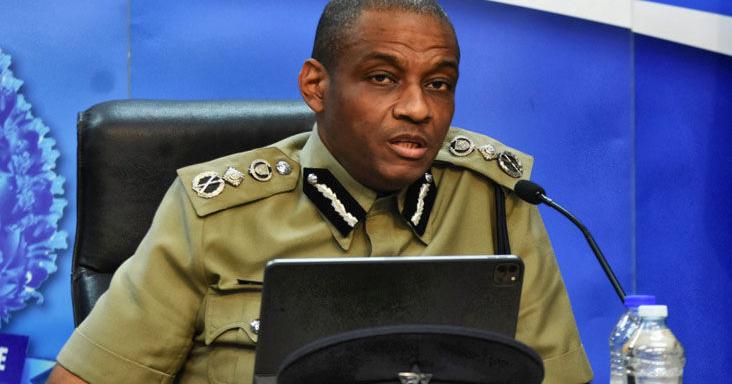
    The letter notes that the Office of the Commissioner of Police is a formal part of the statutory framework governing communications interception and intelligence gathering. As such, common law principles around apparent bias and institutional independence require that the commissioner step aside when questions about compliance with this framework arise. The attorneys stress that they are making no allegations of misconduct or bad faith against the current commissioner. Even so, they argue that the commissioner should not take part in any investigation, review, assessment, or decision-making related to the alleged statutory non-compliance laid out in the letter. An independent review is necessary to protect public trust in the accountability framework established by Parliament, they maintain.

    Beyond recusal, the legal team is asking the PolSC to consider approving the creation of an independent review panel made up of qualified, institutionally independent experts. This panel would be tasked with three core responsibilities: determining whether the mandatory reporting obligations under both the SSA Act and Interception of Communications Act have been met, assessing whether institutional or legislative reforms are needed to fix gaps in oversight, and identifying what additional safeguards can be introduced to rebuild public confidence in the national statutory accountability framework for intelligence operations.

  • Woman to get $103,000 in police assault case

    Woman to get $103,000 in police assault case

    A Trinidadian woman who endured a two-year criminal prosecution following an assault by a serving police officer outside a Port of Spain nightclub has been awarded more than TT$103,000 in damages after the High Court ruled law enforcement deliberately fabricated a false case against her. The ruling, delivered by Justice Margaret Mohammed last Friday, vindicated 41-year-old Andrea Phillips, who was working as a bouncer at Stumblin’ Night Club on Ariapita Avenue, Woodbrook, when the 2017 confrontation unfolded.

    The dispute that sparked the incident centered on a routine TT$60 venue cover charge. On the night of June 30, 2017, shortly before midnight, PC Nicholas Holder and WPC Thomas-Bentham approached the club’s entrance without identifying themselves as serving police officers, the court confirmed. Phillips maintained throughout her claim that she repeatedly informed Holder the cover charge was mandatory for all guests before entry. When Holder attempted to bypass payment and force his way into the venue, Phillips stepped in to block his path.

    Justice Mohammed’s judgment accepted overwhelming evidence that Holder responded to the confrontation with unprovoked aggression, an action the judge ruled constituted a pre-emptive assault against Phillips. The judge corroborated Phillips’ account of the incident with testimony from Derick Timothy, the nightclub’s security manager, who was positioned just three to four feet from the altercation. Timothy told the court that after Phillips pushed Holder back in self-defense, the officer struck Phillips twice directly in the face. Justice Mohammed described Timothy as a completely credible, reliable witness whose account aligned with physical and documentary evidence presented to the court.

    In contrast, the judge found critical contradictions and gaps in Holder’s version of events that undermined his entire testimony. Multiple inconsistencies between Holder’s statements and official police station diary extracts were exposed during cross-examination, and Holder failed to call any fellow officers to support his account of the confrontation. Most notably, he presented no medical evidence to back his unsubstantiated claim that Phillips had fractured his jaw during the incident. “He was not a witness of truth,” Justice Mohammed wrote in her final judgment.

    The court also rejected Holder’s account of Phillips’ arrest, finding the arrest took place hours after the incident at Woodbrook Police Station, not at the nightclub as the officer had claimed. Justice Mohammed ruled Holder had no reasonable or probable cause to take Phillips into custody, and equally lacked legal grounds to charge her with obstruction of justice, resisting arrest, and use of obscene language. The criminal charges against Phillips were ultimately dismissed in July 2019, after Holder failed to appear for multiple required court hearings.

    Justice Mohammed found sufficient evidence to conclude Holder acted out of personal malice against Phillips, pointing to his aggressive conduct at the venue entrance, his failure to inform Phillips of the specific reason for her arrest, and the irregular process through which she was detained and charged. During her 38 hours of pre-charge detention, Phillips was held in what the judge described as “inhumane conditions” in a police holding cell.

    In her final ruling, Justice Mohammed awarded Phillips TT$83,000 in general and aggravated damages, plus an additional TT$20,000 in exemplary damages to penalize the officer’s misconduct, totaling more than TT$103,000 in compensation. The judge further ordered the state to cover all of Phillips’ legal costs, amounting to an additional TT$24,450. Phillips filed her civil claim against the Office of the Attorney General, which holds legal responsibility for the conduct of police officers in Trinidad and Tobago, over claims of assault, wrongful arrest, false imprisonment, and malicious prosecution.

  • Warner wins landmark 11-year extradition case

    Warner wins landmark 11-year extradition case

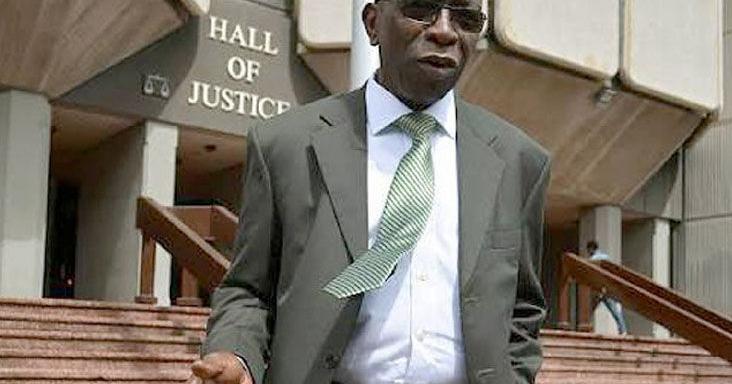
    After more than 11 years of grueling extradition litigation, former FIFA vice-president Jack Warner has secured a historic, game-changing win in Trinidad and Tobago’s High Court, which has permanently thrown out all efforts to extradite him to the United States and ruled that state authorities systematically violated his fundamental constitutional rights.

    In a detailed 71-page ruling delivered this week, Justice Karen Reid laid bare critical procedural flaws that undermined the entire extradition effort from its inception. The case hinged on the international extradition principle known as the specialty rule, which mandates that a person surrendered to a foreign jurisdiction can only face prosecution for the specific crimes for which extradition was granted. Under Trinidad and Tobago’s Extradition (Commonwealth and Foreign Territories) Act, an official Authority to Proceed (ATP) — the document that formally launches extradition proceedings — cannot be legally issued unless adequate specialty protections are already in place between the requesting and requested states.

    Justice Reid found that when the then-Attorney General issued the ATP in September 2015, no such valid specialty arrangement existed. Compounding this initial legal error, the judge confirmed that representatives of the Office of the Attorney General repeatedly misled every level of the judiciary, from the High Court to the Court of Appeal and even the Judicial Committee of the Privy Council, by claiming a special, bespoke arrangement had been negotiated specifically for Warner’s case to satisfy the specialty requirement.

    The truth of these false claims only came to light in 2023, when Warner’s legal team obtained documents via a Freedom of Information request that proved no such bespoke arrangement had ever been created. State authorities had instead relied solely on the general provisions of the existing bilateral extradition treaty between Trinidad and Tobago and the U.S., which failed to meet the statutory requirements for a valid ATP.

    While the court acknowledged that the initial misrepresentation may have stemmed from an accidental misunderstanding rather than deliberate deception, Justice Reid emphasized that once state officials learned the claim was false, they had an explicit legal duty to correct the court record. Instead, the ruling found, the state allowed all subsequent litigation to proceed on a false foundation. This failure, the judge held, constituted a severe breach of the state’s obligation of candour to the courts, amounted to an abuse of judicial process, and stripped Warner of his ability to pursue an effective legal challenge to his extradition. The ruling concluded that this arbitrary and fundamentally unfair exercise of state power violated Warner’s constitutional right to liberty protected under Section 4(a) of Trinidad and Tobago’s Constitution and his right to equal protection of the law under Section 4(b).

    As a remedy, Justice Reid ordered a permanent stay of all extradition proceedings against Warner, awarded him monetary damages for the violation of his constitutional rights, and ordered the Attorney General to cover all of Warner’s legal costs, with certification for both senior and junior counsel. The court also permanently barred the Attorney General from enforcing previous cost orders issued against Warner in earlier judicial review proceedings. A case management conference to set the final amount of damages has been scheduled for September 30, 2026.

    The long-running extradition saga first began in 2015, when the United States requested Warner’s extradition in connection with alleged money laundering offences tied to corruption investigations into FIFA. A provisional arrest warrant was issued on May 27, 2015, and Warner surrendered to authorities the same day before being granted bail 24 hours later. The U.S. submitted a formal extradition request that July, and the ATP was issued that September, opening proceedings in the Magistrates’ Court.

    Warner immediately launched a judicial review challenge to the ATP’s legality, which was dismissed by the High Court in 2017 and upheld by the Court of Appeal in 2019. He appealed to the Judicial Committee of the Privy Council, which rejected his appeal in December 2022, clearing the way for extradition proceedings to restart. It was only after these proceedings resumed that Warner filed the fresh constitutional challenge that led to this week’s ruling, prompted by the Freedom of Information disclosures that exposed the false claims about the specialty arrangement. Justice Reid ruled that these new disclosures fundamentally changed the legal context of the case, justifying the dramatic remedy of permanently halting the extradition process entirely.

  • “St. Kitts and Nevis Will Not Be Exposed To Criminals” – Prime Minister Drew

    “St. Kitts and Nevis Will Not Be Exposed To Criminals” – Prime Minister Drew

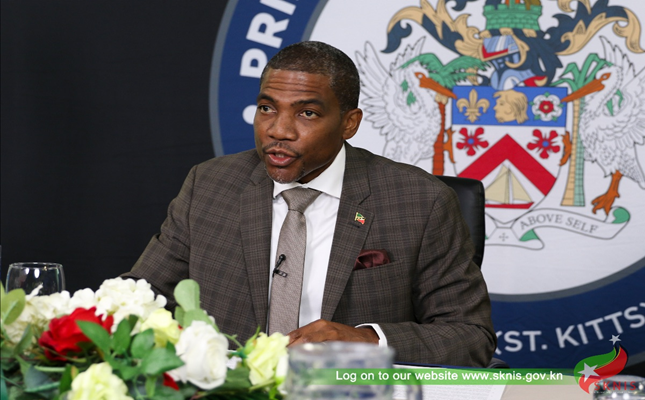
    BASSETERRE, St. Kitts – In a public address to ease growing domestic concerns over a bilateral migration cooperation agreement with the United States, St. Kitts and Nevis Prime Minister Hon. Dr. Terrance Drew has issued a firm guarantee that rigorous multi-layered screening protocols will prevent any individuals with criminal histories from entering the federation.

    Drew made the commitment during the July 16 episode of his monthly *Prime Minister’s Round Table* public forum, addressing widespread public speculation that the transfer arrangement would expose the small Caribbean nation to dangerous criminal offenders. The agreement, which applies exclusively to nationals of Caribbean Community (CARICOM) member states, explicitly grants St. Kitts and Nevis full sovereign authority to reject any transfer candidate that fails to meet the country’s strict national security thresholds.

    Back in May 2026, the St. Kitts and Nevis government confirmed it had accepted three CARICOM nationals transferred from U.S. custody. Contrary to circulating misinformation that the transferees had criminal convictions, the Prime Minister clarified that the individuals only faced U.S. immigration violations, not criminal charges or convictions. All three candidates underwent comprehensive pre-transfer evaluations covering criminal background history, immigration eligibility, medical health and national security risk, Drew confirmed. U.S. authorities also shared full biographical, medical and criminal background data with local agencies ahead of the transfer, and St. Kitts and Nevis’ national security, immigration and law enforcement bodies all participated in the full review process.

    “So these are not criminals. We have no reason to lock them up or anything like that,” Drew emphasized during the address.

    The existing bilateral memorandum of understanding enshrines St. Kitts and Nevis’ full sovereign control over the transfer process: the federation holds sole discretion to approve or reject any proposed transferee, and the agreement explicitly bans the transfer of any individual convicted of violent or sexual offenses. Drew added that if post-transfer information emerges showing an individual does not meet the terms of the arrangement, the government will immediately implement all necessary remedial actions to protect public safety.

    “There will be measures taken to ensure that St. Kitts and Nevis is not exposed to any criminals,” he reiterated.

    The Prime Minister also confirmed that the International Organization for Migration (IOM) has played a key independent oversight role throughout the transfer process, ensuring all proceedings adhere to international law, global humanitarian standards and the fundamental human rights of transferred individuals.

    On the topic of cost, Drew addressed another key public concern: all expenses tied to transferred individuals, including housing, food, clothing, healthcare and other essential needs, are covered on a case-by-case basis with no financial burden falling to the St. Kitts and Nevis government. “I can say broadly that one, it didn’t cost St. Kitts and Nevis one cent, and two, we made sure that the basics were covered for these people,” he noted.

    Drew concluded by framing the agreement as a balanced approach to fulfilling the nation’s international and regional obligations while upholding the government’s core duty to protect the security and sovereign interests of St. Kitts and Nevis. He pledged the administration will maintain full transparency going forward, and will continue to apply strict immigration, security and law enforcement protocols to every candidate considered for transfer under the agreement.

  • Statement by the President of Cricket West Indies on the passing of Sir Garfield Sobers

    Statement by the President of Cricket West Indies on the passing of Sir Garfield Sobers

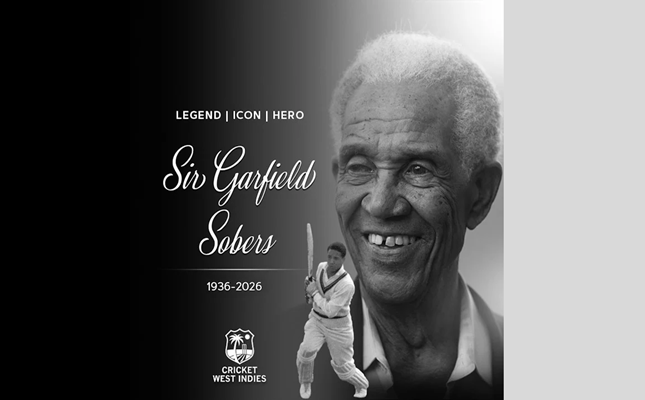
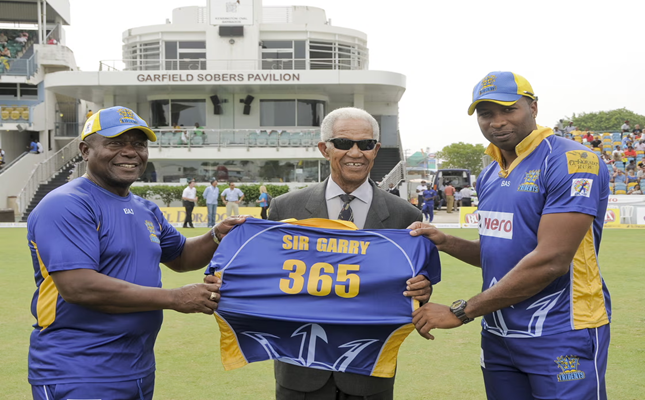
    The global cricket community and the Caribbean region are in mourning this week after the passing of Sir Garfield Sobers, the Barbadian-born sporting icon widely hailed as the greatest cricketer in the history of the sport. In an official statement released Saturday, Cricket West Indies (CWI) President Dr. The Hon. Kishore Shallow confirmed the death of the legendary all-rounder, reflecting on a life and career that transcended sport to become a core part of Caribbean identity.

    In the history of international cricket, only a handful of athletes have fundamentally reshaped public understanding of what greatness on the pitch looks like — and Sir Garfield Sobers stands at the top of that exclusive list. Unlike specialist players who excelled in only one role, Sobers boasted unrivaled mastery across every dimension of the game: his batting precision, his versatile bowling skill, and his sharp fielding awareness set a standard that has never been matched. But Dr. Shallow emphasized that Sobers’ impact stretched far beyond the boundary lines of cricket grounds across the globe.

    Sobers rose to international stardom at a pivotal moment in Caribbean history, as the region’s nations were emerging onto the world stage and seeking to assert their own distinct voice. Through his consistent, unprecedented excellence on the global cricket circuit, he gave millions of people across Caribbean islands and the global Caribbean diaspora a renewed sense of what their communities could achieve. He proved that sporting greatness and global influence were not limited by the small size of Caribbean nations, their geographic isolation, or the humble origins that marked many of the region’s brightest stars.

    Over time, Sobers grew from a beloved sports champion into a powerful symbol of what the Caribbean stands for: excellence, resilience, and boundless possibility. His career brought unprecedented pride to his home nation of Barbados, inspired generations of young cricketers across the West Indies, and earned universal respect from cricket fans and players in every corner of the world.

    Dr. Shallow shared a personal connection to Sobers’ lasting legacy, noting that as a young emerging cricketer, he benefited directly from the infrastructure and mentorship Sobers built through the Sir Garfield Sobers International Under-19 Cricket Tournament. Beyond the formal opportunity the tournament provided, Dr. Shallow said he cherished the personal encouragement, wisdom, and support Sobers extended to him over decades of his career. That kindness and guidance, he added, will remain a permanent, treasured part of his own journey in cricket.

    “Sir Garfield Sobers has completed his final innings, but his legacy will forever endure in the hearts of our region, and the story of the cricketing world,” Dr. Shallow wrote in the statement. On behalf of the entire Cricket West Indies organization, he extended deepest condolences to Sir Garfield Sobers’ family, the government and people of Barbados, and all cricket fans and loved ones mourning the loss of the icon across the globe. This statement was released in full to SKNVibes.com, which does not edit original press statements for spelling or grammatical error, and does not necessarily endorse the views expressed within.

  • Saint Kitts and Nevis enlists regional expert to build medicinal cannabis banking framework

    Saint Kitts and Nevis enlists regional expert to build medicinal cannabis banking framework

    BASSETERRE, Saint Kitts – As the eastern Caribbean nation of Saint Kitts and Nevis moves to advance its nascent medicinal cannabis sector, the federation has turned to an experienced regional leader to address one of the industry’s most persistent hurdles: access to formal banking services.

    The Saint Kitts and Nevis Medicinal Cannabis Authority announced July 17 that it has tapped Saboto Caesar, the former agriculture minister of neighboring St. Vincent and the Grenadines, to guide the development of a customized, robust banking framework for the local medicinal cannabis market. Caesar is scheduled to arrive in the twin-island federation on July 19 for a five-day consulting engagement, authority CEO Nadiv Mills confirmed in a media briefing July 15.

    Caesar’s track record in regional cannabis policy makes him uniquely suited to support the project, Mills noted. He is widely recognized as the driving force behind the successful development of St. Vincent and the Grenadines’ cannabis wellness sector, including the design and rollout of that nation’s own functional medicinal cannabis banking system. That experience has already positioned St. Vincent and the Grenadines as a regional pioneer: in 2025, the country became the first member of the Organisation of Eastern Caribbean States (OECS) to secure an export license from Germany, making it the first OECS nation to ship legal medicinal cannabis to international markets.

    During his upcoming visit, Caesar will hold a series of working meetings with leaders from Saint Kitts and Nevis’ commercial banks and other financial institutions. The goal of these discussions is to identify the specific regulatory, risk management and operational challenges local lenders face when serving the licensed medicinal cannabis sector. He will also share the policy frameworks and operational best practices that allowed St. Vincent and the Grenadines to overcome similar barriers to build a stable, compliant industry.

    As part of the engagement, Saint Kitts and Nevis will also introduce its new end-to-end supply chain monitoring tool to participating financial institutions. The seed-to-sale track-and-trace technology logs every transaction along the production and distribution chain, boosting transparency across the supply chain, simplifying regulatory compliance for licensed operators, and strengthening overall operational accountability for the sector. This system is expected to give financial institutions greater confidence in serving the industry by reducing compliance and reputational risk.

    The engagement comes as more Caribbean nations move to formalize and expand their legal medicinal cannabis sectors, leveraging regional knowledge sharing to speed up regulatory development and reduce growing pains for new market entrants.

  • A Tribute to the Greatest! Cricket West Indies Offers Free Admission to ODI Matches at Kensington Oval in Honour of Sir Garfield Sobers

    A Tribute to the Greatest! Cricket West Indies Offers Free Admission to ODI Matches at Kensington Oval in Honour of Sir Garfield Sobers

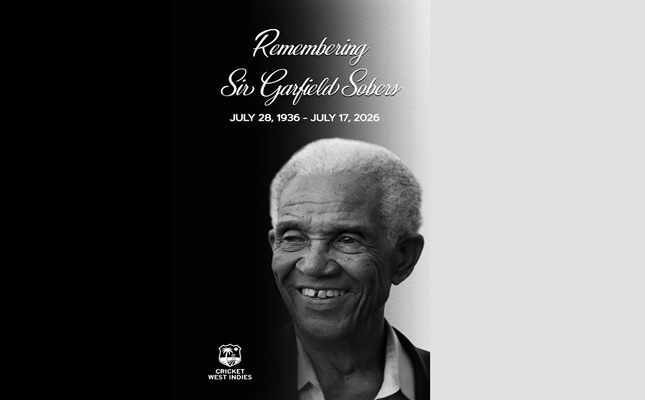
    BRIDGETOWN, Barbados — Just one day after the passing of legendary cricketing icon Sir Garfield Sobers, Cricket West Indies (CWI) has announced a sweeping gesture to honor his unparalleled legacy: free general admission for all fans attending the upcoming One-Day International matches between the West Indies and New Zealand at Bridgetown’s iconic Kensington Oval.

    The two fixtures, scheduled for Sunday, July 19 at 10:00 a.m. and Tuesday, July 21 at 2:30 p.m., will be reimagined as public tributes to The Right Excellent Sir Garfield, who died Friday, July 17 at the age of 89. The cricketing global community is already gathering in Barbados to celebrate the life and career of the man widely regarded as the greatest cricketer in the history of the sport.

    For fans who already purchased advance tickets to either match, CWI confirmed that full refunds will be issued automatically, with all processing completed within seven business days of the announcement.

    In a press statement Saturday, CWI Chief Executive Officer Chris Dehring explained that the decision to open the stadium free of charge stems from the immeasurable, cross-generational impact Sir Garfield had on Caribbean culture and global cricket. “Sir Garfield Sobers belonged to all of us,” Dehring said. “While Barbados was his home, his unmatched brilliance on the pitch united the entire Caribbean region and captured the imagination of cricket lovers across every continent.”

    Kensington Oval holds special meaning in the story of Sir Garfield’s career, Dehring noted, as the ground where dozens of the most iconic moments of his decades-long career unfolded. “We want every person in Barbados — whether lifelong cricket fans or casual observers — to have the chance to gather as one global cricket family to honor a man who inspired millions across the world, and whose legacy will endure for centuries,” he added. “These matches will be far more than just international fixtures; they will be a celebration of an extraordinary life, and an opportunity for all of us to say thank you to the greatest cricketer the game has ever known.”

    CWI has extended a formal invitation to all Barbadian residents, traveling cricket fans, and visitors on the island to join players from the West Indies and New Zealand teams, alongside the wider international cricketing community, in commemorating the life of one of the most celebrated sports icons of the 20th century.

  • Statement from CPL’s CEO on passing of Sir Garfield Sobers

    Statement from CPL’s CEO on passing of Sir Garfield Sobers

    The Caribbean Premier League (CPL) community is engulfed in mourning following the passing of iconic West Indian cricketer Sir Garfield Sobers, with CPL Chief Executive Pete Russell paying tribute to the legendary figure in an official statement released Saturday.

    Widely regarded as one of the greatest all-rounders in the history of international cricket, Sobers left an indelible mark on the sport that extended far beyond his on-field achievements, Russell noted. During his decades-long career, Sobers dominated every discipline of cricket, combining elite batting, bowling, and fielding skill to revolutionize the standard for all-round excellence. His contributions were foundational to building West Indies cricket’s reputation as a dominant global force, a legacy that endures in the region’s cricket culture today.

    Beyond his unmatched athletic prowess, Russell highlighted Sobers’ profound impact off the pitch as a unifying and inspiring figure for the entire Caribbean. Despite his global fame and unchallenged standing as a sporting icon, Sobers never lost his signature grace, humility, and approachability. He was a constant presence at Barbados’ Kensington Oval, his beloved home ground, where he often attended matches alongside his wife Jackie. He retained an unwavering passion for cricket throughout his life, always making time for fans seeking conversation and freely sharing thoughtful guidance with emerging young cricketers navigating the early stages of their professional careers.

    This year’s CPL season is scheduled to conclude with its championship final at Kensington Oval, a moment Russell says Sobers had eagerly anticipated. “We are devastated that he will not be here with us to experience that day,” Russell wrote. In honor of Sobers’ legacy, the entire 2026 CPL tournament will celebrate his life and contributions to cricket and the Caribbean community, with special tributes planned during the final to reflect on his extraordinary impact on the sport and everyone who had the opportunity to meet him.

  • Zware aardbeving van magnitude 7,3 treft Mexicaanse kust nabij Guatemala

    Zware aardbeving van magnitude 7,3 treft Mexicaanse kust nabij Guatemala

    On July 17, 2026, a powerful 7.3-magnitude earthquake jolted the southern Pacific coast of Mexico near the Guatemala border, sending panic spreading across three countries and forcing thousands of residents to rush out of buildings for safety.

    The U.S. Geological Survey (USGS) confirmed the quake’s epicenter was located roughly 48 kilometers off the coast of the small Mexican town Aquiles Serdan, at a shallow depth of 18 kilometers – a positioning that amplifies shaking felt across nearby populated areas. In the hours after the main tremor, Mexico’s national seismological institute recorded more than 30 aftershocks, with the strongest reaching a magnitude of 6.8, prolonging anxiety for local communities.

    Strong shaking was reported across wide swathes of southern Mexico, including the states of Chiapas and Oaxaca, as well as neighboring Guatemala and El Salvador. In Tuxtla Gutierrez, the capital of Chiapas, high-rise structures swayed violently, sparking widespread panic. Araceli Sanchez, a local government employee who was working in a 15-story office building when the quake hit, described the experience as “terrifying.” She recalled that residents cried as they fled down emergency stairwells to evacuate, many still shaken by the unexpected intensity of the tremor.

    In the immediate aftermath of the quake, the U.S. Tsunami Warning System issued a brief tsunami advisory for the Pacific coastlines of Mexico and Guatemala, but the warning was canceled within a short window after assessment confirmed no remaining tsunami risk.

    Mexican President Claudia Sheinbaum held emergency coordination calls with the governors of the affected regions shortly after the quake, while Secretary of the Navy Raymundo Morales released an initial statement confirming no reports of serious damage had been recorded as of early reports. Even in Mexico City, which sits more than 800 kilometers from the epicenter and is still remembered for the devastating 1985 and 2017 earthquakes that killed thousands, some residents reported feeling light shaking. As a precautionary measure, several tall buildings in the capital were evacuated as a safety measure.

    Across the border in Guatemala, multiple buildings in Guatemala City were cleared out, and classes were canceled in regions near the Mexican border. Many local residents described the sudden, intense shaking as triggering traumatic flashbacks to a pair of major quakes that hit Venezuela just weeks earlier. On June 24, back-to-back quakes of magnitude 7.2 and 7.5 struck Venezuela less than a minute apart, leaving extensive damage across Caracas and surrounding areas and triggering weeks of rescue and relief operations.

    Geographically, Mexico and Central America sit along the boundary of multiple shifting tectonic plates, making the region one of the most seismically active zones on Earth. This geological reality means major quakes are a recurring risk for communities across the area.

    As of the latest update, there are still no official reports of casualties or major damage to critical infrastructure. Inspection teams have already been deployed to the affected regions to survey for hidden structural damage, while emergency response services remain on standby to respond to any developing crises. Though the tsunami threat has passed, aftershocks continue to rumble through the region, keeping local populations on edge. Local authorities have urged residents to remain alert for additional tremors and to follow official guidance as the situation continues to develop.

  • Toen spreken belangrijker werd dan luisteren

    Toen spreken belangrijker werd dan luisteren

    One of the most striking paradoxes of the modern era stands out starkly today: humanity has never communicated more frequently across more platforms than it does now, yet we have never seemed to listen to one another less. Debate and dialogue play out everywhere from legislative chambers and live television broadcasts to global policy conferences, corporate boardrooms and social media feeds. Every person holds an opinion, every voice craves to persuade and every speaker demands to be heard. But amid this constant cacophony of expression, a foundational question grows harder to ignore: when did speaking become more important than listening?

    There was likely never a single defining moment when this shift occurred. Instead, it has been a gradual evolution unfolding over centuries, driven by a growing desire to be proven right that has outpaced the willingness to collaborate in search of shared truth and collective solutions.

    Throughout human history, rhetoric has played an indispensable role in the advancement of civilizations. Great leaders, philosophers and statesmen have long used the power of words to inspire masses, unite fractured societies and drive meaningful, lasting change. Without a clear vision and the ability to communicate that vision convincingly, societies struggle to mobilize toward common goals. Yet the greatest thinkers of antiquity understood that persuasive power only holds real meaning when it is rooted in genuine understanding.

    In ancient Greece, two distinct approaches to public debate emerged. Socrates framed dialogue as a collaborative journey to uncover shared truth, while the Sophists prioritized the art of persuasion above all else. Both frameworks carry inherent value, but when the desire to persuade overrides the commitment to understand, rhetoric loses its moral and practical foundation.

    Far from being opposing skills, rhetoric and active listening are complementary pillars of effective leadership. Every major societal shift begins with a unifying vision that inspires, persuades and gives direction to communities. But as that vision moves from concept to implementation, the role of leadership shifts. At that stage, listening becomes just as critical as speaking, because sustainable solutions can only emerge when diverse perspectives, lived experiences and competing interests are brought together to inform decision-making. Inspirational leadership moves people to action; attentive leadership keeps them united through the challenges of implementation.

    This core principle is not a new concept, and it is deeply reflected in traditional governance practices in Suriname. For generations, many Indigenous and Maroon communities in Suriname’s interior have made major collective decisions only after extended, inclusive deliberation. The traditional krutu gathering is a well-known example: attendees first share their individual insights and perspectives openly, before the group works together to reach a collective decision that accounts for all voices.

    This balance between speaking and listening is particularly urgent as Suriname enters a new phase of national development. A clear, unifying vision remains indispensable, but as the country’s policy challenges grow more complex, the need to integrate diverse knowledge, experience and interests grows alongside it. Even so, there remains a widespread perception that strong leadership is measured first by the power of a speech or the sharpness of a debater’s rhetoric. It is true that persuasive skill and clear argumentation are essential to a democratic constitutional state. But the true quality of a leader, public administrator or parliamentarian is ultimately measured not just by the words they speak, but by their ability to genuinely hear what others have to say.

    For years, I have argued that Suriname does not suffer from a lack of expertise. The country is home to experienced professionals, enterprising citizens, a strong engaged diaspora and young talented people eager to contribute to the nation’s future. On top of that, Suriname is blessed with rich natural resources that many other nations lack. Our greatest shortfall, therefore, is not a lack of knowledge or opportunity—it is a failure to bring together the knowledge and talent that already exists within the country. After all, the best ideas rarely emerge from a single mind; they grow from the collision and combination of diverse experiences, interests and perspectives.

    No one understood this truth better than Nelson Mandela. In his autobiography *Long Walk to Freedom*, Mandela recounts the lesson he learned as a young man: a good leader does not speak first at gatherings, they speak last. The process is simple: listen to every voice first, only then offer direction. For Mandela, this practice was not a sign of hesitation—it was the very essence of unifying, effective leadership.

    It is no coincidence that the Bible has preserved this timeless principle for millennia: “There is a time to be silent, and a time to speak” (Ecclesiastes 3:7). Wise leadership does not demand choosing between speaking and listening; it lies in knowing when to provide clear direction and when to make space for the insights of others.

    Today, Suriname stands on the cusp of unprecedented economic and social development. This moment demands leaders who can inspire when direction is needed, and listen when collaboration is required. Because sustainable development does not grow from one voice dominating all others—it emerges when diverse voices lift each other up.

    Perhaps, then, Suriname’s sustainable future does not begin with a better speech. It begins with a better conversation.