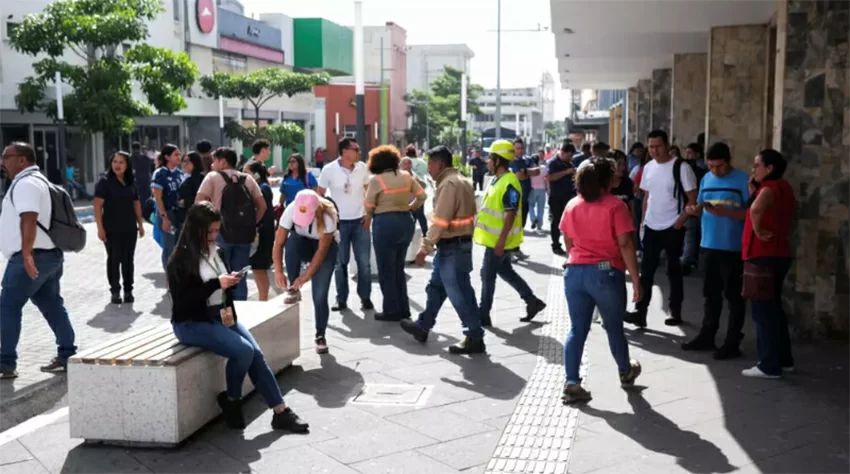
On July 17, 2026, a powerful 7.3-magnitude earthquake jolted the southern Pacific coast of Mexico near the Guatemala border, sending panic spreading across three countries and forcing thousands of residents to rush out of buildings for safety.
The U.S. Geological Survey (USGS) confirmed the quake’s epicenter was located roughly 48 kilometers off the coast of the small Mexican town Aquiles Serdan, at a shallow depth of 18 kilometers – a positioning that amplifies shaking felt across nearby populated areas. In the hours after the main tremor, Mexico’s national seismological institute recorded more than 30 aftershocks, with the strongest reaching a magnitude of 6.8, prolonging anxiety for local communities.
Strong shaking was reported across wide swathes of southern Mexico, including the states of Chiapas and Oaxaca, as well as neighboring Guatemala and El Salvador. In Tuxtla Gutierrez, the capital of Chiapas, high-rise structures swayed violently, sparking widespread panic. Araceli Sanchez, a local government employee who was working in a 15-story office building when the quake hit, described the experience as “terrifying.” She recalled that residents cried as they fled down emergency stairwells to evacuate, many still shaken by the unexpected intensity of the tremor.
In the immediate aftermath of the quake, the U.S. Tsunami Warning System issued a brief tsunami advisory for the Pacific coastlines of Mexico and Guatemala, but the warning was canceled within a short window after assessment confirmed no remaining tsunami risk.
Mexican President Claudia Sheinbaum held emergency coordination calls with the governors of the affected regions shortly after the quake, while Secretary of the Navy Raymundo Morales released an initial statement confirming no reports of serious damage had been recorded as of early reports. Even in Mexico City, which sits more than 800 kilometers from the epicenter and is still remembered for the devastating 1985 and 2017 earthquakes that killed thousands, some residents reported feeling light shaking. As a precautionary measure, several tall buildings in the capital were evacuated as a safety measure.
Across the border in Guatemala, multiple buildings in Guatemala City were cleared out, and classes were canceled in regions near the Mexican border. Many local residents described the sudden, intense shaking as triggering traumatic flashbacks to a pair of major quakes that hit Venezuela just weeks earlier. On June 24, back-to-back quakes of magnitude 7.2 and 7.5 struck Venezuela less than a minute apart, leaving extensive damage across Caracas and surrounding areas and triggering weeks of rescue and relief operations.
Geographically, Mexico and Central America sit along the boundary of multiple shifting tectonic plates, making the region one of the most seismically active zones on Earth. This geological reality means major quakes are a recurring risk for communities across the area.
As of the latest update, there are still no official reports of casualties or major damage to critical infrastructure. Inspection teams have already been deployed to the affected regions to survey for hidden structural damage, while emergency response services remain on standby to respond to any developing crises. Though the tsunami threat has passed, aftershocks continue to rumble through the region, keeping local populations on edge. Local authorities have urged residents to remain alert for additional tremors and to follow official guidance as the situation continues to develop.