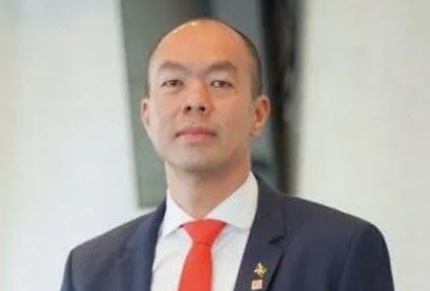
On a Saturday in early October 2026, a law enforcement operation targeting contraband in Guyana has escalated into a high-profile political defamation dispute, after a senior public figure launched legal action against the country’s main opposition leader over false social media claims. The operation, carried out by Guyana’s Customs Anti-Narcotics Unit, widely known as CANU, targeted a rented property at Windsor Estates on the East Bank Demerara, resulting in the seizure of undeclared alcohol and the arrest of three individuals. The property is owned by Ernesto Choo, a sitting member of the Police Service Commission (PSC), but CANU has explicitly stated that Choo is neither a target of the operation nor under any investigation related to the seizure. In an official statement released after the raid, CANU clarified that only one of the three people taken into custody was a tenant at the property, which Choo has leased out for more than three years. “One of the persons arrested stated that he rents the property from Mr. Ernesto Choo. Mr. Ernesto Choo was not the subject in this operation, and not the subject of any investigations of the unit,” the statement read. While no narcotics were recovered during the search, CANU confirmed that officers seized an undocumented shipment of uncustomed alcohol, with a well-placed source familiar with the operation confirming to Demerara Waves Online News that the haul totaled 30 cases of Johnny Walker whisky. Even after CANU’s official clarification, opposition leader Azruddin Mohamed, who heads the main opposition bloc We Invest in Nationhood (WIN), published a Facebook post falsely linking Choo to the contraband seizure. Choo’s legal representative, prominent attorney Sase Gunraj, has denounced the post as deliberate defamation. In a statement responding to the opposition leader’s comments, Gunraj emphasized that his client has not retained possession or control of the property since he rented it out more than three years ago. He described the claims made in Mohamed’s post as “false, malicious and defamatory,” adding that the misleading statements have caused severe, irreversible harm to Choo’s long-standing professional and public reputation. Following the publication of the post, Choo has formally instructed his legal team to move forward with a full defamation lawsuit against Mohamed, holding the opposition leader legally accountable for his damaging false statements. The incident has drawn public attention to the spread of misinformation through social media among Guyana’s political circles, even as law enforcement authorities moved quickly to correct misleading narratives about the routine contraband enforcement operation.
博客
-

DNL legt voorstellen voor bunkering en beheer natuurlijke hulpbronnen bij DNA
On October 3, Suriname’s political party De Nieuwe Leeuw (DNL) took a major step toward strengthening governance of the country’s natural resource revenues, formally submitting two landmark draft pieces of legislation to the National Assembly (DNA) aimed at curbing corruption, preventing tax avoidance, and shielding public income from political interference. DNL Chair Dharm Mungra personally handed over the draft bills to DNA President Ashwin Adhin, who will circulate the proposals to all sitting members of parliament; the Sovereign Wealth Fund bill was previously shared with Suriname President Jennifer Simons one week ahead of the formal submission.
The first proposal, the Bunkering and Fiscal Transparency Act, seeks to establish a comprehensive, standardized legal framework for the country’s growing bunkering sector, covering core areas from permitting to environmental protection to tax compliance. To crack down on artificial profit shifting that erodes tax revenues, the bill mandates ringfencing of income for each individual operating permit, preventing companies from offsetting profits with artificially generated losses across different operations. It also enshrines transfer pricing rules aligned with Organisation for Economic Co-operation and Development (OECD) global standards to block common tax avoidance schemes.
In line with global tax reform efforts, the draft incorporates the OECD’s Pillar Two rule, which requires a 15% minimum effective corporate tax rate for large multinational enterprises operating in Suriname. Mandatory customer due diligence checks and suspicious transaction reporting requirements are also included to bolster the country’s anti-money laundering and anti-corruption frameworks. For environmental governance, the bill introduces a ban on the discharge of untreated scrubber washwater from vessels and mandates that all operators hold valid Protection and Indemnity (P&I) insurance to cover potential environmental damages.
The second draft legislation, the Sovereign Wealth Fund Act, targets long-term management of natural resource revenues, addressing gaps that DNL argues exist in Suriname’s current Stabilization and Future Generations Fund (SSFS) legal framework. While the existing legislation includes basic safeguards, DNL emphasizes that it fails to block undue political influence over fund management, highlighting ongoing risks around political control over executive appointments and dismissals, unaddressed conflicts of interest, and limited enforceable oversight powers for the National Assembly, the Court of Audit, and the Advisory Board of the State Debt and Development Plan CLAD.
Without independent implementation and strict enforcement of governance rules, DNL argues that the current system leaves openings for corruption and nepotism that divert public wealth for private gain. The new draft builds in explicit “firewall” provisions designed to limit arbitrary political interference in fund operations. It also requires public reporting aligned with the Extractive Industries Transparency Initiative (EITI) global standards, and mandates that fund assets be invested in long-term sustainable assets that can generate steady income for future generations of Surinamese.
Speaking on the purpose of the two proposals, Mungra emphasized that Suriname must put in place strong legal foundations now to responsibly manage future natural resource revenues. “Our natural wealth is a blessing, but it also comes with profound responsibility,” Mungra stated. “Only through strict legislation, independent oversight, and transparent management can we ensure that today’s revenue is not lost to corruption or mismanagement, but instead becomes the solid foundation for the shared prosperity of future generations.”
-

Antigua and Barbuda to Import Container Loads of Streetlights Equipped With Security Cameras
The government of Antigua and Barbuda is advancing a multi-faceted initiative that combines public security upgrades and national infrastructure beautification, with a plan to import container shipments of smart streetlights fitted with integrated surveillance cameras for installation along the country’s primary road networks. Prime Minister Gaston Browne publicly revealed the proposal during an appearance on the *Browne and Browne Show* Saturday, where he laid out a sweeping slate of government projects focused on elevating community aesthetics, upgrading aging road infrastructure, and strengthening national public safety frameworks.
In his remarks, Browne confirmed that he has directed members of his Cabinet to evaluate the purchase of these smart streetlight systems, which feature remote operability that allows real-time surveillance footage to be accessed directly from mobile devices. The administration aims to move forward with importing the equipment in the near term, with Browne noting “we’re hoping that very shortly we can actually import a couple of containers [of] those lights and put them along the main roads as well.”
The integrated units serve a dual strategic purpose: they deliver enhanced nighttime illumination for road users while expanding the government’s national surveillance coverage. “Not only to provide lighting, but also to increase security in addition to the 220 cameras that we have installed already,” Browne explained, adding that the new streetlights are a core component of the administration’s broader crime-fighting strategy. The initiative will extend the country’s existing camera surveillance network by embedding monitoring technology directly into new public lighting infrastructure, eliminating the need for separate fixture installations.
Browne framed the streetlight proposal as one piece of a broader push to transform Antigua and Barbuda’s built and natural environment. He argued that road upgrade projects must be paired with complementary landscaping, improved lighting and other upgrades that boost both community aesthetics and public safety. “So as we improve the country’s network of roads, we also want to make sure that we concurrently beautify those roads by putting in some nice plants,” he said, with the camera-equipped streetlights forming a key part of that concurrent upgrade effort.
The prime minister also tied the holistic infrastructure initiative to his administration’s broader goal of building a cleaner, more orderly society. He stressed that Antigua and Barbuda cannot achieve its long-term ambition of becoming a “lifestyle superpower” as long as it grapples with persistent public blight issues including indiscriminate littering, abandoned derelict vehicles, deteriorating unmaintained buildings, and unregulated makeshift roadside vending stalls. “But generally speaking, when you have a more disciplined society, that society is more likely to progress at a faster rate than an indisciplined one,” Browne noted.
Alongside the streetlight proposal, Browne outlined a suite of parallel policy measures the government will advance simultaneously, including stiffer financial penalties and increased enforcement for littering violations, targeted action to remove abandoned derelict vehicles from public areas, and a crackdown on unauthorised, visually unappealing roadside vending operations. He added that the Attorney General has been tasked with developing a program that would allow incarcerated prisoners to support public works efforts by assisting with landscaping along major roadways and routine maintenance of public government buildings.
The new smart streetlights are also slated to be incorporated into the planned redevelopment and beautification of the high-traffic corridor that runs from the Point and St. John’s waterfront district to Fort James, a popular tourist destination. Speaking specifically about that project, Browne reaffirmed that upgraded lighting and surveillance would be central to the revamp: “We’re going to beautify that area, put in some nice plants and so on, nice street lights with cameras so that visitors who walk the streets going out to Fort James … are in a secured environment.”
During his announcement, Browne did not release key details about the project, including the number of camera-equipped streetlights planned for each import shipment, the total projected cost of the initiative, the identity of the equipment supplier, or a precise arrival date for the first shipment. He did, however, reaffirm the administration’s near-term goal of bringing in “a couple of containers” of the new fixtures to deploy across major roadways as part of the wider security and infrastructure improvement program.
-
Eastern Caribbean fishers explore Belize’s lobster industry
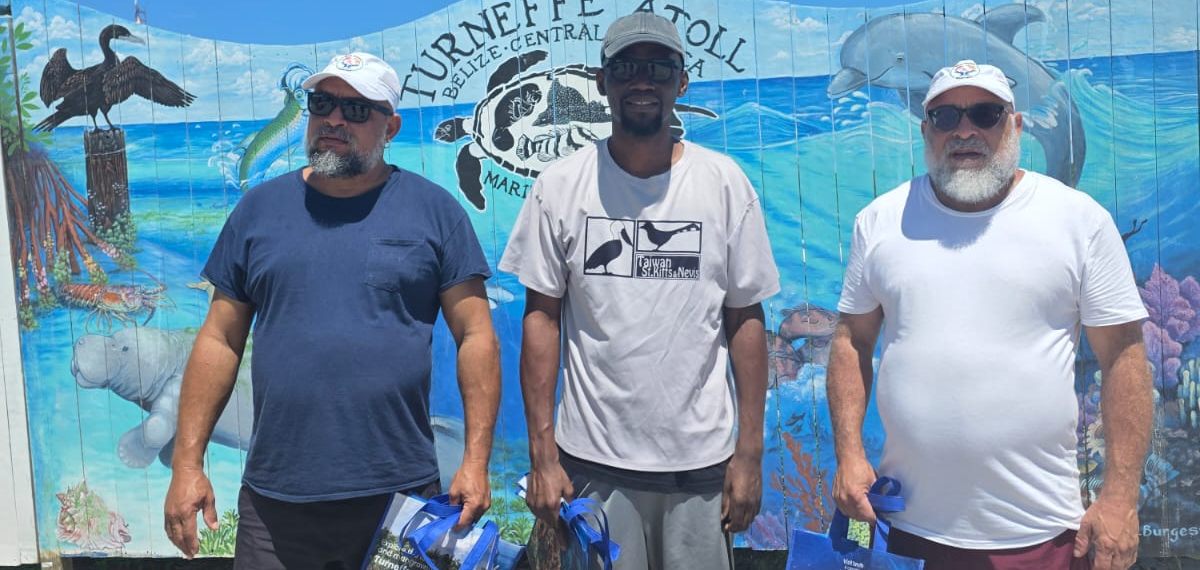
A five-day knowledge-sharing and trade-focused exchange hosted in Belize has opened new doors for expanded seafood commerce across the Caribbean, after a small delegation of fishers and seafood industry representatives from the Eastern Caribbean wrapped up an immersive study tour of Belize’s well-regarded lobster sector. Held from September 15 to 19, 2026, the trip brought three industry professionals — Jack Spencer and Marcus Spencer from St. Kitts and Nevis, and Calvin Josiah from St. Martin — to Belize to examine the country’s fisheries management systems and explore untapped trade opportunities for fish and fish products between Belize and Eastern Caribbean markets. The initiative was jointly coordinated by the Caribbean Regional Fisheries Mechanism (CRFM) and the Caribbean Network of Fisherfolk Organisations (CNFO), with wide-ranging support from Belizean government bodies, local fishing cooperatives, environmental conservation groups, and independent community fishers. The onshore portion of the program gave delegates hands-on access to three major fishing cooperative entities across Belize: the Belize Fishermen Cooperative Association, the National Fishermen Producers Cooperative Society, and the Northern Fishermen Cooperative Society. During these visits, participants observed every step of the lobster supply chain, from initial catch reception and post-harvest handling to processing and final distribution preparation for domestic and international markets. The schedule also included formal working sessions with leaders from Belize’s Ministry of the Blue Economy and the Belize Fisheries Department. Discussions covered critical industry topics including sustainable lobster fishery growth, regulatory frameworks, resource management protocols, cross-border trade compliance standards, and enforcement practices for industry regulations. To give delegates a first-hand look at inshore fishing operations and sustainable marine resource management, the tour moved offshore for a field visit to Turneffe Atoll, organized by the Turneffe Atoll Sustainability Association (TASA) with additional backing from the Belize Fisheries Department, CRFM, and local fisher Jason Young. At Young’s active lobster fishing camp on the atoll, visiting industry stakeholders learned about lobster trap design and deployment strategies, pre-fishing season preparation protocols, and the on-the-ground challenges that shape small-scale commercial fishing operations. The offshore tour also included stops at two co-managed conservation sites within the Turneffe Atoll Marine Reserve: Caye Bokel and Calabash Caye. Throughout the experience, participants emphasized a key takeaway: that collaborative partnerships between commercial fishers, government regulators, and non-profit conservation organizations are foundational to effective, long-term management of finite fishery resources. Marcus Spencer, one of the delegates from St. Kitts and Nevis, shared that he left the exchange deeply impressed by Belize’s approach to the sector. “The fisheries in Belize are well managed, and I would love for other fishers in the Caribbean to have similar experiences,” he told organizers. Calvin Josiah of St. Martin echoed enthusiasm for the potential of expanded bilateral trade, while also noting that solving gaps in regional transportation and logistics infrastructure will be critical to converting preliminary commercial interest into long-term, sustainable trade flows. By the end of the tour, the full delegation expressed collective hope that the exchange would be the first step toward deeper, long-term collaborative relationships between Belize’s fisheries sector and stakeholders in St. Kitts and Nevis, St. Martin, and the broader Caribbean region. In a post-visit public statement, the CRFM underscored the value of this people-centered exchange model, noting that direct peer-to-peer engagement between fishers, cooperative leaders, and business owners helps strengthen regional fisheries enterprises, unlock new opportunities for value-added seafood production, and connect small-scale producers to expanded markets across the entire Caribbean basin.
-
PM Signals Tougher Action Against Littering and Unsightly Vending in Antigua and Barbuda
Antigua and Barbuda’s ruling administration is gearing up to roll out stricter enforcement measures targeting three persistent public nuisances: unregulated littering, unapproved unsightly roadside vending, and abandoned derelict vehicles. Prime Minister Gaston Browne laid out these plans during an appearance on the *Browne and Browne Show* Saturday, framing the initiative as a central piece of the government’s broader goal to leave the nation with a more prosperous, healthy, and socially refined population when its term concludes.
Browne connected the upcoming crackdown on public space violations to the administration’s overarching governing philosophy: using updated legislation and rigorous enforcement to tackle deep-rooted social challenges. He pointed to the most recent parliamentary sitting, where legislators approved harsher sentencing guidelines for firearms-related and sexual offenses, noting the government would bring the same level of resolve to address quality-of-life issues across the country. “We had a very successful parliamentary sitting on Monday in which we addressed the issue of sentencing for firearm offenses as well as sexual offenses,” Browne told listeners. “We will be tackling some other issues pretty aggressively going forward, and I’m asking for the cooperation of our people.”
Outlining the administration’s legacy vision, Browne emphasized that the government’s work extends far beyond short-term political gain. “We want to leave this country significantly better than we inherited it,” he said. “The people must be wealthier. They must be healthier. They must have a better environment in which to live. And we must have better cultured people. That is what we have determined. This is where exactly we’re taking Antigua and Barbuda. And it’s not about political preservation in office.” He added that officials are prepared to implement measures some residents may view as strict if they are necessary to shift harmful public behaviors, noting “if we have to make the tough decisions in order to drag certain people forward, we’re going to do so.”
One of the flagship components of the new campaign is a crackdown on indiscriminate littering, a longstanding target of the government’s efforts to revitalize community and public spaces. The prime minister confirmed that the administration will not only raise financial penalties for littering but also prioritize consistent on-the-ground enforcement, a step that builds on a September Cabinet decision to adopt a formal zero-tolerance policy for littering and illegal dumping. At the time of that decision, the Cabinet announced plans to raise the maximum fine for littering to EC$5,000 through legislative amendment, with the initiative also covering illegal dumping, abandoned vehicles, and unapproved use of roadside, beach, and other public lands. Browne’s recent comments make clear that enforcement will play an equal role to higher penalties, rather than the government relying on fines alone to drive behavior change.
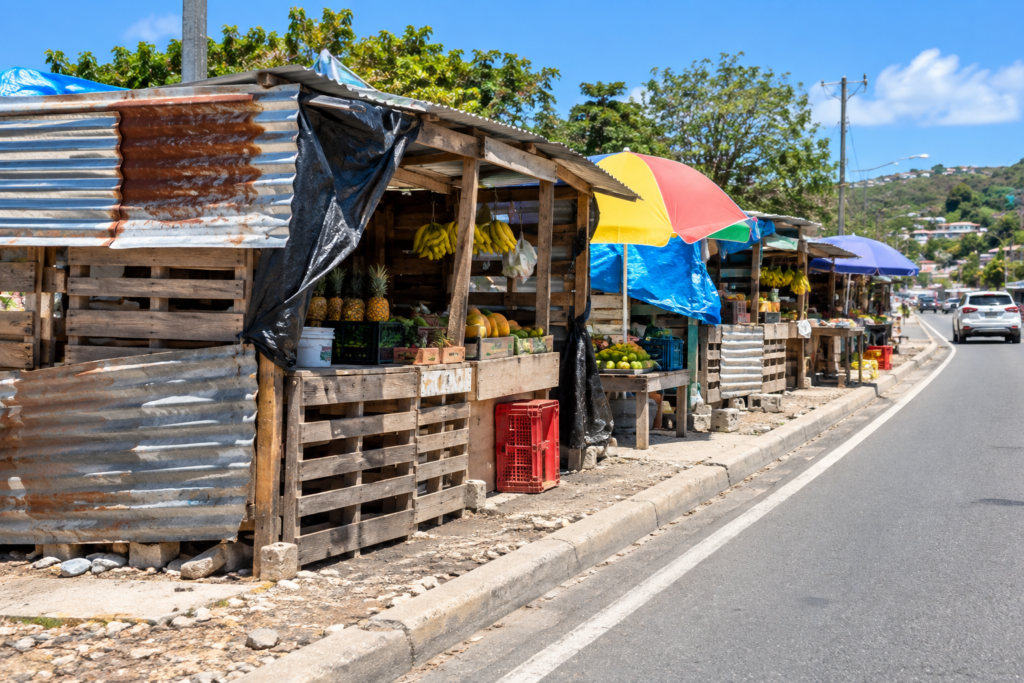
Unauthorised makeshift roadside vending will also face aggressive regulatory action, Browne confirmed, though he stressed that the goal is not to cut off income for local vendors. “Now, we do not want to put anybody out of earning an income,” he explained. Instead, the administration objects to unauthorised makeshift shacks constructed from discarded materials along roadways that erode the nation’s visual appeal. “This idea that individuals can just vend indiscriminately and to use pallets and other, you know, broken pieces of building material, galvanize and so on, and knock up these little shacks — that is not the image that we want Antigua to have, especially when our guests come here,” Browne said. This is not the first government crackdown on unauthorised vending; officials have previously removed unapproved structures from public beaches while working to develop purpose-built vending facilities for local vendors.
Browne highlighted that the condition of public spaces is far from a purely cosmetic issue, noting that poor upkeep can directly shape how potential investors and international visitors perceive Antigua and Barbuda. He shared a recent firsthand experience with a prospective investor evaluating the Jolly Beach site for a proposed high-end Ritz-Carlton development. While the investor praised the government’s ambition to position the country as a luxury tourism destination, they questioned the state of roadside areas en route to the beach, pointing out piles of garbage and abandoned vehicles that clashed with the nation’s luxury tourism goals. Browne said he shared the investor’s criticism, acknowledging that even as the government continues demolishing derelict properties and removing abandoned vehicles, new abandoned units are continuously left along roadways to replace those that are cleared.
To address the ongoing derelict vehicle problem, the government plans a targeted legislative change to recover removal costs from vehicle owners. Browne pointed specifically to reports of vehicles being left for repairs along the newly constructed concrete road between Jennings and Hermitage, noting that owners will first receive a formal request to remove the vehicles. If owners fail to comply, the government will seize and remove the vehicles, and the cost of removal will be attached to the owner’s vehicle or personal driver’s licence. Under the new system, owners will be required to settle all outstanding removal costs before they can renew any relevant licences.
Browne acknowledged that some residents may label these strict policies draconian, but argued they are an unavoidable necessity to secure broad public compliance. “People may consider these policies draconian,” he said. “They’re necessary to ensure compliance.” He went on to urge all residents to reflect on what they want Antigua and Barbuda to look like over the next 10 years, framing the campaign as a collective investment in the nation’s future.
Unlike standalone clean-up efforts, Browne positioned the enforcement campaign as a core component of the government’s whole-of-government national development strategy. His vision of a population that is wealthier, healthier, more culturally refined, and supported by a high-quality built environment follows major government investments in social infrastructure, including the new National Performing Arts Centre. Browne argued that economic growth cannot be separated from improvements to public spaces, social standards, and cultural development, and that government intervention is justified in areas where voluntary compliance has consistently failed. For the administration, cleaner, more well-maintained public spaces are intrinsically linked to stronger tourism growth, higher investment, and improved quality of life for all residents. The September Cabinet policy already paired stricter enforcement with public education and community-led clean-up initiatives, reflecting a multi-pronged approach to addressing the issue. For Browne, these measures are ultimately about building a better legacy for all Antigua and Barbuda residents, a goal that outweighs short-term political considerations.
-

Cuba National Football Team Draws against Saint Kitts and Nevis – Radio Habana Cuba
In a high-stakes Group B matchup of the 2026 CONCACAF Nations League that delivered dramatic twists until the final whistle, Cuba’s men’s national football team played out a 3-3 draw against Saint Kitts and Nevis at Trinidad’s Hasely Crawford Stadium on October 3.
The Cuban side, nicknamed La Tricolor, got off to a promising start, dictating possession and creating the first dangerous opportunities of the game. But despite their early territorial control, it was Saint Kitts and Nevis that broke the deadlock in the 26th minute, when forward Kyle Kelly converted a clinical finish to put his side ahead.
The one-goal deficit barely lasted three minutes for Cuba. Just one attacking sequence after falling behind, Yunior Yuri Pérez leveled the scoreline in the 29th minute, restoring parity for the Antillean side. Buoyed by the quick equalizer, Cuba seized full control of the match’s tempo, and 10 minutes before the halftime break, Diego Catasus found the back of the net to put La Tricolor up 2-1 going into the locker room.
Cuba extended their advantage just after halftime, with Yunior Yuri Pérez notching his second goal of the contest. The goal highlighted Cuba’s effective game plan: quick one- and two-touch combination play that exploited the gaps left behind Saint Kitts and Nevis’ high-pushing defense, which had been pushed forward in a desperate attempt to claw back the equalizer. At 3-1 up, Cuba looked set to lock in all three points, and even had chances to add a fourth to put the game out of reach.
However, uncharacteristic defensive lapses changed the course of the match in the final 10 minutes. Cuba conceded two late goals from turnovers: Tyreece Simpson pulled one back for Saint Kitts and Nevis in the 82nd minute, and Tiquanny Williams netted the equalizer just six minutes later in the 88th, stunning the Cuban side.
In stoppage time, Cuba nearly secured a dramatic late winner of their own. Luis Javier Paradela beat the Saint Kitts and Nevis goalkeeper but saw his goal-bound shot cannon off the crossbar, leaving the score tied at full time.
Off the pitch, persistent light rain throughout the match soaked the playing surface, which negatively impacted Cuba’s ball-handling ability — a key strength that has helped the side outperform other Group C opponents. The draw leaves both teams with one point apiece from this Nations League fixture, keeping Group C’s qualification race wide open heading into the next round of matches.
-
Former Deluxe Cinema Bought For $6 Million Now Worth About $25 Million, PM Says
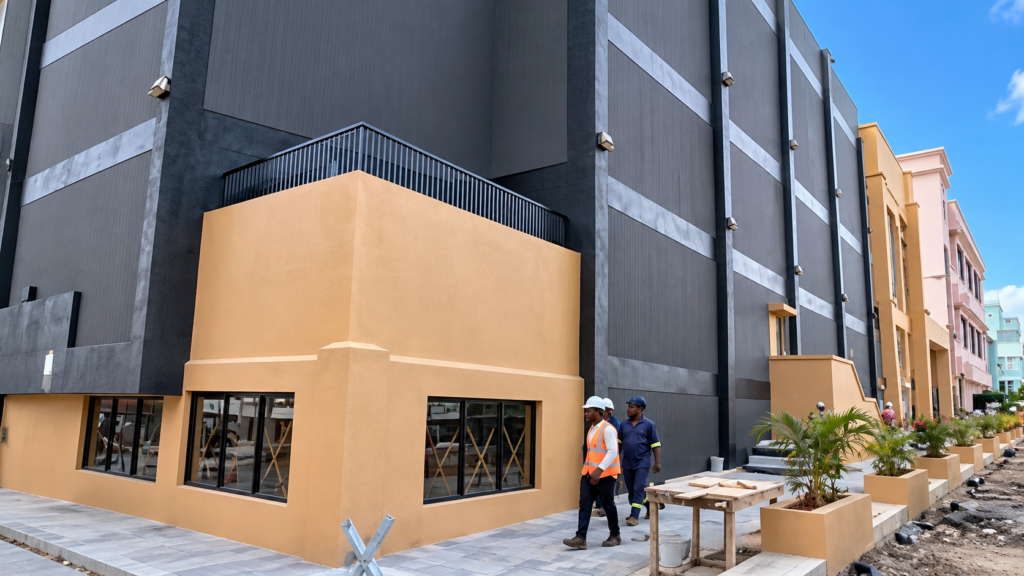
When a former Deluxe Cinema location was purchased for $6 million several years ago, few could have predicted the dramatic surge in its property value that would follow. Now, the country’s top leader says the asset’s market worth has climbed to roughly $25 million — a more than fourfold increase that has sparked new discussions about urban real estate trends and public asset management.
The Prime Minister, speaking during a recent parliamentary session addressing urban development projects, confirmed the updated valuation in response to questions from opposition lawmakers about the government’s acquisition and redevelopment plans for the site. The property, which has sat dormant since the Deluxe Cinema chain closed its doors at this location a decade ago, was acquired by the current government as part of a broader initiative to revitalize a blighted downtown corridor.
Real estate analysts note that the sharp appreciation reflects broader shifts in the downtown housing and commercial market, where demand for mixed-use development space has pushed property values upward across the board in recent years. The original $6 million purchase price was already considered below market value at the time, due to the previous owner’s desire to offload the abandoned property quickly to avoid ongoing maintenance costs.
The Prime Minister’s confirmation of the $25 million valuation has reignited debate over whether the government’s stewardship of the asset has delivered strong returns for public funds, or if the rapid appreciation signals missed opportunities for earlier redevelopment. Proponents of the government’s handling point out that holding the property while the market rebounded has positioned it to generate significant public benefit through a future mixed-use project that will include affordable housing and small business retail space. Critics, however, argue that the multi-year delay in moving forward with redevelopment has held back broader progress on downtown revitalization.
Moving forward, the government is expected to release a detailed timeline for the redevelopment of the site in the coming quarter, with the updated valuation expected to inform new negotiations with private development partners. Industry observers say that the cinema property’s valuation surge is a clear example of how strategic public land acquisition can yield strong returns when timed correctly with broader market cycles.
-

60+ Coconut Farmers Trained to Spot and Stop Crop Threats. Your District Is Next?
In a targeted effort to protect Belize’s critical coconut industry, more than 60 small-scale producers from the Belize and Orange Walk Districts have completed hands-on training focused on identifying and mitigating destructive pests and diseases that threaten coconut yields. The successful pilot workshops, held in September 2026, have paved the way for a national expansion of the program, with sessions scheduled to reach coconut farmers across all remaining districts of the country.
Organized by Belize’s Ministry of Agriculture, Food Security and New Growth Industries, each two-day workshop welcomed more than 30 participants, intentionally including women producers and young emerging farmers to ensure inclusive capacity building across the sector. The training was led by a senior coconut pest and disease specialist from the Food and Agriculture Organization (FAO), with technical and logistical support provided by the ministry’s Fruit Tree Program, Research Unit, and Extension Unit.
Unlike traditional classroom-only training, the program combined theoretical lectures on pest lifecycle identification and disease symptom recognition with immersive on-site field exercises. This blended approach allowed farmers to practice spotting threats directly on living coconut plants, giving them practical, actionable skills they can apply immediately on their own farms.
The national training initiative forms part of FAO’s global “One Country One Priority Product” program, an agenda designed to strengthen sustainable, inclusive value chains for high-potential agricultural commodities selected by each participating nation. For Belize, coconut was chosen as the priority product due to its deep cultural roots, significant economic contribution to rural livelihoods, and growing export potential.
Following the positive outcomes of the pilot workshops in the two northern districts, the Ministry of Agriculture is now finalizing logistics and scheduling for the remaining districts. Coconut producers across Belize who are interested in participating in the upcoming training sessions can register for a spot through their local district agriculture office.
-
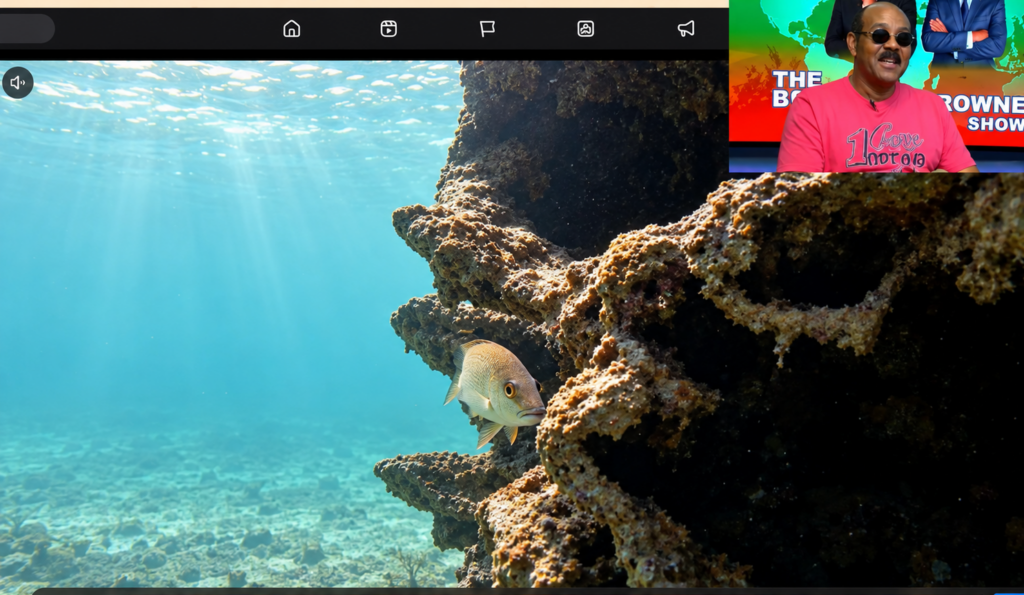
PM Browne Says Using Dredge Spoil at Peace Beach Saved Government Millions
Antigua and Barbuda’s Prime Minister Gaston Browne is facing mounting public scrutiny over a decision by his administration to deposit dredged material from St. John’s Harbour maintenance work along the Peace Beach coastline adjacent to Barnacle Point, property that has been privately owned by Browne’s son for nearly a decade. Speaking during his regular weekly broadcast, the *Browne and Browne Show*, on Saturday, the prime forcefully pushed back against accusations of nepotism and improper preferential treatment, framing the policy choice as a fiscally responsible move that saved public coffers millions of dollars in avoidable waste disposal costs.
For generations, dredge spoil generated from routine harbour upkeep in St. John’s was loaded onto vessels and transported dozens of miles offshore for open-ocean dumping, a logistically complex process that Browne confirmed came with a seven-figure price tag for the government. When the most recent dredging project got underway, the proximity of his son’s Barnacle Point parcel to the harbour work zone created a unique low-cost alternative, the prime minister explained. Instead of incurring massive transport costs, crews simply ran a slurry pipeline directly from the dredging site to the empty coastline, pumping the sand and sediment onshore in a single step that cut disposal costs by millions, according to Browne.
Critics have pointed to the conflict of interest inherent in placing public project waste that doubles as valuable land-building material on private property owned by the prime minister’s close family. But Browne rejected these claims, arguing that the dredge spoil, which would otherwise be discarded as worthless waste, was put to productive public use. He emphasized that the 300-foot-long beach created by the deposited material remains open to the public as a public recreational space, even as the adjoining one-acre plot of land behind it remains in private hands. He added that his family has invested its own private capital and heavy equipment – including excavators, backhoes, bulldozers and trucks – to grade, level and landscape the site, planting more than 40 coconut trees and a variety of native flowering plants and greenery to restore the coastal habitat. Browne also noted that his administration has allocated dredge spoil to other public entities and private landowners in the past, meaning his son’s case was not an exception to existing policy.
Beyond the controversial beach expansion, Browne used Saturday’s broadcast to share an early, promising update on a companion environmental project: a new artificial reef installed just offshore from Peace Beach, the first purpose-built artificial reef deployed in Antigua and the second across the twin-island nation, following an earlier installation in Barbuda. Browne told listeners that marine life began colonizing the 24 artificial reef modules less than 24 hours after they were lowered into the seabed, with underwater footage already showing dozens of fish species using the concrete structures as shelter and habitat.
The project was developed with technical guidance from marine scientist Dr. Deborah Brosnan, with ongoing oversight from Antigua and Barbuda’s Department of Environment. According to Browne, coral fragments will be planted on the modules in the coming months to further transform the site into a functional artificial coral reef ecosystem. The government also plans to deploy artificial intelligence-powered monitoring technology to track marine life activity around the reef, documenting species migration patterns, movement and breeding behaviour to measure the project’s long-term ecological impact.
Browne issued a plea to recreational users and local fishers to avoid damaging the reef structures with spearguns or fishing gear that could dislodge the modules. He argued that the initiative carries benefits that extend far beyond recreational diving and coastal conservation, framing expanded artificial reef networks as a key component of the country’s long-term food security strategy. By providing additional breeding and nursery habitat for commercially important species including snapper, lobster and octopus, Browne predicted the reefs will eventually boost local fish populations and increase catch volumes for small-scale domestic fishers.Buoyed by the early success of the Peace Beach reef, Browne announced plans to expand the artificial reef program across Antigua and Barbuda, with Fort James Beach and Ffryes Beach identified as the next high-priority locations for new installations. Long Bay, which already supports a healthy natural reef system, is considered a lower priority for new construction, he noted. The prime minister said he will add the expansion proposal to the Cabinet agenda within the next several weeks to secure budget allocation for additional projects, making artificial reef expansion a core pillar of the government’s broader coastal management and environmental protection strategy. While long-term monitoring will be required to confirm whether the reefs deliver measurable increases in fish populations and catches, Browne said the rapid colonization of the Peace Beach reef by marine life is an encouraging early indicator that the model works, and showcases how waste material from public infrastructure projects can be repurposed to deliver ecological and economic value.
-

Na tien jaar productie heeft Merian-mijn nog zicht tot 2042
A decade after launching commercial gold extraction operations at its Merian mine in Suriname, Newmont Suriname, a subsidiary of global gold mining giant Newmont Corporation, is preparing for decades of further activity, with clear pathways to expand its production footprint in the South American nation.
The company marked the 10-year anniversary of commercial production at the Merian site on a Friday, with senior company leaders and Suriname’s top government officials in attendance to celebrate the milestone and outline the project’s future. Since full operations kicked off in 2016, the Merian mine has produced 4 million ounces of gold, generating approximately $6.6 billion in total cumulative revenue over the period, according to Shirley Sowma-Sumter, External Director and Country Manager of Newmont Suriname.
Of that total revenue, Newmont calculations show that $4.74 billion, equal to 73% of all revenue generated over the 10-year window, has been directly injected into Suriname’s domestic economy through local spending, procurement, wages, and community investments. Currently, the operation runs two active open pits—Merian 1 and Merian 2—and company leaders have confirmed that geological assessments have identified viable opportunities to expand mining activities at the site in coming years.
Suriname President Jennifer Simons, who was directly involved in the original approval of the Merian project a decade ago during her tenure as Speaker of the National Assembly, told attendees at the anniversary celebration that the mine’s planned long-term operation brings much-needed economic stability to the country. But she emphasized that growth in the gold mining sector must deliver shared benefits rather than come at the expense of Suriname’s other key economic industries, a position confirmed by Suriname’s Communication Service.
A core priority moving forward, Simons stressed, must be ensuring that Indigenous and local communities living near the Merian mine and other mining projects across the country directly share in the economic gains from resource extraction. “Local communities must always benefit from developments that take place on their land and in their backyards,” the president stated. She added that strengthening and better regulating Suriname’s gold sector is critical to ensuring it contributes to long-term, sustainable national development that lifts all segments of the population.
Dave Meador, Newmont Corporation’s Managing Director for the Americas, echoed the president’s call for inclusive, sustainable growth, noting that the Merian mine’s success should not be measured solely by total gold output. “Our legacy here will be defined by the opportunities we create for Surinamese businesses and workers, the investments we make in local communities, and the positive long-term impact we leave behind,” Meador said.
Looking ahead, Newmont has committed to centering three core priorities for its Suriname operations in the coming years: upholding rigorous workplace safety standards, deepening partnerships with local businesses and community groups, and building long-term, sustainable value for both the company and Suriname as a whole. During President Simons’ visit to the mine site, she received a full tour of the operation, receiving detailed briefings on active extraction processes and gold refining procedures. She was joined on the tour by Minister of Natural Resources David Abiamofo, Chief of Staff Sergio Akiemboto from the President’s Cabinet, representatives of Suriname’s Traditional Authority, and Rudolf Elias, president-commissioner of Suriname’s state-owned oil company Staatsolie.