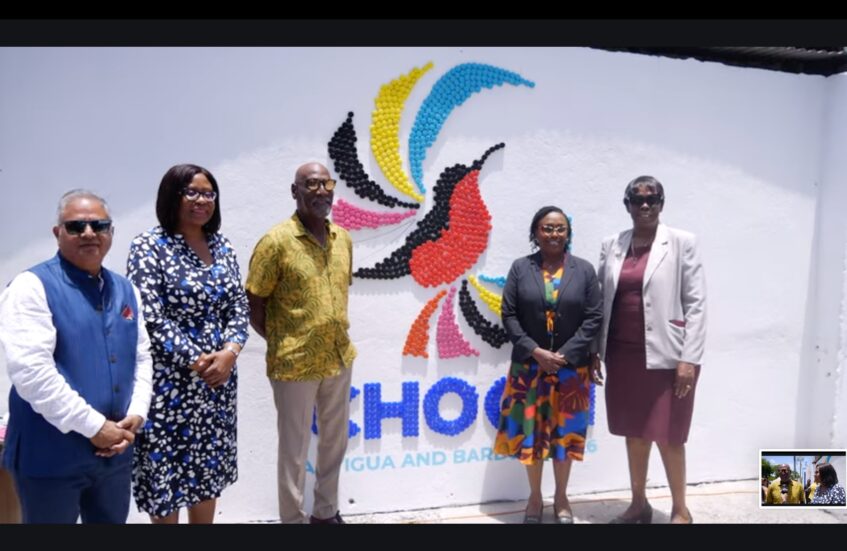
Antigua and Barbuda has taken a major step forward in its preparations for the 2026 Commonwealth Heads of Government Meeting (CHOGM) with the public unveiling of a striking, eco-friendly mural crafted entirely from recycled plastic bottle caps. This creative community project, which features portraits of the nation’s governor-general Sir Rodney Williams and beloved Antiguan cricket icon Sir Vivian Richards, weaves together environmental advocacy, national pride, and public engagement as the Caribbean nation gears up for the landmark international summit. More than just a public art installation, the initiative is designed to embed sustainable development goals into the lead-up to the conference, driving nationwide conversations about environmental stewardship and encouraging widespread community participation in summit preparation efforts. Government officials involved in the project emphasized that the mural’s sustainable construction is no coincidence—it is a tangible public demonstration of Antigua and Barbuda’s long-standing commitment to environmental responsibility, particularly as the country prepares to make history as the smallest sovereign nation ever to host the quadrennial Commonwealth gathering. For the small island nation, which is disproportionately vulnerable to the impacts of climate change and sea-level rise, the project also serves as a quiet, powerful reminder of its climate advocacy priorities on the global stage ahead of the high-profile summit.
博客
-
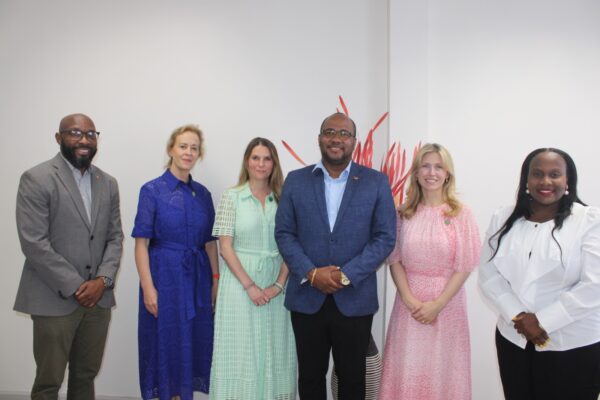
Minister Turner Holds Talks on Improving Sewage Systems and Protecting Coastlines
As Antigua and Barbuda makes early preparations to host the 2026 Commonwealth Heads of Government Meeting (CHOGM), senior government official Minister Rawdon Turner has held high-level strategic discussions with the Sustainable Markets Initiative (SMI) to lay the groundwork for targeted progress on the country’s most pressing national development goals. The meeting, which brought together SMI chief executive Jennifer Jordan-Saifi and her communications team alongside Minister Turner, centered on aligning international support with Antigua and Barbuda’s long-term resilience and inclusive growth agendas.
At the top of the government’s priority list is the urgent modernization of St. John’s aging sewage treatment infrastructure, a long-unresolved challenge that poses growing risks to the capital’s development trajectory, public health outcomes, and surrounding ecosystems. Outlining the administration’s vision for a future-proof, sustainable urban landscape, Turner emphasized that upgrading these outdated systems is non-negotiable for unlocking continued growth in the capital while safeguarding both community well-being and the natural environment.
Inclusivity emerged as another core focus of the talks. Minister Turner highlighted the government’s goal to transform St. John’s into a universally accessible city for people living with disabilities, outlining plans to build connected, mobility-friendly urban corridors and upgrade existing public infrastructure. To turn this vision into actionable progress, he formally requested SMI’s technical guidance to help the government adapt and implement international best practices that will boost mobility, expand social inclusion, and raise quality of life for both local residents and the tourists that drive a key segment of the national economy.
Climate resilience and environmental stewardship, long critical priorities for the low-lying island nation, also dominated the agenda. Minister Turner drew attention to the accelerating threat of coastal erosion and widespread beach degradation across Antigua and Barbuda, two interconnected challenges that put the country’s critical tourism industry and natural heritage at severe risk. To address this, he asked SMI to provide specialized consultancy support to develop evidence-based, practical strategies that can protect coastlines and preserve one of the country’s most economically and ecologically valuable natural assets.
Following the productive discussions, SMI CEO Jordan-Saifi welcomed the opportunity to build a formal partnership with the government of Antigua and Barbuda. She confirmed the organization’s openness to exploring all viable avenues to deliver tangible, meaningful support aligned with the priorities laid out by Turner. Moving forward, SMI will conduct a detailed assessment of each priority area, then work to mobilize tailored support through one of several potential channels: grant funding, concessional financing, access to specialized technical expertise, or brokering targeted strategic partnerships with other global stakeholders.
The high-level meeting underscores the Antigua and Barbuda government’s proactive commitment to leveraging international collaboration to solve long-standing national development challenges, as the country gears up to welcome heads of state and global leaders from across the Commonwealth for the 2026 CHOGM summit.
-
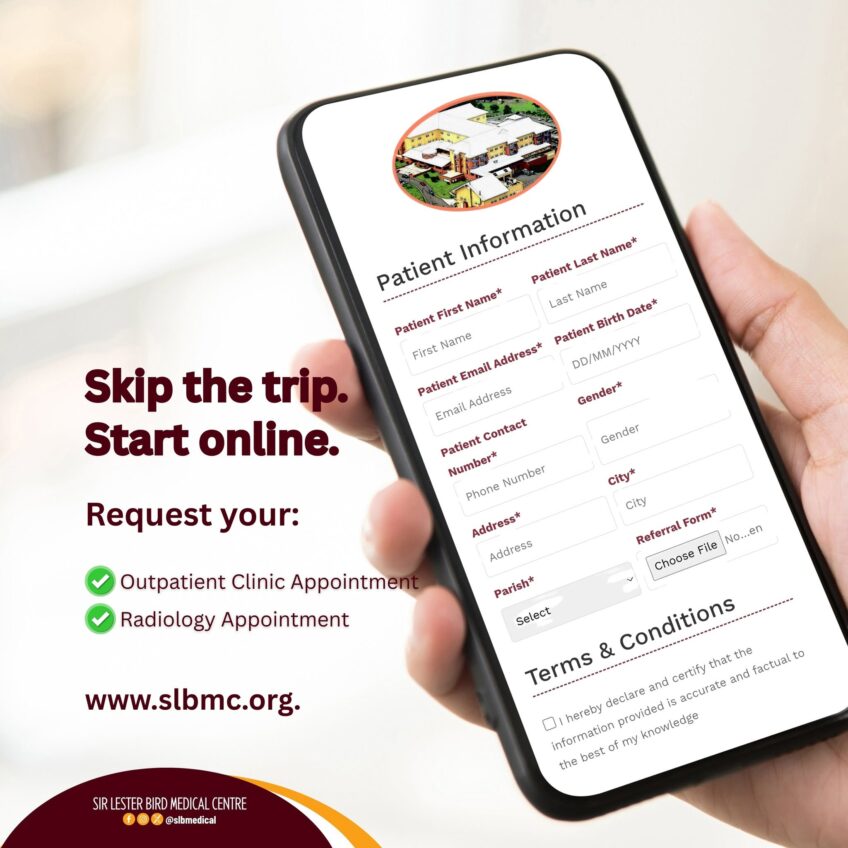
Patients Can Now Request Some Hospital Appointments Online
The Sir Lester Bird Medical Centre (SLBMC) has recently issued a public call encouraging all patients to shift to its new digital appointment request platform for both outpatient clinical visits and radiology services, marking a key step in modernizing the facility’s patient experience.
Unlike traditional booking processes that require patients to travel to the medical center in person to reserve a time slot, the new online system removes this geographic and logistical barrier entirely. Patients can submit their appointment requests at any point that fits their schedule, as the platform operates around the clock, 24 hours a day, seven days a week. This flexibility caters to working professionals, caregivers, and patients with mobility limitations who may struggle to visit the hospital during standard operating hours for non-urgent booking.
After a patient submits an online request, the hospital’s administrative care team will review the submission and reach out directly to the patient to finalize and confirm all appointment details, including date, time, and any pre-appointment preparations patients need to complete ahead of their visit.
Hospital administrators explained that the rollout of this digital booking tool is part of the facility’s broader effort to upgrade patient access to care. By moving routine appointment requests online, the center aims to cut down on on-site crowding, reduce wait times for in-person visitors, and streamline the entire care navigation process, ultimately making essential healthcare services more convenient and accessible for the communities it serves.
-

Ministry of Sports Closes Offices, Staff to Work Remotely Until Further Notice
In an unexpected official notice released Tuesday, June 9, the top leader of Jamaica’s Ministry of Sports has ordered an immediate temporary closure of the ministry’s central office facilities, with all employees transitioning to remote work arrangements that will remain in effect until the government issues new guidance. The public announcement was formally signed by Heather Samuel-Daley, the sitting Director of Sports. “Please be advised that the Ministry of Sports is currently closed,” the official notification read, confirming that all non-essential and administrative personnel would carry out their job duties off-site for the foreseeable future. Strikingly, senior ministry officials did not include any public explanation for the sudden office shutdown, nor did they offer any preliminary timeline for when staff might be allowed to return to in-person work at the main ministry campus. In a follow-up statement to the press, administrative representatives added that additional updates will be shared with the public and stakeholders promptly as new details are finalized. The ministry also extended a formal apology for any disruptions or inconveniences the sudden shift may cause for community members, sports organizations, and other groups seeking in-person services, while expressing gratitude for the public’s patience, understanding, and ongoing cooperation amid the unanticipated change.
-
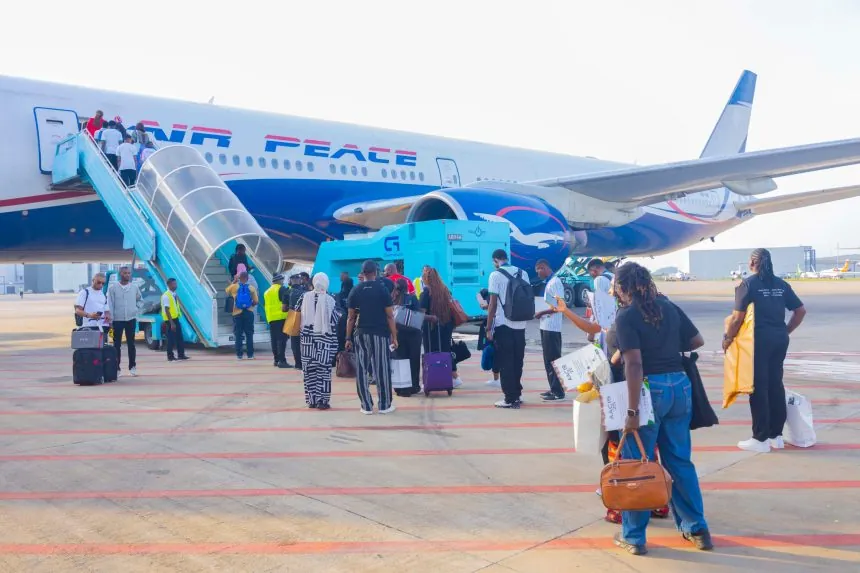
Air Peace Continues To Marker Antigua and Barbuda to Nigerian Travelers Despite set back
Against the backdrop of an evolving global aviation landscape marked by post-pandemic recovery hurdles and fluctuating travel demand, Nigeria’s largest independent carrier Air Peace has announced it will continue its marketing push to position Antigua and Barbuda as a top tropical getaway for Nigerian travelers, even after facing unforeseen operational setbacks in the route’s launch phase.
The airline first unveiled plans to connect Nigeria directly to the Caribbean twin-island nation in 2022, a move designed to tap into growing demand among West African travelers for leisure and visa-free travel options, as Antigua and Barbuda offers visa-on-arrival access to Nigerian passport holders. The partnership also formed part of Antigua and Barbuda’s broader tourism strategy to diversify its source markets beyond traditional North American and European visitors, opening up a new, fast-growing region for visitor arrivals.
While the carrier encountered temporary disruptions including delayed route certification, adjusted scheduling, and supply chain bottlenecks that pushed back the full launch of regular commercial flights, Air Peace’s leadership reaffirmed its long-term commitment to the route. In a recent statement shared with industry stakeholders, the airline noted that ongoing demand signals from Nigerian travelers have strengthened its resolve to build out this connection. Many Nigerian leisure travelers have sought alternative warm-weather destinations in recent years, shifting away from more traditional European routes that often come with stricter visa requirements and higher travel costs.
For Antigua and Barbuda’s tourism authority, the continued collaboration with Air Peace aligns with its 2030 tourism development goal to boost annual visitor arrivals by 25% and expand economic opportunities in the island’s hospitality sector. Industry analysts note that a successful direct air link could unlock mutual economic benefits: for the airline, it opens up a niche for long-haul leisure travel that has been underserved by major global carriers, while for the Caribbean nation, it brings in a new demographic of high-potential travelers. As of the latest update, both parties are working through the remaining regulatory and operational details to resume progress on the route, with full service expected to launch in the coming 12 months.
-
OPINION: Leadership That Empowers: Advancing Youth and Women’s Participation
For any evolving nation, the dual pillars of seasoned institutional wisdom and fresh, diverse representation form the backbone of sustainable progress. Antigua and Barbuda stands as a testament to this truth, having long reaped the rewards of dedicated service from veteran leaders who have steered the country through decades of growth, upheaval, and systemic transformation. Across party lines, these senior statespeople have built and strengthened the nation’s democratic institutions, shaped its positive regional and international reputation, and continue to contribute critical insights that anchor national development. Their decades of accumulated expertise in policy design, legislative drafting, diplomacy, public administration, and governance remain an irreplaceable national asset.
There is no denying the foundational value of experience, institutional memory, and policy continuity. No country can navigate the complexities of 21st-century national and global challenges effectively without leaders who understand its unique history, have learned from past mistakes and triumphs, and carry the practical know-how to guide decision-making. The hard-won wisdom of long-serving public officials creates the stable foundation that supports consistent, long-term national growth.
Yet, visionary leadership does not stop at honoring legacy. It also prioritizes creating space for the next generation to step into governance, recognizing that intergenerational collaboration, rather than replacement, drives collective success. The most resilient, forward-thinking societies prioritize intentional mentorship that lets experienced leaders pass knowledge to emerging participants, who in turn bring new energy, perspectives, and skills to build on existing progress. Young people do not erase the work of previous generations; they expand it with their own unique strengths shaped by the modern world.
Today’s youth in Antigua and Barbuda have grown up in an era of unprecedented global connectivity, with instant access to digital technology, cross-cultural information, and global perspectives that no prior generation has enjoyed. This background has positioned them as natural leaders in innovation, grassroots advocacy, community organizing, and modern digital communication — skills that are increasingly critical to addressing contemporary national challenges.
In recent years, Antigua and Barbuda has made notable strides in expanding representation for two historically underrepresented groups: women and young people. Increasing the participation of these groups does more than advance equity; it directly improves governance by bringing a wider range of lived experiences and perspectives to policy debates and national priority-setting.
Recent shifts within the country’s political landscape reflect this encouraging momentum. Three key developments stand out: the appointment of the youngest senator in Antigua and Barbuda’s history, a growing share of women holding Senate seats, and the election of an additional woman to the House of Representatives. Each of these changes marks meaningful, tangible progress toward more inclusive governance.
This progress does not happen by accident. It is the result of intentional commitment from the Prime Minister, sitting policymakers, and national stakeholders who recognize that investing in people — and building clear pathways for underrepresented groups to enter leadership — is an investment in the nation’s future. Equally important, these developments send a clear, powerful message to young people and women across Antigua and Barbuda: their voices belong in leadership, and their contributions to national development are valued.
-
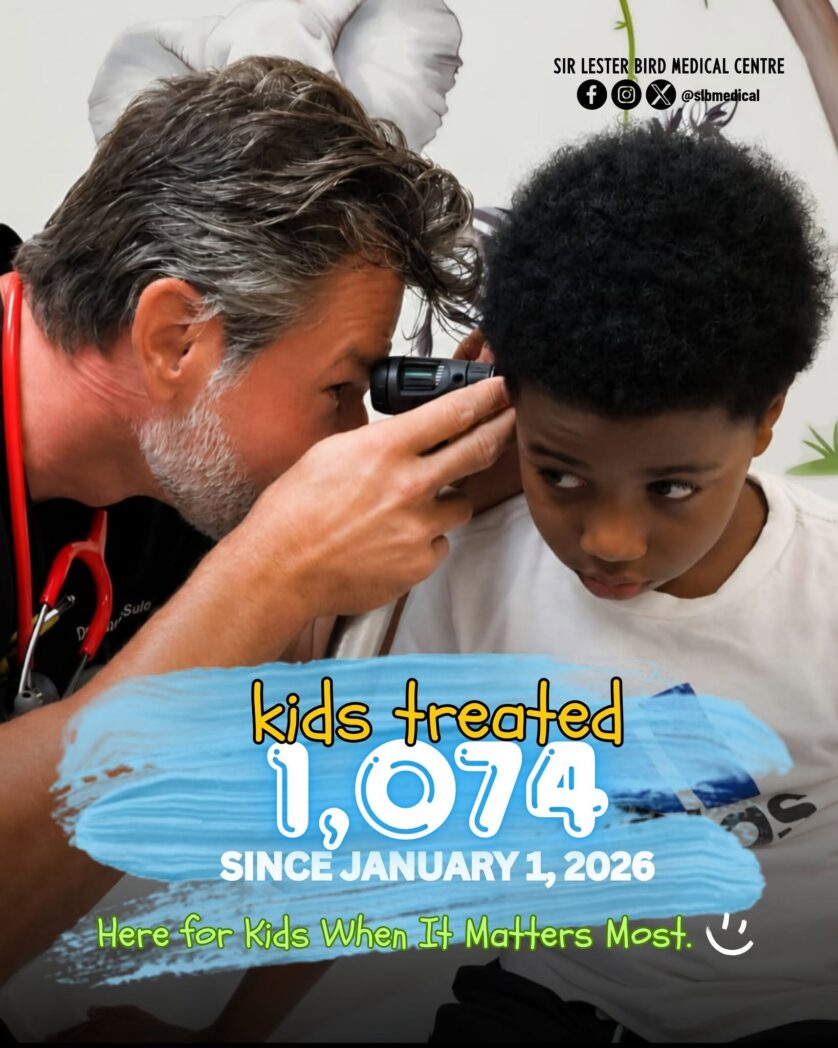
SLBMC Reports 1,074 Pediatric Emergency Visits So Far in 2026
The main public medical facility of Antigua and Barbuda, the Sir Lester Bird Medical Centre (SLBMC), has released an updated operational figure highlighting the persistent high demand for specialized emergency care for children across the twin-island nation. As of the current point in 2026, the facility’s dedicated Pediatric Emergency Department has already provided urgent medical intervention to 1,074 children and adolescent patients, according to an official statement from the institution.
This volume of patients underscores the critical ongoing need for accessible, high-quality pediatric emergency services in Antigua and Barbuda, as local healthcare providers work to manage a consistent stream of urgent cases involving young people. Beyond sharing the patient volume, SLBMC used the update to publicly recognize and commend the hard work of its specialized pediatric care team, highlighting the commitment that frontline staff bring to their roles every day.
“Thank you to our Pediatric team for the care, compassion, and expertise they bring to every patient encounter,” the statement read. Hospital administrators note that the team has not only delivered consistent clinical care to young patients but also extended essential support to the family members of children receiving treatment, amid the steady flow of emergency cases that the department continues to manage.
-

Antigua and Barbuda U20 Players Meet Omar Al Somah After Returning for CONCACAF Championship Preparations
The build-up to next month’s 2026 CONCACAF Under-20 Championship in Mexico took a promising step forward this week, as three of Antigua and Barbuda’s squad, based abroad, touched down on home soil on Tuesday. Team captain Keyonte George and teammate Conroy Browne, both currently based in Germany for their youth development, joined UK-based player Marco Micheal at V.C. Bird International Airport, where the trio were formally welcomed by D. Zorol Barthley, General Secretary of the Antigua and Barbuda Football Association.
With less than a month remaining until the team’s opening Group Stage fixture, the three returning players will immediately integrate with the rest of the national squad to ramp up training ahead of the full team’s departure on July 2. What was meant to be a routine arrival quickly became an unforgettable milestone for the young prospects, however: the group crossed paths with star Syrian international footballer Omar Al Somah, who was also passing through the airport that day. Al Somah, a highly regarded veteran who plies his professional trade in the Saudi top flight and is widely counted among Syria’s most successful active players, took time out of his travel to talk strategy, motivation, and experience with the upcoming young Antiguan contingent.
For the Antigua and Barbuda Football Association, the unplanned meeting carried more weight than a simple photo opportunity. “These are the moments that change careers,” Barthley emphasized of the encounter. “For our captain and his teammates to interact with a player of Omar Al Somah’s calibre, on the very day they return home to prepare for a CONCACAF Championship, says everything about the trajectory this squad is on.”
This year’s CONCACAF Under-20 Championship marks a historic milestone for Antigua and Barbuda, which secured one of just 12 qualification spots for the regional tournament. It is the only team from the Eastern Caribbean Currency Union to earn a place in the 2026 edition, carrying the hopes of the entire sub-region into the competition. The side has been drawn into a tough Group that includes tournament hosts Mexico, Guatemala, and Costa Rica, with all their group fixtures set to take place at Puebla’s iconic Estadio Cuauhtémoc on July 24, 27, and 30 respectively. Beyond regional glory, the tournament doubles as the official CONCACAF qualification route for the 2026 FIFA Under-20 World Cup, giving the Antigua and Barbuda side a shot at reaching football’s global youth showcase.
To get the squad properly acclimated and build match fitness ahead of the tournament, the full national side will depart Antigua on July 2 for an extensive 43-day pre-competition camp. The itinerary includes training stops in St. Lucia, Panama, and Mexico City before the team travels to Puebla for the official start of the CONCACAF tournament.
-
Koopkracht nog niet hersteld ondanks lagere inflatie
New data from Suriname’s 2026 Financial Plan has laid bare the uneven economic recovery the nation is facing following years of crippling inflation, with most worker groups still grappling with falling real purchasing power three years after peak inflationary pressures began. While overall inflation has cooled significantly from the highs seen during recent economic crisis years, the report confirms that the damage to household finances has not been undone for a large share of the working population, especially among senior public sector employees.
Between 2020 and 2025, the average consumer price index in Suriname skyrocketed from 189.7 to 885.5, translating to a cumulative inflation rate of 366.8% over the five-year period. For 2026, the government projects that inflation will stabilize around 9.2%, with annual rates settling between 6% and 8% provided global oil prices and the domestic currency’s exchange rate hold steady. Despite this cooling of price growth, an analysis of wage trends included in the plan shows that most workers have not seen real gains in their incomes compared to 2022 levels.
Only a handful of sectors have outpaced inflation to deliver actual purchasing power growth over the period. The wholesale and retail trade sector, plus the information and communications industry, recorded positive real wage growth, with information and communications workers seeing their purchasing power jump by as much as 23% since 2022. In sharp contrast, sectors including transportation, hospitality, restaurants, and recreation have experienced severe purchasing power declines, with real labor values falling by roughly 31% in these industries.
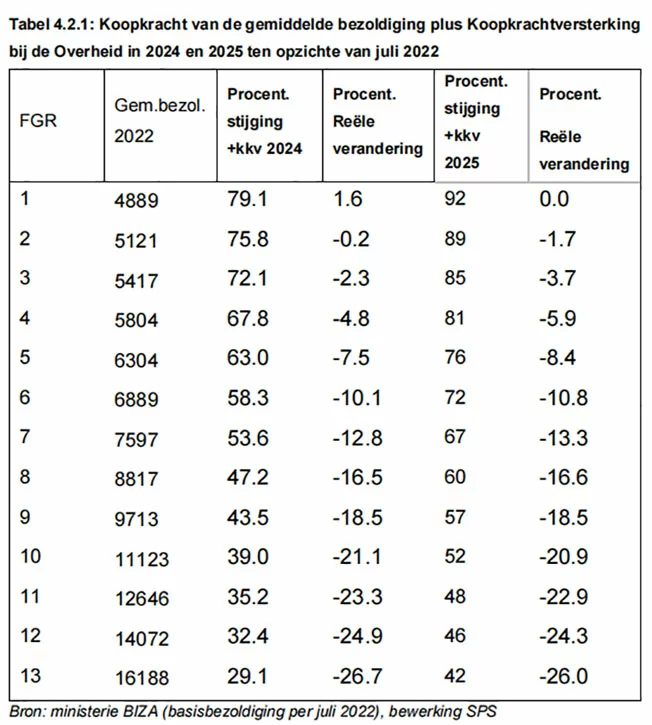
The public sector paints an equally mixed picture of recovery. Government calculations confirm that just one pay tier – entry-level Function Group 1 – has seen a small real improvement, recording a 1.6% purchasing power gain compared to July 2022. All other 12 public sector function groups, from 2 through 13, have seen real purchasing power fall even after accounting for scheduled salary adjustments and ad-hoc support measures, a trend that continues into 2025. Senior public employees in higher function groups have lost between 13% and 26% of their 2022 purchasing power, according to the analysis.
The ongoing erosion of the Surinamese dollar’s value has compounded these strains on household budgets. In 2022, one Surinamese dollar (SRD) held an average purchasing power value of 84 cents relative to the currency’s value at the start of that year. By 2025, that value had fallen to just 43 cents, meaning the same nominal amount of money buys nearly 50% less than it did just three years ago.
The only bright spot in the report is the trend for minimum wage earners. The hourly minimum wage rose sharply from SRD 20 in 2022 to SRD 52.47 in 2025, which translated to a real improvement in purchasing power for this group. Adjusted for inflation, the 2025 hourly minimum wage holds a value of roughly SRD 22.56, up from SRD 16.80 in 2022, marking a modest but tangible real gain for workers at the bottom of the income distribution.
Going forward, the 2026 Financial Plan forecasts that lower inflation in 2025 and 2026 will support gradual further recovery in purchasing power across the country. At the same time, the official data makes clear that the lasting damage of the high inflation that hit Suriname over the past three years remains far from fully resolved for most of the population.
-
Bijna 600 ontwikkelingsprojecten geregistreerd; uitvoering blijft een probleem
New data published in Suriname’s 2026 Financial Year Plan reveals a noticeable uptick in the number of successfully completed national development projects over the six-month period between November 2024 and May 2025, even as widespread implementation delays and structural bottlenecks continue to hold back progress toward key national development targets.
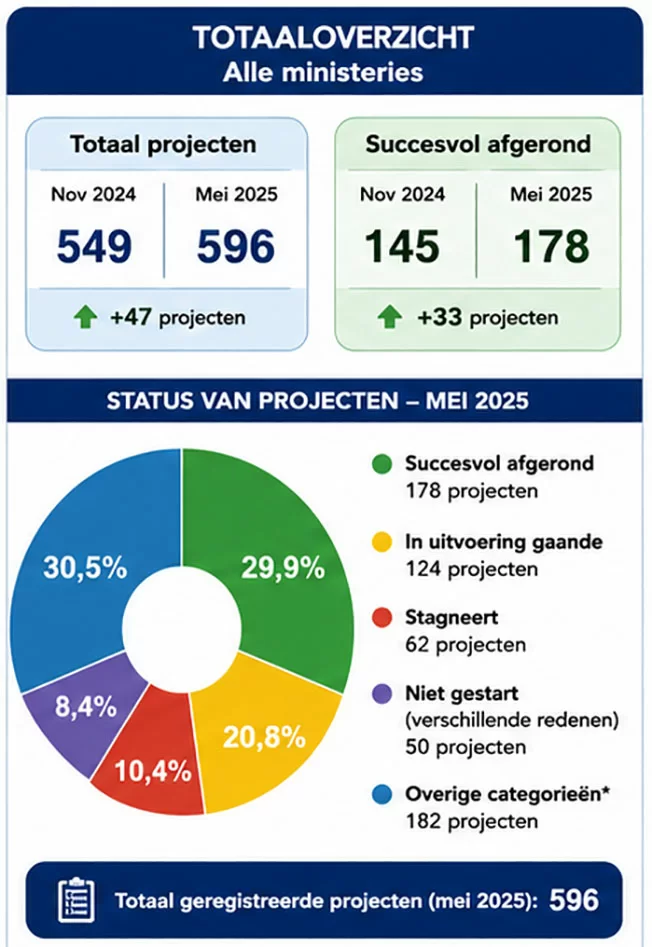
According to statistics compiled by the Planning Office of Suriname, the total number of registered development projects across all government ministries grew from 549 to 596 over the reporting period. Over the same six months, the count of fully completed, successful projects rose 22.7% from 145 to 178.
A breakdown of performance across government departments shows uneven progress, with two ministries leading in completed outputs. The Ministry of Finance and Planning tops the ranking with 38 successfully finalized projects, followed closely by the Ministry of Labor, Employment and Youth Affairs, which has wrapped up 36 projects. Two other departments have posted particularly strong gains in project completion: the Ministry of Regional Development and Sport more than doubled its completed projects from 8 to 19, while the Ministry of Agriculture, Livestock and Fisheries saw its completed count rise from 4 to 9. The Ministry of Education, Science and Culture also recorded improvement, growing its number of finished projects from 2 to 6.
Despite these incremental gains, the report makes clear that slow and uneven implementation remains a major policy challenge for the Surinamese government. As of May 2025, 124 registered projects were still active in implementation, 62 were classified as stagnant with no meaningful progress, and dozens more have not even broken ground. The report attributes these delays to a range of persistent obstacles, including unresolved financing gaps, hold-ups in pre-construction preparation, and shortages of specialized technical expertise required to advance projects.
In the 2026 Financial Year Plan document, the national government openly acknowledges that overall project implementation is falling short of official expectations. It identifies three core systemic challenges that are slowing progress: insufficient on-the-ground implementation capacity, inadequate monitoring frameworks to track project performance, and persistent bottlenecks in early-stage project planning.
The plan emphasizes that accelerating development project delivery is a non-negotiable priority if Suriname is to deliver on its core policy goals: driving broad-based economic growth, reducing widespread poverty, and raising the quality of public services for all citizens. Without meaningful reforms to speed up and improve implementation, the document warns, many of the country’s most important development targets face significant delays that could impact communities across the nation for years to come.