博客

  • Neita Garvey pushes digital overhaul of municipal corporations

    Neita Garvey pushes digital overhaul of municipal corporations

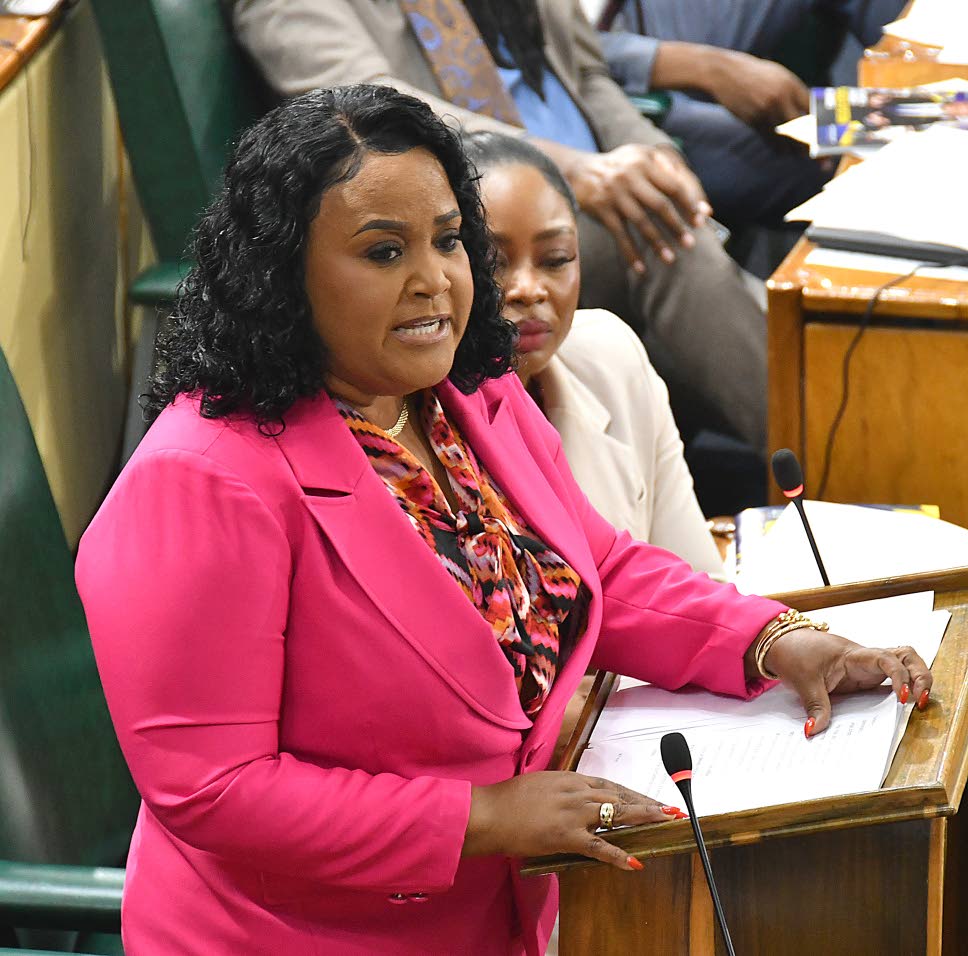
    Jamaica’s Opposition has laid out an ambitious plan to drag the country’s municipal government systems into the digital age, arguing that long-overdue systemic change is critical to meeting the expectations of 21st-century citizens.

    Natalie Neita Garvey, the Opposition’s spokesperson on local government and Member of Parliament for St Catherine North Central, outlined the proposal during a sectoral debate in the House of Representatives on Wednesday. Dubbed the Smart Municipal Jamaica Initiative, the plan aims to fundamentally reshape how local authorities engage with residents, process administrative requests, and deliver core public services.

    Neita Garvey pointed to a stark disconnect between Jamaica’s digital integration in daily life and the outdated workings of municipal bodies. While Jamaicans now complete instant bank transfers, conduct cross-border business, and communicate with contacts across the globe entirely from mobile devices, most municipal services still rely on paper-heavy workflows and drawn-out, opaque administrative processes, she said.

    In a striking rebuke of the current system, Neita Garvey told lawmakers: “Bureaucracy should not feel like archaeology. Citizens should not have to excavate information.”

    Under the status quo, residents seeking permits, business licences, or municipal approvals are forced to travel from office to office just to get status updates, creating widespread frustration and costly delays for both individual applicants and local businesses, she explained.

    “Modern government must become visible, trackable, transparent, and responsive. This requires nothing less than a national programme of municipal digitisation,” Neita Garvey added.

    At the core of the proposal is the development of a single unified digital platform that connects all of Jamaica’s municipal corporations into one interoperable network. Through this centralized portal, residents would be able to submit applications for permits, licences, and approvals entirely online, track the progress of their requests in real time, pay required fees electronically, and receive automatic notifications about any updates to their cases.

    The plan also expands beyond core administrative services: Neita Garvey proposed adding features that allow residents to monitor the progress of local infrastructure projects, submit non-emergency service requests, take part in public policy consultations, and access all public municipal records through the same single portal.

    Crucially, Neita Garvey emphasized that municipal digitization cannot be implemented as a patchwork of independent, municipality-specific projects. Instead, she argued, the shift must be guided by a national framework with uniform technical standards and shared, interoperable technology to guarantee consistent service quality for all Jamaican residents, no matter which part of the country they live in.

    The digital overhaul forms part of a broader push to reform Jamaica’s local governance system, which Neita Garvey said remains overly reliant on central government approval and trapped by outdated administrative norms, even after decades of incremental reform attempts. Alongside digitization, she is calling for increased financial autonomy for municipal corporations, performance-based funding models, modernized revenue collection systems, and expanded opportunities for community participation in local decision-making.

    Closing her argument, Neita Garvey framed the reform as an urgent economic and governance priority, saying: “The question is not whether Jamaica can digitise local government. The question is whether Jamaica can afford not to.”

  • World Cup, dark clouds

    World Cup, dark clouds

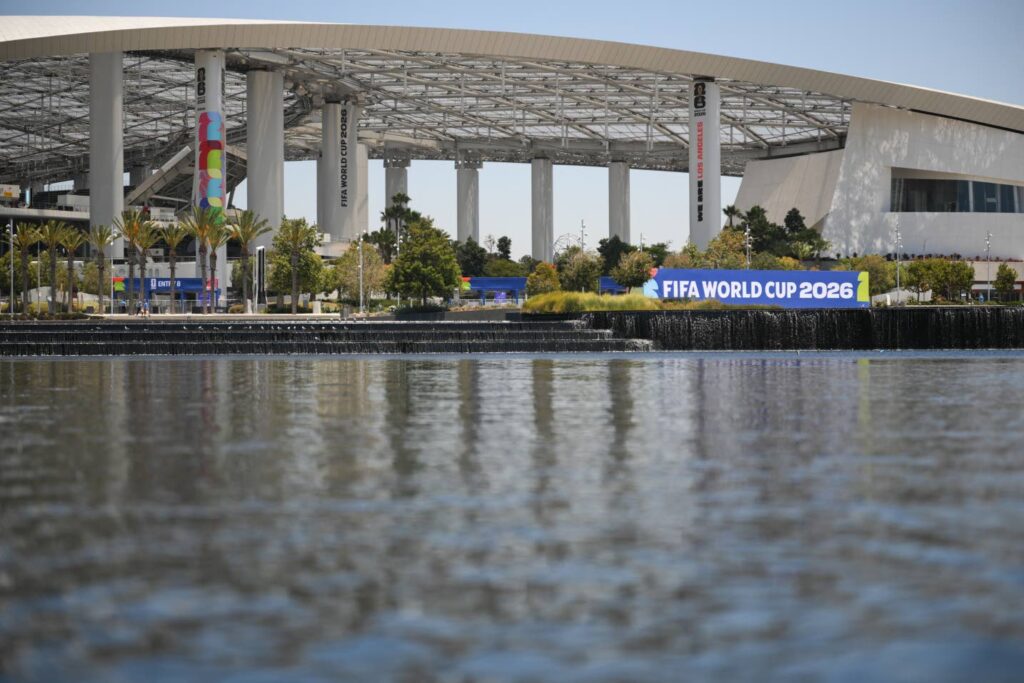
    After a four-year global wait, the world’s most anticipated sporting spectacle, the 2026 FIFA World Cup co-hosted by the United States, Mexico and Canada, is finally set to kick off, bringing unrivaled football fever to fans across every continent — including passionate supporters in Jamaica, whose national team the Reggae Boyz narrowly missed out on qualification for what many saw as a once-in-a-generation spot.

    This 2026 edition marks a historic turning point for the men’s World Cup, growing beyond its decades-old 32-team format to welcome a record 48 national sides to the global stage. The expansion has pushed the total number of tournament matches up to 104, and for the first time, emerging football nations including Cape Verde, Curaçao, Jordan and Uzbekistan will make their World Cup debuts, opening the door for more underrepresented regions of the world to compete at football’s highest level.

    But the historic expansion has not come without controversy. On the eve of the opening match at Mexico City’s iconic Estadio Azteca, FIFA President Gianni Infantino took the stage at a Mexico City press conference to push back against mounting criticism of two major issues facing the tournament: exorbitant ticket prices and widespread visa and entry denials linked to U.S. immigration policy.

    Infantino defended FIFA’s ticketing structure, which has drawn global outrage after some premium tickets were listed for more than $30,000. He pointed to the $60 base entry ticket, arguing that the price point is lower than the average entry cost for playoff matches across major U.S. professional sports, adding that the tournament’s overall average ticket price of under $500 also undercuts average prices for major U.S. sporting events.

    Infantino also downplayed the high-profile controversy surrounding Somali referee Omar Artan, who was denied entry to the U.S. last Saturday after arriving in Miami due to U.S. immigration security concerns. The U.S. State Department later claimed Artan had ties to suspected terrorist organization members, and FIFA has confirmed he will not officiate any matches during the tournament. Additionally, Infantino framed Iran’s participation in the tournament amid ongoing military tensions between Iran and the U.S. as a victory for football and FIFA’s mission of uniting nations through sport. Multiple individuals connected to Iran’s national team, including senior officials and fans, have already been denied entry to the U.S. as part of the Trump administration’s strict immigration crackdown.

    In a separate development Wednesday, U.S. President Donald Trump confirmed he plans to attend multiple World Cup matches during the tournament, though he declined to share specific details of his attendance.

    Tensions are running high on the ground in Mexico City, where the opening match between host nation Mexico and South Africa is scheduled to kick off Thursday. Protests against the Mexican government have already disrupted preparations, with demonstrators blocking a major avenue leading to Estadio Azteca on Tuesday. Riot police formed a barricade to prevent protesters from reaching the stadium grounds. Mexican President Claudia Sheinbaum has labeled the week of ongoing demonstrations a “provocation,” and assured the public Wednesday that security for the opening match is fully under control.

    Uncertainty has also come from unexpected quarters, with weather disrupting pre-tournament preparations. A severe thunderstorm carrying torrential rain and lightning hit Orlando, Florida on Wednesday, forcing a delay of England’s final warm-up friendly against Costa Rica. The weather disruption echoes similar issues that plagued the 2025 Club World Cup, where multiple matches were delayed or disrupted by extreme weather.

    Even as most teams have settled into their host bases across North America, another unexpected controversy has emerged surrounding underdog side Haiti, who face Scotland in their opening match in the coming days. FIFA ordered Haiti to completely redesign and replace their official team kits after it was discovered the shirts featured an illustration of the 1803 Battle of Vertières, the conflict that secured Haiti’s independence from colonial rule — a depiction that violates FIFA’s rules prohibiting political messaging on match equipment.

  • DJ Amber celebrates honours

    DJ Amber celebrates honours

    Nearly 20 years after first stepping behind the radio microphone, one of Jamaica’s most beloved broadcasting figures, DJ Amber, has marked a career-defining milestone that goes far beyond personal accolade: it puts a long-overdue spotlight on the countless contributions of women shaping the nation’s media and entertainment industries.

    Amber was among the standout women recognized during the 10th annual Queens of Reggae Island Honour Ceremony (QORIHC) Awards, a celebration that elevates the work of trailblazing women across five key sectors: reggae music, media, entertainment, business, and grassroots community development. For the veteran broadcaster, the award carries extra weight, as it shines a light on a cohort of professional women whose labor often flies under the public radar.

    “Getting this show of public appreciation feels incredibly meaningful,” Amber shared in an interview after the ceremony. “Women working across media, broadcasting, music, and entertainment rarely get this level of formal recognition. So this is a double honor: I’m being recognized as a woman, and as an outstanding professional in my field, which makes it that much sweeter.”

    The recognition also serves as a sobering reminder of the persistent barriers women face in creative and media industries that have long been dominated by male leadership and ownership. “Across the board, this is still a male-dominated landscape,” Amber explained. “No matter if you work in film, music, or the arts, men still hold most of the power and most of the public recognition. That’s what makes QORIHC’s work so important—they consistently lift up the excellent work that women like me and my fellow honorees are doing.”

    Amber’s rise to become one of Jamaica’s most recognizable radio voices began at Linkz Radio in the coastal town of Savanna-la-Mar, before she made the jump to the nation’s iconic IRIE FM. There, her warm, approachable persona and down-to-earth conversational style helped her build a large, fiercely loyal listener base. She attributes that deep connection with audiences to her refusal to adopt a performative “on-air persona.”

    “I don’t put on a fake ‘radio voice’ when I get behind the mic,” she said. “I just talk to my audience like I would talk to my friends, my family, or someone I run into at the grocery store or on the street. That authenticity is what keeps people coming back.”

    What many listeners may not see is that Amber’s influence extends far beyond the airwaves. She has earned widespread acclaim for her off-air humanitarian work: organizing disaster relief campaigns for vulnerable communities hit by hurricanes and tropical storms, leading advocacy to protect public access to Jamaica’s world-famous beaches, and leveraging her platform to amplify conversations about pressing social issues that impact working-class Jamaicans.

    This commitment to public service grows out of a core belief that people in media have a unique responsibility to drive progress. “I truly believe media personalities have a responsibility to use their platforms to push for social change,” she said. “The media is the most powerful space we have to influence public opinion and support positive change across our society.” She credits her parents with instilling these values of service early in life, and says community outreach remains one of the most meaningful parts of her entire career.

    Even as she basks in the recognition from QORIHC, Amber has already turned her attention to what comes next. Beyond continuing her daily work on Jamaican radio, she plans to expand her growing business portfolio, explore new opportunities in reggae music production, and scale up her humanitarian outreach to reach more communities across the island. “I stay busy even when listeners don’t see or hear me on the air,” she joked.

    As she reflects on nearly 20 years in the industry and her latest honor, Amber hopes her career journey can inspire the next generation of women hoping to build careers in media and entertainment. Looking ahead to her legacy, she says: “When people hear my name 20 years from now, I’d love for them to remember me as a kind yet bold woman. I want to be remembered for having done all the good I could in this lifetime.”

  • ’They didn’t do the police nothing…’

    ’They didn’t do the police nothing…’

    MONTEGO BAY, St James — A fatal early-morning police operation on the outskirts of Montego Bay has reignited long-simmering tensions over law enforcement use of force, after four men were shot dead Wednesday in an incident that has left grieving relatives crying foul and authorities defending the action as a necessary step to curb growing community violence.

    Patterns of conflicting narratives that have become all too familiar in Jamaican fatal police shootings are playing out once again: bereaved family members are adamant the men were unarmed workers carrying out their jobs, pointing to unprovoked excessive force as the cause of death, while official police accounts frame the incident as a targeted operation that devolved into an armed shootout with suspects tied to a wave of local violence. What makes this incident unusual is the sheer loss of life in a single confrontation.

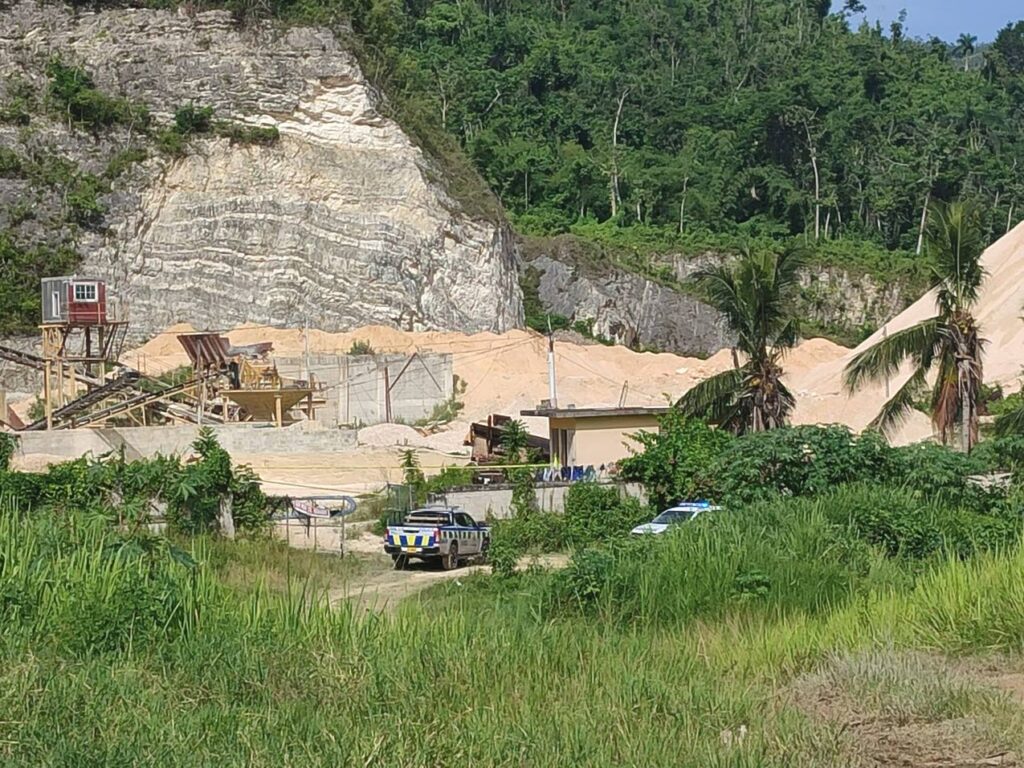
    The victims have been identified as Jahmar Ashman, 57-year-old Brian “Teezy” Fairclough, Brian’s son Brian “Teejay” Fairclough, and a fourth man who remains unidentified as of press time. The shooting unfolded at a marl quarry near the Retirement Dump area, according to official records.

    For Tameika Evans, partner of Jahmar Ashman, the tragedy has left her struggling to explain the loss to the couple’s two-year-old child, who remains unaware his father is dead. The toddler was seen eating candy near the crime scene Wednesday as police maintained a secured cordon around the area. Evans told local media the Jamaica Observer that Ashman and the younger Fairclough worked as night watchmen at the quarry. She received word of the shooting from her mother, who first noted a heavy police presence in the area, and law enforcement had already transported the bodies to hospital before Evans could arrive on scene.

    Near the crime scene, Tashoy Fairclough, the newly widowed wife of Brian Fairclough, told reporters she is terrified of the long-term impact her husband’s death will have on their two young children. The couple’s 10-year-old daughter is scheduled to sit her Primary Exit Profile (PEP) national exit exams Wednesday, and Fairclough said the child has been inconsolable, unable to focus on the test despite school officials arranging support. “All of this is police brutality; them a wicked and we need justice round here suh,” Fairclough said. She explained her husband worked as a tractor operator at the quarry and had been staying on site in a quarry building with his son and the two other men at the time of the raid. She described him as a peaceable man who avoided conflict.

    Gwendolyn Williams, who raised Brian “Teejay” Fairclough from infancy, echoed the family’s anger and worry. She said none of the four men deserved to die, and expressed concern that the young children left behind will now be forced to survive without their breadwinners. “Them dead and leave them little children to go to school, them shouldn’t kill them. They didn’t do the police nothing fi them kill them,” Williams insisted.

    But the Jamaica Constabulary Force (JCF) has pushed back against the claims, releasing an official statement outlining the context for the operation. According to the JCF, the operation was launched at approximately 5:40 a.m. Wednesday based on intelligence gathered during ongoing investigations into a recent string of violent incidents in the area, including a fatal shooting at the Retirement Dump on June 5. Investigators have linked multiple violent attacks to an ongoing turf conflict between groups involved in the local scrap metal trade operating out of the dump.

    The JCF statement noted that long-standing disputes between scrap metal and recyclable material collectors and sellers had escalated in recent weeks, triggering a cycle of violent reprisal attacks that pushed community tensions to dangerous levels. Wednesday’s targeted raid was designed to prevent further bloodshed, the force said, adding that intelligence indicated additional attacks were imminent. “Law enforcement personnel were deployed to the area as part of ongoing efforts to disrupt criminal activity, prevent additional loss of life, and restore public safety,” the statement read. All four men shot during the confrontation were transported to hospital, where they were subsequently pronounced dead, according to the JCF.

    Consistent with standard protocol for all fatal shootings involving Jamaica Constabulary Force members, the Independent Commission of Investigations (Indecom) has launched an independent probe into the incident.

    This fatal shooting marks the fourth high-profile incident involving fatalities during security force operations in Granville division since the start of 2024. On New Year’s Day, a four-year-old child and two adult men were killed during a police operation in the same community. On Mother’s Day, 17-year-old Tjey Edwards was fatally shot during an alleged confrontation with law enforcement. One week after Edwards’ death, Latoya “Buju” Bulgin was shot and killed by Constable Andrew Wilson while she was transporting people to a protest over Edwards’ death. The officer has since been charged with Bulgin’s murder and is currently awaiting trial.

    Indecom data shows the scale of growing fatal confrontations in the country: 14 people have been killed in alleged clashes with security forces across Jamaica since the start of June. Eleven of those deaths occurred between Tuesday and Wednesday of this week, including two separate quadruple fatal shootings.

  • UWI Global Campus and Caribbean HR institute partner to strengthen workforce development

    UWI Global Campus and Caribbean HR institute partner to strengthen workforce development

    Against a backdrop of rapidly shifting regional labour markets across the Caribbean, where evolving workplace demands have exposed a growing disconnect between academic HR training and on-the-ground industry needs, two leading institutions have joined forces to reshape human resource development across the region. The University of the West Indies Global Campus’ Hugh Shearer Labour Studies Institute and the Caribbean Institute for Human Resource Management have formally signed a Memorandum of Understanding to solidify a new collaborative partnership centered on elevating HR education, advancing professional growth, and boosting workforce readiness across all Caribbean nations.

    This agreement is far more than a symbolic alliance: it is a targeted effort to close the long-standing gap between theoretical academic learning and real-world industry practice, ensuring that HR education keeps pace with the changing requirements of the regional labour force. By merging The UWI’s decades of academic excellence and research infrastructure with CaIHRM’s deep, on-the-ground industry insights and professional network, the partnership will create clear, accessible pathways for current and aspiring HR professionals to advance their careers.

    Under the terms of the MOU, the two institutions will collaborate on a range of key initiatives. First, they will co-develop structured professional pathways and industry-recognized credentials for practicing HR practitioners, giving learners clear milestones for career progression. They will also work to update existing academic curricula to integrate cutting-edge contemporary HR and organizational development topics, ensuring course content directly reflects the emerging trends and unique challenges facing Caribbean workplaces today.

    Additional areas of collaboration include expanding applied research focused on the specific HR challenges facing the Caribbean region, and embedding hands-on practical learning opportunities — including real-world case studies and immersive workplace simulations — into all educational programs. To bridge the divide between academia and industry, the partnership will also increase interaction between working HR professionals and students through guest lecture series, adjunct teaching opportunities for industry leaders, and structured feedback loops that allow practitioners to shape the direction of academic programming.

    Joint programming is also a core pillar of the agreement: the two organizations will co-develop short specialized courses and professional certificate programs, and host regular regional conferences, symposia, and thought leadership events designed to advance HR practice and organizational development across the Caribbean. A dedicated Joint Steering Committee will be established to oversee all initiative implementation, coordinate cross-institutional activities, track progress against core goals, and ensure the partnership remains aligned with its founding objectives throughout its term.

    Dr. Lauren Marsh, Head of the Hugh Shearer Labour Studies Institute, framed the collaboration as a transformative strategic milestone for regional human resource development. “This collaboration reflects a shared commitment to strengthening professional pathways and enhancing workforce readiness across the Caribbean, with a strong emphasis on practical training through case-based learning, simulations, and real-world industry engagement,” Marsh explained. “It is expected to play a significant role in shaping resilient, future-ready organisations and labour markets across the region.”

    Cavelle Joseph-St. Omer, President of CaIHRM, also welcomed the new agreement, calling it a landmark development for HR professionals at every career stage across the Caribbean. She emphasized that the partnership opens unprecedented opportunities to strengthen professional practice and expand access to continuous learning and development across the region, adding that the alliance creates a rare, valuable opportunity to meaningfully connect academia and industry. By working together, the two institutions can build local HR capacity, strengthen regional specialized expertise, and better prepare both current and future practitioners to meet the changing demands of Caribbean workplaces.

    The three-year initial agreement includes an option for renewal following a joint performance evaluation and mutual agreement from both parties. In the long term, the partnership is projected to strengthen the regional HR talent pipeline, raise uniform professional standards for HR practice across the Caribbean, and contribute to broader inclusive economic and social development across the region. For The UWI Global Campus, the initiative aligns with its long-standing institutional focus on educational innovation, intentional industry collaboration, and delivering relevant, high-quality education tailored to meet the unique needs of the Caribbean and the wider global community.

  • Antigua and Barbuda Revises GDP Growth Outlook Down to 4%

    Antigua and Barbuda Revises GDP Growth Outlook Down to 4%

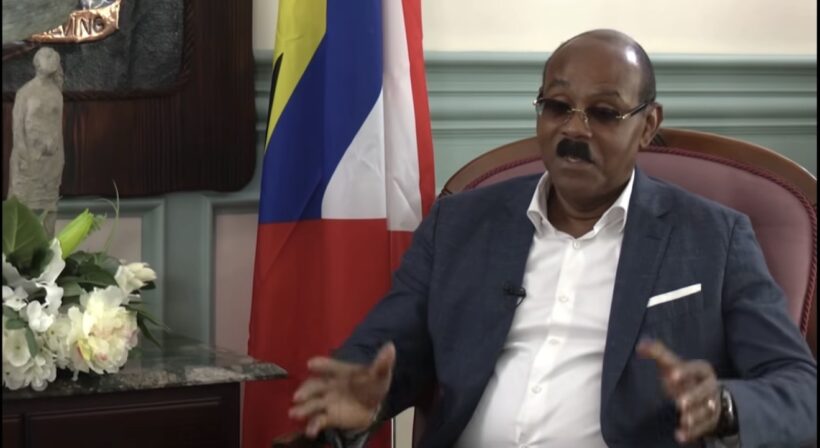
    Small island nation Antigua and Barbuda has revised its 2026 economic growth projection downward from 6% to 4%, driven by mounting pressure from soaring global fuel and food costs that are dampening domestic economic activity, according to Prime Minister and Finance Minister Gaston Browne.

    Browne confirmed that escalating global uncertainty, most notably the persistent geopolitical tensions in the Middle East, has left the government with no choice but to adjust its earlier optimistic growth outlook. Speaking with local state media, he outlined that the administration entered the year with far more ambitious projections, but shifting global market conditions have forced a recalibration of national economic expectations.

    “At the opening of 2026, we held an optimistic outlook and penciled in an expansion of roughly 6%,” Browne explained. “However, when assessed against current global trends, our projected growth now lands much closer to 4%.”

    Despite the downward revision, Browne emphasized that the adjusted 4% growth rate still represents a solid expansion for the Caribbean economy. When compared to growth forecasts for peer small island nations across the region, Antigua and Barbuda’s performance still holds up favorably, he noted.

    The prime minister pinpointed widespread disruptions to the global energy supply chain, particularly heightened security risks surrounding the Strait of Hormuz, as the core driver of recent fuel price spikes. As a small developing island state, Antigua and Barbuda is almost entirely dependent on imported petroleum products to meet domestic energy needs, leaving its economy exceptionally exposed to sudden swings in international energy pricing.

    Beyond energy costs, Browne also warned that rising input costs for global agriculture – including higher transportation expenses and more expensive fertilizer – have pushed up food prices across international markets. This has added a second layer of economic pressure for Antigua and Barbuda, which, like most small island states, imports the vast majority of its food supply.

    Even in the face of these overlapping headwinds, Browne remains cautiously optimistic that the economy can regain lost momentum before the end of the year. He noted that a de-escalation of geopolitical tensions and an easing of global commodity market volatility could set the stage for a stronger finish to 2026.

    “We hold onto hope that these ongoing challenges will be resolved, allowing economic activity to pick up steam in the fourth quarter of 2026,” Browne said. “That would put our economy on a strong, stable footing as we move into 2027.”

    He closed by reiterating that even with the adjusted forecast, Antigua and Barbuda is still on track to post one of the strongest economic growth rates among all Caribbean nations in 2026.

  • Freeland and Hill Tour Potters Project Scheduled for September Completion

    Freeland and Hill Tour Potters Project Scheduled for September Completion

    A major infrastructure upgrade project transforming Antigua and Barbuda’s Potters Playing Field into a modern multi-sport complex is progressing firmly on schedule, with full completion targeted well in advance of the 2026 Commonwealth Heads of Government Meeting (CHOGM), senior government and diplomatic officials have confirmed. Key sporting amenities across the redevelopment site are set to wrap up construction by the final week of September, putting the project on track to welcome global leaders when the country hosts the high-profile international gathering in late 2026.

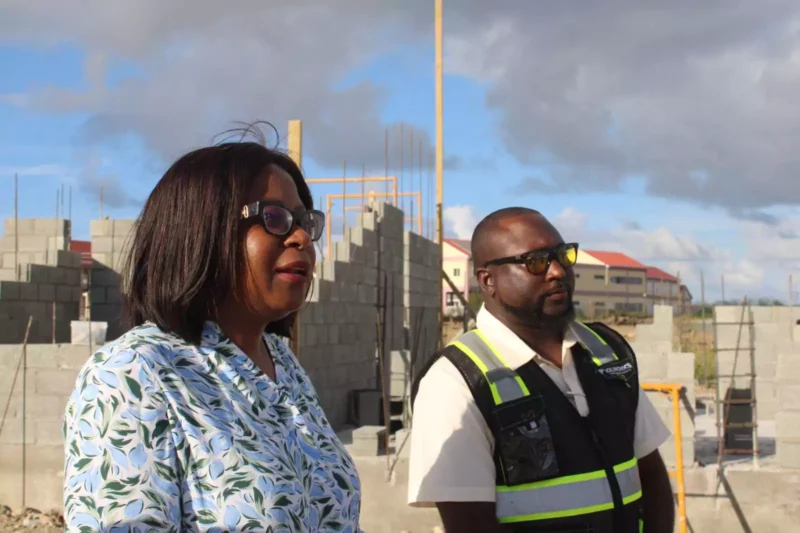
    This week, the development site welcomed a formal progress review led by Michael Freeland, the country’s Minister of State for Tourism and Member of Parliament for St. George, alongside Karen-Mae Hill, Antigua and Barbuda’s High Commissioner to the United Kingdom. The pair walked the entire construction zone alongside the project’s core leadership to inspect ongoing work and discuss next steps for delivery.

    According to Prince Charles, lead project manager for the redevelopment, work is advancing steadily on three purpose-built hard courts designed to host basketball, netball and volleyball competitions. Each court will include shaded covered seating that can accommodate approximately 225 spectators per facility, creating a comfortable viewing space for attendees at future community and national events. Agile Courts Construction, the contracted firm leading delivery of the court amenities, is currently handling resurfacing work as well as the installation of new perimeter fencing, upgraded event lighting, and other critical supporting infrastructure across the hard court zone.

    Beyond the dedicated court spaces, the redeveloped Potters Playing Field will also feature a dual-use open field calibrated for both football and cricket matches. Site crews have already completed core drainage work for the open field, and are on schedule to lay grass sod across the entire area in August, ahead of the final September completion target for sporting facilities.

    Officials confirmed during the site visit that the entire multi-sport complex is projected to reach substantial completion by September 30, more than a year ahead of the 2026 CHOGM, which will bring heads of government and senior diplomatic representatives from across the Commonwealth bloc to Antigua and Barbuda between November 1 and 4, 2026. The timeline ensures the facility will be fully operational and ready to support event activities and guest engagements during the international gathering.

    In addition to reviewing construction timelines, the walking tour included in-depth discussions on three key secondary priorities for the site: upgraded security protocols to protect visitors and event attendees, improved pedestrian access pathways to connect the complex to nearby neighborhoods and transportation routes, and adaptive reuse plans for existing Public Works buildings located on the property. The current structures will be renovated and repurposed to house new administrative offices for the complex and dedicated workshop spaces for maintenance and event operations, eliminating the need for new construction and reducing the project’s overall environmental footprint.

  • Antigua and Barbuda to Host OECS Services Sector Training Initiative

    Antigua and Barbuda to Host OECS Services Sector Training Initiative

    Against a backdrop of ongoing post-pandemic economic adjustment and intensifying competition in global services markets, Antigua and Barbuda has been selected to host a landmark specialized training initiative for the services sector, developed in partnership with the Organisation of Eastern Caribbean States (OECS). Scheduled to run from June 29 to July 2, 2026, the four-day program will take place daily from 9:00 a.m. to 3:30 p.m. at the Customs and Excise Division Conference Room located in Deep Water Harbour, Antigua.

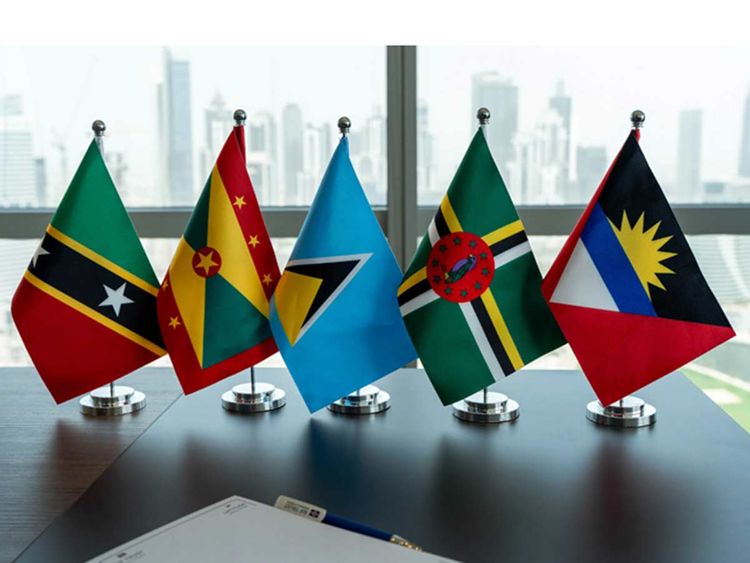
    This capacity-building effort forms a core component of a broader regional consultancy project commissioned by the OECS, with the formal mandate of strengthening technical knowledge, improving policy design capabilities, and honing negotiation skills for both public and private sector stakeholders across the bloc’s services industries. The 11-nation OECS bloc, whose participating member states include Antigua and Barbuda, Dominica, Grenada, Montserrat, Saint Kitts and Nevis, Saint Lucia, and Saint Vincent and the Grenadines, developed the initiative to advance the core goals of the Revised Treaty of Basseterre. That landmark agreement established the Eastern Caribbean Economic Union (ECEU), which works to accelerate deep economic integration, harmonize cross-border policy frameworks, and build a unified single economic space across the Eastern Caribbean.

    The timing of the program addresses a pressing need for the OECS: in the years following the COVID-19 pandemic, member states have prioritized building economic resilience and boosting competitiveness in global services trade, grappling with both persistent post-pandemic aftershocks and broader global economic headwinds. To that end, the training program is tailored to upskill three key groups that shape services sector performance: trade officials and public sector policymakers, representatives of Business Support Organisations (BSOs), and private sector services industry leaders.

    Over the course of the four days, participants will engage in a structured set of learning and collaboration activities. Attendees will contribute to the development of a customized Specialized Services Sector Training Plan aligned with the unique national needs of OECS member states, take part in a hands-on national workshop designed to build practical policy development and trade negotiation skills, and join a stakeholder sensitization seminar covering high-priority topics. Key seminar themes include emerging trends in traditional and non-traditional services sectors, existing obligations related to trade in services (TIS), strategies to address persistent barriers to cross-border services trade, and cutting-edge market intelligence tools to support domestic services sector growth.

    To remove barriers to participation for stakeholders across the region, the entire program will be delivered in a hybrid format, allowing both in-person and remote attendance for public and private sector representatives. OECS officials note that the initiative is designed to deliver long-term tangible benefits for the entire bloc: upon completion, member states will be better positioned to leverage the terms of existing trade agreements, update outdated domestic regulatory frameworks for the services sector, and boost their global competitiveness. By strengthening institutional capacity and improving policy coherence across public and private stakeholders, the program ultimately aims to drive sustainable long-term economic growth, boost regional economic resilience, and expand the participation of OECS member states in both regional and international trade networks.

    Local stakeholders in Antigua and Barbuda who are interested in participating in the initiative have been directed to contact the country’s Ministry of Trade via phone at 562-1532 or 562-8114 to request further information and secure registration details.

  • Classroom to community in fight against crime

    Classroom to community in fight against crime

    When the 2024 academic year kicks off this September, Barbados will roll out a groundbreaking mandatory community service programme for all secondary school students, designed to address rising youth crime and strengthen core civic values across the island nation. Education Transformation Minister Chad Blackman announced the initiative, dubbed “60 at 60,” during a parliamentary address, framing the programme as a proactive, prevention-focused complement to stricter law enforcement measures targeting gun-related offences.

    Under the new rules, all students seeking to complete their secondary education must complete 60 hours of approved community-focused activity before graduation. Participants can choose to work with civic organizations, join uniformed youth groups, or participate in organized team sports to meet the requirement. This marks the first time Barbados has integrated a mandatory civic engagement component into its formal national secondary curriculum.

    Speaking to lawmakers, Blackman emphasized that the initiative moves far beyond traditional academic benchmarks. Its core mission is to shape responsible, community-oriented citizens by instilling critical soft skills that formal classroom learning often overlooks: discipline, collaborative teamwork, empathetic communication, and constructive conflict resolution. These skills, he argued, are essential to guiding young people away from delinquent behaviour and addressing the deep-rooted social factors that push youth toward crime.

    “Many young people earn strong grades and follow all the rules, but qualifications alone are not enough to build a strong nation,” Blackman told Parliament. “If young people leave school without the right mindset—without empathy, without knowing how to resolve conflict peacefully, without a sense of shared responsibility to their communities—we have failed them.”

    The minister noted that criminal behaviour rarely develops overnight. Individuals facing gun-related charges do not turn to crime by random chance; instead, their paths are often shaped by underlying social gaps, including peer pressure, the absence of a stable guiding adult figure in the home, and a lack of positive extracurricular engagement. By placing young people in structured community settings early in their education, the government aims to intervene before at-risk youth turn to harmful activity.

    To support the successful launch of the programme, Blackman has issued a renewed public call for volunteer mentors across Barbados. He stressed that the call is open to all community members, not just men—pointing to the decades of critical leadership women have provided through longstanding youth groups like Cub Scouts, Brownies, and Girl Guides. Retired residents and working professionals alike are invited to donate a few hours of their time to support the initiative, which forms a core part of the government’s broader national youth development strategy.

    “Our goal is to give young people the tools, values and discipline they need to thrive long after they leave school, and to make our entire nation proud,” Blackman said. “When community members step up to mentor our youth, they help build a stronger, safer Barbados for everyone.”

    Addressing ongoing concerns about the creeping culture of illegal gun ownership across the island, Blackman reaffirmed Barbados’ commitment to confronting the crisis head-on. He pushed back against the dangerous normalization of gun violence that has spread on social media, where some young people now brandish illegal firearms as if they are characters in a Hollywood film. There is no room for tolerance or indifference toward this harmful trend, he insisted.

    The minister also called on parents, families and community leaders to work together to reframe public perception of gun-related crime: gun charges should never be viewed as a badge of honor among young people, he said, and there is nothing respectable or impressive about appearing in court on firearms offences.

  • How steep World Cup ticket prices affect Caribbean football

    How steep World Cup ticket prices affect Caribbean football

    The 2026 FIFA World Cup, co-hosted by North American nations, is set to kick off on June 11, 2026 in Mexico City when the host nation takes on South Africa, bringing with it both promise of transformative investment for small footballing nations like those across the Caribbean and growing fury over unprecedented ticket price increases that are pricing out ordinary supporters. Over the 39-day tournament, billions of fans around the globe will tune in to watch the world’s best players compete, but long before the opening whistle, the conversation around the event has centered on the ballooning cost of attendance, and the trade-off at the heart of FIFA’s pricing strategy.

    Analysis of FIFA’s 2026 ticketing structure reveals staggering jumps across every tier compared to the 2022 Qatar World Cup. A basic Category 3 general admission ticket for a group-stage match that does not feature a host nation now starts at $120, a 74% increase from the equivalent seat four years ago. The steepest rise comes for the sport’s biggest stage: tickets to the 2026 World Cup Final have jumped 236.1% from 2022, marking the largest ever price increase for a World Cup final in FIFA’s history. Even the $60 discounted locked tier, introduced by FIFA to deflect widespread public criticism of high pricing, is only accessible to verified loyal fans who purchase through their national football associations, and this entry-level price point is still 445.5% higher than the cheapest entry tickets offered at previous tournaments.

    As a registered non-profit organization, FIFA has pushed back against criticism, arguing that elevated ticket and commercial revenues are not for institutional profit, but rather to fund global football development, a mission that stands to deliver major financial gains to small, developing member associations within the Confederation of North, Central America and Caribbean Association Football (CONCACAF). Speaking at the CNBC Invest in America Forum, FIFA President Gianni Infantino tied projected total World Cup revenues, which are now on track to hit $11 billion and could even reach $14 to $15 billion fueled by record commercial and ticket sales, to investment in grassroots and youth football around the world.

    “That [revenue] goes into 211 countries all over the world, to allow football projects, academies, stadiums, pitches, competitions for girls, for boys, in 211 countries – more than the UN – to be played and organised. Three-quarters of them would probably not be able to have organised sport without the advance that they receive from a competition like the World Cup,” Infantino said.

    FIFA’s longstanding model pools all World Cup revenue streams — including ticket sales, broadcast deals and sponsorships — and redistributes the funds to member associations through its development programs. At the 76th FIFA Congress held in Vancouver, the governing body announced that the 2026 revenue surge would allow it to boost funding for the upcoming Forward 4.0 development cycle by an additional 20%, meaning small member territories including CARICOM nations will see increased development funding in the coming years.

    Tennyson Glasgow, a veteran Saint Lucian football commentator, told local outlet St Lucia Times that small Caribbean nations stand to see tangible benefits from the higher revenues generated by increased ticket prices. “FIFA may have done their homework as well to realise that when it comes to sports in that part of the world, people really go out, especially for the fan experience, and that comes at a cost. We’re talking about the best footballers globally. It’s not going to be cheap. Of course, FIFA would want to maximise that,” Glasgow said.

    “We have seen records of FIFA always living up to the expectation in terms of taking care of their member countries. So, I’m certainly saying that yes, Saint Lucia, as a small nation, yet a member of FIFA, will benefit, especially when it comes to grassroots programmes, female football, and of course, we might just see some facilities being improved or some new ones may be placed,” he added.

    Despite the potential development gains for small footballing nations, critics argue that the burden of funding this growth is falling unfairly on ordinary fans in the 2026 host countries. High-profile figures have joined the backlash, with California Attorney General Rob Bonta accusing FIFA of “misleading ticketing practices”, and even former U.S. President Donald Trump saying he “wouldn’t pay it either” when asked about the exorbitant ticket prices.

    At its core, the 2026 World Cup pricing model is a double-edged sword. The unprecedented revenue from ticket sales, broadcast deals and sponsorships will deliver much-needed investment to grow football at the grassroots level across the globe, bringing tangible improvements for small developing associations. Yet for the ordinary fans who are the backbone of the sport, the sharp price hikes that make this investment possible have created a significant barrier to access that remains a source of widespread frustration.