博客

  • Officials Working to Standardise EV Charging Across CARICOM

    Officials Working to Standardise EV Charging Across CARICOM

    As electric vehicle adoption gains momentum across Caribbean nations, the Caribbean Community (CARICOM) has launched a coordinated push to address a critical growing pain: fragmented and inconsistent EV charging infrastructure. In a recent virtual webinar hosted by the CARICOM Secretariat from its headquarters in Turkeyen, Greater Georgetown, Guyana, on Thursday, 11 June 2026, regional stakeholders and industry experts gathered to map a path toward standardized, interoperable charging networks that work across all member states.

    During the discussions, attendees zeroed in on three core areas identified as non-negotiable for cross-regional harmonization: unified safety protocols, standardized charger installation requirements, and aligned inspection procedures. The central goal of these efforts is to deliver interoperability — meaning EV owners will be able to use any public charging station regardless of which CARICOM country they are traveling in, eliminating the compatibility barriers that currently complicate cross-border electric vehicle travel.

    The keynote presentation of the session was delivered by Dr. Soren E. Maloney, a professional engineer and director of Ziklag Consulting Group Company Limited, who drew on hands-on experience developing Guyana’s emerging EV charging ecosystem to frame the regional conversation. Dr. Maloney confirmed that while EV uptake is accelerating across every CARICOM member state, individual countries are progressing at vastly different speeds when it comes to developing formal standards and regulatory frameworks for charging infrastructure.

    He outlined the systemic challenges holding many smaller member states back: limited technical workforces, constrained national budgets allocated for sustainable transport infrastructure, and a general lack of institutional capacity to develop locally tailored standards and build regulatory oversight systems. These uneven starting points have made cross-regional interoperability a particularly stubborn challenge to address, Dr. Maloney noted.

    Drawing lessons from Guyana’s ongoing work in the sector, Dr. Maloney highlighted four key principles that should guide regional standard-setting: clear definition of institutional roles and process workflows, continuous collection and integration of stakeholder feedback, intentional embedding of long-term capacity-building for local workforces, and the development of standards that align with local conditions, current market maturity, and the scale of each country’s EV fleet. He emphasized that copying and pasting regulatory frameworks from larger, more developed regions or individual nations is not a viable solution for the Caribbean context, warning that inflexible standards could lock member states into outdated technologies and limit their ability to adapt to future innovations in the EV space.

    The webinar, which is available to listen to on-demand, brought together stakeholders from across the region to exchange on-the-ground experiences and fill knowledge gaps around the current state of the Caribbean EV landscape, marking a key first step toward a unified regional approach to sustainable electric transportation.

  • Spoedeisende Hulp AZP kondigt ‘Code Zwart’ af; Medische Staf in overleg

    Spoedeisende Hulp AZP kondigt ‘Code Zwart’ af; Medische Staf in overleg

    Paramaribo, Suriname – June 11 – The emergency department (SEH) at the Academisch Ziekenhuis Paramaribo (AZP), Suriname’s leading tertiary care facility, has immediately enacted a rare ‘Code Black’ declaration, triggered by deep-seated staffing and logistical crises that threaten the core of the nation’s acute care system.

    According to an internal notice obtained by local outlet Starnieuws, the unprecedented measure comes after the department confirmed it can no longer guarantee consistent, high-quality, and safe acute care for all patients under current operating conditions. AZP’s Medical Council has already convened urgent closed-door discussions to assess the escalating crisis, though no concrete short-term interventions have been announced publicly as of press time.

    In a circular addressed to all clinical departments across AZP, SEH management emphasized that the Code Black declaration is a necessary response to overwhelming capacity shortfalls that have pushed the department beyond its functional limits. The declaration brings sweeping changes to acute care access across the facility: under the new protocols, severely ill and clinically unstable patients may not be transferred to the SEH in certain scenarios, and patients requiring constant intensive monitoring cannot be routinely admitted to the emergency department when the hospital’s Intensive Care Unit (ICU) is already operating at full capacity.

    Additionally, the SEH has noted that unstable patients referred from smaller regional care facilities across Suriname may be temporarily turned away if the department faces severe understaffing, insufficient shock room capacity, or other constraints that make the delivery of safe acute care impossible. All referrals of high-acuity patients from external providers must now be pre-negotiated and approved by the on-call emergency medicine specialist before transfer is authorized.

    SEH leadership stressed that the drastic move is not a refusal to provide care, but a candid acknowledgment of the department’s current inability to deliver fully responsible care across all cases. Beyond addressing immediate operational constraints, the declaration is framed as an urgent wake-up call: systemic, structural changes are desperately needed to safeguard the long-term quality and accessibility of acute healthcare across Suriname.

    The crisis is being watched with intense alarm across Suriname’s entire health sector. As the country’s primary tertiary care institution, AZP serves as the central hub for emergency case management for almost the entire nation, meaning disruptions to its emergency department impact patient outcomes from the capital to the most remote regions of Suriname.

  • Cabinet Issues Warning Over Illegal Development and Land Sales in Barbuda

    Cabinet Issues Warning Over Illegal Development and Land Sales in Barbuda

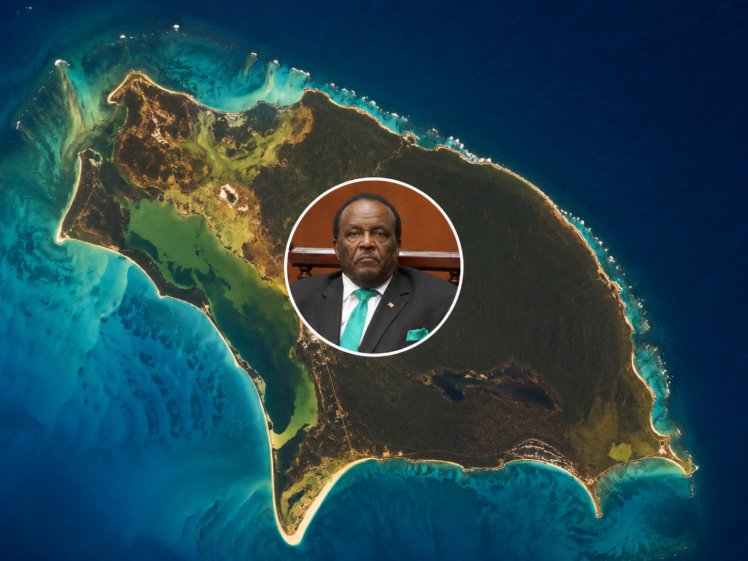
    In a recent post-Cabinet media briefing, Director General of Communications Maurice Merchant has publicly issued a stern official warning from the Antigua and Barbuda Cabinet: any unapproved land sales, leases, and development projects across the island of Barbuda will not receive government recognition, and violators could face strict enforcement action, including the full demolition of illegally constructed structures.

    The announcement followed in-depth Cabinet discussions centered on two key land governance topics: the ongoing development of the long-awaited Barbuda Land Registry, and the national government’s preparations for the formal sale of Crown land on the island. During the meeting, Attorney General and Minister for Legal Affairs Sir Steadroy Benjamin presented a progress update on bringing the new land registry into full operation, a initiative the government has framed as a foundational step to establish a clear, binding legal framework for all land registration processes and property transactions across Barbuda.

    Cabinet members confirmed they were satisfied with the progress achieved so far, and publicly reaffirmed the government’s long-held position on institutional land authority on the island. The Cabinet made clear that under national law, the Barbuda Council does not hold the legal power to sell, lease, or otherwise transfer ownership of any land on the island. Any attempt by the Council to carry out these types of land transactions will be deemed legally void, and will never be recognized or upheld by the national government, the statement stressed.

    This position is consistent with the government’s longstanding stance on Barbuda’s land administration, as it works to roll out a formal, centralized land registration system for the island. Merchant confirmed that work is still ongoing to put in place all the required legal and administrative infrastructure to support consistent land registration and regulated transactions. Government officials anticipate that once fully operational, the registry will deliver much greater legal certainty for existing landowners, prospective investors, and developers by creating an official, verifiable system for recording and confirming all legal land interests.

    Beyond addressing unauthorized transactions, the Cabinet used the briefing to flag growing concerns over unapproved development activity. Ministers reiterated that every land transaction and construction project must comply fully with the national laws of Antigua and Barbuda, and any structures built without securing all necessary legal approvals will be subject to formal enforcement. Merchant noted that the discussion included specific references to ongoing development projects that have proceeded without the required permits, and emphasized that the government is fully prepared to take punitive action where violations are confirmed. Available enforcement actions include the demolition and complete removal of any unauthorized structures built in violation of national planning and development regulations.

    The official warning comes as the national government moves to strengthen oversight of land management across Barbuda, through both the creation of the centralized land registry and the rollout of what officials describe as a far more transparent and secure system for overseeing all land transactions. The Cabinet regards the new registry as a critical pillar of broader efforts to boost transparency in land governance, protect formal property rights, and ensure that all land-related activities are conducted strictly within the bounds of national law.

    Merchant added that the national government remains fully committed to fostering orderly, sustainable development across Barbuda, while ensuring that all land ownership transfers, transactions, and large-scale development projects adhere to established legal procedures. Thursday’s discussions form part of the Cabinet’s ongoing regular review of land management challenges in Barbuda, and the broader government initiative to build institutional systems that will deliver greater legal certainty for residents, developers, and investors alike.

  • International Day of Play – Protect play protect childhood

    International Day of Play – Protect play protect childhood

    As the world marks the annual International Day of Play on June 11, global health and child development advocates are sounding a urgent alarm over the erosion of play opportunities for children across every region of the globe, from conflict zones to rapidly urbanizing communities. This year’s observance carries the clarion theme: “Protect play, protect childhood,” spotlighting a decades-long neglect of a human right enshrined in the UN Convention on the Rights of the Child that underpins lifelong physical, mental, and social development.

    For many marginalized communities, including people of Afro-Caribbean ancestry, cultural norms often prioritize academic study over unstructured recreation, leaving children with little to no time dedicated to play. But the public health costs of this shift have become impossible to ignore. UN data shows that the global prevalence of overweight and obesity among children and adolescents aged 5 to 19 surged from just 8% in 1990 to 20% in 2022, totaling more than 390 million young people living with the condition. The increase is nearly uniform across genders, with 19% of girls and 21% of boys classified as overweight in 2022, transforming childhood obesity into one of the most pressing public health challenges of the 21st century. Compounding this issue, many school systems have cut structured physical education entirely, leaving children to complete an entire academic year with no dedicated playtime built into their schedules.

    Beyond physical health, play is far more than a trivial pastime: it is a universal language that crosses national, cultural, and socioeconomic divides, and a core driver of child development. The United Nations emphasizes that play nurtures resilience, creativity, and innovation in people of all ages. For children specifically, it builds the cognitive, physical, social, and emotional skills needed to navigate a rapidly changing world, fosters relationship-building and problem-solving abilities, and helps young people process trauma and adverse experiences. In educational settings, play-based learning has been repeatedly proven to boost student engagement, make learning more enjoyable and relevant, and improve knowledge retention. Play also supports positive mental health for the entire family, creating space for connection between caregivers and children. Even in crisis, play serves as a lifeline: when conflict or displacement upends children’s lives, playful interactions help them find safety, process fear, and make sense of a chaotic world.

    Yet millions of children are being systematically denied this fundamental right. In war-torn regions including Gaza and Ukraine, ongoing conflict has robbed children of any chance to play, leaving them to bear the brunt of violence and instability with no reprieve. Beyond conflict zones, rapid urbanization has erased large swathes of safe, green public play spaces across much of the globe, as city planning fails to prioritize children’s developmental needs. An estimated 160 million children worldwide are trapped in child labor, forced to work instead of play or learn. Even for children who do get play time, the growing shift to online play has created new risks that many caregivers are unprepared to address.

    To reverse these harmful trends, UNICEF and UNESCO are calling on governments worldwide to prioritize the right to play as part of the Sustainable Development Goals agenda, with three core action items. First, nations must integrate universal access to evidence-based parenting programs that promote playful interaction and help caregivers mitigate risks like excessive screen time into national child development policies. Second, governments must guarantee universal access to high-quality, inclusive early childhood education for all children aged 3 to 6, with play-based learning as a core component. Third, policymakers must protect public play spaces and care environments from the impacts of climate change, urbanization, and conflict.

    Throughout June 2026, UNICEF is rolling out a global campaign to support this effort, sharing expert guidance for parents covering everything from the developmental science of play to fun, accessible family activities. The agency is also releasing dedicated resources to help caregivers keep children’s online play experiences safe and positive, recognizing the growing role of digital spaces in children’s recreation.

    In a statement marking the day, UNICEF Executive Director Catherine Russell noted that play is more than recreation—it is a signal that children feel safe, nurtured, and loved, even amid great hardship. “Play lets children be children, no matter what challenges they face,” Russell said. This year’s International Day of Play serves as a global call to action, uniting stakeholders at the international, national, and local levels to integrate play into education and community planning, secure the necessary policy support, training, and funding, and reaffirm that every child has the right to thrive through play.

  • Spain to Assist Antigua and Barbuda’s Push to Make Spanish Second Language

    Spain to Assist Antigua and Barbuda’s Push to Make Spanish Second Language

    A new collaborative partnership in language education and cultural exchange is taking shape between the Caribbean nation of Antigua and Barbuda and the European Kingdom of Spain, as the Caribbean government advances its ambitious plan to position Spanish as the country’s official second language.

    During a post-Cabinet press briefing held this Thursday, Maurice Merchant, Antigua and Barbuda’s Director General of Communications, shared key updates with reporters on the progress of the initiative. He confirmed that the national Cabinet has received a formal briefing on recent high-level talks between Prime Minister Gaston Browne and Spain’s ambassador accredited to Jamaica, which centered on expanding bilateral cooperation in language teaching and cross-cultural engagement.

    Per Merchant’s statement, Spanish authorities have already conveyed their clear readiness to support Antigua and Barbuda’s ambitious project through a comprehensive package of support. This support includes the deployment of specialized Spanish lecturers, development and provision of custom teaching materials, implementation of ongoing professional teacher-training programs, and access to cutting-edge educational software and other digital learning tools. All resources are targeted at raising the overall quality and accessibility of Spanish instruction across all levels of education in the country.

    Merchant added that the discussions also addressed targeted, sector-specific language training designed for frontline workers across key industries that drive Antigua and Barbuda’s economy. This includes training for employees in tourism, hospitality, airport and seaport operations, national security, and customs services — sectors that interact regularly with Spanish-speaking visitors and trading partners.

    Another key proposal put forward during the talks that received Cabinet attention is the plan to establish a permanent Spanish Language and Cultural Institute on the islands. This dedicated facility will function as a regional hub for immersive language learning, cross-cultural events, and sustained educational collaboration between the two governments.

    In a notable aside, Merchant highlighted that a number of Antigua and Barbuda’s senior government leaders already hold advanced fluency in Spanish. This group includes Foreign Affairs Minister E.P. Chet Greene, Cabinet Secretary Maria Browne, and Sports Minister Dwayne George, demonstrating the existing foundation of Spanish language capacity within the national administration.

    The Antigua and Barbuda government frames the push for broader Spanish proficiency as a strategic investment that will deliver long-term economic and diplomatic benefits. Officials argue that wider Spanish competency will boost the country’s competitive edge in the key tourism sector, expand cross-border commercial opportunities, strengthen its diplomatic engagement across Latin America and the Caribbean, and advance regional integration efforts across the Caribbean bloc.

    Cabinet has formally welcomed the progress of the talks with Spain and expressed unanimous support for continuing diplomatic and practical engagement with Spain and other interested international partners as the language initiative moves from planning to implementation.

  • Saint Lucia showcases labour reforms at ILO meeting

    Saint Lucia showcases labour reforms at ILO meeting

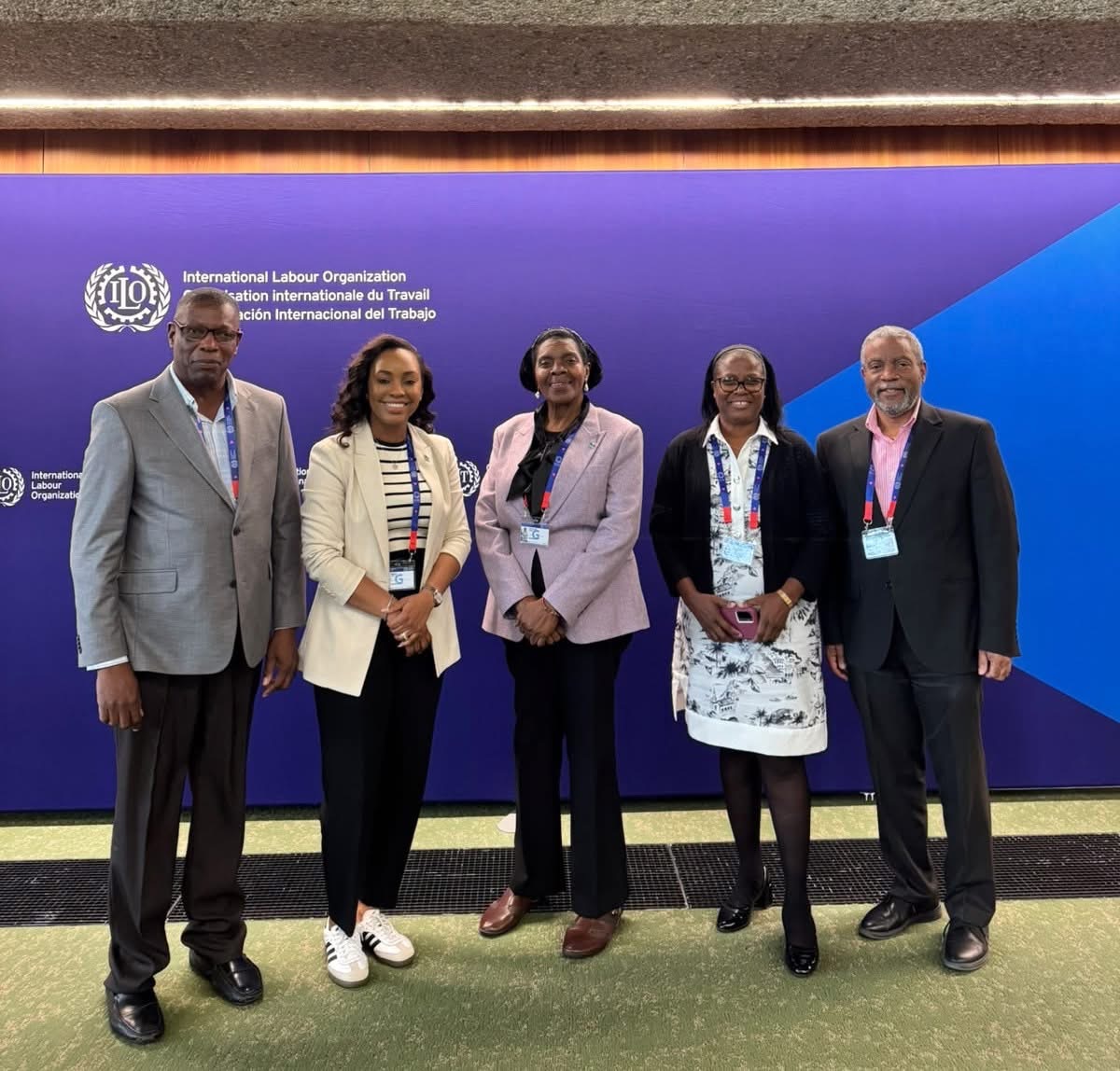
    Against the backdrop of this month’s International Labour Conference (ILC) hosted in Geneva, the Caribbean island nation of Saint Lucia has taken the global stage to outline its sweeping advancements across three core labour-focused priorities: workers’ rights protections, expanded social safety nets, and meaningful gender parity in the workforce, according to an official statement released by the country’s government.

    Leading the presentation for Saint Lucia, Minister for Labour and Social Justice Emma Hippolyte addressed a cross-sectional gathering of delegates from 187 member states of the International Labour Organization (ILO), bringing together representatives from national governments, employer associations, and labour unions. In her address, she detailed the sustained policy push Saint Lucia has pursued in recent years to cultivate a more equitable and inclusive national labour market that leaves no demographic group behind.

    A central pillar of Hippolyte’s address centered on the urgent need to embed gender equality into every layer of working life, with a particular focus on elevating the undervalued care economy. She emphasized that unpaid and underpaid care work forms an invisible backbone of national economic and social development, yet this critical sector has been systematically sidelined for decades, with women bearing the overwhelming majority of this unrecognized burden.

    “Addressing this longstanding oversight is a fundamental act of social justice,” Hippolyte told delegates, as she issued a call for more robust, coordinated international policy frameworks that can back national efforts to advance gender equality and inclusive participation across all sectors of the global workforce.

    Beyond its commitments to gender parity, the minister also outlined a series of tangible policy wins that Saint Lucia has delivered to improve working conditions and social welfare for all residents. Key achievements include the implementation of a binding national minimum wage, the conversion of nearly 1,900 precarious public sector contract positions into permanent, fully benefited roles, the expansion of public assistance programs to reach more low-income households, and ongoing progress toward rolling out universal healthcare coverage. She added that Saint Lucia has now completed ratification of all core ILO conventions, cementing its alignment with global labour standards.

    Most recently, Hippolyte noted, the country ratified ILO Convention 144, which governs tripartite consultation among governments, employers, and workers, and established its first-ever National Tripartite Advisory Committee to formalize this collaborative governance structure. She framed inclusive social dialogue as a foundational tool for building economic stability, boosting national resilience to external shocks, and driving long-term sustainable development that benefits all segments of society.

    Hippolyte also highlighted targeted policy reforms designed to break down systemic barriers that have historically excluded women and other vulnerable groups from full participation in public life and the economy. Among these measures is the elimination of Value Added Tax on sanitary napkins, paired with government support for schools to distribute free menstrual hygiene products to female students, a policy that ensures no young woman has to miss class due to lack of access to essential supplies, protecting their right to uninterrupted education.

  • Derde helft WK 2026: FIFA streng over rechten: regels gelden voor horeca én media

    Derde helft WK 2026: FIFA streng over rechten: regels gelden voor horeca én media

    As the 2026 FIFA World Cup kicks off this afternoon, global football governing body FIFA has once again emphasized its strict commitment to protecting the tournament’s broadcast rights, match footage and commercial exploitation rights. These regulatory standards apply not only to hospitality businesses looking to screen matches for patrons, but also to media outlets using official World Cup photographs, video clips and other tournament-related intellectual property.

    In the South American nation of Suriname, the Surinaamse Televisie Stichting (STVS) holds the exclusive official broadcast rights for the 2026 World Cup. As the authorized rights holder for the country, STVS is required to adhere to FIFA’s global regulatory guidelines and oversee all screening and usage of World Cup broadcasts within Suriname’s borders. Currently, the organization’s primary focus is on clarifying rules for local hospitality operators.

    Under FIFA’s framework, regular restaurants, bars, sports cafes and other hospitality venues are permitted to screen World Cup matches for their everyday patrons. Venue owners are also allowed to host free public viewing events for fans to gather and watch matches together without prior approval. What is not allowed without explicit permission from STVS is any commercial World Cup event that requires attendees to pay for access to the match screening. This includes entry fees, mandatory consumption packages, and charges for reserved tables or seating that are specifically tied to World Cup match viewing.

    According to STVS, these rules are a direct requirement of the standard terms FIFA imposes on broadcast rights holders around the world. The strict copyright enforcement is designed to protect the commercial value of the World Cup tournament, as well as the legitimate interests of FIFA’s official sponsors and global media partners.

    FIFA’s regulatory guidelines extend far beyond public screenings by hospitality businesses. Media organizations of all kinds are also bound by strict usage terms for official tournament content. The use of full match footage, short video clips, official photographs and any other branded World Cup content is only permitted within the clear boundaries set by FIFA. Unlicensed media outlets that have not reached formal agreements with FIFA or an official rights holder are prohibited from freely downloading, distributing or publishing official match content. Even the sharing of short video clips on websites, social media and other digital platforms is subject to FIFA’s usage rules.

    That said, FIFA has established specific partnership and licensing agreements for legitimate news organizations, which allow these outlets to use official World Cup content under pre-negotiated terms. Multiple local Surinamese media outlets have already entered into official cooperation agreements with STVS to access and use tournament content legally.

    In recent years, FIFA has significantly strengthened its oversight of copyright compliance and unauthorized digital distribution of World Cup content. The organization now actively monitors unapproved publication of video content across social media, unauthorized live streaming platforms and other digital channels, cracking down on piracy that erodes the value of official rights.

    With the World Cup now underway, STVS has moved to issue clear guidance to both local hospitality businesses and media organizations to avoid unintended violations of copyright rules. For the average football fan in Suriname, very little changes: all matches remain freely accessible to watch through official broadcasts. For businesses and organizations that seek to commercially exploit World Cup broadcasts or official content, however, clear international regulations set and enforced by FIFA remain fully in effect.

    FIFA’s core message is straightforward: football fans around the world are welcome to enjoy the 2026 World Cup, but all commercial use of match footage, broadcast signals and official events remains subject to the terms and conditions set by official authorized rights holders.

  • Premier League Football to Return to ARG After Cabinet Approval

    Premier League Football to Return to ARG After Cabinet Approval

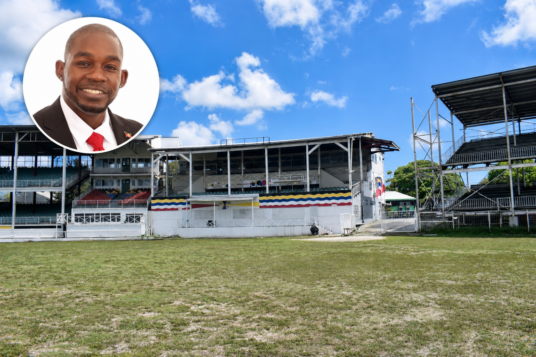
    Top-flight domestic football in Antigua and Barbuda is set to make its long-awaited comeback to the iconic Antigua Recreation Ground (ARG) this coming season, after the national cabinet gave the green light to a groundbreaking pilot program that will allow both football and cricket to share the historic venue. Running from September through December, the new arrangement represents the culmination of weeks of coordinated negotiations between government leaders, the Antigua and Barbuda Football Association, and key stakeholders from the national cricket community.

    The official confirmation of the approval was delivered by Director General of Communications Maurice Merchant during a post-Cabinet press briefing held on Thursday. Merchant outlined that cabinet’s decision rests on the conclusion that the two popular sports can successfully operate side-by-side at the ARG, provided the venue implements structured scheduling, consistent targeted maintenance, and centralized professional facility management. “Cabinet agreed that Premier League football will return to the Antigua Recreation Ground for the upcoming September to December season on a new operational framework,” Merchant stated in his address to reporters.

    For Antigua and Barbuda’s local football ecosystem, this outcome marks a major milestone. Clubs and fans have campaigned for years to bring top-tier domestic football back to the capital’s most high-profile sports venue, which has held a unique place in the country’s sporting history for decades. Widely recognized as one of Antigua and Barbuda’s most iconic sporting infrastructure assets, the ARG has hosted thousands of elite football and cricket matches since it opened, and is deeply woven into the cultural identity of the nation’s sporting community.

    Under the terms of the newly approved plan, the coexistence arrangement will run as a trial throughout the 2024 September-to-December season, allowing officials to assess its effectiveness and work out any logistical kinks before a decision is made on potential long-term adoption. Merchant confirmed that old operational protocols for football at the ARG will be retired entirely, replaced by the updated management framework laid out in the pilot proposal. The cabinet also received formal recommendations to establish a dedicated, cross-stakeholder management body for the ARG, tasked with overseeing all scheduling, maintenance planning, and day-to-day operations. Officials have framed this proposed management structure as a critical step to unlock the full potential of the venue, while upholding the strict quality standards required for both football and cricket competitions.

    The entire negotiation process was spearheaded by Sports Minister Dwayne George, who brought all competing parties to the table to find a mutually beneficial solution. Merchant emphasized that cabinet remains confident the ARG can continue to fulfill its dual role as a world-class host for regional and international cricket, while also once again serving as the premier home for top domestic football in Antigua and Barbuda. For local clubs and their fanbases, the approval is more than just a logistical change—it brings top-flight football back to a venue that millions consider the traditional heart of major national sporting events.

  • NIS under pressure, but ‘financially stable for a while’

    NIS under pressure, but ‘financially stable for a while’

    The chair of the National Insurance Services (NIS) board of directors in St. Vincent, Stephen Joachim, has publicly addressed the state of the country’s state-run social security system amid mounting demographic and economic headwinds, confirming that while the agency faces significant pressure, it remains financially secure for the foreseeable future.

    Joachim made the comments during an interview with local outlet Boom FM, coinciding with the upcoming leadership transition: incoming executive director Ronette Lewis will officially take over the role on July 1, stepping into the role at a moment when both the NIS and the wider government are grappling with fiscal strain, with the country carrying a heavy national debt.

    The most recent independent actuarial assessment of NIS’s long-term solvency, completed three years ago, projected that the system would remain fully funded through 2060 based on demographic and economic assumptions in place at the time. A new updated actuarial review is currently in its final stages of completion, Joachim confirmed. That 2021 projection was built around detailed calculations of future contribution inflows, scheduled benefit outflows and other core operational factors to reach the 2060 solvency estimate.

    However, Joachim issued a stark warning that unforeseen shifts in national fertility rates, combined with potential inaccuracies in earlier demographic data, could drastically alter that long-term outlook. When the previous assessment was conducted, modelers estimated St. Vincent’s fertility rate stood at roughly two children per woman. A few months back, officials revised that estimate down to 1.8, but the latest official government data puts the actual fertility rate much closer to 1.5. That downward shift carries massive implications for the long-term funding of the social security system, Joachim explained, as a smaller working-age population will be called on to support pension benefits for a growing cohort of retirees going forward.

    At its core, Joachim’s message emphasized that the NIS does not have an infinite pool of funds to draw from, and every policy decision regarding benefit levels and retirement age represents a delicate intergenerational balancing act between meeting the needs of current beneficiaries and preserving solvency for future generations. “Everybody wants lots of benefits,” he noted. “We could double your pension next week… but what happens to your grandchild? There’ll be no money there for your grandchild. You really want us to do that?”

    Joachim explained that policy trade-offs for the NIS are not simple questions of factual right or wrong, but require deliberate judgment to strike an acceptable balance between how much the system can pay out to current contributors and retirees, and how much reserves must be set aside to meet future obligations.

    Joachim also pushed back against public criticism of Lewis’s appointment, with many observers arguing that the role should be filled by a trained actuary, following the departure of former executive director Stewart Haynes, an actuary who led the NIS for nine years before resigning earlier this year to accept a new position in St. Kitts. Joachim rejected the idea that an actuarial background is a prerequisite for the top role, noting that what the NIS needs most is an experienced manager, not a technical specialist. “Why do you need an actuary? People just say it because Stuart was an actuary,” he said. “If anybody doubts me, speak to Stuart Haynes. He will tell you: ‘Steve, I do not use my actuarial skills to manage the NIS. This is about managing.’”

    In a pointed rebuke to critics of both the appointment and the board’s overall approach to the NIS, Joachim urged opponents to set aside empty sloganeering and engage with the actual mechanics of how the social security system operates. “At least be logical and sensible,” he said. “Tell me why you need to have an actuary. Tell me, do you understand the NIS and how it works? Do you understand what really happens in the NIS? I don’t think most people have a clue, so they automatically assume, because Stuart is an actuary, we have to have an actuary too.”

    While Joachim acknowledged that members of the public are fully entitled to hold differing opinions on NIS governance, he made clear that under his leadership, the board will stand by all decisions it has made after a thorough selection and review process, on the grounds that these choices serve the long-term best interests of all NIS contributors. “We had people who disagreed with us. I don’t have a problem with people disagreeing,” he said. “But you can’t say we didn’t do a thorough process.”

  • Gonsalves willing to join legal team to challenge dismissals

    Gonsalves willing to join legal team to challenge dismissals

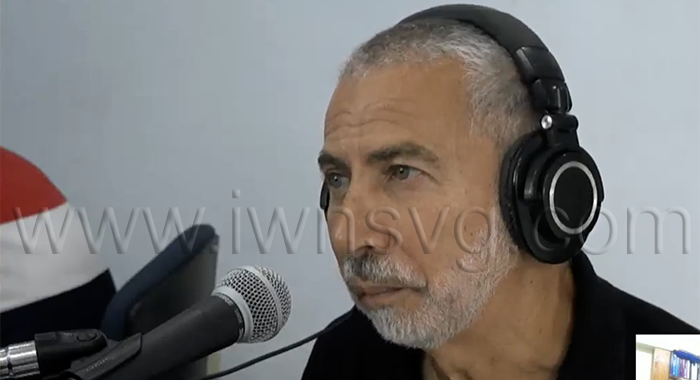
    A brewing political and legal conflict has emerged in the country after opposition leader Ralph Gonsalves publicly accused the ruling New Democratic Party (NDP) government of illegally terminating 28 workers employed through the national Youth Employment Service (YES Programme). Gonsalves, a trained lawyer who has led the opposition, made the allegations during his regular weekly segment on Star Radio this Wednesday, outlining multiple violations of national law and constitutional protections in the mass dismissal.

    At the core of Gonsalves’ argument is a direct breach of Section 13 of the national Constitution, which explicitly prohibits discrimination in employment on the basis of race, gender, place of origin, religious creed, and political opinion. According to Gonsalves, every single one of the 28 terminated workers was replaced by a known public supporter of the ruling NDP, a pattern that leaves no question of politically motivated discrimination. “You cannot discriminate against somebody on political grounds with respect to their job. You can’t do that,” Gonsalves emphasized during the broadcast.

    The opposition leader detailed that the 28 dismissed employees, most of whom served as community mobilizers and program coordinators, held formal letters of appointment confirming their roles. Despite this valid employment status, no performance assessments were conducted before their positions were eliminated. Worse still, Gonsalves reported that workers received no formal written termination notice as required by national labor regulation: some were informed of their firing via casual phone calls, while others were told in person by mid-level public administration staff.

    Gonsalves clarified that he does not hold the low-level staff who delivered the termination notices personally responsible for the decision, but says these messengers will be required to testify in court about who issued their instructions. He says the evidence already points directly to senior political leadership, most likely a sitting government minister or other high-ranking member of the ruling political directorate – the source of the discriminatory decision that underpins the unlawful firing.

    As of the broadcast, the dismissals took place back in April, and many of the affected workers have yet to receive the pay and severance they are legally owed. Under national labor regulations, Gonsalves explained, terminated workers are owed all outstanding pay for their final month of employment, a minimum of one month’s salary in lieu of formal notice, any earned compassionate gratuity, and compensation for unused accrued holiday time. Gonsalves also noted that the national Protection of Employment Act allows for wrongfully terminated workers to petition for reinstatement to their former roles, though he acknowledged the current government is unlikely to agree to such a resolution voluntarily.

    To date, neither the Public Service Union – the primary trade union representing the country’s public sector workers – nor the national Christian Council have released any public statement addressing the mass termination. In response to this lack of institutional action, Gonsalves announced that a full legal team has already been assembled to provide pro bono representation for all 28 affected workers. He confirmed he will personally lead the legal team if the group moves forward with a formal constitutional challenge to the dismissals.

    “The evidence is clear and a case will be made,” Gonsalves said, adding of the judicial process: “I know the wheels of justice grind slowly, but it grinds finely.” He called on the government to immediately remedy the unlawful action by providing all owed compensation to the fired workers, and has publicly pressed for accountability for the politically motivated discrimination he says violates the nation’s founding constitutional principles.