As global policymakers begin shaping the post-2030 sustainable development agenda, the British Virgin Islands (BVI) has once again stood firmly behind Brazil’s push to win international adoption of an 18th Sustainable Development Goal (SDG) focused exclusively on Ethnic and Racial Equality.
The existing 17 United Nations SDGs, which are targeted for completion by 2030, do not include a standalone goal for advancing ethnic and racial equity. Brazil’s voluntary proposal for SDG 18 seeks to fill this gap by centering ethnic-racial equality as a core pillar of global sustainable development, though it has not yet received official UN endorsement. Brazil has spent years campaigning for broader international recognition of the initiative, framing it as a critical missing piece of the global sustainability framework.
The BVI’s latest commitment came during a technical meeting convened by Brazil’s Ministry of Racial Equality, themed “SDG 18 and the Promotion of Ethnic and Racial Equality.” The gathering brought together representatives from national governments, faith-based organizations, civil society groups, and grassroots movements that make up the global SDG 18 advocacy network. Benito Wheatley, BVI’s Special Envoy, joined the meeting virtually and was among the key speakers highlighting the importance of the initiative.
In his remarks to the assembly, Wheatley praised Brazil for taking the bold step of launching SDG 18 as a voluntary national initiative and for its ongoing work to build international buy-in. “Ethnic and racial equality should be a foundational principle of sustainable development,” Wheatley stated. He went on to explain that the BVI’s longstanding support for the initiative has been visible through its consistent participation in multilateral forums under the umbrella of the UN Economic Commission for Latin America and the Caribbean (ECLAC), including the Forum of the Countries of Latin America and the Caribbean on Sustainable Development and the Regional Conference on Population and Development in Latin America and the Caribbean.
Wheatley emphasized that the BVI, along with other Small Island Developing States (SIDS), remains a vocal advocate for equitable global development. He argued that the international community holds a collective responsibility to guarantee that all people can participate fairly in the sustainable development of their societies and share equitably in its benefits. This core principle underpins the BVI’s support for SDG 18, he added.
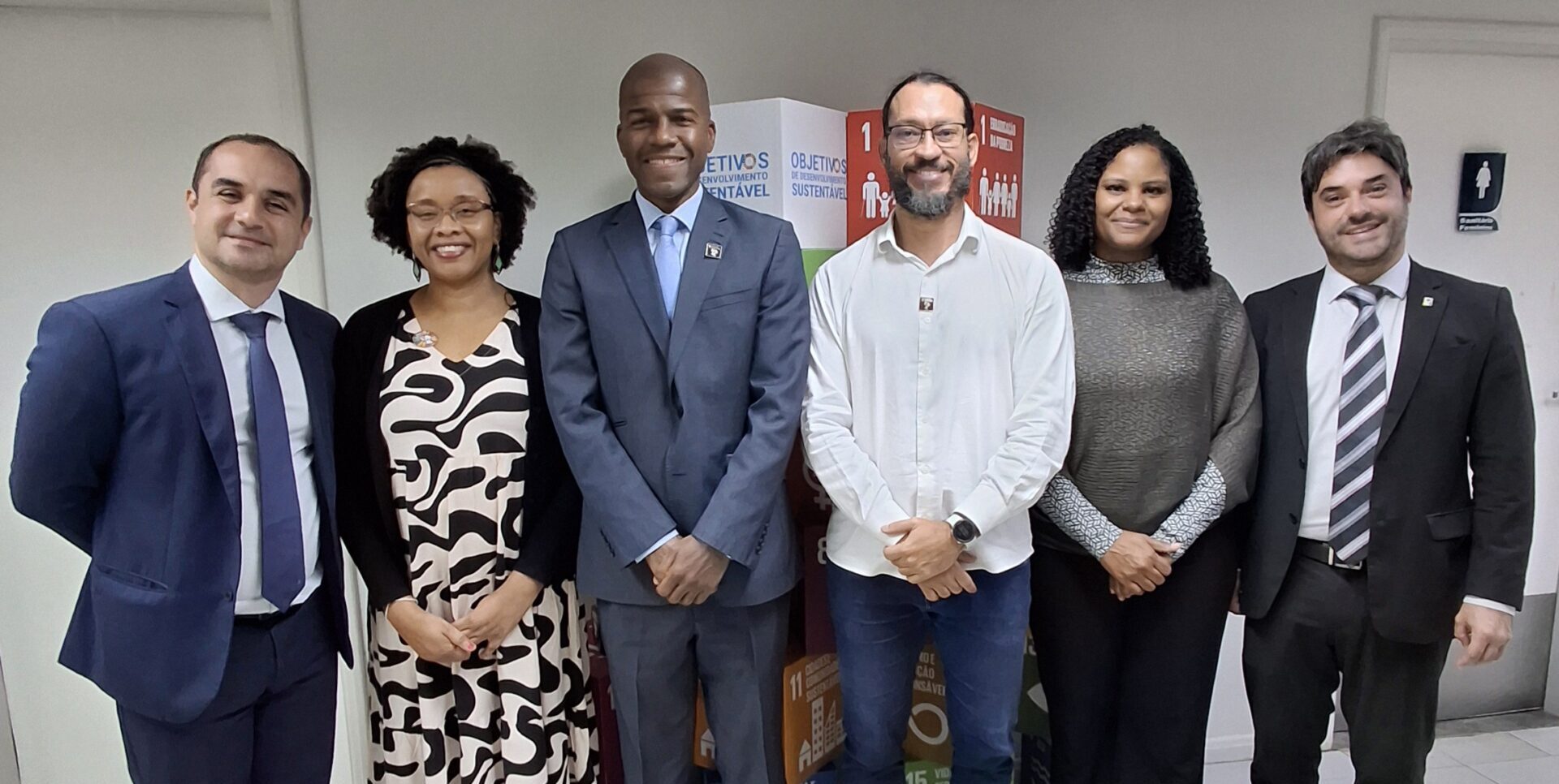
The BVI’s renewed public commitment follows a recent high-level bilateral meeting held in Brazil’s capital, Brasilia, where Wheatley met with a delegation of senior Brazilian officials. Attendees included Igor Trabuco, Head of the International Advisory Department at Brazil’s Ministry of Racial Equality; Tatiana Dias Silva, Director of Evaluation, Monitoring and Information Management; Thiago Gehre, Executive Director of Brazil’s National Commission on Sustainable Development Goals; Patrícia Carvalho, an officer with the commission; and Gustavo Westman, Special Adviser for International Affairs in the Office of the President. This bilateral meeting was held in conjunction with ECLAC’s Second Parliamentary Summit on Climate Change and Just Transition in Latin America and the Caribbean, an event where Brazil serves as Co-Chair and the BVI holds the position of Vice Chair of the Parliamentary Observatory of Climate Change and Just Transition (OPCC).
As discussions about the future of the global SDG framework beyond 2030 gain momentum, the growing coalition of support behind Brazil’s SDG 18 initiative signals a shifting global consensus around the need to explicitly center ethnic and racial equity in global sustainability efforts.