In a large-scale coordinated maritime emergency operation that concluded successfully off India’s eastern coast, the Indian Coast Guard has pulled off the full rescue of a disabled Belize-registered cargo tanker carrying 23 crew members, eliminating major risks of a shipwreck and large-scale palm oil pollution, authorities confirmed this week.
The incident unfolded at approximately 7:30 a.m. local time on Sunday, September 27, 2026, when the 9,000-metric-tonne palm oil tanker MT Seagull 9 issued an urgent distress signal from its position roughly 37 nautical miles east-southeast of Paradip, a major port in the eastern Indian state of Odisha. The vessel had suffered catastrophic main engine failure that left it dead in the water, followed by uncontrolled flooding in its ballast tanks that caused the ship to tilt at a dangerous angle, putting all on board at immediate risk of sinking.
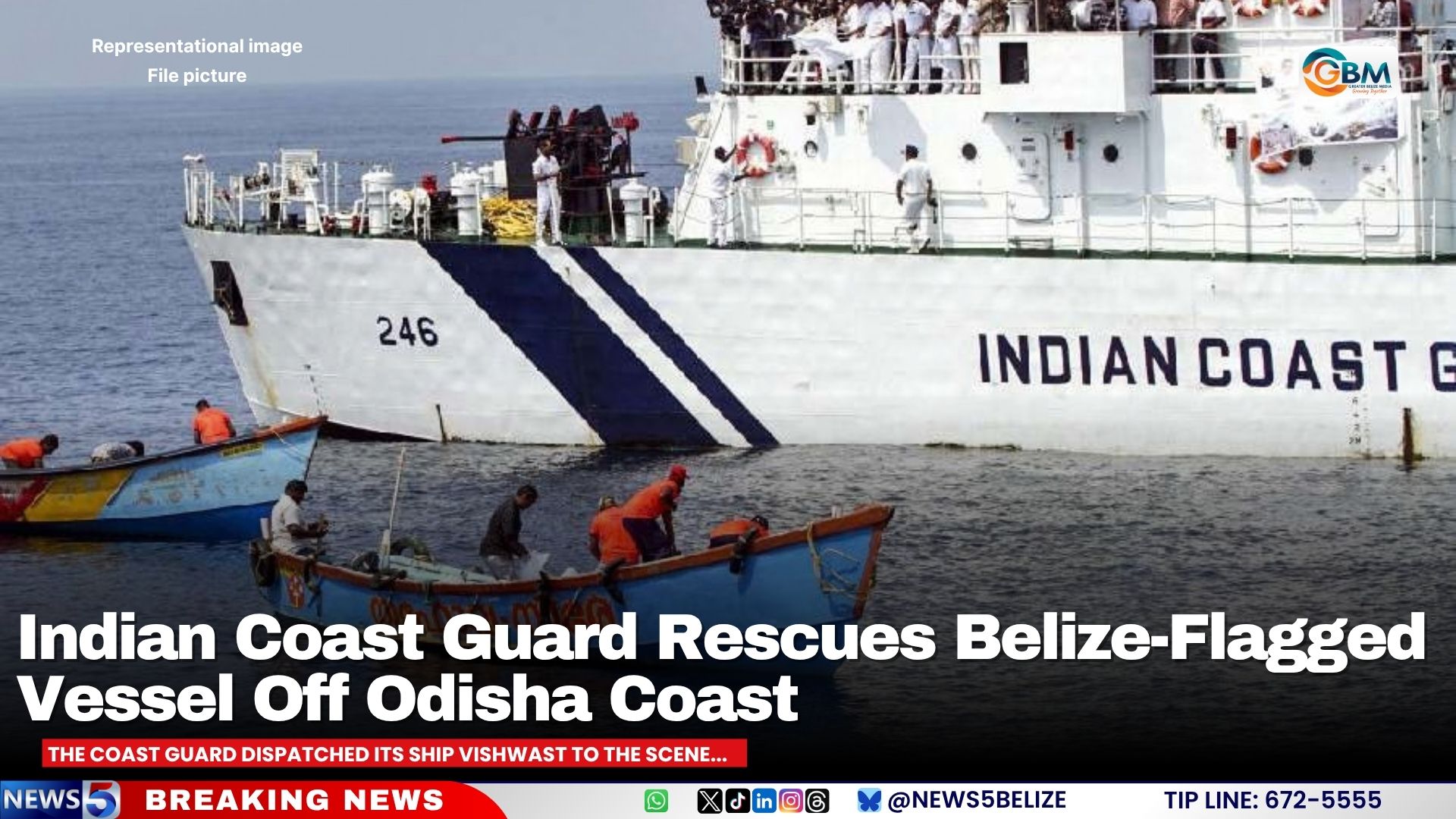
Within minutes of receiving the distress call, the Indian Coast Guard mobilized a multi-asset response team, dispatching its offshore patrol vessel Vishwast to the incident site at full speed. A specialized damage control team was deployed to board the listing tanker, where technicians immediately got to work containing the flooding: submersible pumps were brought on board to remove excess water, two severely damaged seawater pipelines were completely sealed off, and a third fractured line was successfully contained to stop further leakage into the vessel’s hull.
To prepare for the potential risk of an oil spill into the Bay of Bengal, a dedicated pollution control vessel and a second offshore patrol vessel were rerouted from nearby operations to the scene to stand by for rapid response and continuous environmental monitoring. A Dornier reconnaissance aircraft operated by the Indian Coast Guard also launched from the regional hub in Bhubaneswar to carry out round-the-clock aerial surveillance of the incident zone and monitor any signs of pollution.
Over the following hours, teams carried out coordinated controlled cargo transfer and systematic de-flooding operations that gradually stabilized the listing tanker, completely eliminating the imminent risk of capsizing. While a small, thin palm oil sheen was detected in waters adjacent to the vessel during the first day of operations, full aerial and surface surveys conducted by Monday confirmed the minor sheen had dissipated completely with no lasting environmental impact.
Following the successful stabilization of the MT Seagull 9, the Paradip Port Authority’s tugboat Dolphin took over the operation, towing the disabled vessel to the designated anchorage area off Paradip Port, where repair work on the failed main engine is now underway. All 23 crew members aboard the tanker remained safe throughout the entire rescue operation, with no reported injuries.