分类: world

  • Nearly a thousand illegal immigrants detained on December 1

    Nearly a thousand illegal immigrants detained on December 1

    SANTO DOMINGO – In a significant nationwide enforcement operation, Dominican authorities detained hundreds of individuals for immigration violations this week. The General Directorate of Migration (DGM) executed coordinated interdiction operations on Monday, December 1, 2025, resulting in the apprehension of 587 persons found to be residing in the country without legal status.

    The operations spanned multiple strategic locations, highlighting a comprehensive approach to border and internal control. Key areas targeted included the northern border regions of Cañongó and Dajabón, the eastern tourist zone of Verón, the southern locality of Felipina de Bahoruco, the southwestern port city of Barahona, and Villa Vásquez in Monte Cristi. Operations were also conducted in Los Ríos, a sector of the capital, Santo Domingo.

    In a demonstration of inter-agency collaboration, the DGM received an additional 407 individuals transferred from separate interdiction initiatives conducted by the nation’s security forces. The Dominican Army referred 233 persons, the National Police transferred 63, and the Specialized Border Security Corps (CESFRONT) contributed 111 referrals.

    Combining both its own operations and the inter-agency transfers, the DGM processed a total of 994 individuals for irregular immigration status. Following official procedures, the vast majority—917 persons—were subsequently deported from the country. The DGM emphasized that these actions are not isolated incidents but rather constitute a routine component of its ongoing national immigration control strategy. This strategy is implemented in tight coordination with various security and border protection agencies across the Dominican Republic to maintain the integrity of the nation’s immigration laws.

  • The Repair Campaign reveals widespread Caribbean support for long-term investments from former colonial powers

    The Repair Campaign reveals widespread Caribbean support for long-term investments from former colonial powers

    A groundbreaking survey by The Repair Campaign reveals an unprecedented consensus across the Caribbean regarding colonial reparations and historical education. The 2025 study demonstrates that 83% of Jamaicans and Barbadians specifically advocate for sustained financial commitments from former colonial powers including Britain, France, and the Netherlands, citing centuries of resource extraction during colonial rule.

    The research, marking the organization’s third anniversary coinciding with the UN’s International Day for the Abolition of Slavery, exposes critical educational gaps concerning colonial history. Merely 41% of Caribbean respondents received education about chattel slavery in primary schools, with only 35% encountering this history during secondary education. This knowledge deficit extends to European nations, where 85% of UK participants were unaware that over three million Africans were forcibly transported to the Caribbean during the transatlantic slave trade.

    An extraordinary 89% of Caribbean respondents emphasized the necessity of incorporating comprehensive colonial history into local educational curricula. The Repair Campaign, operating under CARICOM’s 10-Point Plan for Reparatory Justice, has significantly advanced this movement through extensive outreach. Their efforts include approximately 280 engagements with civil society and governmental entities across Caribbean and European regions, plus over 100 high-level political meetings spanning 20 nations.

    The campaign’s digital strategy has reached over five million individuals through social media platforms, while gathering more than 20,000 signatures petitioning the UK government for formal apologies and reparative justice. Founder Denis O’Brien contextualized these efforts, stating: ‘The legacy of transatlantic enslavement, colonialism, and Indigenous genocide continues to profoundly shape the social, economic, and political realities of the Caribbean today. Historical injustices persist through structural inequalities, economic vulnerabilities, and social disparities.’

    Campaign Manager Brian Royes announced forthcoming initiatives: ‘In 2026, we will place renewed focus on energizing Caribbean governments to formally demand apologies from UK and European governments for their role in chattel slavery. This constitutes a critical first step toward achieving deep, long-lasting improvement for millions across the Caribbean.’

    The movement frames these financial investments and educational reforms as essential components for achieving reparatory justice and sustainable development throughout the region.

  • Jamaica Secures US$6.7 Billion for Hurricane Melissa Recovery

    Jamaica Secures US$6.7 Billion for Hurricane Melissa Recovery

    Jamaica has obtained a substantial international financial package totaling US$6.7 billion to support recovery efforts following the devastating impact of Hurricane Melissa. The comprehensive assistance package was coordinated following direct appeals from Prime Minister Andrew Holness to global financial institutions.

    The funding consortium includes multiple international organizations: the Development Bank of Latin America and the Caribbean (CAF), the Caribbean Development Bank, the Inter-American Development Bank Group, the International Monetary Fund, and the World Bank. This collaborative effort represents one of the largest disaster recovery packages in Caribbean history.

    Hurricane Melissa made landfall in Jamaica during October 2025 as a catastrophic Category 5 storm, generating widespread destruction across the island nation. The hurricane caused massive flooding, severely damaged residential areas, educational facilities, and critical infrastructure networks, while displacing thousands of Jamaican citizens. Preliminary damage assessments indicate total losses reaching approximately US$8.8 billion, establishing Melissa as one of the most destructive meteorological events in Jamaica’s recent history.

    The recovery package incorporates multiple financial instruments including immediate emergency relief allocations, long-term reconstruction financing, specialized technical assistance programs, and substantial private investment components. This multi-faceted approach aims to not only restore damaged infrastructure but also build enhanced resilience against future climate-related disasters.

    Jamaica’s proactive disaster risk management planning enabled rapid initial response efforts. Within days of the hurricane’s impact, US$662 million became available through various mechanisms including government contingency reserves, the Caribbean Catastrophe Risk Insurance Facility, World Bank catastrophe bonds, and IDB credit facilities. This immediate funding addressed critical humanitarian needs while longer-term recovery strategies were being developed.

    The newly announced comprehensive package allocates US$3.6 billion over a three-year implementation period, targeting priority government reconstruction projects, resilient infrastructure development, small business rehabilitation programs, budgetary support, and technical guidance initiatives. Additionally, approximately US$2.4 billion in private investment is anticipated to significantly expand the scale and scope of recovery operations.

  • Pope Leo Urges Dialogue Over Military Action in Venezuela

    Pope Leo Urges Dialogue Over Military Action in Venezuela

    In a significant diplomatic intervention, Pope Leo has publicly urged the United States to pursue alternatives to military action in Venezuela, emphasizing dialogue and economic measures as preferable approaches. The first American pontiff in Catholic history made these remarks during an in-flight press conference while returning to Rome from Beirut on Tuesday.

    The Pope expressed concern about potential military operations, stating: ‘There appears to be possibility of some activity, even an operation to invade Venezuelan territory. I firmly believe that seeking pathways for dialogue, potentially including economic pressure, represents a more constructive approach to change, if that is the objective the United States wishes to pursue.’

    These comments emerge amid escalating tensions between Washington and Caracas. Pope Leo revealed that Venezuelan church leadership is actively working to de-escalate the situation. He additionally referenced recent communications between U.S. President Donald Trump and Venezuelan leader Nicolás Maduro, highlighting the necessity for careful monitoring of this volatile geopolitical landscape.

    The backdrop to this diplomatic exchange includes Maduro’s indictment in the United States for allegedly leading the Cartel de los Soles criminal organization. According to sources, President Trump and Secretary of State Marco Rubio delivered an ultimatum to Maduro during a late November phone call, indicating he had limited time to safely exit the country with immediate family members.

  • Antigua and Barbuda Customs Officer Featured in WCO Programme as Small Island Scholarship Concludes

    Antigua and Barbuda Customs Officer Featured in WCO Programme as Small Island Scholarship Concludes

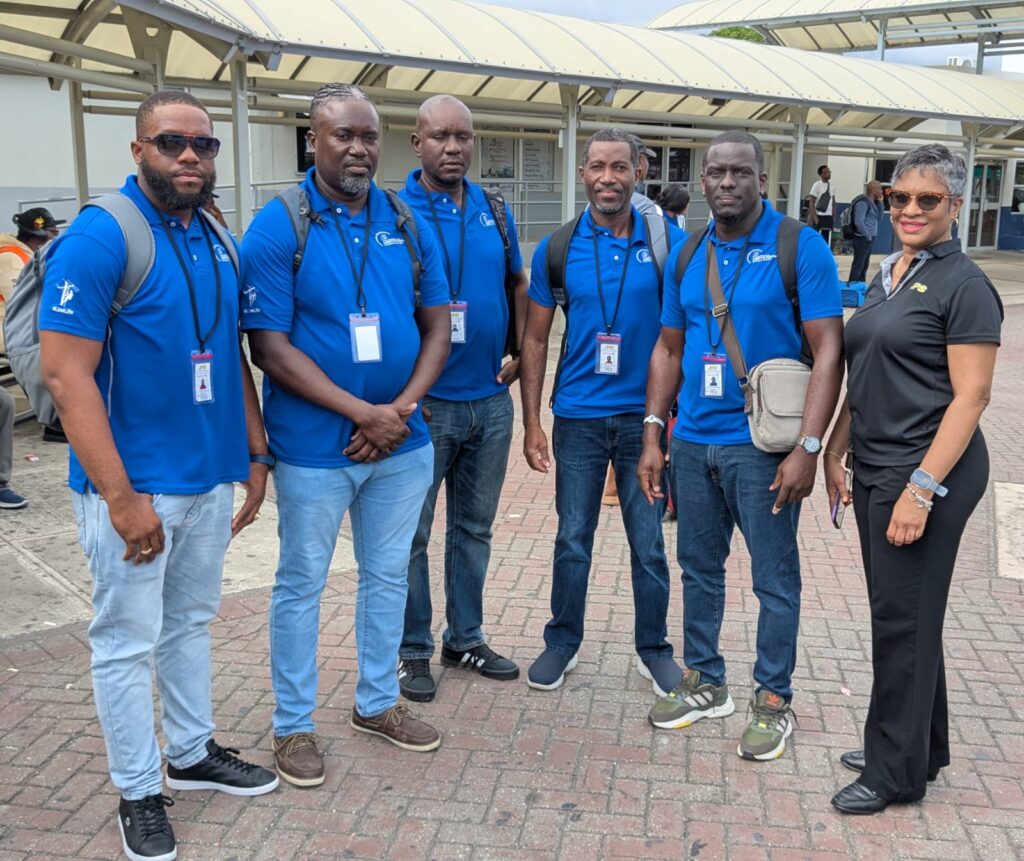
    The World Customs Organization (WCO) has formally recognized Senior Customs Officer Salim Browne of Antigua and Barbuda as it celebrated the successful completion of its ambitious Small Island Economies (SIEs) Scholarship Programme. Officer Browne distinguished himself as one of only thirty officials chosen from nineteen vulnerable island nations to partake in this intensive capacity-building initiative, which unfolded across three separate editions from 2023 to 2025.

    Funded by the WCO-Customs Cooperation Fund-Korea, the program’s curriculum was meticulously designed to confront the distinct challenges faced by small island customs administrations. It delivered rigorous academic and practical training in critical domains such as advanced risk management protocols, contemporary border security techniques, trade facilitation measures, and enhancing international cooperation. Each three-month session combined theoretical classroom instruction with hands-on, field-based learning experiences.

    The WCO established the program specifically to empower small island states, which often operate with limited resources and possess economies highly dependent on imports. The initiative aims to bolster their resilience against the mounting pressures of global trade fluctuations, evolving security threats, and the relentless pace of technological transformation in customs operations.

    The Antigua and Barbuda Customs and Excise Division has publicly commended Officer Browne’s involvement, emphasizing that the expertise he acquired is instrumental to the nation’s ongoing campaign to modernize its customs infrastructure. This modernization seeks to align national procedures with global standards, thereby improving service delivery, strengthening border protection, and streamlining trade processes for economic benefit.

    The final cohort of the scholarship brought together a diverse group of officials from geographically dispersed regions, including the Caribbean, Indian Ocean, and the Pacific, with participants from Jamaica, Trinidad and Tobago, Saint Lucia, Papua New Guinea, the Maldives, and Seychelles. The WCO heralds the program’s conclusion as a major milestone in its global capacity-building agenda and anticipates that the professional network forged among the graduates will foster sustained collaboration and cooperation among small island customs administrations worldwide.

  • Multi-agency partnership launched to strengthen Jamaica’s Hurricane recovery

    Multi-agency partnership launched to strengthen Jamaica’s Hurricane recovery

    KINGSTON, Jamaica — A powerful consortium of international and local organizations has united to spearhead Jamaica’s comprehensive rehabilitation in the aftermath of Category 5 Hurricane Melissa’s catastrophic impact. The coalition comprises BridgePoint Foundation, Jamaica Defence Force (JDF), Operation Blessing, Ruka Storm Foundation, World Vision USA, and WhyNot International, all formally collaborating to reconstruct devastated communities and assist families in rebuilding their lives.

    This strategic alliance combines decades of cumulative expertise in disaster response, humanitarian aid, logistical operations, and sustainable community development. In a unified declaration, the partners emphasized their collective dedication: “Together, we are building back hope one home, one family, one community at a time.”

    BridgePoint Foundation serves as the coordinating body for this national recovery endeavor, directing objective-setting, field coordination, and maintaining constant communication among partners and community stakeholders. The foundation’s methodical, grassroots strategy is engineered to optimize each organization’s unique capabilities to provide enduring, outcome-oriented support across the island.

    Initial relief operations have already delivered nourishment, potable water, and critical supplies to over 300 affected families in Black River. Ongoing logistical coordination with NGOs and the JDF prioritizes reaching vulnerable communities including Black River, Accompong, Belmont, Montego Bay, and remote surrounding regions.

    The coalition has implemented extensive relief measures featuring shelter assistance, housing construction, and support for local enterprises. Operation Blessing emerged as a leading contributor, distributing substantial aid across multiple parishes: 90,000 hot meals, protective tarping for seven homes, structural stabilization for one school roof, 10,391 gallons of purified water, 2,000 solar lamps, 2,400 care packages, over 40,000 water bottles, and five church-based water filtration systems each producing up to 1,000 gallons daily.

    Laura Butler, Director of Operations and Strategic Relationships at BridgePoint Foundation, commended the collaborative efforts of partners, JDF, and nationwide volunteers: “It’s impossible to overstate the level of destruction our country has endured. It will take all of us—every effort, every partner, every hand—to rebuild our beautiful Jamaica. I have the privilege of working alongside these groups on the ground, and it is truly an honor to be part of this extended team that is doing wonders daily for our people.”

    Butler highlighted the inspirational resilience of Jamaican citizens, noting, “It’s also beautiful to see the Jamaicans working overtime to help those affected by the hurricane. True solidarity when it’s needed the most.”

    The United Cajun Navy has significantly contributed by shipping 200,000 ready-to-eat meals and 50,000 liters of water to the island. The organization pre-deployed search and rescue teams before Melissa’s landfall and established an incident management team, medical resources, and a primary distribution hub in St Elizabeth.

    Their continuing support includes: coordinated roof repairs for educational institutions, medical clinics, churches, and residences; creation of logistical staging areas and resource distribution points; agricultural land rehabilitation in St Elizabeth; sustenance distribution in mountainous communities near Negril and Westmoreland; assistance to Maggoty church in clearing damaged library materials and restoring shelter space; generator provisions for schools and clinics; Starlink units for emergency responders; consistent delivery of hot meals and water to isolated households; and specialized expertise in freshwater procurement.

    Collectively, these organizations have extended aid to hundreds of families across Jamaica, concentrating on severely affected and inaccessible communities. Their synchronized initiatives additionally bolster local vendors, enhance community-driven recovery programs, and expand shelter and housing construction projects.

  • Room to rebuild  stronger

    Room to rebuild stronger

    In an unprecedented move, international financial institutions have pledged a monumental $6.7 billion financing package to support Jamaica’s recovery from the devastation wrought by Hurricane Melissa. The Category 5 hurricane struck the island’s southwestern region on October 28 with catastrophic winds exceeding 185 mph, causing preliminary damage estimates of $8.8 billion.

    The coordinated three-year assistance program represents the largest development financing package ever assembled for Jamaica, involving the International Monetary Fund, World Bank Group, Inter-American Development Bank, Development Bank of Latin America and the Caribbean, and the Caribbean Development Bank. Prime Minister Andrew Holness characterized the rapid mobilization of funds within one month of the disaster as “historic” and a testament to Jamaica’s strengthened international credibility.

    According to Holness, this extraordinary support reflects global confidence in Jamaica’s governance framework, built through years of disciplined fiscal management, debt reduction, and institutional strengthening. “Jamaica today stands as a credible, responsible, and trustworthy sovereign,” Holness stated during an address to the House of Representatives, emphasizing that the nation’s hard-earned reputation enabled this rapid response during its time of greatest need.

    The recovery strategy will unfold through three comprehensive phases. The initial stabilization phase focuses on restoring essential services including electricity, water, connectivity, emergency shelter, and transportation infrastructure. As conditions stabilize, relief efforts will transition from physical distribution to targeted financial support through voucher systems.

    The second phase addresses economic and social recovery through school reopenings, healthcare facility restoration, and support for agricultural sectors, small businesses, and tourism operators. Particular emphasis will be placed on micro, small, and medium-sized enterprises (MSMEs), which Holness identified as the backbone of Jamaica’s economy. The Development Bank of Jamaica has launched a Business Recovery Programme with $3 billion in initial funding for the 2025/26 fiscal year.

    The final reconstruction phase will focus on climate-resilient rebuilding with future-proofed infrastructure designed to withstand environmental challenges. Holness emphasized that reconstruction efforts will serve as a growth-inducing strategy, creating employment opportunities, attracting private investment, and ultimately repositioning Jamaica as a modern, competitive economy capable of weathering future climate shocks.

  • Caribbean States Meet in Antigua for Nuclear Safeguards Training

    Caribbean States Meet in Antigua for Nuclear Safeguards Training

    A landmark regional initiative to enhance nuclear security protocols is underway in Antigua and Barbuda this week. Government officials from eight Caribbean nations have convened for a specialized workshop focused on strengthening the reporting of nuclear material inventories, specifically under the modified Small Quantities Protocol (SQP).

    The intensive, week-long training program, hosted at the Trade Winds Hotel, represents a significant collaborative effort. It is jointly organized by the Antiguan government alongside major international bodies, including the US Department of Energy, the National Nuclear Security Administration (NNSA), the International Nuclear Safeguards Engagement Programme, and the International Atomic Energy Agency (IAEA).

    In his opening address, Ambassador Dr. Clarence Pilgrim, Permanent Secretary in the Ministry of Foreign Affairs, emphasized the critical nature of the event. He stated that the workshop is both ‘timely and essential,’ underscoring a fundamental principle of global security: all nations, including those with minimal or no nuclear material, are bound by international non-proliferation obligations. Dr. Pilgrim elaborated that the core objective of the sessions is to equip participating states with the advanced technical expertise required to compile precise nuclear inventories and ensure their accurate submission to the IAEA.

    The delegations in attendance comprise technical and policy experts from St. Kitts and Nevis, St. Vincent and the Grenadines, St. Lucia, Suriname, the Bahamas, Grenada, Belize, and the host nation, Antigua and Barbuda. According to organizing officials, this capacity-building exercise is designed to directly support the region’s ongoing endeavors to fulfill the stringent requirements set forth by the Comprehensive Safeguards Agreement and its Additional Protocol. These agreements are considered the cornerstone of the global nuclear non-proliferation framework, and enhanced compliance from Caribbean states marks a proactive step toward reinforcing worldwide security architecture.

  • Nog honderden vermist na overstromingen in Indonesië, Sri Lanka en Thailand

    Nog honderden vermist na overstromingen in Indonesië, Sri Lanka en Thailand

    A catastrophic flooding event across Southeast Asia has left rescue teams searching for more than 800 missing persons while the confirmed death toll has surpassed 1,000 across Indonesia, Sri Lanka, and Thailand. The devastating natural disaster has triggered urgent calls for enhanced climate action from regional leaders.

    According to latest official reports, Indonesia has suffered the most severe impact with 442 confirmed fatalities and 402 individuals still unaccounted for, primarily on the island of Sumatra. Sri Lankan authorities report 334 deaths with approximately 400 people missing in the aftermath of Cyclone Ditwah. Thailand has recorded 176 fatalities, mostly concentrated in the southern Songkhla province where the city of Hat Yai experienced its most intense rainfall in three centuries.

    The humanitarian crisis has affected over four million residents across the region. Indonesia’s National Disaster Management Agency reports 290,700 people displaced across North Sumatra, West Sumatra, and Aceh provinces. In Sri Lanka, nearly one million people have been impacted by the disaster with approximately 200,000 evacuated to temporary shelters.

    Indonesian President Prabowo Subianto visited affected areas, pledging to rebuild damaged infrastructure while highlighting accessibility challenges due to severed communication lines and destroyed road networks. Relief operations depend heavily on aerial support with eleven helicopters and four naval vessels deployed to reach isolated communities. Reports of looting in some areas have prompted additional police deployments.

    President Subianto emphasized the climate connection during a press briefing: ‘We must effectively address climate change. Local governments must play a crucial role in environmental protection and preparing for extreme weather conditions resulting from future climate change.’

    Thai authorities have initiated a 239 million baht (approximately $7.4 million) compensation package for 26,000 affected citizens while working to restore critical infrastructure including water and electricity systems in southern regions. In Sri Lanka, the collapse of the Mavil Aru dam has necessitated large-scale military rescue operations amid widespread destruction.

    Emergency response teams continue to face significant challenges as all three nations intensify efforts to support affected populations and limit further damage from one of the region’s most severe flooding events in recent history.

  • Antigua and Barbuda Joins Caribbean Partners at UN Desertification Talks in Panama

    Antigua and Barbuda Joins Caribbean Partners at UN Desertification Talks in Panama

    Caribbean Small Island Developing States (SIDS) are taking center stage at the 23rd session of the Committee for the Review of the Implementation of the Convention (CRIC 23) in Panama City, demonstrating regional commitment to sustainable land management. From December 1-5, 2025, representatives from Antigua and Barbuda, The Bahamas, Barbados, Belize, Haiti, Grenada, Guyana, St. Kitts and Nevis, and St. Lucia are participating under the United Nations Convention to Combat Desertification (UNCCD) framework.

    The Partnership Initiative for Sustainable Land Management (PISLM) is serving as a regional help desk for Caribbean SIDS for the first time, addressing critical capacity gaps in reporting to the UNCCD. Executive Director Dr. Ronen Francis highlighted significant achievements, including the successful development of updated soil maps and comprehensive datasets for five Caribbean nations. These tools represent essential resources for national planning, environmental management, and evidence-based decision making.

    A major milestone discussed was the Global Environment Facility’s approval of the CSIDS SOILCARE Project Phase 2, which will extend benefits to 14 Caribbean SIDS through enhanced soil mapping capabilities. This new generation of soil information will strengthen countries’ abilities to meet Land Degradation Neutrality (LDN) reporting obligations and effectively participate in the UNCCD’s Performance Review and Assessment Implementation System (PRAIS).

    Caribbean representatives including Enrique Monize (Guyana), Dr. Eric Browne (St. Kitts and Nevis), Joseph Noel (Grenada), and Karl Augustine (St. Lucia) championed initiatives such as the CARICOM ’25 by 25+5 Initiative,’ Caribbean SOILCARE Phases I & II, and CARSIS—the Caribbean Soil Information System. These programs demonstrate the region’s coordinated approach to achieving land degradation neutrality and safeguarding terrestrial resources for future generations.

    The conference follows preparatory events including a November 27-28 training workshop and a UNCCD SIDS Forum on November 29, 2025, underscoring the comprehensive preparation undertaken by Caribbean nations to address land degradation challenges.