分类: world

  • Iran has ‘will’ to end war, but seeks guarantees, president says

    Iran has ‘will’ to end war, but seeks guarantees, president says

    ### Iran Signals Openness to Conflict Resolution After Intensified Airstrikes

    In the wake of a new wave of heavy airstrikes across Iranian territory, Iranian President Masoud Pezeshkian announced Tuesday that Tehran holds the “necessary will” to bring the ongoing war with the United States and Israel to a close, but only with ironclad international guarantees that future aggression will not be repeated.

    Pezeshkian made the remarks during a phone conversation with the president of the European Council, marking the clearest signal yet of Iran’s negotiating position after weeks of open conflict that began when US and Israeli leadership launched a surprise offensive on February 28 that killed Iran’s long-time supreme leader Ayatollah Ali Khamenei. The Iranian leader’s death triggered sweeping retaliatory attacks across the Middle East that have drawn in regional armed groups and disrupted global energy markets.

    The Iranian president’s overture came amid rapidly shifting rhetoric from Washington, where US President Donald Trump has flip-flopped between threatening major escalation including the deployment of ground troops and pushing for a negotiated end to the conflict. In response to a 15-point US peace proposal released last week, Tehran submitted a counteroffer centered on establishing a formal verification mechanism to ensure neither the US nor Israel will resume hostilities after any ceasefire is signed.

    Even as diplomatic murmurings emerged, military pressure continued to ramp up across the region. On Tuesday, fresh airstrikes hit key locations including central Iran’s Isfahan and the capital Tehran, where AFP correspondents on the ground heard large explosions and confirmed Iranian air defense systems were activated. State media reports indicate damage to a Shia religious site in Zanjan, while the Iranian government claimed strikes hit a facility producing cancer medications and anesthetics—claims AFP has not been able to independently verify. For residents of Tehran, daily life hangs in a fragile balance between routine and the constant threat of violence. “When I make it to a cafe table, even for a few minutes, I can almost believe the world hasn’t ended,” 27-year-old dental assistant Fatemeh told AFP via encrypted messaging. “And then I go back home, back to the reality of living through war, with all its darkness and weight.”

    Iran’s powerful Islamic Revolutionary Guard Corps (IRGC) issued a stark new threat earlier this week, announcing that from Wednesday it will target leading US technology firms including Google, Meta, Apple, Intel, Tesla, and data analytics company Palantir in retaliation for any future targeted assassinations of Iranian leadership. The IRGC accused the 18 named companies of complicity in previous killings of Iranian officials, warning that “the destruction of their relevant units” will follow every assassination carried out on Iranian soil.

    Top US military leadership doubled down on threats of escalation Tuesday. Speaking after a tour of US troops deployed to the Middle East, Pentagon Chief Pete Hegseth claimed “the upcoming days will be decisive. Iran knows that, and there’s almost nothing they can militarily do about it.” Hegseth refused to rule out deploying ground troops, noting that “you can’t fight and win a war if you tell your adversary what you are willing to do, or what you are not willing to do, to include boots on the ground.” A day earlier, Trump issued an ultimatum: if Tehran rejected a US-led peace deal, American forces would “obliterate” all of Iran’s oil infrastructure, including its critical Kharg Island export terminal, as well as the country’s water desalination plants.

    ### Regional Spillover and Global Economic Disruption

    The conflict has already spilled across Iran’s borders, with Iran-aligned groups Hezbollah in Lebanon and the Houthi movement in Yemen joining the fight against the US and Israel. On Tuesday, explosions were reported in Dubai, while two people were injured near Riyadh, Saudi Arabia after air defense systems intercepted an incoming drone. Kuwait’s state oil company confirmed one of its tankers caught fire off the coast of Dubai following what it called a “direct and malicious Iranian attack.”

    Iran has maintained a full chokehold on the Strait of Hormuz, the strategic waterway through which roughly one-fifth of global oil supplies pass, sending energy prices soaring across the world. Average US retail gasoline prices have now jumped past $4 per gallon, hitting the highest level in nearly four years. Indonesia has implemented formal fuel rationing, while the European Union has urged member states to cut domestic fuel consumption to ease market pressure. “It is clear that the more you can do to save oil, especially diesel, especially jet fuel, the better we are off,” EU Energy Commissioner Dan Jorgensen told reporters in Brussels.

    Trump has lashed out at NATO allies and other global partners that have refused to commit military resources to secure the Strait of Hormuz for global shipping. In a post on his Truth Social platform Tuesday, the US president warned that Washington would no longer guarantee global energy security through the waterway. “The U.S.A. won’t be there to help you anymore, just like you weren’t there for us,” he wrote. “Iran has been, essentially, decimated. The hard part is done. Go get your own oil!”

    ### Frontlines in Lebanon Remain Volatile

    On the Lebanese front, Israeli military operations against Hezbollah have continued unabated, even as international attention focuses on talks to end the broader regional war. Israel is currently mourning the deaths of four soldiers killed in southern Lebanon, and Israeli Defense Minister Israel Katz announced Tuesday that Israeli forces will retain occupation of a large swathe of southern Lebanon even after a ceasefire agreement is reached. Katz also vowed that “all the houses in the villages adjacent to the border in Lebanon will be demolished.”

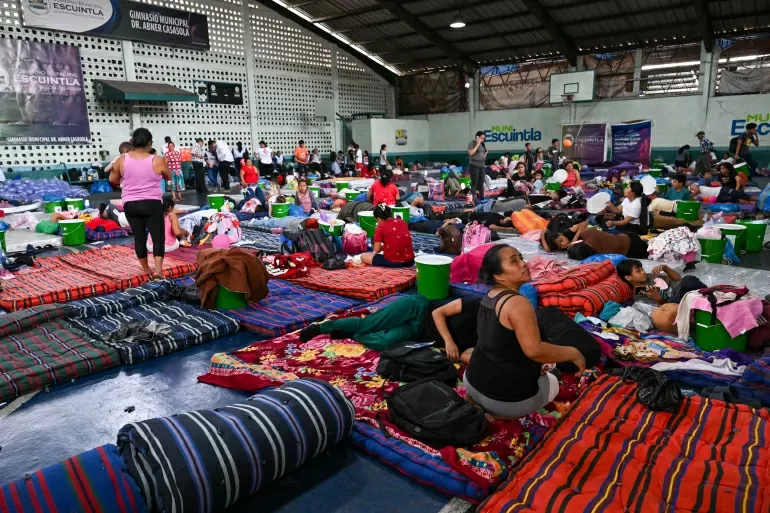
    Canadian Prime Minister Mark Carney condemned Israel’s troop deployment in Lebanon as an “illegal invasion.” According to Lebanese official data, more than 1,200 Lebanese people have been killed in Israeli attacks, and more than one million have been displaced from their homes. Around 1,000 displaced people are currently sheltering in Beirut’s largest sports stadium, including roughly 50 people with disabilities that limit their mobility. “If there’s a strike, the people around me could run away and leave me behind,” said 62-year-old Fatima Nazli, a wheelchair user sheltering at the stadium. “I can’t get up and move if no one helps me.”

    Pezehkian’s diplomatic overture sent an immediate positive shock through US financial markets, which rose sharply following news of the statement, as investors bet on a possible de-escalation of the conflict that has roiled global energy supplies.

  • CDB welcomes GCF approval of  major climate resilience investment for  the Bahamas’ water sector

    CDB welcomes GCF approval of  major climate resilience investment for  the Bahamas’ water sector

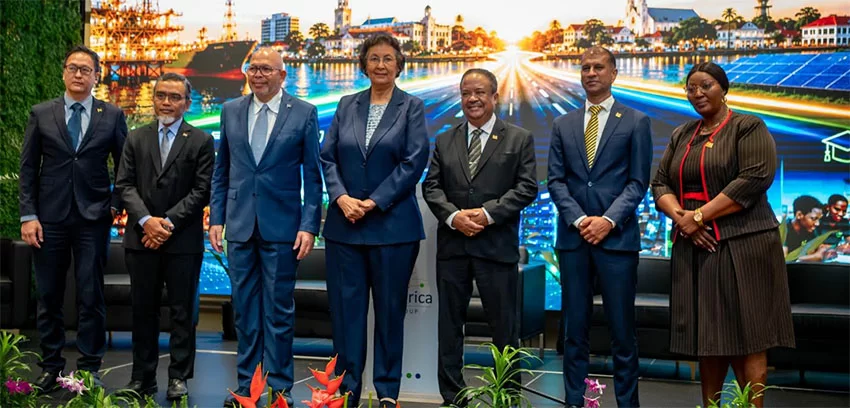
    BRIDGETOWN, Barbados – The Bahamas has received landmark approval for a comprehensive water security initiative that will transform the nation’s climate resilience capabilities. The Green Climate Fund (GCF) has sanctioned the Climate Resilience of the Water Sector in The Bahamas project, representing a strategic partnership between the Caribbean Development Bank (CDB), the Bahamian government, and the Water and Sewerage Corporation (WSC).

    With total funding of $65.2 million, the project combines a GCF grant of $37.506 million, a GCF concessional loan of $12.546 million, a CDB loan of $12.546 million, and a $2.602 million in-kind contribution from WSC. This financial package will address the archipelago’s escalating vulnerability to climate-related water challenges through infrastructure modernization and governance strengthening.

    As one of the world’s most climate-sensitive Small Island Developing States, The Bahamas faces existential threats to its freshwater resources. With 83% of its landmass lying less than five meters above sea level, the nation contends with hurricane damage, seven-meter storm surges, prolonged droughts, and saltwater intrusion into its limited groundwater reserves. The country’s heavy reliance on expensive desalination has further strained utility operations amid frequent service disruptions.

    The initiative will deploy comprehensive interventions across six islands: New Providence, South Andros, Mangrove Cay, North and Central Andros, Abaco, and Acklins. Key components include climate-resilient wellfields, storm-proof pumping stations, expanded water storage capacity, enhanced system connectivity, and targeted water loss reduction measures.

    L. O’Reilly Lewis, CDB’s Director of Projects, described the investment as “a transformational opportunity for The Bahamas that combines robust climate-resilient infrastructure with strengthened governance and data-driven management to safeguard water security for generations to come.”

    Kristin Lang, Director of GCF’s Latin America and Caribbean Department, emphasized that this marks GCF’s first single-country project in The Bahamas, demonstrating commitment to “strengthening country-owned solutions where climate risks are highest.” The project aligns directly with CDB’s Strategic Plan 2026-2035, prioritizing climate action and resilient infrastructure as central to regional transformation.

    Upon completion, the initiative will directly benefit over 215,000 residents while bolstering national climate resilience for an additional 199,000 people, creating a more sustainable water future for the vulnerable island nation.

  • SVG signs WTO fisheries subsidies agreement

    SVG signs WTO fisheries subsidies agreement

    In a significant move for marine conservation and economic development, St. Vincent and the Grenadines has formally ratified the World Trade Organization’s Fisheries Subsidies Agreement. The signing ceremony occurred during the 14th WTO Ministerial Conference in Yaoundé, Cameroon, where Foreign Minister Dwight Fitzgerald Bramble executed the instrument of acceptance on behalf of the Caribbean nation.

    This multilateral agreement represents a critical advancement in global efforts to combat detrimental fishing subsidies that fuel overfishing, fleet overcapacity, and illegal, unreported, and unregulated (IUU) fishing operations. By joining this accord, St. Vincent and the Grenadines reinforces its dedication to responsible ocean governance and the sustainable exploitation of marine resources.

    The ministry’s official release emphasized the accord’s alignment with the country’s blue economy objectives, highlighting the indispensable function of marine assets in driving economic expansion, ensuring food security, and practicing environmental conservation. The fisheries industry serves as a vital economic pillar, supporting numerous livelihoods throughout the island chain.

    Notably, the pact incorporates special provisions for developing nations and small island developing states (SIDS), acknowledging their unique challenges and allowing implementation schedules that correspond with national development agendas. Additionally, it facilitates access to technical expertise and capacity-building initiatives designed to fortify fisheries management and surveillance infrastructures.

    Minister Bramble characterized this development as a crucial opportunity to improve the fishing sector’s durability, ecological sustainability, and long-term prosperity, all while safeguarding the marine ecosystems essential to Vincentian society. The government reaffirmed its commitment to multilateral cooperation, vowing to continue collaborating with international allies to foster sustainable development and conscientious ocean resource management.

  • Russia Delivers 100,000 tonnes of oil to help Cuban crisis

    Russia Delivers 100,000 tonnes of oil to help Cuban crisis

    A Russian oil tanker has arrived in Cuban waters, delivering the first major crude shipment to the island nation since January. The vessel Anatoly Kolodkin is transporting approximately 100,000 tonnes of oil classified by Russian authorities as humanitarian aid. This development follows contradictory statements from the Trump administration regarding its de facto oil embargo against Cuba.

    The shipment arrives as Cuba experiences severe nationwide blackouts and critical fuel shortages that have compromised hospital emergency services and intensive care units. The World Health Organization had previously warned about the deteriorating healthcare situation resulting from the energy crisis.

    President Donald Trump unexpectedly stated aboard Air Force One that he had “no problem” with Russia delivering oil to Cuba, remarking that “they need to survive.” This comment appeared to signal a potential softening of the administration’s position, which had previously threatened tariffs on any nation sending oil to Cuba and had added Cuba to a list of countries barred from receiving Russian oil deliveries.

    Cuba’s current energy crisis intensified dramatically after January 3rd, when U.S. forces seized Venezuelan leader Nicolás Maduro, who had been providing Cuba with oil under highly preferential terms. Russian Energy Minister Sergei Tsivilev acknowledged that Cuba “had found itself in a difficult situation as a result of sanctions pressure,” justifying the humanitarian shipment.

    The Communist government under President Miguel Díaz Canel has been engaged in talks with the Trump administration to resolve the crisis, though both sides have established political and economic conditions that complicate finding common ground. The Russian oil is expected to provide short-term relief when offloaded at Matanzas terminal, but Cuba’s underlying economic troubles—exacerbated by pandemic-related tourism declines and government mismanagement—remain unresolved.

  • Antigua and Barbuda Participates in Jamaica Talks on Disaster Protection Treaty

    Antigua and Barbuda Participates in Jamaica Talks on Disaster Protection Treaty

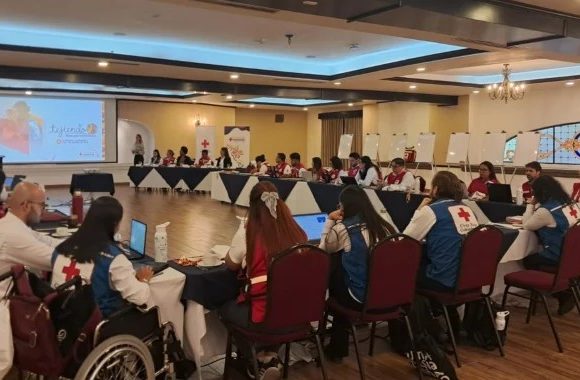
    Antigua and Barbuda has actively participated in high-level regional consultations in Jamaica, contributing to the development of a groundbreaking international treaty designed to enhance protections for populations affected by natural disasters and humanitarian crises. The Kingston roundtable brought together government officials, legal specialists, and humanitarian organizations to critically examine the proposed Treaty on the Protection of Persons in the Event of Disasters.

    Representing Antigua and Barbuda, Red Cross President Dr. Jose Humphreys and Crown Counsel Annetta Jackson provided substantial input during the deliberations. The proposed treaty represents a significant step toward establishing standardized international protocols that would improve humanitarian access, delineate state responsibilities, and foster enhanced cooperation during disaster response operations.

    Dr. Humphreys articulated a comprehensive vision for the treaty, emphasizing that effective disaster management must extend beyond emergency response to incorporate robust preparedness measures, resilience-building initiatives, and systematic disaster risk reduction strategies. He particularly highlighted the critical importance of these provisions for vulnerable Caribbean nations that face disproportionate risks from climate-related disasters and other emergencies.

    The Red Cross president further advocated for streamlined border procedures to expedite the entry of relief personnel and essential supplies during critical emergency periods. He also pressed for formal international recognition of National Red Cross and Red Crescent Societies, acknowledging their indispensable role in providing humanitarian support across global disaster zones.

    These discussions form an integral component of broader United Nations efforts to create a formalized legal framework for disaster situations, addressing a significant gap in international law where no single comprehensive treaty currently exists to govern disaster response and protection protocols.

  • Spanish man caught smuggling 77 drug capsules at Las Américas Airport

    Spanish man caught smuggling 77 drug capsules at Las Américas Airport

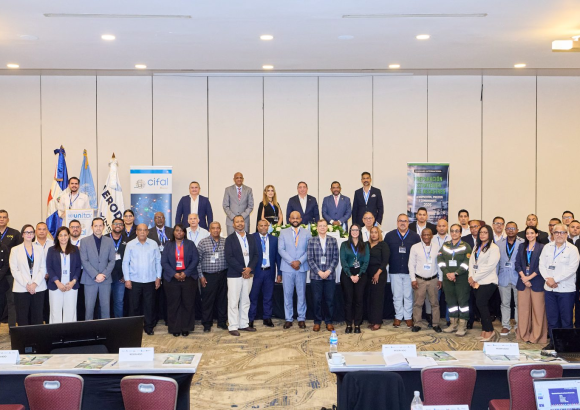
    Authorities at Las Américas International Airport in Santo Domingo have apprehended a 39-year-old Spanish citizen attempting to board a Madrid-bound flight while allegedly carrying 77 capsules of suspected cocaine internally. The interdiction resulted from a meticulously coordinated operation involving the National Directorate for Drug Control (DNCD), the Specialized Airport Security Corps, Customs officials, and the Public Prosecutor’s Office.

    Security personnel initially identified the suspect during standard pre-flight screening procedures, where anomalies were observed in his digestive tract during a routine inspection. This discovery prompted immediate escalation to a higher level of scrutiny. The individual was subsequently transported to a medical facility for further examination, where radiographic imaging conclusively revealed the presence of numerous foreign objects within his body.

    Under strict medical supervision, the suspect underwent a monitored procedure resulting in the expulsion of 77 tightly sealed capsules. The substance contained within these capsules field-tested positive for cocaine, though official confirmation awaits comprehensive laboratory analysis. The seized evidence has been transferred to the National Institute of Forensic Sciences (INACIF) for definitive chemical examination and evidential processing.

    Dominican authorities have emphasized that this arrest represents a significant interception within ongoing transnational narcotics trafficking investigations. Judicial and law enforcement agencies are actively pursuing leads to identify potential accomplices and dismantle any broader networks associated with this smuggling attempt. The suspect remains in custody facing serious drug trafficking charges under Dominican law, which carries severe penalties for such offenses.

  • Column: Het kruis van de lijdende mens

    Column: Het kruis van de lijdende mens

    As Christians worldwide enter Holy Week and Muslims conclude Ramadan, the tragic timing of the Middle East conflict’s eruption during these sacred periods reveals a painful paradox. While wars have historically been waged in religion’s name, suffering itself recognizes no faith—it permeates every street, household, and broken soul regardless of religious or ethnic background.

    The cross carried by Jesus—Christianity’s ultimate symbol of unconditional sacrifice—weighs no less heavily than the burdens borne by millions of innocent civilians today. Children orphaned by violence, mothers weeping amidst the rubble of their homes, and families abandoning lifetimes of memories in search of safety remain trapped between the iron fists of world leaders whose egos blind them to unfolding human tragedies.

    While those in power sleep securely in comfortable palaces, untouched by bombings or gunfire, ordinary men, women, and children huddle in dark shelters with empty stomachs and hearts filled with terror. Uncertain of survival and unable to envision peaceful futures, their eyes reflect both despair and hope—a paradoxical burden no human should bear.

    This Holy Week, traditionally a period of reflection and compassion, demands actions that transcend symbolic gestures. It calls for concrete deeds to break cycles of violence, for while wars persist and egos overshadow humanity, innocent suffering continues unabated.

    The heartbreaking transformation of our world into battlegrounds stems not from necessity but from the stubbornness of few. Those who believe themselves victorious instead crush lives, shatter families, and destroy dreams. The true casualties are measured not in political losses but in children’s tears, orphans’ silence, and entire peoples’ forgotten existence.

    Christian teachings find meaning in injustice and pain, yet contemporary society remains silent as millions carry their crosses. History demonstrates that power without compassion proves destructive, and true victory emerges not from imposed dominance but from restored peace and protected innocents. The price is invariably paid not by war-initiating leaders but by ordinary people seeking only to return to their homes, families, and lives.

    As Erich Maria Remarque profoundly observed: ‘War will never claim the guilty, but always the innocent.’ This Holy Week must serve not merely as historical remembrance but as present-day call to action—choosing humanity over ego, advocating peace over conflict. Only then can we hope for a world where ordinary people no longer suffer from the powerful’s mistakes.

  • Over 70 killed in Haiti gang attack

    Over 70 killed in Haiti gang attack

    In the troubled Caribbean nation of Haiti, a brutal mass killing carried out by a notorious armed faction has unleashed devastation in a rural community north of the capital Port-au-Prince, leaving dozens of civilians dead and hundreds of families homeless.

    The coordinated attack unfolded in Jean Denis, a small settlement located in Haiti’s strategic Artibonite region, when fighters from the powerful local armed group Gran Grif launched a surprise pre-dawn assault on the community Sunday. In a well-planned move to block outside intervention, the attackers immediately sealed off all major access routes leading into the village, digging trenches and erecting makeshift barricades to slow the response of Haitian security forces.

    Antonal Mortimé, an official with the Port-au-Prince-based human rights organization Collectif Défenseurs Plus, told reporters that preliminary on-the-ground investigations have confirmed at least 70 fatalities from the attack – a number that includes multiple child victims. Around 30 other people were wounded in the indiscriminate shooting, and nearly 50 residential homes were set ablaze during the violence. The destruction has forced more than 6,000 terrified residents to flee their homes to seek safety in nearby towns and camps for internally displaced people.

    Witness accounts shared with local media, paired with graphic videos circulating on Haitian social media platforms, show heavily armed gunmen roaming the streets of Jean Denis firing randomly into homes and public spaces. Multiple local residents have publicly criticized the Haitian National Police for a delayed response to the emergency, saying the delay left the community vulnerable to the sustained attack.

    When the violence first broke out, Haitian government authorities released a lower initial casualty count, confirming only at least 16 people killed and 10 injured. Officials have acknowledged that the gang’s barricades and trench obstacles successfully slowed advancing police units, giving the attackers extended time to carry out the killings and arson before they withdrew from the area. Police forces eventually pushed the gunmen out of Jean Denis, and law enforcement officials say search operations are still ongoing to track down the perpetrators and reestablish stable security for any residents who wish to return to the community.

  • The blockade limits the full performance of the Cuban economy

    The blockade limits the full performance of the Cuban economy

    Cuban Foreign Minister Bruno Rodríguez Parrilla has launched a vehement condemnation against the United States, accusing the nation of escalating its long-standing economic pressure into what he describes as a “fierce blockade” against Cuban fuel supplies. The diplomatic offensive was delivered via the minister’s official Twitter account, accompanied by visual evidence of the post.

    In his social media statement, Rodríguez Parrilla characterized the US economic campaign against Cuba as a sustained 67-year war designed to systematically cripple the nation’s development. The Foreign Minister detailed how these measures intentionally restrict Cuba’s operational capabilities, damage economic foundations, impede productive growth, eliminate revenue streams, and block access to international markets and technological advancements.

    Rodríguez Parrilla further articulated that such “asymmetric, abusive, and ruthless aggression” represents disproportionate action against a government that US critics frequently label as incompetent. The Minister turned this criticism on its head, suggesting instead that the intensity of the economic assault demonstrates Washington’s recognition of Havana’s resilient governance structures.

    The Cuban diplomat concluded his statement with a striking assertion: the very persistence and severity of US economic measures acknowledge the strength and viability of Cuba’s socialist system. He maintained that America resorts to such brutal tactics precisely because of Cuba’s proven commitment to social justice principles and international solidarity, which continues to withstand decades of external pressure.

  • Haiti is disproportionately suffering the impacts of climate change

    Haiti is disproportionately suffering the impacts of climate change

    At the 124th Special Meeting of the CARICOM Council for Trade and Economic Development (COTED) in Georgetown, Guyana, Haiti’s Environment Minister Valéry Fils-Aimé delivered a powerful plea for climate justice, highlighting the severe and disproportionate burden his nation bears from global environmental crises. The high-level assembly, which convened environment ministers from across the Caribbean alongside international donors and partner institutions, served as a critical platform to forge a unified regional stance ahead of the pivotal COP31 climate negotiations.

    Minister Fils-Aimé framed climate change not as a distant threat but as an immediate and relentless daily reality for the Haitian populace. He detailed how each climate-related catastrophe poses a direct challenge to survival, systematically eroding the nation’s infrastructure, devastating livelihoods, and severely compromising community security. This constant state of vulnerability, he argued, is profoundly unjust given Haiti’s negligible contribution to global CO2 emissions.

    The minister’s address centered on three core demands essential for building national resilience. First, he advocated for radically simplified and equitable access to international climate finance, arguing that existing mechanisms are often too bureaucratic for the world’s most vulnerable nations. Second, he pushed for the urgent implementation of concrete adaptation measures, specifically championing large-scale reforestation projects, the sustainable management of natural resources, and critical investments in green infrastructure. Finally, his speech was a clarion call for strengthened regional solidarity within CARICOM, emphasizing that a collective voice is paramount in upcoming global forums.

    In his concluding remarks, Fils-Aimé urged member states to rally behind a definitive ‘survival agenda.’ This agenda, focused squarely on adaptation, accessible finance, and climate justice, is designed to ensure Caribbean nations present a powerful, consolidated front in international dialogues, demanding that those who pollute the least are no longer forced to pay the highest price.