分类: world

  • The Dominican Republic has had two hydrometeorological events per year in the last decade

    The Dominican Republic has had two hydrometeorological events per year in the last decade

    Over the 30-year period spanning from 1995 to 2024, the Dominican Republic has recorded 75 major hydrometeorological events, with tropical depressions and storms making up the vast majority of these extreme weather occurrences, according to newly released data from the country’s National Statistics Office (ONE).

    The national statistical agency’s comprehensive analysis breaks down the makeup of these 30 years of weather events: 15 were classified as tropical depressions, 29 were categorized as tropical storms, and the third most common type was Category 1 hurricanes, which hit 10 times over the study period. When looking at more recent trends from the past 10 years, ONE found that the annual frequency of these hydrometeorological events has held steady, holding to an average of two recorded events per year.

    Beyond frequency and type, the data also highlights a clear seasonal concentration of extreme weather. More than 65% of all recorded events over the 30-year window occurred in just two months: August and September, aligning with the peak of the annual Atlantic hurricane season that impacts the Caribbean nation.

    Geographically, the impact of these events is not evenly distributed across the Dominican Republic’s provinces. ONE’s data identifies five provinces that have seen the highest number of hydrometeorological event trajectories between 1995 and 2024: La Altagracia leads with 8 recorded trajectories, followed by Azua with 7, and San Juan and Elías Piña tied at 6 each, with La Vega rounding out the top five at 5.

    In addition to mapping long-term weather trends, the 2024 data also sheds light on how Dominican households are preparing for extreme weather events. The statistical office reports that nearly 65% of households across the country took proactive preventive steps in 2024, reinforcing doors, roofs and windows when receiving alerts about incoming natural hazards.

    Other common preparedness actions taken by residents include securing loose furniture and household appliances (practiced by 20% of households), properly securing propane gas tanks to reduce risk (17.7%), relocating to the home of a family member or friend for safety (13.3%), and stockpiling emergency supplies and non-perishable food ahead of an event (12.5%).

  • COE reports more than 700 displaced people, isolated communities, and maintains alert for 26 provinces

    COE reports more than 700 displaced people, isolated communities, and maintains alert for 26 provinces

    Torrential rainfall that hit several northern and central provinces of the Dominican Republic Saturday night has triggered devastating flash flooding, leaving hundreds of residents displaced and disrupting critical infrastructure across the affected region, the nation’s Emergency Operations Center (COE) confirmed in an official update Sunday morning.

    In its latest situation bulletin, the COE detailed the widespread human and material toll of the disaster: across the hard-hit provinces of Puerto Plata, Monte Plata, Valverde, and María Trinidad Sánchez, the flooding has damaged 145 residential properties, forced 725 people from their homes, and left 167 residents taking temporary refuge in government-run emergency shelters. Twelve entire communities remain cut off from surrounding areas, blocked by floodwaters that have made local roads impassable.

    Beyond housing and displacement, the disaster has also triggered a major public health crisis by cutting off drinking water access for more than 113,000 users across the affected region. Seventeen regional aqueduct systems have been knocked out of commission by the heavy rains and flood damage, leaving vast swathes of the impacted population without access to safe running water.

    In response to the ongoing hazard, the COE has activated its highest-level red alert for four of the most severely impacted provinces: Puerto Plata, Espaillat, María Trinidad Sánchez, and Valverde. The alert bars non-essential travel and mandates emergency response teams to remain on standby for rapid rescue and relief operations.

    An additional 15 provinces and administrative areas remain under lower-level yellow alert, warning residents of ongoing risks of flooding and landslides. The areas under yellow alert include Monseñor Nouel, Sánchez Ramírez, Santiago, La Vega, Monte Cristi, Elías Piña, Samaná, Santiago Rodríguez, San Cristóbal, Santo Domingo Province, the National District, Monte Plata, San José de Ocoa, Duarte – with particular focus on the high-risk Bajo Yuna region – and Hermanas Mirabal.

  • Suriname pleit voor eerlijke klimaatfinanciering tijdens Amazone overleg

    Suriname pleit voor eerlijke klimaatfinanciering tijdens Amazone overleg

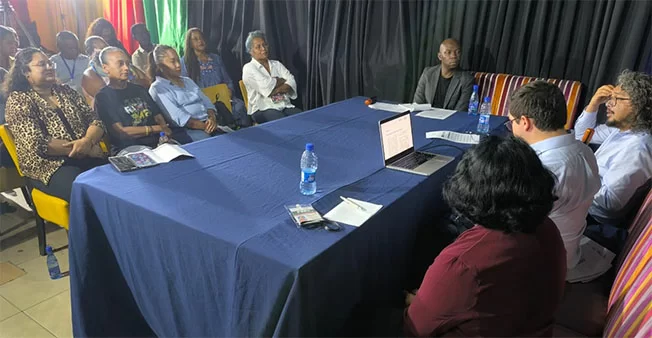
    On April 9, a critical regional consultation focused on Amazon rainforest protection brought together a diverse array of stakeholders in Brazil’s capital city of Brasília, where Suriname emerged as a leading voice demanding systemic reform to global climate finance frameworks that recognizes the contributions of nations preserving extensive, intact forest ecosystems.

    Organized to advance implementation of prior regional commitments to Amazon conservation, the gathering convened representatives from member states of the Amazon Cooperation Treaty Organization (ACTO), ACTO’s administrative secretariat, Brazilian federal authorities, civil society groups, Indigenous communities, and academic research institutions. Discussion centered on strengthening cross-border collaboration, updating scientific data infrastructure, and addressing longstanding inequities in global climate action support.

    Speaking on behalf of the Surinamese government, Ambassador Ike Antonius drew attention to a gaping oversight in current international climate funding structures: the failure to adequately compensate High Forest, Low Deforestation (HFLD) nations. These are countries that maintain vast tracts of intact forest cover with minimal deforestation rates, delivering substantial global public benefits by sequestering carbon and slowing the progression of anthropogenic climate change. Yet they have historically been locked out of the majority of climate finance allocated to forest protection, which is often directed only to nations tackling high existing deforestation rates.

    Suriname, which falls squarely into the HFLD category, has repeatedly raised this demand across global climate policy forums. The country’s position reflects a longstanding government push to overhaul the global financial architecture underpinning international climate policy, to ensure nations that have already prioritized forest conservation receive tangible recognition and support for their ongoing efforts.

    Beyond the debate over climate finance, the consultation reinforced the shared commitment of Amazon basin nations to deepening cross-border collaboration. Participants emphasized that coordinated action on knowledge sharing, aligned policy development, and improved access to up-to-date scientific data is essential to scaling up effective conservation across the region. Stakeholders from Indigenous groups and civil society also contributed perspectives on integrating traditional knowledge and community-led stewardship into regional conservation strategies, underscoring the multi-sectoral approach needed to protect the world’s largest tropical rainforest.

  • CARICOM Chairman insists T’dad Foreign Minister absented from retreat due to seasickness

    CARICOM Chairman insists T’dad Foreign Minister absented from retreat due to seasickness

    A brewing internal dispute within the Caribbean Community (CARICOM) has moved into the public eye, with CARICOM Chairman and St Kitts and Nevis Prime Minister Dr. Terrance Drew issuing a detailed public refutation of Trinidad and Tobago’s claims surrounding the recent reappointment of the bloc’s Secretary General on Saturday evening. The core of the conflict centers on two key claims from Trinidad and Tobago: that its Foreign Minister Sean Sobers was deliberately disinvited from a critical leaders’ retreat focused on the Secretary General appointment, and that the reappointment process violated CARICOM’s foundational governing treaty.

    Addressing the first allegation head-on, Drew laid out a timestamped timeline of communications to back the bloc’s position that Sobers voluntarily opted out of the February 26 off-site retreat due to pre-existing seasickness. According to Drew, after Trinidad and Tobago Prime Minister Kamla Persad-Bissessar departed the broader CARICOM conference hosted in St Kitts and Nevis on the evening of February 25, Sobers reached out to incumbent CARICOM Secretary General Dr. Carla Barnett via WhatsApp at 10:33 PM that same night to ask if he could attend the retreat in Persad-Bissessar’s place. Barnett confirmed that foreign ministers routinely stand in for absent heads of government, clearing the way for Sobers to participate. In that same exchange, Drew said, Sobers noted that the retreat required a boat ride to reach its venue, and his chronic seasickness made attendance uncomfortable, leaving his participation uncertain. By 10:55 PM that night, Barnett forwarded the exchange to Drew, noting that Trinidad and Tobago would likely go unrepresented at the next day’s retreat. In a follow-up message sent at 12:37 AM on February 26, Barnett told Sobers that the CARICOM chair would fully understand his decision to skip the event if the boat trip would trigger illness. Drew emphasized that Sobers never sent any follow-up communication to either the chair or the Secretary General indicating he had changed his mind and was able to attend. This directly contradicts Trinidad and Tobago’s claim that Sobers was uninvited to the closed-door meeting.

    Drew also pushed back on Trinidad and Tobago’s second claim that the Secretary General appointment was never placed on the retreat’s formal agenda. He confirmed that the reappointment of incumbent Dr. Barnett for a second five-year term was discussed under the retreat’s existing “Financing and Governance of the Community” agenda item. The discussion was held in accordance with the provisions laid out in Article 24 of the Revised Treaty of Chaguaramas, CARICOM’s core governing document, and Barnett stepped out of the room during the deliberations to avoid any conflict of interest. After regional leaders reached a consensus to approve Barnett’s reappointment, Drew explained that the bloc intentionally delayed the public announcement as a courtesy to inform CARICOM heads who were not present at the retreat before making the decision official. However, repeated attempts to contact Persad-Bissessar via both email and phone went unanswered, and Drew was ultimately tasked with notifying Sobers of the outcome.

    Trinidad and Tobago has rejected the legitimacy of the process, arguing that the appointment violated the Revised Treaty of Chaguaramas. While the country has ruled out a full exit from CARICOM, it has announced that it will cut all financial contributions to the regional bloc until the dispute is resolved to its satisfaction. So far, at least two CARICOM member states — Guyana and Belize — have publicly expressed their support for the reappointment process that led to Barnett’s second term. Barnett made history as the first woman to hold the post of CARICOM Secretary General. The dispute also spilled over into an April 10 virtual summit called to address Trinidad and Tobago’s concerns about the reappointment, which Trinidad and Tobago boycotted entirely. Drew confirmed that neither the prime minister nor any other representative from the country attended the scheduled meeting.

  • Trinidad’s PM escalates feud with Caribbean neighbours

    Trinidad’s PM escalates feud with Caribbean neighbours

    A long-simmering dispute between Trinidad and Tobago and its Caribbean Community (CARICOM) neighbors over U.S. policy toward Venezuela and international drug trafficking erupted into open diplomatic conflict on Friday, as Prime Minister Kamla Persad-Bissessar doubled down on her demand that CARICOM Secretary-General Carla Barnett leave office when her current term expires this August. The 15-member regional trade and integration bloc has been fractured by ideological rifts since late last year, when a majority of member governments publicly condemned expanded U.S. military activity in the South Caribbean and the large deployment of American forces positioned near Venezuela, launched as part of a U.S. operation targeting then-Venezuelan President Nicolás Maduro. For years, CARICOM member states have collectively endorsed the vision of the Caribbean as a formal “zone of peace,” rejecting the introduction of extra-regional great power military competition into the bloc’s neighborhood. But since winning Trinidad and Tobago’s general election one year ago, Persad-Bissessar has openly rejected this longstanding regional consensus, dismissing the “zone of peace” framework as nothing more than “zone of peace fakery.” She has positioned her administration as a firm backer of U.S. military action in the region and the U.S. campaign against transnational drug trafficking and organized crime. Her latest move targets the bloc’s top administrative leadership, where she has waged a monthslong public campaign to block Barnett’s reappointment when her five-year term concludes at the end of August. To strengthen her push, Persad-Bissessar has repeatedly emphasized Trinidad and Tobago’s outsized financial contribution to CARICOM: the nation covers roughly 22% of the bloc’s total annual operating budget, equal to approximately $20 million per year. The prime minister has made no secret of her deep frustration with the bloc’s current policy direction, stating repeatedly that she cannot understand why most regional leaders have aligned with Venezuela and the Maduro administration rather than falling in line with the U.S. position. In a 2025 statement released as the U.S. ramped up preparations for its action against Maduro, Persad-Bissessar claimed that “CARICOM has chosen to support the Maduro narco-government through the fake zone of peace narrative.” Her comments came as multiple CARICOM governments raised formal complaints over the civilian casualties and alleged legal violations linked to deadly U.S.-aligned boat strikes in regional waters. Persad-Bissessar’s unyielding pressure ultimately forced CARICOM leaders to convene an emergency closed-door meeting on Friday to address the contentious question of Barnett’s reappointment, bringing the months of behind-the-scenes friction into full public view.

  • 10 kilo cocaïne uit Suriname onderschept in Bulgaarse haven

    10 kilo cocaïne uit Suriname onderschept in Bulgaarse haven

    Authorities in Bulgaria have intercepted a 10-kilogram shipment of cocaine hidden inside a shipping container at the Varna-West commercial port, with the container originating from the South American nation of Suriname. Bulgarian customs officials confirmed that the illegal narcotics were concealed in custom-built hollow cavities cut into a cargo of raw timber, a common smuggling tactic used by trafficking networks to hide contraband. The container was flagged for inspection through a targeted risk assessment protocol that the country’s customs service uses to identify high-risk shipments entering its borders. Once the suspicious container was pulled from the port’s processing queue, inspection teams discovered the carefully hidden cocaine stashed within the trunks of the timber load. Law enforcement experts note that this method of hiding contraband in modified cargo is a longstanding tactic employed by drug smuggling rings to evade detection at border checkpoints and port inspections. Following the seizure, Bulgarian authorities have transferred the full case to national police units, which have launched a formal criminal investigation to trace the full supply chain of the shipment, mapping out its original source and intended final destination across European markets. International law enforcement agencies monitoring organized drug trafficking have observed a growing trend in recent years: Black Sea ports including Varna are increasingly being exploited as key entry points for cocaine shipments originating in South America bound for consumer markets across the European continent. This latest seizure of Suriname-origin cocaine, officials confirm, fits squarely into this broader pattern of shifting smuggling routes that trafficking networks have adopted as traditional entry points along Western Europe’s Atlantic coast have tightened border security measures. The operation underscores the evolving challenges that Black Sea states face in countering transnational organized drug crime as trafficking groups adapt their logistics to avoid interdiction.

  • US and Iran Hold Direct Peace Talks in Pakistan, CNN Reports

    US and Iran Hold Direct Peace Talks in Pakistan, CNN Reports

    On April 11, 2026, a long-awaited diplomatic breakthrough got underway as senior official delegations from the United States and Iran convened for the highest-level direct face-to-face talks between the two nations in decades, CNN reported. Hosted in Pakistan’s capital Islamabad, the negotiations operate as trilateral discussions with Pakistani officials serving as neutral mediators, ending a years-long stretch of almost exclusively indirect dialogue between Washington and Tehran.

    The U.S. delegation is headed by Vice President JD Vance, and counts among its members special envoy Steve Witkoff, Jared Kushner, and a cohort of senior national security and regional policy advisers. A White House official confirmed to CNN that alongside the in-person negotiating team, Washington has deployed a full group of subject-matter experts, with additional backup support operating out of U.S. capital to back the talks. On Iran’s side, state media cited by CNN confirms the delegation totals 71 people, including lead negotiators, technical specialists, media liaisons, and security detail to cover all aspects of the complex discussions.

    The opening of the talks comes against a backdrop of soaring regional instability and a fragile, temporary ceasefire between the U.S. and Iran. Even as negotiators sit down in Islamabad, multiple connected flashpoints continue to test the fragile diplomatic push. Most notably, U.S. President Donald Trump announced that his administration has launched a process to “clear out” the Strait of Hormuz, one of the world’s most vital global oil and shipping chokepoints. As of the latest reports, however, the specific scope and actions involved in this process remain undisclosed. Ship tracking data analyzed by CNN shows that a number of commercial vessels, led by Chinese-owned tankers and bulk carriers, have continued regular transits through the strait even amid escalating tensions in the area.

    The ongoing unrest has already sent ripples through global commodity markets, most sharply hitting the global fertilizer trade. Since late February, global urea prices have skyrocketed by more than 50%, triggering widespread alarm among U.S. agricultural organizations that warn the spike could cascade into broader disruptions across the international food supply chain. In response, President Trump has issued a warning against price gouging and confirmed that his administration is maintaining close, continuous oversight of fertilizer price movements to mitigate consumer and producer impacts.

    Another major sticking point for the broader negotiations sits on the Israel-Lebanon front. In recent days, the Israeli military has continued its large-scale offensive strikes against Hezbollah targets positioned inside Lebanese territory. Israeli defense officials confirmed that the force carried out strikes on more than 200 Hezbollah sites in a single 24-hour period. Tehran has made its position clear: any comprehensive, lasting ceasefire agreement that emerges from the Islamabad talks must include a binding commitment to end all Israeli strikes across Lebanon.

    While Israeli officials have so far rejected calls for direct ceasefire negotiations with Hezbollah, they have confirmed that Israel will launch formal peace negotiation talks with the Lebanese government next week, per CNN’s reporting. For his part, Lebanese Prime Minister Nawaf Salam has chosen to postpone a planned official trip to Washington D.C. and the United Nations Headquarters in New York, saying he needs to remain in Beirut to coordinate closely with the country’s leadership amid the fast-moving regional developments.

  • VS en Suriname versterken samenwerking met medische missie en militaire training

    VS en Suriname versterken samenwerking met medische missie en militaire training

    Starting April 13, the South American nation of Suriname and the United States will kick off the long-planned LAMAT 2026 initiative, a combined public-practice exercise that merges joint medical outreach and military capacity building, scheduled to run through April 23. The mission, which will deliver care across two host communities Nieuw Nickerie and Brownsweg, brings together U.S. military medical personnel and local Surinamese healthcare providers to deliver free, accessible care to underserved local populations, with an estimated 800 patients expected to receive treatment over the course of the initiative.

    The scope of medical work will cover core public health and clinical areas, including primary care, general dentistry, and emergency medical response. Beyond direct patient care, a core pillar of the mission is structured knowledge sharing between the two teams, designed to strengthen long-term local healthcare capacity and improve regional readiness for public health emergencies.

    According to a statement from the U.S. Embassy in Suriname, the LAMAT 2026 mission underscores the decades of steady collaborative ties between the two countries, and reflects their shared commitment to building a more robust, resilient national healthcare system in Suriname.

    Running parallel to the medical outreach program is a separate joint military training exercise conducted alongside the South Dakota National Guard, which has maintained a formal partnership with Suriname since 2006. Roughly 70 military personnel from both sides will participate in tactical and skills-based training, with coursework focused on critical skills including jungle operations, field navigation, and coordinated response in high-challenge operating environments.

    Overall, the combined mission is backed by more than $600,000 in U.S. funding, highlighting the breadth of deepening cooperation between Suriname and the United States across three core domains: public healthcare advancement, regional security, and long-term institutional capacity building.

  • Hurricane Risk Lower in 2026, But Threat Still Real

    Hurricane Risk Lower in 2026, But Threat Still Real

    As the 2026 Atlantic hurricane season approaches, new seasonal projections bring a glimmer of cautious optimism to Caribbean nations, while emergency planners and climate researchers continue to stress that extreme weather threats remain far from eliminated. The latest outlook from Colorado State University’s renowned Tropical Meteorology Project, headed by leading tropical climate researcher Philip J. Klotzbach, paints a picture of reduced hurricane risk for the Caribbean this year.

    The team’s analysis estimates just a 35% probability that at least one Category 3 or higher major hurricane will track across the Caribbean region in 2026. This percentage is noticeably lower than the 47% long-term average that has been recorded over decades of storm tracking, pointing to a potentially less active season than the region typically experiences.

    Broader projections for the entire Atlantic basin also point to below-average storm activity overall. The official forecast calls for 13 named storms, six hurricanes, and two major hurricanes for the full season, which formally gets underway on June 1 each year.

    Despite the downward adjustment to risk forecasts, lead forecasters have been quick to push back against any sense of complacency, particularly for small, vulnerable island nations including Antigua and Barbuda. The research team’s report emphasizes a core lesson repeated across hurricane preparedness campaigns: even in a season with low overall projected activity, a single landfalling major hurricane is enough to trigger catastrophic destruction and turn a quiet season into a disaster for affected communities. The report explicitly urges all coastal residents across the Caribbean to maintain constant vigilance and keep emergency plans updated.

    Meteorologists attribute the expected dip in Atlantic storm activity to the anticipated formation of El Niño conditions in the Pacific Ocean. The El Niño climate pattern is well-documented to increase vertical wind shear across the Atlantic basin, a atmospheric condition that disrupts the formation and strengthening of tropical cyclones.

    That said, significant uncertainty still surrounds the ultimate strength of the El Niño pattern during the peak of hurricane season, which runs from August through October. The intensity of this climate pattern will play a decisive role in shaping actual storm activity across the region, meaning final outcomes could still shift from current projections.

    For Caribbean governments and local authorities, the core priority remains unchanged: robust pre-season preparation is non-negotiable. Small island developing states across the region disproportionately bear the risk of hurricane damage, with underdeveloped infrastructure and coastal communities that remain extremely exposed to storm surge, extreme wind, and flooding. Even a moderate storm can trigger widespread disruption and long-term economic damage in these contexts.

    As the countdown to the June 1 start of the 2026 hurricane season continues, regional authorities are moving forward with full readiness efforts, including updating emergency response protocols, restocking emergency supplies, and running public preparedness campaigns to ensure communities are ready if a storm does strike.

  • Spanning en scepsis rond vredesbesprekingen VS-Iran terwijl geweld in Libanon voortduurt

    Spanning en scepsis rond vredesbesprekingen VS-Iran terwijl geweld in Libanon voortduurt

    On Friday, a high-level United States delegation headed by Vice President JD Vance touched down in Islamabad for long-awaited peace negotiations with Iran, but the diplomatic effort was immediately overshadowed by mutual accusations of ceasefire violations and rising violence in neighboring Lebanon that has cast deep uncertainty over prospects for a lasting regional peace deal.

    The US delegation, which also includes special envoy Steve Witkoff and former White House advisor Jared Kushner, arrived in the Pakistani capital under strict security lockdown measures. Pakistan has positioned itself as a neutral mediator for the talks, seeking to cement its role as a stabilizing force in a region that has been torn apart by months of open conflict.

    However, Iran has laid out strict preconditions that have already thrown the launch of formal negotiations into question. Senior Iranian officials, including Parliament Speaker Mohammad Baqer Qalibaf and Foreign Minister Abbas Araqchi, have made two non-negotiable demands before talks can proceed: any temporary ceasefire must explicitly extend to Israeli strikes on Hezbollah in Lebanon, and all Iranian assets frozen under international sanctions must be unblocked immediately.

    The US administration has already expressed open skepticism about the possibility of quickly reopening the strategically critical Strait of Hormuz, which is controlled by Iran. A months-long Iranian blockade of the key waterway has already caused massive disruptions to global energy supplies. Ahead of the negotiations, former President Trump stated that the US is extending an “open hand” to Tehran, but warned that the delegation would not tolerate bad-faith negotiating tactics.

    While diplomats gather in Pakistan, deadly violence continues to escalate in Lebanon. Israeli airstrikes targeting positions in southern Lebanon and the capital Beirut have killed hundreds of people and forced mass civilian displacement across the country. In response, Hezbollah has launched sustained rocket attacks against northern Israeli cities, amplifying tensions in a country already grappling with a weak central government, deep sectarian divisions, and a collapsing national economy.

    Though Israel recently agreed to enter separate peace talks with Lebanese government representatives, regional analysts remain deeply pessimistic about any breakthrough, as the Lebanese government lacks meaningful leverage over Hezbollah. The militant group has refused to participate in direct negotiations, creating a major barrier to any permanent ceasefire agreement.

    The gap between core US and Iranian demands remains wide, creating a major obstacle to any successful diplomatic outcome. Iran’s key demands include a full end to economic sanctions that have gutted its national economy, formal international recognition of its sovereignty over the Strait of Hormuz, and a complete withdrawal of US military forces from the Middle East region. On the other side, the US is demanding that Iran end all uranium enrichment activities, abandon its ballistic missile arsenal, cut off all support to regional armed proxy groups, and release at least six detained American citizens, including journalist Reza Valizadeh.

    Leading regional analysts warn that the wide gap between the two sides’ positions means the risk of a full resumption of open conflict remains very high. Barbara Leaf, a former senior US diplomat focused on the Middle East, emphasized there is a “very large risk” that tensions will reignite, particularly given the already severe damage the conflict has inflicted on global energy markets and global inflation levels.

    The ongoing crisis has already triggered the largest disruption to global oil supplies in modern history, stoking widespread inflationary pressures, worsening global food insecurity, and pushing the global economy closer to the edge of recession. While the temporary ceasefire has reduced direct hostilities between major parties, Iran has maintained partial blockades on the Strait of Hormuz, restricting access for non-Iranian shipping and extending economic disruptions across global markets.

    The economic fallout of the crisis is already being felt in the United States. March inflation data released recently showed consumer prices rising by 0.9% month-over-month, the fastest single-month increase since the major inflation shock of mid-2022. This has amplified economic pressure on the Trump administration just months ahead of upcoming midterm elections.