分类: world

  • Column: De laatste ontmoeting die misschien niet komt; kille visumprocedure

    Column: De laatste ontmoeting die misschien niet komt; kille visumprocedure

    Seated in her favorite rocking chair, an 85-year-old Surinamese woman waits, her gaze fixed on a door that will not open this month. She celebrates her milestone birthday this week, and her son, who lives across the Atlantic in Suriname, has longed to hold her, speak to her without a crackling phone line between them, and see her one last time before it is too late. He will not make it — not for lack of desire, not for lack of money to pay for the trip, but because the rigid Dutch Schengen visa system has shut him out.

    For Surinamese citizens hoping to travel to the Netherlands, entering the country is not a simple matter of planning a trip. It is an exhaustive, dehumanizing gauntlet of bureaucratic requirements that reduces a deeply personal family reunion to a mountain of paperwork and invasive checks. Applicants must surrender full access to their private financial lives, turning over three months of bank statements, employment verification letters, pre-booked flight tickets and travel insurance. Every document is meant to prove one thing: that they are not a “risk” that will overstay their visa, and that they will definitely return to Suriname after their visit — even when their only goal is to spend time with an aging parent.

    Even having a sibling already residing in the Netherlands who agrees to sponsor the trip is not enough to cut through the red tape. The sponsor must also disclose all of their personal financial details, submit pay stubs, share private identifying information and take on full financial guarantee for the traveler’s entire trip, covering all food and travel costs. What should be a heartfelt family gathering is reduced to nothing more than spreadsheets, numbers and constant government scrutiny.

    After applicants complete the extensive online paperwork, the real waiting begins. Securing an in-person appointment through the visa processing system is already an ordeal, with waiting times stretching more than a month for an available slot. Once a traveler finally makes it to a VFS Global processing center, they walk out €90 poorer and no less uncertain about the outcome of their application. The response is coldly corporate: applicants can expect to wait a minimum of one month just to get a decision. As of mid-April 2026, applications submitted all the way back in January are still being processed, making travel in the same month impossible, and forcing applicants to reschedule their appointments from scratch.

    The crushing nature of the system becomes even clearer when checking for new appointment slots. On April 13, 2026, the earliest available appointment date was May 29, 2026. Even after that appointment, the processor requires a minimum of another month to review the application — despite all documents already being submitted electronically more than a month prior. By that time, the financial guarantee submitted by the family and the purchased travel insurance will both expire. What this all means is simple: the son will not get his chance to celebrate his mother’s birthday with her in person.

    A comparison to U.S. visa processing highlights how deeply dysfunctional the Dutch system is. Even under the often unpredictable U.S. immigration system, the process is clear and fast. Applicants know what to expect, receive an immediate decision after their in-person interview, and get their passports back within a week — often with a multi-year five-year visa that allows future travel. The rules may be strict, but the process is organized, efficient, and treats applicants with basic dignity.

    That human element has been completely erased from the Dutch visa system. Dutch officials routinely deflect blame, pointing to Brussels, Schengen Area rules, and shared European policy as justification for the strict process. But for applicants, who bears responsibility does not change their lived experience: the system is slow, cold, demeaning, and inhumane.

    This disconnect is all the more striking given the centuries-long deep historical and social ties between the Netherlands and Suriname. Lofty diplomatic rhetoric and official state visits do nothing to change the reality on the ground for ordinary Surinamese families. The contrast becomes even more glaring when the situation is reversed: Dutch citizens traveling to Suriname can apply for an e-visa online and receive their approval via email within a matter of days, with no stacks of paperwork, no months-long waiting, no constant uncertainty. They get straightforward, simple access.

    For Surinamese people, a visa to the Netherlands is never just a travel document — it is an almost insurmountable barrier. It is a weeks-long journey marked by constant stress, crippling uncertainty, and total dependence on a bureaucratic system that does not care about individual circumstances. The system makes no exceptions for advanced age, for running out of time, for the need to say goodbye to a dying loved one.

    Today, families are trapped on opposite sides of the Atlantic, a distance that modern air travel could easily bridge in a single day on KLM or Surinam Airways flights. Surinamese people who hold Dutch passports often note that a purple EU passport is just a travel document, but the reality is that it grants them the freedom to travel between the two countries whenever they want, to enjoy life in both nations, and pack a suitcase at a moment’s notice. This painful family separation exposes that the fight is about far more than just a piece of paper: it is about equal access, basic human dignity, and freedom of movement. One group can travel whenever they choose; the other must jump through endless hoops just to prove they deserve the right to see their own family.

    As the 85-year-old mother waits for a son who will not come, the system’s failure is laid bare. It has forgotten the human core of what it is meant to facilitate: people who want to see each other one last time, before it is too late. There will be no visa for a birthday visit. If the worst comes to pass, the family may only qualify for an emergency visa for a funeral.

  • Drug Plane Intercepted in High‑Stakes Belizean Operation

    Drug Plane Intercepted in High‑Stakes Belizean Operation

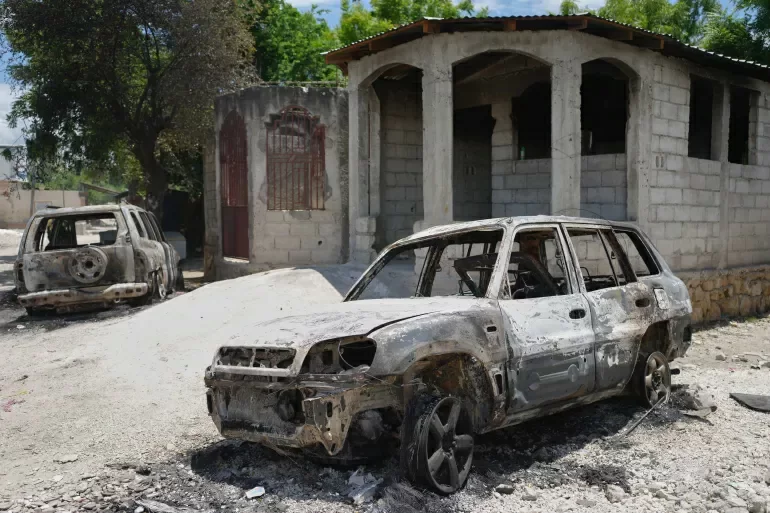
    On a Friday in April 2026, a cross-border law enforcement operation delivered a major blow to transnational drug trafficking, intercepting a suspected smuggling plane carrying over 1,000 pounds of cocaine before it could complete its journey to a remote landing strip in northern Belize. The operation traces its origins to early morning air surveillance, when U.S. authorities first detected an unregistered aircraft moving over Pacific waters near Costa Rica. Alerted immediately to the threat, Belizean security agencies activated a rapid joint response framework, mobilizing personnel across the country within minutes to prepare for the plane’s expected arrival. The initial break in the ground operation came when a customs enforcement patrol conducting sweeps near the coastal Neuland Community discovered a suspicious SUV parked off-road. Inside the vehicle, officers found nine canisters of aviation fuel, an unregistered firearm, and a satellite phone, confirming their intelligence that Neuland was the aircraft’s intended landing site. As law enforcement locked down the area, the suspect plane continued its erratic northbound journey, zigzagging between the airspaces of El Salvador, Nicaragua, and Honduras to evade detection. By 2:40 p.m., projections placed the aircraft just one hour from entering Belizean airspace, with security teams already strategically positioned around the Neuland landing zone. At 5:03 p.m., after receiving formal airspace clearance, the Belize Defense Force deployed its air assets to intercept the incoming plane. Seventeen minutes later, Mexican military aircraft were also granted permission to enter Belizean airspace to support the operation, marking a rare example of cross-border security cooperation against drug trafficking. Radar contact with the suspect plane was confirmed at 5:21 p.m., roughly six nautical miles east of Carmelita Village, as it traveled northeast toward its intended landing. The aircraft touched down in Neuland Village at 6:14 p.m., and two Mexican men—identified as pilot Paul Valenzuela Osuna and co-pilot Edgar Aguilar Trinidad—were taken into custody immediately after exiting the plane. Authorities confirmed the two suspects were carrying thousands of dollars in mixed U.S. and Mexican currency, alongside the 1,000+ pounds of cocaine. The seized narcotics have an estimated street value of $11 million, marking one of the largest drug seizures in Belize so far this year. Both men now face formal charges of drug importation and violations of immigration law, and remain in custody ahead of their upcoming trial. The operation’s success has, however, been overshadowed by a lingering controversy surrounding the suspicious SUV that tipped off authorities to the landing site. Shortly after customs officers discovered the vehicle, the SUV was destroyed by fire, sparking widespread public speculation that law enforcement personnel deliberately set the blaze to cover up procedural missteps or corruption. Belize’s top police official has forcefully rejected these claims, offering a clarified timeline of events to clear his department of wrongdoing. “The claim that law enforcement burned the SUV holding the suspected aviation fuel is completely false,” said Commissioner of Police Dr. Richard Rosado in an official press briefing. After the initial discovery of the vehicle, “certain circumstances on the ground required the customs enforcement team to withdraw for their safety. I will not go into specific details at this time, but the withdrawal was a prudent and necessary decision. When our officers returned to the site with additional security support, the vehicle was already engulfed in flames.” Assistant Superintendent Stacy Smith, a staff officer with the department, acknowledged that the loss of the vehicle and the aviation fuel has complicated evidence collection for the upcoming prosecution. “It would have been ideal to preserve all of this evidence for court,” Smith explained. “Of course losing the fuel does detract from some of the evidential material we can present in the case. But we have already recovered enough critical evidence to support the prosecution, and the investigation remains active.” Three individuals were initially in the SUV when it was discovered: two Belizean nationals and one Mexican national. However, Dr. Rosado confirmed that the Office of the Director of Public Prosecutions (DPP) has ruled there is insufficient evidence to file charges against the two Belizean suspects at this time. The pair remain persons of interest in the ongoing investigation, which authorities say will continue to uncover the full network behind this smuggling attempt. The successful interception highlights the growing cooperation between North American and Central American security agencies to disrupt drug trafficking routes that have increasingly shifted through smaller Caribbean and Central American nations in recent years. While the burned vehicle remains an unsolved complication in the case, authorities say the seizure of the cocaine and the arrest of the two pilots marks a critical win against transnational organized crime operating in the region.

  • Some fuel arrive in Guyana, more expected- PM Phillips

    Some fuel arrive in Guyana, more expected- PM Phillips

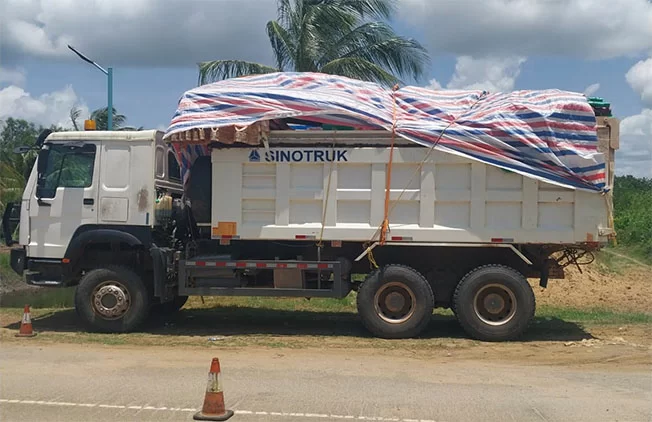
    On Monday, 13 April 2026, widespread panic buying of fuel broke out across Guyana, leaving queues stretching for blocks outside filling stations and empty pumps at many outlets, prompting the country’s top leadership to step forward to reassure the public that the temporary disruption would be resolved quickly with ample new supplies already arriving.

    Widespread stockpiling was triggered after a major fuel shipment delay for SOL, the operator of Mobil-branded fuel outlets across the country, left its stations completely out of gasoline and diesel. According to President Irfaan Ali, the delay occurred after one of SOL’s petroleum tankers lost its anchorage and was forced to return to port, disrupting the scheduled delivery timeline. Prime Minister Mark Phillips, addressing the public Monday night, confirmed that the delayed shipment has now arrived in Guyana and is currently being offloaded to distribution networks.

    The Prime Minister emphasized that there is no justification for ongoing panic buying or hoarding, noting that multiple importers have already landed large volumes of fuel and additional large consignments are scheduled to arrive through the first half of this week. Detailed arrival schedules for all major national fuel suppliers confirm that new supplies are already entering the market:

    On Monday 13 April at 2 p.m., Rubis Guyana Inc. took delivery of 10,000 barrels of gasoline, 6,700 barrels of low-sulphur diesel, and 4,500 barrels of ultra-low-sulphur diesel, alongside 3,000 barrels of gasoline and 14,000 barrels of diesel that arrived for SOL. Offloading for these shipments began immediately, with distribution rolling out to filling stations by Monday evening.

    Looking ahead, SOL is scheduled to receive an additional 12,000 barrels of gasoline and 6,000 barrels of diesel at 2:20 p.m. on 14 April. Rubis will take another 10,000 barrels of gasoline, 18,000 barrels of diesel, and 3,000 barrels of avjet at 3 p.m. the same day. For Guyana Oil Company (GUYOIL), two large shipments carrying a combined 21,000 barrels of gasoline and 9,000 barrels of diesel are scheduled to arrive and begin offloading on the morning of Thursday 15 April.

    With the supply shortage prompting many consumers to stockpile fuel in unsafe plastic containers, the Prime Minister issued a critical public safety warning. He reminded Guyanese that all petroleum products are highly flammable, and storing fuel in unapproved, non-industrial containers creates severe fire hazards that can lead to catastrophic injury, loss of life, and widespread property damage.

    Phillips added that the Guyana government will maintain close oversight of the fuel market through the resolution of the disruption, and will implement all necessary measures to ensure consistent, reliable access to fuel for all consumers across the country.

    Monday’s unprecedented long queues at filling stations marked the most severe public panic over fuel supplies the country has seen since the 1980s, when Guyana faced a crippling foreign exchange crisis and broad economic recession that left critical goods in short supply.

  • Nicaraguan pilot dies in crash in Guyana’s jungle

    Nicaraguan pilot dies in crash in Guyana’s jungle

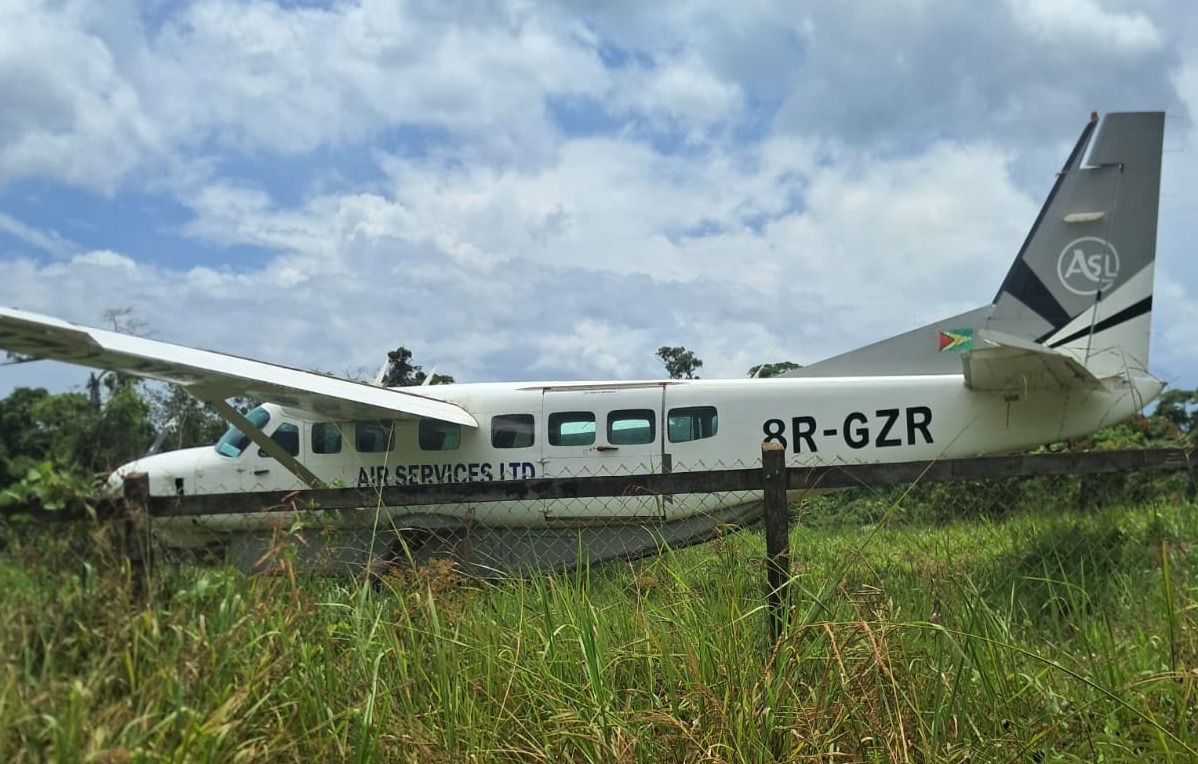
    On Monday, April 13, 2026, Guyana’s Civil Aviation Authority (GCAA) officially confirmed the death of a Nicaraguan pilot whose small commercial aircraft vanished three days prior in the country’s unforgiving interior landscape. The pilot has been identified as Captain Ryder Castillo, a former serviceman in Nicaragua’s military, who was at the controls of a Cessna 208 owned by local carrier Air Services Limited (ASL).

    The plane, registered under the call sign 8R-YAC, lost all contact with air traffic control during a routine domestic shuttle flight between the towns of Mahdia and Imabaimadai on the morning of Friday, April 10. Search and rescue teams were able to locate the wrecked aircraft from the air within hours of it going missing, but the remote location of the crash — nestled in steep, jungle-covered mountains — made an immediate on-site recovery impossible. Aerial access to the crash zone was deemed too high-risk for rescue crews, prompting command to deploy a team of Guyana Defence Force (GDF) Special Forces, who landed their helicopter at a more accessible clearing miles away and hiked over multiple days to reach the site.

    Upon arriving at the wreckage, the Special Forces team recovered Captain Castillo’s remains, and is now arranging logistics to move the body out of the remote backcountry to a population center for official processing. In the wake of the tragedy, Guyana’s Aviation Minister Deodat Indar has already appointed a dedicated accident investigator to lead a full inquiry into what caused the crash.

    This incident comes amid a period of heightened engagement between GCAA leadership and domestic aviation operators. Just days before the crash, GCAA’s Director-General, Retired Lt. Col., held a meeting with active pilots operating in Guyana, though it remains unclear if representatives from all domestic carriers including ASL were in attendance. ASL, the operator of the crashed Cessna, had only recently received regulatory approval to restart flights to the community of Matthews Ridge, with the approval restricted exclusively to the airline’s most experienced pilots. The company is already cooperating with an ongoing GCAA probe into a separate incident involving another of its aircraft, and has confirmed it will share all relevant data and internal records with investigators working on this latest crash.

  • Antigua and Barbuda High Commission Welcomes Participants of The King’s Foundation Building Craft Programme

    Antigua and Barbuda High Commission Welcomes Participants of The King’s Foundation Building Craft Programme

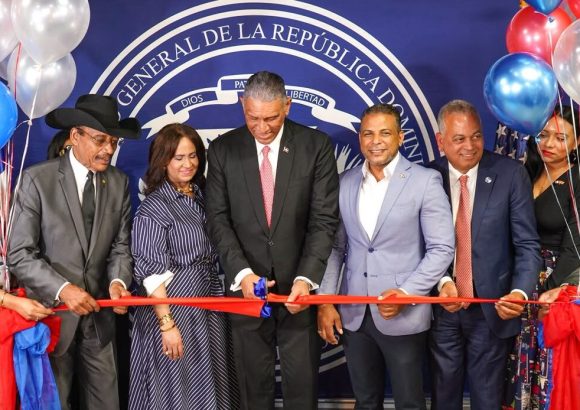
    LONDON, April 13, 2026 – A milestone moment for skills development and heritage preservation in Antigua and Barbuda unfolded this week, as the nation’s High Commission in London opened its doors to welcome the first group of local participants taking part in the transformative King’s Foundation Building Craft Programme.

    The innovative training initiative is the product of years of collaborative planning between three key partners: The King’s Foundation, the Antigua and Barbuda High Commission in London, and the Antigua and Barbuda Centre for Advanced Studies. Over the course of the programme, participating craft professionals will gain immersive, specialized instruction in both time-honored traditional construction methods and modern sustainable building practices, with a particular focus on heritage site restoration and conservation.

    For the small Caribbean nation, the programme carries far-reaching long-term benefits beyond individual professional growth. It is designed to bolster domestic technical expertise, create a framework for protecting Antigua and Barbuda’s unique cultural and architectural heritage, and equip a rising generation of skilled local workers to lead future restoration projects and national development initiatives across the islands.

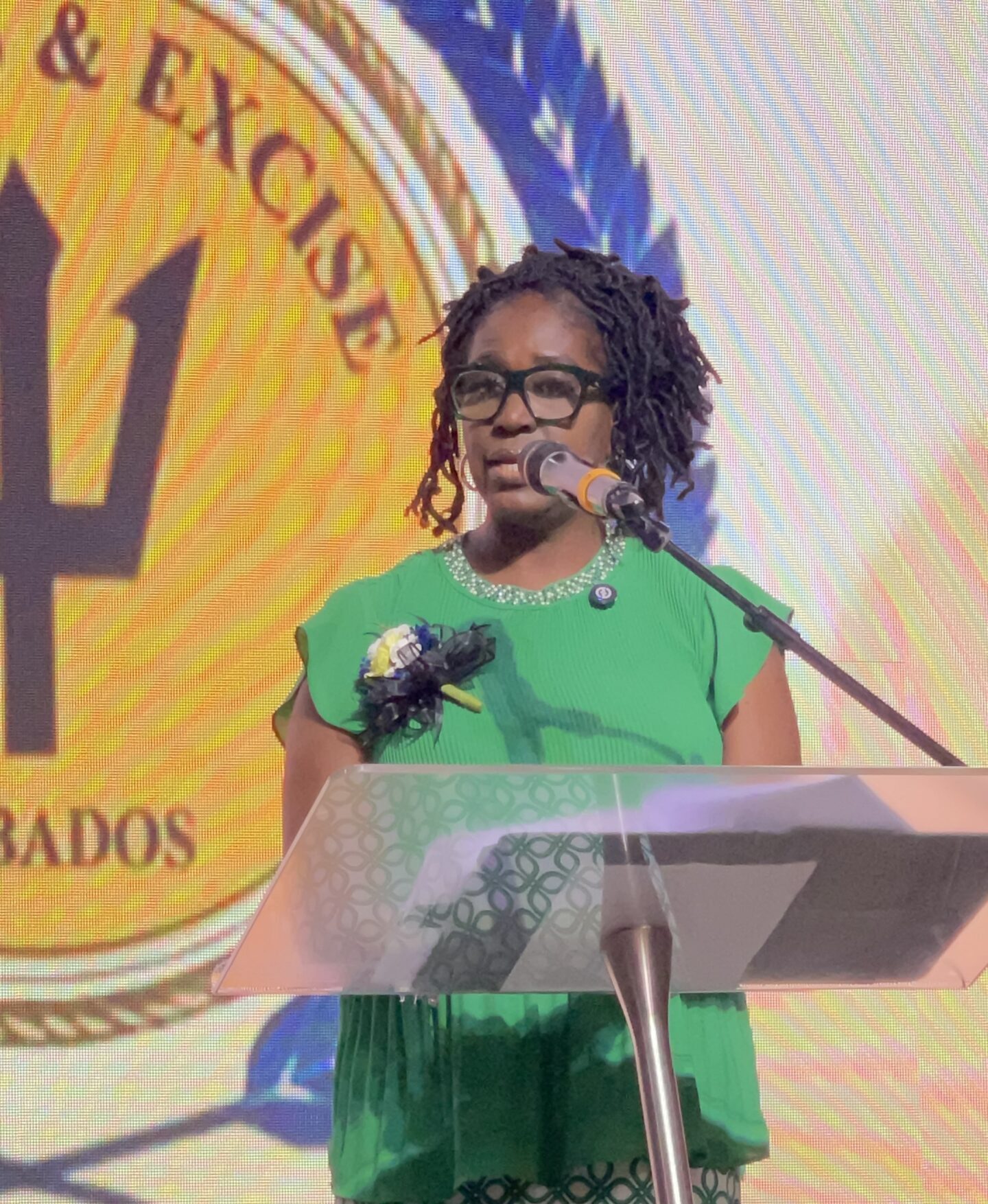
    Addressing gathered participants and partners at the reception, Antigua and Barbuda High Commissioner Karen-Mae Hill encouraged the cohort to seize the once-in-a-lifetime learning opportunity, joking lightly about the group’s likely adjustment to Britain’s cooler spring temperatures. Hill reflected on her own early involvement in building the programme, recalling a trip to Dumfries House in Scotland to meet with The King’s Foundation team during the conceptual development phase.

    “This is a truly unique opportunity for learning, cross-cultural exchange, and professional advancement,” Hill told the group. “I urge every one of you to embrace this experience with discipline, open minds, and creative thinking. As you build new skills, consider not only how this will advance your own careers – but how you can bring this expertise home to lift up our entire nation.”

    Jeremy Cross, Director of International Engagement for The King’s Foundation, also spoke at the event, expressing his organization’s enthusiasm for the new partnership. “We are delighted to welcome these exceptionally talented individuals to our training sites, as they hone their craft in heritage building and climate-resilient construction,” Cross said. “We are looking forward to working alongside each participant throughout the programme, and to the mutual exchange of knowledge and approaches that this collaboration will bring.”

    In closing, the High Commission recognized the behind-the-scenes work that made the welcome event and participant arrangements possible, singling out Brent Scotland, Second Secretary, and Caleb Gardiner, Third Secretary, for their instrumental coordination efforts that brought the initiative to its official launch.

  • New trial over Maradona’s death begins in Argentina

    New trial over Maradona’s death begins in Argentina

    BUENOS AIRES PROVINCE, Argentina — Eight years after the unexpected death of Argentine football icon Diego Maradona, and 10 months after judicial scandal derailed the first legal proceedings, a fresh negligence trial targeting his former medical care team got underway Tuesday in the Buenos Aires suburb of San Isidro.

    Widely regarded as one of the most talented and influential football players in the history of the sport, Maradona passed away in November 2020 at age 60, just two weeks after undergoing emergency surgery to remove a blood clot in his brain. He was undergoing at-home recovery when his condition suddenly deteriorated.

    Forensic examinations have confirmed Maradona’s cause of death as heart failure combined with acute pulmonary edema, a dangerous buildup of fluid in the lungs. Court documents allege the seven medical professionals who oversaw his post-surgical care committed gross negligence in the planning and execution of his home convalescence, directly contributing to his death. Prosecutors have upgraded the charges to wrongful homicide with possible intent, arguing the medical team continued their planned care plan despite clear awareness that their decisions put Maradona’s life at severe risk. If convicted, each defendant faces prison sentences ranging from 8 to 25 years.

    The first trial, launched last year, collapsed after two months of testimony amid a major judicial controversy. One of the three presiding judges, Julieta Makintach, was exposed for participating in a clandestine unauthorized documentary about the case, which included secret recordings captured inside the courtroom. The scandal led Argentine courts to annul the entire first proceeding, forcing a full retrial.

    When court opened this week, the packed San Isidro courtroom included several of Maradona’s immediate family members: daughters Dalma, Gianinna and Jana, as well as his former partner Veronica Ojeda. More than 120 witnesses are scheduled to testify over the course of the retrial, which legal teams estimate will conclude no earlier than July.

    In a pre-trial interview with Radio Con Vos over the weekend, Vadim Mischanchuk, a defense attorney representing psychiatrist Agustina Cosachov, pushed back against the prosecution’s narrative. “If there is one thing that has been definitively ruled out across all evidence, it is any malicious criminal plan to kill Maradona,” he said. Defense teams across the board maintain Maradona, who struggled publicly with substance use disorders involving cocaine and alcohol for decades, died of natural causes unrelated to medical negligence. Defense lawyer Francisco Oneto has also formally requested that the entire retrial be broadcast live on national television, a departure from the current plan that only allows live coverage of the opening session and the final verdict.

    Maradona’s death in 2020 sent waves of grief across Argentina and the global football community, coming in the middle of the first wave of the COVID-19 pandemic. Tens of thousands of fans lined up for hours to pay their final respects as his body lay in state at the Argentine presidential palace in Buenos Aires, capping a decades-long legacy that included leading Argentina to a 1986 FIFA World Cup victory and earning iconic status at top clubs Boca Juniors in Argentina and Napoli in Italy.

  • Caricom reiterates call for reparatory justice for slave trade

    Caricom reiterates call for reparatory justice for slave trade

    GENEVA, Switzerland — Representing the 15-nation Caribbean Community (Caricom) at the Fifth Session of the Permanent Forum of People of African Descent, Guyana’s Minister within the Ministry of Culture, Youth and Sports Steven Jacobs stood before the global assembly Tuesday to reinforce the regional bloc’s longstanding demand for reparatory justice for the harms of the transatlantic slave trade.

    In his address to the forum, which centered its discussions on the interconnected themes of reparations, equitable sustainable development and economic justice, Jacobs voiced unwavering Caricom backing for the forum’s work. He framed the moment as a critical turning point: while the well-documented history of systemic injustice against people of African descent cannot be erased, the future of this community remains open to collective action. For centuries, he noted, the narrative of people of African descent has been defined by state-enforced dispossession, systemic exclusion, and structural inequality — harms whose intergenerational impacts continue to limit outcomes for marginalized communities across the globe today.

    Jacobs recalled that the United Nations General Assembly has formally recognized the transatlantic trade in enslaved African people and the institution of chattel slavery as among the worst crimes against humanity in recorded history. This international acknowledgment, he emphasized, enshrines a critical truth in global collective memory — but formal recognition alone is not enough to undo centuries of harm. Without concrete action to address the lingering legacies of slavery, Jacobs argued, these inequities will continue to shape access to opportunity, public resources, and developmental progress for generations to come, a reality that Caricom member states experience directly every day.

    “Our call for reparatory justice is therefore grounded in responsibility and equity,” Jacobs told delegates. Through the bloc’s landmark 10-Point Plan for Reparatory Justice, Caricom has steadily advanced a flexible, actionable framework centered on accountability for historical harms, targeted developmental investment, and cross-regional partnership to advance redress.

    He also highlighted the growing global momentum behind the reparations movement, pointing to the widely endorsed Accra Proclamation as well as deepening collaborative work between African and Caribbean nations. These coordinated efforts, Jacobs noted, reflect a growing global consensus that the legacy of the transatlantic slave trade is a shared historical responsibility — and meaningful progress will only come through collective, coordinated action.

    The structural legacies of enslavement and colonialism, Jacobs added, are not confined to individual national contexts; they remain embedded in core global systems, driving persistent economic imbalances and blocking inclusive developmental pathways for formerly colonized nations. For Small Island Developing States (SIDS) like many members of Caricom, these longstanding structural challenges have been further exacerbated by the accelerating climate crisis, which disproportionately threatens small, low-lying coastal nations that contributed almost nothing to historical greenhouse gas emissions.

    Tackling these overlapping crises, Jacobs argued, requires integrated, coordinated policy action that connects the push for reparatory justice to broader efforts to reform the unfair global financial architecture and deliver urgent, equitable climate action that centers the needs of the most vulnerable nations. He emphasized that the Second International Decade for People of African Descent must be a period of tangible delivery, turning non-binding global commitments into measurable, life-changing progress for communities of African descent around the world.

    Closing his address, Jacobs reaffirmed Caricom’s commitment to constructive collaboration with the Permanent Forum and the broader international community. The bloc’s goal, he said, is to ensure that the next chapter of the global story of people of African descent is not written for the community by outside powers — but written by the community itself, in partnership with global allies, and rooted in justice for their past, present, and future.

  • Trump says Iran talks may resume as Israel, Lebanon open direct track

    Trump says Iran talks may resume as Israel, Lebanon open direct track

    Two parallel diplomatic breakthroughs have brought cautious new momentum to Middle East peace efforts this week, even as ongoing conflict and deep policy disagreements underscore the extreme fragility of efforts to stabilize a region roiled by more than six weeks of full-scale war. US President Donald Trump announced Tuesday that a new round of bilateral peace negotiations between the United States and Iran could convene as early as this week in Pakistan, just one day after he claimed that unnamed Iranian officials had reached out to his administration seeking a negotiated settlement.

    Simultaneously, Israeli and Lebanese officials confirmed an agreement to launch the first direct high-level negotiations between the two longtime formal adversaries since 1993, following a mediated meeting in Washington hosted by US Secretary of State Marco Rubio. This rare opening has been immediately met with fierce pushback from Lebanese militant group Hezbollah, which launched a rocket attack targeting more than a dozen northern Israeli communities precisely as the diplomatic meeting kicked off in Washington.

    The United States has emerged as the primary driver of both diplomatic tracks, driven by growing fears that ongoing open conflict between Israel and Hezbollah could unravel the fragile two-week ceasefire already in place between Washington and Tehran, which followed an initial round of inconclusive talks in Pakistan earlier this month. Lebanon was dragged into the broader regional conflict after Hezbollah launched attacks against Israel in support of its core ally Iran, triggering large-scale Israeli ground incursions and airstrikes that have left more than 2,000 people dead and forced over 1 million Lebanese residents to flee their homes.

    Rubio, who mediated the initial meeting between Israeli ambassador Yechiel Leiter and Lebanese envoy Nada Hamadeh Moawad, framed the gathering as an unprecedented opening for decades-long tensions. “This is a historic opportunity,” Rubio stated during opening remarks, acknowledging that “decades of history” hang over the fragile negotiating process. Lebanese President Joseph Aoun added that he hoped the talks would “mark the beginning of the end of the suffering of the Lebanese people.”

    A US State Department spokesperson characterized the initial discussions as “productive,” confirming that “All sides agreed to launch direct negotiations at a mutually agreed time and venue.” While Leiter noted that both nations shared the core goal of removing Hezbollah’s armed influence from southern Lebanon, Moawad described the meeting as “constructive” while emphasizing that she had pushed aggressively for an immediate ceasefire. Israel, which currently maintains military control over parts of southern Lebanon, has rejected any ceasefire that leaves Hezbollah’s military infrastructure intact, arguing the group remains the single greatest barrier to long-term regional stability.

    Parallel to the Israeli-Lebanese track, the Trump administration has simultaneously ramped up economic and military pressure on Iran to advance its negotiating position, announcing a full naval blockade covering “vessels of all nations entering or departing Iranian ports and coastal areas,” per a statement from US Central Command. As of Tuesday, CENTCOM claimed that no vessels had transits through the relevant area and six ships had complied with orders to turn back, though public maritime tracking data indicated that several vessels that had docked at Iranian ports had crossed the blockade zone since it was imposed.

    Iran’s military command has decried the blockade as an act of state-sponsored piracy, issuing a stark warning that if Tehran’s harbor security is threatened, “no port in the Persian Gulf and the Arabian Sea will be safe.” Regional security analysts note that the blockade serves two core strategic goals for the White House: cutting off critical oil export revenue for Tehran, and pressuring Beijing—Tehran’s largest crude oil customer—to push Iranian leadership to reopen the Strait of Hormuz, a critical global oil chokepoint. China has already labeled the blockade “dangerous and irresponsible” after Trump issued an explicit threat to sink any vessel that attempts to enter or leave Iranian ports in violation of the order.

    Despite the rising tensions, the temporary ceasefire between the US and Iran agreed last Wednesday remains in place. Global financial markets reacted positively to renewed hopes for a negotiated end to the conflict, with stock indices climbing and international crude oil prices retreating. By Tuesday, Brent North Sea Crude traded at $94.79 per barrel, while West Texas Intermediate fell to $91.28. The US Treasury also confirmed it will not renew a temporary sanctions waiver for Iranian oil, which was implemented earlier to offset war-related supply disruptions to global energy markets.

    Hezbollah leader Naim Qassem reiterated his hardline position ahead of the Washington meeting, calling for the negotiations to be canceled and vowing to continue armed resistance against Israel. The international community has largely welcomed the diplomatic openings, with foreign ministers from 17 nations including Britain and France urging all parties to seize the moment to secure lasting regional security. UN Secretary-General Antonio Guterres has emphasized that “there is no military solution” to the conflict, adding that lasting peace requires “persistent engagement and political will” and that “Serious negotiations must resume.”

    At the center of the US-Iran negotiating impasse remains the long-running dispute over Tehran’s nuclear program. Pakistani diplomatic sources have confirmed to AFP that Islamabad continues to work behind the scenes to convene a second round of US-Iran talks. Trump has repeatedly stated that any final deal must permanently block Iran from acquiring a nuclear weapon, a core justification for his administration’s launch of the war earlier on the basis of claims Tehran is actively pursuing an atomic bomb—allegations Iran has repeatedly denied.

    According to reports from The New York Times, US negotiators offered a proposal during the first round of talks that would require Iran to suspend all uranium enrichment activities for 20 years, a demand Tehran has rejected. In response, Iran put forward a counter-offer to suspend nuclear enrichment for five years, an offer US officials have dismissed as insufficient. International diplomatic efforts have accelerated in recent days, with Russian Foreign Minister Sergei Lavrov meeting with his Chinese counterpart in Beijing just hours after holding talks with Iran’s top diplomat. Moscow has already tabled a proposal to securely store Iran’s enriched uranium as part of any final nuclear deal, adding another layer of international involvement to the ongoing negotiations.

  • Sandra falls into hands of serial killer

    Sandra falls into hands of serial killer

    For 31 years, the family of Sandra Rajkumar-Costilla carried unanswered questions about her brutal murder. Now, their long wait for a formal admission of guilt has come to an end, as convicted serial killer Rex Heuermann has pleaded guilty to taking her life, closing one of the longest cold chapters in the Long Island serial killing case.

    Sandra’s story is one stitched together by generational trauma and fractured family ties that trace back to a 1975 tragedy in her native Trinidad. It was June of that year when her father Ramkissoon “Ramki” Rajkumar murdered his wife Milly — Sandra’s mother — before taking his own life in a murder-suicide that ripped the young family apart. Now, 49 years later, Ramki’s surviving sister still refers to that day only as “the incident,” the trauma too raw to name outright.

    After the 1975 murder-suicide, Sandra, then between 10 and 12 years old, and her younger brother Manny were taken into legal custody by their maternal grandparents, who moved the pair to Arima, Trinidad. Ramki’s sister says the couple blocked the paternal side of the family from seeing the children, despite multiple attempts to visit that even included police escorts. The children were entitled to a monthly government pension as part of their father’s employment benefits, and both Ramki’s sister and Manny believe the grandparents took custody primarily to access these funds, leaving the young orphans with little in the way of emotional care or guidance. “They were the grab bag, the meal ticket,” Manny recalled of their childhood.

    Sandra lived with her maternal grandmother for seven years, attending Arima Senior Comprehensive (now renamed Arima North Secondary) while Manny went to Five Rivers Secondary. When Sandra was around 16, she made a surprise visit to her paternal aunt with school friends, a meeting her aunt still remembers decades later. “She was a beautiful girl,” she said. “We cannot turn back time. We always say if and but, but if circumstances were different, if they had lived with us, who knows if they could have had a different outcome. We are sad.”

    In 1982, when Sandra was 17 and Manny 14, their ailing maternal grandmother could no longer care for them. Their half-brother Anthony, who served in the U.S. Army, stepped forward to adopt the pair, and the siblings left Trinidad for a new life in the United States. After a short stay with their half-sister Ruth in New York, they moved to Hawaii, where Sandra married and Manny enrolled at Waipahu High School. Sandra’s childhood best friend, Nicky — who asked to remain anonymous — remembers Sandra leaving Trinidad to join her new life, leaving her high school boyfriend behind. Four years later, in 1986, Sandra briefly returned to Trinidad to bring her boyfriend back to the U.S., a reunion Nicky witnessed firsthand before she herself migrated to the U.S. in 1988. The pair stayed close after Nicky’s move, and Nicky says she was the last person to speak to Sandra before she disappeared.

    After moving back to the U.S. with her boyfriend, Sandra became pregnant, and the young couple stayed briefly with Manny (who had moved to New York after stints in Hawaii and North Carolina) before finding their own place. Life in New York was unforgiving for the young family; they struggled financially, and Manny often helped cover expenses. When Sandra’s relationship with her boyfriend collapsed, Manny says his sister’s mental health declined rapidly. “In my opinion, he destroyed my sister mentally. When he came into the picture, everything changed. The relationship wasn’t what she expected and she was disappointed. She started drinking,” Manny said. “I believe she was in a bar somewhere drinking. Absolutely that’s how it happened” when she encountered Heuermann.

    Manny has pushed back against long-standing assumptions that his sister worked as a sex worker, matching the profile of Heuermann’s other known victims. He says Sandra worked payroll and bookkeeping roles through temp agencies, meeting wealthy business leaders in Manhattan through her work, and was never involved in sex work. He described his sister as trusting and naive, unable to spot malicious intent in others, saying “it’s probably just by chance this guy happened by her in a bar, picked her up and perhaps said, ‘I have a house in Long Island; let’s take a drive; there’s a beach there…’ and she fell for it and this happened.”

    In the pre-cell phone era of the early 1990s, Sandra would occasionally disappear for a day at a time, always calling Manny from a public payphone to let him know where she was. That changed on a cold November day in 1993, when 28-year-old Sandra left her 2-year-old son with a neighbor and never returned. That same day, Nicky — by then living in Massachusetts — received a call from Sandra at a payphone. Sandra told her her relationship was falling apart and she was struggling, and Nicky immediately invited her to come to Massachusetts to start over, offering to help her get a bus ticket. Sandra agreed to come the next morning, but she never called to say she had arrived at the bus station. “I waited and waited for her to call and say she was at the bus stop so I could go pick her up. She never called,” Nicky said.

    After several days without contact, Manny and his family reported Sandra missing. A week after Nicky’s final conversation with Sandra, police found her body in the North Sea area of Long Island. DNA from hair found on her body matched Heuermann, an architect who had been linked to a string of murders of women along Long Island’s Gilgo Beach starting in the 1990s. Heuermann was arrested in 2023, and officially charged with Sandra’s murder in 2024. Last week, he pleaded guilty to Sandra’s murder, admitting he had strangled her to death. He is set to be formally sentenced on June 17.

    Today, many members of Sandra’s family are unable or unwilling to speak out or attend the sentencing. Her half-sister Ruth, who lives in Florida, has not responded to requests for comment. Half-brother Anthony was arrested on larceny charges in North Carolina in 2022. Manny is currently awaiting trial in Trinidad on undisclosed charges. Only Nicky says she plans to be in court for Sandra.

    For Nicky and Manny, the case still leaves open one painful loose end: the whereabouts of Sandra’s son, who would now be 35 years old. After Sandra’s murder, her son was briefly cared for by Ruth before his father took custody, and he has not been in contact with Sandra’s remaining loved ones. “She asked me to promise that when the time is right, I will let her son know how much she loved him. I’ve been looking for him for years to deliver that message,” Nicky said. Reflecting on the life Sandra could have had, Nicky added: “Sandra was about to start a whole new life. I told her come, I don’t care what you have done in the past, whatever it is we can fix it.”

  • At least 30 dead in stampede at Haiti’s historic site

    At least 30 dead in stampede at Haiti’s historic site

    A devastating crowd crush at one of Haiti’s most famous cultural landmarks has left at least 30 people dead, with local authorities cautioning that the fatality count may climb in the coming hours as search operations continue. The tragic incident unfolded on Saturday, April 11, at the Citadelle Laferrière, a iconic 19th-century fortress constructed just after Haiti won its independence from French colonial rule. Recognized as a UNESCO World Heritage Site in 1982, the fortress draws thousands of visitors annually for its longstanding traditional celebration, and this year’s event drew a large crowd of students and other tourists eager to take part in the festivities.

    Jean Henri Petit, head of civil protection for Haiti’s Nord Department where the Citadelle is located, confirmed that the deadly crush broke out at the main entrance to the site, and that unanticipated rainy weather worsened dangerous conditions for attendees. Culture Minister Emmanuel Menard formally verified the 30 fatalities in a written statement provided to AFP, adding that injured people have already been transported to local medical facilities to receive urgent care. Rescue teams remain on site working to locate any individuals who have been reported missing following the incident, and Menard did not release an exact number of people wounded in the disaster.

    Haiti’s Prime Minister Alix Didier Fils-Aime released an official statement extending his deepest condolences to the families who lost loved ones in the tragedy, affirming the national government’s solidarity with grieving communities during what he called a period of profound suffering and mourning. The prime minister noted that a large share of attendees at the annual celebration were young people, but no identities of the deceased have been released to the public as of yet, and his office did not provide an independent death toll estimate.

    This latest catastrophe comes as Haiti already faces overlapping humanitarian and security crises. The Caribbean nation has been gripped by widespread gang violence that has killed hundreds of civilians in recent months, paired with rising civilian casualties from ongoing security force crackdowns on armed groups. It is also no stranger to large-scale disasters: in 2021 alone, a massive earthquake killed approximately 2,000 Haitians and a fuel tank explosion left 90 people dead, while another fuel blast killed 24 people in 2024.