分类: world

  • Why is it raining so much in April in the Dominican Republic: climatic causes explained

    Why is it raining so much in April in the Dominican Republic: climatic causes explained

    The Dominican Republic is facing an extraordinary and alarming weather anomaly this April: far outside the country’s typical seasonal rainfall patterns, days of extreme, high-volume downpours have shattered historical averages, leaving residents and experts grappling with a shift that is already upending thousands of lives. Meteorologists with the nation’s leading weather agency have traced the abnormal precipitation directly to human-driven climate change, sounding a clear alarm about shifting seasonal patterns across the Caribbean.

    Cristopher Florian, a veteran meteorologist at the Dominican Institute of Meteorology (Indomet), told local outlet HOY that rising global ocean temperatures are the primary driver of this extreme weather. As seas warm, they evaporate at a faster rate, pumping far more water vapor into the atmosphere than historical baseline conditions. This extra moisture creates the ideal conditions for far more intense, concentrated bursts of rainfall that far exceed what is normally expected for this time of year.

    Florian noted that this deviation from historic patterns is not an isolated event: for the past three consecutive years, April rainfall totals in the Dominican Republic have consistently outpaced long-term averages, driven by persistent anomalies in large-scale atmospheric circulation. Under normal seasonal cycles, the country’s wet convective season does not begin until mid-to-late April, when typical seasonal rainfall ramps up. In recent years, however, this active rainy period has been starting earlier and bringing more intense precipitation than ever recorded – a clear marker of broader climate disruption, according to Florian.

    The scale of the recent downpours is unprecedented in modern records for the month. On April 8, a low-pressure trough swept across multiple regions of the country, dumping extreme rainfall across populated areas. In the Ensanche Julieta neighborhood of the National District, the storm dropped 314 millimeters of rain in just a matter of hours – a volume that would be extreme even in the heart of the wettest months of the year.

    The impacts of this extreme weather extend far beyond disrupted climate patterns, causing widespread harm to local communities. The Dominican Republic’s Emergency Operations Center (COE) released an updated damage assessment Thursday that paints a stark picture of the human cost: more than 1,000 residential properties have been damaged by floodwaters and associated hazards, with dozens completely leveled by flash flooding and mudslides. In total, officials confirmed 1,024 homes sustained damage, 23 of which were partially destroyed and 32 fully reduced to uninhabitable ruins. More than 5,100 residents have been displaced from their homes and relocated to government-designated emergency safe shelters across the hardest-hit regions.

  • Global partners rally behind RSS to confront threats

    Global partners rally behind RSS to confront threats

    Against a backdrop of growing transnational security challenges across the Caribbean, international partners have announced new commitments of funding, resources and strategic backing to the Barbados-headquartered Regional Security System (RSS), multiple official sources confirmed to Barbados TODAY following the bloc’s recent Council of Ministers’ Meeting in Saint Lucia.

    The gathering, which Attorney General Wilfred Abrahams characterized as highly productive, brought together regional leaders and global stakeholders to align on priorities for countering the rising tide of cross-border criminal activity. Attendees hammered out a series of binding agreements and strategic initiatives designed to shore up the region’s collective security capacity.

    At the top of the meeting’s agenda was a mandate for coordinated, collective action across all RSS member states, centered on enhanced cross-border collaboration, aligned operational strategies, and real-time intelligence sharing to disrupt transnational criminal networks. A second key priority formalized standards for the third-country Refugee/Deportee Relocation Protocol, which operates under bilateral agreements between the United States and individual Caribbean member states. The framework requires full, unredacted information exchange between all parties, and the U.S. Chargé d’Affaires presented a complete briefing on outstanding questions and protocol details to the ministerial council, according to the official meeting outcome document obtained by Barbados TODAY.

    Ministers also approved a comprehensive review of national legislative frameworks across all member states, with the goal of updating and standardizing anti-gang legislation and strengthening legal tools to counter transnational organized crime. Separately, the CARICOM Implementation Agency for Crime and Security (IMPACS) updated attendees on a new centralized gang database being developed by the Civil Gang Injunctions Unit (CGIU), and issued a formal call for member states to contribute local data to complete the initiative.

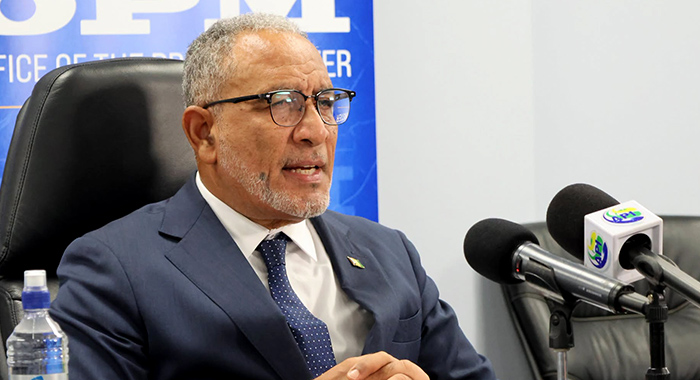
    During open discussion, representatives from St. Vincent and the Grenadines raised awareness of significant unintended negative consequences stemming from kinetic strikes on commercial and civilian vessels operating in the region’s shared maritime domain, prompting further deliberation on alternative counter-maritime crime strategies.

    In his executive report to the council, the RSS Executive Director confirmed that the ratification process for the Treaty of San José has been fully completed at RSS headquarters. He also outlined ongoing infrastructure upgrades: modernization work for Maritime Operations Centres across all member states will move forward as planned, funded through a development project administered by Global Affairs Canada. Additionally, a new policy provision has been approved to reallocate funds seized from criminal operations to directly support frontline crime-fighting initiatives across the region.

    The meeting also advanced the RSS’s 2026 strategic action plan, which lays out a clear roadmap for expanding security cooperation. Key priorities outlined in the plan include: strengthening regional data collection and intelligence sharing frameworks; formalizing a strategic partnership with the Caribbean Electric Utility Services Corporation (CARILEC) via a memorandum of understanding set for signing in May 2025; establishing formal partnership agreements with Belize and the British Virgin Islands to boost regional capacity for financial crime investigations and illicit asset recovery; deepening collaboration with European Union member states on cross-border criminal investigations through alignment with the European Judicial Network. The RSS also announced plans to submit an application for observer status on the Budapest Cybercrime Convention Committee, as the region works to address rising digital criminal threats.

    In a final decision addressing shifting regional drug policy trends — as more Caribbean jurisdictions move to legalize cannabis for medical or recreational use — the Council of Ministers enacted a strict zero-tolerance policy for illicit drug use among all active law enforcement officers across member states. A formal policy paper outlining implementation guidelines will be reviewed and approved by senior police and military leadership in the coming months.

  • IICA meeting with agricultural leaders of Americas highlights need for unified approach to agrifood challenges

    IICA meeting with agricultural leaders of Americas highlights need for unified approach to agrifood challenges

    Against a backdrop of escalating global geopolitical volatility and widespread market disruption, senior agricultural ministers and policy leaders from across the Americas have united to issue a urgent call for enhanced cross-regional collaboration. The goal of this coordinated push is to shore up long-unaddressed vulnerabilities in hemispheric agrifood systems, buffer against unexpected external shocks, and unlock untapped emerging development opportunities, according to an official press release from the Inter-American Institute for Cooperation on Agriculture (IICA), which convened the high-level virtual gathering.

    The summit, held during IICA Director General Muhammad Ibrahim’s official working visit to Washington, D.C., brought together a diverse cohort of stakeholders: national government agricultural delegations, U.S. federal officials, global multilateral funding bodies, private sector agricultural leaders, and policy research institutions. During his visit, Ibrahim has been actively engaging with stakeholders to co-design a shared regional agenda to strengthen hemispheric agricultural resilience.

    Central to the meeting’s discussions was a growing consensus that the current threats to food security across the region stem from deep-seated structural weaknesses, not temporary, passing market disruptions. A core priority identified by attendees is cutting over-reliance on imported agricultural inputs, particularly nitrogen-based fertilizers, nearly 80% of which are sourced from the Middle East— a supply chain that has been thrown into severe uncertainty by ongoing regional geopolitical tensions. Participants agreed that the solution lies in expanding targeted regional investment in domestic production of organic fertilizers and bio-based agricultural inputs, paired with expanded cross-border technical cooperation to advance inclusive, sustainable agricultural development across the hemisphere.

    Opening the summit, Kip Tom, Vice Chair of Rural Policy at the America First Policy Institute (AFPI), emphasized the outsized global role of the Western Hemisphere’s agricultural sector. “The Western Hemisphere is a leader in global agriculture and feeds billions of people around the world each day. Today, despite global uncertainty, we must serve as a model of strength and continental cooperation,” Tom stated. He also drew a clear connection between global food security and national stability, calling for deeper regional trade integration and market expansion, noting that IICA’s coordinating role “is more important today than ever before, so that the Americas may grow even stronger.”

    Director General Ibrahim expanded on the urgency of addressing fertilizer dependence, noting that small-scale agricultural producers, who form the backbone of food production in many regional economies, bear the brunt of supply chain disruptions. “We must reduce our dependence on fertilizer imports through alternatives that enable us to have a robust production chain. The issue of nitrogen-based fertilizers is particularly critical, given that nearly 80% of them come from the Middle East. Today, small-scale producers are facing risks and uncertainty for this very reason,” he said. Ibrahim added that IICA is uniquely positioned to drive progress through targeted investment in technological innovation, including the development of climate-resilient, high-yield improved seed varieties tailored to regional growing conditions.

    Agricultural leaders from across the hemispheric shared national perspectives and ongoing domestic efforts to build resilience, highlighting shared challenges and coordinated solutions. Zulfikar Mustapha, representing Guyana, noted that small Caribbean island nations face disproportionate exposure to global supply chain shocks tied to Middle Eastern tensions. He outlined Guyana’s ongoing initiative to build a regional fertilizer plant powered by domestic natural gas reserves to supply Caribbean nations, paired with major investments in digital smart agriculture technologies.

    Viviana Ruiz, another participating leader, underscored the deep interconnectedness of modern energy, fertilizer, and food markets. “The production costs of strategic crops are leading to a decrease in the use of inputs. However, the situation also affords an opportunity to transition towards greater sustainability and low-carbon production. Now more than ever, the region must act in unison and adopt a collective commitment,” she said.

    Mexican agricultural representative Santiago Ruy Sanchez de Orellana shared that Mexico currently imports 75% of its total fertilizer demand, and is moving rapidly to expand domestic production through state-owned energy giant PEMEX, while rolling out a national policy to support adoption of bioinputs. “Through the state-owned oil company PEMEX, we are expanding local fertilizer production. Mexico is also promoting a bioinputs policy,” he said, adding that “hemispheric cooperation makes the pursuit of food sovereignty viable while respecting each country’s priorities. Food sovereignty is not in opposition to trade and international cooperation; on the contrary, it needs it.”

    Argentine representative Agustín Tejeda warned against the trend of restrictive protectionist trade measures in response to global uncertainty, arguing that inward-looking policies would only exacerbate regional vulnerabilities. “The response from countries in our region should not be further withdrawal, but rather greater cooperation, greater efficiency, more trade, and more transparent information,” he said.

    Additional participants included delegates from leading global development institutions including the World Bank and the International Fund for Agricultural Development, alongside private sector agricultural leaders. According to the IICA press release, the group collectively “emphasized the responsibilities of the Americas in times of pressure on global food demand and expressed the need to protect small-scale producers,” who are most vulnerable to market volatility and input price shocks.

  • ‘Moral blindness’: UK far-right pol slammed for plan to deny visas over reparations

    ‘Moral blindness’: UK far-right pol slammed for plan to deny visas over reparations

    A major diplomatic and political row has erupted after Nigel Farage, leader of Britain’s far-right Reform UK party, sparked international outrage by proposing that a future Reform UK government would block all visa applications from Caribbean and African countries that demand reparations for the transatlantic slave trade. The policy, which explicitly targets nations including Barbados and other former British Commonwealth states that have led global reparations advocacy, has drawn sharp condemnation from Barbadian officials, who have labeled Farage’s stance a demonstration of “profound moral blindness”.

    Despite holding just eight seats in the UK national parliament, Reform UK – an ultra-conservative, anti-immigration party that has gained significant traction among British voters – currently leads national opinion polls ahead of the UK general election scheduled to take place by 2029. In defending Farage’s proposal, Reform UK officials have described reparations demands as “insulting”, arguing that they erase the UK’s historical legacy as the first major global power to abolish slavery and enforce its ban across the Atlantic.

    That framing has been firmly rejected by leaders of Barbados’ reparations movement. Ambassador David Comissiong, deputy chair of the Barbados National Task Force on Reparations, told local outlet Barbados TODAY that Farage’s out-of-touch position will not weaken the reparations campaign – instead, it will galvanize advocates to double down on their efforts. The core goals of the reparations movement extend far beyond direct cash payments, Comissiong explained, and include targeted action: restoring stolen cultural artifacts and institutions, addressing ongoing public health disparities rooted in centuries of slavery, eliminating illiteracy across former enslaved nations, and facilitating equitable technology transfer.

    “Far from causing anyone to back off from the reparations issue, it is going to, in fact, motivate us, the reparations campaigners, to actually double down in telling the story, educating national public opinion, confronting people like Mr Farage with the hard facts and truth of that tragic history,” Comissiong said in the Friday interview. He added that Farage appears to misunderstand the massive scope of his own proposal: a visa ban would bar entry to the UK for nearly all citizens of English-speaking Caribbean and African nations, a policy that would carry severe negative consequences not just for affected countries, but for the UK and the entire Commonwealth of Nations.

    Comissiong argued that Farage’s stance reflects a stubborn historical strain of denial within sections of British society, one that refuses to acknowledge the grave crimes committed by the British Empire. “As an empire, they committed serious, serious crimes in dominating non-native people, enslaving, carrying out genocide of the native people, and constructing this terribly devilish and inhumane system of racialised chattel slavery, where they denied human status to a large segment of the human family,” he said. Centuries after abolition, this persistent refusal to confront the harms of slavery – harms whose intergenerational impacts endure to this day – and to humbly admit wrongdoing is exactly what qualifies Farage’s position as morally blind, he added. The only cure for this denial, Comissiong noted, is widespread public education about the true history of the transatlantic slave trade.

    Crucially, Comissiong emphasized that Farage’s position is out of step even with leading British institutions. He pointed to King Charles III’s public acknowledgment that a conversation about reparations is long overdue, as well as the Church of England’s formal admission of complicity in the crime of slavery, followed by a public apology and the launch of a dedicated reparative justice funding program. He also noted that prominent established British families with ties to the slave trade, such as the descendants of the Jacobeans and the Gladstones, have issued public apologies for their ancestors’ roles and launched their own reparative justice initiatives.

    In a separate exclusive interview with Barbados TODAY from his London office on Friday, Barbados’ High Commissioner to the UK Edmund Hinkson reaffirmed Barbados’ unwavering commitment to the reparations cause, even as he declined to comment on UK domestic political protocol. Hinkson stressed that Barbados fully endorses the United Nations resolution that formally classifies the transatlantic slave trade as the worst crime against humanity in recorded history. He also expressed regret that while the resolution passed with overwhelming support, endorsed by 152 of the UN’s 193 member states, the UK and all European Union nations that participated in the slave trade abstained from the vote.

    Hinkson also pushed back against a common misleading narrative in British media and political circles that Caribbean reparations advocates are demanding direct cash payments of between £18 trillion ($48 trillion) and £24 trillion ($65 trillion), an estimate of the value of forced labor extracted from enslaved people by British actors including commercial banks, insurance companies, the Church of England, and a majority of 19th-century British parliament. “Of course, none of the countries that were involved in this tremendous international crime have that money right now. We are not asking for that kind of money by itself … that is not at the forefront. We understand that the practicality of that money will not be paid,” he explained.

    Instead, Hinkson outlined the movement’s core priorities, starting with a full, formal apology from the British government for the country’s role in the slave trade. Critics often argue that modern Britons should not apologize for crimes committed by their ancestors, but Hinkson countered that descendants of slave owners and traders continue to reap massive economic and social benefits from their ancestors’ exploitative actions. Beyond a formal apology, the movement’s demands mirror those laid out by Comissiong: the repatriation of stolen cultural artifacts held in British museums, targeted support to address the public health crisis that stems from the intergenerational trauma of slavery – Caribbean nations have some of the highest global rates of chronic conditions including hypertension and both types of diabetes – programs to eliminate illiteracy, support for psychological rehabilitation for affected communities, equitable technology transfer, and widespread debt cancellation for former colonial nations.

  • Air Services Limited plane crashes in rough terrain

    Air Services Limited plane crashes in rough terrain

    On Friday, 10 April 2026, a single-engine Cessna 208 operated by regional Caribbean carrier Air Services Limited (ASL) crashed in dense, mountainous forestland in Guyana, triggering an urgent large-scale search and rescue operation, local aviation officials confirmed.

    The aircraft, registered under the identification number 8R-YAC, was operating a short domestic flight from Mahdia to Imbaimadai when it lost contact with air traffic controllers. According to official records released by the Guyana Civil Aviation Authority (GCAA), the plane departed Mahdia at 8:10 a.m. local time and was scheduled to land at its destination just 30 minutes later, at 8:40 a.m. When the Cessna failed to send an arrival confirmation, aviation regulators launched an immediate missing aircraft check just four minutes after the expected landing time, at 8:44 a.m.

    Initial reports from the GCAA confirm that only one person was on board at the time of the crash: a foreign pilot contracted to fly for ASL. Investigators also noted that severe adverse weather conditions were present across the flight route when the aircraft went missing, a factor that will be examined as part of the upcoming accident probe.

    Thanks to recent upgrades to Guyana’s national search and rescue infrastructure, teams were able to quickly narrow down the plane’s approximate crash location. First, an ASL reconnaissance aircraft spotted the downed plane from the air, and the sighting was later independently verified by two Trans Guyana Airways Cessna Caravans and a Britten-Norman Islander survey plane.

    Authorities have now mobilized a full rescue response, led by the Guyana Defence Force (GDF). The operation includes elite special operations troops, specialized medical personnel, and a recently acquired Bell helicopter fitted with a winch to access the hard-to-reach terrain. A senior official involved in the mission noted that rescue teams will need to rappel and hike across steep, unforgiving mountain slopes to reach the crash site, adding that the operation is in a time-sensitive race against the clock.

    As of the latest update from the GCAA, the incident response remains active, and all current details are considered preliminary pending full on-site verification by recovery and investigation teams.

  • Easter truce between Russia and Ukraine falters

    Easter truce between Russia and Ukraine falters

    KHARKIV, Ukraine — What was meant to be a temporary pause in fighting for Orthodox Easter has quickly devolved into a familiar cycle of cross-border accusations of violence, marking yet another setback to diplomatic efforts to end Europe’s deadliest conflict since World War II. Just hours after a 32-hour bilateral ceasefire went into effect on Saturday afternoon, Ukraine’s military command published a detailed account of nearly 470 breaches of the truce carried out by Russian forces.

    The ceasefire agreement itself emerged after a weeks-long back-and-forth: Ukrainian President Volodymyr Zelensky first proposed the holiday truce more than a week before it was scheduled to take effect, with Russian President Vladimir Putin ultimately ordering his forces to hold fire on Thursday. The Kremlin outlined that the truce would run from 1:00 pm GMT Saturday through the end of Sunday, a 32-hour window that both sides had formally agreed to observe.

    By late Saturday, however, Ukraine’s military documented hundreds of hostile actions in a public post on Facebook. In total, officials recorded 469 ceasefire violations, including 22 enemy infantry assaults, 153 artillery barrages, 19 attacks from attack drones, and 275 strikes from first-person-view (FPV) loitering drones. Across the entire day Saturday, the military added, Russian forces launched 57 air raids, dropped 182 guided aerial bombs, deployed more than 3,900 drones of all types, and carried out 2,454 separate shelling attacks targeting both Ukrainian civilian population centers and frontline military positions.

    Russia has pushed back with its own accusations of Ukrainian truce violations. In Russia’s border Kursk region, Governor Alexander Khinshtein claimed that a Ukrainian drone strike targeted a local gas station in the town of Lgov, leaving three people injured — including an infant.

    In his Saturday evening public address, Zelensky used the widespread violations to call for an extended holiday ceasefire, framing the outcome as a clear test of Russian intentions to the global community, including the United States. “We have put this proposal to Russia, and if Russia again chooses war instead of peace, this will once again demonstrate to the world, and to the United States, who really wants what,” he said.

    For residents of Kharkiv, the northeastern Ukrainian city that sits just kilometers from the Russian border and faces near-daily Russian attacks, the widespread violence matched the deep skepticism many held ahead of the truce. Sixty-five-year-old Oleg Polyskin said he held faint hope the short 36-hour truce might hold, but added that he put no faith in Russian promises. “But even if you’re going to church, there is no 100-percent guarantee that everything will be peaceful… you shouldn’t trust Putin and his government,” he said. Sixteen-year-old Sofiia Liapina echoed that wariness: “It would be nice if nothing happened tonight and it was quiet, without air-raid alerts. But we can’t know — because our neighbours can’t be trusted.”

    The violence began even before the truce was scheduled to begin. Ukrainian authorities reported that in the hours leading up to the 1:00 pm GMT start time, Russia launched a massive wave of at least 160 drones across Ukraine, killing four civilians in the country’s eastern and southern regions and wounding dozens more. For its part, Russia reported that a reciprocal wave of Ukrainian drone strikes sparked a large fire at an oil depot and damaged multiple residential apartment buildings in its southern Krasnodar region.

    This year’s Easter ceasefire follows an identical arrangement in 2024, which also collapsed after both sides traded accusations of hundreds of truce violations. Amid the tensions over the truce, however, the two warring parties managed to complete a significant prisoner of war exchange on Saturday. Each side released 175 captured military personnel, plus seven civilians, for a total of 350 service members and 14 civilians returned home. “I still haven’t really realised that I’m finally here — that now I can make my dreams reality, that I am finally free,” said Maksym, a Ukrainian soldier who regained his freedom after four years in Russian captivity.

    Beyond the temporary holiday truce, long-running diplomatic efforts to end the full-scale conflict, now in its fourth year, remain deadlocked. US-led peace talks have stalled in recent weeks, in large part due to competing global priorities sparked by the ongoing war in the Middle East. Even before the escalation of tensions between Iran and Israel, progress on a Ukrainian peace deal had moved at a glacial pace, held up by intractable disagreements over territorial claims.

    Ukraine has proposed freezing active hostilities along current front lines, a framework that Russia has flatly rejected. Moscow demands that Kyiv cede full control of all remaining Donetsk region territory held by Ukrainian forces — a non-negotiable demand for the Ukrainian government. Kremlin spokesman Dmitry Peskov further confirmed last week that Russia had not held pre-truce discussions with either Ukraine or the United States, and that the Easter ceasefire was not tied to ongoing end-of-war negotiations.

    Since the full-scale invasion began, the conflict has claimed hundreds of thousands of lives on both sides and forced more than 14 million Ukrainians to flee their homes, according to United Nations figures, making it the deadliest European conflict since World War II. Russia has captured small additional swathes of Ukrainian territory over the past year, but at the cost of massive personnel and equipment losses, according to the US-based Institute for the Study of War (ISW). Kyiv has managed to push back against Russian advances in the southeast in recent months, and Russian territorial gains have slowed sharply since late 2025, the ISW reported. Today, Russian forces occupy just over 19 percent of Ukraine’s internationally recognized territory, most of which was seized in the first weeks of the 2022 full-scale invasion.

  • Khamenei: ‘Teheran heeft de wereld verbaasd’

    Khamenei: ‘Teheran heeft de wereld verbaasd’

    On the 40th day of mourning for his predecessor and father, Ayatollah Ali Khamenei – who was killed in a joint US-Israeli strike on the opening day of the ongoing conflict – Iran’s new Supreme Leader Mojtaba Khamenei issued a landmark public address Thursday, marking his first public statement since the outbreak of hostilities. The 58-year-old leader, who had stayed out of the public eye since fighting began, used the televised address to declare that Iran has secured a “final victory” in its war against Israel and the United States.

    Khamenei emphasized that Iran has never sought unnecessary conflict, but remains committed to defending its inalienable legitimate rights. He stressed that the criminal aggressors who launched unprovoked attacks on Iranian soil will not escape unpunished, adding that Tehran will demand full compensation for all infrastructure damage, and for the blood of all martyrs and injured citizens lost in the conflict.

    When addressing the status of the Strait of Hormuz, a critical global chokepoint that Iran has effectively blocked since the war erupted on February 28 and a core point of contention in ongoing US-Iran peace talks, Khamenei only noted that the country would enter a “new phase” without offering additional details. The strait accounts for nearly a fifth of global oil trade, making its status a critical issue for the global economy.

    The announcement comes one day after the United States and Iran reached a two-week ceasefire agreement brokered by Pakistan to allow for formal peace negotiations. The truce was reached after escalating attacks on Gulf states and the near-complete closure of the Strait of Hormuz triggered widespread international fears of a prolonged regional conflict with far-reaching global economic and security consequences. As part of the ceasefire deal, Iran agreed to allow commercial shipping to resume passage through the strategic waterway, with unconfirmed reports indicating Tehran plans to charge transit tolls for vessels using the strait to fund post-conflict reconstruction.

    Despite the diplomatic breakthrough, Khamenei issued a clear warning that Iran stands fully prepared to respond immediately if enemy forces violate the terms of the truce. “Our fingers remain on the trigger,” he stated.

    The fragile ceasefire already faces a major test just hours after it took effect. On Wednesday, Israel carried out a devastating airstrike in Lebanon that killed more than 300 people, putting the US-Iran agreement at severe risk. Dispute already exists over whether Lebanon is covered under the ceasefire terms: Iran and Pakistan maintain the truce applies to all allied fronts of the conflict, while the US and Israel reject this interpretation. Global leaders have already called for Lebanon to be included in the ceasefire framework and urged an immediate end to hostilities across the entire region.

    Khamenei reaffirmed that Iran did not initiate the war, but will never surrender its legitimate rights under any circumstances. He explicitly referenced the “entire resistance front”, a statement widely interpreted as including Lebanese armed groups aligned with Tehran. Formal peace talks between US and Iranian delegations are scheduled to kick off this weekend in Pakistan, where negotiators will work toward a permanent end to the conflict.

  • Column: De oorlog die wij zien en de strijd die wij niet begrijpen

    Column: De oorlog die wij zien en de strijd die wij niet begrijpen

    Mainstream coverage of the ongoing crisis in the Middle East often simplifies the chaos into a familiar, neat narrative: Israel, backed by the United States, is locked in a single open war against regional adversaries led by Iran and its allied armed factions. This framing creates a false sense of clarity, but the reality is far more complex than the superficial story many outlets present. What is often described as one unified conflict is actually a tangled convergence of multiple separate disputes, each with its own distinct objectives, overlapping interests, long-held historical grudges, and competing strategic agendas that interact and intensify one another.

    On the surface, the most visible fronts are clear: Israel fights Hamas in Gaza and exchanges fire with Hezbollah along its northern border with Lebanon. Daily headlines bring images of airstrikes, rocket barrages, widespread destruction, and Israeli officials framing the campaign as a necessary fight for national survival. But beneath this visible frontline fighting lies a deeper layer of geopolitical ambition and risk calculation that rarely makes front-page news.

    For Israel, the conflict extends far beyond neutralizing immediate threats from Hamas and Hezbollah. The core strategic priority driving many of its military actions, particularly sustained airstrikes targeting Hezbollah assets in Lebanon, is curbing the expanding regional influence of Iran. From Israel’s strategic perspective, Iran’s growing power is not an abstract geopolitical concern—it is viewed as an existential threat to the Jewish state, established as a sovereign nation only in 1948. In Israeli policy circles, this is not framed as an offensive war of expansion, but a defensive struggle necessary to guarantee the country’s long-term survival.

    Tensions along the Israel-Lebanon border have escalated dramatically since the outbreak of the Gaza war following Hamas’ October 7, 2023 attack on Israeli territory. Hezbollah, Iran’s most powerful regional proxy, has launched near-daily rocket and drone strikes on northern Israel, and Israel has responded with waves of airstrikes targeting Hezbollah military infrastructure across southern Lebanon. For Israel, Hezbollah represents one of the most pressing security threats in the region: the group maintains an enormous arsenal of projectiles and receives extensive funding, training, and political backing from Iran, Israel’s long-standing core adversary. By targeting Hezbollah weapons depots, launch sites, and command centers, Israeli military leaders aim to erode the group’s offensive capacity and deter future large-scale attacks.

    The United States publicly presents itself as a fully committed ally standing shoulder-to-shoulder with Israel, but Washington’s strategic goals in the crisis diverge significantly from Jerusalem’s. Where Israel frames the conflict as an existential fight for its immediate security, the U.S. is primarily maneuvering to protect and extend its own regional influence and control. For American policymakers, this is not an existential war, but a carefully calibrated geopolitical file. Washington’s core priorities are maintaining a facade of regional stability, protecting its network of allied partners, and preserving decades of American geopolitical dominance in the Middle East. While the U.S. shares Israel’s goal of limiting Iran’s regional expansion, it has no interest in triggering a full-scale regional war that could draw American troops into direct combat. As a result, U.S. engagement is calculated, often restrained, and consistently focused on managing escalation rather than pursuing all-out conflict. The U.S.-Israel alliance does not equate to identical, aligned interests in every part of the crisis.

    Iran, meanwhile, is not a direct belligerent in open fighting, but it is far from a passive bystander. Tehran avoids open, conventional war that would leave it vulnerable to direct American and Israeli retaliation, instead exercises influence through a web of regional proxies and allied armed groups, maintaining constant pressure on Israel and the U.S. without fully committing its own military forces to open conflict. Iran’s strategy of indirect confrontation is deliberately designed to operate outside the boundaries of traditional warfare, making it extremely difficult for its adversaries to counter fully. Flexible, persistent, and focused on long-term gains rather than quick battlefield victories, Iran is playing a long game that pays dividends even as its proxies bear the brunt of fighting.

    A common and misleading misconception about the conflict frames the Israeli-Palestinian confrontation as an ancient, inevitable clash rooted in centuries of religious and ethnic tension. This narrative is convenient but deeply misleading. It frames the current violence as an unavoidable outcome of ancient hatreds, erasing the reality that today’s crisis is the direct product of modern political decisions and territorial disputes. While historical context plays a major role in shaping current tensions, it cannot fully explain or justify the current state of open conflict. What is clear is that every actor involved frames its own actions as a fight for survival, shaped by decades of accumulated grievance and fear.

    The explosions, rubble, and civilian casualties that fill daily news coverage are only the visible symptom of this far larger, more complex struggle. They are the consequences of overlapping disputes, not the core drivers of the conflict itself. This is a multifaceted battle for influence, security, and regional power, where even formal allies hold competing objectives and adversaries often operate in the shadows rather than openly. The central question that matters most is not who is fighting, but what they are fighting for. Until that question is openly and honestly addressed, global audiences will continue to accept a simplified, misleading narrative that ignores the underlying dynamics shaping the crisis—dynamics that play out almost entirely out of public view. Perhaps the biggest problem is not that too little of the conflict is visible to the public, but that most audiences are content to accept the superficial story that is presented to them.

  • U.S. Ambassador joins memorial mass for Jet Set collapse victims on first anniversary

    U.S. Ambassador joins memorial mass for Jet Set collapse victims on first anniversary

    One year after one of the deadliest structural disasters in the Dominican Republic’s recent history, dignitaries, victims’ loved ones, and public figures gathered Thursday at the site of the former Jet Set nightclub to remember the 236 lives lost to the catastrophic April 2025 roof collapse. Among those in attendance were Francis Leah Campos, the United States Ambassador to the Dominican Republic, alongside Eduardo Verástegui, a well-known Mexican actor and politician, who joined the memorial mass to honor the victims.

    The commemoration comes as the legal process moves forward against the nightclub’s co-owners, siblings Antonio and Maribel Espaillat, who face criminal responsibility for the collapse. During this week’s preliminary hearing, prosecuting attorneys laid out serious allegations against the pair: they claim the Espaillat siblings carried out unpermitted structural modifications to the property over multiple years, and intentionally disregarded repeated internal warnings about the roof’s progressive deterioration to avoid the costs of required repairs.

    Dominican Attorney General Yeni Berenice Reynoso has emphasized the urgency of moving the case forward fairly and quickly. Speaking on the proceedings, Reynoso noted that nearly 400 people were impacted by the tragedy – including the 236 killed, those who were injured, and all of their grieving families – and that this group deserves a prompt, transparent judicial outcome. Reynoso stressed that the national justice system must take active steps to prevent unnecessary procedural delays that would block accountability for the disaster.

  • Venezuela hopes to use Grenada as gateway to Caribbean- Rodriguez

    Venezuela hopes to use Grenada as gateway to Caribbean- Rodriguez

    On Thursday, April 9, 2026, Delcy Rodriguez, the interim president of Venezuela, made her first international visit to the Caribbean island nation of Grenada since assuming leadership of the oil-rich South American country. During the trip, she held high-level talks with Grenadian Prime Minister Dickon Mitchell in St. George’s, Grenada’s capital, and outlined her administration’s goal of using enhanced bilateral cooperation with Grenada as a stepping stone to deepen ties across the entire Caribbean region.

    Speaking to reporters through an interpreter alongside Mitchell, Rodriguez noted that the planned bilateral cooperation agenda spans multiple key sectors, including educator exchange programs, public health collaboration, maritime and air transportation infrastructure development, domestic food production expansion, bilateral and regional trade initiatives, hydrocarbon development, and maritime boundary negotiation. Neither leader shared specific timelines or financial details of the proposed partnerships during the public briefing.

    A key bilateral matter on the meeting’s agenda was the negotiation of the two nations’ shared maritime boundary, a pressing issue as Grenada moves forward with plans to restart offshore oil and natural gas exploration in its territorial waters.

    The visit comes against a dramatic geopolitical backdrop: earlier this year on January 3, former Venezuelan President Nicolas Maduro was detained by U.S. forces and transported to New York to face trial on charges of drug trafficking and weapons trafficking. Rodriguez emphasized that her new administration favors resolving all international disputes through diplomatic and peaceful channels. She also added that the Venezuelan government seeks constructive diplomatic engagement with the United States and other global powers to assert the fundamental right of all nations to pursue autonomous development. Notably, U.S. sanctions targeting Rodriguez over previous allegations of anti-democratic activity have now been lifted.

    Rodriguez used the platform to speak out against ongoing oil sanctions imposed on both Venezuela and Cuba, stressing that unilateral coercive measures have inflicted severe harm on ordinary civilian populations in both nations. She reaffirmed that Venezuela’s long-standing close relationship with Cuba remains fully intact, and called for an immediate end to the decades-long U.S. blockade of the island nation. “The people of Venezuela as well as the people of Cuba have a right to live free of sanctions,” she stated.

    At the same time, Rodriguez highlighted that Caracas is currently opening new channels of cooperation with the United States across multiple sectors, and expressed hope that the entire Latin American and Caribbean region can advance collectively through collaborative engagement.

    The long-standing diplomatic ties between Caracas and several Eastern Caribbean states date back to the governments of Hugo Chavez and later Nicolas Maduro. Countries including Grenada, Dominica, St. Lucia, St. Kitts and Nevis, and Antigua and Barbuda have maintained close relations with Venezuelan administrations for decades, and the new Jennifer Geerlings-Simons administration in St. Vincent and the Grenadines, which took office last year, is also broadly viewed as sympathetic to Caracas.