分类: world

  • Khamenei: ‘Teheran heeft de wereld verbaasd’

    Khamenei: ‘Teheran heeft de wereld verbaasd’

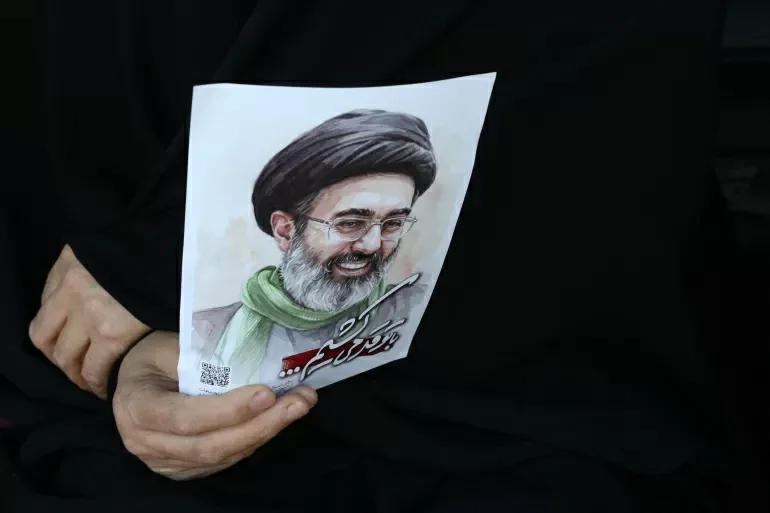
    On the 40th day of mourning for his predecessor and father, Ayatollah Ali Khamenei – who was killed in a joint US-Israeli strike on the opening day of the ongoing conflict – Iran’s new Supreme Leader Mojtaba Khamenei issued a landmark public address Thursday, marking his first public statement since the outbreak of hostilities. The 58-year-old leader, who had stayed out of the public eye since fighting began, used the televised address to declare that Iran has secured a “final victory” in its war against Israel and the United States.

    Khamenei emphasized that Iran has never sought unnecessary conflict, but remains committed to defending its inalienable legitimate rights. He stressed that the criminal aggressors who launched unprovoked attacks on Iranian soil will not escape unpunished, adding that Tehran will demand full compensation for all infrastructure damage, and for the blood of all martyrs and injured citizens lost in the conflict.

    When addressing the status of the Strait of Hormuz, a critical global chokepoint that Iran has effectively blocked since the war erupted on February 28 and a core point of contention in ongoing US-Iran peace talks, Khamenei only noted that the country would enter a “new phase” without offering additional details. The strait accounts for nearly a fifth of global oil trade, making its status a critical issue for the global economy.

    The announcement comes one day after the United States and Iran reached a two-week ceasefire agreement brokered by Pakistan to allow for formal peace negotiations. The truce was reached after escalating attacks on Gulf states and the near-complete closure of the Strait of Hormuz triggered widespread international fears of a prolonged regional conflict with far-reaching global economic and security consequences. As part of the ceasefire deal, Iran agreed to allow commercial shipping to resume passage through the strategic waterway, with unconfirmed reports indicating Tehran plans to charge transit tolls for vessels using the strait to fund post-conflict reconstruction.

    Despite the diplomatic breakthrough, Khamenei issued a clear warning that Iran stands fully prepared to respond immediately if enemy forces violate the terms of the truce. “Our fingers remain on the trigger,” he stated.

    The fragile ceasefire already faces a major test just hours after it took effect. On Wednesday, Israel carried out a devastating airstrike in Lebanon that killed more than 300 people, putting the US-Iran agreement at severe risk. Dispute already exists over whether Lebanon is covered under the ceasefire terms: Iran and Pakistan maintain the truce applies to all allied fronts of the conflict, while the US and Israel reject this interpretation. Global leaders have already called for Lebanon to be included in the ceasefire framework and urged an immediate end to hostilities across the entire region.

    Khamenei reaffirmed that Iran did not initiate the war, but will never surrender its legitimate rights under any circumstances. He explicitly referenced the “entire resistance front”, a statement widely interpreted as including Lebanese armed groups aligned with Tehran. Formal peace talks between US and Iranian delegations are scheduled to kick off this weekend in Pakistan, where negotiators will work toward a permanent end to the conflict.
  • Column: De oorlog die wij zien en de strijd die wij niet begrijpen

    Column: De oorlog die wij zien en de strijd die wij niet begrijpen

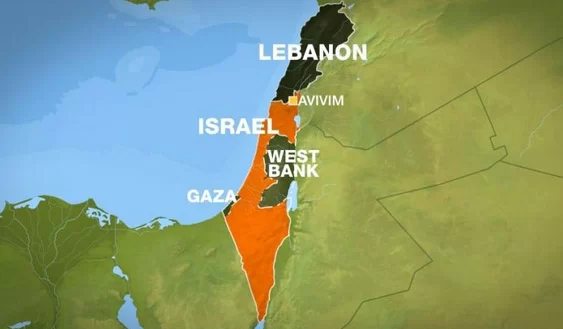
    Mainstream coverage of the ongoing crisis in the Middle East often simplifies the chaos into a familiar, neat narrative: Israel, backed by the United States, is locked in a single open war against regional adversaries led by Iran and its allied armed factions. This framing creates a false sense of clarity, but the reality is far more complex than the superficial story many outlets present. What is often described as one unified conflict is actually a tangled convergence of multiple separate disputes, each with its own distinct objectives, overlapping interests, long-held historical grudges, and competing strategic agendas that interact and intensify one another.

    On the surface, the most visible fronts are clear: Israel fights Hamas in Gaza and exchanges fire with Hezbollah along its northern border with Lebanon. Daily headlines bring images of airstrikes, rocket barrages, widespread destruction, and Israeli officials framing the campaign as a necessary fight for national survival. But beneath this visible frontline fighting lies a deeper layer of geopolitical ambition and risk calculation that rarely makes front-page news.

    For Israel, the conflict extends far beyond neutralizing immediate threats from Hamas and Hezbollah. The core strategic priority driving many of its military actions, particularly sustained airstrikes targeting Hezbollah assets in Lebanon, is curbing the expanding regional influence of Iran. From Israel’s strategic perspective, Iran’s growing power is not an abstract geopolitical concern—it is viewed as an existential threat to the Jewish state, established as a sovereign nation only in 1948. In Israeli policy circles, this is not framed as an offensive war of expansion, but a defensive struggle necessary to guarantee the country’s long-term survival.

    Tensions along the Israel-Lebanon border have escalated dramatically since the outbreak of the Gaza war following Hamas’ October 7, 2023 attack on Israeli territory. Hezbollah, Iran’s most powerful regional proxy, has launched near-daily rocket and drone strikes on northern Israel, and Israel has responded with waves of airstrikes targeting Hezbollah military infrastructure across southern Lebanon. For Israel, Hezbollah represents one of the most pressing security threats in the region: the group maintains an enormous arsenal of projectiles and receives extensive funding, training, and political backing from Iran, Israel’s long-standing core adversary. By targeting Hezbollah weapons depots, launch sites, and command centers, Israeli military leaders aim to erode the group’s offensive capacity and deter future large-scale attacks.

    The United States publicly presents itself as a fully committed ally standing shoulder-to-shoulder with Israel, but Washington’s strategic goals in the crisis diverge significantly from Jerusalem’s. Where Israel frames the conflict as an existential fight for its immediate security, the U.S. is primarily maneuvering to protect and extend its own regional influence and control. For American policymakers, this is not an existential war, but a carefully calibrated geopolitical file. Washington’s core priorities are maintaining a facade of regional stability, protecting its network of allied partners, and preserving decades of American geopolitical dominance in the Middle East. While the U.S. shares Israel’s goal of limiting Iran’s regional expansion, it has no interest in triggering a full-scale regional war that could draw American troops into direct combat. As a result, U.S. engagement is calculated, often restrained, and consistently focused on managing escalation rather than pursuing all-out conflict. The U.S.-Israel alliance does not equate to identical, aligned interests in every part of the crisis.

    Iran, meanwhile, is not a direct belligerent in open fighting, but it is far from a passive bystander. Tehran avoids open, conventional war that would leave it vulnerable to direct American and Israeli retaliation, instead exercises influence through a web of regional proxies and allied armed groups, maintaining constant pressure on Israel and the U.S. without fully committing its own military forces to open conflict. Iran’s strategy of indirect confrontation is deliberately designed to operate outside the boundaries of traditional warfare, making it extremely difficult for its adversaries to counter fully. Flexible, persistent, and focused on long-term gains rather than quick battlefield victories, Iran is playing a long game that pays dividends even as its proxies bear the brunt of fighting.

    A common and misleading misconception about the conflict frames the Israeli-Palestinian confrontation as an ancient, inevitable clash rooted in centuries of religious and ethnic tension. This narrative is convenient but deeply misleading. It frames the current violence as an unavoidable outcome of ancient hatreds, erasing the reality that today’s crisis is the direct product of modern political decisions and territorial disputes. While historical context plays a major role in shaping current tensions, it cannot fully explain or justify the current state of open conflict. What is clear is that every actor involved frames its own actions as a fight for survival, shaped by decades of accumulated grievance and fear.

    The explosions, rubble, and civilian casualties that fill daily news coverage are only the visible symptom of this far larger, more complex struggle. They are the consequences of overlapping disputes, not the core drivers of the conflict itself. This is a multifaceted battle for influence, security, and regional power, where even formal allies hold competing objectives and adversaries often operate in the shadows rather than openly. The central question that matters most is not who is fighting, but what they are fighting for. Until that question is openly and honestly addressed, global audiences will continue to accept a simplified, misleading narrative that ignores the underlying dynamics shaping the crisis—dynamics that play out almost entirely out of public view. Perhaps the biggest problem is not that too little of the conflict is visible to the public, but that most audiences are content to accept the superficial story that is presented to them.

  • U.S. Ambassador joins memorial mass for Jet Set collapse victims on first anniversary

    U.S. Ambassador joins memorial mass for Jet Set collapse victims on first anniversary

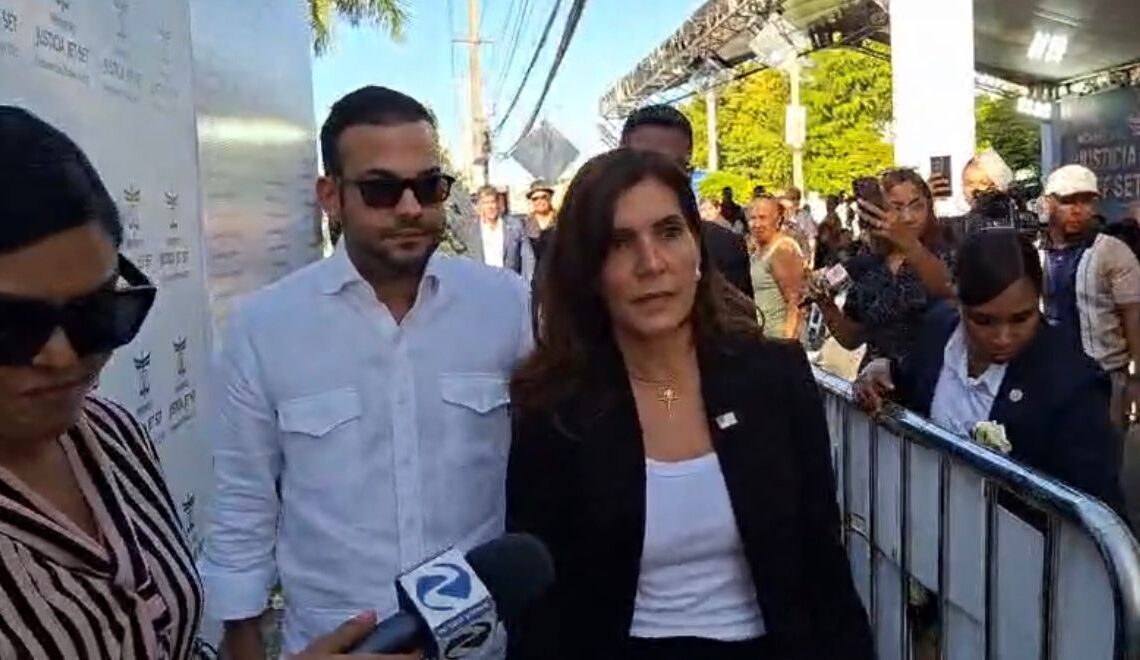
    One year after one of the deadliest structural disasters in the Dominican Republic’s recent history, dignitaries, victims’ loved ones, and public figures gathered Thursday at the site of the former Jet Set nightclub to remember the 236 lives lost to the catastrophic April 2025 roof collapse. Among those in attendance were Francis Leah Campos, the United States Ambassador to the Dominican Republic, alongside Eduardo Verástegui, a well-known Mexican actor and politician, who joined the memorial mass to honor the victims.

    The commemoration comes as the legal process moves forward against the nightclub’s co-owners, siblings Antonio and Maribel Espaillat, who face criminal responsibility for the collapse. During this week’s preliminary hearing, prosecuting attorneys laid out serious allegations against the pair: they claim the Espaillat siblings carried out unpermitted structural modifications to the property over multiple years, and intentionally disregarded repeated internal warnings about the roof’s progressive deterioration to avoid the costs of required repairs.

    Dominican Attorney General Yeni Berenice Reynoso has emphasized the urgency of moving the case forward fairly and quickly. Speaking on the proceedings, Reynoso noted that nearly 400 people were impacted by the tragedy – including the 236 killed, those who were injured, and all of their grieving families – and that this group deserves a prompt, transparent judicial outcome. Reynoso stressed that the national justice system must take active steps to prevent unnecessary procedural delays that would block accountability for the disaster.

  • Venezuela hopes to use Grenada as gateway to Caribbean- Rodriguez

    Venezuela hopes to use Grenada as gateway to Caribbean- Rodriguez

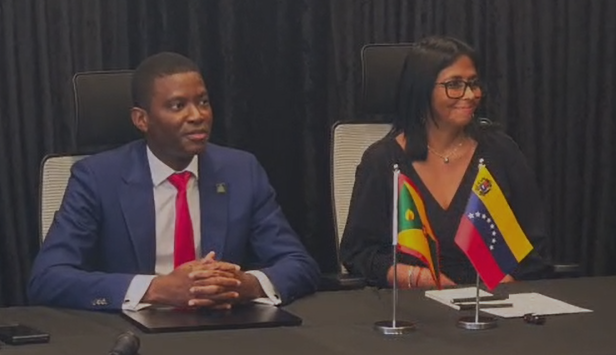
    On Thursday, April 9, 2026, Delcy Rodriguez, the interim president of Venezuela, made her first international visit to the Caribbean island nation of Grenada since assuming leadership of the oil-rich South American country. During the trip, she held high-level talks with Grenadian Prime Minister Dickon Mitchell in St. George’s, Grenada’s capital, and outlined her administration’s goal of using enhanced bilateral cooperation with Grenada as a stepping stone to deepen ties across the entire Caribbean region.

    Speaking to reporters through an interpreter alongside Mitchell, Rodriguez noted that the planned bilateral cooperation agenda spans multiple key sectors, including educator exchange programs, public health collaboration, maritime and air transportation infrastructure development, domestic food production expansion, bilateral and regional trade initiatives, hydrocarbon development, and maritime boundary negotiation. Neither leader shared specific timelines or financial details of the proposed partnerships during the public briefing.

    A key bilateral matter on the meeting’s agenda was the negotiation of the two nations’ shared maritime boundary, a pressing issue as Grenada moves forward with plans to restart offshore oil and natural gas exploration in its territorial waters.

    The visit comes against a dramatic geopolitical backdrop: earlier this year on January 3, former Venezuelan President Nicolas Maduro was detained by U.S. forces and transported to New York to face trial on charges of drug trafficking and weapons trafficking. Rodriguez emphasized that her new administration favors resolving all international disputes through diplomatic and peaceful channels. She also added that the Venezuelan government seeks constructive diplomatic engagement with the United States and other global powers to assert the fundamental right of all nations to pursue autonomous development. Notably, U.S. sanctions targeting Rodriguez over previous allegations of anti-democratic activity have now been lifted.

    Rodriguez used the platform to speak out against ongoing oil sanctions imposed on both Venezuela and Cuba, stressing that unilateral coercive measures have inflicted severe harm on ordinary civilian populations in both nations. She reaffirmed that Venezuela’s long-standing close relationship with Cuba remains fully intact, and called for an immediate end to the decades-long U.S. blockade of the island nation. “The people of Venezuela as well as the people of Cuba have a right to live free of sanctions,” she stated.

    At the same time, Rodriguez highlighted that Caracas is currently opening new channels of cooperation with the United States across multiple sectors, and expressed hope that the entire Latin American and Caribbean region can advance collectively through collaborative engagement.

    The long-standing diplomatic ties between Caracas and several Eastern Caribbean states date back to the governments of Hugo Chavez and later Nicolas Maduro. Countries including Grenada, Dominica, St. Lucia, St. Kitts and Nevis, and Antigua and Barbuda have maintained close relations with Venezuelan administrations for decades, and the new Jennifer Geerlings-Simons administration in St. Vincent and the Grenadines, which took office last year, is also broadly viewed as sympathetic to Caracas.

  • Brace for fallout as Mid-East war escalates, says CAAP

    Brace for fallout as Mid-East war escalates, says CAAP

    As the Middle East conflict expands its scope, a Caribbean regional advocacy organization has sounded the alarm over projected sharp increases in regional food and energy prices, while calling on leaders of the Caribbean Community (CARICOM) to formally label deliberate attacks on civilian infrastructure as war crimes and speed up efforts to build regional economic and food self-sufficiency.

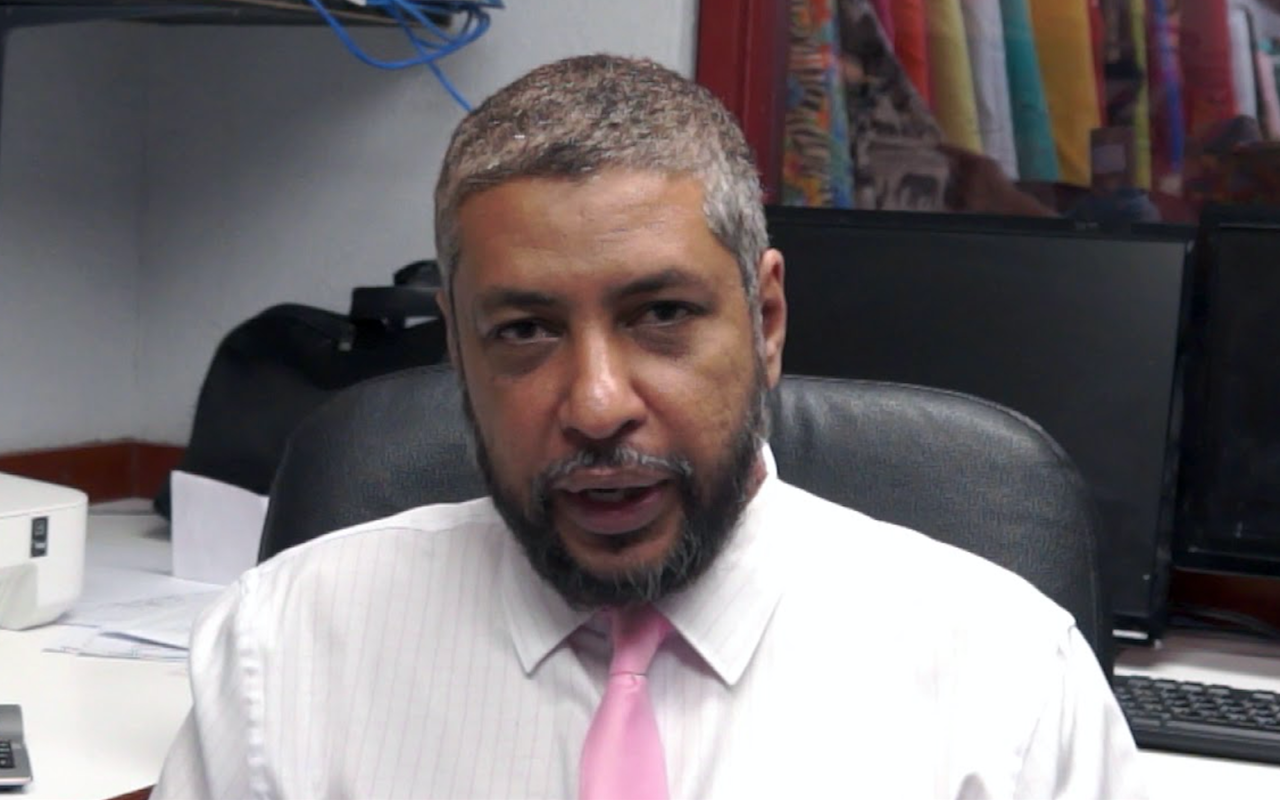
    Suleiman Bulbulia, treasurer of Caribbean Against Apartheid in Palestine (CAAP), shared the warning in an exclusive interview with Barbados TODAY. He explained that the ongoing conflict, which now draws in major powers including Israel, the United States and Iran, will send shockwaves through global commodity markets that will eventually reach small island economies across the Caribbean through higher import costs.

    Bulbulia emphasized that the Caribbean’s structural dependence on imported goods leaves the region uniquely exposed to sudden global market volatility. “The ripple effects of this conflict will touch every corner of the global economy, and the Caribbean will not be spared,” he stated. “We have already observed significant upward pressure on global crude oil prices, and these increases will eventually pass through to regional consumers. Higher fuel costs push up shipping fees for all imported goods, and since the vast majority of the Caribbean’s food and consumer products come from overseas, the final price tag for households will rise sharply. This is a pressing issue that demands immediate attention.”

    Beyond the immediate economic threats, Bulbulia raised grave concerns over what he frames as open disregard for international humanitarian law and established diplomatic norms. He argued that the repeated targeting of critical civilian infrastructure — including hospitals, transportation networks and power generation facilities — meets the legal definition of war crimes, and that all responsible members of the international community, including CARICOM, have an obligation to publicly condemn these actions.

    “Across the globe today, we are seeing a growing retreat from commitments to uphold international rules and fundamental human rights,” Bulbulia said. “If actors face no consequences for these violations today, where will this path lead us? If attacks on civilian sites go unpunished in one region today, the norm of impunity will embolden actors to take similar actions in other countries tomorrow. Where does this cycle of lawlessness end?”

    Drawing a direct parallel to the Caribbean’s longstanding, unified opposition to apartheid rule in 20th century South Africa, Bulbulia urged CARICOM to use its collective diplomatic voice to advocate for upholding the rule of law on the global stage. He warned that without collective pushback, the world could slide back into a pre-modern “might makes right” mentality that erodes decades of progress on international humanitarian norms.

    To buffer the Caribbean from future external economic shocks caused by global conflicts, Bulbulia called for accelerated investment and policy action to build regional self-sufficiency. He highlighted the untapped agricultural potential of larger Caribbean nations including Guyana, Suriname and Jamaica, arguing that regional integration of food production could cut the bloc’s reliance on imported food drastically.

    “It is past time we ask the critical question: how can we make CARICOM member states food self-sufficient?” he noted. “We have abundant natural and human resources right here within the region. Instead of remaining dependent on global supply chains that are increasingly vulnerable to geopolitical upheaval, we should develop these resources and integrate regional trade to meet our own needs.”

  • Matthews strengthens SVG’s NY consulate’s engagement with NYPD

    Matthews strengthens SVG’s NY consulate’s engagement with NYPD

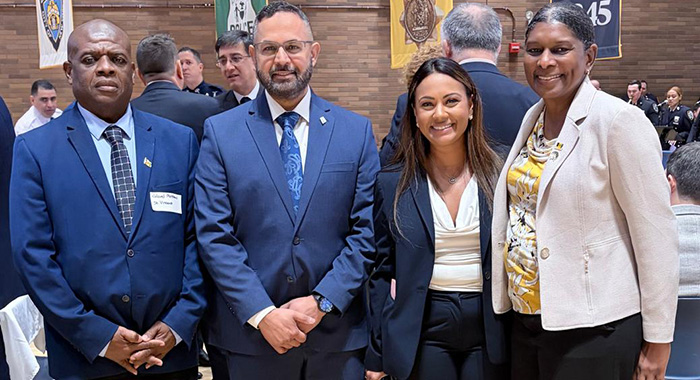
    In a major diplomatic and security gathering hosted by the New York City Police Department, the Consulate General of St. Vincent and the Grenadines (SVG) in New York, headed by Consul General Roland U.C. Matthews, took part in a high-level engagement that brought together top diplomatic representatives from more than 70 nations across the globe.

    This convening created a one-of-a-kind collaborative space, designed to open lines of dialogue, build new working partnerships, and strengthen existing ties between foreign consular bodies and one of the world’s most prominent law enforcement agencies. Over the course of the event, senior leaders from three key NYPD divisions — the Intelligence and Counterterrorism Bureau, the Community Affairs Bureau, and the Public Security Section — delivered detailed presentations showcasing the department’s far-reaching expertise across three core areas: proactive crime prevention, cross-agency intelligence sharing, and community-centered policing strategies.

    Attendees also received an exclusive look into the NYPD’s advanced Joint Operations Center, where officials walk through the department’s data-driven, strategic framework for upholding public safety in New York City, a global metropolis known for its constant dynamism and diverse population.

    For SVG, a small island developing state, the participation marked a pivotal step forward in deepening bilateral security and law enforcement cooperation with U.S. law enforcement. The gathering allowed delegations to continue discussions first initiated in earlier talks, laying solid groundwork for expanded future collaboration — most notably, the development of specialized close protection training for officers of the Royal St. Vincent and the Grenadines Police Force (RSVGPF).

    In comments following the engagement, Consul General Matthews underscored the immense value of these cross-border law enforcement dialogues. “This event provided an invaluable opportunity to connect with fellow consuls general, all of whom share a common objective to ensure that our nationals continue to receive the support they need while abroad, and to foster meaningful dialogue that benefits both our home countries and our host nation,” Matthews said.

    He added that as a small island developing state, SVG actively prioritizes and seeks out capacity-building opportunities like this high-level meeting. “Today, we have started an important conversation, and I am confident that what has begun here will bear fruit in the not-too-distant future,” Matthews noted.

    Widely regarded as one of the most well-resourced and technologically advanced metropolitan police departments in the world, the NYPD used the event to highlight its longstanding track record of effective crime reduction, innovative public safety solutions, and sustained engagement with diverse community groups, including foreign national populations residing in New York.

    Looking ahead, follow-up sessions between SVG consular officials and senior NYPD leadership are scheduled to take place in the coming weeks. These upcoming meetings will focus on locking in concrete, actionable areas of partnership that can be implemented in the near term. Officials project that the final outcomes of this collaboration will deliver tangible, long-lasting benefits to the RSVGPF, ultimately contributing to improved national safety and security across St. Vincent and the Grenadines.

  • Wereld reageert op ‘brutale’ Israëlische aanvallen op Libanon na VS-Iran staakt-het-vuren

    Wereld reageert op ‘brutale’ Israëlische aanvallen op Libanon na VS-Iran staakt-het-vuren

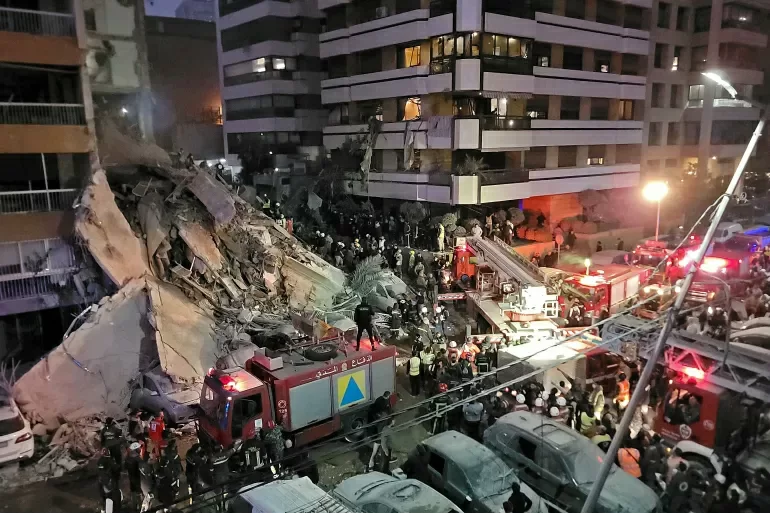
    Just hours after a two-week ceasefire between the United States and Iran was announced, Israeli forces launched devastating, wide-ranging bombardment across Lebanon that has left hundreds dead and thousands injured, sending shockwaves through the already volatile Middle East.

    Lebanese Civil Defense has confirmed that at least 254 people were killed and 1,165 more wounded in the airstrikes, which targeted locations across the country: including the Tallet al-Khayyat neighborhood of Beirut, the Bekaa Valley, the Lebanon Mountains, the coastal city of Sidon, and multiple villages in southern Lebanon. Emergency response workers and local residents have already gathered at the scene of the Beirut strike to recover victims and provide aid, according to AFP photos from the attack site.

    The Israel Defense Forces labeled the operation the largest coordinated assault on Lebanon since it launched a new military campaign in the country on March 1. IDF officials confirmed that the strikes targeted more than 100 Hezbollah command centers and military installations across the country.

    The scale of the casualties has overwhelmed Lebanon’s already strained healthcare system. Elias Chlela, head of the Lebanese Medical Association, issued an urgent call for all doctors to report to hospitals immediately to assist with the influx of wounded patients. One of Beirut’s largest hospitals also announced a critical need for blood donations of all blood types to support emergency operations.

    Dispute has already erupted over whether Lebanon falls under the scope of the newly announced U.S.-Iran ceasefire. Israeli Prime Minister Benjamin Netanyahu stated openly that Lebanon is not included in the ceasefire deal, arguing the truce does not apply to clashes with Hezbollah. U.S. President Donald Trump echoed this position, describing Lebanon as a separate case excluded from the agreement. However, Pakistan, which served as a mediator in the ceasefire negotiations, confirmed that Lebanon was intended to be covered by the truce, creating a major rift over the terms of the deal.

    Reactions from global actors and regional stakeholders have been swift and widespread: In Lebanon, Parliament Speaker Nabih Berri condemned the strikes on densely populated civilian areas as a full-fledged war crime. He noted the attack came immediately after the ceasefire announcement, calling it a serious test for the international community and a blatant violation of international law, while urging all Lebanese citizens to unite in solidarity with the victims.

    Lebanese armed group Hezbollah affirmed its inherent right to respond to the attacks, stating that the blood of its killed and wounded members will not be spilled in vain, and reaffirming its right to resist occupation. A Hezbollah member of parliament warned that the Israeli strikes constitute a serious violation of the ceasefire, and continued attacks will put the entire truce agreement at risk.

    On the Israeli side, Defense Minister Israel Katz explained that Israel intends to separate the conflict with Iran from its military campaign in Lebanon in order to fundamentally alter the situation on the ground. Netanyahu reaffirmed that Israeli operations will continue, as the ceasefire does not apply to Hezbollah targets.

    Iran’s leadership issued a stark warning that it will retaliate if Israel does not immediately halt its attacks on Lebanon. Iranian Foreign Minister Abbas Araghchi stressed that the terms of the ceasefire are clear, stating “The United States must choose: either a ceasefire, or war through Israel.” He added that the entire world is witnessing the bloodshed in Lebanon, and responsibility for any further escalation rests with the U.S.

    The U.S. maintained its position that Lebanon is excluded from the truce due to its conflict with Hezbollah, with Vice President JD Vance characterizing the disagreement over Lebanon’s inclusion as a legitimate misunderstanding of Iran’s position, in contrast to the Pakistani prime minister’s confirmation that Lebanon was part of the deal.

    Multiple regional and global governments have condemned the strikes. Qatar’s Foreign Ministry decried the brutal series of attacks as a dangerous escalation and a blatant violation of Lebanese sovereignty and international law, expressing full solidarity with Lebanon and calling on the international community to hold Israel accountable. Egypt condemned the bombardment as a premeditated attempt to undermine regional and international de-escalation efforts and plunge the entire region into chaos. Turkey’s Foreign Ministry strongly condemned the attacks, warning they will drastically worsen the already catastrophic humanitarian situation, and called on the international community to act immediately to end Israeli operations and protect civilian lives. Spanish Prime Minister Pedro Sánchez called Netanyahu’s disregard for civilian life and international law disgraceful, calling for Lebanon’s immediate inclusion in the ceasefire and the imposition of sanctions on Israel. Italian Foreign Minister Antonio Tajani expressed solidarity with Lebanon, warned the offensive could create a second Gaza conflict, and called on Israel to halt bombing and guarantee safe operating conditions for United Nations peacekeepers.

    United Nations officials issued a sharp condemnation of the strikes, calling for urgent diplomatic action to prevent further civilian casualties. The UN High Commissioner for Human Rights described the scale of destruction as appalling, and stressed that protecting civilian peace and safety must be the top priority. The International Committee of the Red Cross also expressed outrage over the deadly destruction in densely populated civilian areas, emphasizing that any regional ceasefire agreement must prioritize the safety and dignity of Lebanese civilians.

  • U.S. judge orders Dominican Republic to pay US$44 million in Duquesa landfill dispute

    U.S. judge orders Dominican Republic to pay US$44 million in Duquesa landfill dispute

    A years-long international investment dispute centered on a Santo Domingo landfill has hit a decisive new milestone, after a U.S. federal judge formally confirmed a binding arbitration order requiring the Dominican Republic to pay close to $44 million in damages to Canadian billionaire investor Michael Lee-Chin, local Dominican outlet El Nacional reported.

    U.S. District Court Judge Colleen Kollar-Kotelly rejected the Dominican government’s legal bid to vacate the 2023 international tribunal ruling, instead upholding the panel’s finding that the state illegally seized Lee-Chin’s investment when it terminated Lajun Corp.’s operating concession for the Duquesa landfill in 2017 and seized direct control of the waste management facility located in Santo Domingo Norte.

    The structured compensation award breaks down into $38.7 million in direct damages for the unlawful expropriation, $4.8 million to remedy unfair regulatory treatment, plus accrued interest and adjudicated legal fees. When combined, the total owed to Lee-Chin amounts to just over $43.6 million, a figure that rounds to nearly $44 million.

    The origins of the dispute stretch back to 2018, when Lee-Chin launched his formal claim at the International Centre for Settlement of Investment Disputes, the leading global body for resolving cross-border investment conflicts. In his filing, the investor argued that the Dominican Republic’s actions breached binding investor protection provisions laid out in the CARICOM regional trade agreement.

    The latest ruling from the U.S. federal court eliminates the last major avenue for the Dominican Republic to challenge the award, leaving the government stuck with a binding payment obligation that marks one of the largest international arbitration losses the country has faced in recent years. The outcome also reinforces the enforceability of international investor rulings against sovereign states, setting a notable precedent for future cross-border investment disputes in the Caribbean region.

  • Anwar Barrow Takes Challenge to Caribbean Court of Justice

    Anwar Barrow Takes Challenge to Caribbean Court of Justice

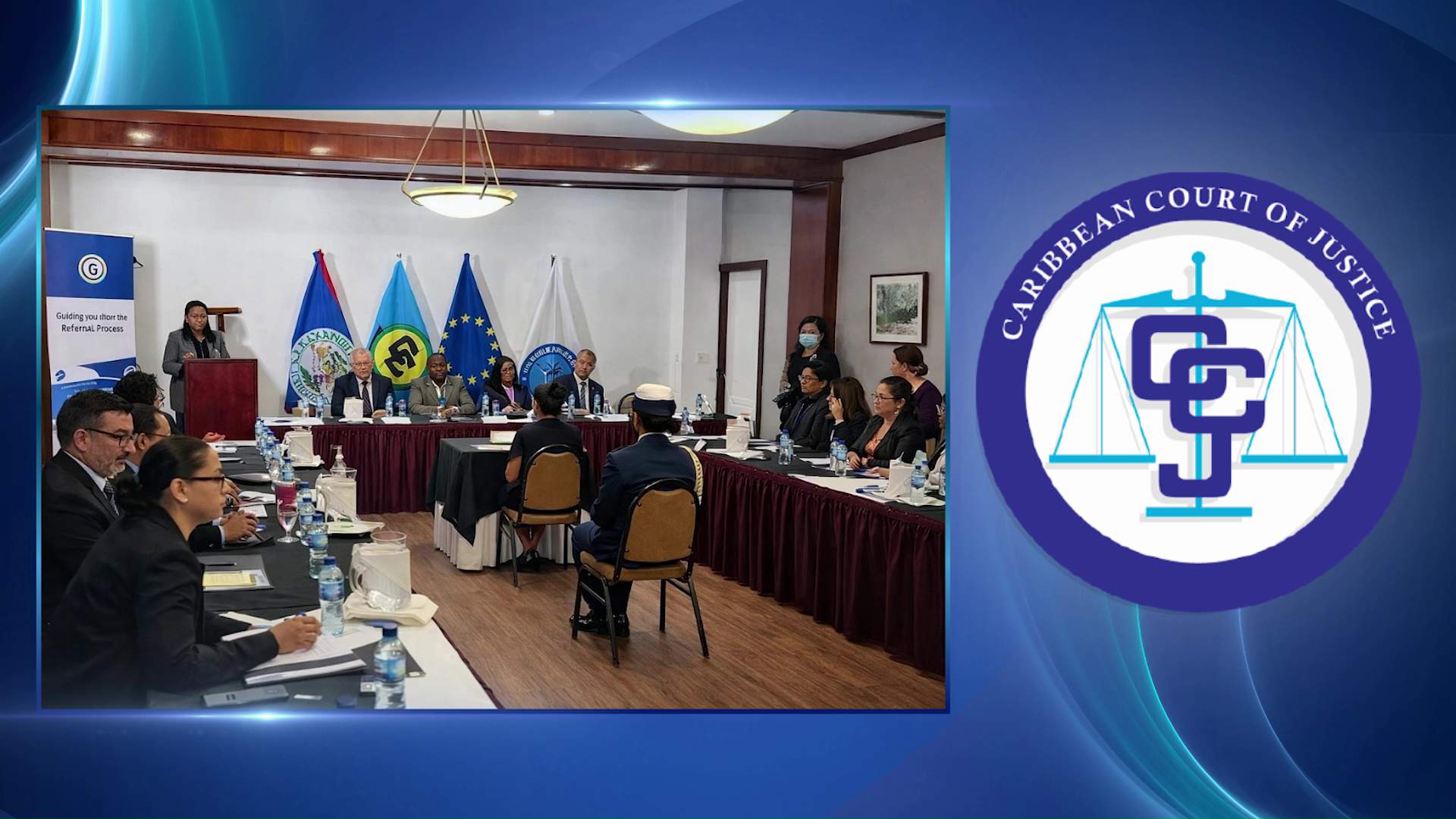
    In a groundbreaking moment for Caribbean regional integration, the Caribbean Court of Justice (CCJ) is set to make history when it hears the first-ever direct referral of a legal question from a national court — a milestone that could redefine how regional law is interpreted and applied across all 15 member states of the Caribbean Community (CARICOM).

    The historic case stems from a legal dispute initiated by Belizean businessman Anwar Barrow against Belize’s Financial Services Commission (FSC) and the Office of the Attorney General. At the heart of the dispute are three core issues: a mandatory requirement that company registration fees be paid exclusively in U.S. dollars rather than Belize’s domestic currency, the arbitrary application of fees to a business transaction Barrow was involved in, and discriminatory differential treatment of individuals accessing the Companies Registry based on their national origin within CARICOM. It is the final issue, which Barrow argues violates the non-discrimination provisions of the Revised Treaty of Chaguaramas, that has been referred to the CCJ for a binding ruling.

    In an on-the-record interview about the litigation, Barrow emphasized that beyond his personal commercial interests, the case addresses a broader systemic concern about institutional compliance with the rule of law. “When the top institutions — government and statutory bodies — openly disregard the law, how can we expect ordinary citizens to follow it?” Barrow said. “I have encountered this flouting of regulations multiple times, and when I raised the issue to those in charge, they simply ignored it. This case is not just about my business; it’s about holding accountable the institutions that are supposed to uphold our legal framework.”

    For the CCJ, this referral represents an unprecedented exercise of its original jurisdiction, a power granted to the court to rule on CARICOM treaty issues that had never before been activated via direct national court referral. Legal analysts across the region note that the court’s final ruling has the potential to set a binding precedent that strengthens enforcement of regional trade and business rules across all CARICOM member states, closing long-documented gaps in how treaty rights are implemented at the national level.

    Barrow framed the case as a potential turning point for regional governance, arguing that a clear ruling from the CCJ would give real enforceable weight to the Revised Treaty of Chaguaramas, creating a more consistent and predictable legal environment for cross-border business activity throughout the Caribbean. He also noted that his action is part of a growing movement of Belizean citizens pushing for greater accountability and adherence to the rule of law, joining other advocates like Jerry Enriquez, who has led work on constitutional and redistricting reform in the country.

    “For too long, enforcement of the regional treaty has been far less robust than Caribbean leaders and communities have wanted,” Barrow explained. “This is the first time a national court has referred a matter like this directly to the CCJ, and I hope it opens the door to more open discussion and resolution of regional legal issues in the public interest.”

    When contacted for comment on the case, officials from the Belize Financial Services Commission declined to make any public statement, noting that the matter is currently active before the courts. News outlets will continue to provide updates as the CCJ progresses with the historic hearing and issues its final ruling.

  • Israel-Lebanon Tensions Threaten Fragile Ceasefire Gains

    Israel-Lebanon Tensions Threaten Fragile Ceasefire Gains

    On Thursday, 9 April 2026, the United Nations issued a stark warning that escalating Israeli military operations across Lebanon threaten to unravel a fragile two-week ceasefire brokered between Israel, Iran and other key stakeholders, putting hard-won progress toward regional stability in jeopardy.

    UN Secretary-General António Guterres acknowledged that the current pause in cross-region hostilities opened a rare, critical window to negotiate a broader, lasting peace deal. He has called on every involved party to uphold their obligations under international humanitarian law, emphasizing that a full end to fighting is non-negotiable both to protect innocent civilian lives and alleviate the rapidly worsening humanitarian catastrophe unfolding across the region. Guterres also extended gratitude to Pakistan and other regional nations that supported ceasefire facilitation, confirming that his Personal Envoy Jean Arnault is currently on the ground working to advance ongoing diplomatic outreach. Per regional diplomatic sources, U.S. Vice President JD Vance is scheduled to lead a high-level delegation to Pakistan in the coming days to hold further negotiations focused on solidifying the truce.

    Even as diplomatic momentum builds, however, recent violence has cast a deep shadow over peace prospects. The UN has issued a firm condemnation of recent Israeli strikes across Lebanese territory that have already claimed civilian lives. Senior UN officials cautioned that persistent offensive operations will not only collapse the fragile truce but also push an already desperate humanitarian situation into a far worse state. The international body has repeated its urgent call for all parties to immediately stop all hostilities and recommit to full implementation of UN Security Council Resolution 1701, the landmark framework established to secure long-term stability in southern Lebanon.

    “There is no military solution to this conflict,” the UN reaffirmed, stressing that inclusive dialogue remains the only sustainable path toward ending decades of regional tension.

    UN peacekeeping forces deployed in Lebanon have not been spared from the rising violence. Six UN peacekeepers were wounded in a recent exchange of rocket and artillery fire near the southern Lebanese town of At Tiri, where multiple UN vehicles also sustained significant damage. In a separate provocative incident, the Israel Defense Forces blocked a UNIFIL (United Nations Interim Force in Lebanon) logistics convoy and detained one peacekeeper. The service member was released within an hour after direct intervention by senior UN leadership. The UN has formally labeled the detention a clear violation of international law and demanded an immediate end to all interference with the mission’s authorized operations.

    On the humanitarian side, conditions across Lebanon are declining at an alarming rate. Mass displacement of civilians, concentrated in areas south of the Zahrani River and the southern suburbs of Beirut, has sent demand for emergency life-saving assistance soaring. The UN Refugee Agency, working in partnership with the Lebanese government and local humanitarian partners, has been rushing to deploy emergency shelter and critical supplies to families fleeing conflict zones. But overcrowded, underserviced shelter facilities and a lack of adequate sanitation have already triggered outbreaks of scabies and lice, placing vulnerable groups including children and elderly residents at particularly high health risk.

    While public health teams have been deployed to respond to outbreaks and aid groups are working to scale up access to clean water and medical stockpiles, relief operations are buckling under unprecedented pressure. As of the latest update, less than one-third of the $308 million UN Lebanon Flash Appeal has been funded, leaving critical aid gaps that cannot be filled with existing resources.

    The UN concluded its briefing with a final warning: without an immediate surge in international donor support and a sustained end to all hostilities, both humanitarian conditions across Lebanon and the fragile prospects for long-term regional peace will continue to unravel.