分类: world

  • Cuban government riaffirms gratitude to China for rice donation

    Cuban government riaffirms gratitude to China for rice donation

    In a significant demonstration of international solidarity, Cuba has formally received the initial shipment of a 30,000-ton cereal donation from China. The arrival of the aid was officially confirmed during a reception ceremony held on Monday, attended by high-ranking officials from both nations.

    Cuban Foreign Minister Bruno Rodríguez Parrilla publicly acknowledged the contribution on social media platform X, characterizing it as a profound symbol of the ‘close brotherhood and historical ties of friendship’ that bind the two countries. The humanitarian assistance is specifically designated to bolster Cuba’s basic food basket, addressing critical nutritional needs of the Cuban population.

    Cuban Vice Prime Minister Oscar Pérez-Oliva provided operational details during the reception, confirming that two initial deliveries totaling 2,400 tons had already arrived through the Mariel container terminal and the port of Santiago de Cuba. He further announced that two additional shipments are scheduled to reach the island during the first half of the year, completing the full donation pledged by Chinese authorities and its people.

    The ceremony featured remarks from Chinese Ambassador to Cuba Hua Xin, who emphasized the strategic importance of the bilateral relationship. Ambassador Hua noted that the cereal donation ‘not only embodies the deep bonds of special friendship between both nations, but also demonstrates the unwavering commitment to remain united even in difficult times,’ highlighting the resilience of Sino-Cuban relations amid global challenges.

    This substantial food aid package arrives as Cuba continues to navigate complex economic circumstances, with the cereal shipment representing both practical support and diplomatic reinforcement of the longstanding partnership between the two socialist nations.

  • Israel begins demolishing UNRWA complex in occupied Jerusalem

    Israel begins demolishing UNRWA complex in occupied Jerusalem

    Israeli military forces have conducted a controversial operation at a United Nations facility, according to reports from the Wafa news agency. The incident involved multiple military units establishing a security perimeter around the area before deploying bulldozers that proceeded to demolish structures within the compound.

    In a particularly symbolic act, soldiers reportedly raised the Israeli flag inside the headquarters of the United Nations Relief and Works Agency (UNRWA) during the operation. This event represents the latest escalation in a longstanding conflict between Israel and the UN agency that dates back to 2014, when the Israeli government passed legislation effectively banning UNRWA from operating within both Israel and the occupied Palestinian territories.

    UNRWA has served as a critical humanitarian provider for decades, delivering education, healthcare, and essential aid services to millions of Palestinian refugees across the Gaza Strip, West Bank, Lebanon, Syria, and Jordan. The current tensions stem from Israeli allegations that the agency employed Palestinian militants who participated in the October 2013 strike against Israel. These claims have been subsequently refuted by United Nations investigations, though they continue to fuel diplomatic friction.

    The demolition operation and flag-raising incident have drawn international attention, reviving concerns about the delicate relationship between humanitarian operations and political conflicts in the region.

  • US seizes sanctioned tanker in Caribbean crackdown

    US seizes sanctioned tanker in Caribbean crackdown

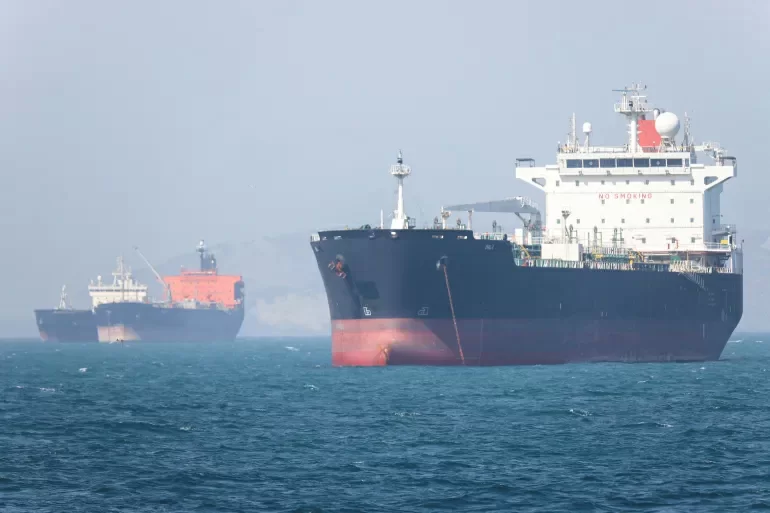
    In a significant maritime enforcement operation, US military forces successfully boarded and seized the oil tanker Veronica in Caribbean waters on January 16th. The coordinated mission involved tactical teams from US Southern Command and the US Coast Guard, with additional support provided by marines and sailors deployed from the aircraft carrier USS Gerald R. Ford.

    Authorities confirmed the operation concluded without incident, with released footage showing special forces fast-roping onto the tanker’s deck. The vessel, which had last transmitted its automated position on January 3rd while anchored off Aruba, was carrying a partial load of crude oil at the time of interception.

    Homeland Security Secretary Kristi Noem publicly announced the action through social media channels, characterizing the seizure as part of an intensified campaign to enforce international sanctions against Venezuela’s petroleum exports. US officials emphasized their commitment to denying safe passage to vessels transporting Venezuelan crude in violation of restrictions.

    The Veronica represents at least the sixth interdiction of sanctioned or suspect tankers since December 2025, according to US officials and public records. Legal authorities have assumed custody of both the vessel and its crew, with warnings that seized personnel could face prosecution. Specific criminal charges and final dispositions regarding the cargo and crew remain undisclosed at this time.

    Maritime registry data reveals inconsistent flag and identity documentation for vessels operating in this trade network, with the Veronica’s flag status itself being disputed in public accounts. This operation follows separate US enforcement actions earlier in January that removed the Aframax tanker Olina from service—a vessel appearing in maritime records under previous names and different flags.

    The enforcement measures are producing immediate commercial consequences within the shadow fleet operations. Industry monitors report a measurable deterrent effect on Venezuelan oil shipments, manifested through reduced visible loadings and more circuitous tanker routing. This increased opacity elevates transaction risks for buyers and shippers, subsequently driving higher insurance premiums, charter rates, and costs associated with clandestine transfers.

    Geopolitically, the enforcement campaign unfolds against a complex backdrop. US officials maintain these measures aim to compel lawful commercial access to Venezuela’s petroleum reserves while disrupting sanctions evasion channels. Russia has previously criticized such interdictions as violations of maritime norms, and broader diplomatic tensions potentially complicate cooperative enforcement efforts at sea.

    Long-term implications suggest sustained interdictions could accelerate existing trends in the tanker market, including increased use of flags of convenience, frequent vessel renamings, and growth of intermediary trading hubs. These adaptations may ultimately constrain buyers of Venezuelan crude, reduce realized prices, and potentially depress government revenue in Caracas. While the immediate supply impact on global markets remains limited given Venezuela’s current production levels, persistent enforcement adds new volatility layers to an already complex oil market.

  • Brazil agriculture minister says country is ready to increase collaboration with IICA and member states

    Brazil agriculture minister says country is ready to increase collaboration with IICA and member states

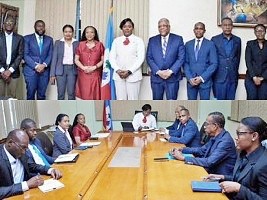
    Brazil has expressed strong confidence in Muhammad Ibrahim’s new leadership role at the Inter-American Institute for Cooperation on Agriculture (IICA), highlighting his extensive expertise in agricultural management and innovation-driven competitiveness. The endorsement came during Ibrahim’s swearing-in ceremony in San José, Costa Rica, where he officially began his four-year term as Director General.

    Cleber Soares, Brazil’s Deputy Minister of Agriculture and Livestock, represented Minister Carlos Fávaro at the ceremony and emphasized Ibrahim’s comprehensive understanding of both opportunities and challenges facing agricultural systems across the Americas. Soares confirmed Brazil’s commitment to collaborative efforts with IICA member states under Ibrahim’s guidance.

    The newly appointed Director General, a distinguished Guyanese agronomist, was elected by the continent’s agriculture ministers in November, succeeding Argentina’s Manuel Otero who completed two terms. Soares revealed that preliminary discussions with Ibrahim are already underway to facilitate knowledge sharing, particularly regarding Brazil’s advancements in tropical agriculture.

    Brazil’s remarkable agricultural transformation serves as a model for technological progress in the sector. Once a major food importer, the nation has emerged as a global agricultural powerhouse through research-driven innovations that significantly boosted productivity and sustainability.

    Looking forward, Soares identified IICA’s critical mission: strengthening partnerships between major food-exporting nations like Brazil and import-dependent countries, especially in Central America and the Caribbean. A key challenge involves integrating small-scale farmers into modern agricultural systems through sustainable technologies and value-added approaches.

    ‘Our objective extends beyond production techniques,’ Soares explained. ‘Producers require comprehensive support in farm management, marketing strategies, distribution networks, input procurement, and climate adaptation. Additionally, we must address the resurgence of plant and animal diseases that transcend national borders—an area where IICA’s coordination role becomes essential.’

    The deputy minister also emphasized two fundamental pillars for continental agricultural sustainability: accessible credit and agricultural insurance. He noted that without credit facilities, many smallholders cannot sustain their operations, while insurance protection remains particularly crucial in tropical regions vulnerable to production losses.

  • STATEMENT: Ministry of Foreign Affairs on allegations referencing U.S. national on remand

    STATEMENT: Ministry of Foreign Affairs on allegations referencing U.S. national on remand

    ROSEAU, DOMINICA – The Dominican Ministry of Foreign Affairs, International Business, Trade and Energy has issued an official statement countering what it describes as malicious social media speculation regarding the detention of American national Jonathan Scott Lehrer. The Ministry emphasized that while it typically refrains from addressing unfounded rumors, it felt compelled to correct misinformation being circulated by political opposition groups.

    The Ministry confirmed that Lehrer is one of two U.S. citizens currently held on remand at Dominica State Prison. Contrary to suggestions of irregular proceedings, authorities detailed the established consular protocols that have been consistently followed since November 2024.

    In accordance with the Vienna Convention on Consular Relations, the U.S. Embassy in Bridgetown formally requested and received permission for consular access to both detained nationals. The Ministry clarified that such consular assistance represents standard diplomatic practice when citizens are detained overseas, subject to the host nation’s procedures.

    The request was processed through proper channels: received by the Foreign Ministry via diplomatic note, confirmed by the Ministry of National Security, and subsequently approved to the U.S. Embassy. The most recent virtual meeting occurred on January 14, 2026, with an in-person meeting scheduled for February 2026, pending final confirmation from security officials.

    The Dominican government asserted its commitment to maintaining the highest standards of integrity, fairness, and respect in handling all detainees. The statement strongly rejected characterizations that consular access negotiations represented any form of special arrangement with U.S. authorities, labeling such suggestions as deliberately misleading.

    The Ministry concluded by urging the public to allow the judicial process to proceed without interference and refrain from making statements that could potentially prejudice ongoing legal proceedings.

  • World Economic Forum 2026 in Davos van start; wereldwijd leiders bijeen

    World Economic Forum 2026 in Davos van start; wereldwijd leiders bijeen

    The 2026 World Economic Forum (WEF) commenced officially on Monday in Davos, Switzerland, gathering approximately 3,000 participants from over 130 countries. The prestigious assembly brings together heads of state, government officials, corporate executives, and civil society leaders for a four-day convention running through January 23. This year’s theme, ‘A Spirit of Dialogue,’ emphasizes fostering cooperation during an era marked by complex geopolitical and economic challenges.

    Suriname’s Vice President Gregory Rusland is among the distinguished attendees, having received a special invitation to join an exclusive meeting of forty international decision-makers comprising heads of state, CEOs, and ministers. Rusland is scheduled to engage with global leaders on the critical topic: ‘From Commitments to Implementation: Scaling Sustainable Tourism and Hospitality.’

    For decades, the annual WEF summit has served as a crucial platform for addressing pressing global issues including economic growth, multilateral cooperation, technological advancement, and climate change. The 2026 program features more than 200 sessions covering diverse subjects such as global risks, economic inequality, artificial intelligence, and sustainable development.

    Key discussion topics this year include the role of dialogue in an increasingly fragmented global economy. According to recent WEF risk analysis, economic confrontations including trade conflicts and protectionist measures have gained significant prominence on the world stage. The forum will also address the growing divide between economic elites and broader populations. Larry Fink, CEO of investment firm BlackRock and interim co-chair of the forum, emphasized the need for economic systems to evolve toward generating broader societal benefits and reducing distrust.

    Additional focal points include digital innovation and artificial intelligence, investments in strategic sectors like defense and technology, the future of energy and climate policy, and the vital role of international cooperation in tackling global challenges.

    The geopolitical dimension features prominently in this year’s agenda. National security advisors from multiple countries convened in Davos to discuss sensitive matters including policy responses to trade conflicts surrounding Greenland, which have recently created tensions between the United States and European nations. The presence of numerous state leaders and government heads underscores the forum’s continued importance as a diplomatic platform for international collaboration amid global uncertainties including conflict zones and challenges in multilateral relations.

  • Interpol issues Yellow Notice for missing child Brianna Genao

    Interpol issues Yellow Notice for missing child Brianna Genao

    The International Criminal Police Organization (Interpol) has escalated the search for three-year-old Brianna Genao González by issuing a global Yellow Notice, marking a critical development in the transnational investigation into her disappearance from the Dominican Republic. This specialized alert mechanism enables law enforcement agencies across Interpol’s 196 member countries to coordinate efforts in locating the missing child and verifying potential leads beyond Dominican borders.

    The international response comes twenty days after Brianna was first reported missing from Barrero, a community within Puerto Plata province’s municipality of Imbert. Dominican authorities have deployed substantial resources since January, with the National Police, Public Prosecutor’s Office, Armed Forces, and specialized rescue teams conducting comprehensive search operations across densely wooded territories and adjacent areas. These efforts have incorporated advanced technologies including aerial drones, specialized canine units, and other forensic resources designed for difficult terrain.

    Initial search parameters covered over 50 kilometers of challenging landscape with technical support from international forensic experts. The investigation has now transitioned to an analytical phase examining additional evidentiary elements that might illuminate the circumstances surrounding Brianna’s disappearance. The United States Federal Bureau of Investigation provided technical assistance beginning January 12th, though the agency withdrew physical personnel from field operations on January 19th while maintaining investigative support through evidence analysis and consultation.

    The Interpol Yellow Notice represents a strategic escalation in the search methodology, creating formal channels for international intelligence sharing and cooperative investigation. Law enforcement experts indicate such notices significantly enhance visibility for missing persons cases across borders and facilitate coordinated response protocols. As the procedural framework activates across global law enforcement networks, Brianna’s family and the Dominican community continue their vigil awaiting breakthrough developments in the transnational investigation.

  • FLASH : 30 weapons and a large quantity of ammunition seized in the stronghold of «Barbecue»

    FLASH : 30 weapons and a large quantity of ammunition seized in the stronghold of «Barbecue»

    In a decisive blow against organized crime, Haitian National Police (PNH) special forces units conducted a major tactical operation on January 19, 2026, targeting the Delmas 2 district stronghold of notorious gang leader Jimmy Chérisier, known as “Barbecue.” The operation, which targeted the leader of the “Viv Ansanm” terrorist coalition, resulted in significant tactical gains for law enforcement.

    The raid culminated in the complete destruction of a property belonging to the gang leader, along with heavy equipment utilized by the criminal organization. Police spokesperson Frantz Lerebours confirmed that at least six gang members were killed during intense firefights, though several wounded militants managed to escape the scene. Multiple vehicles associated with the gang were also destroyed in the operation.

    Law enforcement officials secured a substantial arsenal of weaponry including five surveillance drones, eight pistols, eighteen 12-gauge shotguns, three AR-15 rifles, and one .22 caliber rifle. The seizure included massive ammunition stocks in 5.56mm, 12-gauge, 7.62mm, .38 caliber, and 9mm calibers.

    Investigators also uncovered disturbing evidence of impersonation tactics with the recovery of official-looking UDMO uniforms in cream and blue colors, complete with Police Inspector rank insignia. The operation additionally yielded multiple bulletproof vests, tear gas grenades, and a plastic bag containing small denomination Haitian gourdes (2, 10, and 25 gourdes), suggesting extensive criminal financial operations.

  • Caribbean urged to ‘shock-proof’ climate justice strategies

    Caribbean urged to ‘shock-proof’ climate justice strategies

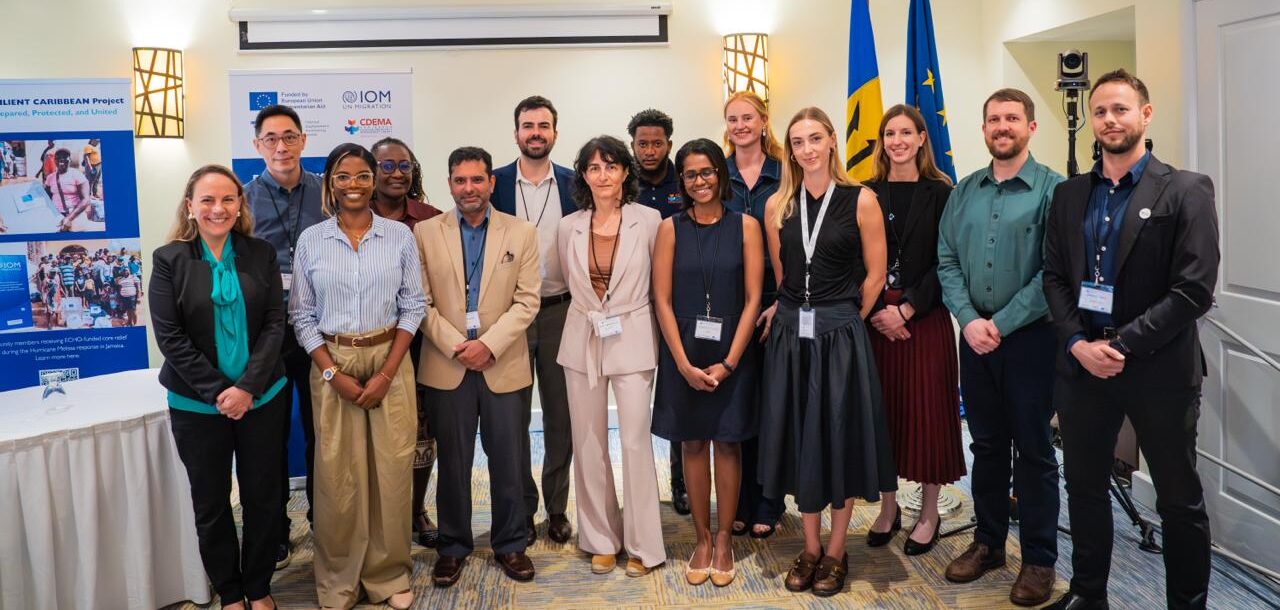
    At the opening of a pivotal regional forum in Barbados, Caribbean leaders issued a powerful call for concrete strategies to achieve climate justice, emphasizing the urgent need for approaches that can endure major geopolitical disruptions. Cletus Springer, Chair of the Caribbean Natural Resources Institute (CANARI), set the tone for the two-day CANARI Partners Forum, declaring the gathering a forum for “strategic action” rather than theoretical discussion. The event, themed ‘Towards climate justice in the Caribbean: building understanding and catalysing partnerships and finance,’ brings together regional and international stakeholders to address climate change as a critical development and human rights priority. Springer framed the discussions against a backdrop of what he termed “truly seismic geopolitical upheaval,” warning that the rapid erosion of the global multilateral system threatens to marginalize small island states. He posed a central challenge to delegates: “How do we advance a climate justice agenda that is robust enough to survive current and future geopolitical shocks?” The CANARI chair highlighted the escalating climate impacts across the region, including increasing extreme weather events and a developing drought in the Eastern Caribbean that’s expected to extend well into the traditional rainy season. These impacts, he noted, validate regional leaders’ characterization of climate change as “an existential threat to the sustainable development of the Caribbean.” Springer underscored the “profound unfairness” of the global climate system where those least responsible for greenhouse gas emissions bear the greatest burden. He emphasized that climate justice must address structural power imbalances and move beyond technical solutions to confront root causes of vulnerability amplified by factors including gender, race, and poverty. The forum represents a significant effort to develop practical approaches that protect vulnerable livelihoods while challenging the systemic inequalities that exacerbate climate injustice.

  • Guatemala Declares SOE Amid Surge in Gang Violence

    Guatemala Declares SOE Amid Surge in Gang Violence

    Guatemalan President Bernardo Arévalo has enacted a 30-day nationwide state of emergency in response to escalating gang violence that resulted in the deaths of seven police officers and injuries to ten others during a weekend of coordinated attacks. The crisis originated with simultaneous prison riots across three correctional facilities where 46 guards were taken hostage by inmates allegedly affiliated with the Barrio 18 criminal syndicate.

    Security forces successfully reclaimed control of the prisons and apprehended the gang’s leader, Aldo Duppie (alias ‘El Lobo’), who was photographed with visible injuries during his transfer. Shortly after his recapture, a series of retaliatory assaults targeted police units throughout Guatemala City and surrounding regions.

    President Arévalo characterized these attacks as deliberate attempts by criminal organizations to intimidate state authorities and undermine anti-gang operations. ‘These murders were designed to terrorize both security forces and civilians into abandoning our confrontation against these criminal enterprises and their reign of fear,’ Arévalo stated. ‘Their strategy will ultimately prove unsuccessful.’

    The emergency declaration enables heightened security measures including military deployment alongside police forces. Educational institutions nationwide suspended operations on Monday, while the U.S. Embassy issued security advisories for American citizens residing in or traveling to Guatemala.

    Barrio 18 and its principal rival MS-13 maintain extensive networks throughout Central America, engaging in systematic extortion, narcotics trafficking, and violence. Guatemala’s Congress officially designated Barrio 18 as a terrorist organization in 2025, aligning with previous classifications by United States authorities. Duppie, the captured leader, is currently serving cumulative prison sentences exceeding 2,000 years for numerous criminal convictions.