分类: world

  • What IShowSpeed Showed the World About Antigua By Ambassador Theon Ali

    What IShowSpeed Showed the World About Antigua By Ambassador Theon Ali

    When global streaming star IShowSpeed embarked on a visit to the twin-island Caribbean nation of Antigua and Barbuda, few anticipated the outsized cultural and diplomatic impact his trip would generate. In a perspective piece penned by Antigua and Barbuda’s Ambassador Theon Ali, the streaming personality’s high-energy journey through the country revealed far more to a global audience of millions than just sun-soaked beaches and turquoise waters.

    Ali argues that IShowSpeed’s unfiltered, authentic content captured the warm hospitality, vibrant local culture, and untapped potential that define Antigua and Barbuda in a way that traditional tourism campaigns rarely match. The streamer’s live broadcasts from local street food stalls, his interactions with ordinary Antiguans, and his explorations of lesser-known coastal communities racked up hundreds of millions of views across TikTok, YouTube, and other social platforms, turning the small Caribbean nation into a viral talking point for young audiences around the world.

    Beyond boosting tourism interest, Ali highlights that IShowSpeed’s visit opened new conversations about the country’s appeal as a destination for digital creators, foreign investment, and youth-focused cultural exchange. Unlike scripted official content, the streamer’s off-the-cuff adventures showcased the relatable, energetic character of Antigua and Barbuda, breaking through the noise of crowded international media to leave a lasting positive impression.

    Ali also notes that the viral attention generated by the trip has already translated into tangible outcomes, including a surge in social media followers for Antigua and Barbuda’s tourism boards, increased inquiries from young travelers planning future visits, and growing interest from digital content companies eyeing the Caribbean as a creative hub. For a small nation working to expand its global footprint beyond traditional tourism, Ali frames IShowSpeed’s unplanned cultural contribution as a powerful case study in how modern digital influence can create unexpected opportunities for small states around the world.

  • Escazú in the Caribbean: Turning commitments into action

    Escazú in the Caribbean: Turning commitments into action

    By Michelle Brathwaite, Regional Representative of the UN Human Rights Office for the Caribbean Community

    In April 2024, The Bahamas etched its name into regional environmental governance history as it welcomed delegates and stakeholders from across Latin America and the Caribbean for the fourth Conference of the Parties (COP4) to the Escazú Agreement. This gathering marked the very first time the landmark treaty’s official conference has been hosted in the Caribbean, a timing that could not be more critical for a small island region that finds itself on the unenviable front lines of three converging crises: accelerating climate change, catastrophic biodiversity decline, and rapidly growing unsustainable development pressures.

    The Escazú Agreement stands as a defining regional pact that enshrines three core environmental rights: guaranteed access to environmental information, meaningful public participation in environmental decision-making, and fair access to justice for communities harmed by environmental harm. At its foundation, the treaty addresses critical questions: how are environmental and development decisions made, which communities get a seat at the table, and how are human rights protected when economic development and ecological protection intersect. For small island and coastal Caribbean states, where natural ecosystems are uniquely fragile and local communities rely directly on marine, coastal and terrestrial resources for their livelihoods and survival, these foundational principles are non-negotiable for long-term sustainable development.

    Of the 19 nations across the Americas that have fully ratified the agreement to date, half are Caribbean countries: Antigua and Barbuda, The Bahamas, Belize, Dominica, Grenada, Guyana, St Kitts and Nevis, St Lucia, St Vincent and the Grenadines, and Trinidad and Tobago. This broad regional participation reflects a growing, shared commitment across the Caribbean to upholding transparency, inclusive participation, institutional accountability, and targeted protection for environmental human rights defenders. Brathwaite called on the remaining Caribbean nations that have not yet ratified or joined the agreement to follow the lead of these 10 states and commit to its binding principles.

    The urgency of full regional adoption and implementation of the Escazú Agreement is impossible to ignore. Climate change is supercharging the intensity of tropical storms, expanding the reach of coastal flooding, and driving steady, irreversible sea-level rise that threatens to displace entire coastal communities across the region. Ongoing biodiversity collapse undermines the Caribbean’s most critical economic sectors — tourism and fisheries — eroding food security and pushing thousands of vulnerable livelihoods to the brink. At the same time, demand for large-scale development projects continues to grow, and the policy choices made today will shape whether the region’s development trajectory builds community resilience and inclusive growth, or deepens systemic inequality and irreversible ecological damage.

    These pressing challenges took center stage at an official side event hosted by the UN Human Rights Office for the Caribbean alongside the main COP4 negotiations. Speakers from civil society, the private sector, government, and Indigenous and local community groups held open discussions about the binding human rights obligations of national governments and the shared environmental responsibilities of private companies operating in the region. A single clear consensus emerged from these talks: any community that will be affected by an environmental or development decision must receive early, full information about the project and have the opportunity to contribute meaningfully to the final decision.

    This requirement is not only a binding international human rights obligation — it is also proven sound policy. When frontline communities are excluded from decision-making, infrastructure and development projects often face widespread public resistance, costly delays, and permanent erosion of public trust in government and industry. When inclusive participation is genuine and occurs early in the planning process, final policy and project decisions are stronger, environmental and social risks are better anticipated and managed, and long-term outcomes are far more economically and ecologically sustainable. Even with this clear consensus, significant implementation barriers remain: broader public education and awareness are still needed across the region to inform communities, governments, and businesses of the protections and opportunities the Escazú Agreement provides.

    One of the treaty’s most groundbreaking provisions is Article 9, which establishes binding protections for environmental human rights defenders. Across the Caribbean, individual activists and local community groups work tirelessly to protect critical ecosystems and defend the rights of frontline communities, often operating with very limited financial and institutional support and facing significant personal risk. Intimidation, harassment and reprisals against activists who raise legitimate environmental concerns directly violate international human rights law, run counter to the binding commitments Caribbean governments have made under the Escazú Agreement, and erode the core principles of inclusive participation and public trust that COP4 participants reaffirmed during the conference.

    Brathwaite emphasized that regional governments must take immediate action to ensure environmental and human rights defenders can carry out their critical work safely, free from intimidation and violence. Similarly, private companies operating across the Caribbean have a responsibility to ensure that their operations — whether directly or through suppliers and partners in their global value chains — do not contribute to threats, criminalization, or retaliation against activists who raise environmental concerns.

    The UN Human Rights Office for the Caribbean remains fully committed to supporting regional governments as they implement the agreement, offering targeted capacity-building programming and expert technical assistance on upholding access to environmental information, expanding meaningful public participation, guaranteeing access to environmental justice, and integrating human rights-centered approaches into all national environmental action.

    Hosting COP4 in The Bahamas served as a powerful reminder to the global community that the Caribbean is far more than a region defined by climate vulnerability: it is a leading voice in global environmental governance and human rights-centered climate action. With sustained cross-regional cooperation and unwavering political will, the Escazú Agreement can help the Caribbean deliver on its vision of inclusive, participatory development that protects the fundamental human right to a healthy environment for current and future generations.

    *Disclaimer: NOW Grenada is not responsible for the opinions, statements or media content presented by contributors. In case of abuse, click here to report.*

  • AgriConnect initiative launched in Jamaica to boost digital agriculture and support small farmers

    AgriConnect initiative launched in Jamaica to boost digital agriculture and support small farmers

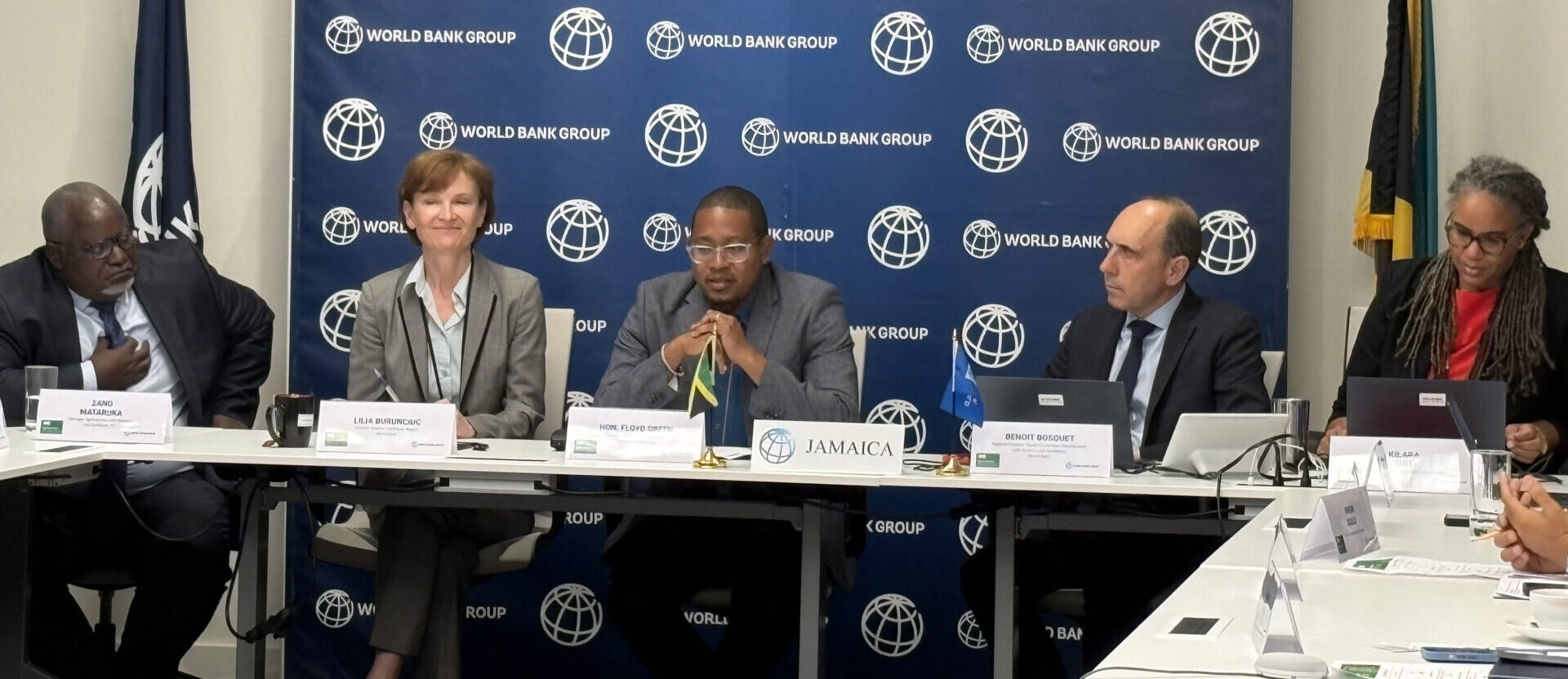
    In a high-profile gathering held in Kingston that brought together key stakeholders from across Jamaica’s agricultural and food sectors, the World Bank Group (WBG) has officially launched its landmark AgriConnect initiative, a global project designed to upgrade connectivity in rural communities, expand digital access for agricultural producers, and connect small-scale family farmers to formal national and international markets. The launch event was supported by the Inter-American Institute for Cooperation on Agriculture (IICA), a long-standing regional partner for agricultural development across the Americas, and featured opening remarks from Jamaica’s Minister of Agriculture, Fisheries and Mining, Floyd Green.

    Senior representatives from multiple international institutions joined the launch, including Lilia Burunciuc, Kent Coipel, Benoît Bosquet, and Diego Arias, who used the occasion to reaffirm the deep collaborative partnership between their organizations and shared commitment to advancing sustainable, inclusive agricultural growth across the Caribbean region. During opening discussions, attendees centered the critical function of family farming in Jamaica’s national food supply, while also openly addressing the long-standing structural challenges that have held the sector back.

    The Jamaican launch of AgriConnect is just one component of the WBG’s broader global effort to modernize agrifood systems worldwide. The initiative has set an ambitious target to reach up to 300 million smallholder farmers across the globe by 2030, with the core goal of supporting producers to transition from low-yield subsistence farming to more productive, commercially viable operations that can generate stable incomes and lift rural communities out of poverty.

    Minister Green framed the launch of AgriConnect as a transformative opportunity for Jamaica, noting that the initiative’s core vision aligns perfectly with the Jamaican government’s ongoing national efforts to build a more resilient, inclusive, and modern agricultural industry. He also did not shy away from outlining the unique challenges Jamaica faces: as a small open economy, the country struggles with limited access to affordable financing for small-scale producers. Like other Caribbean island nations, Jamaica is also on the frontlines of climate change, facing increasingly frequent and severe extreme weather events that threaten crop yields and disrupt production. At the same time, the country is working to shore up domestic food security and cut its heavy reliance on imported food products.

    Speaking on behalf of IICA, Kent Coipel outlined the organization’s decades-long work supporting small and medium-sized agricultural producers across the Caribbean and Latin America. IICA’s core efforts focus on strengthening agricultural value chains, with targeted programming in producer training, export readiness, and expanding access to formal regional and global markets. “Strengthening the organizational capacity of rural communities is a fundamental pillar of IICA’s technical cooperation,” Coipel said during the event. He added that IICA has already supported critical grassroots initiatives in Jamaica, including helping to form and secure legal recognition for the Jamaican Network of Rural Women Producers, while also promoting cross-community knowledge sharing, professional networking, and improved governance for rural producer groups.

    The two-day launch event featured structured working sessions that delved into practical solutions for key challenges facing Jamaican agriculture. One session explored actionable strategies to expand market access for small producers and boost efficiency across domestic food value chains, with insights from Derrick Deslandes, head of the College of Agriculture Science and Education, and industry leader Jacqueline Sharp. A second focused session centered on expanding small producers’ access to emerging agricultural technologies, and exploring the growing role of science and innovation in modernizing Jamaica’s agricultural sector. Contributors to that discussion included Winston Daes, Aura Cifuentes, and Arturo Ramírez, whose private sector firm develops specialized solutions for water management and alternative energy for agricultural operations.

    Across the Americas, IICA is just one of several key international partners backing the World Bank’s AgriConnect initiative. Additional partners include regional development financial institutions, private sector agribusinesses, philanthropic foundations, and global agricultural knowledge organizations. The initiative has already rolled out key regional milestones this year: it was first showcased to stakeholders in Brazil, which is home to nearly four million family farmers, at an IICA office in March. The official regional launch for Latin America and the Caribbean followed in April in Washington, D.C., with participation from IICA Director General Muhammad Ibrahim and dozens of agriculture ministers from across the region.

    Globally, the initiative is backed by an estimated $9 billion in annual financing, with the potential to mobilize an additional $5 billion in private and public investment for agricultural development. These resources are earmarked to strengthen innovation ecosystems, expand accessible financing mechanisms for small producers, and build out the support service infrastructure that smallholder farmers need to thrive.

    The core concept for AgriConnect grew out of a 2023 expert panel convened by the World Bank, which identified agriculture and agribusiness as one of five global sectors with the greatest potential to absorb the large number of young people entering the global workforce over the next decade. Two core priorities anchor the initiative: first, reducing agricultural risk by boosting climate resilience for small producers and building stronger market risk management systems, and second, strengthening end-to-end value chains and accelerating the digital transformation of agriculture through the widespread adoption of digital tools, open access knowledge platforms, and modern production technologies.

    According to IICA’s final summary of the launch, initiatives like AgriConnect are expected to drive greater social inclusion in the agricultural sector, boost the global competitiveness of small and medium-sized producers across the Americas, and support more equitable, sustainable rural development across the region in the coming decades.

  • Climate workshop urges urgent action as Caribbean faces ‘lived reality’

    Climate workshop urges urgent action as Caribbean faces ‘lived reality’

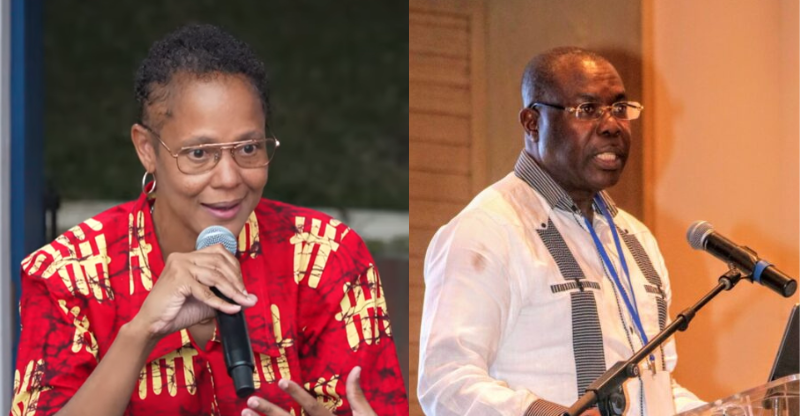
    This week, high-ranking officials from across the Caribbean gathered in Barbados for the Santiago Network Regional Workshop, hosted at the Caribbean Development Bank’s Wildey campus, to sound an urgent alarm over the accelerating climate crisis facing small island developing states (SIDS) and push for immediate, actionable measures to shield at-risk local communities. Against a backdrop of global climate projections showing the planet is on track to warm by close to 3 degrees Celsius this century – far exceeding the 1.5-degree target agreed in the Paris Climate Accords – leaders emphasized that climate breakdown is no longer a distant risk for the region: it is an ongoing, daily crisis reshaping life for Caribbean populations. The workshop centered on scaling demand-driven technical assistance for SIDS and other climate-vulnerable regions, connecting global climate pledges to tangible on-the-ground implementation. Opening the event, Barbados Deputy Prime Minister Santia Bradshaw, who also holds cabinet portfolios for Environment, National Beautification and Fisheries, called out a troubling retreat from global climate ambition, noting that critical resources for adaptation and mitigation are being redirected even as scientific reports confirm the world is drifting toward a catastrophic 3-degree warming threshold. “The world is not on track to limit global temperature rise to 1.5°C,” Bradshaw told attendees. “Instead, we are heading closer to a three-degree increase, an outcome with potentially devastating consequences, particularly for vulnerable regions. For the Caribbean, this is not an abstract threat. It is a lived reality.” Outlining Barbados’ ambitious 2035 national climate strategy, Bradshaw stressed that the region can no longer rely on passive advocacy alone to drive change. Echoing the consistent stance of Prime Minister Mia Mottley, she noted that Caribbean nations are prepared to lead by example, innovate on climate solutions, and prioritize the protection of their citizens. “As our Prime Minister Mottley has said repeatedly, we will not be passive in the face of climate change. We will not wait for others to act. We will lead, we will innovate, and we will protect our people. Our region must not only build resilience, we must become a model of resilience,” Bradshaw said. She also laid out specific, measurable national targets to demonstrate the region’s commitment to proactive climate action: by 2030, 85% of all residential housing in Barbados will be engineered to withstand the force of a Category 3 hurricane, and the country will continue expanding what is already the largest electric bus fleet in the Caribbean, cutting transportation emissions while building cleaner, more resilient infrastructure. Following Bradshaw’s address, Caribbean Development Bank Vice President Dr. Isaac Solomon reinforced the critical mission of the Santiago Network, which was created to coordinate global support for addressing climate loss and damage in vulnerable nations. Dr. Solomon emphasized that the network fills a long-unmet gap between non-binding global climate commitments negotiated at UN Climate Change Conferences (COPs) and the concrete, country-led implementation needed to protect communities. Like Bradshaw, he noted that climate loss and damage is not a future scenario – it is an escalating current crisis. “Extreme weather events, sea level rise, flooding, droughts, and heat stress impose recurrent human, social, and economic costs that strain public finances and erode decades of development gains,” Dr. Solomon explained. He argued that while climate finance is an essential component of climate action, funding alone cannot deliver lasting impact without robust, functional institutional frameworks to support it. The Santiago Network’s core role, he said, is to deliver demand-aligned technical assistance that makes ambitious climate action “bankable” for SIDS. “Addressing loss and damage is not only about post disaster response. It is about institutional readiness, strengthening data systems, legal frameworks, inter-agency coordination, and decision-making processes before disasters occur. Finance alone is insufficient without strong systems, data, and institutions,” Dr. Solomon said. The three-day workshop focused on advancing three core priority outcomes to deliver tangible progress: first, supporting country-led identification of specific climate action needs, rather than imposing external priorities; second, improving cross-institutional coordination to cut down on redundant efforts and maximize the impact of limited resources; and third, directly linking targeted technical assistance to accessible concessional climate finance. Both Bradshaw and Solomon closed their remarks by urging all workshop participants to ensure the event translates into real, tangible benefits for Caribbean communities, shifting from years of high-level policy discussions at global COP summits to concrete, on-the-ground action that will protect current and future generations of Caribbean residents from the worst impacts of climate change.

  • Internal fighting across Africa continues to destabilize the region

    Internal fighting across Africa continues to destabilize the region

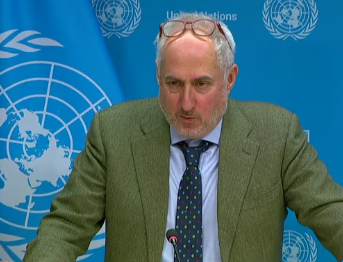
    In a stark press briefing from United Nations Headquarters in New York, senior UN spokesperson Stéphane Dujarric has renewed global warnings over the rapidly deteriorating security and humanitarian landscape driven by persistent internal conflicts spanning multiple African nations. The ongoing violence has sent death tolls climbing, forced hundreds of thousands of people from their homes, and stretched already overburdened local and international aid agencies to their breaking point.

    The crisis in Sudan remains one of the most pressing emergencies, Dujarric confirmed. Recurrent drone strikes targeting critical infrastructure in Khartoum, the Sudanese capital, have paralyzed core humanitarian operations. Just one day after drone attacks targeted Khartoum’s airport and surrounding urban areas, all incoming and outgoing flights remain suspended — a major disruption given the airport’s central role in moving aid workers and life-saving supplies into the country. Dujarric noted that the UN’s on-the-ground team has already resettled in Khartoum to coordinate relief efforts, but the persistent attacks have blocked their ability to deliver support to vulnerable populations.

    Further south in Sudan’s White Nile State, fresh drone strikes hit multiple locations in the city of Kosti, including two fuel stations located in a crowded commercial district, just one day after another fuel station and tanker were hit in the area. The strikes have caused an unconfirmed number of civilian casualties and knocked out critical basic services for local residents. In North Darfur’s El Fasher, the security situation continues to spiral downward: new data from the International Organization for Migration shows that more than 138,000 civilians have fled El Fasher and surrounding rural villages between October 2025 and March 2026 alone, joining the millions of already displaced people across the country.

    Against this backdrop, the UN is reiterating its core demands for all warring parties: an immediate ceasefire, full protection for civilians and civilian infrastructure, and unimpeded, fast access for aid convoys to reach communities in need. “We continue to call for an immediate stop to the fighting; for civilians and civilian infrastructure to be protected, and not be targeted; and for aid to be allowed to reach people swiftly, safely, and without any obstruction,” Dujarric told reporters.

    In the northeastern Democratic Republic of the Congo’s Ituri Province, UN-led humanitarian negotiations have scored a small, long-awaited victory: after months of blocked access caused by surging violence, aid groups have been able to resume life-saving food distributions at the Plaine Savo displacement camp, where more than 71,000 displaced people are sheltering. This marks the first large-scale food delivery to the site since December 2025, when a wave of armed clashes cut off all access to the camp. Ahead of the delivery, UN Humanitarian Coordinator Bruno Lemarquis and OCHA Ituri head Carla Martinez traveled to the camp to meet with displaced families, local leaders, and aid partners to assess on-the-ground conditions, and called on all armed and state actors to guarantee permanent safe access for aid groups.

    Even with the resumption of food aid, the situation in Plaine Savo remains dire. Clashes continue to flare in surrounding areas, leaving displaced families facing acute hunger and constant danger. Local reports confirm that at least 21 displaced residents have been killed since December 2025 while venturing into nearby fields to search for food, underscoring the deadly risk civilians face even within camp perimeters.

    The UN peacekeeping mission in the DRC, MONUSCO, has stepped in to support conflict-affected communities beyond humanitarian aid, recently assisting hundreds of people caught in recent armed clashes and escorting final-year secondary students to sit their national exams. At the request of school administrators, 200 students from three schools in Gina, Djugu territory — the site of recent deadly armed clashes between groups including the Convention for the Popular Revolution (CRP) — were escorted by peacekeepers to the provincial capital of Bunia to take their exams. MONUSCO peacekeepers also rescued nearly 200 civilians trapped under CRP fire during the recent violence. After exams conclude on May 7, the students will be escorted back to Gina under armed guard.

    To the north in Mali, the UN Office of the High Commissioner for Human Rights is sounding the alarm over a sharp spike in coordinated attacks across multiple towns and cities carried out last week. The attacks caused heavy civilian casualties and forced hundreds of additional families to flee their homes, with more civilian deaths reported in follow-up clashes over the weekend. UN High Commissioner for Human Rights Volker Türk has called for an immediate end to all hostilities, urging all parties to adhere to their obligations under international humanitarian and human rights law to protect civilian lives and critical infrastructure. Malian authorities have launched an official investigation into the attacks, which took place between April 25 and 26 2026.

  • ILO report highlights labour rights as critical to protecting journalists on World Press Freedom Day

    ILO report highlights labour rights as critical to protecting journalists on World Press Freedom Day

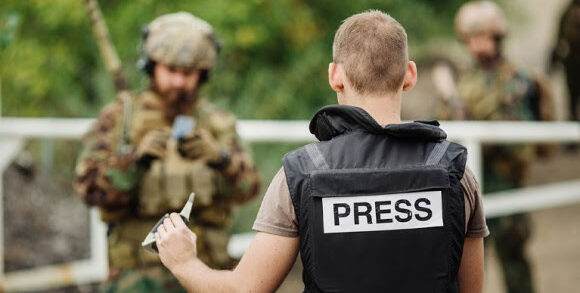
    To mark World Press Freedom Day 2026 on May 3, the International Labour Organization (ILO) has launched a groundbreaking new report that examines the underrecognized role of core labour rights in protecting journalists and media professionals across the globe. The report delivers a stark assessment of the escalating risks faced by media workers, shedding new light on the systemic threats that have plagued the industry for decades. According to official data published alongside the analysis, more than 1,850 journalists have been killed in the line of duty since 1993. Countless more have been subjected to arbitrary detention, forced disappearance, and routine intimidation. Alarmingly, the ILO confirms that the vast majority of these deadly attacks remain unsolved, allowing perpetrators to act with total impunity.

    Physical violence is not the only threat facing modern media workers, the report emphasizes. Journalists now face a growing spectrum of hazards, from aggressive legal intimidation tactics designed to silence critical reporting to coordinated harassment and abuse across digital platforms. Women journalists, in particular, are disproportionately targeted by gendered digital threats that create a chilling effect on independent media.

    The ILO’s analysis pushes beyond conventional conversations about press freedom, arguing that guaranteeing the safety of media workers requires far more than protecting freedom of expression alone. Instead, the report makes the case that universal access to fundamental labour rights is an equally, if not more, critical component of meaningful journalist protection. Within this framework, the publication explores how established core labour rights, paired with widely accepted international labour standards, can reinforce existing safety frameworks. It also outlines clear pathways for governments, media outlet owners, media worker unions, and industry representative bodies to collaborate on developing more robust, effective safety protocols for newsrooms and field reporting.

    “Journalists are key defenders of human and labour rights,” noted Frank Hagemann, Director of Sectoral Policies at the ILO, in comments accompanying the report’s release. “They are also workers, and labour rights offer an important tool for protecting journalists at work.”

    Beyond this new report, the ILO reaffirmed its longstanding commitment to advancing journalist safety globally through its participation in the United Nations Plan of Action on the Safety of Journalists and the Issue of Impunity. First endorsed in 2012 by the United Nations System Chief Executives Board for Coordination, the cross-institutional initiative was created to coordinate global action to address rising threats to media workers and end the culture of impunity that allows attacks on journalists to go unpunished. The full 588KB report is available for public download to support further industry and policy discussion on this critical issue.

  • World Court hears PNC, PPP govts had floated returning parts of Essequibo to Venezuela

    World Court hears PNC, PPP govts had floated returning parts of Essequibo to Venezuela

    On Monday, May 2026, Venezuela presented new archival evidence to the United Nations’ highest judicial body, the International Court of Justice (ICJ), as part of its ongoing argument that the 1966 Geneva Agreement remains the sole valid framework for bilateral negotiation of its long-running border dispute with Guyana over the resource-rich Essequibo region.

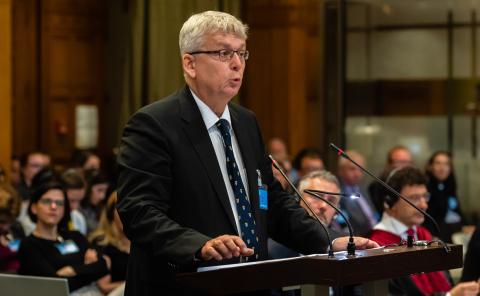
    Leading Venezuela’s presentation of this evidence, international law professor Andreas Zimmermann told the court that Guyana itself had twice, across different ruling administrations, floated proposals to cede partial control of disputed Essequibo territory to Venezuela during past bilateral talks.

    The first documented proposal emerged in 1977, when Guyana was governed by the People’s National Congress (PNC) under Prime Minister Forbes Burnham. During closed-door bilateral negotiations held under the Port of Spain Protocol, a subsidiary agreement to the 1966 Geneva framework, Guyana’s foreign minister tabled a formal proposal to adjust the existing border at Punta Playa, Zimmermann told the court. The proposed change would shift the current border’s orientation from the northwest to the northeast, effectively transferring the affected territory to Venezuelan control.

    “This development confirms that, during bilateral talks conducted under both the Port of Spain Protocol and the Geneva Agreement, Guyana was willing to pursue creative, mutually acceptable solutions and relinquish de facto control over territory that the 1899 Arbitral Award had supposedly assigned to British Guiana,” Zimmermann told the ICJ.

    Decades later, during the 1990s when Guyana was led by the People’s Progressive Party Civic (PPPC) administration, further talks explored even more flexible frameworks for resolving the dispute, the professor added. In 1995, joint discussions between the two countries included serious consideration of returning partial control of the disputed territory to Venezuela, as well as an innovative proposal for a reverse lease arrangement that would have Venezuela hold sovereignty over some areas while Guyana retained day-to-day operational control.

    Zimmermann also cited a 1998 letter written by then-Guyanese President Janet Jagan that reaffirmed the core purpose of the UN Secretary-General’s Good Officer mediation process – a process established under the Geneva Agreement – which Jagan explicitly noted was to “explore all avenues that would lead to the settlement of the border controversy” rather than simply debating the legal validity of the 1899 award.

    The professor added that high-level talks exploring practical solutions date back even further: between 1970 and 1975, Venezuelan President Carlos Andrés Pérez and Prime Minister Burnham held extensive, detailed discussions on the border dispute and mapped out multiple potential pathways to a compromise. Those talks culminated in a 1976 proposal from Burnham himself to resolve the long-running disagreement through expanded cross-border economic cooperation, with Burnham quoted as saying: “I would propose that there should be signed an accord which would lay at rest the border question.”

    Based on this long paper trail of past negotiations and proposals, Zimmermann argued, Guyana has long implicitly recognized that the Geneva Agreement is the proper instrument to resolve the substantive border dispute between the two nations, rather than treating the 1899 Arbitral Award as a final, unchallengeable settlement. The core mandate of Article 4 of the Geneva Agreement, he reminded the court, requires parties to pursue a practical, mutually acceptable solution to the full dispute, which aligns directly with the past actions of successive Guyanese governments.

    The ICJ is currently holding hearings this week and next to consider the merits of the case, which centers on the legal validity of the 1899 Arbitral Award. Guyana has long maintained that the 1899 award represents a full, final and binding settlement of the border with Venezuela, and is expected to deliver its rebuttal to Venezuela’s latest arguments in the coming days.

  • Guyana houdt voet bij stuk bij afwijzen Chinese vissersschepen

    Guyana houdt voet bij stuk bij afwijzen Chinese vissersschepen

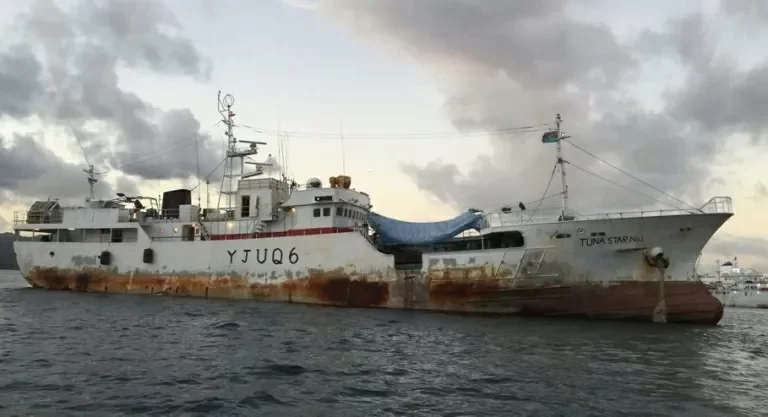
    GEORGETOWN, GUYANA – In a move that underscores growing regional sensitivity around foreign commercial fishing activity, Guyana’s agricultural authorities have formally denied a permit request from Chinese seafood firm Grandeast Seafood Inc. to operate six of its own fishing vessels in local waters. Guyana’s Minister of Agriculture Zulfikar Mustapha confirmed the rejection publicly on Monday, adding that no ongoing negotiations are underway to reverse the decision and grant approval at a later date.

    Grandeast Seafood, a subsidiary of China-based Hong Dong Fisheries Co., Ltd., has operated a fish and shrimp processing facility in Guyana since July 2018. The company poured roughly $20 million into building the modern plant, which boasts a total annual processing capacity of 5,000 to 6,000 metric tons of finfish and 10,000 to 12,000 metric tons of shrimp. However, the facility has consistently operated far below full capacity due to inconsistent local supply of raw seafood. Since opening, the plant has only processed an average of 2,500 metric tons of finfish and 700 metric tons of shrimp annually, creating lost production and revenue for the firm. To fix this persistent supply gap, Grandeast Seafood submitted its permit application to operate six company-owned fishing vessels last year, which has now been turned down.

    In its application, the Chinese firm emphasized that all six vessels would operate strictly in compliance with Guyana’s existing fisheries laws, and would not disrupt the livelihoods of local small-scale fishermen. The company also argued that operating its own vessels would create new skilled job opportunities and training programs for local crew members, delivering tangible economic benefits to Guyana’s coastal communities.

    The permit rejection has drawn close attention from neighboring Suriname, a country with its own sizable fishing industry that has struggled for years with unregulated foreign fishing in its territorial waters. Suriname’s authorities have repeatedly intercepted Chinese fishing vessels conducting illegal, unreported, and unregulated (IUU) fishing in Suriname’s claimed maritime territory over the past decade. These repeated incidents have already prompted the country to ramp up maritime patrols, strengthen enforcement measures, and hold high-level diplomatic talks with Chinese officials to address the issue of overexploitation of shared regional fish stocks.

    Suriname has repeatedly stated that it remains fully committed to upholding the integrity of its maritime borders, protecting domestic fishing grounds for local operators, and ensuring long-term sustainable fishing practices across the region. The outcome of Grandeast Seafood’s permit application in Guyana is widely viewed as a key indicator of how Caribbean South American nations will approach foreign investment in their fishing sectors moving forward, balancing potential economic gains against concerns over resource sovereignty and local livelihood protection.

  • U.S. Coast Guard Intercepts Drug Vessel Near Haiti, Seizes $3.8M in Marijuana

    U.S. Coast Guard Intercepts Drug Vessel Near Haiti, Seizes $3.8M in Marijuana

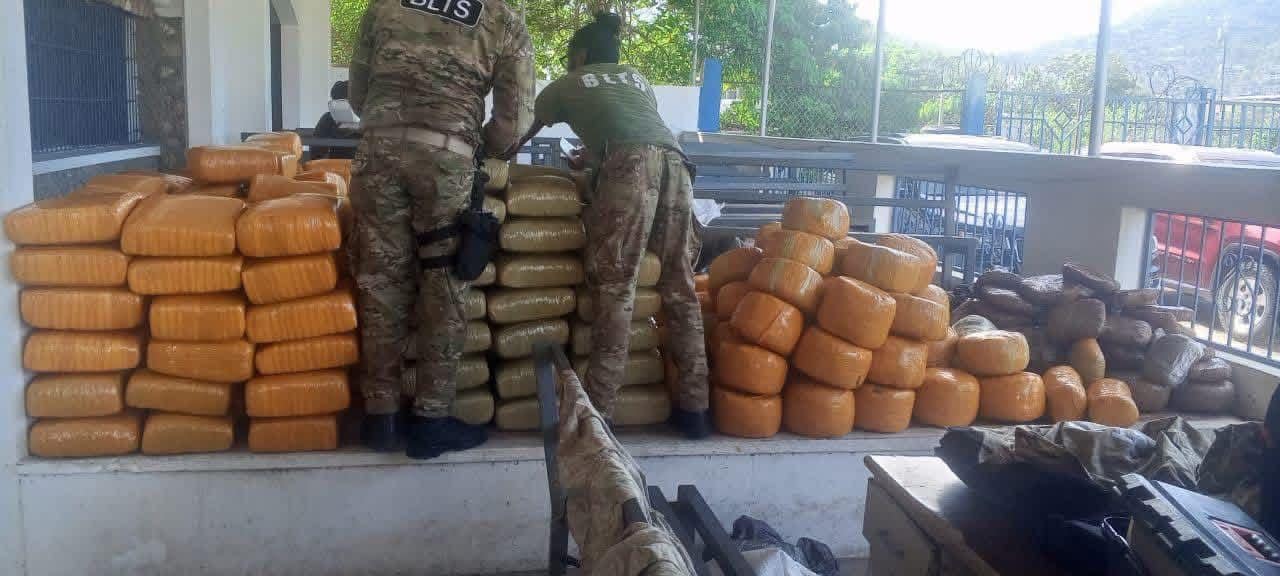
    A coordinated anti-narcotics operation carried out by a U.S. Coast Guard law enforcement detachment deployed on a U.S. Navy vessel has successfully intercepted a vessel suspected of smuggling illegal drugs in waters off Haiti’s northern coast. The operation resulted in the seizure of approximately 3,200 pounds of marijuana, with an estimated street value of $3.8 million, U.S. officials confirmed.

    Based on an official statement released by U.S. Coast Guard Southeast, the interception occurred Thursday approximately eight nautical miles off the coast of Mole Saint-Nicolas, a coastal town in Haiti’s northwestern department. During the boarding and inspection of the suspect vessel, the enforcement team took one individual into custody. Three days after the interception, on Sunday, both the seized contraband and the detained suspect were handed over to Haitian law enforcement officials for further processing and prosecution.

    Lt. Cmdr. Cory Arsenault, the U.S. Coast Guard’s liaison officer to Haiti, emphasized the ongoing commitment of U.S. forces to collaborative regional security. “In close coordination with the Haitian government, the U.S. Coast Guard remains steadfast in our shared mission to safeguard the maritime approaches of the Caribbean,” Arsenault said. “Together, we are strengthening joint operations to disrupt the illegal flow of narcotics, protect vulnerable communities, and uphold the security and stability of the region.”

    The successful interdiction was not a solo effort: it drew on coordination and intelligence support from a network of multiple U.S. and regional security agencies, including Joint Interagency Task Force South, the multi-national body tasked with countering illicit trafficking in the Caribbean and Eastern Pacific, and U.S. Southern Command, which oversees U.S. military operations in the region. Transnational drug trafficking has long been a persistent security challenge for Caribbean nations, with unpatrolled maritime routes often used by smuggling networks to move contraband between North, Central, and South America, fueling domestic instability and organized crime in the process.

  • Venezuela maintains ICJ does not recognise court in border controversy; says Spain was responsible for Essequibo

    Venezuela maintains ICJ does not recognise court in border controversy; says Spain was responsible for Essequibo

    On Wednesday, May 6, 2026, during ongoing oral proceedings at the United Nations’ highest judicial body, the International Court of Justice (ICJ), Venezuela doubled down on its longstanding refusal to recognize the court’s authority to adjudicate a decades-long territorial border dispute with neighboring Guyana centered on the contested Essequibo Region.

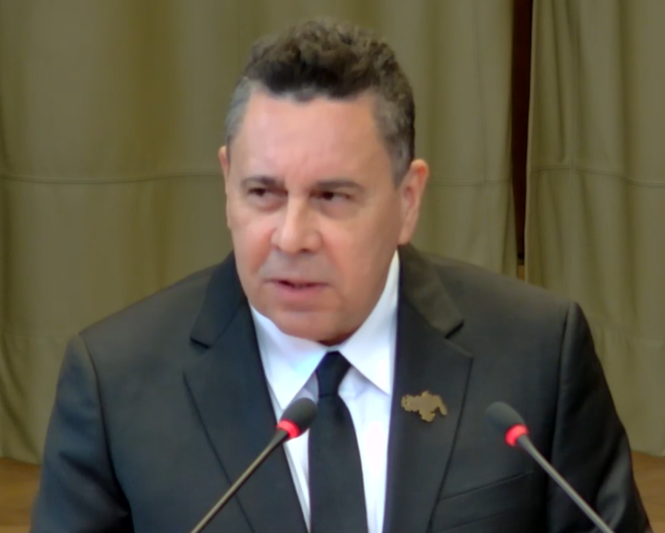
    Samuel Moncada, Venezuela’s designated agent to the ICJ, opened his remarks to the court wearing a lapel pin displaying a map of Venezuela that explicitly incorporates the 159,000-square-kilometer Essequibo Region – a move that has already drawn formal concern from Guyana through the Caribbean Community (CARICOM), the regional bloc of which Guyana is a member. The appearance comes just two days after Guyana presented its case to the ICJ, calling on the court to issue binding orders requiring Venezuela to remove all official maps labeling Essequibo as Venezuelan territory, and to rescind all domestic laws and constitutional amendments passed following a 2023 Venezuelan national referendum that formalized the country’s claim to the region.

    Addressing the court directly, Moncada emphasized that the 2023 popular referendum “unequivocally reaffirmed” Venezuelan voters’ unanimous rejection of the ICJ’s jurisdiction over the long-running disagreement. “That position has not changed. Venezuela has never consented to submitting this dispute to the jurisdiction of any court or arbitral tribunal,” he told the panel of ICJ judges.

    Moncada argued that any ruling by the court that interferes with the 1966 Geneva Agreement – the bilateral pact brokered by the United Nations that frames the dispute – would block any path to a resolution that satisfies both nations. “The only option is to allow the agreement to fulfill its purpose and objective without impediments,” he added. He accused Guyana of deliberately disregarding the terms of the 1966 accord, which was designed to address the colonial-era “fraudulent” 1899 Arbitral Award that first granted Essequibo to British Guiana, the predecessor to modern Guyana. Unlike judicial adjudication that produces a winner and a loser, Moncada noted, the Geneva Agreement mandates a mutually acceptable bilateral solution to overcome the harmful legacy of colonial border drawing.

    Staking Venezuela’s historical claim to the region, Moncada contended that Essequibo was always part of Spanish colonial territory that later became independent Venezuela. He argued that the Netherlands gained control of territory only east of the Essequibo River under the 1648 Treaty of Munster, in which Spain formally recognized Dutch independence and its territorial claims. This position directly contradicts Guyana’s formal submissions to the court, which have included cartographic and historical evidence showing Spanish colonial forces never established a presence in Essequibo, and that most place names across the region trace back to Dutch colonial settlement.

    Carl Greenidge, Guyana’s agent to the ICJ, laid out his country’s historical case during Monday’s proceedings, presenting maps showing the westernmost Spanish colonial outposts sat more than 650 kilometers east of the Venezuelan border, outside the boundaries of Essequibo. Greenidge also submitted a list of 35 existing place names across the region that retain their original Dutch monikers, tracing Guyana’s colonial history back to the first permanent Dutch settlement in 1598. By 1616, the Dutch had formally established the Colony of Essequibo, built Fort Kykoveral along the Mazaruni River as their administrative seat, and began governing territory stretching west to the Orinoco River, Greenidge explained. The Dutch West India Company took over administration of the colony in 1621, before moving the colonial seat to Fort Zealandia in 1744, he added.

    Moncada closed his remarks by reaffirming Venezuela’s commitment to a peaceful resolution of the dispute, while rejecting reliance on great power influence or outcomes from what he called “rigged international arbitrations.” “This is what led to our tradition of not recognizing the jurisdiction of arbitral tribunals or courts of any kind when it comes to matters relating to our territorial integrity,” he said. “This is why Venezuela does not accept the jurisdiction of the International Court of Justice, which was erroneously imposed in the 2020 judgment, it respectfully rejects its jurisdiction to hear and decide on this dispute.”