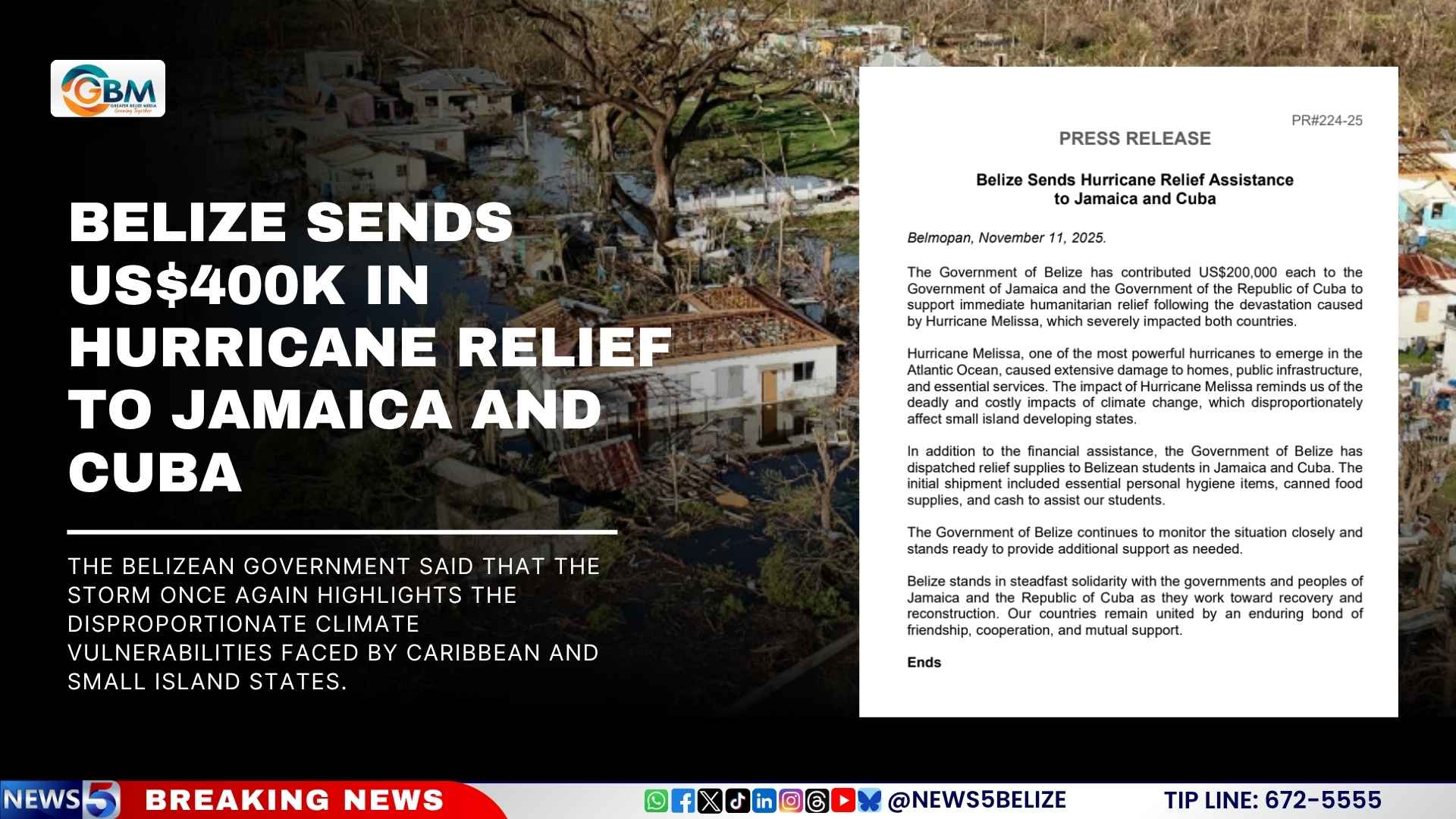
In a significant humanitarian gesture, Belize has committed $400,000 in emergency relief to Jamaica and Cuba, allocating $200,000 to each nation in the aftermath of Hurricane Melissa. The catastrophic Category 5 storm wreaked havoc across the Caribbean in late October 2025, leaving behind a trail of destruction that includes severe flooding, power outages, damaged infrastructure, and the displacement of thousands of families. The hurricane also disrupted essential services such as water systems, healthcare facilities, and transportation networks, further complicating recovery efforts. Hurricane Melissa, which formed during the peak of the 2025 hurricane season, rapidly intensified as it entered the Caribbean, causing estimated losses of $6–7 billion, equivalent to 28–32% of Jamaica’s GDP. Jamaican Prime Minister Andrew Holness described the disaster as both a humanitarian and economic crisis, reigniting calls for climate accountability ahead of COP30. The Belizean government emphasized the disproportionate climate vulnerabilities faced by Caribbean and small island states, underscoring the urgent need for global action. In addition to financial aid, Belize has sent relief packages to its students in Jamaica and Cuba, containing personal hygiene kits, canned food, and emergency cash. Officials have pledged further assistance if required, reaffirming Belize’s solidarity with the affected nations. ‘Our nations remain united by enduring friendship, cooperation, and mutual support,’ the government stated.
分类: world
-

Guatemala shows disrespect for US condemnation of blockade on Cuba
In a thought-provoking analysis, writer and journalist Juan Antonio Canel highlighted the enduring challenges faced by the United Nations (UN) in fulfilling its founding charter. Article 1 of the charter mandates collective measures to prevent threats to peace and suppress acts of aggression. However, Canel pointed out two critical issues that continue to undermine this mission: the U.S. government’s economic, commercial, and financial blockade of Cuba, and the ongoing genocide in Gaza. Despite widespread international condemnation, these crises persist, raising questions about the UN’s effectiveness. Canel described the blockade against Cuba as inhumane and questioned the legitimacy of such sanctions imposed on a sovereign nation. He emphasized that these measures violate international law, citing the UN General Assembly’s repeated condemnation of the blockade, most recently on October 29, with 165 votes in favor, seven against, and 12 abstentions. Despite overwhelming support for ending the blockade, Canel lamented that no tangible progress has been made, underscoring the UN’s struggle to enforce its own principles.
-
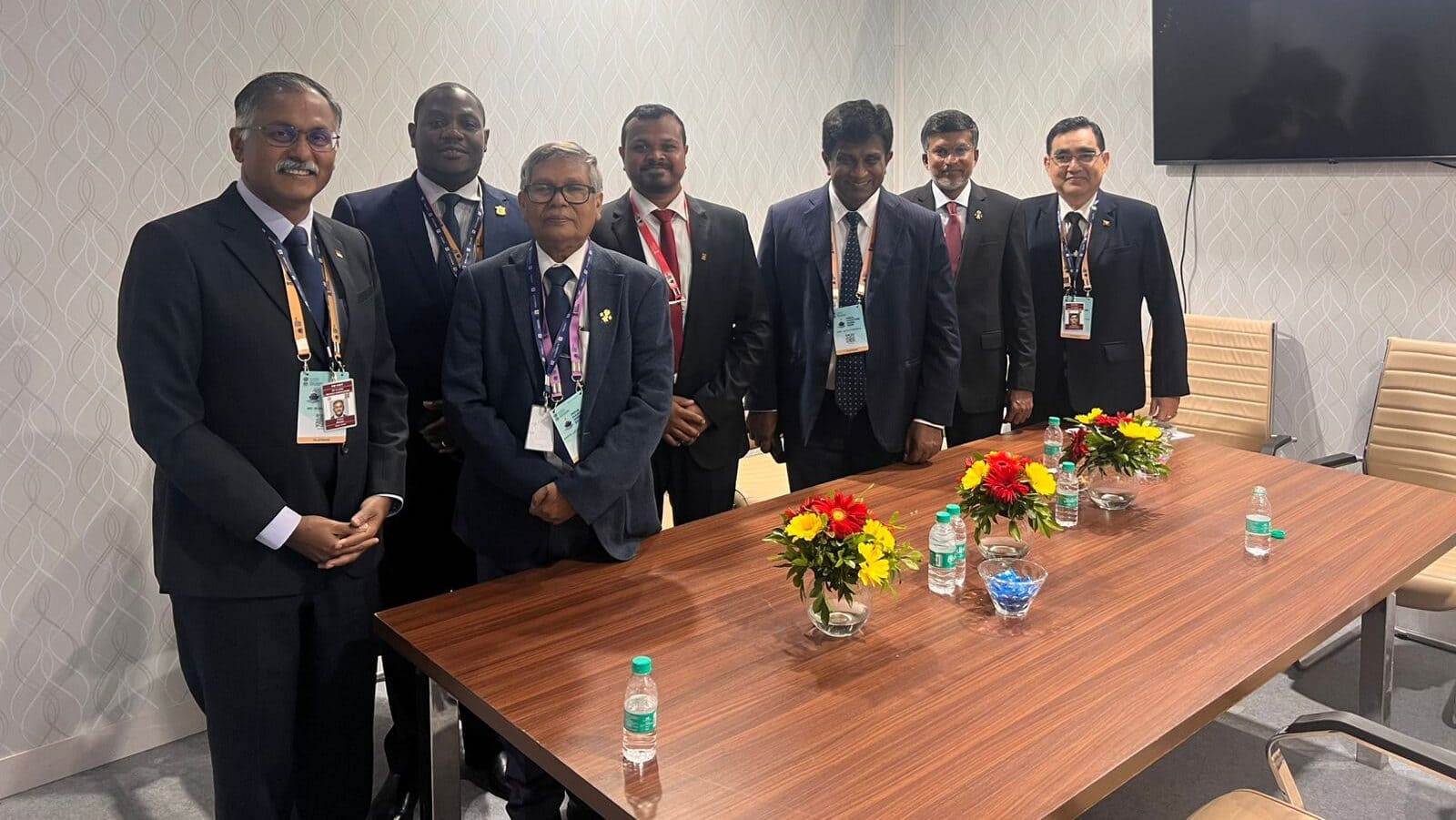
Minister Smith Strengthens Global Blue Economy Ties at Indian Maritime Week 2025
Hon. Anthony Smith Jr., Minister of Agriculture, Land, Fisheries, and the Blue Economy of Antigua and Barbuda, has significantly elevated the nation’s global standing through a series of high-level bilateral meetings. Fresh from his impactful participation at Sagarmanthan: The Great Oceans Dialogue, held during India Maritime Week 2025, Minister Smith engaged in strategic discussions with ministers and senior representatives from India, Mauritius, Singapore, the Maldives, Norway, the Philippines, Sri Lanka, the Netherlands, and Liberia. These dialogues focused on strengthening cooperation in sustainable ocean development, sharing best practices, and identifying joint initiatives in research, innovation, and capacity building. A key highlight was his forward-looking exchange with the Prime Minister of India, where discussions centered on enhancing collaboration in maritime education, ocean technology, and Blue Economy policy frameworks. Minister Smith emphasized Antigua and Barbuda’s commitment to building strategic partnerships that advance the sustainable use of marine resources, particularly through education, innovation, and youth engagement. He noted that such collaborations are crucial for ensuring equitable growth and ocean resilience among Small Island Developing States (SIDS) and beyond. Accompanied by Ms. Marver Woodley, Senior Operations and Policy Manager within the Department of the Blue Economy, Minister Smith’s active participation in bilateral dialogues has reaffirmed Antigua and Barbuda’s position as a rising voice in global ocean governance and a leading advocate for partnership-driven Blue Economy transformation.
-
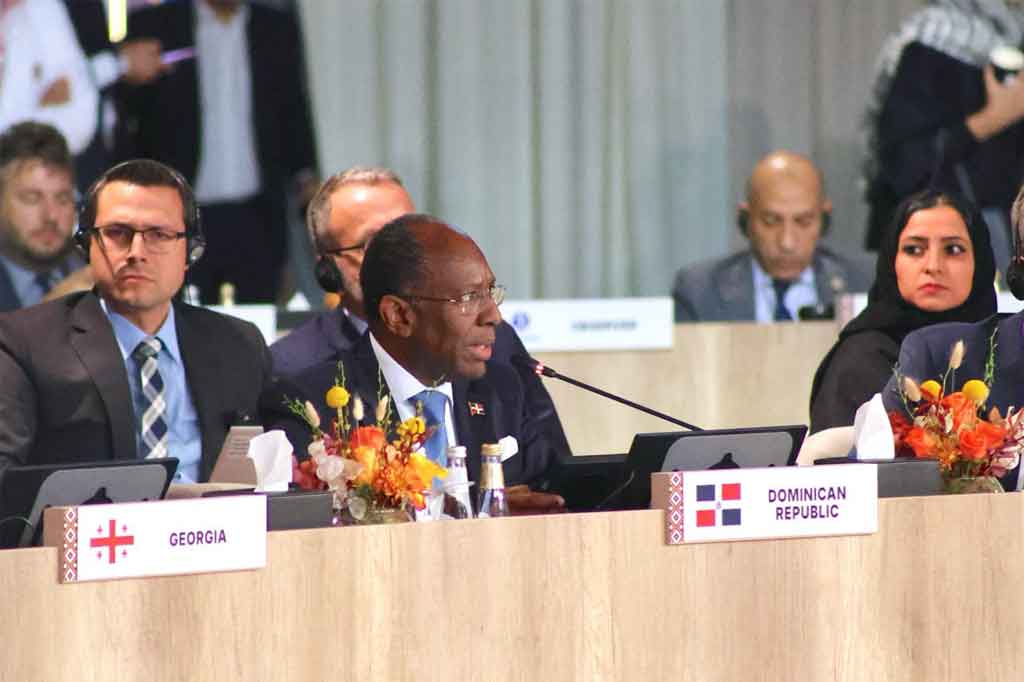
Dominican Republic to host 27th UN General Assembly on Tourism
In a landmark decision, the 26th United Nations General Assembly on Tourism, held in Saudi Arabia, has selected the Dominican Republic as the host nation for the 2027 UNWTO General Assembly. The resolution, passed with the participation of over 160 delegations from member states, underscores the country’s growing influence in global tourism. Dominican Minister of Tourism, David Collado, expressed gratitude for the honor, emphasizing its significance for the nation. On his social media, Collado stated, ‘Hosting the UNWTO’s General Assembly in 2027 is not just an achievement: it is a recognition of a management that transformed the way of tourism in the region.’ He further highlighted the Dominican Republic’s expanding leadership in the global tourism sector. This decision follows Collado’s recent recognition as the Tourism Minister of the Americas by UN Tourism, marking the first time the United Nations agency has bestowed such an honor. The 26th Assembly, which concluded this Tuesday, saw the Dominican Republic represented by Deputy Minister Carlos Peguero, solidifying the nation’s commitment to advancing tourism on the world stage.
-
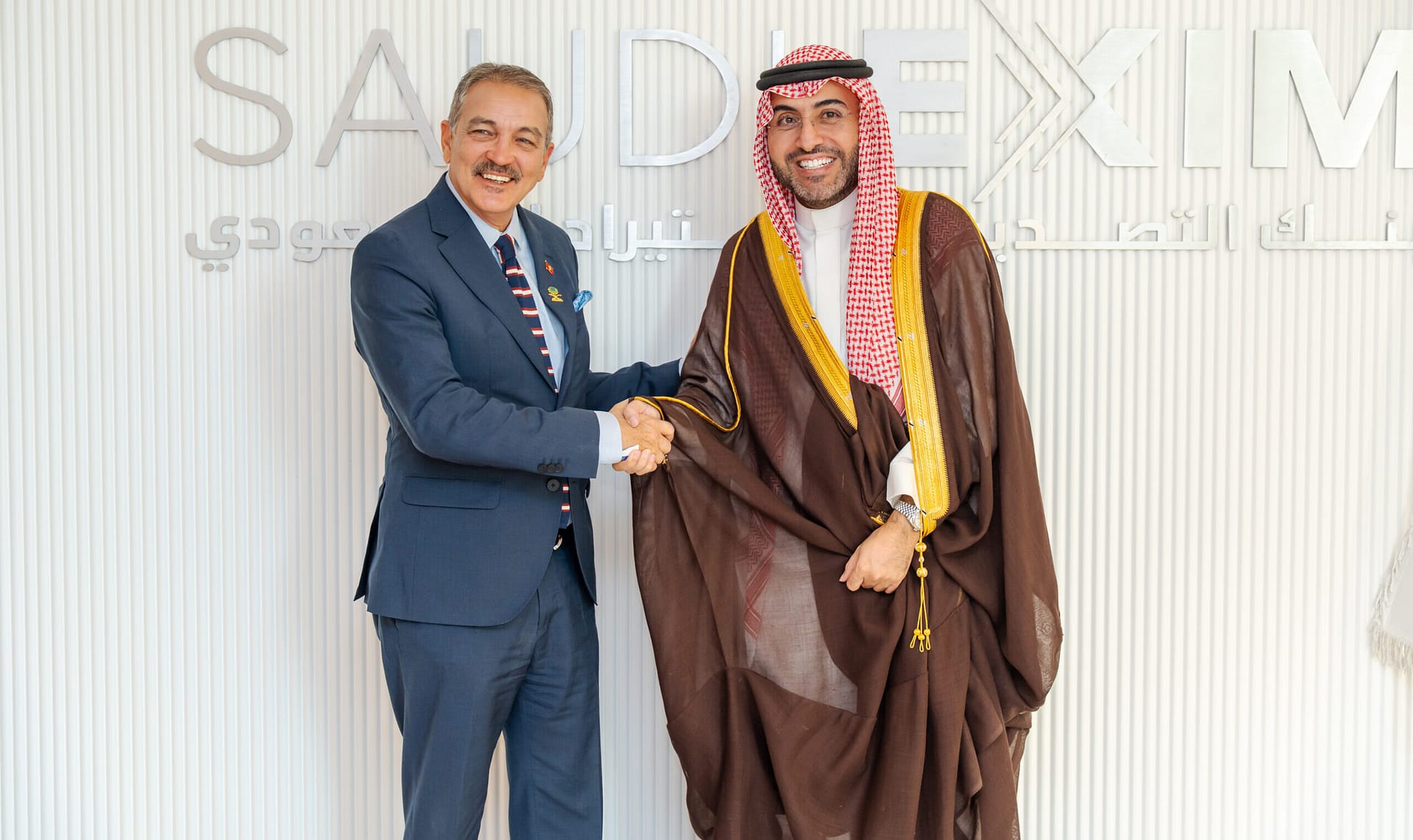
Antigua and Barbuda Explores Investment Opportunities with Saudi EXIM Bank During UN Tourism General Assembly
The 26th Session of the UN Tourism General Assembly, currently underway in Riyadh, has provided a platform for Antigua and Barbuda to enhance its global tourism and investment partnerships. The Hon. H. Charles Fernandez, Minister of Tourism, Civil Aviation, Transportation, and Investment, has spearheaded a series of high-level bilateral and business meetings during the event. A key highlight was the meeting with a senior delegation from the Saudi EXIM Bank, led by Dr. Naif Alshammari, Deputy CEO, Jahera Almri, Partnerships Manager, and Naif O. Alajroush, Director General of International Relations. The discussions centered on economic cooperation, development financing, and potential investment opportunities. The Antigua and Barbuda delegation, including Mr. Vernon Jeffers, Chairman of the Antigua and Barbuda Tourism Authority, and Mr. St. Clair Soleyn, Director of Policy and Planning, showcased the nation’s robust economic growth and strategic positioning for Public-Private Partnerships (PPPs). With one of the highest GDPs in the region, second only to Guyana, Antigua and Barbuda is poised to attract significant foreign investment. The Saudi EXIM Bank expressed strong interest in expanding its presence in the Caribbean and extended an official invitation for Antigua and Barbuda to participate in an investment conference in Panama in early 2026. Earlier in the week, Minister Fernandez and his delegation met with Her Royal Highness Princess Haifa bint Mohammed Al Saud, Deputy Minister of Tourism for Saudi Arabia, to explore collaboration in yachting, sailing, marina industries, and coral reef restoration initiatives. Minister Fernandez presented Her Royal Highness with a handcrafted model sailing vessel, symbolizing Antigua and Barbuda’s maritime heritage and its growing reputation as a premier yachting destination. The delegation continues to engage in bilateral discussions at the Assembly, which has brought together over 160 countries under the theme ‘AI-Powered Tourism: Redefining the Future.’
-

UN warns of increased gun violence
During a recent Security Council debate, Ebo highlighted the escalating global crisis fueled by the proliferation of small and lightweight weapons. These arms, he emphasized, are not only a catalyst for current conflicts but also a harbinger of future violence. Despite existing regulatory frameworks, significant challenges remain in their effective implementation. Ebo underscored that the unchecked spread of these weapons is both a symptom and a driver of the multifaceted security crises plaguing nations worldwide. The pervasive availability of illicit arms, he warned, necessitates urgent action to mitigate their far-reaching consequences. Ebo also pointed to recent international efforts aimed at addressing this issue, including the 2023 adoption of the Global Framework for the Management of the Life Cycle of Conventional Ordnance. This framework seeks to prevent the diversion of military arsenals and reduce accidents in storage facilities. Additionally, he referenced the Fourth Review Conference of the Programme of Action on Small Arms and Light Weapons, held in 2024, where member states reaffirmed their commitment to combating the illegal manufacture and trafficking of these weapons. The conference also established a group of experts to explore emerging technologies in weapons production. Ebo further revealed alarming statistics, noting that 48,000 civilians lost their lives in 2024 due to armed conflict—a 40% increase from the previous year. Moreover, firearms were implicated in 88% of documented cases of sexual violence in conflict zones between 2022 and 2024.
-

Daesh cell dismantled and weapons confiscated in Syria
In a significant counter-terrorism operation, Syrian Internal Security Forces successfully dismantled an extremist cell in Hama, arresting three of its members and confiscating a substantial arsenal of weapons and ammunition. Osama Zein Al-Din, a senior Internal Security official, confirmed the operation’s success, highlighting the seizure of suicide belts, improvised explosive devices (IEDs), rocket launchers, grenades, and various types of ammunition. Additionally, documents linking the cell to Daesh command structures in central Syria were uncovered. The extremist group was reportedly planning attacks targeting civilians, Syrian Arab Army personnel, and security forces. Zein Al-Din emphasized the critical role of citizen cooperation in the operation’s success and reaffirmed the commitment of the Internal Security Forces to apprehend all remaining members of the terrorist network. This operation underscores the ongoing efforts to combat terrorism and ensure public safety in the region.
-

News report: Maduro planning guerilla response if US invades
Venezuela is bracing for a potential confrontation with the United States as the USS Gerald R. Ford, the US Navy’s advanced aircraft carrier, arrived in the southern Caribbean Sea on November 11. In response, Venezuelan President Nicolás Maduro has ordered the military to prepare for guerilla-style resistance, deploying decades-old Russian-made weapons and planning sabotage operations at over 280 locations. The strategy, termed ‘prolonged resistance,’ also includes ‘anarchisation,’ a tactic aimed at creating chaos in Caracas to make the country ungovernable for foreign forces.
Defense Minister Vladimir Padrino López announced a ‘massive mobilisation’ of military personnel and equipment, with land, air, naval, and reserve forces conducting exercises through November 13. López described the deployment as a response to the ‘imperialist threat’ posed by the US military presence.
The US has been increasing its military assets in the Caribbean since August, citing the need to combat narco-terrorism and drug trafficking, particularly from Venezuela. Since September 2, the US has conducted 19 airstrikes in the Caribbean and Eastern Pacific, resulting in at least 75 deaths. The USS Gerald R. Ford carrier strike group, which includes over 4,000 sailors and dozens of tactical aircraft, is the latest addition to the region.
US Secretary of War Pete Hegseth redirected the carrier strike group from the Mediterranean to the Caribbean on October 24, in line with President Trump’s directive to dismantle transnational criminal organizations. Chief Pentagon Spokesperson Sean Parnell emphasized that the enhanced force presence would bolster efforts to disrupt narcotics trafficking and dismantle criminal networks.
Meanwhile, Trinidad and Tobago’s Prime Minister Kamla Persad-Bissessar has endorsed the US military actions, dismissing the Caribbean’s ‘zone of peace’ concept as ineffective. However, a recent peace vigil in Port of Spain, attended by 200 people, was labeled a ‘dismal failure’ by Persad-Bissessar. Attempts to reach her and Defense Minister Wayne Sturge for comments on the USS Gerald R. Ford’s arrival were unsuccessful.
-

UN food agencies warn of 16 hunger hotspots
ROME, Italy – Two prominent United Nations (UN) food agencies, the Food and Agriculture Organisation (FAO) and the World Food Programme (WFP), issued a dire warning on Wednesday, highlighting the escalating risk of famine for millions worldwide. The agencies attributed the crisis to severe funding shortages, which are exacerbating already critical conditions in vulnerable regions.
-
Guyana and Suriname to raise US$1 billion for infrastructure projects
In a landmark initiative, seven Amazon nations—Guyana, Suriname, Bolivia, Brazil, Colombia, Ecuador, and Peru—have launched the Amazonia Forever Facility for Cities and Resilient Infrastructure. This ambitious project aims to mobilize over $1 billion to enhance water security, promote clean energy, and build resilient urban infrastructure across the Amazon region. The initiative was formally announced during COP30 in Belém, Brazil, under the leadership of the Amazonia Network of Ministers of Finance and Planning, with strong backing from the Inter-American Development Bank Group (IDB).
The facility will employ innovative financial mechanisms, including blended financing, performance-based concessionality schemes, and credit-substitution guarantees, to support infrastructure projects in urban and peri-urban areas. It also includes technical assistance to ensure effective implementation. Brazil’s Planning and Budget Minister, Simone Tebet, emphasized the dual focus on forest conservation and urban development, stating, ‘This tool enables us to address both environmental and urban challenges, which are critical for the region’s future.’
IDB Group President Ilan Goldfajn highlighted the initiative’s broader impact, noting that ‘building resilient infrastructure protects the 60 million people who call the Amazon home, while creating livelihoods and jobs in cities is the best way to preserve the forest.’ The Amazon region faces significant gaps in water, sanitation, energy, and risk management, with over 70% of its population residing in cities and peri-urban areas.
The initiative has garnered substantial international support. Denmark, Norway, and Sweden have committed to an $800 million guarantee to boost clean-energy projects under the Amazonia Forever program. Additionally, the IDB’s Water Security and Climate Resilience Program, in partnership with the Green Climate Fund, will deploy $162 million for resilient infrastructure projects. The Clean Energy Access Accelerator, supported by the Climate Investment Funds, will provide $215 million to expand clean energy access and promote emerging technologies. The Spanish Agency for International Development Cooperation has also contributed €6 million to focus on water and sanitation in the Amazon.