分类: world

  • Tsunami affects north Japan following magnitude 7.5 earthquake

    Tsunami affects north Japan following magnitude 7.5 earthquake

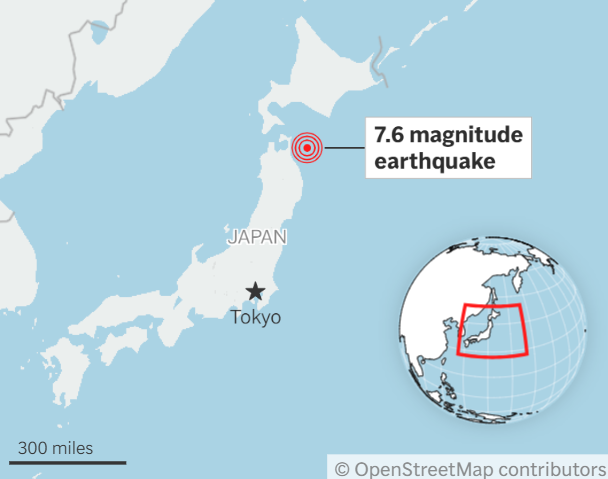
    TOKYO, Japan — A significant seismic event rattled northern Japan on Monday evening, triggering tsunami advisories along the Pacific coastline. The 7.5-magnitude tremor originated approximately 80 kilometers offshore in the Pacific Ocean at 11:15 pm local time (2:15 pm GMT), according to meteorological authorities.

    Initial reports from emergency services confirmed at least 23 injuries resulting from the quake, though no fatalities have been reported. The subsequent tsunami waves reached heights of up to 70 centimeters (28 inches), affecting multiple coastal communities. Government agencies have initiated comprehensive damage assessment operations across the impacted regions.

    The Japan Meteorological Agency has issued critical warnings regarding potential aftershocks, indicating the possibility of seismic activity reaching magnitude 8 levels in the coming days. Scientists emphasized the particular vulnerability of Japan’s northeastern coastal areas to subsequent quakes and tsunamis due to complex tectonic interactions in the Pacific Rim.

    Officials have urgently advised residents in vulnerable zones to review emergency preparedness measures, including evacuation routes and disaster supply kits. The warning specifically highlighted the heightened risk profile along the nation’s northeastern seismic zones, where infrastructure remains particularly susceptible to major tectonic events.

    Emergency response teams remain on high alert as the situation continues to develop, with particular attention to remote coastal communities that may experience communication challenges. The government has activated its disaster management protocol, coordinating with local authorities to ensure rapid response capabilities should conditions deteriorate.
  • Foreign minister evokes Cuban Patriot Antonio Maceo

    Foreign minister evokes Cuban Patriot Antonio Maceo

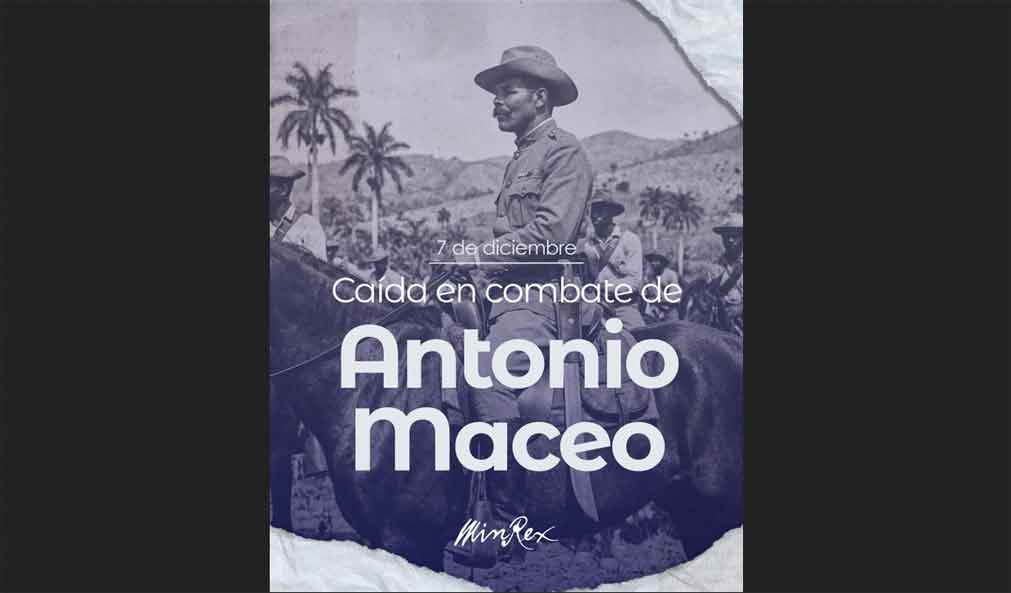
    Cuban Foreign Minister Bruno Rodríguez has commemorated the 129th anniversary of the death of Lieutenant General Antonio Maceo Grajales, paying tribute to the enduring legacy of the iconic revolutionary figure known as the Bronze Titan. In a public statement delivered via social media platform X, Rodríguez emphasized how Maceo’s principles continue to shape contemporary Cuban diplomacy and national identity.

    Rodríguez characterized Maceo’s extraordinary courage, unwavering revolutionary ethos, steadfast intransigence against oppression, and profound patriotism as perpetual inspirations for Cuba’s diplomatic corps. He specifically noted that these qualities remain foundational to Cuba’s ongoing defense of national sovereignty and independence in the international arena.

    The foreign minister further asserted that Maceo’s spiritual inheritance persists through the resilience and dignified character of the Cuban populace, connecting historical resistance to contemporary national identity.

    Antonio Maceo Grajales, born June 14, 1845, emerged as one of Cuba’s most distinguished military leaders during the independence struggles against Spanish colonial rule. Achieving the esteemed ranks of major general and lieutenant general within the Cuban Liberation Army, Maceo demonstrated exceptional strategic brilliance and combat perseverance across multiple campaigns.

    Beyond his military accomplishments, Maceo became renowned for his uncompromising commitment to justice. This was notably exemplified during the historic Baragua Protest, where he forcefully rejected inadequate peace terms presented by Spanish General Arsenio Martínez Campos, thereby preserving the revolutionary movement’s integrity.

    Maceo’s life ended in combat on December 7, 1896, near San Pedro in what was then Havana province. His remains now rest permanently at the El Cacahual memorial site, located west of modern-day Havana, where they serve as a focal point for national remembrance and historical reflection.

  • Chinese Army denounces Japanese interference in military drills

    Chinese Army denounces Japanese interference in military drills

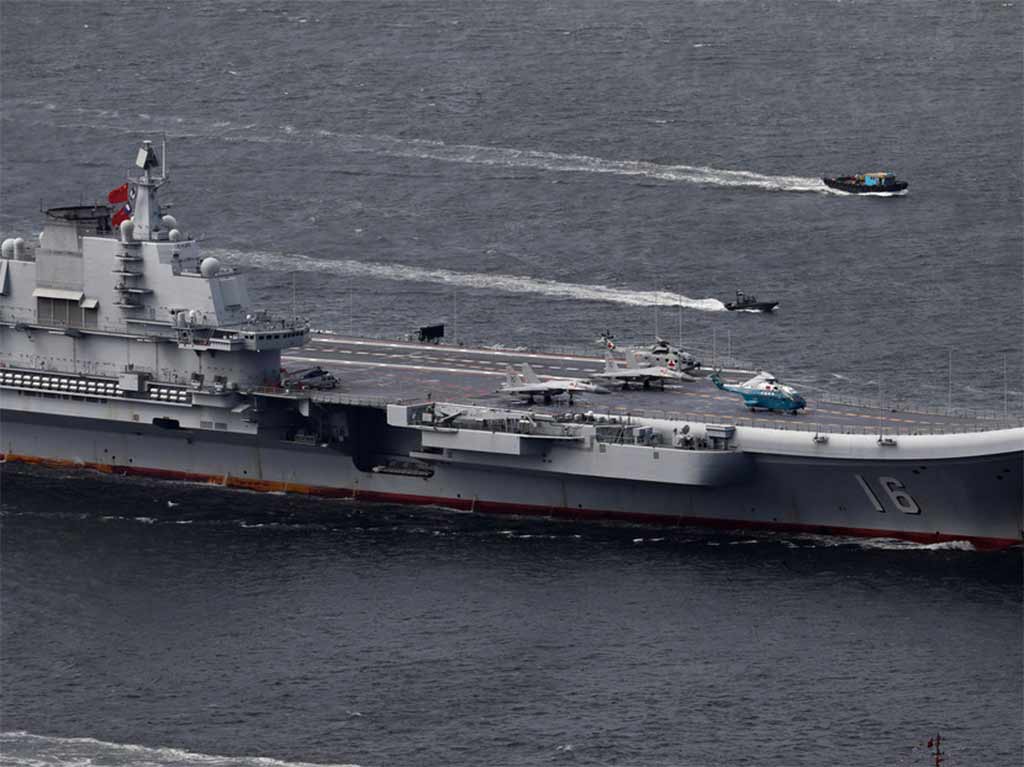
    The Chinese military has issued a formal condemnation of Japan’s actions during recent naval exercises in the Western Pacific. Navy spokesperson Colonel Wang Xuemeng revealed that Japanese aircraft repeatedly intruded into designated training airspace despite prior notification of the drills.

    Colonel Wang emphasized that all operations conducted by the Liaoning aircraft carrier strike group were fully compliant with international maritime laws and regulations. The spokesperson characterized Japan’s aerial intrusions as creating significant safety hazards that disrupted normal training operations and compromised flight safety for Chinese naval forces.

    In strong diplomatic language, the Chinese military representative dismissed Japanese accusations as fundamentally disconnected from factual reality. The spokesperson explicitly demanded that Tokyo immediately cease what China characterizes as baseless slander and provocative actions in international airspace.

    The naval official concluded with a firm warning that China reserves the right to take all necessary legal measures to protect its national security and defend its legitimate rights in accordance with international law. This statement represents the latest escalation in ongoing tensions between the two Pacific powers regarding military activities in strategically important waterways.

  • Salvadorans express solidarity with Cuba

    Salvadorans express solidarity with Cuba

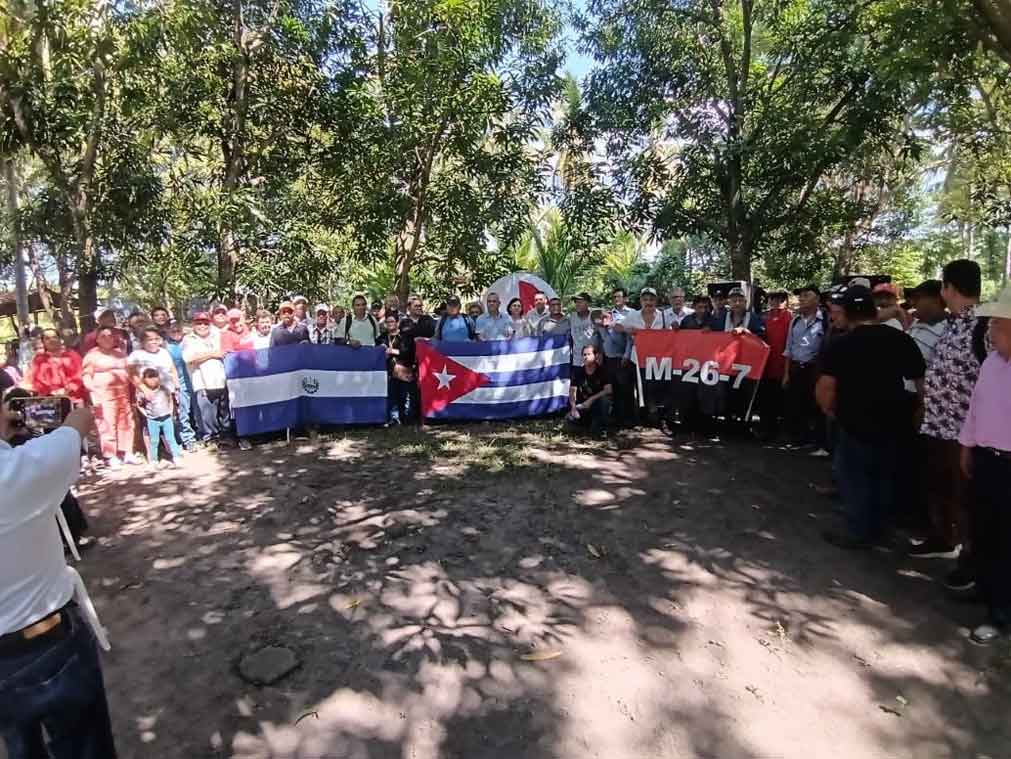
    In a powerful demonstration of international solidarity, the July 26 Friends Group convened its sixth national gathering in Usulután, El Salvador, drawing nearly 200 participants from across the Central American nation. The organization, which maintains a special facility in Cuban territory dedicated to supporting war veterans and disabled former combatants, organized what activist Raúl Martínez characterized as a profound ‘friendship and brotherhood’ assembly.

    The meeting served as a platform to express unwavering support for both the Cuban people and their government amidst ongoing economic challenges. Participants unanimously condemned the longstanding United States economic embargo against Cuba, identifying its termination as a primary objective of their collective advocacy efforts.

    In a tangible display of their commitment, attendees organized a fundraising initiative specifically designed to alleviate some of the hardships faced by Cuban citizens resulting from the comprehensive trade restrictions. This financial campaign represents the latest in a series of efforts by Salvadoran social organizations to provide material assistance to the Caribbean nation.

    The July 26 Friends Group takes its name from the date of Fidel Castro’s 1953 attack on the Moncada Barracks, a seminal event in the Cuban Revolution. The organization has maintained consistent ties with Cuban institutions for decades, particularly through its specialized care facility for military veterans on the island.

  • Deluxe Cinema Being Transformed Into 900-Seat Venue for CHOGM 2026 Opening

    Deluxe Cinema Being Transformed Into 900-Seat Venue for CHOGM 2026 Opening

    Antigua and Barbuda is undertaking a significant cultural transformation as it prepares to host the prestigious Commonwealth Heads of Government Meeting (CHOGM) in November 2026. The former Deluxe Cinema, a historic landmark, is being converted into a state-of-the-art events facility specifically designed to host the summit’s opening ceremony.

    Government officials confirmed the ambitious renovation project during Friday’s post-Cabinet media briefing. Maurice Merchant, Director General of Communications, revealed that the repurposed venue—originally intended to become the Centre for Performing Arts—will undergo comprehensive upgrades to accommodate approximately 971 attendees for the high-profile international gathering.

    The cinema conversion represents just one component of a multifaceted preparation strategy. The American University of Antigua (AUA) has also been designated as a potential hosting site for CHOGM-related events as the government evaluates multiple venues capable of handling large delegations and formal sessions.

    This venue development initiative aligns with the nation’s broader ambition to establish itself as the Caribbean’s premier conference destination—a strategic vision emphasized by the Prime Minister during recent budget presentations. The timing of CHOGM 2026 holds particular significance as it coincides with Antigua and Barbuda’s Independence celebrations, potentially making it one of the largest international events in the nation’s history.

    The Deluxe Cinema renovation forms part of an extensive readiness agenda that Cabinet has classified as a top priority. This comprehensive approach includes parallel upgrades to national infrastructure, hospitality services, and event management capabilities. Additional details regarding the country’s preparation timeline and budgetary allocations are anticipated during the upcoming budget debate proceedings.

  • Climate Finance to Help Clear COVID-Era Arrears and Fund Resilience Projects, PM Says

    Climate Finance to Help Clear COVID-Era Arrears and Fund Resilience Projects, PM Says

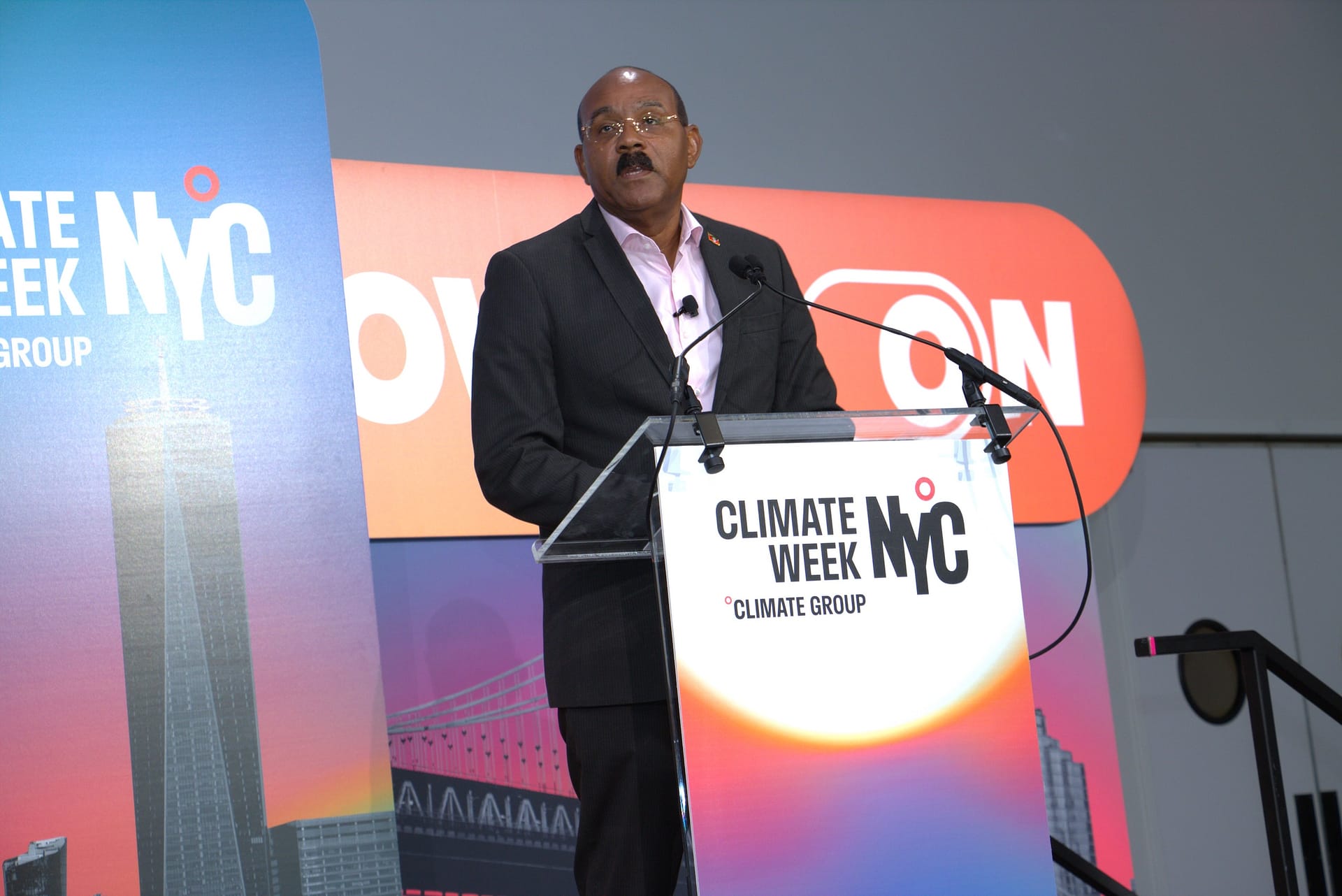
    In a groundbreaking fiscal strategy, Antigua and Barbuda’s Prime Minister Gaston Browne has announced plans to leverage climate financing as a multifaceted solution to both developmental and economic challenges. During his 2026 Budget Presentation, Browne revealed that emerging climate funds would be strategically deployed not only for critical resilience projects but also to clear substantial arrears accumulated during the COVID-19 pandemic’s economic downturn.

    The Prime Minister characterized climate finance as an ‘innovative fiscal tool’ that would accelerate national development while stabilizing public finances that have faced severe strain over the past five years. The government’s approach involves channeling these international resources into multiple priority areas including climate-resilient housing infrastructure, renewable energy transition, climate-smart public facilities, and enhanced environmental protection systems.

    Browne emphasized that his administration is positioning the twin-island nation as a leading voice among small island developing states (SIDS) advocating for equitable access to climate funding. This leadership role includes ongoing negotiations with international partners, multilateral financial institutions, and specialized climate facilities to secure new financing arrangements that prioritize adaptation requirements specific to vulnerable island nations.

    The strategic integration of climate-related resources is expected to complement domestic revenue measures and current debt consolidation efforts. This comprehensive approach aims to restore fiscal stability while simultaneously strengthening community resilience against climate impacts. The 2026 Budget reflects this dual priority with increased allocations for climate mitigation programs, advanced disaster preparedness systems, and localized adaptation initiatives designed to protect vulnerable populations.

    Parliamentary discussions on the budget are scheduled to continue in the coming week, where further details of this innovative climate finance implementation plan are expected to be elaborated.

  • Immigration announces eased entry for tourists from several countries, only with a valid passport.

    Immigration announces eased entry for tourists from several countries, only with a valid passport.

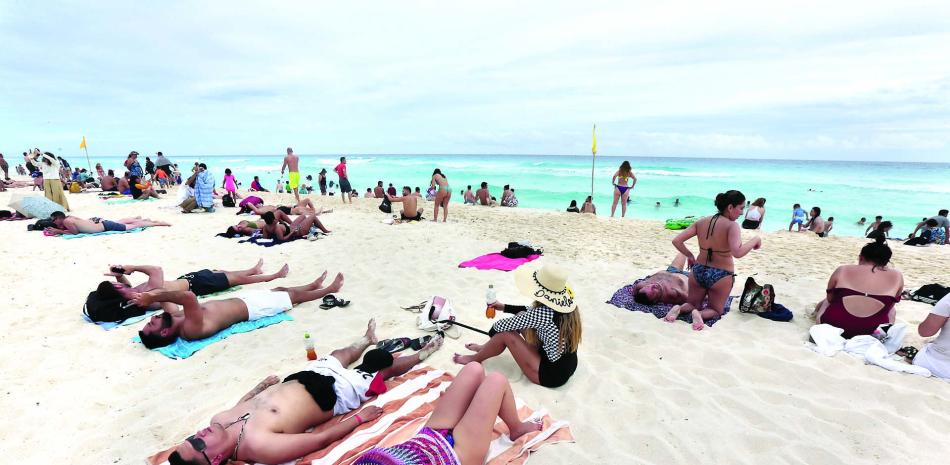
    In a significant move to enhance tourism accessibility, the Dominican Republic’s General Directorate of Migration (DGM) has officially extended a landmark immigration facilitation measure. Effective from December 1, 2025, through December 31, 2026, tourists from a specified list of nations will be permitted entry without meeting the conventional six-month passport validity requirement.

    The policy applies to citizens of Argentina, Brazil, Canada, Chile, Colombia, Ecuador, the United States, the United Kingdom, and all European Union member states. The only stipulation is that travelers must possess a passport that remains valid for the entire duration of their stay and until their departure from Dominican territory. This directive, formalized through a memorandum continuing Resolution No. DGM-01-2024, also extends to foreigners from other countries who hold valid documentation for entry into the aforementioned nations.

    In an official communiqué, the DGM framed this one-year extension as a reaffirmation of the national government’s commitment to stimulating international tourism and modernizing border control procedures. The initiative is strategically designed to dismantle administrative barriers and guarantee a more fluid and welcoming arrival experience for visitors originating from the country’s most critical tourism markets. This policy shift underscores a global trend where destination countries are streamlining entry protocols to remain competitive in the post-pandemic travel landscape.

  • Government blocks entry of pork from Spain due to swine fever; restriction includes processed products

    Government blocks entry of pork from Spain due to swine fever; restriction includes processed products

    SANTO DOMINGO, Dominican Republic – The Dominican government has enacted an urgent prohibition on all imports of pork and related commodities from Spain in response to a confirmed African Swine Fever (ASF) outbreak within the European nation. The decisive action was formally declared on Thursday by Abel Madera, Director of the General Directorate of Livestock (DIGEGA).

    The preventative suspension was triggered by an official notification from the World Organization for Animal Health (OIE), which verified the detection of the highly contagious viral disease in wild boar populations located in Spain’s Catalonia region on November 28. Although the Dominican Republic is not a primary market for Spanish fresh pork, authorities emphasized that the move is a critical safeguard to insulate the Caribbean nation’s domestic swine industry and territory from potential contamination.

    Director Madera clarified that the comprehensive ban extends beyond fresh and frozen meat to encompass a wide range of products. This includes sausages, all other processed pork items, by-products, and genetic material. The restrictions will remain enforced until international and Spanish veterinary authorities can successfully contain the outbreak and provide certification that the threat has been entirely mitigated.

    Madera further noted that the majority of the Dominican Republic’s imported pork supply is sourced from the United States, not Spain. To bolster this defensive measure, the nation is maintaining its stringent inspection protocols at all ports and airports, with heightened vigilance on agricultural shipments deemed high-risk. Technical teams from DIGEGA have been placed on high alert to intensify epidemiological surveillance efforts across local farms and production zones.

  • November 2025 was the driest in four years: causes that broke the cycle of tragedies

    November 2025 was the driest in four years: causes that broke the cycle of tragedies

    The Dominican Republic has dramatically broken its November rainfall pattern, with 2025 recording the driest November in four years—a stark contrast to the catastrophic flooding events that previously defined this month. Meteorological analysis reveals a significant departure from the extreme weather conditions that caused substantial loss of life and property damage in recent years.

    According to Saddan Font-Frías Montero, head of the National Forecast Center at the Dominican Institute of Meteorology (INDOMET), November 2025 behaved climatologically as a transition month from wet to dry season rather than maintaining its historical pattern of extreme precipitation. The data shows rainfall totals fell below normal at 54% of the country’s monitoring stations, with particularly pronounced negative deviations along the northern coast.

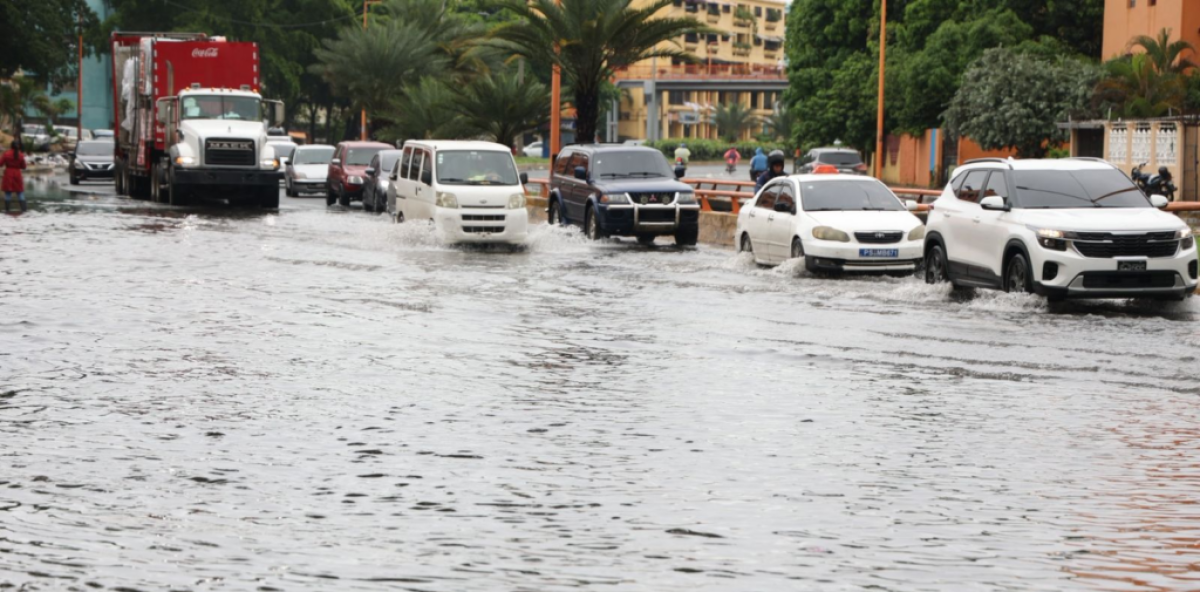
    The contrast with previous years is striking. November 2022 witnessed one of the most devastating weather events when a trough combined with a tropical wave dropped 266 millimeters of rain within just four hours—equivalent to the entire November average—resulting in nine fatalities, submerged vehicles, and widespread urban flooding. The following year, 2023 brought another extreme event associated with potential tropical cyclone number 22 and an upper-level trough that caused more than 20 deaths, isolated 55 communities, and required the evacuation of 7,060 people to safe areas.

    Meteorological experts attribute the unusually dry conditions of November 2025 to the absence of upper atmospheric troughs (TUTT) and the lack of weather disturbances such as tropical waves or low-pressure centers that typically generate extraordinary rainfall during this period. This break from pattern offers the Caribbean nation respite from the seasonal tragedies that have historically transformed streets into rivers and claimed numerous lives during November.

  • Colombia : Specialized training concludes for 23 Haitian police officers

    Colombia : Specialized training concludes for 23 Haitian police officers

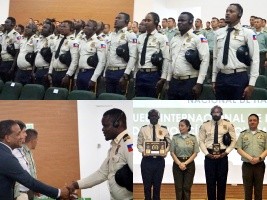
    In a significant bilateral cooperation effort, Colombia has successfully completed an intensive training program for 23 officers of the Haitian National Police (PNH). The closing ceremony, held on December 4th, 2025 at the Colombian International Police Training Center in San Luis, Tolima, was attended by Ambassador Rafael Orozco, Director for the Americas at Colombia’s Ministry of Foreign Affairs.

    This specialized training initiative represents a concrete implementation of the Colombia-Haiti Work Plan, stemming from commitments made during President Gustavo Petro’s official visits to Haiti in January and July 2025. The program was developed through collaborative efforts between Colombia’s Ministry of Foreign Affairs, Ministry of National Defense, National Police, and the Presidential Agency for International Cooperation (APC Colombia).

    Colombian police instructors delivered comprehensive training across five critical security domains essential for strengthening Haiti’s law enforcement capabilities. The curriculum focused on citizen security protocols, advanced criminal investigation techniques, tactical operations in both urban and rural environments, intelligence gathering methodologies, and strategies for combating smuggling operations.

    This capacity-building program underscores Colombia’s strategic commitment to supporting institutional strengthening and security stabilization in Haiti. The training approach emphasized knowledge transfer through practical, scenario-based learning designed to enhance the operational readiness and strategic decision-making capabilities of Haitian law enforcement personnel.

    The initiative reflects Colombia’s broader foreign policy objective of promoting regional security cooperation through technical assistance programs that respect national sovereignty while addressing shared security challenges. This cooperation model demonstrates how South-South collaboration can effectively contribute to peacebuilding and institutional development efforts in partner nations.