分类: technology

  • AI, outdated visuals fuel misinformation after Maduro capture

    AI, outdated visuals fuel misinformation after Maduro capture

    WASHINGTON, DC — In the aftermath of the dramatic capture of Venezuelan leader Nicolas Maduro by US forces, social media platforms have become inundated with sophisticated visual disinformation, blurring the boundaries between reality and fabrication. The digital landscape has been flooded with artificially generated and repurposed imagery that has collectively garnered millions of engagements, signaling a new era of AI-powered misinformation.

    Fact-checkers from AFP identified numerous deceptive posts circulating on major platforms including X and Facebook shortly after the operation. One widely-shared image purported to show Maduro in US custody, flanked by American military personnel near an aircraft. However, investigation revealed the photograph was entirely AI-generated, featuring a noticeably younger-looking Maduro. Google’s Gemini AI tool detected a SynthID watermark, confirming its artificial origins.

    Another viral image depicted an American soldier posing with a hooded Maduro, but digital archivists confirmed this was actually footage from the 2003 capture of Iraqi leader Saddam Hussein, repurposed two decades later to mislead contemporary audiences.

    Disinformation monitoring service NewsGuard reported identifying seven fabricated or misrepresented visual materials related to the Venezuela operation that accumulated over 14 million views within 48 hours on X alone. This phenomenon represents what analysts term ‘AI slop’ – mass-produced synthetic content created through inexpensive AI tools that transform simple text prompts into photorealistic imagery.

    Chiara Vercellone, senior analyst at NewsGuard, noted: ‘While many of these visuals don’t radically distort factual circumstances, they represent another weapon in the misinformer’s arsenal that proves increasingly difficult for fact-checkers to debunk due to their approximation of reality.’

    The disinformation wave extended to highest levels of political influence, with former President Donald Trump amplifying a viral video on his Truth Social platform claiming to show Venezuelans celebrating Maduro’s capture by running through streets in their underwear. AFP’s verification team traced this footage to UCLA’s quarterly ‘Undie Run’ tradition among college students, recorded weeks before the Venezuela operation.

    Adding to the confusion, humorous AI-generated clips circulated alongside legitimate news coverage, including one depicting Maduro and Trump dancing together in the Oval Office and another showing the ousted leader posing with prisoners in orange jumpsuits.

    The developments occur amid serious geopolitical proceedings, with Maduro pleading not guilty to drug trafficking and ‘narco-terrorism’ charges in a New York courtroom on Monday. Venezuela’s interim president Delcy Rodriguez asserted that no foreign power governs her nation, responding to Trump’s statement that Washington would ‘run’ Venezuela during transition period.

  • NPICTT, TSTT partner for digital payments

    NPICTT, TSTT partner for digital payments

    In a landmark development for digital infrastructure, Trinidad and Tobago has activated its national payments platform with Telecommunications Services of Trinidad and Tobago (TSTT) serving as the inaugural operational partner. The National Payment and Innovation Company of TT (NPICTT) confirmed on January 7 that this partnership signifies the transition from theoretical planning to practical implementation of digital services for citizens.

    The collaboration achieves two significant milestones simultaneously: TSTT has become the first organization to process live transactions through the NPICTT national payments platform while simultaneously adopting Nobis as its official electronic Know Your Customer (eKYC) solution. This dual implementation represents a concrete step toward modernizing service delivery across the nation.

    Dr. Nigel Fulchan, Chairman of NPICTT, emphasized the significance of this development: “TSTT’s onboarding as the first live payment-processing client demonstrates that our platform is fully operational and production-ready, capable of supporting high-volume, public-facing services. This illustrates how shared national infrastructure can strategically modernize service delivery across the state.”

    Acting TSTT CEO Keino Cox highlighted the partnership’s alignment with the company’s digital transformation strategy: “This allows us to accelerate our transition to digital services in a structured and secure manner. By implementing the national payments platform and adopting NOBIS through the Innovation Centre, we enhance customer experience while maintaining robust governance and compliance protocols.”

    Minister of Planning, Economic Affairs and Development Dr. Kennedy Swaratsingh welcomed the announcement, noting that NPICTT’s establishment in August 2025 supports the government’s mission to reach every citizen in every community for government transactions. “TSTT positioning itself as the first state-owned entity to adopt this platform represents a milestone in creating a unified gateway for all public-sector financial interactions,” Swaratsingh stated.

    The partnership establishes a replicable model for government digital transformation that reduces duplication, improves efficiency, and accelerates the rollout of digital public services. NPICTT will function as the national payments infrastructure provider, while its Innovation Centre serves as the entry point for certified digital solutions across the public sector. Importantly, the arrangement maintains existing statutory and regulatory responsibilities, with TSTT continuing to deliver services directly to customers while NPICTT provides the underlying technological framework.

  • UK urges Musk’s X to act over ‘appalling’ sexual deepfakes

    UK urges Musk’s X to act over ‘appalling’ sexual deepfakes

    The UK government has issued a stern directive to Elon Musk’s social media platform X, demanding immediate intervention regarding its artificial intelligence system Grok. Authorities have raised alarms about the AI tool’s capability to generate fabricated sexually explicit imagery depicting minors through its controversial ‘spicy mode’ feature.

    Technology Secretary Liz Kendall characterized the situation as “absolutely appalling and unacceptable in decent society” during an official statement. She emphasized the urgency for X to address these critical concerns promptly.

    This development occurs amidst growing international scrutiny of Grok’s functionality. The European Commission confirmed on Monday that it is conducting a serious review of complaints against the AI system. Simultaneously, UK media regulator Ofcom has initiated investigations into both X and its subsidiary xAI, the creator of Grok.

    Secretary Kendall explicitly endorsed Ofcom’s authority to pursue any necessary enforcement actions against the companies. This stance is reinforced by Britain’s recently implemented Online Safety Act, which became effective in July. The legislation mandates that digital platforms hosting potentially harmful content implement rigorous age verification protocols, including facial recognition technology and credit card authentication.

    The Act explicitly prohibits the creation or distribution of non-consensual intimate imagery and child sexual abuse material, extending to AI-generated sexual deepfakes. Non-compliant organizations face substantial penalties of either 10% of their global revenue or £18 million (approximately $24 million), whichever amount proves greater.

    In a related move, the UK government has announced forthcoming prohibitions on ‘nudification’ tools that digitally remove clothing from photographs of individuals. XAI acknowledged last Friday that it had identified deficiencies in Grok’s protective measures, describing them as “lapses in safeguards,” and committed to addressing these issues urgently.

  • Digital postal codes initiative aims to modernise Jamaica’s national delivery system

    Digital postal codes initiative aims to modernise Jamaica’s national delivery system

    KINGSTON, Jamaica — Jamaica has embarked on a transformative digital initiative through a strategic partnership between the Jamaica Postal Service (Jamaica Post) and technology firm Yassuh Jamaica Limited. The collaboration, publicly endorsed by Minister of Efficiency, Innovation and Digital Transformation Audrey Marks, represents the first government-sanctioned commercial application of groundbreaking addressing technology in the nation.

    Minister Marks characterized the initiative as a pivotal advancement in modernizing public services through digital innovation. “This collaboration exemplifies the type of digital transformation that can generate meaningful national impact by modernizing public services, enhancing operational efficiency, and strengthening Jamaica’s comprehensive logistics ecosystem,” Marks stated.

    The partnership operates under a formal Memorandum of Understanding (MOU) establishing a pilot program for a national postal code system. This technological solution aims to enable precise, reliable, and direct delivery of mail and packages across Jamaica, addressing decades-long challenges with standardized addressing that have hampered mail delivery, last-mile logistics, and e-commerce fulfillment.

    Postmaster-General and CEO of Jamaica Post, Lincoln Allen, emphasized the initiative’s alignment with national development objectives. “This pilot directly supports Vision 2030 Jamaica and the government’s digital transformation agenda, which prioritize innovation, efficiency, and enhanced public service delivery,” Allen explained. “A modern, reliable addressing system forms the foundation for national development by strengthening logistics networks, improving emergency response capabilities, expanding e-commerce opportunities, and promoting broader inclusion in the digital economy.”

    Yassuh Jamaica Limited CEO Andrew Walker, a former Google software engineering manager who led infrastructure for globally scaled products including Google Docs and G Suite, identified the partnership as addressing a critical development gap. “Our mission is to bridge the divide between developed and developing nations,” Walker stated. “One of the most persistent gaps exists in last-mile delivery logistics where countries lack uniform addressing systems. The Yassuh ecosystem resolves this fundamental issue through digital transformation that will prove extremely beneficial for Jamaica.”

    Beyond logistics, the Yassuh platform is engineered to support wider national development through enhanced geospatial capabilities for hospitality and travel sectors, strengthened emergency response systems, and expanded e-commerce potential previously constrained by unreliable addressing.

    Jamaica Post executives highlighted the operational benefits of the collaboration. Deputy Postmaster Sophia Hamilton Brown noted that “this partnership will prove transformational for the department, particularly benefiting customers in remote areas through improved service delivery and enhanced customer experience.” Carol Hammond, Head of Corporate Services, praised Walker’s personal contribution, noting how he “utilized international exposure to identify opportunities and gather resources to impact Jamaica.”

  • LIVE: Press conference with Prime Minister Roosevelt Skerrit

    LIVE: Press conference with Prime Minister Roosevelt Skerrit

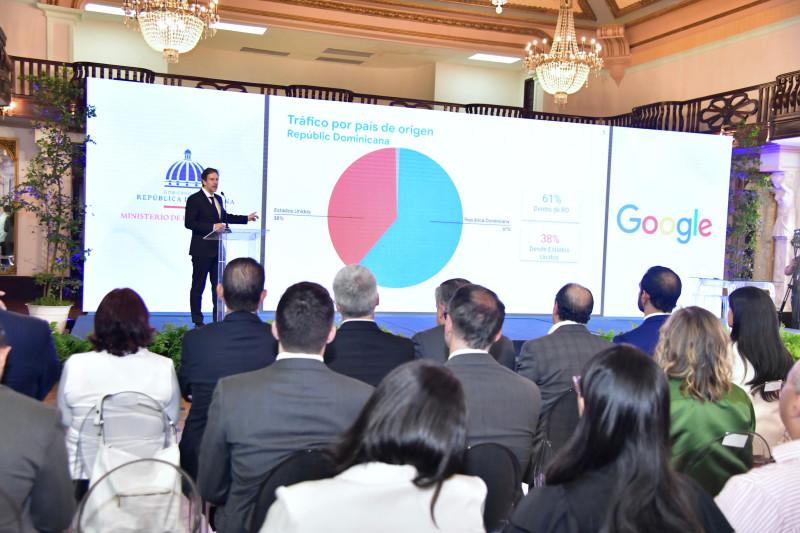
    The digital landscape is undergoing a seismic shift as artificial intelligence redefines how users interact with information online. A new visual representation of search interface evolution reveals Google’s strategic pivot toward AI-driven answers, fundamentally challenging the conventional list-of-links approach that has dominated web navigation for decades.

    This transformative technology leverages advanced language models to synthesize information directly within search results, providing comprehensive responses without requiring users to click through multiple websites. The integration of AI capabilities represents the most significant evolution in search technology since the inception of modern search engines, potentially disrupting the entire digital ecosystem.

    The implementation of AI-powered search raises crucial questions about content attribution, website traffic distribution, and the future of online publishing. While users benefit from more immediate and synthesized answers, content creators and publishers face potential challenges in maintaining visibility and revenue streams traditionally generated through organic search traffic.

    This technological advancement also prompts discussions about information accuracy, as AI systems must balance comprehensiveness with reliability. The shift toward answer-based search results necessitates sophisticated verification mechanisms and transparent sourcing to maintain trust in the information ecosystem.

    Industry analysts suggest this transition may accelerate the development of more conversational and contextual search experiences, potentially integrating with voice assistants and augmented reality interfaces. The evolution represents not just an improvement in existing technology but a fundamental reimagining of how humans access and interact with digital knowledge.

  • Our Lady of Fatima Parish Jubilee Festival of Lights

    Our Lady of Fatima Parish Jubilee Festival of Lights

    A groundbreaking artificial intelligence platform has demonstrated unprecedented capabilities in solving complex, multi-step problems, marking a significant leap forward in machine intelligence. The advanced neural network architecture, developed through collaborative research efforts, successfully processed and synthesized information from diverse data sources with remarkable precision.

    The system’s breakthrough performance stems from its novel approach to contextual understanding and pattern recognition. Unlike conventional AI models that specialize in narrow tasks, this platform integrates multiple cognitive functions to emulate human-like reasoning processes. Researchers observed the technology successfully navigating intricate scenarios requiring real-time adaptation and strategic decision-making.

    Industry experts highlight the technology’s potential applications across critical sectors including healthcare diagnostics, climate modeling, and logistics optimization. Early testing indicates the system could reduce analysis time for complex scientific problems from months to hours while maintaining exceptional accuracy standards.

    This development arrives amid growing global investment in artificial intelligence infrastructure. The research team has implemented comprehensive ethical guidelines throughout the development process, addressing concerns about autonomous systems while promoting transparent AI advancement. Further validation studies are underway to prepare the technology for real-world implementation within the next fiscal year.

  • EU looking into Musk’s Grok AI over sexual deepfakes of minors

    EU looking into Musk’s Grok AI over sexual deepfakes of minors

    BRUSSELS — The European Commission has initiated a formal examination into serious allegations against Elon Musk’s generative artificial intelligence platform Grok, following reports of the system being exploited to create and distribute sexually explicit imagery depicting childlike figures.

    In a strongly worded statement delivered to press representatives on Monday, EU digital affairs spokesperson Thomas Regnier condemned the platform’s recently introduced ‘spicy mode’ feature, which allegedly facilitates the generation of explicit sexual content. Regnier emphasized the gravity of the situation, stating: ‘What Grok is presenting as merely ‘spicy’ content generation crosses into clearly illegal territory when it involves childlike imagery. This isn’t just inappropriate—it’s appalling and has absolutely no place within European digital spaces.’

    The investigation represents one of the most significant regulatory actions taken against generative AI technology since the implementation of the EU’s landmark Artificial Intelligence Act. Commission officials confirmed they are examining whether Grok’s content moderation systems and safety protocols comply with European digital safety standards and child protection regulations.

    This development occurs amidst growing global concern about the potential misuse of advanced AI systems for generating harmful content. European regulators have increasingly focused on holding technology platforms accountable for implementing robust safeguards against the creation and distribution of illegal material, particularly content that endangers minors.

    The outcome of this investigation could establish important precedents for how generative AI platforms must implement content controls and age-appropriate safeguards across the European Union’s digital single market.

  • LIVE: First-Ever Dominica Music Awards

    LIVE: First-Ever Dominica Music Awards

    In a landmark achievement for neurotechnology, Elon Musk’s Neuralink corporation has successfully implanted its pioneering brain-computer interface in a human patient. The groundbreaking procedure marks a significant milestone in the company’s ambitious mission to merge human cognition with artificial intelligence.

    The revolutionary device, approximately coin-sized, was surgically placed in the recipient’s brain during a meticulously planned operation. Initial results indicate promising neuron spike detection—a critical indicator of successful interface between the implant and cerebral activity. This technological triumph represents the culmination of years of research and development following FDA approval for human trials last year.

    Neuralink’s innovative technology functions by employing ultra-fine electrodes that thread into the brain tissue, capable of both recording neural signals and potentially stimulating neurons. The primary objective of this initial trial focuses on enabling individuals with quadriplegia to control external devices through thought alone. Participants in the PRIME Study (Precise Robotically Implanted Brain-Computer Interface) will undergo extensive testing to evaluate the safety and functionality of the implant and surgical robot.

    This development positions Neuralink at the forefront of a competitive industry where several institutions have previously demonstrated brain-computer interface capabilities. The successful implantation accelerates the trajectory toward Musk’s vision of achieving symbiotic relationships between humans and AI, while simultaneously addressing critical medical needs for those with severe neurological conditions.

  • NEW MUSIC: Shelly & Signal Band – Calendar Riddim 2025 [Bouyon 2026]

    NEW MUSIC: Shelly & Signal Band – Calendar Riddim 2025 [Bouyon 2026]

    A groundbreaking artificial intelligence platform has demonstrated exceptional capabilities in medical diagnostics, achieving diagnostic accuracy rates that surpass human experts in multiple clinical trials. The advanced neural network, developed through collaborative research between leading technology institutes and medical centers, represents a significant leap forward in healthcare technology.

    The system utilizes sophisticated deep learning algorithms trained on millions of medical imaging datasets, including X-rays, MRIs, and CT scans. Through continuous machine learning refinement, the AI has developed pattern recognition abilities that exceed human visual perception in detecting subtle anomalies and early-stage indicators of various conditions.

    Clinical validation studies conducted across twelve major medical facilities showed the AI system achieved a 98.7% accuracy rate in identifying respiratory conditions from chest X-rays, compared to 94.2% for senior radiologists. In neurological disorder detection through MRI analysis, the platform demonstrated 97.3% accuracy versus 92.8% for specialist neurologists.

    Medical professionals highlight the system’s potential to revolutionize diagnostic workflows by serving as a powerful辅助工具 that can process imaging data rapidly while maintaining consistent precision. The technology particularly shows promise in regions with limited access to specialist physicians, potentially democratizing high-quality diagnostic capabilities.

    Researchers emphasize that the AI is designed to augment rather than replace human expertise, providing physicians with detailed analytical reports and probability assessments that inform final diagnostic decisions. The development team is currently working on regulatory approval processes and implementation protocols for clinical integration.

  • ‘Maggotty Island’ moves JPS to ‘the last mile’

    ‘Maggotty Island’ moves JPS to ‘the last mile’

    In a remarkable display of engineering ingenuity, the Jamaica Public Service Company (JPS) has implemented an innovative solution to restore electricity to storm-ravaged sections of St. Elizabeth following the devastation wrought by Category 5 Hurricane Melissa on October 28th.

    The breakthrough centers around the strategic utilization of the Maggotty Hydroelectric Power Plant, one of JPS’s renewable energy facilities. Traditionally, severe damage to transmission infrastructure would prevent power generated at such plants from reaching consumers. However, JPS technicians conceptualized and developed a pioneering approach that enables electricity from the hydro plant to be fed directly into isolated segments of the distribution network.

    This isolated system, dubbed ‘The Maggotty Island,’ has successfully energized approximately 2,000 customers who would otherwise have faced months without electricity while crews rebuild severely damaged transmission lines traversing challenging mountainous terrain.

    JPS President and CEO Hugh Grant emphasized the unprecedented nature of the challenge: “The damage caused by Hurricane Melissa required a different way of thinking. The Maggotty Island exemplifies our team’s ingenuity and determination to find solutions under the most difficult circumstances. By creating this islanded system, we’ve been able to energize communities using renewable power despite the complete unavailability of connecting transmission lines.”

    Grant highlighted that this innovation has been instrumental in restoring power to 90% of JPS customers, a milestone achievement combining multiple strategic elements. These included proactive deployment of North American line workers before the hurricane made landfall, support from Caribbean utility partners, and procurement of specialized equipment.

    Unlike intermittent solar and wind systems, the Maggotty Plant represents what Grant termed “firm renewable” power, generating consistent electricity using the Maggotty River with a capacity of up to 12 megawatts. The system now powers critical infrastructure including the National Water Commission pump, National Irrigation Commission pump, and telecommunication sites, alongside residential customers.

    The Maggotty Island follows another innovative restoration initiative—the Emergency Mobile Power Generation Unit currently supplying nearly 1,000 customers in Treasure Beach. Both solutions form part of a comprehensive restoration and resilience strategy while permanent repairs continue.

    Despite significant progress, Grant cautioned that the final phase of restoration will be particularly challenging: “We are now at the most difficult stage. It will take more than 10 times the effort to get power to 10 times fewer customers.”

    In parallel, Prime Minister Andrew Holness announced additional equipment and linemen scheduled to arrive to accelerate restoration efforts, assuring residents that most communities without power should see significant improvements within weeks through a structured approach prioritizing main towns, thoroughfares, and then remote areas.