分类: technology

  • Your digital world can be safe when you know the signs

    Your digital world can be safe when you know the signs

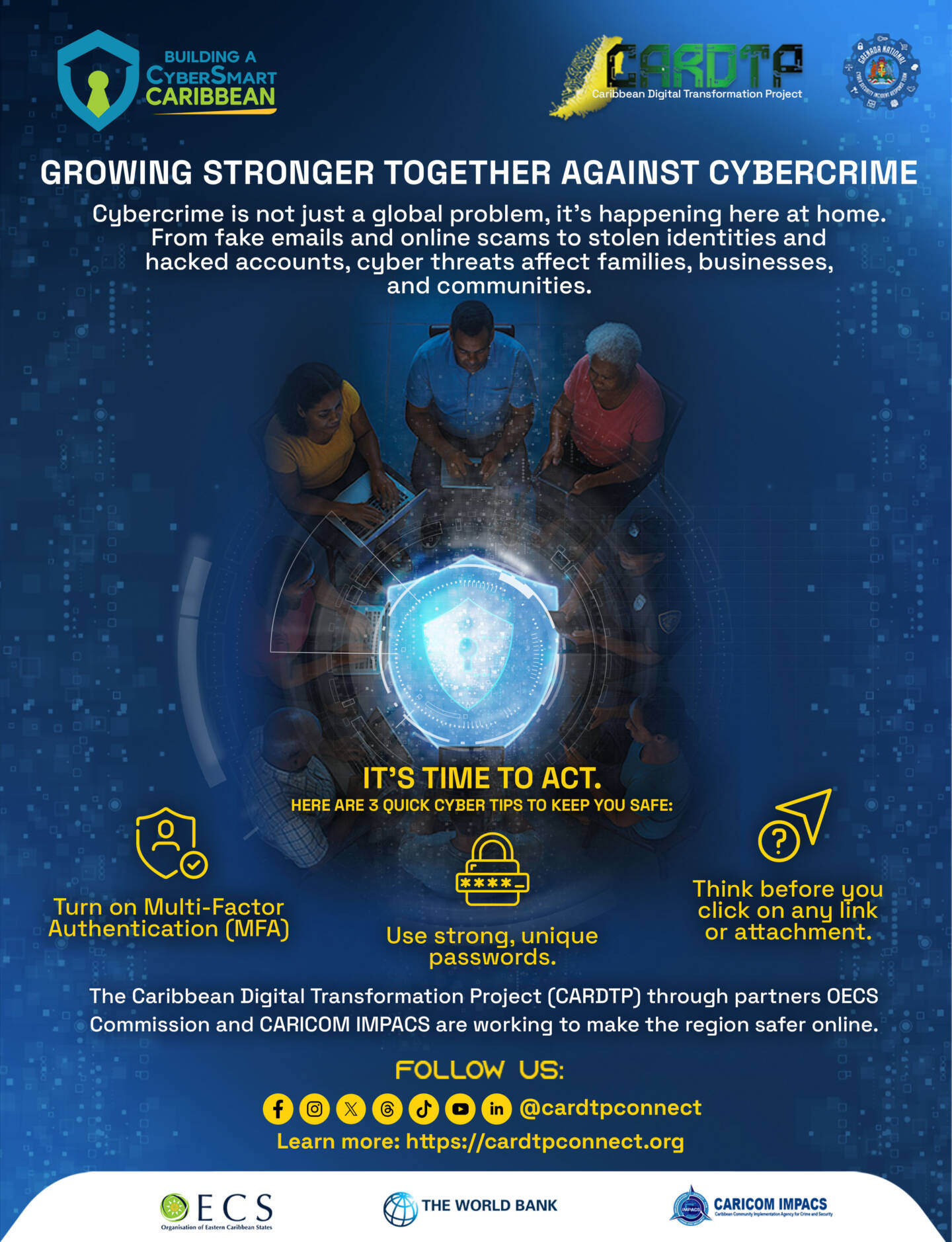
    A new digital literacy resource targeted at senior citizens across the Caribbean region has been launched, accessible via the dedicated portal cardtpconnect.org/digitalseniors. The initiative is tied to the Caribbean Digital Transformation Project (CARTDP), a regional development effort backed by the World Bank, with support from regional bodies including the Caribbean Community (CARICOM) and the Organization of Eastern Caribbean States (OECS).

    Focused on equipping older adults with critical digital safety skills, the project addresses rising threats that disproportionately impact senior internet users, including cybercrime, fraudulent schemes, unauthorized hacking, and online harassment. Key topics covered through the resource include best practices for secure password management, the importance of enabling multi-factor authentication (MFA), and guidance on how to recognize and avoid common digital scams. Regional cybersecurity bodies such as the Computer Security Incident Response Team (CSIRT) have contributed expertise to develop age-appropriate, accessible content for the platform.

    In a standard content disclaimer, platform administrators from NOW Grenada, the hosting outlet for the announcement, note that they do not assume responsibility for opinions, statements, or third-party contributor content shared through the initiative. The organization has also established a formal reporting channel for users to flag any abusive content encountered on the platform, aligning with regional digital safety standards.

  • Antigua and Barbuda ranked 154th in CARICOM AI readiness index, 2025 report shows

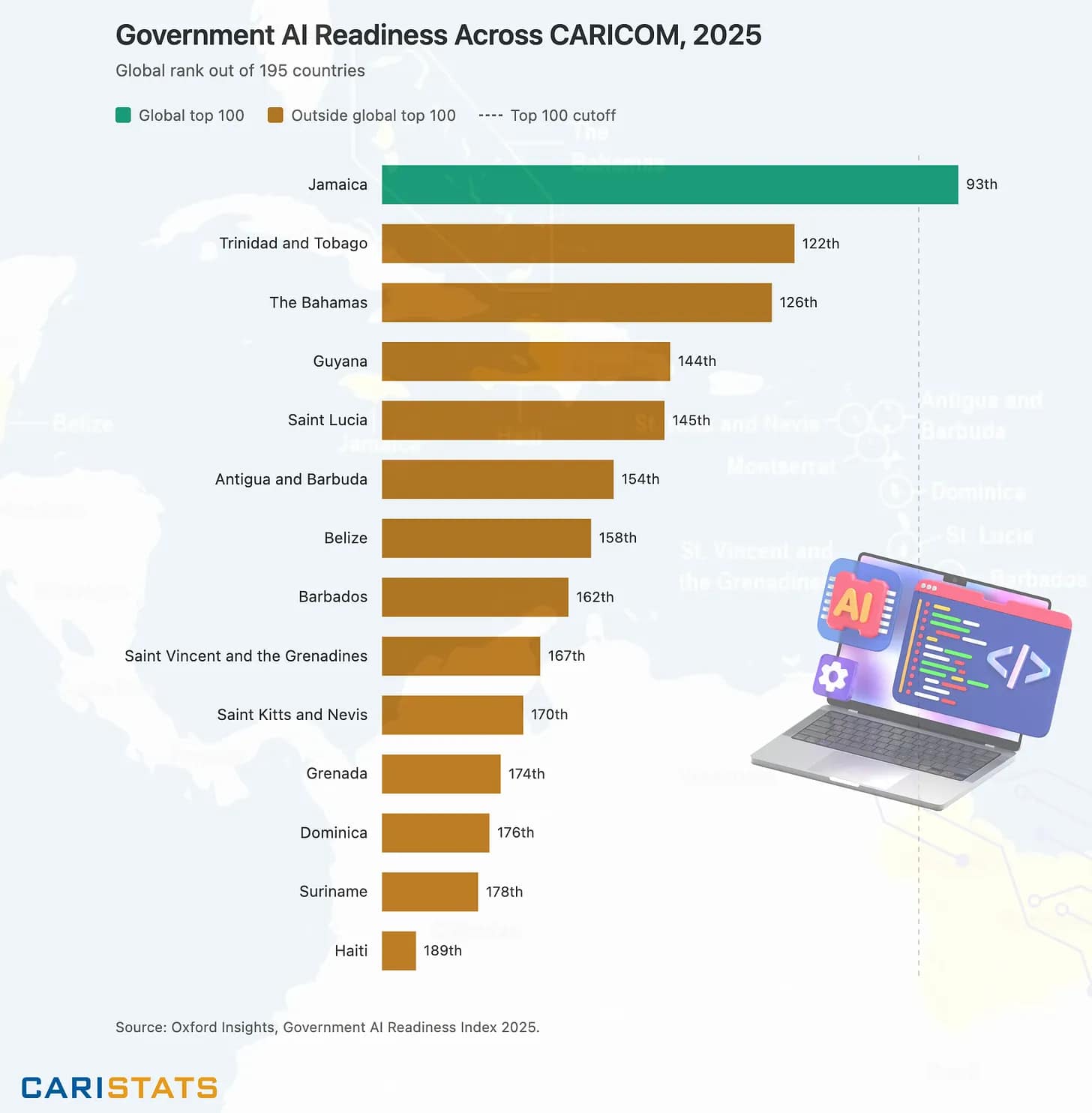
    Antigua and Barbuda ranked 154th in CARICOM AI readiness index, 2025 report shows

    A new 2025 global assessment of government preparedness to leverage artificial intelligence for public good has revealed significant gaps in capacity across Caribbean Community (CARICOM) member states, published by leading international research firm Oxford Insights. Covering 195 nations worldwide, this year’s Government AI Readiness Index introduces a newly updated analytical framework built around six core pillars: Policy Capacity, AI Infrastructure, Governance, Public Sector Adoption, Development and Diffusion, and Resilience, replacing the index’s previous structure to better reflect evolving AI ecosystem needs.

    When ranked against the rest of the world, CARICOM nations see a wide spread in positions, stretching from 93rd all the way down to 189th. Only one CARICOM member, Jamaica, claims a spot in the global top 100, a outcome researchers attribute directly to the island nation’s recent launch of a formal national AI strategy. A second tier of mid-ranking regional states includes Trinidad and Tobago at 122nd and The Bahamas at 126th, while the 11 remaining member states fall far behind, with rankings between 144th and 189th.

    In addition to global rankings, the index assigns individual scores from 0 to 100 for each of the six measurement pillars across every assessed country. Aggregated regional data shows CARICOM’s strongest performing area is AI Infrastructure, which posts an average regional score of 33. Governance and Resilience tie for second place with average scores of 29 each. The region’s weakest pillars, by contrast, are Policy Capacity, and Development and Diffusion, which both carry an average regional score of just 13.

    Taken as a whole, the 2025 index data paints a clear picture of the CARICOM region’s current AI landscape: while member states have built comparatively stronger foundational digital infrastructure than many peer economies, they still lag far behind in developing formal national AI strategies, scaling up AI development, and rolling out applied AI solutions across public and private sectors.

  • CariGenetics Saint Lucia launched to advance precision medicine in OECS

    CariGenetics Saint Lucia launched to advance precision medicine in OECS

    After 18 months of productive collaborative work between regional biotech startup GenTech Analytica and Bermuda-headquartered genomics leader CariGenetics, the Caribbean-based research and innovation hub has formally rebranded as CariGenetics Saint Lucia — a milestone that marks a major leap forward for homegrown genomics, precision medicine and public health innovation across Saint Lucia and the entire Organisation of Eastern Caribbean States (OECS) region.

    CariGenetics, the parent organization, has long centered its mission on closing critical global gaps in genomic data by sequencing and studying genetic material from Caribbean populations, groups that have historically been drastically underrepresented in international genomic research. Through targeted research, community-focused education and expanded access to precision medicine tools, the organization works to directly improve health outcomes for communities across the Caribbean region.

    The 18-month partnership between the two entities has already delivered tangible impact for local communities. Teams launched Saint Lucia’s first-ever population-based prostate cancer genetic study, and brought accessible genetic testing services to the region, giving thousands of local residents access to personalized health insights that were previously out of reach. Beyond direct services, the collaboration also expanded outreach efforts to boost public literacy around genetics and deepen regional engagement with genomic health initiatives.

    The unification of the two operations under a single shared brand does more than streamline operations: it consolidates scattered Caribbean genetic research efforts under a regional identity, strengthening collective voice and impact. Leadership from the newly branded entity has already presented key genomic and population health findings to OECS governing bodies, outlining how genetic insights can drive more targeted public health action for high-priority concerns including cancer, non-communicable diseases (NCDs), medication safety, and long-term regional health planning. The team has also put forward actionable frameworks for integrating genomics into existing regional health systems in a way that centers local needs and upholds ethical data practices.

    This formal expansion significantly boosts CariGenetics’ overall capacity to support regional governments, healthcare providers, academic research partners and local communities. It combines coordinated global research infrastructure with an embedded, experienced local team across the OECS, equipping stakeholders with practical, evidence-based tools to shape disease prevention strategies, guide clinical treatment decisions, and inform public health policy.

    Dr. Carika Weldon, founder and Chief Executive Officer of CariGenetics, emphasized that the rebranding is far more than a corporate rebranding exercise — it is a reflection of the organization’s core commitment to building indigenous scientific capacity across the Caribbean, while keeping local communities at the center of every stage of genomic innovation.

    “This is about more than business growth. It is about building the infrastructure, trust, and partnerships needed to ensure Caribbean people are represented in the future of precision medicine with excellent local talent,” Weldon explained. “Through CariGenetics Saint Lucia, we are strengthening our ability to work alongside local and regional partners to advance research, improve education and support more personalised approaches to healthcare for our communities.”

    For the original GenTech Analytica team, the transition opens a new chapter for a vision that launched just two years ago: to guarantee the Caribbean a seat at the table in the future of global genetics and precision medicine. From its origins as an early-stage entrepreneurial concept, GenTech Analytica grew into a robust platform that connects scientific communication, cross-regional engagement, and community-focused health innovation.

    Devy Frederick, founder of GenTech Analytica and newly appointed Chief Executive Officer of CariGenetics Saint Lucia, called the milestone a profound moment of pride for the regional startup community. “GenTech Analytica started with the belief that the Caribbean should have a voice in the future of genetics and precision medicine,” Frederick said. “To see that vision now become CariGenetics Saint Lucia after two years is a proud moment. I hope this also encourages other young Caribbean entrepreneurs to take their ideas seriously, build partnerships, and create solutions that can contribute meaningfully to the development of our region.”

    Looking forward, CariGenetics Saint Lucia will prioritize four core strategic goals: advancing indigenous Caribbean-led genomic research, expanding affordable access to genetic testing across the OECS, supporting clinical and public health decision-making, and building cross-sector partnerships to ensure Caribbean populations are fairly represented in global genomic science. Key priority areas of work include cancer genomics, consumer wellness genetic testing, pharmacogenomics, polygenic risk score development, and the creation of responsible, community-centered regulatory frameworks for genomic data stewardship.

    Each of these areas plays a central role in the future of precision medicine. Pharmacogenomics, for example, maps how an individual’s genetic makeup influences their response to common medications, allowing clinicians to prescribe more effective, lower-risk treatment plans. Polygenic risk scores, meanwhile, give clinicians and public health planners insight into inherited disease risk patterns, enabling earlier screening, targeted prevention, and more proactive public health planning.

    Regional health leaders note that this transition is more than a corporate milestone: it demonstrates a collective, shared commitment to positioning Caribbean communities not just as research participants in global genomics, but as leaders shaping how precision medicine is developed and delivered across the region. With the Caribbean facing one of the highest global burdens of non-communicable diseases, the localized genomic infrastructure built through CariGenetics Saint Lucia is poised to enable earlier disease identification, more accessible prevention services, and more effective personalized care for generations of Caribbean residents.

  • OpenAI facing ‘waves’ of US lawsuits over Canada mass shooting

    OpenAI facing ‘waves’ of US lawsuits over Canada mass shooting

    TORONTO – In a major legal development following one of Canada’s deadliest mass shootings in recent years, seven new federal lawsuits have been lodged against OpenAI in a California court by legal representatives of victim families connected to the February attack in the small British Columbia mining town of Tumbler Ridge.

    The litigation centers on the AI developer’s controversial handling of account activity linked to 18-year-old Jesse Van Rootselaar, the perpetrator of the attack that left eight people dead and multiple others seriously injured. After the shooting, OpenAI faced widespread public backlash over its choice not to alert Canadian law enforcement to concerning behavior detected on Van Rootselaar’s ChatGPT account, which the company said it banned in June 2025 – months before the attack. In the immediate aftermath, OpenAI defended its inaction, claiming there was no clear evidence of an imminent violent plot that would trigger a report to authorities.

    The new lawsuits challenge multiple core claims made by OpenAI, according to official statements from the plaintiffs’ cross-border legal team. Legal representatives allege that OpenAi deliberately chose not to report Van Rootselaar’s activity, arguing that flagging one high-risk account would create an obligation to flag thousands of similar concerning cases across the platform. Beyond this, the suits cast doubt on OpenAI’s assertion that Van Rootselaar’s original account was ever fully banned.

    The legal filing details longstanding gaps in OpenAI’s account safety protocols, claiming that when users are locked out for dangerous conduct, the company actively provides guidance on how to restore access – including workarounds to bypass mandatory 30-day suspension periods. Even for permanently banned users, the suit notes OpenAI does not block repeat sign-ups: the company explicitly informs users that they can create a new account immediately simply by registering with a different email address. Per court documents, Van Rootselaar did exactly that, launching a new ChatGPT account after her first was restricted.

    This new wave of US litigation follows an earlier Canadian case brought on behalf of Maya Gebala, a 12-year-old victim who was gravely wounded in the school shooting. Legal teams confirmed they are coordinating across the US-Canada border, and the new US filings will supersede the existing Canadian action. Legal representatives also signaled that more lawsuits are imminent, saying that over two dozen additional claims on behalf of shooting victims will be filed in batches over the coming weeks.

    OpenAI has already taken public steps to address fallout from the incident. Earlier this month, CEO Sam Altman issued a direct public apology to the Tumbler Ridge community, saying he was “deeply sorry that we did not alert law enforcement to the account that was banned in June”. The company has also confirmed that it has revised its safety policies since the incident, acknowledging that under current updated protocols, Van Rootselaar’s behavior would now trigger an automatic flag to police.

    When contacted for comment on Wednesday’s new filings, an OpenAI spokesperson reiterated the company’s commitment to preventing misuse of its tools. “We have a zero-tolerance policy for using our tools to assist in committing violence. As we shared with Canadian officials, we have already strengthened our safeguards, including improving how ChatGPT responds to signs of distress,” the spokesperson said.

    The attack itself has remained one of the most high-profile cases examining the responsibility of AI platforms for user-generated dangerous content. Van Rootselaar first killed her mother and brother at their family home in Tumbler Ridge, before traveling to the town’s local secondary school, where she shot and killed five students and one teacher. She ultimately died from a self-inflicted gunshot wound after responding police entered the school building.

  • Growing stronger together against cybercrime

    Growing stronger together against cybercrime

    Against a backdrop of accelerating digital transformation across the Caribbean region, a collaborative regional cybersecurity project has emerged to address growing threats of cybercrime, fraud, and unauthorized system access. The Caribbean Digital Transformation Project (CARDT P), backed by the World Bank and implemented in coordination with the Caribbean Community (CARICOM) and the Organization of Eastern Caribbean States (OECS), is prioritizing public and institutional awareness of practical cyber defense strategies.

    Central to the initiative’s outreach is the promotion of robust cybersecurity hygiene practices, including the use of complex, unique passwords and the adoption of multi-factor authentication (MFA) — widely recognized as one of the most effective additional layers of protection against unauthorized account access and hacking attempts. The project also works closely with regional Computer Security Incident Response Teams (CSIRT) to coordinate threat response and build local capacity to mitigate cyber risks across public and private sector networks.

    As part of the project’s public engagement, NOW Grenada, a regional media platform, hosts information resources about the initiative while maintaining standard editorial disclaimers: the outlet clarifies that it does not take responsibility for opinions, statements, or third-party content shared by contributors to the project. For users who encounter abusive or inappropriate content linked to the initiative’s materials, NOW Grenada provides a direct reporting pathway to address violations. Individuals seeking full documentation, program updates, and additional cybersecurity guidance can access all official resources via the project’s dedicated website at https://cardtpconnect.org.

    The initiative comes as Caribbean digital ecosystems expand rapidly, bringing new economic opportunities but also increasing exposure to global cyber threats that target small and developing economies. By combining capacity building, public awareness campaigns, and institutional coordination, CARDT P aims to strengthen the region’s overall digital resilience and ensure that digital transformation delivers benefits while minimizing risk to individuals, businesses, and governments across CARICOM and OECS member states.

  • Amber Group CEO says digital identity is humanity’s biggest challenge at global engineering summit

    Amber Group CEO says digital identity is humanity’s biggest challenge at global engineering summit

    At a high-profile gathering of the world’s top engineering and technology minds in New York last week, Dushyant Savadia, chief executive of Jamaican-headquartered Amber Group, brought a pressing underdiscussed global challenge to the forefront: the crisis of unrecognized legal identity for roughly 1.1 billion people worldwide. Framing the issue as one of humanity’s most persistent unaddressed gaps, Savadia pointed to Jamaica’s ongoing rollout of the National Identification System (NIDS) as a actionable blueprint that other nations, particularly small island developing states, can adapt to close the identity gap.

    Savadia’s appearance marked a historic milestone, as he became the first leader from Jamaica and the broader Caribbean region extended an invitation to speak as a featured guest at the Institute of Electrical and Electronics Engineers (IEEE) Laureate Summit. Held from April 22 to 24, the 2024 summit drew an elite cohort of global technology leaders, including NVIDIA co-founder and CEO Jensen Huang, who was honored with the organization’s prestigious IEEE Medal of Honor during the event.

    In his 35-minute featured interview at the summit, Savadia broke down the far-reaching harms of stateless and unregistered identity. Without official legal documentation, he explained, billions of people are systematically locked out of core public and private systems that most take for granted: access to formal banking, basic healthcare services, democratic voting rights, insurance coverage, and participation in the fast-growing digital global economy.

    “Give them an identity and you give them a door into every system that was previously closed to them,” Savadia emphasized during the discussion.

    Drawing on global precedent, Savadia highlighted India’s groundbreaking Aadhaar programme, which has successfully registered nearly 1 billion residents to a centralized digital identity system, as evidence that large-scale identity initiatives can deliver transformative impact. He went on to note that Jamaica’s NIDS rollout, once complete, could position the Caribbean nation as a regional and global model, particularly for peer small island developing states that face unique structural challenges in building national identification infrastructure.

    Beyond economic and social exclusion, Savadia also argued that widespread lack of formal identity fuels broader public safety risks. People who “do not exist in the system have no stake in it,” he explained, a dynamic that can create fertile ground for increased crime and persistent social fragmentation.

    Founded in 1963, the IEEE stands as one of the world’s most influential professional engineering and technology organizations, boasting a membership of more than 400,000 professionals across over 160 countries. According to a statement from Amber Group, Savadia was invited to speak at the invitation-only summit in recognition of the firm’s pioneering work across multiple cutting-edge technology sectors, including artificial intelligence, robotics, the internet of things, cybersecurity, and fintech.

  • Ministry of Agriculture invests in drone technology

    Ministry of Agriculture invests in drone technology

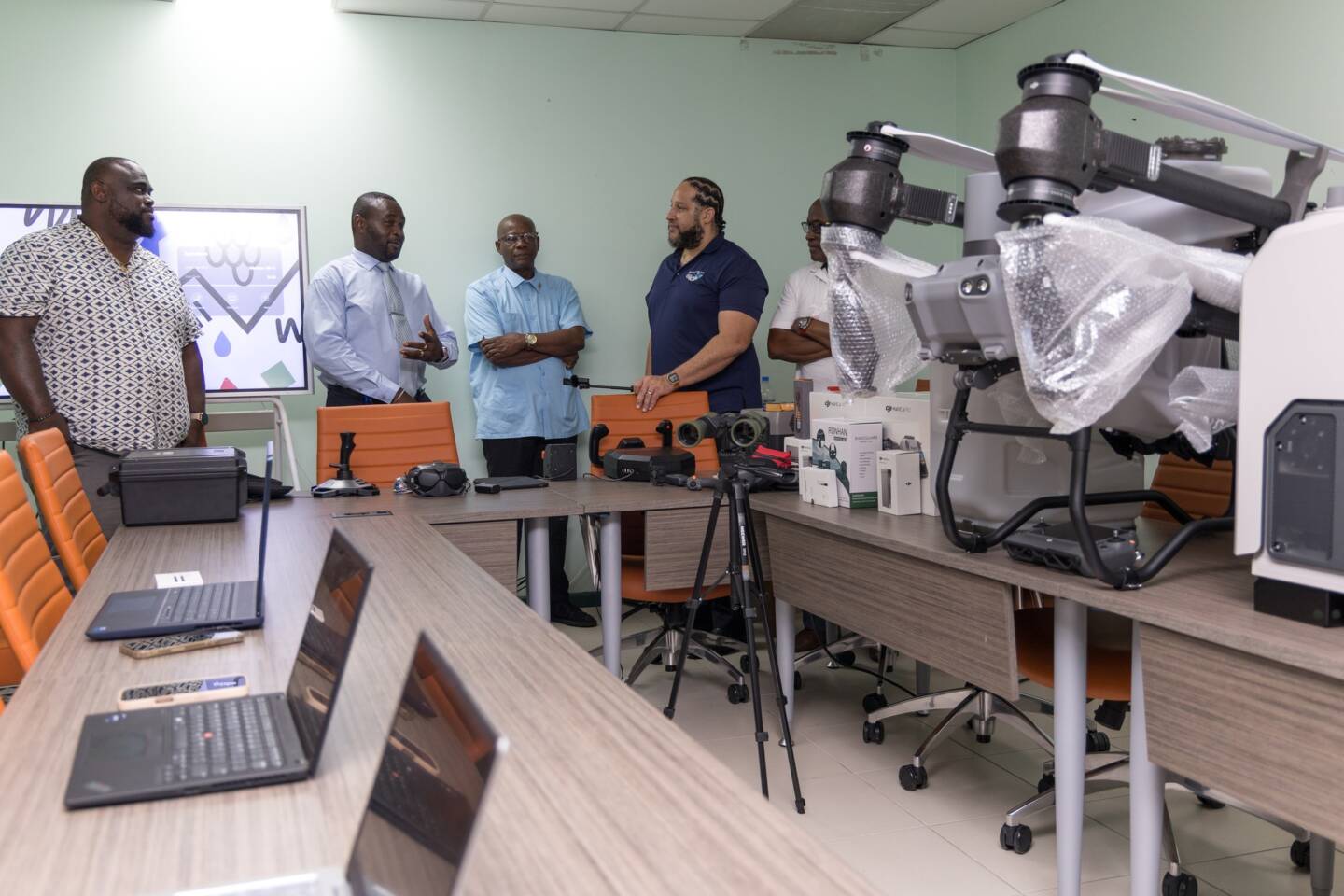
    Grenada’s agricultural sector is taking a major step toward modernization, as the country’s Ministry of Agriculture, Lands and Forestry launches a pilot initiative to integrate drone technology into mainstream farming operations. The project is designed to revolutionize core agricultural practices, from crop health monitoring to field management, delivering a range of benefits that include more precise farming workflows, reduced operational costs, higher overall farm productivity, and long-term improvements in agricultural sustainability.

    To support the new program, the Government of Grenada has recently completed the acquisition of nine new drones, representing an investment of more than EC$200,000. This purchase expands the ministry’s total fleet of managed Unmanned Aircraft Systems (UAVs) to 12, providing enough equipment to roll out the pilot across multiple use cases and departments.

    The current UAV pilot scheme builds on foundational work carried out in 2023 as part of a collaborative UAV program led by the Food and Agriculture Organisation (FAO). That earlier initiative laid the groundwork for broader adoption of cutting-edge agritech, including big data analytics, machine learning, and artificial intelligence tools customized to meet the needs of agriculture and other key Grenadian industries. The ongoing pilot program aims to turn this preliminary framework into practical, on-the-ground use across the sector.

    To ensure the program is operated by qualified personnel, 10 ministry officers are currently undergoing hands-on training provided by Aerial Vision, a local Grenadian drone and aerial services company. Upon successful completion of the training curriculum, all participating officers will earn official certification as UAV pilots. These certified professionals will then be deployed to support the pilot program across their respective departments, which include Lands and Surveys, Praedial Larceny, Land Use, Public Relations, and other specialized units.

  • Liberty Caribbean Champions Women and Girls in Building Caribbean’s AI Future

    Liberty Caribbean Champions Women and Girls in Building Caribbean’s AI Future

    As the Caribbean region marks International Telecommunication Union’s (ITU) 2024 International Girls in ICT Day, which carries the theme “AI for Development: Girls Shaping the Digital Future”, leading regional telecommunications provider Liberty Caribbean has issued a urgent call for collective, accelerated action to address widespread gaps in artificial intelligence access, adoption and technical capacity across Caribbean communities.

    Organized annually by the ITU, this year’s global observance sets out a clear mandate: to inspire and equip more women and girls to build careers in information and communication technology (ICT), with a specific focus on fast-growing AI-powered emerging fields. The push for greater female representation in these sectors is rooted in a broader goal of building truly inclusive, sustainable socio-economic development across the globe, and small island regions like the Caribbean are no exception.

    In her remarks for the observance, Liberty Caribbean Chief Executive Officer Inge Smidts stressed that closing the Caribbean’s AI gap must move from a long-term planning goal to an immediate regional development priority. “AI must become a regional development priority to unlock new possibilities across our economies. This cannot be something we observe from the sidelines,” Smidts said.

    She emphasized that meaningful progress does not happen through passive interest: it demands intentional, cross-border collaborative action to move the region from casual curiosity about AI to large-scale, practical deployment across industries. “Countries that apply AI responsibly and ensure inclusive participation in their transformation efforts will be best positioned to grow and create opportunity,” she added.

    Smidts went on to note that as digital technology increasingly becomes the backbone of global economic decision-making, future prosperity for Caribbean nations will hinge on how effectively regional stakeholders turn widespread digital access into measurable productivity gains. “We must build this future intentionally, with full representation of our societies at the centre, ensuring that women, girls, and underserved communities are not only included, but empowered to lead, innovate, and shape the direction of that growth,” she said.

    As a leading regional connectivity provider, Liberty Caribbean — which operates consumer brands Flow and BTC, along with B2B service provider Liberty Business — has already laid groundwork for this regional shift through consistent, long-term investment in resilient, future-proof digital networks and cloud-based platforms. Beyond infrastructure, the company is rolling out targeted initiatives to upskill regional workforces, promote ethical, responsible AI innovation, and ensure that broader AI adoption delivers tangible, measurable benefits for residential customers, local communities, and national economies across the region.

    Internally, the company has already begun integrating AI-powered automation into its core operations, a move designed to boost back-office efficiency and deliver a more seamless, responsive experience for its customer base across more than 20 Caribbean markets.

    Sashagay Middleton, a B2B Sales Account Executive based in Antigua and Barbuda, framed the shift as a deeply local issue, noting that digital technology is no longer a distant future concept but an integral part of daily life across the Caribbean. “Technology is no longer something that belongs to a distant future, it’s part of how we live, work and connect every day in Antigua and Barbuda,” Middleton said. “As we mark International Girls in ICT Day, we are reminded of how important it is to encourage girls to see themselves as creators of technology, including AI, not just consumers. When girls are empowered digitally, the entire country benefits.”

    Through ongoing investments in universal connectivity, accessible digital skills training, and inclusive talent development pathways, Liberty Caribbean is working to ensure that future Caribbean innovation is led by homegrown talent — including the women and girls who will shape the sector’s next chapter.

    A 150-year-old regional institution, Liberty Caribbean (formerly C&W Communications, now operated by Liberty Latin America) provides broadband, mobile, video and voice services to residential customers across more than 20 Caribbean markets via its Flow and BTC brands, while its Liberty Business division delivers enterprise-grade connectivity, cloud infrastructure, cybersecurity and data center services to private businesses and government agencies across the region, supporting long-term digital economic growth.

  • BNSI urges workers to embrace AI

    BNSI urges workers to embrace AI

    As artificial intelligence reshapes workplaces across every global sector, the Barbados National Standards Institution (BNSI) is sounding a clear call to action: local workers and businesses that delay integrating AI and updating their change management frameworks risk falling permanently behind in an increasingly competitive digital economy. BNSI director Haydn Rhynd emphasized in an address to the Barbados Association of Administrative Professionals conference on Wednesday that the Caribbean nation simply cannot afford to put off embracing this transformative technology.

    Speaking exclusively to Barbados TODAY on the sidelines of the event, Rhynd acknowledged that widespread anxiety around AI’s impact on employment is common among the island’s workforce. Many workers, he noted, already grapple with internal fear of the unknown, with common concerns ranging from self-doubt about digital literacy to questions about whether they need full retraining to keep up, or even age-related anxiety about learning new systems. This tendency to view organizational and technological change as an inherently threatening force, he said, is the biggest barrier to widespread AI adoption on the island right now.

    Contrary to popular narratives that AI will eliminate millions of jobs, Rhynd argued that the technology is transforming existing roles rather than erasing them entirely. Workers that choose to embrace the shift rather than resist it will not only stay relevant in the evolving job market – they will gain a competitive edge that allows them to lead their fields. By learning to leverage AI tools to handle repetitive, mundane tasks, employees free up valuable time and mental bandwidth to focus on high-value work that relies on uniquely human skills like creativity, critical thinking, and interpersonal connection. This, Rhynd stressed, makes the current era of rapid technological change a fantastic opportunity rather than an unprecedented threat.

    To help local businesses and workers navigate this transition smoothly, BNSI has developed a comprehensive set of industry-specific change management standards designed to lower barriers to AI adoption. Beyond the standardized frameworks, the institution also offers hands-on training support tailored to organizations of all sizes and sectors. These training sessions walk participants through the fundamentals of working with AI, helping teams select the right tools for their specific operational needs and demystify the process of integration. Rhynd reported that growing numbers of previously reluctant Barbadian organizations are now recognizing the urgency of action, with more stakeholders than ever coming to the conclusion that inaction on AI is no longer a viable option.

    However, Rhynd also issued a critical caution for businesses rushing to integrate AI: the shift to the technology requires equal attention to strengthening cybersecurity and data protection protocols. Widespread questions remain around confidentiality, with many leaders unsure what types of internal information is safe to share with public AI tools, and how to build secure processes for data handling. To address this gap, BNSI also offers targeted standards to guide organizations through the process of building robust data protection frameworks that mitigate risk while still allowing them to benefit from AI capabilities.

    Pointing to the accelerating pace of AI innovation, Rhynd noted that the technology has already proven adaptable to virtually every sector of the global economy. From healthcare and food production to manufacturing, agriculture, finance, and general business operations, AI can deliver efficiency gains and productivity improvements across every part of Barbados’ economy. No industry can afford to write off AI as irrelevant to their work, he added, urging all stakeholders to move quickly to position the island for success in the AI-driven future.

  • Flow empowers next generation of female innovators with AI workshop for Girls in ICT Day

    Flow empowers next generation of female innovators with AI workshop for Girls in ICT Day

    KINGSTON, Jamaica – In a deliberate push to narrow the gender gap in technology, local telecom provider Flow and its philanthropic arm, the Flow Foundation, celebrated the annual International Girls in ICT Day with an interactive artificial intelligence workshop designed to build practical skills and self-assurance among young female learners ahead of their entry into the fast-changing digital sector. Spearheaded by the International Telecommunication Union, Girls in ICT Day is observed globally every fourth Thursday of April, with a core mission to inspire more young women and girls to pursue academic pathways and professional careers in information and communication technology, a field long marked by gender underrepresentation.

    This year’s Jamaican iteration of the celebration, held at Flow’s Corporate Lounge in Kingston under the focused theme “AI for Development: Girls Shaping the Digital Future”, drew more than 100 high school students from across the island for a hands-on, forward-looking learning experience that moved far beyond theoretical discussion. Veteran AI transformation strategist and entrepreneur Stacey Hines led the workshop, walking participants through core AI fundamentals and highlighting tangible, real-world use cases for the technology, with a specific focus on relevant applications developed and deployed across the Caribbean region.

    Attendees explored how AI can be leveraged to address many of the most urgent social and economic challenges facing their communities, worked in collaborative teams to draft their own AI-powered solutions to local problems, and even got the chance to design custom animated AI avatars, putting their new skills to immediate use. “High school girls across Jamaica are growing up into a world where AI literacy is no longer a niche skill – it’s a core competency for almost any growing career,” Hines explained during the event. “This session gave them direct access to the tools, the framework, and the supportive community they need to step into that world with confidence. That is what makes this work so critical. It creates room for curiosity, grows digital confidence, and makes clear that girls belong at the center of global innovation, not on the sidelines. Our goal here is not just to teach them what AI is – it’s to show them how it can open doors, strengthen local communities, and create clear pathways to leadership for them.”

    The day’s activities wrapped up with an energetic pitch competition, where participating teams presented their AI-driven concepts to judges, showcasing how their ideas could solve pressing local challenges. Through funding from the Flow Foundation, every member of the first-place team took home a Samsung tablet in recognition of their standout creativity, teamwork, and forward-thinking approach. Teams placing second and third were awarded smartphones paired with multi-month data plans to support their continued tech learning.

    For many of the young attendees, the workshop proved to be both a revelation and a source of empowerment. Kaylee Braimbridge, an 11th-grade student at Vauxhall High School, shared that the event “made AI feel less intimidating and showed me that I can actually use it to solve problems in my community and even build something of my own one day.”

    Maya Walrond, Senior Director for Digital Transformation at Flow, emphasized that the workshop is just one part of the company’s long-term commitment to fostering Jamaica’s digital evolution. “At Flow, we recognize that the future strength of our nation is deeply tied to how well we prepare our young people to thrive in an increasingly digital global economy,” Walrond said. “Initiatives like this are not just about giving girls exposure to new technology – they are about empowerment. We are building meaningful, accessible, and enjoyable opportunities for girls to engage with cutting-edge emerging technologies, build innovation skills, and see themselves as leaders in Jamaica’s ongoing digital transformation journey.”

    Beyond investing in digital infrastructure across the island, Flow is using targeted community initiatives like this AI workshop to invest directly in Jamaica’s next generation of tech leaders. By equipping young women with the knowledge, confidence, and practical tools to engage with emerging technologies, the company is working to build a more inclusive, innovative, and sustainable digital future for the entire country.