分类: technology

  • Regional IT stakeholders evaluate the CARICOM Knowledge Management Web Portal and Framework

    Regional IT stakeholders evaluate the CARICOM Knowledge Management Web Portal and Framework

    In a significant stride toward regional digital integration, the Caribbean Community (CARICOM) has successfully validated its groundbreaking Knowledge Management Framework and Web Portal during a high-level workshop held in Trinidad and Tobago from November 19-20, 2025. This strategic initiative, funded by the 11th European Development Fund, represents a cornerstone in the implementation of the CARICOM Single ICT Space and the region’s transition to a data-driven digital economy.

    The validation workshop convened senior ICT officials and technical specialists from across member states, alongside representatives from key regional organizations including the Caribbean Telecommunications Union and Caribbean Broadcasting Union. This gathering marked the second phase of validation activities under the ICT4D component of the 11th EDF program, building upon previous groundwork established through the comprehensive ICT Sector Gap Analysis completed in May 2025.

    Ms. Evelyn Wayne, Director of Economic Policy and Development at the CARICOM Secretariat, emphasized the transformative potential of the initiative during her opening address. She characterized the Knowledge Management Framework and Portal as ‘a defining step forward in supporting evidence-based economic planning, strengthening digital governance, and enabling a coordinated approach to ICT development across the Community.’ The framework is positioned as essential infrastructure for enhancing regional digital resilience and strategic integration.

    The Knowledge Management Web Portal, scheduled for completion by December 31, 2025, will provide member states with advanced capabilities for secure data upload and verification, sophisticated analytical dashboards, and automated reporting functions at both national and regional levels. The platform will also feature controlled public access to aggregated regional indicators, promoting transparency while maintaining compliance with international reporting standards.

    Workshop participants demonstrated strong enthusiasm for the portal’s potential to address longstanding challenges in ICT data collection, including issues of fragmentation, methodological inconsistencies, and limited access to comprehensive regional datasets. Attendees contributed practical recommendations to optimize system usability, refine validation protocols, streamline workflows, and ensure alignment with both national priorities and international obligations.

    This initiative directly supports the systematic monitoring of progress toward the CARICOM Digital Agenda 2036, establishing clear targets and measurable outcomes for the region’s digital transformation journey.

  • The best tech to level up your content in 2026

    The best tech to level up your content in 2026

    As the holiday shopping season accelerates following Black Friday, content creators and business owners face a pivotal opportunity to upgrade their technological arsenal for the coming year. The evolving digital landscape has transformed equipment upgrades from luxury to necessity, driven by fundamental shifts in content consumption patterns.

    Audience preferences have dramatically shifted away from traditional talking-head formats toward experiential, visually dynamic content. This evolution occurs alongside an overwhelming flood of AI-generated material across platforms, forcing algorithms to prioritize authentically human content that demonstrates technical sophistication and creative originality.

    Camera technology represents the frontline of this transformation. The era of smartphone-only creation has ended, replaced by specialized devices offering superior stabilization, color accuracy, and low-light capabilities. Action cameras like DJI Osmo Action 6 and GoPro Hero 13 deliver cinematic movement capture, while the Insta360 X5 enables revolutionary 360-degree filming with post-production reframing capabilities. The compact DJI Pocket 3 has emerged as a versatile solution, functioning both as a stabilized camera and high-quality webcam for diverse shooting scenarios.

    Drone technology has transitioned from luxury to essential creative tool, with ultralight models like DJI Neo 2 and Mini 5 Pro revolutionizing aerial perspectives. These sub-250g devices offer simplified legal compliance across most regions, including the Caribbean, while advanced tracking autonomy provides creator follow capabilities without additional crew.

    Smartphone innovation continues with brands like Vivo, Oppo, Xiaomi, and Huawei leading creator-focused development. Devices such as the Vivo X300 Pro and Huawei Pura 80 Ultra feature larger sensors, enhanced low-light performance, and superior stabilization—all ranking among DxOmark’s top photographic performers. These mobile powerhouses now function as complete editing studios, publishing systems, and research assistants.

    Audio quality remains non-negotiable, with the Shure MV7+ microphone paired with wireless systems like Rode Wireless GO III ensuring professional recording anywhere. Monitor upgrades, including 4K displays from LG and ASUS ProArt series, enable precise color management and editing accuracy.

    Storage solutions have entered a new era with Network-Attached Storage (NAS) systems from Synology and UGREEN DH2300. These private cloud alternatives offer massive capacity, remote access, and long-term cost savings compared to subscription-based cloud services.

    The 2026 content landscape will prioritize quality over quantity, with human creators leveraging technological advantages to build genuine connections amidst AI-generated volume. Success will depend on creative angles, lifestyle-driven narratives, efficient workflows, and multi-platform consistency—all supported by strategic equipment investments during current holiday sales periods.

  • Hacking people, not systems: The rise of digital reputation as a national security

    Hacking people, not systems: The rise of digital reputation as a national security

    A recent Data Privacy Workshop in Barbados has highlighted an increasingly critical aspect of digital security that extends beyond traditional protection frameworks: the management of one’s digital reputation. The event, which featured collaborative exercises and expert presentations, served as a platform for introducing the innovative Digital Reputation Intelligence Report by Data Privacy and Management Advisory Services (DPMAS).

    While conventional data protection has historically focused on three core pillars—data protection principles, data subject rights, and cybersecurity implementation—the workshop revealed a fourth dimension gaining urgent relevance. Digital reputation intelligence provides structured assessments of an individual’s online presence, identifying risks, strengths, and opportunities within their public digital footprint.

    The dark web’s hidden ecosystem, where stolen credentials and personal data circulate indefinitely, has made digital reputation management an essential security practice. Cybercriminals now prioritize ‘hacking people’ over hacking systems, using publicly available information to engineer sophisticated phishing attacks, password resets, and impersonation schemes.

    Barbados’s digital landscape underscores the urgency of this issue. With 338,000 mobile connections (120% of the population), 226,000 internet users (80% penetration), and 193,000 social media identities, the nation maintains an extensive online presence. This connectivity creates both opportunities and vulnerabilities that traditional security measures cannot address.

    The persistent nature of digital information compounds these risks. Even removed content survives in cached pages, archived profiles, and third-party databases, creating lasting digital shadows that can support fraud years after initial posting.

    DPMAS’s report represents a proactive approach to this challenge, providing individuals and organizations with visibility into their digital footprint and actionable insights for reputation management. As Caribbean nations confront evolving cyber threats and regional data protection frameworks develop, managing one’s digital reputation has transitioned from cosmetic concern to essential security hygiene.

  • BACSWN unveils emissions platform with 16 pending patents

    BACSWN unveils emissions platform with 16 pending patents

    The Bahamas has significantly elevated its profile in international climate technology circles through its ongoing participation in the Global Carbon Markets Conference. For the second consecutive year, representatives from the Bahamas Aviation, Climate & Severe Weather Network (BACSWN) showcased groundbreaking developments in emissions tracking technology and meteorological infrastructure.

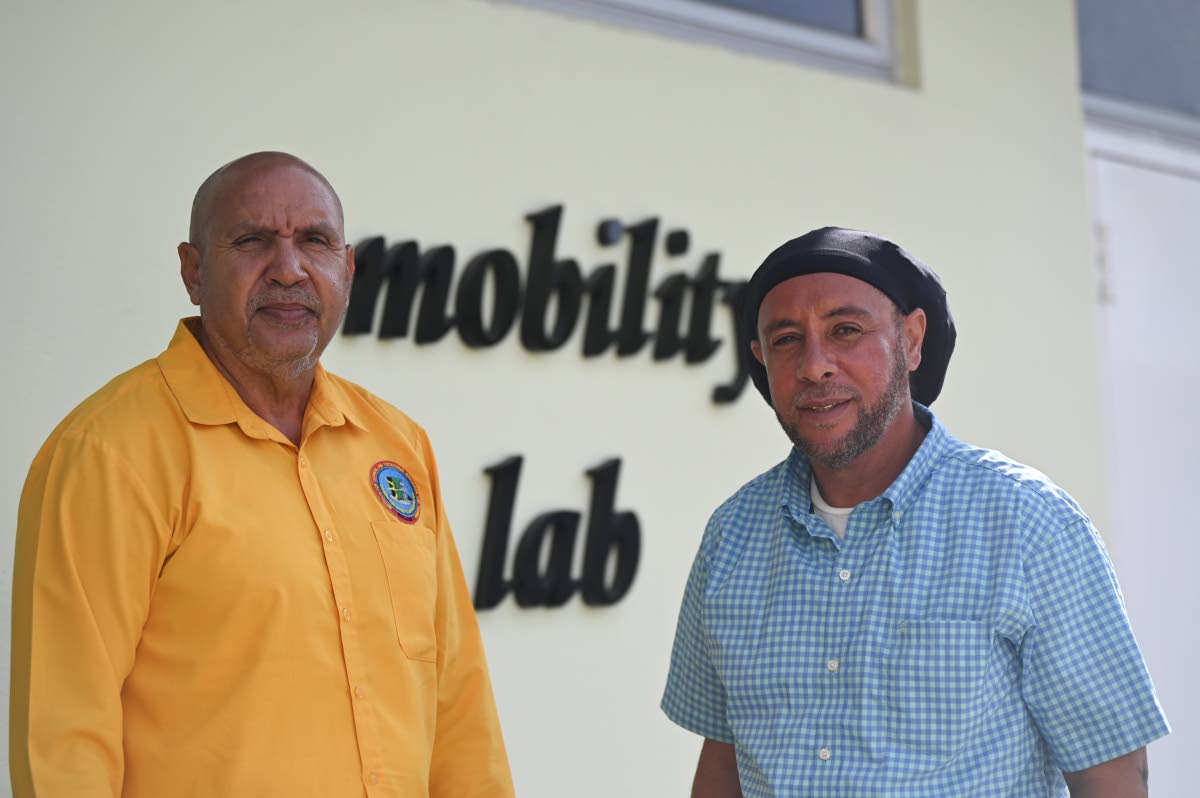
    BACSWN Chief Operating Officer Michael Strachan and Tribune Digital Labs President Quincy Rolle delivered a collaborative presentation highlighting the nation’s expanding influence across aviation, weather intelligence, and carbon market innovation. Their demonstration revealed how the archipelago is leveraging its strategic position to address global climate challenges.

    The conference appearance coincides with BACSWN’s preparations to establish one of the Caribbean’s first next-generation meteorological watch offices and aviation weather centers. This initiative follows a landmark Heads of Agreement signed with the Bahamian government in May, which designates BACSWN as the national aviation and meteorological authority alongside a planned $427 million infrastructure investment across key islands.

    Mr. Strachan emphasized the climate vulnerabilities driving these developments, noting the disproportionate impact of climate change on small island nations and the significant volume of aviation emissions transiting Bahamian airspace—the world’s sixth-largest airspace with over 616,000 annual flights.

    “For a small island nation,” Strachan explained, “the carbon emissions over our airspace add to the problem we’re already facing. It’s crucial that countries like ourselves and private sector companies collaborate to support decarbonization projects.”

    The technology presentation featured BACSWN’s advanced carbon intelligence platform, developed by Tribune Digital Labs. Mr. Rolle detailed how the system integrates proprietary WxSense weather networks, live flight data, and custom algorithms capable of real-time emissions tracking. The platform has achieved patent-pending status for 16 distinct innovations and demonstrates adaptability for global implementation.

    In a significant regulatory development, Strachan confirmed BACSWN is finalizing a reciprocal agreement with Carbon Management Limited Bahamas to oversee aviation carbon operations, aligning with the recently passed Carbon Credits Trading Act. Both executives continue high-level meetings with international industry leaders through the conference’s conclusion.

  • Taiwan–Saint Kitts and Nevis Collaborate to Advance E-ID System Development with Workshops, Equipment Handover, and System Deployment Progressing Forward

    Taiwan–Saint Kitts and Nevis Collaborate to Advance E-ID System Development with Workshops, Equipment Handover, and System Deployment Progressing Forward

    In a significant stride toward digital governance, Saint Kitts and Nevis has accelerated its electronic identification system development through collaborative efforts with Taiwanese technical experts. The comprehensive initiative culminated in a series of workshops and equipment transfers throughout November 2025, marking a pivotal phase in the Caribbean nation’s digital transformation journey.

    The partnership between the Republic of China (Taiwan) Embassy and Saint Kitts and Nevis’ Department of Information Technology yielded a specialized workshop on November 18th, focusing on digital identity authentication system implementation. Taiwanese technology firms including IISI, Chunghwa Telecom, and Foongtone Technology joined multiple government agencies from Saint Kitts and Nevis to review three years of developmental progress and conduct detailed technical discussions covering server deployment, terminal installation, and system validation protocols.

    A formal equipment handover ceremony at the Ministry of Finance featured Second Secretary Hsien-Yu Chung representing Ambassador Edward Tao, who reaffirmed Taiwan’s commitment to supporting Saint Kitts and Nevis’ digital economy infrastructure and public service diversification. Permanent Secretary Cheryleann Pemberton emphasized the E-ID system’s critical role in national digital transformation while acknowledging Taiwan’s sustained technical cooperation.

    Practical implementation followed from November 19-21 with Taiwanese technicians and local IT specialists conducting hardware and software installation at Saint Kitts Island’s data center. The team successfully operationalized card printing equipment to produce functional E-ID sample cards, providing hands-on training for government personnel responsible for future citizen registration processes.

    The technical team expanded operations to Nevis Island from November 24-26, replicating system installation procedures and demonstrating sample card functionalities to ensure consistent service delivery across both islands. The cross-island deployment strategy ensures uniform implementation of secure, convenient electronic identity verification services throughout the federation.

    The project concluded with a wrap-up meeting at the National ICT Center on November 28th, where Permanent Secretary Pemberton commended the rapid implementation progress and recognized Project Manager Edward Chen and Taiwanese developers for their professional dedication in advancing the nation’s digital identification infrastructure.

  • Paso Rápido users no longer need to share TAG number

    Paso Rápido users no longer need to share TAG number

    Santo Domingo, Dominican Republic – The Dominican Republic’s highway infrastructure has entered a new era of digital efficiency with RD Vial Trust’s implementation of a fully automated toll collection system. General Director Hostos Rizik Lugo announced the groundbreaking transition that eliminates manual TAG number entry requirements effective immediately.

    The technological advancement centers around newly deployed backup RFID readers that automatically authenticate vehicle passages even when TAG devices fail to register in dedicated lanes. This redundancy system represents a significant leap in transportation technology, ensuring seamless transit through toll points without human intervention.

    Rizik Lugo emphasized the multifaceted benefits of this modernization initiative through his official X account platform. “We continue to modernize the country’s road network,” he stated, highlighting the government’s commitment to technological infrastructure development. The enhanced system provides robust user protection mechanisms while simultaneously combating potential fraud through advanced digital validation protocols.

    The sophisticated infrastructure guarantees precise toll collection by directly linking each transaction to individual account holders, eliminating processing errors and administrative discrepancies. RD Vial authorities have issued recommendations for all motorists to update their Paso Rápido applications to the latest version and verify the accuracy of their registered email addresses to ensure optimal system performance.

    This technological overhaul positions the Dominican Republic as a regional leader in smart transportation solutions, demonstrating how digital innovation can enhance public infrastructure while improving user experience and operational security.

  • Dominican Republic wins silver and bronze at World Robot Olympiad 2025

    Dominican Republic wins silver and bronze at World Robot Olympiad 2025

    SINGAPORE – The Dominican Republic has dramatically elevated its status in the global technology arena by capturing two prestigious medals at the World Robot Olympiad (WRO) 2025 finals. Competing in a fiercely contested field representing over 96 nations, the Caribbean nation’s young talents demonstrated exceptional skill and innovation on the world stage.

    In a landmark achievement for the country’s STEAM (Science, Technology, Engineering, Arts, and Mathematics) education sector, the ‘Fire Busters’ team was awarded the silver medal in the highly competitive Future Innovators – Senior category. The judging panel specifically highlighted their project’s groundbreaking innovation, significant social impact potential, and outstanding technical execution. This accomplishment has propelled the Dominican Republic to an impressive 18th place in the global rankings for this division.

    Simultaneously, the ‘Cyberbot’ squad secured the bronze medal in the RoboMission – Junior category, where they excelled in robot design sophistication, strategic implementation, and advanced programming techniques against international counterparts.

    The path to Singapore was paved through an extensive national selection process orchestrated by WRO Dominican Republic. This rigorous competition, which unfolded across Santiago and Santo Domingo, attracted hundreds of participants from both public and private educational institutions, showcasing the growing depth of robotic talent throughout the country.

  • ‘AI can’t replace human storytelling — Savadia

    ‘AI can’t replace human storytelling — Savadia

    At a recent World Television Day virtual symposium hosted by the Caribbean Institute of Media and Communication (CARIMAC), industry leader Dushyant Savadia delivered a compelling argument about artificial intelligence’s role in media’s future. The Amber Group CEO and founder addressed attendees during his keynote presentation, asserting that while AI continues to advance rapidly, it will never duplicate the emotional intelligence and intuitive capabilities inherent to human storytellers.

    The event, organized by final-year public relations students under the provocative theme ‘AI TV: The Future or The End?’, assembled media professionals, students, and television enthusiasts to examine television’s evolving landscape amid artificial intelligence integration. Rather than framing AI as an existential threat to creative industries, Savadia encouraged emerging media professionals to embrace it as an innovative tool that automates repetitive tasks, thereby liberating human creators to concentrate on more substantive narrative development.

    Savadia’s presentation highlighted the accelerating global expansion of AI technologies, predicting that by March 2026, AI chatbots will achieve unprecedented sophistication, paving the way for the next transformational phase: physical AI. “We are entering an era where AI systems will resemble humans in both appearance and interaction,” he explained, characterizing television’s current evolution as its most significant transformation since the transition from black-and-white to color broadcasting.

    Illustrating this rapid pace of change, Savadia demonstrated Revonews.ai, an innovative platform revolutionizing modern newsroom operations. The cutting-edge system enables audiences to engage directly with news content through an AI assistant utilizing media veteran Cliff Hughes’ voice, access decades of archival material instantly, and curate personalized real-time story selections across news, sports, and entertainment categories.

    “Whatever you imagine, you can now create,” Savadia told participants, envisioning a future where viewers can pause programming and interact directly with their television content. The subsequent question-and-answer session generated vigorous discussion regarding ethical challenges, cultural preservation imperatives, and the future trajectory of Jamaican content creation.

    Dr. Patrick Prendergast, CARIMAC’s director, reflected on the symposium’s significance, noting the institution’s continuous pursuit of technological adaptation for industry and societal advancement. The event provided a platform to contemplate television’s enduring cultural influence while innovating responsibly within the framework of established media values, standards, and creative practices.

  • LIVE: Official Launch of Dominica Carnival 2026

    LIVE: Official Launch of Dominica Carnival 2026

    A groundbreaking shift is underway in meteorological science as artificial intelligence demonstrates unprecedented capabilities in weather prediction. Google’s DeepMind has unveiled GraphCast, an advanced AI model that is setting new benchmarks for forecasting accuracy and efficiency across global weather patterns.

    This revolutionary technology represents a paradigm shift from conventional numerical weather prediction (NWP) methods that have dominated the field for decades. Unlike traditional systems that rely on complex physics-based computations, GraphCast utilizes machine learning to analyze vast historical weather datasets, identifying patterns and relationships that enable remarkably precise forecasts.

    The AI system has demonstrated superior performance in predicting severe weather events days in advance, including the precise tracking of hurricane paths and the intensity of atmospheric rivers. Meteorological agencies worldwide are taking notice of GraphCast’s ability to provide high-resolution, medium-range forecasts with significantly reduced computational requirements compared to established systems.

    Researchers emphasize that AI doesn’t replace traditional forecasting but complements it, creating a powerful synergy between physics-based modeling and data-driven machine learning approaches. The integration of AI technology allows meteorologists to process enormous datasets more efficiently, potentially providing earlier warnings for extreme weather events that threaten communities globally.

    This technological advancement comes at a critical juncture as climate change increases the frequency and intensity of extreme weather phenomena. The enhanced predictive capabilities offered by AI systems like GraphCast could prove instrumental in improving disaster preparedness and response strategies worldwide, potentially saving lives and reducing economic impacts of severe weather events.

    The rapid development of AI weather models signals a new era in meteorological science, where machine learning algorithms work alongside human expertise to create more reliable, detailed, and accessible weather forecasts for professionals and the public alike.

  • Selfie-based age checks boom as gov’ts push for online controls

    Selfie-based age checks boom as gov’ts push for online controls

    LONDON, United Kingdom — A technological revolution is quietly transforming how digital platforms enforce age restrictions. As governments worldwide implement stringent regulations targeting social media and adult content websites, artificial intelligence-driven age verification systems are experiencing unprecedented growth.

    The emerging technology offers a seemingly seamless solution to legislative mandates such as Australia’s forthcoming ban on social media access for users under 16, scheduled to take effect December 10. The verification process demonstrates remarkable simplicity: users merely capture a straightforward selfie using their device’s camera, with an automated assessment delivered within 60 seconds.

    At Yoti, a London-based technology startup, extensive testing occurs using mannequin heads adorned with wigs and masks. The company’s sophisticated algorithms consistently identify these attempts at deception, with test platforms promptly recognizing non-authentic facial representations. Chief Executive Robin Tombs explained the technological evolution: ‘Through continuous refinement, our algorithm has developed exceptional pattern recognition capabilities, enabling accurate age estimation by analyzing facial characteristics.’

    The commercial success story is equally impressive. Yoti currently processes approximately one million daily verifications for prominent clients including Meta, TikTok, Sony, and Pinterest. The company achieved profitability this year following £20 million ($26 million) in revenue for the twelve months ending March, with projections indicating a 50% sales increase for the current fiscal year.

    This expansion reflects broader industry trends. The Age Verification Providers Association (AVPA) counts 34 specialized companies among its members, including Persona, Kids Web Services, K-id, and VerifyMy. A 2021 AVPA forecast projected nearly $10 billion in annual revenue across OECD nations by 2031-2036, though updated projections remain pending.

    AVPA director Iain Corby emphasizes the sector’s dynamic nature, noting: ‘The landscape evolves rapidly with simultaneous advancements in regulation and technology making precise predictions challenging.’

    Despite technological promise, significant concerns persist regarding potential algorithmic biases and privacy implications. Professor Olivier Blazy, cybersecurity expert at France’s prestigious Polytechnique engineering school, warns that these tools ‘may potentially intrude upon personal privacy realms.’ He further suggests the current AI-dominated ecosystem might experience regulatory recalibration to enhance user protection.

    Technical limitations also present challenges. Researchers note that conventional makeup techniques can effectively manipulate age appearance, while independent studies have identified accuracy disparities when processing non-white facial characteristics. An Australian regulatory assessment acknowledged ongoing challenges with Indigenous population representation, while noting vendor efforts to address these gaps.

    Yoti’s CEO acknowledges historical data limitations for certain demographic groups but maintains their system can detect cosmetic alterations and accessories designed to deceive. Regarding privacy concerns, Tombs emphasizes immediate data deletion post-analysis.

    Platforms implementing these solutions typically establish safety buffers, frequently requiring perceived age thresholds exceeding actual limits (e.g., judging visitors as over-21 for 18+ restrictions). Users falling within marginal ranges may still need to resort to traditional verification methods, including official identification documentation.