分类: technology

  • Belize Launches Robotics Training to Prepare Youth for High-Tech Jobs

    Belize Launches Robotics Training to Prepare Youth for High-Tech Jobs

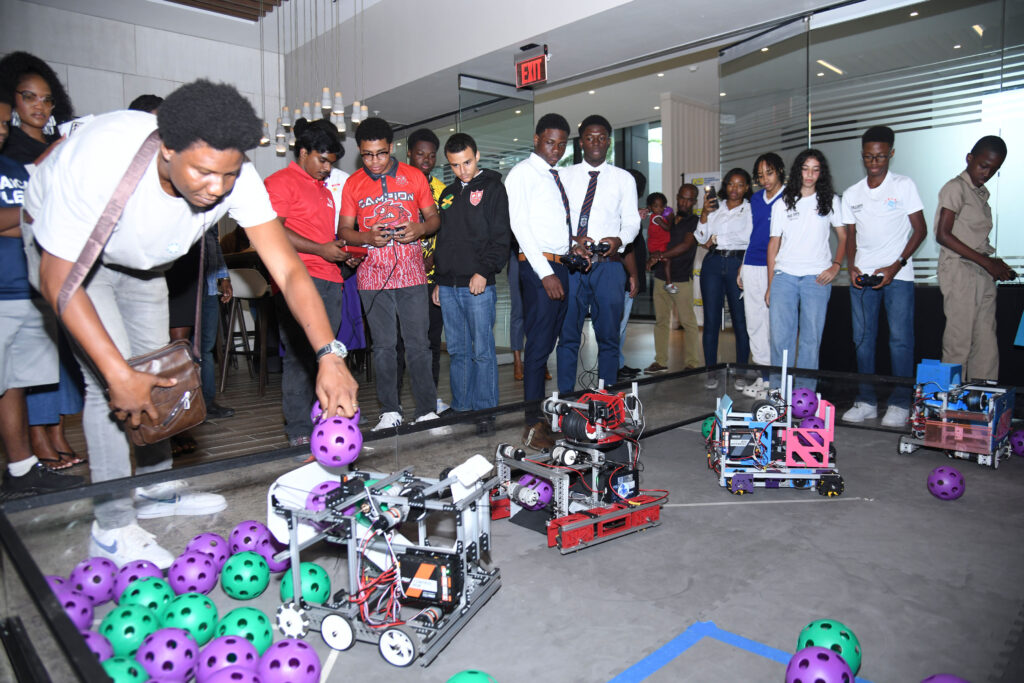
    In a strategic move to future-proof its national workforce, the Central American nation of Belize has officially launched an ambitious robotics training program. This groundbreaking initiative, spearheaded by the Ministry of E-Governance in collaboration with the Belize Robotics Federation, represents a significant investment in human capital development specifically targeting high-tech sectors.

    The program’s inaugural phase saw active participation from students at Belize High School and Saint Catherine Academy, who engaged in intensive hands-on workshops. Participants gained practical experience constructing and programming sophisticated robotic systems including VEX CTE Workcell and VEX ClawBot platforms. The curriculum emphasizes real-world problem-solving methodologies and technical competencies directly aligned with emerging industry requirements.

    Technical expertise was provided through partnership with VEX Robotics, with specialists David Feeney and Eli Osornio delivering expert guidance to ensure students acquire skills meeting current industry standards. The program’s design focuses on creating immediate pathways to careers in engineering, automation, and advanced technology sectors.

    The government has announced plans for nationwide expansion through Belize’s network of Digital Connect Centers, with a train-the-trainer model already underway. Local educators and technology professionals are being certified as program ‘champions’ to ensure consistent, safe, and effective implementation across all regions.

    This initiative forms a critical component of Belize’s broader digital transformation strategy, directly addressing the growing global demand for skilled robotics and automation professionals while creating domestic capacity in high-value technological fields.

  • Hands-On Robotics Workshop Prepares Future Engineers

    Hands-On Robotics Workshop Prepares Future Engineers

    Belize has taken a significant stride in technological education through a pioneering robotics workshop held at the Fort George Digital Connect Center on Saturday. The collaborative effort between the Ministry of E-Governance and the Belize Robotics Federation brought together students from Belize High School and Saint Catherine Academy for an intensive, hands-on training session.

    Participants engaged directly with advanced robotics systems including the VEX CTE Workcell and VEX ClawBot platforms, acquiring practical skills in automation, engineering principles, and complex problem-solving methodologies. These competencies are increasingly vital for success in today’s technology-driven employment landscape.

    The initiative received substantial governmental support from Minister Henry Charles Usher and CEO Jose Urbina, who ensured the facility was optimally equipped for this national program launch. Under the leadership of President Jamie Usher, the Belize Robotics Federation has outlined plans to extend this educational model to Digital Connect Centers nationwide, creating a sustainable framework for robotics education.

    This program represents a key component of the broader Plan Belize 2.0 strategy, which emphasizes digital inclusion and experiential learning as fundamental pillars for national development. The federation intends to train local champions who will subsequently lead standardized robotics sessions across the country, ensuring consistent quality and safety protocols.

    International support from VEX partners David Feeney and Eli Osornio has provided Belizean youth with expert technical guidance, positioning the initiative as a model for technology education in developing nations. The workshop demonstrates Belize’s commitment to preparing its younger generation for competitive participation in the global digital economy.

  • China zet eeuwenoude wetenschap en wijsheid in voor duurzame vooruitgang

    China zet eeuwenoude wetenschap en wijsheid in voor duurzame vooruitgang

    China is systematically reviving its rich technological heritage from centuries past to address contemporary societal challenges and bolster sustainable economic growth. At the center of this initiative is the 17th-century masterwork ‘Tiangong Kaiwu’ (The Revelation of Heavenly Works), authored by Ming Dynasty scholar Song Yingxing (1587–1666). This comprehensive technological encyclopedia—one of the world’s earliest and most detailed—documents over 200 techniques spanning agriculture, metallurgy, ceramics, textiles, printing, and hydraulic engineering.

    The recent Tiangong Kaiwu Forum in Beijing, themed ‘Decoding Industrial Genetics, Building a Shared Tech Future’, highlighted how this historical knowledge is being integrated into modern industrial and environmental applications. The text’s detailed illustrations and systematic explanations of craft and production methods are now inspiring innovations in fields ranging from advanced materials to renewable energy.

    For instance, traditional ceramic techniques described in the book now inform the production of technical ceramics used in electronics, medical implants, and environmental technologies. Similarly, historical metallurgical methods are being adapted to develop stronger, lighter, and more sustainable materials essential for transportation and construction.

    Hydraulic systems and mechanical pumps detailed by Song Yingxing are now foundational to modern small-scale irrigation and hydroelectric projects, supporting China’s investments in sustainable energy and efficient agriculture. The government is actively promoting research and corporate initiatives that draw on such traditional knowledge to advance carbon neutrality and high-value green manufacturing.

    Beyond domestic applications, the revival of Tiangong Kaiwu is reshaping global perceptions of technological history, emphasizing China’s longstanding role in scientific progress. By bridging ancient wisdom with modern innovation, China is positioning itself as a key player in the global transition toward a sustainable and technologically advanced future.

  • Ja-Cirt analysts win top honours at ‘SheSecures’ cybersecurity competition

    Ja-Cirt analysts win top honours at ‘SheSecures’ cybersecurity competition

    KINGSTON, Jamaica — A groundbreaking initiative to bridge the gender gap in cybersecurity has yielded exceptional results, with female analysts from Jamaica’s national security apparatus claiming top honors in the inaugural ‘SheSecures’ Cybersecurity Competition. Monique Satchwell and Rheana Hagigal, Tier Two Analysts at the Jamaica Cyber Incident Response Team (Ja-CIRT), secured first place in the overall team category, outperforming numerous contenders from across the nation.

    This pioneering competition, a collaborative effort between the Ministry of National Security and Peace and the Organization of American States (OAS), was specifically designed to offer hands-on technical training and skill enhancement for Jamaican women and girls aged 16 and above. The initiative’s core mission is to empower more women to enter the rapidly expanding cybersecurity field, thereby significantly strengthening Jamaica’s national cyber resilience in an increasingly digital world.

    The victory underscores a critical push for diversity in a sector where women remain significantly underrepresented. Both winners shared personal journeys that defied traditional gender expectations in technology. For Hagigal, a profound fascination with technology that began in high school crystallized into a career choice driven by the conviction that cybersecurity is the foundation of our digital future. “I knew that the future was going to be cybersecurity, because everything is now digitalised,” she explained.

    Satchwell’s path was more serendipitous. Initially an actuarial science major immersed in mathematics at the University of the West Indies (UWI), a growing intrigue with computers led her to switch to computer science. It was there she discovered and became captivated by the cybersecurity domain. She emphasizes a crucial perspective often overlooked: “People often focus on technology itself, while overlooking the critical need to secure it.

    The road to victory was paved with dedication and intense preparation. Both analysts recounted weeks of rigorous training, including sessions partnered with the Jamaica Defence Force (JDF), supplemented by personal practice lasting several hours each night. “It was very rigorous… but it was well done,” Satchwell stated, expressing immense pride in their achievement. Hagigal echoed this sentiment, attributing their success to training, practice, and sheer perseverance.

    The competition also celebrated other high achievers. A second Ja-CIRT team, comprising Zoe Duncan and Daneel Downer, secured second place, while third place was awarded to a team from the Major Organised Crime and Anti-Corruption Agency (MOCA). The event also featured school and individual categories, with top prizes awarded to students from institutions like Immaculate Conception High School, Northern Caribbean University, and the University of Technology, alongside individual winner Kelleshia Fender of MOCA.

    Their triumph serves as a powerful inspiration, challenging the male-dominated status quo of the profession. Satchwell’s advice to other young women is unequivocal: “Take courage; you’re talented… talent knows no gender; don’t be afraid.” This event marks a significant stride toward a more inclusive and robust cybersecurity landscape for Jamaica.

  • Overheid zet cybersecurity hoger op agenda: e-Gov start bewustwordingstraject

    Overheid zet cybersecurity hoger op agenda: e-Gov start bewustwordingstraject

    Suriname’s E-Government (e-Gov) initiative has launched a comprehensive cybersecurity enhancement program through a strategic collaboration with global security leader Fortinet. The recently concluded Cybersecurity and Data Protection workshop brought together representatives from multiple ministries, security agencies, and government institutions to address growing digital threats.

    According to e-Gov Director Llydion Dalfour, cybersecurity has become a presidential priority under Jennifer Simons’ administration. “The President views digital transformation not merely as a technical upgrade but as a catalyst for efficiency, transparency, accessibility, and improved service delivery,” Dalfour stated. “Her vision encompasses a Suriname where technology empowers every citizen while strengthening trust in government institutions.”

    The workshop emphasized that modern, reliable, and secure systems are fundamental to digital governance. Dalfour highlighted the Head of State’s commitment to ensuring citizens can depend on systems that not only function effectively but also actively protect and defend sensitive data against evolving threats.

    Fortinet experts presented the latest global cybersecurity trends, current threat landscapes, and recommended protective measures during the knowledge-sharing session. The partnership between e-Gov and Fortinet dates back to the establishment of e-Gov, with the security firm having contributed significantly to developing GovGrid infrastructure—the digital backbone of Suriname’s government operations.

    This workshop forms part of a broader initiative to strengthen governmental digital security capabilities. Cybersecurity represents one of the foundational elements in the government’s wider digitalization agenda. “You can digitalize processes, but without trust, the system fails,” Dalfour emphasized. “Citizens and organizations must have absolute confidence that their data and systems remain secure.”

    Concurrently, the government is developing a national cybersecurity strategy that includes a framework for secure systems and standardized procedures for detecting and handling security incidents. e-Gov has committed to further refining and institutionalizing these protective structures to safeguard Suriname’s digital transformation journey.

  • Guyana ,along with IICA, creates Situation Room to oversee country’s agricultural sector

    Guyana ,along with IICA, creates Situation Room to oversee country’s agricultural sector

    Guyana is advancing toward establishing a cutting-edge agricultural Situation Room in collaboration with the Inter-American Institute for Cooperation on Agriculture (IICA), marking a significant leap in climate-resilient farming technology. This strategic initiative aims to revolutionize real-time data collection, predictive analytics, and rapid response mechanisms for extreme weather events threatening the nation’s food security.

    During a recent site inspection, Guyana’s Minister of Agriculture Zulfikar Mustapha and technical teams from both the ministry and IICA assessed the project’s development progress. The facility represents a cornerstone in Guyana’s agricultural modernization agenda, leveraging its extensive fertile lands and tropical climate to potentially transform the nation into the Caribbean’s primary food basket—a region currently dependent on imported food supplies.

    IICA advocates that sustainable agricultural development requires substantial investments from public and private sectors, integration of scientific innovations, and comprehensive farmer training programs. The Situation Room will serve as a centralized hub aggregating critical data on weather patterns, crop yields, flood and drought risks, and pest outbreaks, enabling proactive threat management through smart monitoring tools and evidence-based decision making.

    Minister Mustapha emphasized IICA’s crucial role in supporting Guyana’s transition to technology-driven agriculture, noting that the new facility will significantly enhance the ministry’s capacity to safeguard food production and support farmers nationwide. Project officials reaffirmed their commitment to accelerating completion while ensuring infrastructure and technical systems meet international standards.

  • Maritime industry turns to data for climate policy shift

    Maritime industry turns to data for climate policy shift

    Barbados is pioneering a data-driven transformation of its maritime sector to address escalating climate vulnerabilities and trade disruptions. Government officials and statistical experts convened this week for a strategic national workshop focused on integrating artificial intelligence and advanced data analytics into national policy-making frameworks.

    The initiative, titled “Evidence-based Climate Action through Artificial Intelligence and Data Innovation for Caribbean SIDS,” represents a significant step in modernizing the island nation’s approach to complex environmental and economic challenges. The two-day conference at UN House brought together stakeholders committed to revolutionizing how Barbados navigates its maritime future.

    Janelle Scantlebury-Mounsey, Senior Statistician at the Barbados Statistical Service, emphasized the critical intersection of data science and maritime governance. “Our region confronts intensifying climate vulnerabilities, increasing competition for marine resources, and unprecedented pressures on global supply chains,” she stated. “The growing international interest in Caribbean maritime space makes high-quality statistical intelligence more valuable than ever before.”

    The workshop highlighted innovative methodologies combining satellite-derived Automatic Identification System data with traditional information sources. This integration enables real-time vessel tracking and creates new frameworks for measuring greenhouse gas emissions with unprecedented accuracy. Scantlebury-Mounsey stressed that such approaches must adhere to international standards to ensure data integrity throughout its lifecycle.

    Participants were urged to embrace three fundamental principles: quality assurance for reliable and timely data, inter-agency collaboration for seamless information sharing, and sustainable investment in statistical infrastructure for future generations. This comprehensive approach positions Barbados to make evidence-based decisions in international negotiations, climate resilience planning, and maritime policy development.

    The workshop represents a paradigm shift from assumption-based governance to precision policy-making, potentially establishing Barbados as a leader in data-driven climate adaptation among small island developing states.

  • Jongeren weg van sociale media: Meta verwijdert massaal accounts van kinderen onder 16 jaar

    Jongeren weg van sociale media: Meta verwijdert massaal accounts van kinderen onder 16 jaar

    Australia has positioned itself as the first nation worldwide to implement a comprehensive social media prohibition for users under 16 years old. Technology conglomerate Meta has proactively initiated the removal of minor accounts across Instagram, Facebook, and Threads platforms this week, anticipating the official enforcement of groundbreaking legislation scheduled for December 10th.

    Meta had previously issued warnings to users aged 13-15 regarding account deactivation commencing December 4th. The sweeping measure affects approximately 150,000 Facebook accounts and 350,000 Instagram profiles, with Threads—being integrally linked to Instagram—similarly falling under the regulatory scope.

    The pioneering Australian mandate legally obligates social media corporations to prevent account creation by children below 16 years. Non-compliant companies face severe financial penalties reaching AU$49.5 million (approximately US$33 million). This regulatory framework extends beyond Meta to encompass diverse platforms including YouTube, TikTok, Snapchat, X (formerly Twitter), Twitch, Reddit, and Kick.

    Government officials defend this unprecedented action as essential for safeguarding minors from harmful digital content, cyberbullying risks, and potential grooming by adults. Official research reveals 96% of Australian children aged 10-15 actively use social platforms, with significant exposure to detrimental materials including violent imagery, misogynistic content, and media promoting eating disorders or self-harm behaviors. Survey data indicates over half of young users report experiencing cyberbullying, while one in seven acknowledges encountering grooming-like approaches.

    While Meta commits to regulatory compliance, the corporation advocates for alternative verification methodologies—specifically proposing that app stores should implement age verification during download processes rather than requiring repeated age confirmation within individual applications.

    Affected adolescents believing their accounts were erroneously removed may request official review by submitting government-issued identification or video selfies for age verification.

    Communications Minister Anika Wells vehemently supports the policy, characterizing it as vital for protecting ‘Generation Alpha’ from what she describes as ‘predatory algorithms’ fostering addictive behaviors. However, substantial opposition exists from organizations warning about potential isolation for youth dependent on digital communities for social connection and support. Critics additionally fear migration toward less-regulated alternative platforms.

    YouTube has publicly criticized the legislation as ‘precipitous,’ arguing that elimination of parentally supervised accounts might ultimately decrease child safety. As the international community closely monitors this pioneering digital policy experiment, multiple nations are reportedly evaluating the feasibility and desirability of implementing analogous restrictions.

  • Tourism : Presentation of the «iKat» digital embarkation and disembarkation card project

    Tourism : Presentation of the «iKat» digital embarkation and disembarkation card project

    Haiti has embarked on a significant digital transformation of its border control operations with the official launch of the “iKat” digital embarkation and disembarkation system. The pilot project was unveiled on December 4th, 2025, at Port-au-Prince’s El Rancho Hotel in a ceremony presided over by Prime Minister Fils-Aimé and organized by the Directorate of Immigration and Emigration (DIE).

    The high-profile event gathered representatives from multiple government sectors including the Presidential Transitional Council (CPT), the Prime Minister’s Office, the Ministry of the Interior, and Tourism Minister John Herrick Dessources. Also in attendance were Ms. J.E. Kathia Verdier, Minister for Haitians Living Abroad, alongside technical partners, financial stakeholders, airline representatives, and travel industry executives.

    Developed through a collaborative effort with the Haitian Institute of Statistics and Informatics (IHSI), the iKat system represents a strategic modernization initiative aimed at revolutionizing migration management. This digital platform will progressively replace conventional paper-based forms with an advanced electronic registration process. Travelers will be able to complete required documentation through online pre-registration up to 72 hours before their journey.

    The innovative system is designed to achieve multiple operational objectives: enhancing traveler facilitation through streamlined processes, strengthening migration control via digitized and centralized information systems, enabling authorities to conduct comprehensive pre-arrival and post-entry monitoring, and generating accurate statistical data for policy development.

    A critical feature of iKat is its capacity to establish a consolidated national database that will significantly improve oversight of foreign visitors exceeding the standard 90-day permitted stay. The platform will equip immigration officials with advanced authentication and analytical capabilities through interconnected data systems that can be securely shared with partner institutions, marking a substantial leap forward in border security technology.

  • Meta starts kicking Australian children off Instagram, Facebook

    Meta starts kicking Australian children off Instagram, Facebook

    In a significant compliance move, Meta has commenced the systematic removal of Australian users under 16 from its Instagram, Facebook, and Threads platforms. This action precedes Australia’s pioneering social media ban for minors, scheduled to take effect on December 10th.

    The technology conglomerate initiated notifications last month to users aged 13-15 regarding impending account deactivations starting December 4th. Industry estimates suggest approximately 150,000 Facebook users and 350,000 Instagram accounts will be impacted. Threads, operating as an Instagram-linked platform, automatically falls under these restrictions.

    Australia’s groundbreaking legislation imposes potential fines reaching A$49.5 million (US$33 million) for platforms failing to implement ‘reasonable steps’ in preventing underage access. A Meta spokesperson characterized compliance as ‘an ongoing and multi-layered process,’ while advocating for alternative verification methods through app stores with parental consent mechanisms.

    Affected teens receive options to download their content before deactivation. Those contesting their age classification may submit video selfies or government-issued identification for review. The ban extends beyond Meta’s ecosystem to include YouTube, TikTok, X, Snapchat, Reddit, Kick, and Twitch.

    Communications Minister Anika Wells defended the policy as essential protection for Generation Alpha against ‘predatory algorithms’ that create dopamine-driven engagement patterns. However, critics warn of potential unintended consequences, including isolation for vulnerable youth and migration to less-regulated platforms.

    The government’s commissioned research revealed alarming statistics: 96% of Australian children aged 10-15 use social media, with 70% exposed to harmful content including misogynistic material, violence, and content promoting eating disorders. Additionally, one in seven reported experiencing grooming behavior, while over half encountered cyberbullying.

    Platform responses vary significantly: YouTube criticized the legislation as ‘rushed,’ arguing that parental control features actually enhance safety. Emerging platforms like Lemon8 have voluntarily committed to age restrictions despite not being mandated, while Yope maintains it functions as a private messenger rather than social media.

    Global observers closely monitor this unprecedented regulatory experiment, particularly as insiders suggest concerns about potential international replication of similar bans.