In the ever-evolving landscape of digital communication, social media platforms have emerged as pivotal tools reshaping how individuals interact online. The integration of features like sharing, tweeting, pinning, and more has not only enhanced user engagement but also fostered a more interconnected digital ecosystem. These platforms, which include giants like Twitter, Facebook, and Pinterest, have become essential for both personal and professional communication. The ability to instantly share content across global networks has democratized information dissemination, allowing users to amplify their voices and reach broader audiences. Moreover, the continuous innovation in social media technology, such as the introduction of AI-driven algorithms and advanced analytics, has further personalized user experiences, making digital interactions more relevant and impactful. As these platforms continue to evolve, they are expected to play an even more significant role in shaping the future of digital communication, influencing everything from marketing strategies to social movements.
分类: technology
-

Telesur vergroot internetcapaciteit met Orange
Suriname’s telecommunications company Telesur has joined forces with French telecom giant Orange to significantly enhance internet capacity in the country. This move comes in response to Suriname’s exceptionally high mobile data consumption compared to the region, driven by the burgeoning oil and gas industry and the increasing reliance on online and mobile transactions. International platforms like Facebook and TikTok have already established local servers in Suriname, which are heavily utilized. On Wednesday, two memoranda of understanding were signed between Telesur and Orange at the Courtyard Marriott. The first agreement focuses on Telesur purchasing additional capacity from Orange to support the growing oil and gas sector. The second agreement extends the collaboration on the Marowijne River data cable for another decade and includes plans to install a second river cable in the same region. Telesur’s director, Doric Ramlakhan, highlighted the nationwide surge in internet traffic, with user numbers in rural areas quadrupling since the introduction of 4G/LTE. The fiber-optic project is 70% complete, with over 60,000 households still awaiting the transition from copper connections to fiber. Foreign platforms have set up local servers to ensure continued access to services like Facebook during network outages. Beyond entertainment, including online gaming and streaming, there is a growing demand for business-oriented online services. Telesur plans to focus more on mobile payment systems, which are expected to grow rapidly due to the oil and gas industry’s expansion and increased tourism. According to the World Bank, Suriname ranked third globally in 2024 for mobile data usage, with an average of 73 GB per person, trailing Curaçao (131 GB) and Kuwait (84 GB). China leads in the number of internet users (1.3 billion), followed by India (1 billion) and the United States (324 million).
-

Belize Moves Boldly Toward Digital Transformation
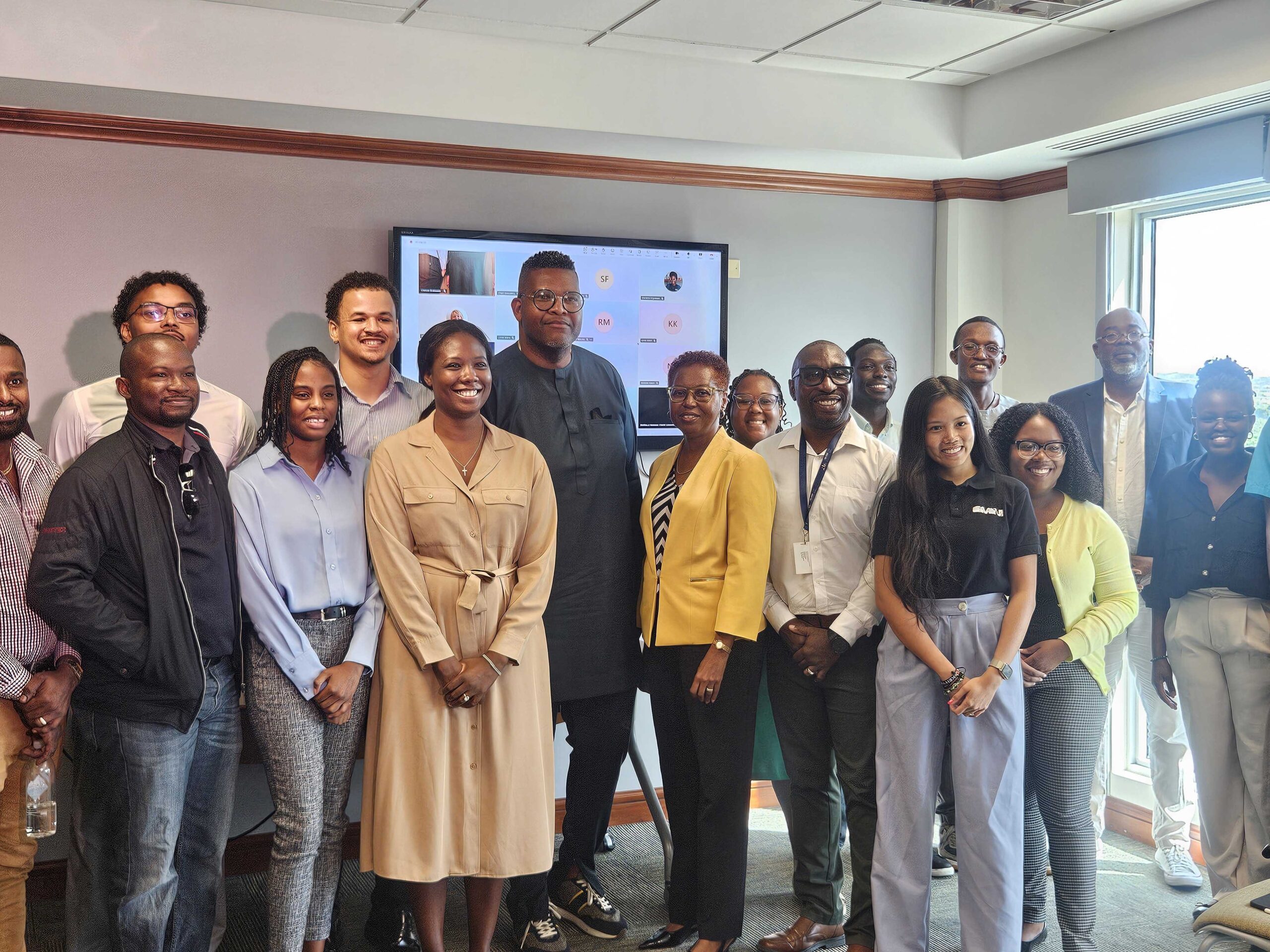
Belize is making significant strides in its digital transformation journey, aiming to transition from a traditional Business Process Outsourcing (BPO) hub to a competitive Global Digital Services center. With the BPO sector currently supporting nearly 20,000 jobs, the country is leveraging the Orange Economy to stay ahead in the rapidly evolving digital landscape. On November 20, 2025, government officials, industry leaders, and international partners convened for a high-level strategy workshop to outline Belize’s future in the global digital economy. Narda Garcia, CEO of the Office of the Prime Minister and Ministry of Investment, emphasized the urgency of this transformation, citing the dual threats of artificial intelligence (AI) and protectionist foreign policies. Garcia highlighted the need to view AI as a tool rather than a threat, advocating for skills diversification to ensure job security. Lincoln Blake, Director of the Investment Policy and Compliance Unit, echoed this sentiment, stressing the importance of training the workforce to master emerging technologies like AI and 3D printing. Consultant Luis Parrilla, leading the development of Belize’s Global Digital Strategy, outlined six key pillars: legal reform, incentive reform, education and capacity training, visibility and export, data governance, and interagency operability. The strategy aims to create a robust environment for sector growth, equipping the workforce with high-demand digital and soft skills. Victoria Tun, Vice-President of the BPO Association, acknowledged the challenges posed by AI but expressed optimism about the industry’s future, emphasizing the importance of upskilling employees. Belize’s five-year Global Digital Strategy reflects the government’s commitment to adapting to technological advancements and ensuring the workforce is prepared for the future.
-

Cybersecurity in times of digital transformation
Cuba has launched its 4th National Cybersecurity Conference today, a pivotal event running until November 30, 2025. This conference underscores the nation’s commitment to fostering a robust cybersecurity culture in an increasingly digitized world. The event will feature a series of activities, including educational talks in schools, universities, and workplaces, alongside a dedicated technology showcase aimed at raising awareness about cyber risks and promoting safe digital practices. The conference also pays homage to Fidel Castro’s vision, emphasizing the critical role of technology and education in safeguarding national sovereignty. Castro’s early initiatives, such as the introduction of computers in education and the establishment of the University of Information Sciences (UCI), laid the foundation for Cuba’s current cybersecurity efforts. The conference highlights the urgent need for cybersecurity measures, given the alarming global statistics: 500,000 cyberattacks occur every minute, 60% of fraud prevention companies detect breaches only after financial losses, and over 90% of attacks exploit human error. Additionally, 56% of experts predict that artificial intelligence will empower cyber attackers, exacerbating threats like phishing and fake news. Cuba’s National Cybersecurity Working Group, established in 2021, has been instrumental in strengthening the country’s defenses. The group has focused on monitoring cyber incidents, enhancing critical infrastructure, and developing national technologies such as toDus, Picta, and Transfermóvil. Looking ahead, Cuba plans to prioritize human resource development, expand cybersecurity education, and modernize its technological infrastructure. The conference also emphasizes the importance of national sovereignty in cyberspace, echoing President Miguel Díaz-Canel’s call for a unified, inclusive approach to internet integration. As Cuba continues its digital transformation, the conference serves as a critical platform for addressing emerging challenges and fostering a secure digital future.
-

Trinidad and Tobago among five finalists: Costa Rica wins Solve for Tomorrow programme
Costa Rican students Steven Alpízar, Sebastián Pastrana, Esteban Canales, and Luis Ureña, along with their teacher Jeisson Córdoba from Colegio Técnico Profesional Don Bosco, have been crowned Regional Champions of Samsung Latin America’s 2025 Solve for Tomorrow (SFT) educational programme. Their winning project, AgroTico Smart, is an advanced agricultural platform designed to tackle the unique challenges faced by farmers in the Chorotega and Huetar Norte regions. Utilizing IoT sensors, AI, and satellite data, the system delivers personalized recommendations to farmers via SMS and web applications. It also includes a distribution model, technical support, and training for local technicians, making it a comprehensive solution for agricultural innovation. The announcement was made on November 13 during a ceremony attended by Jason Kim, President of Samsung Electronics SELA, who praised the students for their creativity and dedication. María Fernanda Hernández, Samsung’s corporate citizenship manager for Central America, the Caribbean, Ecuador, and Venezuela, highlighted the programme’s success in fostering youth innovation and building a brighter future for the region. Over 3,000 project ideas were submitted from 12 countries, with more than 10,000 participants involved. The programme also provided over 12,000 hours of training in essential 21st-century skills and cutting-edge technologies. Among the finalists was the team from Marabella North Secondary School in Trinidad and Tobago, whose solar-powered flood early-warning system, Doh Get Wet, demonstrated significant potential in addressing community flooding risks. Samsung also awarded special recognitions to Ecuador and Paraguay for their outstanding contributions.
-

Four arrested in US in scheme to smuggle AI chips to China
In a significant crackdown on illegal technology exports, the U.S. Department of Justice announced the arrest of two Chinese nationals and two Americans for allegedly orchestrating a scheme to illegally export cutting-edge Nvidia chips with AI applications to China. The individuals, identified as Cham Li, 38, and Jing Chen, 45, both Chinese citizens, alongside Americans Hon Ning Ho, 34, and Brian Raymond, 46, face charges of conspiring to violate the Export Control Reform Act (ECRA) and money laundering.
-

Fake Noticiero 5 Semanal Page on Facebook!
News Five has issued a public alert regarding a fraudulent Facebook page masquerading as its official Spanish-language news service, Noticiero 5 Semanal. The counterfeit page, which bears a striking resemblance to the authentic News Five brand, has been circulating online with the intent to deceive users. Despite having only 35 friends, the fake account employs branding and naming conventions nearly identical to the legitimate Noticiero 5 Semanal page, which boasts over 55,000 followers and is the sole official source for News Five’s Spanish-language content.