分类: sports

  • Column: Van wie is het WK nog?

    Column: Van wie is het WK nog?

    The biggest global sporting spectacle on the planet, the FIFA World Cup, kicked off on Thursday, drawing an audience of billions across every continent. Public squares fill with cheering crowds, bars work around the clock to serve thirsty fans, and for a few weeks, the world feels like it has transformed into one giant, interconnected football family. This unifying power has defined the World Cup for nearly a century: it is one of the rare global events that brings together people from every nationality, language, religion and political background, all bound by a shared love for a single game played with a round ball.

    Yet long before the opening whistle of the first match, an uncomfortable question has once again loomed over this year’s tournament co-hosted by the United States, Canada and Mexico: who does football truly belong to in the modern era?

    The recent controversy surrounding Somali referee Omar Abdulkadir Artan, who faced major barriers entering the United States despite holding an official appointment from FIFA, is far more than an isolated bureaucratic incident. It has become a powerful symbol of a shifting dynamic that has been unfolding for decades. While the World Cup brands itself as a celebration of global equality, behind the scenes, nationality, power, geopolitics and money still dictate access and opportunity.

    This pattern is nothing new. Past tournaments have been marked by persistent tension: debates over exorbitant stadium construction costs in South Africa, mass public protests against billion-dollar infrastructure investments while basic public services were underfunded in Brazil, arguments over geopolitical influence surrounding the Russia World Cup, and widespread scrutiny of migrant working conditions and human rights abuses in Qatar. This year, the core tension centers on immigration policy, border controls, visa restrictions and unequal access for participants and fans alike.

    Time and again, the World Cup proves it cannot exist separate from the problems of the wider world: it is a mirror that reflects global inequality, power imbalances and political divisions. That is why the long-held idea that sport and politics can remain completely separate may be a comforting myth, but it no longer matches reality. Today, the World Cup is a sprawling global enterprise that caters to the competing interests of national governments, international bodies, multinational sponsors, media conglomerates and billion-dollar corporate partners.

    Once, the World Cup was first and foremost a celebration for ordinary fans. Now, it increasingly caters to the needs of sponsors, marketing firms, broadcast rights holders and commercial partners. No one expects a tournament of this scale to run for free; organization and infrastructure require massive investment. But the slow shift has transformed what was once a people’s festival into an exclusive commercial product, priced out of reach for millions.

    For any fan traveling to the United States to cheer on their national team this year, the total cost amounts to a small fortune. Hotel prices have skyrocketed across host cities, domestic airfare has surged to record levels, and match tickets are already among the most expensive in the history of the tournament. On top of that, fans must cover the cost of ground transportation, travel insurance, food and accommodation, pushing the total even higher.

    For millions of supporters across Africa, Asia, Latin America and even low-income regions of Europe, a trip to this World Cup is now financially impossible. The same is true for many fans from the Caribbean and Suriname, communities that have long contributed to the growth of global football. Millions of fans who helped turn the sport into the global phenomenon it is today can only watch from their living rooms on television.

    Even fans watching from home cannot escape the grip of the World Cup’s massive commercial machine. Broadcasters pay billions of dollars to secure exclusive broadcast rights, while sponsors pour hundreds of millions into attaching their brand to the tournament. Every goal, every replay, every press conference is built around a revenue model designed to generate profit for corporate stakeholders.

    For decades, the modern World Cup has not been just about football. This shift is not just disappointing – it carries real risks. Football’s enduring power has always come from its accessibility: you do not need expensive equipment, an exclusive club membership or luxury accommodation to play. All you need is a ball and a patch of open ground. That is what made football the game of workers, students, farmers, children and neighborhood communities across the entire world. Now, the world’s biggest football celebration risks drifting further and further away from the ordinary fan that built the sport.

    Even with all this criticism, billions of people across the world will spend the next four weeks cheering, laughing, groaning and dreaming alongside their favorite teams. An unexpected upset victory by a small underdog nation will still bring an entire country to a standstill in collective euphoria. A last-minute winning goal will still stir raw, genuine emotions that no sponsor can buy and no governing body can manufacture. That unchanging magic of football is still alive.

    But precisely because football holds such enormous, often inspiring power over billions of lives, we cannot shy away from asking these hard questions. Why does access to the tournament remain out of reach for so many? Why do debates over origin, migration and unequal treatment keep resurfacing at every edition? Why do commercial interests grow larger and more central with every World Cup?

    There is no question that the World Cup remains the most beloved sporting event on the planet. But it is long past time for FIFA, host organizers and participating national governments to step back and ask what ordinary fans actually want from the tournament. It is not just bigger stadiums, more expensive hospitality packages and higher revenue streams – it is a tournament that is actually open and accessible to people from every walk of life.

    We can only hope that the inherent beauty of the game will ultimately prove stronger than the politics that surround it and the money that is made from it. Because if the World Cup is supposed to be about anything, it should not be about power or profit – it should be about people.

  • Mexico City dazzles as World Cup 2026 kicks off in style

    Mexico City dazzles as World Cup 2026 kicks off in style

    The 2026 FIFA World Cup has officially kicked off, and Mexico City has emerged as an early showstopper, blending rich cultural heritage with world-class event organization to deliver a breathtaking opening celebration that has captivated soccer fans across the globe.

    As one of the three host nations for this year’s expanded 48-team tournament, alongside the United States and Canada, Mexico welcomed the global soccer community to its iconic capital city with open arms. From the colorful, choreographed parades winding through the historic Centro Histórico district to the dazzling pyrotechnic display that lit up the night sky over the Estadio Azteca—one of the most legendary venues in World Cup history—the opening festivities left attendees and viewers at home in awe.

    Local residents turned out in massive numbers to line city streets, decked out in their signature green, white, and red team colors, chanting traditional soccer anthems and sharing homemade street food with visiting international fans. City officials had spent years upgrading infrastructure, expanding public transit capacity, and enhancing security protocols to accommodate the influx of tens of thousands of travelers, and the smooth execution of the opening weekend has drawn widespread praise from event organizers and attendees alike.

    Estadio Azteca, which has previously hosted two World Cup finals, made history again as part of the 2026 opening, becoming the first stadium ever to host matches in three separate World Cup tournaments. Fans in attendance described the electric atmosphere inside the venue, where the roar of the crowd created a wall of sound that could be heard blocks away from the stadium.

    Beyond the opening celebrations, Mexico City is set to host six group-stage matches and two knockout-round fixtures through the tournament, and early indicators suggest the capital is on track to deliver one of the most memorable World Cup host city experiences in modern history. Soccer analysts and tourism officials both project that the successful launch of the tournament in Mexico City will provide a major boost to the local economy, draw record numbers of future visitors, and reinforce the city’s reputation as one of the most vibrant cultural destinations in the Americas.

  • World Cup 2026 : PM Fils-Aimé in the United States to support our Grenadiers

    World Cup 2026 : PM Fils-Aimé in the United States to support our Grenadiers

    Haiti’s journey at the 2026 FIFA World Cup is set to kick off this weekend, and the nation’s top political leadership is stepping up to rally behind its national football team, the Grenadiers. On Thursday, June 11, 2026, Prime Minister Alix Didier Fils-Aimé departed Haiti for the United States, where he will be in attendance for the team’s opening group stage match against Scotland, scheduled for 9:00 p.m. local (and Haitian) time on June 13 at Foxborough’s Gillette Stadium, located just outside Boston, Massachusetts.

    For the Haitian nation, this World Cup appearance marks a historic milestone, and the prime minister’s trip carries far more meaning than simply attending a sporting event. Through his in-person presence at the match, Fils-Aimé aims to demonstrate unwavering, full-hearted support for the Grenadiers and every member of the Haitian national delegation. This moment stands as a source of collective national pride, and the prime minister’s attendance also serves as a public gesture of encouragement to Haitian youth and the broader domestic sports community, which the government frames as central pillars of national unity and shared hope.

    In the lead-up to the team’s first match, Jean Willio Patrick Chrispin, Haiti’s Secretary of State for Communication, released a statement extending warm congratulations and sincere encouragement to the Grenadiers as they prepare to take the global stage to defend Haiti’s national colors.

    The statement from the Haitian government went further, issuing a nationwide call for all Haitian citizens to rally behind the national squad. Officials emphasized that beyond final match scores, every World Cup appearance by the Grenadiers is an opportunity to showcase to the global community the strength of Haitian unity, the resilience that defines the nation, and the unshakable loyalty Haitians hold for their homeland. The government encouraged every household, neighborhood, city, and community across the country to turn into a hub of collective support for the team.

    A special fraternal appeal was also extended to the vast Haitian diaspora spread across every continent, particularly for diaspora members who will be in attendance at the U.S.-hosted matches. “Your presence, your songs and your fervor will constitute an invaluable source of motivation for our players,” the statement read, adding that diaspora fans serve as living ambassadors for Haiti, extending the nation’s energy as the entire country unites in excitement for the global tournament.

    Amid this moment of national communion, the Fils-Aimé administration called on every Haitian citizen to send positive energy to the national team. “May our prayers, our encouragement and our confidence accompany the Grenadiers throughout their journey,” the statement concluded. “Together, let’s make this World Cup a symbol of unity, national pride and renewed hope. Go Grenadiers! Go Haiti!”

  • PM Commits Funding for Potters Pool Expansion

    PM Commits Funding for Potters Pool Expansion

    A transformative community sports infrastructure project in Antigua and Barbuda has gained critical new momentum, after Prime Minister Gaston Browne pledged government backing to expand the swimming pool at the Potters Playing Field redevelopment, pushing the initiative forward ahead of the country’s 2026 hosting of the Commonwealth Heads of Government Meeting (CHOGM).

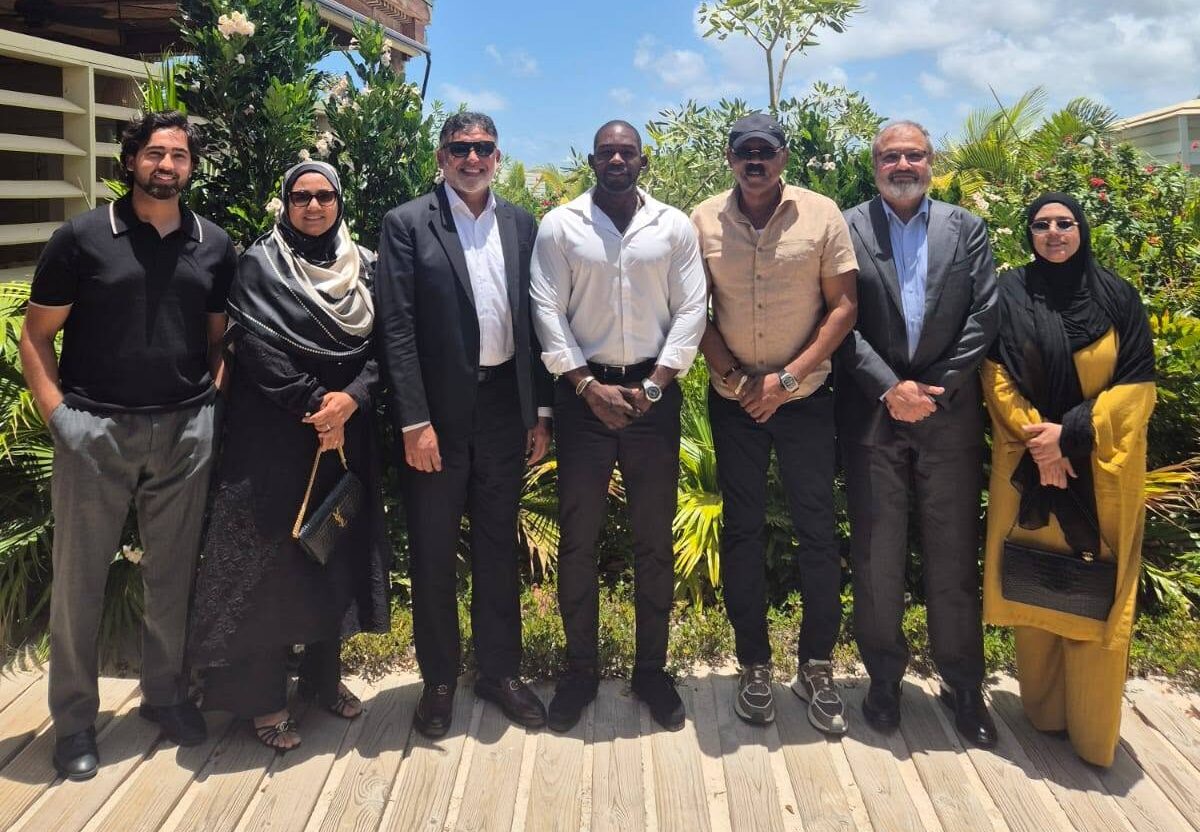
    The funding commitment was formally announced during a recent on-site inspection, led by project lead Karen-Mae Hill and Minister of State Michael Freeland. The tour was also attended by prominent philanthropist Sir David Harrison, alongside members of the project’s board of trustees, giving stakeholders a first-hand look at ongoing construction progress.

    Project leadership has greeted the prime minister’s pledge as a game-changing boost for the initiative, noting that the expanded swimming pool will lift the facility’s overall capacity to serve more users, amplifying the long-term social and athletic benefits the complex will deliver to both local residents and visiting athletes.

    Sir David, one of the project’s key supporters, shared that he is deeply encouraged by the pace of construction work to date, and confirmed he remains confident the entire redevelopment will stay on schedule to meet its pre-CHOGM completion target.

    Hill framed the full Potters Playing Field overhaul as far more than a construction project: it is a strategic investment in the future of the Potters neighborhood, designed to drive holistic community gains. Beyond building athletic infrastructure, the initiative is centered on improving public physical and mental well-being, fostering youth skill development, strengthening social cohesion across local groups, and creating new opportunities for small business and entrepreneurship in the area. Once complete, the facility will host regular neighborhood gatherings, school-level sporting competitions, and national athletic events, while building the capacity to welcome regional and international tournaments in coming years.

    The entire redevelopment is targeted for substantial completion by September 1, 2026, approximately two months before Antigua and Barbuda welcomes global leaders for CHOGM, which is scheduled to run from November 1 to 4 that year.

    The new sports complex boasts a range of purpose-built features, starting with three multi-use hard courts designed for basketball, netball and volleyball. Each court will include covered spectator stands with capacity for 225 attendees. Local contractor Agile Courts Construction has been tapped to lead resurfacing work, plus the installation of new court lighting, official playing markings, perimeter fencing and other core athletic infrastructure. Project officials confirmed all required lighting equipment has already been delivered to the site, removing a potential delay to the construction timeline.

    A multi-purpose shared field for football and cricket will also anchor the complex, with land grading currently underway. Crews will next install a full drainage system before laying sod across the field, with the full grassing work on track to wrap up by August.

    Additional site upgrades include the construction of a dedicated electrical room to power all on-site lighting, with design plans already in place to integrate rooftop solar energy systems to cut long-term operational emissions and costs.

    According to the official project timeline, the hard courts and spectator stands are scheduled for completion as early as September this year, while the expanded swimming pool and new baseball facilities are targeted for final completion by October.

    The entire project has benefited from widespread support from private and public donors, including contributions from the late Sir Aziz Hadeed, a well-known local business leader and philanthropist. In recognition of his contribution, the complex’s cricket and football pavilion will be named the Aziz Fares Hadeed Pavilion in his honor.

    When fully complete, the redeveloped Potters Playing Field will stand as one of Antigua and Barbuda’s largest community-focused sports facilities, and serve as a lasting public legacy of the 2026 CHOGM summit for generations of residents to come.

  • Potters Sports Field Redevelopment Project Advances

    Potters Sports Field Redevelopment Project Advances

    The multi-million-dollar Potters Sports Field Redevelopment Project, a transformative initiative set to reshape recreational and community infrastructure in Potters Village, Antigua and Barbuda, has reached a new milestone as key stakeholders and the project’s lead donor visited the construction site this week.

    The project committee rolled out a progress update during the visit of Sir David Harrison, the principal backer of the redevelopment, marking his third on-site inspection since work got underway. Joining the tour was Antigua and Barbuda Prime Minister Gaston Browne, who publicly commended Sir David for his substantial investment that promises to deliver long-term value to both the Potters community and the broader national population.

    The visit came just days after another key stakeholder walk-through: High Commissioner Karen-Mae Hill, the visionary who first championed the redevelopment, invited St. George’s Parliamentary Representative Michael Freeland to tour the site, sharing detailed updates on project design and proposed construction timelines.

    When complete, the upgraded complex will boast a full suite of world-class recreational amenities, cutting-edge facilities for multiple popular sports. These include top-tier basketball, netball and volleyball hardcourts, a combined cricket and football pitch, a regulation Little League baseball diamond, a dedicated children’s playground, a scenic walking trail, and a half-scale Olympic swimming pool to accommodate local swimming programs and training.

    The community-focused project has drawn widespread support from a network of donors across the public and private sectors. A prominent tribute will honor the late Sir Aziz Hadeed, one of the project’s early backers: the combined cricket and football pavilion will be formally named the Aziz Fares Hadeed Pavilion in his memory. Additional financial backing has been provided by Satellite Energy Ltd., Ophir Daniel and Ann Chapman-Daniel, the Department of the Environment, and Bonnie Floyd Ministries. The project has also received critical technical and logistical support from a wide range of national stakeholders, including Governor-General Sir Rodney Williams, the Ministry of Works, the Antigua and Barbuda Board of Education, the Ministry of Sports, APUA, the Port Authority, C.E.A.S Engineering’s Evron Zachariah, Cricket West Indies, the Survey Department, and the National Solid Waste Management Authority.

    A core defining feature of the project is its commitment to local economic empowerment: 80 percent of all construction workers hired for the redevelopment are residents of Potters Village. This requirement ensures that the immediate economic benefits of the large-scale investment stay within the community, while also creating opportunities for local workers to build new skills and secure sustained employment.

    Project technical leaders confirmed that construction will proceed in staggered phases, with the outdoor hardcourt sports facilities marked as the first major completed component set for handover. Materials for spectator seating stands have already been purchased, with delivery scheduled for the end of July.

    For Hill, who grew up in the community, the project is far more than a construction effort—it is a mission to lift up the neighborhood that shaped her. She emphasized that the completed complex will act as a catalyst for multiple public goods, boosting physical activity and public health, supporting mental well-being, strengthening social connection across community groups, creating new development opportunities for young people, and spurring local small business entrepreneurship.

    Once fully completed, the redeveloped sports complex will fill a critical gap as a leading venue for local community gatherings, inter-school sports competitions, and national sporting events. Beyond that, it will position Potters Village to bid for future regional and international sporting events, including future editions of the Commonwealth Games, bringing increased visibility and economic activity to the area for years to come.

  • Derde helft WK 2026: Mexico wint spannende wedstrijd, drie rode kaarten en vroege goal

    Derde helft WK 2026: Mexico wint spannende wedstrijd, drie rode kaarten en vroege goal

    The 2026 FIFA World Cup officially kicked off on June 11 with a vibrant, culturally rich opening ceremony hosted at Mexico City’s iconic Azteca Stadium, before host nation Mexico claimed a confident 2-0 victory over South Africa in their Group A opening match.

    The opening celebration set a joyful tone for the tournament, showcasing Mexico’s deep cultural heritage and diverse global traditions to a packed stadium of tens of thousands of cheering fans. Global music superstar Shakira, a two-time FIFA World Cup anthem performer with long-standing ties to the tournament, delivered an electrifying headline performance that had the crowd dancing and singing along, building widespread excitement for the upcoming month of elite football competition.

    From the first whistle, the host nation dominated play against South Africa. Mexico earned their first goal just nine minutes into the match, becoming the earliest opening-game goal at a World Cup since Philipp Lahm’s sixth-minute strike for Germany against Costa Rica in 2006. The opening goal came after a sloppy pass from a South African defender put Colombia-born Mexican striker Julian Quinones in a one-on-one breakaway with South African goalkeeper Ronwen Williams. Quinones stayed calm under pressure and slotted the ball between Williams’ legs to find the net, triggering deafening celebrations from the home crowd.

    The first half saw two early yellow cards, issued to South Africa’s Teboho Mokoena and Mexico’s Brian Gutierrez, both for late tackles, before a mandatory hydration break at the 25-minute mark allowed both sides to reset tactically. As the first half wound down, Mexico continued to pile on the pressure: Raúl Jiménez saw a curling shot saved by Williams in the 41st minute, and Quinones hit the post on a follow-up attempt, but South Africa managed to hold the line to go into halftime down just one goal.

    The second half started with no substitutions from either side, but it quickly unraveled for South Africa. In the 52nd minute, South Africa went down to 10 men after Yaya Sithole was issued a straight red card for a reckless tackle from behind on Gutierrez that stopped a clear goalscoring opportunity, handing Mexico a man advantage and a dangerous free kick just outside the 18-yard box.

    Mexico made their numerical advantage count in the 67th minute, when Raúl Jiménez doubled the host’s lead with a powerful headed finish off a pinpoint cross from Roberto Alvarado. The goal marked Jiménez’s first ever World Cup goal, sending the home crowd into a fresh frenzy of celebration.

    Discipline continued to be an issue for South Africa in the closing minutes, when Themba Zwane was sent off for violent conduct, leaving South Africa to play the final stretch with just nine players on the pitch. Mexico’s César Montes also picked up a red card in stoppage time for denying a clear goalscoring opportunity, bringing the total red cards for the match to three. Despite the late reduction to 10 men, Mexico held firm to secure a clean sheet and a full three points to open their tournament.

    Following the opening match, the next Group A fixture is scheduled to kick off at 23:00 the same day, with South Korea set to face the Czech Republic.

  • Dottin hoping to peak at the right time

    Dottin hoping to peak at the right time

    As the much-anticipated ICC Women’s T20 World Cup approaches its kickoff this Friday, all eyes are turning to West Indies’ star all-rounder Deandra Dottin, who is laser-focused on hitting her competitive stride just as the tournament enters its crucial stages. The Caribbean side will mark their tournament debut with a high-stakes opening match against defending champions New Zealand this Saturday, a opener that already has cricket fans around the globe buzzing.

    In a pre-tournament warm-up fixture against Australia held Thursday, Dottin delivered a standout individual performance even as her team fell to a six-wicket loss. The Barbadian native notched the highest score of the match for her side, hammering 48 runs off 38 deliveries against the strong Australian bowling attack. This result marked the West Indies’ second consecutive warm-up defeat, following a loss to India earlier this week.

    In a post-warmup interview, Dottin opened up about her personal preparation strategy and mindset heading into the World Cup. She emphasized that her primary goal in the practice matches was to spend extended time at the crease, shake off pre-tournament rust, and build momentum gradually, rather than posting flashy scores early. This intentional slow build is designed to ensure she peaks at the perfect moment for her team when the official tournament points are on the line.

    Dottin admitted she had put in months of rigorous off-season work, making targeted adjustments to her technique and game plan. In the early stages of preparation, she confessed she had struggled with self-imposed pressure, growing frustrated when results did not match the high standards she sets for herself. Now, however, she sees the slow start to her warm-up form as a positive sign rather than a setback. “I wasn’t supposed to peak too early,” she explained. “Now that I’m actually getting some runs and getting a feel of it, then it’s really good it’s coming at the right time.”

  • Derde helft WK 2026: Haïti gedwongen tenue te wijzigen vanwege oorlogssymboliek

    Derde helft WK 2026: Haïti gedwongen tenue te wijzigen vanwege oorlogssymboliek

    Just days before kicking off their 2026 FIFA World Cup campaign, the Haiti men’s national football team has been required to make last-minute changes to their official match kit after global football governing body FIFA banned a historic battle-themed graphic printed on the original design.

    Kit manufacturer Saeta confirmed the adjustment in an official Instagram statement released Wednesday, noting that FIFA raised objections to the illustration depicting the 1803 Battle of Vertières. The design, which integrated Haiti’s national flag, was created to symbolize the country’s hard-won independence. The original controversial kits were already worn by the squad during two pre-tournament friendly matches held in Florida, United States.

    In its statement, Saeta emphasized that the original design was never intended to carry political messaging. Instead, it was conceived as a tribute to all Haitian people who work daily to build a better future for their nation. The Haitian squad wore the original kit in friendlies against New Zealand on June 2 and Peru on June 5, prior to FIFA’s ruling.

    FIFA’s official equipment regulations explicitly prohibit the display of any political, religious, or personal messages, slogans or imagery on match-day kits. Following FIFA’s ruling, Colombia-based manufacturer Saeta has modified the kit to bring it into full compliance with tournament rules.

    “During the pre-tournament assessment process, FIFA determined that certain visual elements of the original design could be interpreted in a way that violates their equipment regulations, and ultimately requested adjustments to the design,” Saeta explained in the statement. “Although this interpretation differs from our original intention, Saeta respected the governing process and implemented FIFA’s final requirements.”

    Haiti is set to kick off its first World Cup finals campaign in 52 years this Saturday, June 13, with their opening Group stage match against Scotland in Boston. Following the opening clash, the side will face South American powerhouse Brazil in Philadelphia on June 19, before rounding out their group stage fixtures against African contender Morocco five days later in Atlanta.

  • Today is D-Day:  FIFA World Cup 2026

    Today is D-Day: FIFA World Cup 2026

    After years of anticipation, the 2026 FIFA World Cup – the largest edition in the tournament’s 96-year history – officially gets underway on June 11 in Mexico City, launching a six-week festival of football that will feature 104 matches across three host nations. The opening day’s schedule begins with a star-studded opening ceremony at Mexico City Stadium, headlined by Colombian pop icon Shakira and acclaimed Nigerian afrofusion artist Burna Boy, who will take the stage to perform the tournament’s official anthem “Dai Dai”. The ceremony is set to kick off at 11 a.m. local time, with two hours later the host nation’s team stepping onto the same pitch for their opening Group A clash against South Africa.

    Later the same day, the Group A action continues at Guadalajara’s Estadio Akron, where South Korea will face Czechia to round out the first day of tournament play. Ahead of the opening Mexico-South Africa fixture, statistical forecasts generated from 10,000 computer-simulated match outcomes give Mexico a 66% probability of securing three points to open their campaign, while South Africa holds just a 14% chance of an upset victory. Bafana Bafana head coach Hugo Broos did not shy away from the magnitude of the challenge ahead of kickoff, telling reporters that his squad is prepared to compete for every possession against what he described as the strongest side in Group A. He also noted that the energy of 85,000 cheering Mexican supporters in the stands creates an additional competitive edge that the host side will carry into the match.

    While the world turns its attention to the opening of the world’s most-watched sporting event, the lead-up to the tournament has not been free of controversy. Multiple protest movements have surged across Mexico City in the weeks and days before kickoff, with demonstrations organized by teachers, transport labor unions, small-scale farmers, and family members of missing persons. Protesters have blocked major roadways near Estadio Azteca and dismantled temporary World Cup installations around the capital, demanding policy changes including higher public sector wages, pension reform, and urgent government action on long-unresolved national social issues.

    A separate diplomatic controversy has also emerged in the lead-up to kickoff: a Somali referee appointed to officiate matches at the tournament has been barred from entering the United States, one of the three 2026 host nations. Citing anonymous sources, Agence France-Presse reports that a U.S. State Department official confirmed the entry denial was issued over alleged links to suspected members of terrorist organizations, a claim that has not been independently verified as of opening day.

    Beyond social and diplomatic tensions, the 2026 tournament also makes history as the most expensive World Cup ever staged. For the first time in the competition’s history, FIFA implemented dynamic ticket pricing, a model that increases match ticket costs as consumer demand rises. During the initial ticket sales window, the governing body received more than 500 million requests for tickets, pushing prices for some high-demand seats to unprecedented levels. The steep pricing has already had unintended economic consequences for local host communities: Reuters reports that projected waves of international football fans have failed to materialize, leaving hotels in host regions scrambling to cut room rates to fill vacancies, while overall cross-border flight bookings for tournament visitors remain well below pre-tournament projections.

    As the opening ceremony gets underway, football fans across the globe are now waiting to see if on-pitch action can overshadow the pre-tournament disputes, and whether the expanded 48-team format – which created the historic 104-match schedule – will deliver a memorable tournament that lives up to expectations.

  • Ralford Mullings retains discus title at NCAA Champs

    Ralford Mullings retains discus title at NCAA Champs

    EUGENE, Ore. — The 2024 NCAA Outdoor Track and Field Championships at Hayward Field delivered a historic day for Jamaican athletics Friday, as national record-holder and reigning champion Ralford Mullings of the University of Oklahoma successfully defended his men’s discus throw title in spectacular fashion.

    Competition against a stacked field of top collegiate throwers, Mullings got out to an early lead, holding the top position on the leaderboard from the very first round of throws. His lead did not go unchallenged, however: Air Force’s Texas Tanner surged past the defending champion in the middle rounds, pushing Mullings to deliver a career-level performance to retain his crown. Responding to the pressure in the fourth round, Mullings unleashed a winning throw of 65.81 meters, enough to secure his second consecutive national title and cement his status as one of the top young discus throwers in the world.

    The men’s discus event turned into a Jamaican showcase, as compatriots filled multiple top-six finishing positions. Racquel Broderick of the University of Southern California took second place overall, notching a new personal best of 64.15 meters to complete a one-two sweep for Jamaican athletes. Two more Jamaican competitors hit new lifetime best marks to finish in the top five: University of Alabama’s Christopher Young placed fifth with a throw of 62.30 meters, while Florida State University’s Shamar Reid tied Young’s mark to take sixth place. Two additional Jamaican athletes also competed in the final: Alabama’s Trevor Gunzel finished 14th with a 58.90-meter throw, and LSU’s Chad Hendricks recorded a throw of 55.40 meters to round out the Jamaican contingent.

    Jamaican athletes also turned in strong performances in other men’s events on the third day of competition, though not all claimed top spots. In the men’s 800-meter run, an upset shook up the final results: Colin Sahlman of Northern Arizona outpaced two Jamaican teammates from the University of Arkansas to take the national title. Sahlman crossed the finish line in 1:44.22, edging out Arkansas’ Tyrice Taylor, who finished second in 1:44.30. Taylor’s teammate Rivaldo Marshall took third place with a time of 1:44.93. In the men’s 110-meter hurdles, Baylor University’s Demario Prince clocked a time of 13.25 seconds to secure sixth place in the national final.

    Reporting by Paul A Reid