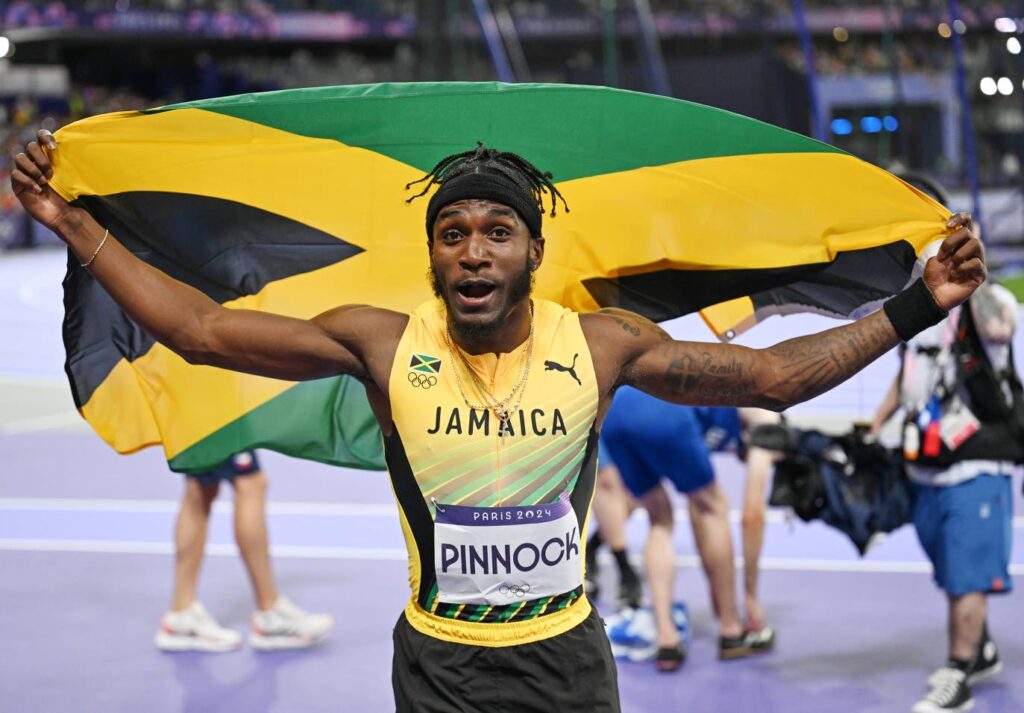
A recent ruling from global track and field governing body World Athletics has thrown international athletics into controversy, after regulators blocked 11 elite athletes — four of whom are decorated Jamaican competitors — from changing their sporting nationality to compete for Turkey. The high-profile athletes affected include some of the Caribbean nation’s top Olympic medal-winners: reigning Olympic discus champion Roje Stona, 2024 Olympic shot put bronze medalist Rajindra Campbell, long jump star and Olympic and World Championships silver medalist Wayne Pinnock, and rising triple jump standout Jaydon Hibbert.
In an official public statement released Thursday, World Athletics’ Nationality Review Panel, the body tasked with evaluating nationality transfer requests, determined the 11 applications were part of a coordinated, state-backed recruitment strategy led by the Turkish government. The panel claims the initiative offers large financial contracts to elite athletes specifically to improve Turkey’s medal standing ahead of the 2028 Los Angeles Olympic Games, and that the transfers run counter to existing rules.
This decision marks the most aggressive action World Athletics has taken to date to crack down on what the organization frames as the commercialization of national sporting allegiance. The governing body argues that approving the transfers would erode the integrity of global elite competition, noting rules require athletes to hold a genuine personal connection to the nation they represent internationally.
But the ruling has drawn sharp pushback from athlete agents, legal experts, and athletics insiders, who say the decision raises major red flags over inconsistent rule enforcement, procedural fairness, and basic athlete rights.
Paul Doyle, the agent representing Roje Stona, called the ruling nonsensical, pointing to a long history of similar nationality transfers that have been approved by World Athletics in recent years. “Athletes have transferred allegiances for decades,” Doyle noted. “When you look at the ones approved, even in the past five years, it makes zero sense that these would be denied.”
Doyle’s criticism echoes widespread industry concern that World Athletics is applying rules selectively, specifically because of the coordinated, large-scale nature of Turkey’s recruitment push, and following pushback from the Jamaica Athletics Administrative Association. A core point of contention is the panel’s choice to evaluate all 11 applications as a single group, rather than conducting individual assessments of each athlete’s case.
Sports attorney Emir Crowne has questioned whether this group-based approach undermines the fundamental fairness of the process. “It raises questions as to whether the athletes were unfairly grouped together as opposed to an individualised assessment of each case,” Crowne explained.
Beyond procedural issues, the ruling has sparked debate over whether it amounts to unlawful restraint of trade. Veteran athlete agent Cubie Seegobin did not mince words, arguing that the case could ultimately end up in international sports court. He noted that governing bodies need to adapt to the realities of a modern, globalized sports economy, where athlete mobility is increasingly common.
Seegobin also highlighted major concerns over timing. World Athletics will not implement new, stricter nationality transfer rules until March 27, 2026, after approving the regulatory changes in March of that year. All 11 athletes submitted their transfer requests well before the new rules were proposed. “They should have let this go through and then implement the new ruling moving forward,” Seegobin argued. “This is going to cause confusion and disruption.”
For the athletes involved, the consequences of the ruling are already immediate and life-altering. Many had already cut ties with Jamaica’s national athletics program, turning down opportunities to compete for their home country in anticipation of representing Turkey. The denial leaves them in regulatory limbo: they cannot compete for Turkey at major international events, and have already stepped away from Jamaican programming.
Doyle confirmed that Stona, one of Jamaica’s biggest track stars, has been hit particularly hard by the decision. “He’s not happy, obviously, but he understands that it’s a process, and, hopefully we can get through this and it will work out as favourable as possible for him. You know, honestly, the hope was that he would be eligible right away. That’s obviously not going to be the case now, but he’s pretty devastated,” Doyle said.
While the athletes are still eligible to compete in lower-tier non-championship events such as road races and club competitions, their path to the 2028 Olympics and World Athletics Championships is now completely unclear. Legal teams have already confirmed they are preparing to appeal the ruling at the highest available level, but the appeals process itself has drawn criticism over procedural fairness.
Crowne explains that current rules require athletes to first request reconsideration from the same Nationality Review Panel that rejected their applications, before they can escalate the case to the independent Court of Arbitration for Sport. “To me, that in itself seems procedurally unfair,” he said. “You have to go back to the same panel and ask them to reconsider before accessing another independent body.”