分类: sports

  • Cricket community salutes Sir Gary’s legacy

    Cricket community salutes Sir Gary’s legacy

    The global cricketing fraternity and Caribbean community are in mourning following the death of one of sport’s most iconic figures, Sir Garfield Sobers, the Barbados National Hero widely celebrated as the greatest all-rounder in cricket history. Tributes have flooded in from across the sport’s governing bodies, past players, and regional leaders, all honoring the unparalleled impact Sobers had on cricket and his home region after his passing on Friday.

    Leading the tributes, Cricket West Indies (CWI) President Dr. Kishore Shallow framed Sobers’ legacy as one that stretches far beyond the boundaries of any cricket pitch. “There are moments in the story of a people when the life of one individual becomes woven into the hopes, dreams and identity of generations. Today, the Caribbean mourns the passing of such an individual,” Shallow shared. “In the story of cricket, there are great players. There are champions. Then, there are those rare individuals who redefine the very meaning of greatness. Sir Garfield Sobers was the greatest cricketer the world has ever seen.”

    Shallow emphasized that Sobers’ extraordinary skill with bat, ball, and in the field became a source of enduring inspiration for Caribbean communities, proving that athletes from small island nations could reach the pinnacle of global sport and earn widespread international respect. The CWI president also reflected on his own personal connection to the legend, noting that he first benefited from Sobers’ investment in young talent as a youth cricketer competing in the Sir Garfield Sobers International Under-19 Cricket Tournament. “I remain grateful not only for that opportunity, but for the encouragement, wisdom and support he personally shared with me over the years. His kindness and influence will forever remain a treasured part of my journey,” Shallow said. Offering condolences on behalf of CWI, Shallow extended sympathies to Sobers’ family, the Government and people of Barbados, and cricket fans worldwide, noting that while the all-rounder has played his “final innings,” his legacy will “forever endure in the hearts of our region, and the story of the cricketing world.”

    The Barbados Cricket Association (BCA) echoed the widespread praise, hailing Sobers as “the greatest cricketer ever born” and an enduring icon of both Barbadian and West Indies cricket. BCA President Calvin Hope shared that he had held out hope that the ailing legend would recover, saying “I could not bring myself to think of a Barbados without him.” Beyond his genius on the pitch, Hope remembered Sobers as a close friend, a key collaborator in advancing Barbados’ sports tourism sector, and a trusted advisor on all cricket-related matters. “From his origins in the Bayland to Buckingham Palace, the Right Excellent Sir Garfield Sobers always remained courteous and respectful to everyone he interacted with,” Hope said. “We are eternally grateful for his contribution to the game of cricket.” As a formal mark of respect, the BCA postponed all domestic cricket matches scheduled for Saturday following the news of his death.

    The West Indies Players’ Association (WIPA) also honored Sobers as the global benchmark for excellence that generations of cricketers have used to measure their own success. “Sir Garfield Sobers was regarded as the gold standard of professional cricket, given his tremendous achievement and ability with both bat and ball,” said WIPA President and CEO Wavell Hinds. “He was an icon and an inspiration to generations of West Indian cricketers, including myself.”

    The International Cricket Council (ICC), cricket’s global governing body, added its voice to the tributes, with chairman Jay Shah noting that the sport had lost one of its most transformative and beloved figures. “Sir Garfield Sobers was not only the finest all-rounder the game has ever known, but one of the greatest cricketers in history. His remarkable ability to influence a match in every facet of the game set him apart from his peers,” Shah said. “Whether with the bat, ball or in the field, Sir Garfield embodied excellence, and his achievements continue to define the standard to which generations of cricketers aspire.”

    Shallow added that off the pitch, Sobers served as a unparalleled ambassador for cricket, with a legacy that extends far beyond his on-field records and statistics. He helped shape the global identity of West Indies cricket and left an indelible mark on the sport as a whole. “He will be remembered with immense admiration and gratitude, and his legacy will continue to inspire generations to come,” Shah said.

    Sobers’ decorated 20-year international Test career, which ran from 1954 to 1974, remains one of the most impressive in cricket history. He made his first-class debut at just 16 years old, earned selection to the West Indies national team a year later, and by 21, he set a new Test cricket record with an unbeaten 365 runs against Pakistan in 1958. That record stood for 36 years, until it was broken by fellow West Indies legend Brian Lara in 1994. Across 93 Test matches, Sobers scored 8,032 runs at an average of 57.78, including 26 centuries and 30 half-centuries, while also claiming 235 wickets and taking 109 catches. In 2000, he was named one of Wisden’s five Cricketers of the Century, cementing his status as a once-in-a-generation sporting talent.

  • Belizeans Pick Sides for World Cup Final

    Belizeans Pick Sides for World Cup Final

    The 2026 FIFA World Cup final is just days away, set to pit Argentina against Spain in one of the most anticipated football matches of the year. While Belize did not qualify for the tournament’s final stage, that has done nothing to dampen the passion of Belizean football fans, who have already picked their allegiances and are gearing up for collective watch parties across the country. Local outlet News Five’s reporter Paul Lopez hit the streets and popular venues to speak with organizers and fans about their plans for the blockbuster matchup.

    One of the most unique community viewing events is being hosted at Belize’s Life Church, where Pastor Corny Dueck explained the initiative grew out of his own sons’ lifelong love of the sport. “My sons are all into football, and from the last World Cup to now they’ve been crazy about the game, playing in local city clubs,” Dueck said. “As the final drew closer, we realized our church is all about building community and family connection. If people would otherwise be stuck watching alone at home, why not gather here for a family-friendly party to enjoy the match together?”

    To add extra fun to the gathering, the church has planned a range of interactive activities for attendees. Organizers have secured an official replica of the 2026 World Cup match ball, and set up a 90-square betting grid, with each square corresponding to one minute of regulation play. Fans can pay a $5 fee to claim a square, marking the minute they predict the first goal of the match will be scored. The holder of the correct minute will win a prize, with a random wheel spin used to break ties if multiple participants pick the same minute. The church is also running a silent auction for signed memorabilia featuring star players from both finalist squads.

    For fans who prefer a more traditional outing to bars, lounges or restaurants, new local venue Social Lounge is also preparing for a full house of football fans. Public relations representative George Jones noted that the venue has invested heavily in technology to deliver an unbeatable viewing experience, even for a sold-out crowd. “We’re one of the newest venues in the area, and we’ve loaded up on large-screen displays,” Jones explained. “No matter where you’re seated, every angle gives you a clear view of the game. We’ll open our doors at 1 PM on Sunday for fans to come in, enjoy great food and great company, and soak in the atmosphere. This is going to be a historic match, one that fans will talk about for years. No matter whether you’re here for Messi and Argentina or for Yamal and Spain, it’s a win for football fans, and that’s what we’re most excited for.”

    Beyond organized public events, Lopez also spoke to casual fans across Belize to find out where they would be watching and who they were supporting. The overwhelming majority of fans polled threw their support behind Argentina, almost universally citing captain and global superstar Lionel Messi as the main draw. One fan said he planned to watch the match from his own home, picking up a couple of drinks to enjoy the game, and summed up his support simply: “Argentina of course, because of Messi, the greatest.” Another fan attending a public gathering said her group was “voting for Argentina all the way,” while a third fan at home simply answered “Messi” when asked who he supported, explaining that Messi is “the GOAT” (Greatest of All Time) of the sport.

    Still, a small but passionate contingent of fans are throwing their support behind Spain, with many pointing to young Spanish star Lamine Yamal as their pick. One Spanish supporter joked when asked why he backed Spain over Messi’s Argentina: “Because Argentina the thief, Messi the thief in general. Because they deh thief, deh the thief my dog Lamine Yamal.” Other fans were equally vocal in their support, chanting “Go Spain, Yeah!” as Lopez interviewed them on the street.

    This report is a transcript of an evening television broadcast from News Five, with Kriol language dialogue transcribed using a standardized spelling system for online readers.

  • Saint Lucia PM lauds the late Sir Garfield Sobers

    Saint Lucia PM lauds the late Sir Garfield Sobers

    The global cricketing community is in mourning after the passing of Sir Garfield St Aubrun Sobers, the man widely celebrated as the greatest cricketer to ever play the game, regardless of which planet he graced with his talent. He died on Friday at the age of 89, leaving behind a decades-long legacy that reshaped international cricket and lifted the spirit of the Caribbean region. Among the first leaders to offer public condolences was Saint Lucia Prime Minister Philip J Pierre, who joined thousands of tributes flowing from across the Caribbean and around the world.

    Speaking on behalf of the government and people of Saint Lucia, Pierre honored Sobers, a Barbados national hero and legendary former captain of the West Indies cricket team. He emphasized that Sobers’ death marks “a profound loss to Barbados, West Indies cricket and the entire Caribbean.”

    Pierre walked through the landmark achievements that turned the native of Bay Land, St Michael, into one of the most enduring icons in the history of international sport. One of his most famous feats came in 1958, when he scored an unbeaten 365 runs in a Test match against Pakistan. That spectacular individual innings set a new world record for the highest score in Test cricket, a mark that stood unbroken for 36 years. A decade later, in 1968, Sobers made history again while representing Nottinghamshire in first-class cricket, when he became the first player ever to hit six sixes from six consecutive balls in a single over – a feat that remains one of the most celebrated in the sport.

    Beyond his record-breaking numbers, Sobers broke new ground as the first truly all-round international cricketer. He was equally exceptional in three core aspects of the game: fielding, batting, and bowling, with the rare ability to deliver both fast pace and effective spin bowling. But Pierre stressed that Sobers’ impact extended far beyond the boundary of any cricket pitch.

    “Sir Garfield belonged to a generation of West Indian cricketers whose success gave confidence to Caribbean people during an important period in the region’s development,” Pierre explained, noting that the team’s global victories became a source of collective pride and empowerment for Caribbean communities at a pivotal time of social and political change.

    Pierre extended formal heartfelt condolences to Sobers’ family and loved ones, as well as to Barbados Prime Minister Mia Amor Mottley, the government and people of Barbados, Cricket West Indies, and the global cricketing fraternity. As chairman of the Caribbean Community (CARICOM), Pierre also joined the regional bloc in honoring “a son of the Caribbean.” Sobers was awarded CARICOM’s highest regional honor, the Order of the Caribbean Community, back in 1998 in recognition of his contributions to cricket and Caribbean identity.

  • Cricket legend to receive State Funeral as island mourns

    Cricket legend to receive State Funeral as island mourns

    Barbados is preparing to honor one of its most iconic figures and greatest sporting legends with a full State Funeral, following the passing of National Hero Sir Garfield St Aubrun Sobers on Friday morning, just 11 days before what would have been his 90th birthday. Within hours of his death, which occurred at approximately 9 a.m., Prime Minister Mia Mottley announced immediate national measures to mourn the iconic cricketer, declaring the day of his passing a national day of mourning and ordering all national flags across the country to be flown at half-mast until his interment. Mottley confirmed that the man who held Barbados’ highest civilian honor in life would receive the nation’s highest posthumous tribute, a state funeral, in recognition of his extraordinary contributions to the country and global sport. In a televised address to the nation, Mottley framed Sir Garry’s death as a moment of profound collective loss, felt not just across Barbados, but throughout the entire Caribbean and the global cricketing community. “It is with profound sadness that I now advise the people of Barbados, the region and the wider cricketing world of the passing of The Right Excellent Sir Garfield St Aubrun Sobers, our beloved Sir Garry,” she said. A second national day of mourning will be held on the day of Sir Garry’s interment, with all official government functions canceled and flags remaining at half-staff through the conclusion of the state funeral. A coordination committee led by Senator Lisa Cummins, working alongside the Cabinet Office and the Barbados Defence Force, has been assembled to organize the ceremonial proceedings, with additional details of the funeral schedule expected to be released publicly in the coming days. Sir Garry’s passing closes the book on an extraordinary life that extended far beyond the boundaries of the cricket pitch, playing a central role in shaping Barbados’ global identity and placing the small Caribbean nation on the world sporting map. Born into humble working-class beginnings in the Bay Land neighborhood of St Michael, Sobers rose from local community pitches to become one of the most revered figures in the history of international cricket, earning global acclaim for his unmatched versatility as a batsman, bowler and fielder that set him apart from his peers. He made his Test debut for the West Indies at just 16 years old in 1954, and over the next two decades established himself as the global benchmark for all-round cricketing excellence. His iconic unbeaten 365-run innings against Pakistan in 1958 stood as the highest individual score in Test match cricket for 36 years, while his historic feat of hitting six sixes from a single over bowled by Malcolm Nash, playing for county side Nottinghamshire against Glamorgan in 1968, remains one of the most celebrated achievements in the sport’s history. In 1975, Queen Elizabeth II knighed him for his services to cricket during a public investiture ceremony held at the Garrison Savannah, an event that remains unique in British and Commonwealth history. He was named a National Hero of Barbados in 1998, becoming the first and only living holder of that honor until 2021. That same year, he was awarded the Order of the Caribbean Community, adding to a long list of honors that included an honorary Doctor of Laws from the University of the West Indies in 1992 and appointment as an Officer of the Order of Australia in 2003. Beyond his on-field achievements and formal accolades, Sir Garry served as one of Barbados’ most recognizable and effective cultural ambassadors, even after retiring from professional cricket. He launched an international schools cricket competition that bears his name, which provided a platform for emerging young Caribbean talent – most notably a young Brian Lara, who would go on to break Sobers’ 36-year Test scoring record and cement his own status as a global batting legend. Reflecting on Sobers’ enduring legacy, Mottley emphasized that his greatness extended far beyond statistical records on the cricket field. “He is remembered as the greatest cricketer, the greatest all-rounder the world has ever seen, not simply because of his records, but because he became the standard by which greatness would forever be measured,” she said. His life trajectory, Mottley noted, stood as a powerful example of how raw talent, relentless discipline and perseverance could lift a young person from humble beginnings onto the global stage. “Sir Garfield St Aubrun Sobers, our Sir Garry, did not begin life among privilege or parade. He began in Walcott Avenue, Bay Land, a boy of Barbados, shaped by family, community, loss, discipline and faith. He travelled from Bay Land to Kensington, from Kensington to Sabina Park, and onto the world stage, carrying Barbados, carrying the West Indies and carrying the Caribbean as a whole with distinction,” Mottley added. The prime minister emphasized that Sobers’ influence transcended sport, framing him as a global symbol of excellence whose achievements instilled enduring national pride across Barbados and the entire Caribbean. Born on July 28, 1936, Sobers experienced profound loss at a young age: when he was just five years old, his father, a Merchant Navy seaman, was killed at sea when his ship was torpedoed by a German U-boat in January 1942 during the Second World War. His mother Thelma raised Sobers and his five siblings alone; his brother Gerald would go on to become a skilled cricketer in his own youth. Educated at Bay Street Boys’ School, Sobers honed his skills on the Bay Pasture, now the playing field of Bay Primary School, and earned a spot playing first-division cricket for the Police Club by age 15, making his first-class debut that same year as a lanky, athletic left-arm bowler. In a tribute released on behalf of the Barbados Police Service, Commissioner of Police Sonia Boyce described Sir Garry as far more than a cricketing legend, noting that his personal discipline, humility and deep love for his country inspired generations of young Barbadians, and will continue to serve as a model for young people striving to reach their full potential. After earning his call-up to the West Indies national Test side as a teenager in 1954, Sobers developed into the most complete cricketer of his era, and is still widely regarded as the greatest all-rounder to ever play the game. Over a 20-year international career spanning 93 Test matches between 1954 and 1974, he scored 8,032 runs at an average of 57.78, including 26 centuries and 30 half-centuries. He also took 235 wickets using a rare combination of fast-medium pace and spin bowling, and claimed 109 catches. Remarkably, these statistics were achieved in an era of uncovered pitches, before the introduction of protective batting helmets, and with far fewer scheduled international matches than modern cricket. These numbers place him among the greatest specialist batters in history even before accounting for his bowling and fielding contributions. A rare complete all-rounder, he was a left-handed batter with breathtaking range and authoritative strokeplay, a brilliant close fielder, and a bowler capable of switching between three distinct styles: fast-medium pace, orthodox left-arm spin and left-arm wrist spin. Legendary Indian spinner Bishan Singh Bedi once described Sobers as “God’s own contribution to world cricket”. He captained the West Indies in 39 Test matches between 1965 and 1972, leading the side to a famous 3-1 series victory over England in 1966. Cricket authorities and legends of the game have repeatedly ranked Sobers at or near the top of the sport’s all-time pantheon. After Sobers scored 254 runs for the World XI against Australia in Melbourne in 1972, Sir Donald Bradman – widely considered the greatest batter of all time – said of the innings: “Having seen all the players of the last 50 years, I believe that Sobers’ was the greatest exhibition of batting seen in Australia. I have seen nothing equal to it in this country.” Wisden Cricketers’ Almanack named Sobers one of the five greatest cricketers of the 20th century, and he was inducted into the ICC Cricket Hall of Fame in 2009. In the days following his passing, tributes have continued to pour in from across the global sporting community and beyond, as Barbadians mourn the loss of the man widely regarded as the greatest all-round cricketer the game has ever seen, and the first global celebrity of independent Barbados. Off the field, Sobers married Australian television presenter Prudence “Pru” Kirby in September 1969, while playing for Nottinghamshire in England. The marriage, which ended in divorce in 1990, produced two sons, Matthew and Daniel, and an adopted daughter, Genevieve. His long-term partner Jackie White passed away earlier in 2025. He is survived by stepchildren Stuart and Trisha, six grandchildren, and his brother Cecil. Closing her national address with an emotional farewell, Mottley said: “Sir Garry, Barbados stands for you. The West Indies stands for you. The world stands for you. For an innings that was so well played, Sir Garry, so well played. We will always love you.”

  • Antigua and Barbuda Prime Minister Pays Tribute to Cricket Legend Sir Garfield Sobers

    Antigua and Barbuda Prime Minister Pays Tribute to Cricket Legend Sir Garfield Sobers

    The passing of Sir Garfield Sobers, one of the most iconic cricketers in Caribbean and global sports history, has drawn an official tribute from Prime Minister Gaston Browne of Antigua and Barbuda, who extended heartfelt condolences on behalf of the nation’s government and people to the government and people of Barbados, as well as Sobers’ loved ones.

    Emerging onto the international cricket scene 60 years ago, a pivotal moment when West Indian national identity was beginning to take shape and colonial rule across the region was drawing to an end, Sobers rose to become one of the most exceptional athletes the Anglo-Caribbean has ever produced. His unprecedented contributions to the sport and his role in lifting the profile of Caribbean athletics earned him profound respect across the region and beyond. In recognition of his lasting legacy, his home country of Barbados bestowed a knighthood upon him and later named him a living National Hero, a rare honor that reflected the deep admiration the Barbadian people held for him.

    Sobers’ influence extended far beyond the borders of Barbados. Across Antigua and Barbuda and the entire CARICOM community, generations of parents chose to name their infant sons after him, a testament to the cultural impact he had on everyday life across the region. Cricket historians have long documented his record-breaking 365 not-out in an international Test match, a score that stood as the highest individual Test score for decades, a mark that solidified his status as one of the sport’s all-time greats. As captain of the West Indies national cricket team, he led the side to numerous victories, earning a reputation for sharp tactical leadership and exemplary sportsmanship that set a standard for future generations of players.

    For many people across Antigua and Barbuda, the West Indies cricket team of Sobers’ era came to represent the collective fighting spirit of the Caribbean people at a time of political and social transformation. His life and career went on to inspire not just future generations of cricketers, but also diplomats, politicians and athletes across Antigua and Barbuda and countries around the world. Even after his retirement from professional cricket, he remained a beloved and prominent figure in the sport, adapting seamlessly as cricket evolved into new shorter formats that reshaped the global game.

    In closing his tribute, Prime Minister Browne extended a final blessing: “May the soul of Sir Garfield Sobers rest in peace and rise in Paradise.”

  • Message of Condolence from CARICOM on the Passing of Sir Garfield St. Aubrun Sobers

    Message of Condolence from CARICOM on the Passing of Sir Garfield St. Aubrun Sobers

    GEORGETOWN, Guyana – 17 July 2026: The Caribbean Community (CARICOM) has joined the government, people of Barbados, and the international cricket community in mourning the death of one of the sport’s most iconic figures, the Right Excellent Sir Garfield St. Aubrun Sobers. A beloved son of the Caribbean, Sir Garfield came to embody the core values of excellence and resilience that shape the entire CARICOM bloc, leaving an indelible mark on both cricket and global culture.

    Throughout his decades-long legendary career, Sir Garfield’s unmatched skill and competitive brilliance on the cricket pitch earned him acclaim across continents. Off the field, his quiet humility and warm graciousness won the respect and affection of fans, peers, and leaders alike, allowing his influence to extend far beyond the boundaries of cricket to cement his status as a globally admired public figure. In recognition of his extraordinary talent and far-reaching impact across the region, CARICOM awarded Sir Garfield its highest honor, the Order of the Caribbean Community (OCC), in 1998 — a distinction that reflected his standing as one of the Caribbean’s most celebrated citizens.

    Sir Garfield’s legacy will endure through the countless generations of Caribbean athletes he has inspired to pursue excellence and carry the region’s name with distinction on the global stage. In an official statement released Friday from the CARICOM Secretariat’s headquarters in Turkeyen, Greater Georgetown, the organization extended its deepest sympathies to the Government and people of Barbados, Sir Garfield’s family and loved ones, and cricket fans across the Caribbean and the world who are grieving his loss.

    Founded in 1973 following the signing of the Treaty of Chaguaramas, with a revised 2001 treaty establishing a regional single market and economy, CARICOM is a bloc of 15 full member states and 8 associate members, home to roughly 16 million people, 60 percent of whom are under the age of 30. The organization centers its work around four core pillars: economic integration, coordinated foreign policy, human and social development, and security cooperation. Built around a vision of an integrated, inclusive, and resilient community driven by knowledge, innovation, and shared prosperity, CARICOM remains one of the most successful examples of regional integration among developing nations, with its principal administrative body headquartered in Georgetown, Guyana.

  • STATEMENT: Message of Condolence from the Caribbean Community (CARICOM) on the Passing of the Right Excellent Sir Garfield St. Aubrun Sobers NH, AO, OCC

    STATEMENT: Message of Condolence from the Caribbean Community (CARICOM) on the Passing of the Right Excellent Sir Garfield St. Aubrun Sobers NH, AO, OCC

    The global cricket community and the nation of Barbados are this week united in grief following the death of one of the sport’s most celebrated figures, Sir Garfield Sobers. The Caribbean Community (CARICOM) has added its voice to the widespread tributes, confirming it stands alongside Barbados’ government, its people and cricket lovers worldwide in honoring the legendary athlete’s life and legacy.

    Born and raised in the Caribbean, Sir Garfield came to embody two of the region’s most defining traits: unmatched excellence and unyielding resilience. On the cricket pitch, his extraordinary skill and strategic brilliance redefined the sport for generations of players, setting a new benchmark for achievement that still influences the game today. Off the field, his trademark humility and warm graciousness won him respect far beyond the boundaries of cricket, earning him widespread admiration and recognition across every corner of the globe.

    In recognition of his extraordinary sporting talent and his enduring impact on the Caribbean region and global sport, Sir Garfield was awarded the Caribbean Community’s highest honor, the Order of the Caribbean Community (OCC), in 1998 — a distinction that reflected the profound respect the community held for one of its most iconic sons.

    Today, Sir Garfield’s legacy endures through the countless young athletes he inspired to chase excellence and carry the Caribbean’s name with distinction on the world stage. CARICOM has extended its deepest condolences to the government and people of Barbados, Sir Garfield’s immediate family and loved ones, and the community of dedicated cricket fans across the Caribbean and the globe who are mourning his passing.

  • Antigua and Barbuda National Olympic Committee Announces 18-Athlete Roster for the XXV Central American and Caribbean Games — Santo Domingo 2026

    Antigua and Barbuda National Olympic Committee Announces 18-Athlete Roster for the XXV Central American and Caribbean Games — Santo Domingo 2026

    As the regional sports community prepares for a landmark milestone in athletic competition, the Antigua and Barbuda National Olympic Committee (ABNOC) has formally revealed its full 18-athlete squad set to compete at the centennial edition of the Central American and Caribbean (CAC) Games. The historic 100th anniversary tournament is scheduled to take place from July 24 to August 8, 2026, in the capital city of the Dominican Republic, Santo Domingo.

    The 2026 CAC Games carry special significance for the region, celebrating a full century of organized cross-border athletic competition that dates back to the inaugural tournament held in 1926. Organizers project that this year’s event will welcome more than 6,000 competing athletes from approximately 40 nations across the Central American and Caribbean region, making it one of the largest multi-sport regional events on the 2026 global calendar.

    One of the most notable hurdles the ABNOC has had to navigate is an unexpected scheduling conflict: the 2026 CAC Games overlap with the 2026 Commonwealth Games, a separate international tournament that draws many of the region’s top athletes. Despite this logistical complexity, Antigua and Barbuda has committed to fielding a full, competitive roster across six distinct Olympic sports, a decision that adds significant pressure to the ABNOC administrative secretariat. Teams and competitors will be required to comply with overlapping entry protocols, eligibility checks, and cross-tournament travel arrangements to meet both events’ requirements.

    This conflict is most pronounced for Antigua and Barbuda’s track and field contingent, who will first compete at the Commonwealth Games hosted in Glasgow, Scotland, before making the transatlantic journey to Santo Domingo to join the CAC Games. To date, the ABNOC has confirmed the full breakdown of athletes, coaching staff, and support personnel for the upcoming tournament.

    In athletics, the team will be led by head coach Kesswin Anthony, with competitors Cejhae Greene competing in the men’s 100-meter dash, Dwayne Fleming entered in both the 100-meter and 200-meter sprints, Christopher Johnson set to compete in the men’s shot put, and Geolyna Dowdye representing the nation in the women’s 100-meter and 200-meter events.

    The swimming delegation, under coach Nelson Molina Fojo, features four competitors: Alandra Dublin will race in the women’s 50-meter freestyle, 50-meter butterfly, and 100-meter butterfly; Ellie Shaw is entered in the 50-meter breaststroke, 100-meter breaststroke, and 200-meter individual medley; Tivon Benjamin will compete in the men’s 50-meter butterfly, 100-meter freestyle, and 100-meter butterfly; and Stefano Mitchell rounds out the squad with entries in the 50-meter freestyle, 50-meter butterfly, and 100-meter freestyle.

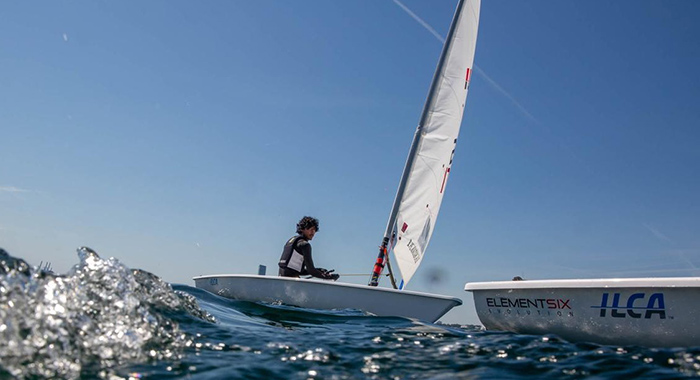
    For sailing, head coach Karl James will guide three athletes: Tiger Tyson in the men’s kite competition, O’zani Lafond in the men’s singlehanded dinghy event, and Shanoy Malone in the men’s regional singlehanded dinghy category. The beach volleyball pair of Raenor Sharpe and Miguel Pena Lugo will compete under the guidance of head coach Olsen Joseph.

    In weightlifting, three competitors will represent the nation under coach Durand Meade: Daniel Antonio in the men’s 110 kg clean & jerk division, Ijauni Nathaniel in the men’s 79 kg clean & jerk category, and Kevesha Nedwell in the women’s 77 kg clean & jerk event. Finally, table tennis will see Stuti Kashyap compete in women’s singles and Mekhi Simmons compete in men’s singles, with Aleena Edwards serving as head coach.

    Off the field of play, the team’s leadership and support structure has also been confirmed. Thomas Greenaway, ABNOC’s First Vice President, will serve as Chef de Mission for the delegation, with Alisha Francis acting as Team Assistant and Keston Daley filling the role of official physiotherapist. Both the ABNOC President and Secretary General will also travel with the team to attend the centennial tournament.

    In a statement accompanying the roster announcement, ABNOC expressed its commitment to supporting the delegation as they prepare to represent the nation on this historic regional sporting stage, emphasizing the pride the organization takes in fielding a full team despite the logistical challenges presented by the 2026 scheduling overlap.

  • Barbados declares days of national mourning in memory of Sir Garry Sobers

    Barbados declares days of national mourning in memory of Sir Garry Sobers

    The Caribbean and global cricket community are mourning the loss of Sir Garfield St Aubyn Sobers, widely regarded as the greatest all-rounder in the history of cricket, who passed away at his Barbados home at the age of 89, just 11 days before his 90th birthday. In response to his death, the government of Barbados has announced two days of national mourning to honor the cricketing icon and national hero: one on July 17, immediately following the announcement of his passing, and a second on the day of his interment. All official government functions have been canceled for both mourning days, and national flags across the country have been ordered to fly at half-staff from the announcement of his death through the date of his burial. Details of Sir Garry’s upcoming state funeral, which will be coordinated by the Cabinet Office, Barbados Defence Force, and Senator Lisa Cummins, will be released publicly in due course. In a somber national broadcast addressed to the people of Barbados and the wider Caribbean, Prime Minister Mia Mottley opened with a heartfelt tribute to one of the nation’s most beloved sons. “This is a solemn hour for our nation,” Mottley said, confirming the passing of the legendary athlete. “Across Barbados and across the world, we hold him with gratitude, with reverence, and with a tender sorrow that comes when the people have to say farewell to one of their greatest sons.” Born into a working-class community on Walcott Avenue in Belmont, Barbados, Sir Garry rose from humble beginnings to become a global sporting icon, shaped by his tight-knit community, personal discipline, and deep faith. His decades-long career on the international cricket pitch carried the reputation of Barbados, the West Indies, and the entire Caribbean onto the world stage with unmatched distinction. Mottley referenced a iconic calypso by The Mighty Sparrow that captured the region’s admiration for Sir Garry decades before the term “GOAT” (Greatest of All Time) entered common parlance: “He asked, who is the greatest cricketer on Earth or Mars? Anyone can tell you it is the great Sir Garfield Sobers.” Dr. Kishore Shallow, President of Cricket West Indies, echoed the prime minister’s sentiment, reflecting on Sir Garry’s lasting impact on the sport. “Sir Garfield Sobers has completed his final innings, but his legacy will forever endure in the hearts of our region, and the story of the cricketing world,” Shallow said. Over the course of his international career, Sir Garry competed in 93 Test matches for the West Indies between 1954 and 1974, amassing 8,032 runs and claiming 235 wickets — a statistical record that cemented his reputation as an unrivaled all-rounder. One of his most iconic achievements came in 1958, when he scored 365 not out against Pakistan at Kingston, Jamaica’s Sabina Park. That record stood as the highest individual Test score for 36 years, until it was broken by fellow West Indian batsman Brian Lara of Trinidad and Tobago. Mottley emphasized that Sir Garry’s legacy extends far beyond his on-field statistics. He is remembered as the global benchmark for athletic greatness, not only for what he achieved on the pitch but for the way he represented his people throughout his life. She recalled the moment Sir Garry received his knighthood from Queen Elizabeth II, kneeling just one mile from his birthplace to accept the honor — a moment that held little surprise for Barbadians, who had already “crowned him in their hearts” long before the official title. For many years, Sir Garry was Barbados’ only living National Hero, a distinction the country awarded him decades after the broader global cricket community had already recognized his unparalleled status in the sport. “Every innings, however great, must at some point come to a close,” Mottley noted. “The finest innings do not end in silence. They end with a whole ground rising and with a grateful people saying, thank you and yes, we love you.” According to Sir Garry’s son Daniel, who was at his father’s side when he passed away at the family home in Bridgetown’s Highgate Gardens neighborhood, the cricketer had been in declining health for some time. Daniel shared that even in his final days, his father displayed characteristic grit: “His breathing had increased, and we had him on oxygen. I couldn’t believe how powerful he is; he just refused to go.” Mottley closed her address by extending sincere condolences to Sir Garry’s children, grandchildren, and extended family, affirming the nation’s enduring love and respect for the icon. “Sir Garry, Barbados stands for you. The West Indies stands for you. The world stands for you. For an innings that was so well played, Sir Garry. So well played. We will always love you,” she said.

  • Derde helft WK 2026: Messi en Argentinië tegen Yamal en Spanje

    Derde helft WK 2026: Messi en Argentinië tegen Yamal en Spanje

    The 2026 FIFA World Cup is set to deliver one of its most anticipated finals in history on July 19, as two contrasting powerhouses of modern football go head-to-head at New Jersey’s MetLife Stadium: defending champion Argentina, led by global icon Lionel Messi, will bring its free-flowing attacking firepower against Spain, a tactically sharp defensive juggernaut captained by teenage sensation Lamine Yamal.

    This match carries historic stakes for Argentina, which already claims three World Cup titles. A victory would make it the first nation to win back-to-back World Cup crowns since Brazil achieved the feat in 1958 and 1962, cementing its place among the greatest international teams of all time. Through seven consecutive wins en route to the final, Argentina has already proven its offensive dominance, racking up a tournament-high 19 goals, outscoring every other side by a wide margin. Its unbroken 13-match World Cup winning streak, dating back to its opening loss to Saudi Arabia in 2022, underscores the team’s relentless momentum heading into the title decider.

    Standing in Argentina’s path is Spain, the current European champion and second-ranked team in the FIFA global rankings, which has built its tournament run on a foundation of almost unbreakable defense. Through seven unbeaten matches (six wins and one draw), Spain has conceded just one single goal across the entire competition, making it the tightest defensive unit in this 48-nation expanded tournament. The side has already dispatched elite European competitors France and Portugal to earn its place in the final, stretching its overall unbeaten streak across all international matches to an extraordinary 37 games — its last defeat came against Colombia in March 2024.

    Beyond the clash of playing styles — all-out attacking spectacle against disciplined tactical defensive solidity — this final also represents a symbolic meeting of football’s present and future. What makes the matchup even more compelling is the decades-old personal connection between the two team leaders: when Yamal was an infant, he was photographed alongside Messi as part of a UNICEF campaign, a full 20 years before the pair would meet on the sport’s biggest global stage.

    The historic match will kick off at 16:00 local time inside MetLife Stadium, which holds 82,500 spectators, and will feature a first-of-its-kind halftime show modeled on the popular spectacle of the NFL’s Super Bowl. The 11-minute performance, which could be extended to 30 minutes, will feature global pop superstars Madonna and Justin Bieber. U.S. President Donald Trump will also attend the match and present the World Cup trophy to the winning side, elevating the event beyond a simple sports competition to a major global cultural spectacle.

    To contextualize both teams’ roads to the final:
    Argentina has recorded seven wins from seven matches, scoring 19 goals and conceding seven. Its group stage run included victories over Algeria (3-0), Austria (2-0), and Jordan (3-1). In the knockout rounds, it edged past Cape Verde (3-2), Egypt (3-2), Switzerland (3-1), and England (2-1) to secure its final spot.
    Spain enters the final unbeaten, with six wins and one draw from seven matches, scoring 13 goals and conceding just one. It opened the tournament with a 0-0 draw against Cape Verde, followed by a 4-0 rout of Saudi Arabia and a 1-0 win over Uruguay in the group stage. Knockout wins over Austria (3-0), Portugal (1-0), Belgium (2-1), and France (2-0) sealed its place in the title match.

    This 2026 World Cup final, the first of the expanded 48-team format hosted across three North American nations, marks a clear milestone in the evolution of global men’s football. For Argentina, a win would not only etch the nation into World Cup history books but also reinforce Messi’s legacy as one of the greatest players to ever step onto the pitch. For Spain, a victory would validate its long-standing focus on tactical discipline and defensive excellence, while showcasing the potential of the next generation of football talent led by the young Yamal. The symbolic narrative of two connected figures from different generations meeting for football’s biggest prize reminds audiences worldwide that football is far more than a game: it is a shared, universal language that connects generations, continents, and cultures. As the sport looks ahead to the 2030 World Cup co-hosted by Morocco, Spain, and Portugal, this final will stand as a defining celebration of the game’s past, present, and bright future, set to be remembered for decades as an iconic clash of football’s opposing, equally compelling strengths.