分类: sports

  • GERMAN BLITZ!

    GERMAN BLITZ!

    HOUSTON, Texas – Four-time World Cup champions Germany kicked off their 2026 World Cup Group E campaign in dominant fashion on Sunday, securing their first opening-match victory at the global tournament since their 2014 title run with a lopsided 7-1 win over first-time qualifiers Curacao at Houston Stadium. The resounding result puts the German side in a strong position to reach the knockout round for the first time in 12 years, though stiffer tests await against group opponents Ecuador and Ivory Coast in the coming matches.

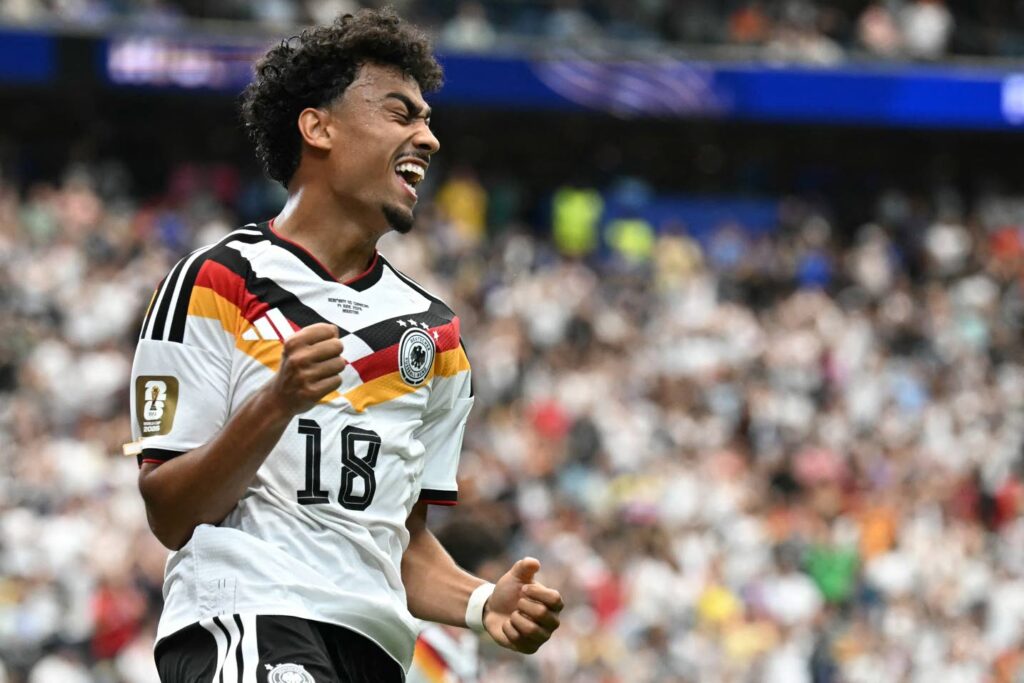
    The match got off to a fast start for Germany, as 22-year-old midfielder Felix Nmecha – who previously represented England at youth level before pledging his allegiance to Germany – curled a stunning strike past Curacao goalkeeper Eloy Room in the sixth minute, collecting a well-placed pass from Florian Wirtz to outmaneuver a defender and open the scoring. The early goal drew a jubilant roar from German head coach Julian Nagelsmann, and Nmecha nearly doubled his tally just minutes later with a blistering long-range effort that sailed just off target.

    Against all expectations, Curacao hit back to draw level in the first half, as Livano Comenencia’s deflected shot wrong-footed German captain and goalkeeper Manuel Neuer. At 40 years old, Neuer is the oldest German player to ever feature at a World Cup, and this appearance marks his fifth participation in the global tournament – a historic milestone for the veteran shot-stopper. He was left shaking his head at the deflection, but Curacao’s 78-year-old head coach Dick Advocaat, the oldest manager to ever lead a side at the World Cup finals, leapt from his bench with arms raised in celebration. The underdog Caribbean side’s equalizer sent their traveling fan group, known as the Blue Wave, into a frenzy in the Houston stands.

    A mandatory mid-first-half drinks break gave Germany time to reset and refocus after the unexpected concession. “The goal we conceded was unnecessary, but that’s part of football,” said young full-back Nathaniel Brown after the match. “I’m proud that we didn’t let our heads drop after that.”

    Curacao’s defense held firm for several minutes after the restart, with Room pulling off a spectacular save to tip Nico Schlotterbeck’s header over the crossbar as the four-time champions pinned the debutants back in their own half. Desperate last-ditch blocks repeatedly kept Germany at bay, but the Curacao backline finally cracked in the 38th minute: Schlotterbeck found himself unmarked at the near post from a corner, and powered a header home for his first ever senior international goal, putting Germany back in the lead.

    Germany extended their advantage before halftime to 3-1, when Kai Havertz calmly converted a penalty after Nmecha was brought down in the box by Riechedly Bazoer. The floodgates fully opened just 69 seconds into the second half, when another former youth England international Jamal Musiala ran onto a pinpoint through ball from Joshua Kimmich and slotted home from a tight angle to make the score 4-1.

    Leroy Sane missed a clear chance to add a fifth just after the hour mark, sending his shot wide with only Room to beat, but Brown made no such mistake moments later, firing home his first ever goal for Germany just before the second hydration break. “It is indescribable,” the 22-year-old said of the milestone. “To score in the first World Cup match, my family is there, then to celebrate with the guys — simply incredible.”

    Substitute Deniz Undav, who has been in red-hot form for Germany on the international stage, made the score 6-1 with his seventh goal in his last seven senior appearances. Havertz put the final nail in the coffin with a late second goal of his own – his 24th overall for the national side – that brought the final score to 7-1, a mirror image of Germany’s iconic 7-1 semi-final victory over host Brazil at the 2014 World Cup.

    The lopsided win sends Germany to the top of the Group E table early in the tournament, boosting their hopes of progressing to the knockout stage for the first time since they lifted the trophy in Rio 12 years ago.
  • World Cup ref cleared over ‘white supremacist’ gesture, says FIFA

    World Cup ref cleared over ‘white supremacist’ gesture, says FIFA

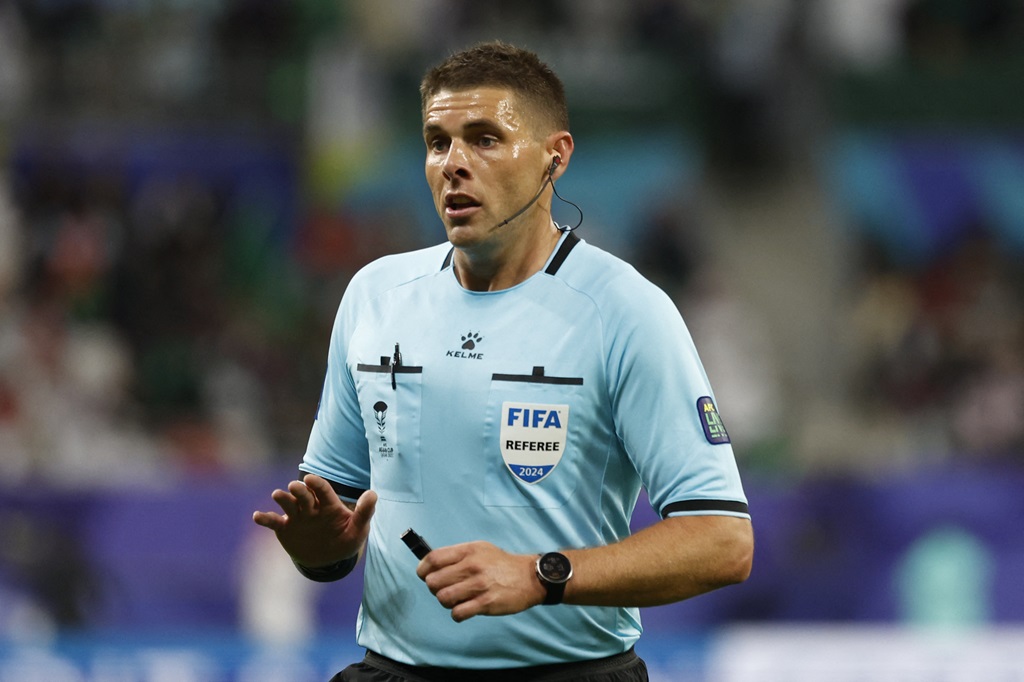
    In a recent development out of Los Angeles, global soccer governing body FIFA has issued a formal exoneration for Australian World Cup referee Shaun Evans, closing an investigation into allegations that he displayed a white supremacist hand gesture during a live televised match. The incident unfolded during Sunday’s international fixture between Germany and Curacao, where Evans was serving in the role of support video assistant referee. A broadcast frame captured Evans holding his right thumb and index finger together to create a closed circular shape, a positioning that online social media users quickly linked to a hand signal associated with far-right extremist factions. The widespread social media attention immediately prompted FIFA to launch a formal probe into the conduct of the official, who had been named to the 2022 Qatar World Cup referee panel. Within 24 hours of the allegation emerging, the FIFA Independent Disciplinary Committee completed its review and announced it had uncovered no evidence that Evans violated the organization’s disciplinary code. Responding to the controversy, Evans released a public statement pushing back on the interpretation of his hand movement, emphasizing the action was entirely accidental. He explained that the position of his hand was the result of an involuntary, subconscious muscle twitch, and that he had no awareness he was making the shape while on duty during the match. Evans went on to stress that he never intended to communicate any hateful ideology, signal affiliation with an extremist group, or make any intentional symbolic statement whatsoever. He acknowledged that the visual matched a gesture widely recognized as a hate symbol, and expressed regret that the incident sparked confusion and concern, but stood firm in his assertion that the action was completely unintentional. The swift closing of the case brings an end to a brief but intense controversy that divided opinion among soccer fans and observers online, with many arguing the social media rush to judgment overlooked alternative explanations for the innocuous hand movement.

  • Uruguay held 1-1 by Saudi Arabia at World Cup

    Uruguay held 1-1 by Saudi Arabia at World Cup

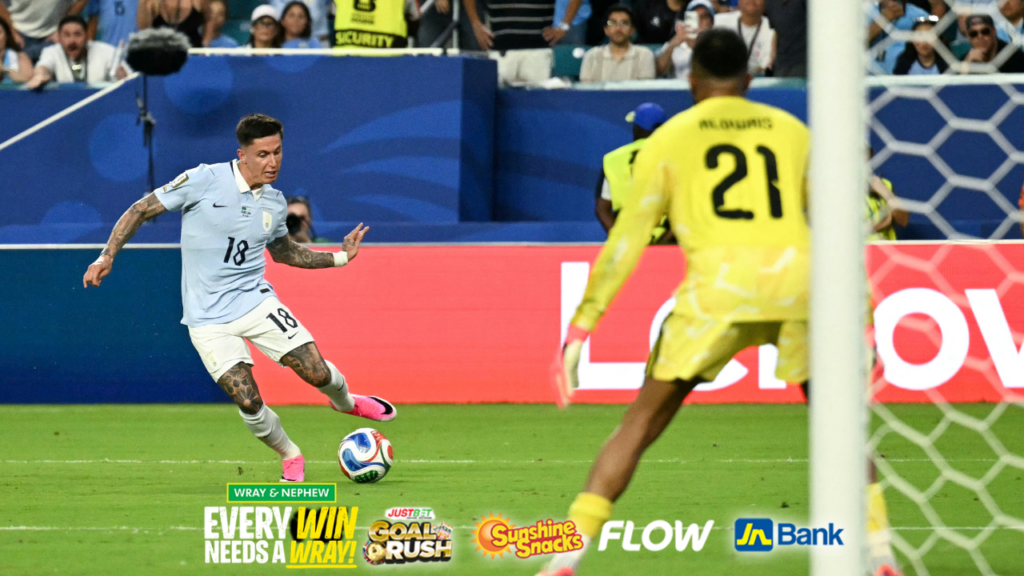
    MIAMI, United States (AFP) — On a scorching hot Monday in South Florida, Uruguay delivered a dominant attacking display against Saudi Arabia but was forced to walk away with a 1-1 draw, throwing the balance of Group H at the World Cup into thrilling uncertainty.

    The deadlock between Uruguay and Saudi Arabia came just hours after one of the most stunning upsets in the history of the men’s World Cup, when European champions Spain could only manage a scoreless 0-0 draw against tournament debutants Cape Verde in the same group.

    Playing in stifling, sweltering conditions that tested the endurance of every player on the pitch, Uruguay controlled large stretches of possession and created the majority of clear scoring opportunities. However, a resilient defensive performance from Saudi Arabia kept the South American side from converting more than one of their chances, securing a share of the points that upends early group stage expectations.

    Back-to-back drawn results across the group’s opening two matches mean that all four teams still have a realistic shot at advancing to the knockout round, with standings deadlocked early on and no side able to claim an early advantage. What was already anticipated to be a competitive group has become one of the most compelling storylines of the tournament’s opening stage, with every upcoming group match set to carry massive stakes for all sides involved.

  • McKay Security pleased with performances of sponsored teams vying for Jamaica Football Championship

    McKay Security pleased with performances of sponsored teams vying for Jamaica Football Championship

    A dramatic, last-minute contest unfolded at Jamaica’s Xpress Sports Complex on Sunday, as two late penalty kicks ended in a 1-1 draw between home side York United and visiting Browns Town FC, a result that has left the Jamaica Football Championship (JFC) playoff qualifying race wide open.

    Jason McKay, chief executive of McKay Security — the event’s lead corporate sponsor — says he could not have asked for a more exciting showcase of the competitiveness his sponsorship aims to foster. Both York United and Browns Town entered the playoff round after claiming parish league titles, each earning a J$1 million incentive from McKay Security for their victories. York won the St Thomas Major League, while Browns Town took home the Kingston and St Andrew Football Association Championship crown.

    The match lived up to pre-game hype, delivering all the tension fans hoped for right until the final whistle. In the 90th minute, York looked set to secure all three points when Kemar Beckford converted a penalty to put the home side up 1-0. But Browns Town had other plans: Nataf Tomlinson stepped up to the spot in the fourth minute of stoppage time and slotted home the equalizer, splitting the points and keeping both teams in the qualifying hunt.

    McKay, who had just presented York with their J$1 million winners’ cheque on Friday, says he is cheering on all three McKay Security-incentivized teams in the playoff series. “I am really excited that the McKay Security-sponsored teams are giving no quarter in their quest to qualify for the Jamaica Football Championship,” he said. “This is exactly the intent of the $1m sponsorship. We want teams to give their all, and that is exactly what we are seeing.”

    After two matches, York sits atop the three-team South-Eastern regional group with two points, following a 0-0 draw against St Catherine Major League champions Cedar Grove last Wednesday. Browns Town and Cedar Grove trail with one point each, and both hold games in hand as the home-and-away round-robin plays out. Only the top finisher from the South-Eastern group will advance to next season’s JFC, the second tier of Jamaican football sitting directly below the country’s Premier League. Three other group winners from the North-Eastern, Central, and Western regions will also claim spots in the next season’s competition.

    Alfred Wilson, an executive with York United, recalled the club’s history in top-tier qualifying, noting the side came just one point short of promotion to the Premier League in a past campaign. That same season, Portmore United and the University of the West Indies earned promotion to the top flight, and York has been working to recapture that form ever since. “McKay Security’s $1 million sponsorship will go a long way in helping us achieve our ambitions of returning to the highest level,” Wilson added.

    Sunday’s playoff action delivered multiple other thrilling contests across the country. In another fixture, Cross United edged Vineyard 3-2 thanks to a late winner from Tyrique Henry in the 90th minute. Rawnie Rampasaul netted a brace for Cross in the 18th and 55th minutes, after Connie Parchment had scored twice to put Vineyard up 2-1 going into halftime. Andre Walcott scored two late goals in the 79th and 83rd minutes to lead Lucea United to a dominant 5-0 victory, while Cooper’s Pen shut out Faulkland FC 2-0. In the North-Eastern regional group, Axum FC rallied from an early deficit to earn a 1-1 home draw against local rival King Football Academy. Chemar Lattibeaudiere equalized for Axum in the 35th minute, canceling out Kaneil Brown’s 12th-minute opener for King Academy.

  • Greed or player health? ‘Damaging’ World Cup drinks breaks under spotlight

    Greed or player health? ‘Damaging’ World Cup drinks breaks under spotlight

    The 2026 FIFA World Cup co-hosted across North America has become the center of a growing debate, centered on a seemingly small rule change that has split players, fans, and analysts: mandatory mid-half hydration breaks. What was introduced as a measure to protect player welfare has sparked accusations of greedy commercialization, disrupted match flow, and permanent damage to soccer’s core identity at the sport’s biggest global tournament.

    Netherlands captain Virgil van Dijk became one of the most high-profile critics of the policy following his side’s 2-2 draw with Japan in an air-conditioned, roofed arena in Dallas, Texas on Sunday. The Liverpool defender pointed out that the breaks consistently line up with commercial television cuts, a disruption that detracts from the viewing experience even for neutral audiences watching from home. “I was watching almost all of the games up until today, and every time going into a commercial is a bit… not really that I like it,” Van Dijk told reporters. “I think for the neutral watchers on TV it’s also not great.”

    Van Dijk’s criticism echoes widespread fan discontent across tournament host cities. On the same day as the Netherlands-Japan clash, fans in Monterrey, Mexico booed loudly when the first-half hydration pause was called during Sweden’s 5-1 win over Tunisia. Just a day later, spectators in Atlanta’s climate-controlled stadium jeered the break during Spain’s match against Cape Verde, making clear that opposition to the policy is not isolated to one region.

    FIFA’s mandate requires two three-minute hydration breaks – one midway through each half – at every World Cup match, regardless of venue conditions or ambient temperature. Even matches played in fully temperature-controlled indoor arenas, like the Dallas Cowboys’ AT&T Stadium where the Netherlands faced Japan, still see play stopped for the pauses. That decision has amplified criticism from those who see the policy as driven by revenue rather than player safety.

    For United States broadcasters, the breaks create a built-in window for additional commercial advertisements – a standard practice in major American professional sports, but an unprecedented disruption to traditional soccer broadcast schedules. Leading British football journalist Henry Winter has argued that the policy is a direct assault on soccer’s traditional structure, turning a “game of two halves” into a game of four quarters, all in pursuit of additional advertising revenue.

    “the greatest sport and event was damaged for fistfuls of dollars,” Winter said, warning that if the change is accepted at the World Cup, it could soon spread to domestic leagues around the world. He called for widespread pushback, noting that UK public broadcasters the BBC and ITV have already opted not to cut to commercials during the breaks, unlike their American counterparts. “If we tolerate this, our TV games could be next,” he added.

    Beyond commercial concerns, many observers have noted that the breaks disrupt the natural rhythm of matches, and often shift momentum unexpectedly between teams. In one high-profile example, debutant side Curacao had fought back to level 1-1 against powerhouse Germany in Houston’s roofed stadium before the first hydration pause. After the break, Curacao’s early momentum vanished completely, with Germany going on to secure a lopsided 7-1 victory. Coaches frequently use the unplanned stoppage to deliver new tactical instructions, creating an additional advantage for teams that have already lost early control of a match.

    Not all voices in the tournament have opposed the policy, however. Spain manager Luis de la Fuente argued that player welfare must remain the top priority, noting that elite soccer’s extreme physical intensity makes brief rest stops beneficial for sustaining performance. “It is difficult to sustain that level of physical exertion for long periods, and I believe those breaks offer a brief respite to recharge and continue competing well,” he said.

    Even de la Fuente, though, has questioned the one-size-fits-all mandate, pointing out that temperatures vary dramatically across the 16 World Cup host cities. While some southern venues face extreme summer heat, other host locations have recorded mild temperatures in the 15 to 28 degree Celsius range this week, making mandatory stops unnecessary.

    Van Dijk echoed that view, calling for a flexible approach that adjusts to the specific conditions of each match. “If it’s really hot, obviously it would be good to put them in,” he said. “But I think you have to look at it in every game separately in my opinion.”

    FIFA has repeatedly defended the policy, rejecting accusations that it is motivated by greed, and has stressed that the breaks are intended first and foremost to protect player health. Still, the controversy shows little sign of fading, as traditionalist fans and prominent figures in the sport continue to push back against what they see as an unnecessary change to the sport they love.

  • Spain held to goalless draw by Cape Verde at World Cup

    Spain held to goalless draw by Cape Verde at World Cup

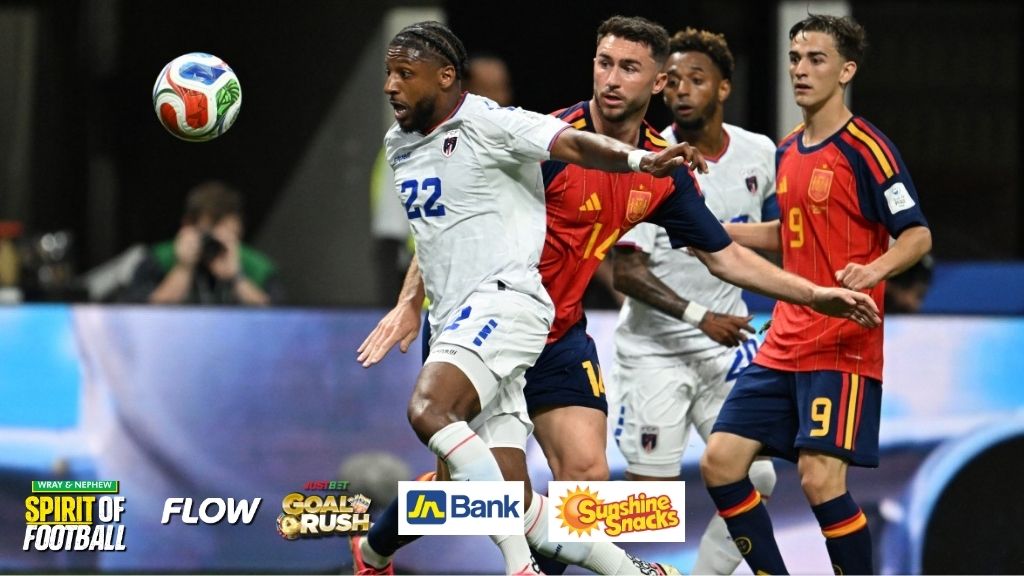
    ATLANTA, Ga. – In a result that will go down as one of the most astonishing upsets in men’s World Cup history, World Cup debutants Cape Verde defied all pre-match expectations to lock in a hard-fought 0-0 draw against reigning European champions Spain on Monday.

    Spain, long considered one of the tournament’s top contenders, dominated possession for nearly the full 90 minutes, controlling the tempo of play and pinning Cape Verde deep in their own half for large stretches of the match. But the African side’s backline put on a masterclass in organized, resolute defending, turning away every attacking threat Spain threw their way. Block after block, interception after interception, and spectacular save after spectacular save kept the Spanish offense off the scoreboard, even as wave after wave of attacks crashed against the Cape Verde goal.

    When the final whistle blew at the Atlanta venue, thousands of Cape Verde supporters in attendance erupted into wild, jubilant celebration, soaking in a result that few soccer analysts or fans predicted ahead of kickoff. For a country making its first ever appearance at the men’s World Cup, holding one of the most talented teams in international soccer to a draw is already a landmark achievement that has captured the attention of the global soccer community.

  • Cape Verde goalkeeper gains huge social media following after Spain draw

    Cape Verde goalkeeper gains huge social media following after Spain draw

    The 2026 FIFA World Cup has produced one of its most unforgettable underdog stories, as 40-year-old Cape Verde goalkeeper Josimar Dias — universally known by his nickname Vozinha — has become a global social media sensation overnight following a stunning performance against European powerhouse Spain on Monday.

    Widely labeled as the overwhelming underdog heading into the group stage fixture, Cape Verde held football’s heavyweight side to a surprising goalless draw, a result that has sent shockwaves through the global football community. The credit for this historic result goes almost entirely to Vozinha, who put on a masterclass in shot-stopping that earned him the official Man of the Match award.

    Spain, one of the tournament’s pre-competition favorites, dominated possession and registered an impressive 27 attempts on goal throughout the 90 minutes. But every dangerous Spanish strike was kept out of the net by the veteran goalkeeper, who pulled off seven critical saves to deny the European side all three points. Clips of his acrobatic, game-saving stops began circulating across social media platforms within minutes of the final whistle, turning the relatively little-known keeper into a household name for football fans across the world.

    In the wake of the match, Vozinha’s social media profiles were flooded with messages of praise, support and admiration from supporters spanning every corner of the globe. The most striking indicator of his newfound fame is the explosive growth of his Instagram following: prior to the fixture, he had just a little over 50,000 followers; less than 48 hours later, that number had skyrocketed to more than two million.

    While the 2026 World Cup draws millions of eyes to established global superstars from Europe’s top leagues, it was this resilient veteran from the small island nation of Cape Verde that captured the world’s heart. His performance wasn’t just a display of goalkeeping skill — it was a showcase of dogged determination and mental toughness that has resonated deeply with football fans everywhere, cementing his place as one of the tournament’s early breakout stars.

  • Derde helft WK 2026: Van straatvoetbal naar het WK

    Derde helft WK 2026: Van straatvoetbal naar het WK

    When global football fans tune into the World Cup to watch superstars like Lionel Messi, Kylian Mbappé, Sadio Mané and Vinícius Júnior, most eyes fix on their multimillion-dollar contracts and on-pitch glory. What often slips through the cracks of popular narrative is the reality that nearly all of these legendary players launched their football journeys in unlikely, underprivileged settings: on dusty city streets, uneven sand pitches, and impoverished neighborhoods such as Brazil’s iconic favelas. In these communities, football was never just a game — for millions of children across the globe, it remains one of the only clear pathways to build a better life and escape cycles of systemic poverty.

    For decades, Brazil has stood as the most famous example of this phenomenon. Generations of world-conquering Brazilian footballers first learned to dribble, pass and outthink opponents on the unmarked streets, crowded favela squares and makeshift pitches of their hometowns before stepping onto the global stage. But the story of social mobility through football is far from exclusive to Brazil.

    Consider Lionel Messi, widely regarded as the greatest player of his generation. Messi grew up in a working-class family in Rosario, a gritty industrial Argentine city. As a young teen, he was diagnosed with a growth deficiency that required costly treatment his family could not afford on their own. It was FC Barcelona that stepped in to offer a life-changing opportunity, covering his medical care and giving him a spot in the club’s youth academy — a chance that turned a working-class kid with a rare medical challenge into a global icon.

    Few stories, however, capture the public imagination quite like that of Sadio Mané. The Senegalese star grew up in Bambali, a remote small village where basic public services were barely accessible to most residents. Before he broke through onto the international football scene, almost no one outside of Senegal knew his name. But after achieving fame and fortune, Mané made the deliberate choice to reinvest a huge share of his wealth back into his home community. He has funded the construction of a primary school, a full-service hospital, public sports facilities and critical infrastructure projects for his birth village. And Mané’s commitment to giving back is far from unique.

    Many African football stars who rose from poverty maintain deeply rooted ties to their hometowns. Having grown up in regions where extreme poverty, limited access to healthcare, and underfunded education are daily realities, many feel a profound responsibility to lift up the communities that shaped them. Ivorian legend Didier Drogba poured his resources into expanding access to healthcare across his home country. Cameroonian icon Samuel Eto’o has long supported youth development and education initiatives for underserved children. Egyptian star Mohamed Salah has funded community projects in his hometown of Nagrig for years, improving access to basic services for local residents. For these athletes, success is no longer measured only by goals scored and trophies lifted — it is measured by the tangible change they bring to the communities that gave them their start.

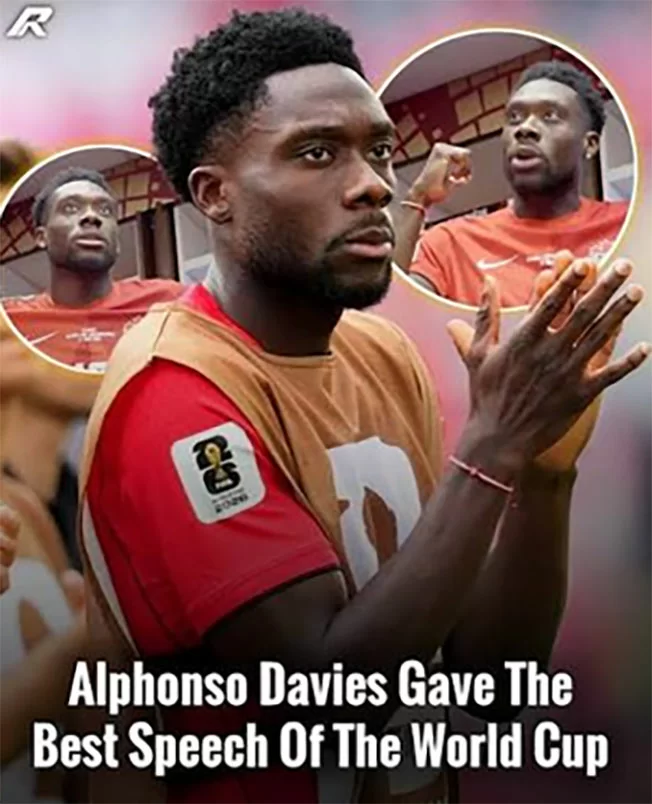
    One of the most remarkable stories of modern football is that of Alphonso Davies, the Canadian star who currently plays for Bayern Munich. Davies was born in a Ghanaian refugee camp to Liberian parents who fled their home country during the brutal civil war that tore through Liberia in the 1990s. When Davies was still a young child, his family resettled in Canada, and his talent on the pitch quickly set him apart. Within a decade, he was representing Canada at the World Cup and establishing himself as one of the best full-backs in European club football. His life story proves that football is far more than just a professional career — for many, it is a symbol of hope, integration, and life-changing second chances.

    Poverty and limited opportunity are not challenges unique to developing nations, even in Europe, working-class and underserved neighborhoods have produced some of the world’s biggest stars. Kylian Mbappé, one of the most recognizable players in modern football, grew up in Bondy, a working-class Paris suburb that is frequently cited in discussions of systemic disadvantage and limited youth opportunity. Many other French national team players also trace their roots to immigrant neighborhoods, where football has long played a critical social role: it gives young people structure, discipline, and a tangible sense of hope for the future when other pathways are closed off.

    In past decades, it was common for promising young talents to derail their careers shortly after they earned their first big contracts. Luxury spending, unwise investments, and entourages that only cared about the players’ newfound wealth cut short the careers of countless promising athletes. Today, the industry handles this challenge far more professionally, with dedicated support teams surrounding young talent that include psychologists, financial advisors, education coaches and agents to help them navigate newfound fame and fortune. Even with this modern support structure, one lesson holds consistent across generations: the most beloved and respected players are almost always the ones who never forget where they came from.

    The World Cup is most often framed as a high-stakes competition between nations. But behind every starting lineup, every goal, and every trophy, there are hundreds of individual stories of unlikely rise: stories of a kid from a favela, a working-class housing project, a refugee camp, or a remote rural village who started playing with a tattered ball on a dusty, uneven sand pitch. For some, that journey led to global fame and enormous wealth. For many others, success became a tool to lift up entire communities that still face the same challenges they once overcame.

    Perhaps that is the most beautiful, underreported side of the World Cup. It is not the multimillion-dollar contracts, not the global advertising campaigns, not the gleaming silver trophy that makes the tournament special. It is the living, breathing proof that the biggest dreams in the world so often start in the most unexpected, unassuming places.

  • SporTT seeks answers on TTFA’s $m

    SporTT seeks answers on TTFA’s $m

    As global football fans turn their attention to the 2026 FIFA World Cup cycle, a growing financial scandal is unfolding off the pitch in Trinidad and Tobago, casting a shadow over the nation’s qualifying campaign. The Sports Company of Trinidad and Tobago (SporTT), the country’s leading state-backed sports development agency founded in 2004, is demanding full accountability from the Trinidad and Tobago Football Association (TTFA) over the management of millions in public funding allocated to national football programs.

    The core of the dispute centers on TT$6.79 million (approximately US$1 million) in public funds disbursed between November 2024 and January 2025 to support the men’s senior national team’s World Cup qualifying run. A second US$1 million tranche of funding was originally promised contingent on the team securing a spot in the 2026 World Cup finals. Separate allocations include TT$836,658.34 for CONCACAF Nations League matches, TT$5.82 million earmarked for player, coach and staff salaries across the Trinidad and Tobago Premier Football League (TTPFL), and TT$980,000 provided to the senior women’s national team for its 2026 international campaign. In total, TTFA received more than TT$14.4 million in SporTT funding between November 2024 and April 2026, not including additional contributions from state-owned entities, private businesses and corporate sponsors.

    Despite the large-scale inflow of public and private funding, widespread reports of unpaid wages and match fees have persisted across all levels of the nation’s football ecosystem. Former men’s national team head coach Dwight Yorke, who was dismissed from his post in December 2025, remains owed approximately US$150,000 (equal to TT$1.02 million). Multiple third-party vendors and service providers that have worked with TTFA are also carrying outstanding payments dating back more than two years.

    Unpaid compensation extends beyond the men’s senior program. As of mid-2026, women’s national team players have not received match fees for their fixtures against Honduras in March 2026 and El Salvador in April 2026, just months after receiving their TT$980,000 campaign allocation. Men’s national team players are still owed match payments from their October 2025 World Cup qualifying win against Bermuda. Even domestic league staff and players in the TTPFL have consistently faced delays and gaps in salary payments, according to a senior TTFA insider who spoke to the *Sunday Express* on condition of anonymity.

    The core failure triggering the current crisis is TTFA’s months-long refusal to submit required documentation detailing how the allocated funds were spent. SporTT’s Sport Development and Performance Unit has been formally following up on the missing accounting records since August 7, 2025, with the most recent requests for reconciliation sent on February 6 and March 26, 2026. Required documents include detailed payroll summaries, verified authorized signatory lists, and independent technical and sustainability reports.

    Similar transparency gaps have been identified for the TT$5.82 million allocated to the TTPFL, where SporTT has raised red flags over unconfirmed statutory deduction payments and the missing independent audit report. Multiple sources confirm that despite repeated formal requests for reconciliation, TTFA has not produced itemized records including invoices, receipts, payment confirmations or verified official documentation to prove how funds were allocated.

    In a late May 2026 high-stakes meeting, TTFA president Kieron Edwards and other senior TTFA executives met with top SporTT leaders and Minister of Sport and Youth Affairs Phillip Watts to resolve the deadlock. A source present at the meeting made clear that no future public funding will be approved until the missing records are provided: “If the Ministry of Sport, through SporTT, is to provide further funding, this must be addressed. We need to see reconciliation for the funds previously provided.”

    Edwards has pushed back against the claims of mismanagement, stating in a May 2026 interview on i95 FM that all required audits have been completed and the organization is in good financial standing. He also asserted that the TTFA executive board remains united, noting that while minor disagreements exist on operational issues, all members are aligned on core strategic priorities. The ongoing standoff over financial transparency has raised serious questions about governance and oversight in Trinidad and Tobago’s top football body, leaving the future of public support for the nation’s football programs in limbo.

  • Edwards: TTFA serious about reporting obligations

    Edwards: TTFA serious about reporting obligations

    The head of the Trinidad and Tobago Football Association (TTFA), Kieron Edwards, has publicly pushed back against growing scrutiny over the organization’s management and disclosure of public and corporate funding, pushing back against claims of improper financial handling. Nearly three weeks after the *Sunday Express* submitted formal questions seeking clarity on the reconciliation of government, state enterprise subventions and corporate sponsorship funds, Edwards delivered a six-page written response addressing all outstanding concerns.

    Edwards opened his response by confirming that two separate tranches of public funding – one from SporTT received in January 2025, and another from the Ministry of Sport disbursed in October 2025 – matched the amounts outlined in the media inquiry. He stressed that all public funds allocated to the TTFA were used exclusively to cover operational, technical, and administrative costs tied to the senior men’s national team’s 2026 FIFA World Cup qualifying run, strictly aligned with the terms of the funding disbursement agreements.

    The TTFA president emphasized that the association maintains complete, compliant financial records for all government funding, which are already subject to the pre-agreed audit and reporting requirements set out by SporTT. Detailed expenditure breakdowns, he explained, are a formal legal obligation to SporTT and the Ministry of Sport, and must be processed through established regulatory channels. Releasing itemized financial data to the public via media before these formal accountability processes conclude, Edwards argued, would bypass proper protocols and set an improper precedent. Any claims that the association’s conduct is irregular or improper based on this delayed pre-process disclosure, he added, are baseless and materially misleading.

    One key point of contention raised prior to Edwards’ response was SporTT’s more than 10-month wait for full accounting of the $6.79 million allocated to the 2026 World Cup qualifying campaign. Edwards countered claims that the TTFA has refused to comply, noting that compiling comprehensive, verified expenditure documentation requires meticulous financial checks. The association, he said, takes its reporting obligations to SporTT extremely seriously, is actively progressing toward completing the documentation, and maintains ongoing open communication with the public funding body. Any claims that the TTFA has failed to meet its obligations before the process concludes, he warned, are premature and could be defamatory.

    Turning to corporate sponsorship from state-owned entities, Edwards addressed questions about the TTFA’s $3 million agreement with the National Gas Company (NGC), explaining that binding confidentiality clauses prevent the organization from disclosing specific terms of the deal. He confirmed that the TTFA negotiated the agreement in good faith, has met all accountability and reporting obligations to NGC, and addressed all outstanding concerns through the pre-negotiated framework.

    This confidentiality standard extends to all other sponsorship arrangements, Edwards noted, including deals with other state entities such as the National Lotteries Control Board (NLCB) and private sector partners including Stag, Sunshine Snacks, bmobile, and Lucozade. All funds from these agreements, he confirmed, were used for the purposes outlined in each individual contract. Edwards added that the 2024 audited financial statements, which were formally approved at the 2025 Ordinary Congress, already include appropriate member oversight of all sponsorship activities. He noted that keeping commercial sponsorship terms confidential is a standard governance practice for national football associations across the globe.

    Finally, Edwards addressed questions about the TTFA’s outstanding creditor debts. He acknowledged that like many national sporting organizations operating amid tight financial constraints, the TTFA has at times struggled to pay all financial obligations in full within the timelines requested by service providers. Edwards stressed that the current TTFA administration inherited substantial legacy debts from previous leadership, including debts accumulated during the FIFA Normalisation Committee era. Since taking office, he said, the administration has worked systematically and transparently to resolve these outstanding obligations, maintains active dialogue with all creditors, and remains fully committed to honoring every debt the association owes.