分类: sports

  • Argentina’s Messi plays in record sixth World Cup

    Argentina’s Messi plays in record sixth World Cup

    In a landmark moment for global football that took place Tuesday in Kansas City, Argentine superstar Lionel Messi etched his name into the record books once again. The 38-year-old captain became the first male footballer in history to start a match at six different FIFA World Cup tournaments, hitting another historic milestone just days ahead of the 2026 edition co-hosted by Canada, Mexico and the United States. This starting appearance against Algeria in Argentina’s opening warm-up fixture also marked Messi’s 200th international cap for his country, an achievement only two other male players have ever reached.

    Messi, who led Argentina to a dramatic World Cup title win in Qatar 2022, originally announced that tournament would be his final shot at global glory. At that edition, the eight-time Ballon d’Or winner delivered one of the most iconic tournament runs in modern football, netting seven times overall including two goals in a thrilling, high-stakes final against France that secured Argentina’s third world championship. But in a turn of events that delighted fans across the globe, the Inter Miami forward reversed his decision to retire from international World Cup competition, and went on to finish as the top goal scorer during South American qualifying for the 2026 tournament.

    Messi’s historic milestone puts him one step ahead of his long-time career rival Cristiano Ronaldo, who will equal the six-World-Cup record if he takes the pitch for Portugal in their warm-up match against DR Congo on Wednesday. Only two other male players have hit the 200-cap mark for their countries: Ronaldo himself and Kuwaiti footballer Bader Al-Mutawa, putting Messi in extremely rare company.

    The Argentine legend has shown no signs of slowing down in club play, either. Since joining Major League Soccer side Inter Miami, he has maintained a blistering scoring pace, notching 13 goals in just 16 league appearances in the 2026 season. In recent comments, Messi made clear his passion for the game remains undimmed, saying he intends to keep playing professionally for as long as he is physically able.

    Making his World Cup debut all the way back in 2006 as a teenaged prospect at the Germany tournament, Messi’s journey to six World Cups spans two decades of elite-level competition, cementing his reputation as one of the greatest players to ever step onto the pitch.

  • Brianna Lyston third in 100m at Ostrava Golden Spike meet

    Brianna Lyston third in 100m at Ostrava Golden Spike meet

    The Ostrava Golden Spike, one of the most prestigious stops on the World Athletics Continental Tour Gold circuit, delivered tightly contested sprint action on Tuesday, with two of Jamaica’s top track talents turning in underwhelming performances amid a key pre-championship season.

    Rising sprint star Brianna Lyston, making her first competitive appearance since a late-April meet in Clermont, Florida where she clocked a 2024 season-best 10.94 seconds in the 100m, crossed the line third in the women’s 100m final with a time of 11.18 seconds, competing in mild 0.5m/s tailwind conditions. The race was claimed by Poland’s home crowd favorite Ewa Swoboda, who took gold with a winning time of 11.09 seconds, while New Zealand’s Zoe Hobbs claimed second place with 11.12 seconds, edging Lyston out of the top two.

    Off the track, a more notable development for Lyston came earlier this week, when the Jamaican sprinter was omitted from the entry list for this weekend’s Jamaica Athletics Administrative Association (JAAA) National Championships. She joins a growing list of elite Jamaican track athletes who have opted to skip the national qualifying event, a decision that sparks questions about her preparation and potential status for upcoming global championship competitions.

    In the women’s 100m hurdles, another Jamaican standout, former World Athletics Championships silver medalist Britany Anderson, also finished outside the top three, crossing the line sixth with a time of 12.87 seconds in nearly calm wind conditions of -0.1m/s. The hurdles race was one of the closest competitions of the entire meet, with the top three finishers separated by just three hundredths of a second. Nadine Visser of the Netherlands claimed the gold medal with a winning time of 12.65 seconds, followed closely by Poland’s Pia Skrzyszowska in second at 12.66 seconds, and South Africa’s Marione Fourie rounding out the top three with 12.68 seconds.

  • Neymar back in training with Brazil at World Cup

    Neymar back in training with Brazil at World Cup

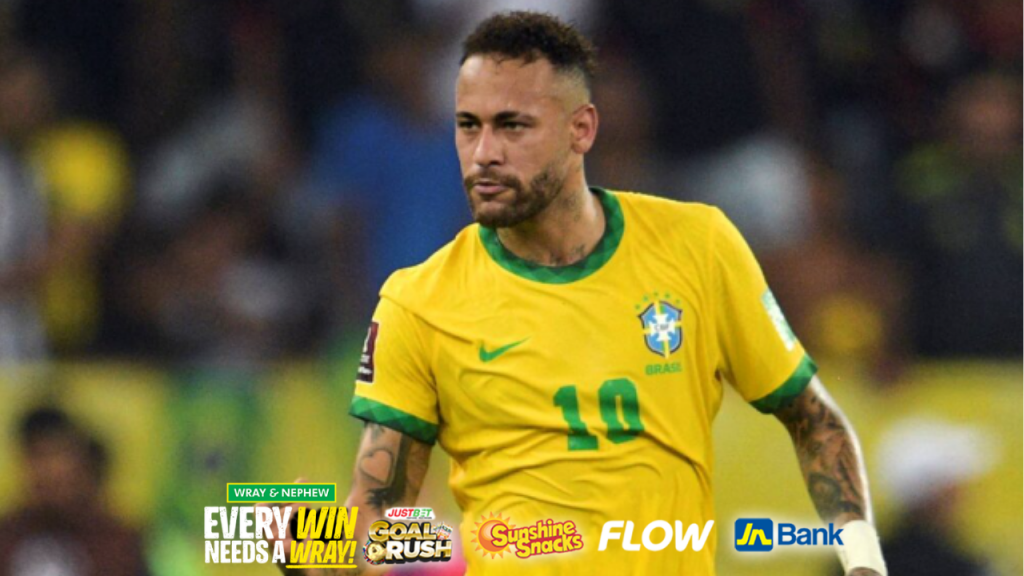
    In a promising development for Brazil’s World Cup campaign, star forward Neymar has taken his first major step toward a comeback, holding his first on-field training session at the tournament Tuesday, months after he suffered a right calf injury that sidelined him for much of 2024.

    Diagnosed with the injury back in late May, the 34-year-old all-time leading goalscorer for Brazil has followed a strict rehabilitation routine ever since the Brazilian squad touched down in the United States for the tournament. Tuesday’s light running session at the team’s New Jersey training base marked a clear milestone in his gradual recovery from the prolonged layoff.

    Neymar has not yet cleared the hurdle to rejoin full team training, and was forced to sit out Brazil’s opening Group C match against Morocco this past Saturday, which ended in a 1-1 draw. His inclusion in the final tournament squad already raised eyebrows across global football circles: consistent fitness problems have kept the veteran winger from making a single appearance for the Brazilian national side since the start of 2023. This year alone, recurring injury issues have limited him to just 50 percent of his club’s matches across domestic league, cup, and Copa Sudamericana competitions.

    Brazil now turns its attention to its second group stage fixture, scheduled to take place this Friday in Philadelphia against Haiti. The team will close out its Group C campaign against Scotland on June 24 in Miami, with Neymar’s recovery timeline remaining a key talking point heading into the critical next phase of the tournament.

  • Ronaldo as excited for sixth World Cup as his first, says Martinez

    Ronaldo as excited for sixth World Cup as his first, says Martinez

    Ahead of Portugal’s opening 2026 World Cup group stage clash against DR Congo, national team head coach Roberto Martinez has doubled down on his unwavering support for 41-year-old icon Cristiano Ronaldo, who is set to make history as the first men’s player to compete at six different World Cup tournaments. With a young, talent-dense squad that has earned Portugal a place among the pre-tournament favorites to lift their first-ever World Cup trophy, Ronaldo’s continued role in the starting lineup has sparked widespread debate across global football circles.

    Critics of Ronaldo’s continued inclusion point to his recent dry spell at the highest level of international competition: the five-time Ballon d’Or holder, who holds the all-time men’s international goal record with 143 strikes, has not found the back of the net in his last nine appearances at major global tournaments. Detractors also note that he contributes minimal defensive work when Portugal is out of possession, a gap that could leave the side exposed against top opposition.

    For Martinez, however, there is no question that Ronaldo remains Portugal’s top choice in the final third. In comments delivered at a pre-match press conference, the coach framed the veteran as a global benchmark for young footballers everywhere. “He is an example and a reference for football. For all those children on the street who begin to feel the love for sport, following the example of Cristiano Ronaldo is wonderful,” Martinez said.

    The coach added that despite this being Ronaldo’s sixth World Cup campaign, the forward approaches preparation with the same hunger and intensity that marked his first appearance on the sport’s biggest stage. “It is his sixth World Cup, but I can say that internally it seems to be his first World Cup in terms of intensity, in terms of emotional output, of how important it is for him to be prepared to lead the group,” Martinez explained. “Within the team he is a vital player because he is the finisher, he is the player in the penalty area, he is the player who has those movements that can open spaces for other players. Within our attacking game, his numbers reflect the importance he has.”

    That sentiment is echoed by Portugal’s young star core, led by Manchester United captain and recent Premier League Player of the Year Bruno Fernandes. Fernandes, who grew up watching Ronaldo compete, recalled first seeing the forward play at UEFA Euro 2004, hosted in Portugal when Ronaldo was just 19 years old and helped carry the side to the tournament final. “All of us in this national team we have grown up watching Cristiano Ronaldo play and for us it’s such an honour to play next to him now in the same team,” Fernandes said. “We’re all here to support him and to support Portugal to go as far as possible.”

    Portugal’s squad boasts one of the deepest and most talented rosters in this year’s tournament. Beyond Fernandes’ standout form, the side fields a elite midfield that includes Vitinha and Joao Neves, who just claimed their second consecutive Champions League title with Paris Saint-Germain, and Bernardo Silva, who is set to transfer to Real Madrid after nine trophy-laden seasons with Manchester City. Fernandes emphasized that the squad’s combination of individual elite talent and team cohesion makes them a legitimate contender, adding that the side has every right to dream of lifting the trophy. “We have a very strong team, great individual quality, and beyond the individual quality and the strengths that we have as individual players, I think we are a very cohesive team, a very united team,” Fernandes said. “Obviously our dream is to be there (winning the World Cup) and I think that dreaming is not forbidden.”

    After facing DR Congo, Portugal will round out Group K play against tournament first-timers Uzbekistan and Colombia. Martinez, however, warned against overlooking Portugal’s opening opponent, pointing to recent high-profile upsets in early tournament matches—including Spain’s surprising 0-0 draw with underdog Cape Verde—to underscore that no World Cup match is a guaranteed win.

    “We’ve got very little to win tomorrow from the outside. If you win against Congo, it’s expected. If you win by one, it’s a big problem. If you draw, it’s a catastrophe. If you lose, this is the end of the world,” said Martinez, a Spanish national. “They come with no expectations, they are enjoying being here. We’ve seen incredible performances from teams like Qatar, Cape Verde, exemplary performances, that shows you that there are no easy games in a World Cup.”

    The coach also confirmed long-circulated reports that he will step down from his role following the World Cup, as his current contract is set to expire at the end of the tournament. “My contract ends after the World Cup. This is not news, this is just a fact,” Martinez added. “We’re now focused on finishing the work that we’ve begun three-and-a-half years ago. When I came to Portugal the focus was to try to win everything, but most importantly to prepare for the World Cup.”

  • Serena Williams defeated in Berlin ahead of Wimbledon return

    Serena Williams defeated in Berlin ahead of Wimbledon return

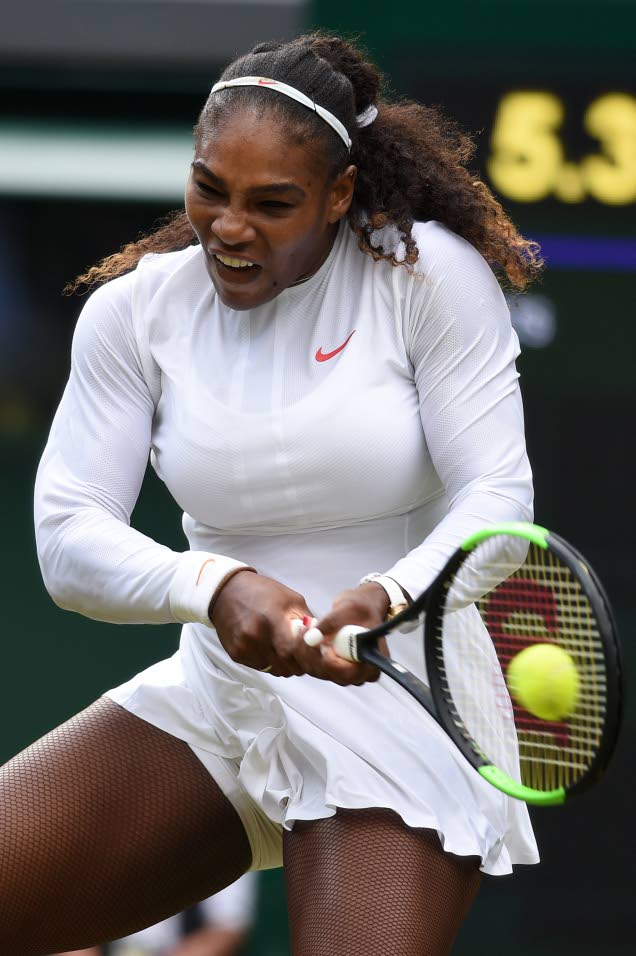
    BERLIN, Germany — Just hours after officially confirming she will team up with sister Venus for Wimbledon doubles, 44-year-old tennis icon Serena Williams faced a straight-set exit at the Berlin Open on Tuesday. Williams and her Czech partner Karolina Muchova fell 6-4, 6-4 to the pairing of Giuliana Olmos of Mexico and New Zealand’s Erin Routliffe, in only Williams’ second outing since her surprise comeback announcement earlier this month.

    The opening set slipped away from Williams and Muchova after Williams dropped serve in her second service game. In the second set, a mid-set break of Muchova’s serve proved decisive, leaving the pair unable to mount a comeback and close out the match in Olmos and Routliffe’s favor.

    Despite the loss, Williams offered a notably positive assessment of her physical performance post-match. “I felt pretty good out there. I felt actually more nimble and more sturdy and quicker than the first match in Queens,” she told reporters, adding that she felt solid overall in terms of physical conditioning and speed — two attributes she noted are critical for fast-paced grass court play.

    This Berlin run marks Williams’ second tournament appearance since she ended a two-year retirement and announced her return to competitive tennis in June. Her first comeback match at London’s Queen’s Club last week ended in a opening-round win, but her run was cut short when doubles partner Victoria Mboko suffered an injury that forced the pair to withdraw.

    When asked why she opted to pair with Muchova, a top Czech player, for the Berlin event, Williams delivered a characteristically witty response: “Czech players have given me nothing but trouble throughout my whole career. So if you can’t beat them, join them.”

    The 23-time Grand Slam singles champion originally stepped away from professional tennis in 2022, saying she wanted to prioritize time with her family. When she announced her comeback, she cited a desire to compete in front of her two young daughters as the core motivation for her return.

    Though flashes of the dominant power game that made Williams a generational force in women’s tennis for 20 years were visible on court, the nearly four-year break from full-time competition left Williams searching for rhythm, particularly in the early stages of the match. She steadily improved as the contest progressed, however, refining her footwork and unleashing the blistering serve and powerful forehand that were the hallmarks of her historic career.

    With the All England Club set to name one final singles wildcard for Wimbledon, which kicks off on June 29, speculation has mounted that Williams could pursue a singles run at the iconic Grand Slam. The tennis legend quickly shut down those rumors, however. “You think I’m ready for singles?” she asked reporters. “I need to get to work.”

    Williams last claimed a Grand Slam singles title at the 2017 Australian Open, and her most recent Wimbledon singles win came in 2016. When she takes the court at Wimbledon next month alongside Venus, the pair will be defending a legendary doubles legacy: together, the Williams sisters have claimed 14 Grand Slam doubles crowns, six of which have come at the London grass court major.

  • Derde helft WK 2026: Dag 5, Strijd om punten en verrassingen op het veld

    Derde helft WK 2026: Dag 5, Strijd om punten en verrassingen op het veld

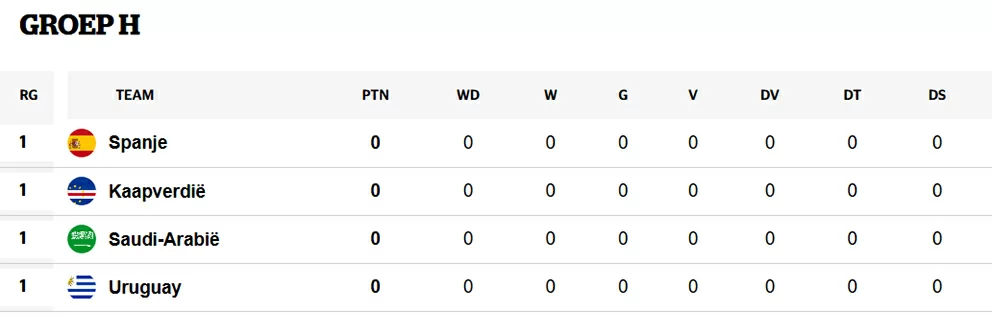
    As the 2026 FIFA World Cup group stage continues its cross-United States tour, Monday, June 15 brings four highly anticipated matches spanning Groups G and H, with teams vying for crucial points to advance to the knockout rounds. From Atlantic coast to West Coast, host cities Atlanta, Seattle, Miami and Los Angeles will welcome football fans for a full day of world-class action.

    The opening kickoff of the day comes at 1:00 PM local time in Atlanta, where European powerhouse Spain faces World Cup debutant Cape Verde in Group H. Spain enters the fixture as the overwhelming favorite, but Cape Verde’s underdog status leaves room for a potential historic upset – a reminder that only one African nation, Nigeria, has ever beaten Spain at a World Cup tournament, a 3-2 group stage win dating back to 1998.

    Next up at 4:00 PM in Seattle, Group G’s second match of the day pits Belgium against Egypt in what is projected to be a tight, one-goal affair. Belgium enters the clash as slight favorites, but the squad carries significant pressure after a disastrous 2022 World Cup campaign that saw them exit in the group stage, a far cry from their third-place finish in Russia 2018. With both sides boasting balanced talent, a single mistake or moment of brilliance could decide the three points.

    Group H action continues at 7:00 PM in Miami, where Saudi Arabia faces Uruguay. The two sides have a shared World Cup history: Uruguay claimed victory in their only previous World Cup meeting in 2018, and are favored to repeat that result on Monday. The pair also played a friendly match in Saudi Arabia in 2014, which ended in a 1-1 draw. Notably, Uruguay’s preparation has been disrupted by unexpected travel trouble: charter flight issues departing Mexico forced the team to delay their arrival, meaning they will only land in the U.S. one day before kickoff.

    The day’s final match kicks off at 10:00 PM in Los Angeles, where Group G rivals Iran and New Zealand face off in their first ever official competitive meeting. Pre-match predictions give Iran a 53.8% chance of claiming victory, and the two sides have only met twice before in friendly fixtures. Their first encounter in New Zealand back in 1973 ended in a scoreless draw, while a 2003 friendly in Tehran saw Iran run out 3-0 winners, with Ali Karimi bagging a brace and Hossein Kaebi adding the third.

    Beyond the on-pitch action, off-field developments are drawing attention across the tournament. Japanese fans have once again upheld their longstanding World Cup tradition of cleaning up stadium waste after matches, a practice that began in 1998, following the team’s thrilling 2-2 draw with the Netherlands on Day 4. In Los Angeles, home of Monday’s Iran-New Zealand clash, the local Iranian-American community is divided over support for the Iranian national team: some activists are planning public protests against the side, while other community members have called for leaving politics out of the sporting event.

    Looking back at Day 4 of the tournament, Sunday June 14 delivered exactly the mix of talent, experience and surprise that makes the World Cup football’s most watched event, as group stage tension continues to build with every fixture. Australia got their campaign off to a winning start with a 2-0 victory over Turkey in a hard-fought contest that saw both sides create clear chances, with Australia’s resilience ultimately tipping the scale. Germany lived up to their favorite billing with a dominant 7-1 thrashing of World Cup first-timers Curaçao, controlling the match from start to finish to send an early warning to other title contenders. The Netherlands and Japan played out a dynamic, end-to-end 2-2 draw that kept fans on the edge of their seats until the final whistle. In Group E, Ivory Coast snatched a late 1-0 win over Ecuador in a tactical battle between two young squads, securing three massive points early in their campaign. Sweden rounded out the day’s action with a solid 5-1 victory over Tunisia, putting themselves in a strong early position in their group.

  • West Indies Men Begin New T20 World Cup Cycle with Series Win Over Sri Lanka

    West Indies Men Begin New T20 World Cup Cycle with Series Win Over Sri Lanka

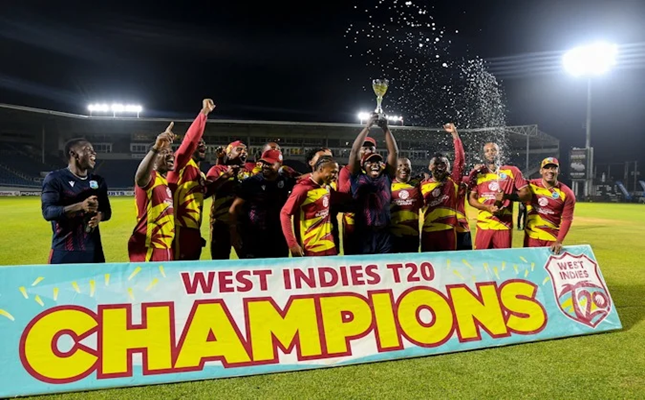
    KINGSTON, Jamaica — The West Indies men’s cricket team has launched its new T20 World Cup cycle in winning style, securing a dramatic 2-1 three-match T20 International series victory over Sri Lanka at Kingston’s Sabina Park over the weekend, driven by a career-defining historic performance from fast bowler Shamar Joseph.

    The Guyanese pace sensation delivered a series for the ages, etching his name into T20I record books. His 11 wickets across the three matches make him the first West Indian bowler to reach the milestone in a three-game series, and only the second bowler globally to achieve the feat, following Afghanistan star Rashid Khan. Throughout the series, Joseph consistently clocked speeds above 140 kilometers per hour, repeatedly unbalancing Sri Lanka’s top batters and putting the visitors under constant pressure.

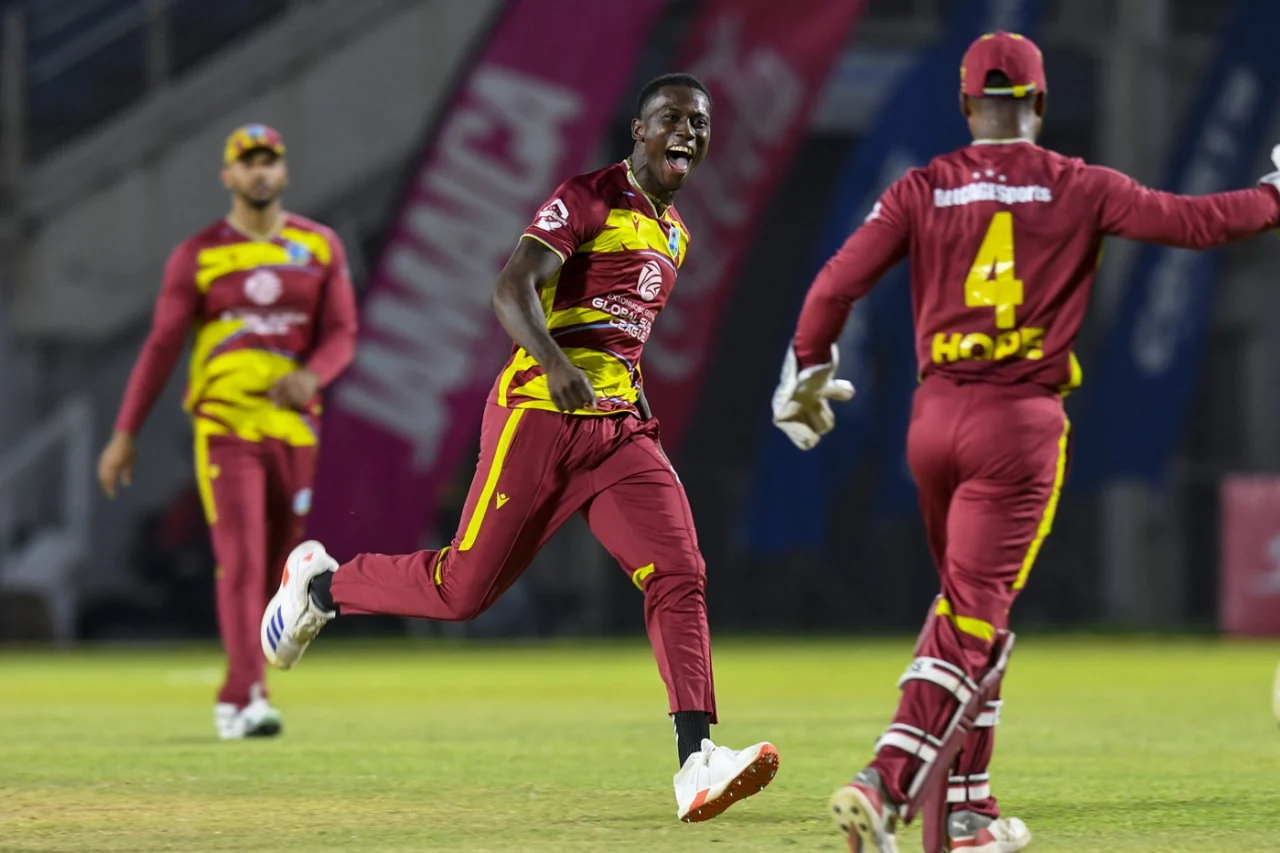
    In the decisive decider match, Joseph nearly claimed a hat-trick during the powerplay, ripping through Sri Lanka’s top order to leave them reeling at 51 for 3. He went on to finish with a new career-best 5 wickets for 33 runs, including three key wickets in the final over — culminating in the dismissal of dangerous batter Dunith Wellalage for 43 — to bowl Sri Lanka out for 169 all out inside the 20-over allocation.

    Speaking after the match, an elated Joseph reflected on his standout performance that sealed the series win for the hosts. “It’s exciting for me, my first five-wicket haul in T20s, couldn’t ask for anything better. Also, a match-winning series for our West Indies team and especially for Jamaica,” Joseph said. “The captain always says, always be ready to come and bowl. So, you just have to be ready to come and execute and be ready to go again. 11 wickets in a series, couldn’t ask for better.”

    The series itself delivered plenty of drama, after the West Indies claimed a convincing seven-wicket win in the opening fixture only to suffer a 37-run defeat in the second match, setting up a high-stakes decider in Kingston. In the final game, the hosts’ run chase got off to a shaky start when captain Shai Hope fell for just one run, but an aggressive 51-run second-wicket stand between Brandon King and Shimron Hetmyer steadied the West Indian innings. Sri Lanka fought back with quick wickets, reducing the hosts to a precarious 53 for 4 and putting the series result in doubt.

    With the chase on the brink, middle-order batters Rovman Powell and Sherfane Rutherford rebuilt the innings through the middle overs before launching a devastating counterattack. The pair put together an explosive 81-run partnership off just 46 balls, swinging momentum firmly back in the West Indies’ favor. Powell, who became the West Indies’ all-time leading T20I run-scorer during the second match of the series, thrilled the home crowd with three sixes and one four, while Rutherford delivered an unbeaten knock of 54 off 40 balls, including four sixes and three fours.

    Needing 37 runs from the final three overs, all-rounder Jason Holder — who missed the second match with a hamstring injury — sealed the win in spectacular fashion, cracking three towering sixes during a rapid 21 runs off just five balls. The West Indies crossed the finish line with two balls remaining, sparking wild celebrations among the home crowd at Sabina Park.

    Holder’s contribution across the series further underlined his value to the side; his 3 wickets for 18 runs in the opening match helped him become just the second West Indian bowler to claim 50 T20I wickets on home soil. Batter Brandon King also reached a major career milestone, becoming only the third West Indian batter — alongside Powell and Nicholas Pooran — to surpass 2,000 career T20I runs.

    Across the entire series, the West Indies held the upper hand on both sides of the ball. The home bowling attack claimed 22 wickets to Sri Lanka’s 17, with Joseph averaging one wicket every six overs and holding an economy rate of 7.83, while Holder finished as the series’ most economical bowler, conceding just 51 runs from 48 deliveries for an economy of 6.37. With the bat, the West Indies hit 31 sixes to the visitors’ 26, with Powell leading the charge with six maximums and both Hetmyer and Rutherford hitting five each.

    West Indies head coach Daren Sammy praised his side’s all-round performance, highlighting the team’s composure under pressure during the tense run chase in the decider. “Most of all, being under pressure today and having the nerve, the calm and the cricket smarts to do what it takes to come out over the line; that was special,” Sammy said. “There are still areas and skills we’ve got to develop, but it’s something that we as the coaching staff and players will continue to work on.”

    Both sides will now shift their focus to the red-ball format, with a two-match Test series scheduled to get underway June 25 at Antigua’s iconic Sir Vivian Richards Stadium, running through July 7.

  • Derde helft WK-2026: Hoe de miljarden van het WK worden verdeeld

    Derde helft WK-2026: Hoe de miljarden van het WK worden verdeeld

    When a captain lifts the World Cup trophy above their head, global audiences only see the celebration of athletic excellence. Behind the goals, outpourings of emotion and national pride, however, lies a massive, complex financial ecosystem that has turned the FIFA World Cup into one of the world’s most lucrative commercial events, with billions of dollars flowing between FIFA, broadcasters, sponsors, national football associations, clubs and ultimately the players themselves. For millions of football fans across the globe, the core question remains: where does all this money come from, and exactly how is it distributed across the entire industry?

    Unlike many major sporting events that rely heavily on ticket sales and stadium revenue, the World Cup’s largest income stream does not come from seats in venues – it is generated in the living rooms of billions of viewers tuning in from around the world. Television and broadcasting rights are by far FIFA’s biggest source of revenue, with global media networks paying record-breaking sums to secure the rights to air tournament matches. Beyond broadcast rights, FIFA also pulls in billions of dollars from corporate sponsorship deals, advertising campaigns, digital content rights, official merchandise sales, premium hospitality packages and match ticket sales. The upcoming expansion of the tournament from 32 to 48 participating nations is set to boost these total revenues even further: more matches mean greater airtime for broadcasters to sell, and in turn higher advertising returns across the board.

    A key component of FIFA’s revenue strategy that often flies under the radar of casual fans is its distribution package model. Instead of negotiating directly with hundreds of individual national broadcasters around the world, FIFA groups large geographic regions or blocs of countries into a single commercial rights package, which it then sells to a specialized distribution partner. That distributor purchases the full regional rights, and then resells sub-licenses to individual national television stations. This system streamlines negotiations for FIFA, eliminating the need to manage hundreds of separate agreements while also guaranteeing the governing body maximizes its total revenue from broadcast rights.

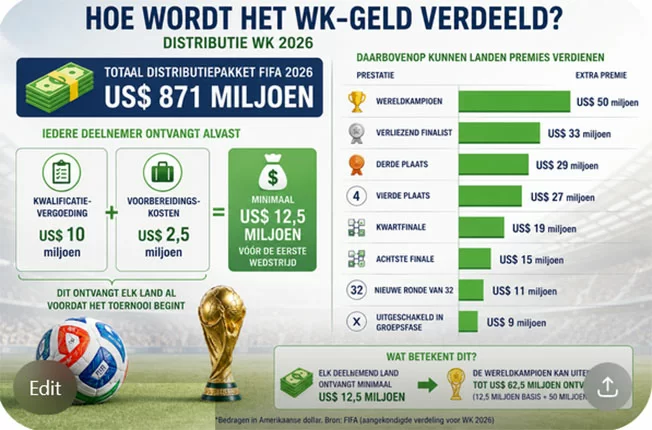
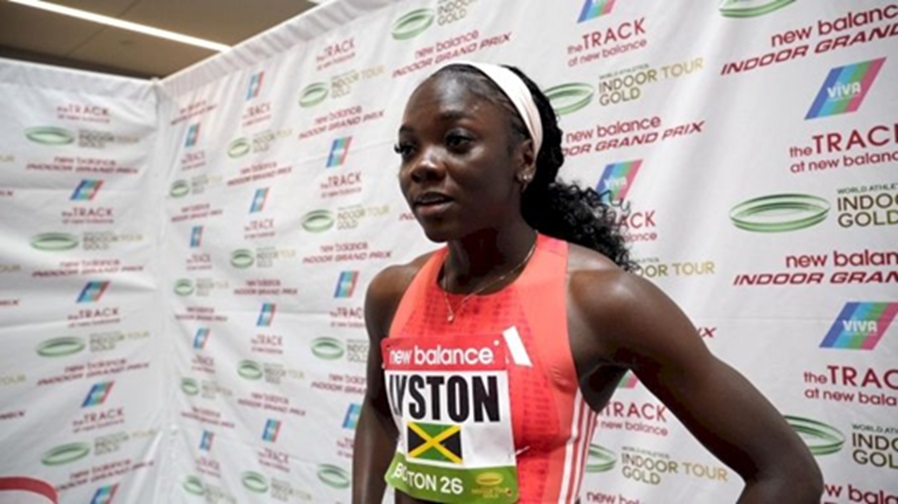
    Long before the opening match of the tournament kicks off, every participating national association already receives a base payout to cover qualification and preparation costs. For the 2026 iteration, each qualified nation already earns upwards of $12 million USD before a single ball is kicked. Additional performance-based prize money is awarded based on how far a team progresses in the tournament. Even teams eliminated in the group stage walk away with multi-million dollar payouts, and prizes rise rapidly as teams advance through the knockout rounds, with the eventual world champions set to take home $50 million USD in prize money. While that figure sounds enormous, it only accounts for a fraction of the total revenue generated by the entire tournament.

    One of the most common misconceptions surrounding World Cup finance is that all this prize money goes directly to the players on the pitch. In reality, FIFA pays all prize funds to national football associations, not individual players. Each association is then free to decide how to allocate its payout across a range of priorities. A portion typically goes to individual player bonuses, technical and coaching staff salaries, and on-tournament medical support. Many associations also allocate large shares of the money to cover operational costs, youth football development programs, coaching education initiatives, and long-term national football infrastructure projects. As a result, individual player bonuses vary wildly from nation to nation: some associations award large, direct bonuses to their squads, while others choose to reinvest most of the payout into growing the sport at the grassroots level.

    Clubs that release players to compete at the World Cup also receive financial compensation from FIFA through the governing body’s Club Benefits Programme. The logic behind the program is straightforward: clubs invest years of time and resources into developing and paying players’ salaries, and face the risk of players suffering tournament injuries that can disrupt club seasons for months. For the 2026 World Cup, FIFA has set aside a record-breaking multi-hundred million dollar fund for this compensation program. The amount a club receives is tied to how far a player’s national team progresses in the tournament, meaning the longer a player stays in the competition, the higher the payout their club receives. Crucially, this system is not limited to elite European giants like Real Madrid, Manchester City and Bayern Munich – smaller clubs that developed and trained world cup players are also eligible to receive a share of these funds.

    The narrative that the World Cup is purely a sporting event only tells half the story. Its entire financial supply chain starts with a single viewer watching a match from home: advertisers pay for commercial airtime, broadcasters pay for the rights to air matches, distributors sell sub-licenses to local stations, FIFA collects the revenue and redistributes it to national associations, clubs, and global development programs. While only one nation leaves the tournament as champions, dozens of different stakeholders across the global football ecosystem financially benefit from the event. The player who scores the winning penalty gets all the post-tournament glory, but the billions of dollars that flow behind that iconic moment remain invisible to most fans.

    It is this unseen economic competition that plays out off the pitch, and it is far larger than the 90 minutes of play that capture global attention. For FIFA, media companies, sponsors and broadcasters, the real final for the World Cup begins long before the opening whistle blows.

  • Antigua’s First Jiu-Jitsu Black Belt, Whylee O’Brien, Continues International Success

    Antigua’s First Jiu-Jitsu Black Belt, Whylee O’Brien, Continues International Success

    In a groundbreaking achievement for the dual-island Caribbean nation of Antigua and Barbuda, Whylee O’Brien has etched his name into the history books as the country’s first-ever Jiu-Jitsu black belt, elevating both his own athletic career and his homeland’s profile in the global martial arts community.

    O’Brien, a native of New Winthropes Village, earned this elite rank after years of relentless training, unwavering discipline, and steadfast commitment to the sport — a discipline that demands not just peak physical conditioning, but extraordinary mental resilience and strategic focus. As the trailblazer from Antigua and Barbuda to reach the highest echelons of ranked Jiu-Jitsu, O’Brien has already emerged as a beacon of inspiration for the next generation of young athletes across the nation, proving that even elite global athletic milestones are within reach for Caribbean competitors.

    Most recently, O’Brien took his place as an official representative of Antigua and Barbuda at the high-profile Wings of Charity 007 James Bond gala, hosted June 12, 2026, at The Chancery Rosewood Hotel in London’s prestigious Mayfair district. The invitation-only event drew a cross-section of global leaders, including international ambassadors, senior diplomats, top business executives, and other distinguished guests from across the world.

    During the gala, O’Brien had a formal meeting with Her Excellency Karen-Mae Hill OBE, Antigua and Barbuda’s High Commissioner to the United Kingdom, and networked confidently with other attending dignitaries, including the Ambassador of Seychelles. Carrying the flag of Antigua and Barbuda emblazoned on the lapel of his formal evening blazer, O’Brien carried the cultural identity and values of his homeland with effortless poise, acting as a de facto unofficial ambassador that won praise from attendees.

    Beyond his athletic accomplishments, O’Brien draws motivation and character from deep roots in Antigua and Barbuda’s cultural and community heritage. He is the great-grandson of the late Mary Henry, a beloved local figure known affectionately as “Mem,” and nephew of celebrated Antiguan author William Henry, whose written works have played a key role in shaping the nation’s modern cultural identity. Even as his athletic feats have earned him nationwide acclaim at home, those close to O’Brien highlight his consistent humility, quiet determination, and unwavering commitment to lifting up his country’s reputation in every international space he enters.

  • Joseph, Rutherford power WI to record chase and series victory

    Joseph, Rutherford power WI to record chase and series victory

    On a tense Sunday night at Kingston’s Sabina Park, the West Indies men’s cricket team claimed a landmark 2-1 three-match T20 International series win against Sri Lanka, pulling off their highest successful run chase at the ground to seal the result. The series had been set up as a perfect decider: the Caribbean side, known universally as the Men in Maroon, took the opening match, before a resurgent Sri Lanka side bounced back to claim victory in the second fixture, leaving everything to play for in the final encounter. After West Indies captain Shai Hope won the pre-match coin toss, he elected to put Sri Lanka in to bat first, a decision that would pay off by the end of the night. The Caribbean bowling attack made consistent breakthroughs throughout the Sri Lankan innings, with young fast bowler Shamar Joseph turning in a career-best performance, taking five wickets for just 33 runs to destabilize the opposition batting order. Despite the early collapses, late-order hitting from Dunith Wellalage, who struck a rapid 43 off only 28 balls, and Vanindu Hasaranga, who contributed 21 runs from 13 deliveries, helped Sri Lanka post a competitive total of 169 all out, setting a challenging target for the hosts. The West Indies’ run chase got off to a disastrous start, with captain Hope departing for a golden duck without adding a single run to the scoreboard. Shimron Hetmyer injected much-needed momentum into the innings with an aggressive 32, but his departure left the middle order needing to rebuild the chase. That rebuilding work was delivered brilliantly by Rovman Powell and Sherfane Rutherford, who combined for an 81-run fifth-wicket stand – the highest fifth-wicket partnership in West Indies T20I history. When Powell fell with the target still out of reach, experienced all-rounder Jason Holder stepped up to finish the job. In the penultimate over of the innings, Holder smashed three monstrous sixes off the Sri Lankan bowling, finishing an unbeaten knock of 21 runs from just 5 deliveries to turn the tide firmly in the hosts’ favor. Rutherford anchored the innings with a polished half-century, ending on 54 not out, and guided the West Indies across the finish line with five wickets in hand and two full deliveries remaining. This win marks a much-needed turning point for the West Indies side: it is their first series victory in four attempts, and their first home T20I series win of 2025. Speaking after the final wicket fell, captain Hope summed up the significance of the result, noting that consistent success is built through small, repeated habits, and that “winning is a habit.”