分类: society

  • Guyana suspends ferry management team following deadly MV Barima capsizing

    Guyana suspends ferry management team following deadly MV Barima capsizing

    A devastating maritime disaster has unfolded off the coast of Guyana, after passenger ferry MV Barima overturned in rough waters late Saturday, leaving scores of people dead or unaccounted for and triggering a sweeping official investigation. The Caribbean Community (CARICOM) has moved quickly to extend its full solidarity and support to the South American nation in the wake of the tragedy.

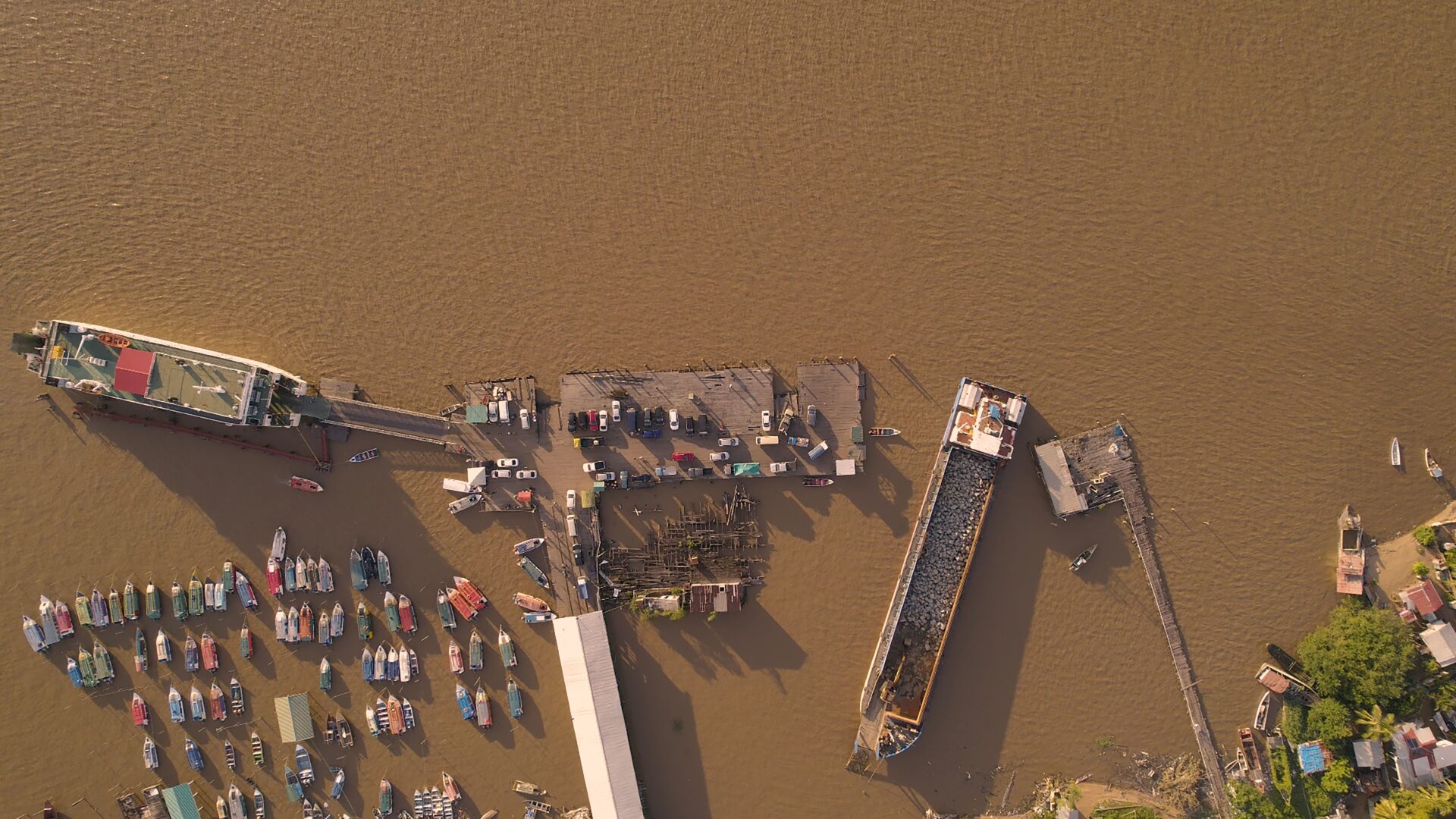
    The ill-fated vessel was en route from Guyana’s capital Georgetown to Port Kaituma when it capsized roughly seven miles offshore, near the mouth of the Pomeroon River, shortly after departing the Kingston Goods Wharf that same afternoon. By Sunday evening, coordinated search and rescue teams had pulled 67 survivors from the water and recovered two bodies, with operations continuing around the clock to locate remaining missing passengers.

    In an official statement released after the incident, CARICOM said it was deeply saddened by the loss of life and disruption caused by the capsizing off Guyana’s Atlantic coast. The regional bloc also offered public recognition to the emergency responders, government agencies and private boat operators who mobilized immediately after the disaster, noting that these crews worked through dangerous overnight conditions to save as many lives as possible. “CARICOM stands in solidarity with the Government and people of Guyana, in particular, the families and communities that are being impacted by this unfolding disaster,” the statement added, confirming the bloc would continue to monitor search and investigation efforts and keep affected families in its prayers.

    In the early days of the probe, serious irregularities have already emerged that have prompted swift official action. The Guyanese government has suspended the entire management team responsible for the ferry’s loading, departure and ongoing operational oversight, Public Works Minister Juan Edghill confirmed Monday. Edghill explained the temporary suspensions are a proactive step to protect the integrity of the investigation, eliminating any risk of evidence tampering and ensuring the probe remains full, transparent and impartial.

    Retired Brigadier and Prime Minister Mark Phillips ordered an urgent, multi-agency investigation after initial inquiries uncovered a series of troubling inconsistencies. Most notably, official passenger records only listed 35 of the 67 passengers who were rescued from the capsized ferry, pointing to major inaccuracies in the vessel’s official manifest. Al Jazeera reports that the ferry was actually carrying at least 133 passengers when it departed, meaning dozens of people could still be missing and presumed dead.

    Investigators have also confirmed a disturbing additional finding: both the ferry’s captain and first engineer tested positive for cannabis in mandatory drug screenings conducted after they were rescued. Guyanese government officials have stressed that any individual found to have committed negligence, misconduct or criminal acts connected to the disaster will face full accountability under national law.

    President Irfaan Ali has already met with survivors and the families of missing passengers to offer government support and hear their concerns. As of the latest updates, search operations are still ongoing across the local Atlantic waters and adjacent shorelines, as authorities work to locate all missing people and deliver answers to waiting families.

  • SKELEC Customer Notice

    SKELEC Customer Notice

    St. Kitts Electricity Company (SKELEC) has announced the official launch of its Advanced Metering Infrastructure (AMI) smart meter upgrade initiative, with installation work already underway in targeted residential and commercial communities across the island. The public notice, first published at 9:36 p.m. local time on Monday, July 20, 2026, shares key guidance for customers to support smooth, safe, and efficient deployment of the new metering technology.

    The AMI upgrade program represents a major modernization effort for SKELEC’s utility infrastructure, replacing outdated traditional analog meters with digitally connected smart meters that enable real-time energy usage tracking, automated billing, and faster outage detection and response. For customers scheduled to receive the new meters, the company has emphasized several critical steps to prepare for installation: ensuring clear and unobstructed access to current meter locations, keeping pets secured away from work zones, and having an adult representative on-site during the installation window to address any on-location questions.

    SKELEC notes that the rollout will proceed in phased stages across designated communities to minimize disruption to regular power service, with most installations completed within a single service appointment. The company has also committed to sharing ongoing updates on project progress, community scheduling, and additional customer guidance through follow-up public notices and related announcements, the latest of which was posted 20 minutes after the initial public alert. Customers are encouraged to check official SKELEC communication channels for updates on their scheduled installation dates and to reach out to customer support with any questions or concerns about the upgrade.

  • OPINION: Improve life for residents, and tourism will follow

    OPINION: Improve life for residents, and tourism will follow

    After St Lucia Times published a recent feature exploring whether Rodney Bay, one of the island nation’s top tourism hubs, has lost its original allure, a 14-year-old local student and youth advocate has stepped forward with a nuanced perspective that pushes the conversation far beyond the fate of a single waterfront district.

    Jahia DeMerville, a Corinth Secondary School student from Babonneau, penned an opinion piece responding to claims from an anonymous local business owner about Rodney Bay’s declining popularity, offering fresh insights into the interconnected fates of local communities and the island’s tourism-dependent economy. Her submission, edited only for grammar and clarity, lays out a clear argument: the challenges facing Rodney Bay are not isolated to the tourism sector, and long-term growth for the island’s biggest industry depends on addressing unmet needs for residents across the country.

    DeMerville acknowledges that many restaurants in the area are quieter than they once were, but pushes back against the idea that this trend stems solely from Rodney Bay losing its appeal. Instead, she points to the island’s ongoing cost of living crisis, which has eroded the disposable income of local residents who once frequented the district’s dining and entertainment spots. With stagnant wages paired with skyrocketing prices for food, rent, electricity and imported goods, local families are forced to prioritize essential needs over discretionary spending like eating out. This economic pressure, not fading appeal, is the core driver of quieter venues, she argues.

    The young writer also draws attention to a stark inequity in public safety resourcing: while extra police patrols have been deployed to Rodney Bay to protect tourist interests, many residential communities that have grappled with persistent crime for decades have been denied the same level of sustained investment and attention. DeMerville emphasizes that this is not an either-or issue. Tourist safety matters, given that tourism accounts for roughly 65% of Saint Lucia’s GDP and generates more than EC$3.5 billion in annual revenue. But she argues that national crime statistics, not just district-level data, shape the perception of Saint Lucia among prospective visitors. If crime is left unaddressed in communities beyond the main tourist zones, it will ultimately damage the country’s entire reputation as a travel destination.

    In recent months, DeMerville notes, visitors have taken to social media to share disappointing experiences on the island, citing aggressive solicitation, unexpectedly high prices, and crumbling infrastructure. Too often, these negative impressions taint visitors’ trips so severely that they are eager to end their stays early and return home — a far cry from the enthusiastic word-of-mouth that drives repeat tourism and new visitors. These issues cannot be fixed by only upgrading Rodney Bay, she argues. Improving infrastructure, public safety and overall quality of life for all Saint Lucians will naturally translate into a better experience for every visitor, no matter where they travel on the island.

    DeMerville concludes by arguing that Saint Lucia’s current approach to tourism development is misaligned. While it makes sense to invest in the sector that anchors the national economy, the island has prioritized the wrong goals — focusing too heavily on polishing flagship tourist destinations in the race for the “Best Caribbean Island” title, while ignoring basic needs for safety, comfort and economic security for local citizens. Before competing for regional tourism acclaim, DeMerville says, Saint Lucia should focus on building a safe, cohesive country with strong leadership, satisfied residents and welcoming experiences for all who visit. The piece was inspired by conversations with DeMerville’s friend Ryan Hippolyte after the pair read St Lucia Times’ original feature on July 4.

  • LETTER: They Love Black Immigrants When We Win World Cups for Them

    LETTER: They Love Black Immigrants When We Win World Cups for Them

    After Spain secured a hard-fought 1-0 win over Argentina in the 2026 men’s World Cup final, the celebrations across the nation have shone an unflinching spotlight on a long-unaddressed hypocrisy that plagues much of modern Europe: Black immigrants and their descendants are widely celebrated when they deliver sporting glory, but pushed to the margins and demonized when they simply demand equal access to dignity, opportunity and a sense of belonging in the countries they call home.

    Two of the standout players that powered Spain to its second World Cup title, Lamine Yamal and Nico Williams, are children of immigrant heritage. When they pulled on the national team jersey and helped carry their country to the biggest prize in global football, they were immediately hailed as national heroes. Front pages of every major Spanish newspaper were dominated by their images, leading politicians lined up to offer public congratulations, and packed crowds in stadiums and city squares across the country chanted their names in celebration. In this euphoric moment, not a single voice questioned whether they were “Spanish enough” to represent the nation.

    Yet step away from the bright lights of the football pitch, and the narrative shifts dramatically for Black people with immigrant roots across the continent. People who share their heritage are routinely told they do not belong, scapegoated for nearly every unresolved social ill facing European countries. Politicians consistently blame migrants for rising crime, stagnant unemployment rates, and strain on public health and education systems – convenient distractions from their own policy failures. Desperate African migrants seeking refuge by crossing the Mediterranean are framed as an invading force threatening national identity, and far-right and even mainstream political movements build massive electoral support by campaigning on stricter border controls and mass deportation programs.

    The double standard could not be clearer. Europe embraces Black immigrants when they score game-winning goals, bring home championship medals, and make the continent’s nations proud on the global stage. But when those same communities need affordable housing, stable employment, equal legal protection, or even just the basic right to go about their daily lives without constant suspicion from authorities and the public, that widespread enthusiasm vanishes overnight.

    It is a critical detail too often overlooked in post-victory analysis that many of the Black players held up as symbols of successful modern European nations are direct products of immigration. Their success is not a happy accident that emerged in spite of border crossing and migration; it is a core part of the modern immigration story that demonstrates how migration enriches the countries that receive it.

    But this reality makes the double standard all the more unjust. Sporting success should never be required as the price of full acceptance and belonging. A Black child born or raised in Spain, France, England, or Portugal should not have to become a global football superstar to be recognized as a full citizen of that country. The right to belong and be recognized as a member of a nation cannot be conditional on how many trophies someone wins or how many goals they score.

    There is no question that Spain deserves full congratulations for its historic victory over Argentina. But the outpouring of celebration that followed the win should force Spain – and Europe as a whole – to confront an uncomfortable, long-avoided question.

    If immigrant families and their children are considered “Spanish enough” when they lift the World Cup trophy for the nation, why are they suddenly cast as unwanted foreigners when election season rolls around?

    In the coming weeks, the applause for the World Cup win will fade, and the Spanish flags hung from balconies and storefronts will be packed away for the next major sporting event. The real test of European values, the writer argues, is whether the same people cheering these immigrant heritage players today will stand up to defend their communities and demand equal rights for them tomorrow.

  • Travel Agent Michelle Anthony Pleads Guilty to Defrauding Government, Two Others of More Than $44,000

    Travel Agent Michelle Anthony Pleads Guilty to Defrauding Government, Two Others of More Than $44,000

    A local travel agent from Lightfoot has entered a guilty plea to multiple counts of fraudulent conversion, admitting she misappropriated more than $44,000 in public and private funds between 2022 and 2023. Fifty-year-old Michelle Anthony faced four criminal counts during her hearing at the High Court before Justice John Spencer, and she is scheduled to return to the judicial body on September 25 for final sentencing. The single largest sum of stolen cash amounts to more than $29,000, a pool of money that had been earmarked exclusively for travel logistics tied to a high-profile cultural performance. The funds were intended to cover travel arrangements for the Hells Gate Steel Orchestra, which had been invited to appear at Antigua and Barbuda Day celebrations in New York City in August 2023. As the current reigning champions of the regional Panorama steelpan competition, the group’s trip was being organized by the national Festivals Commission. Officials confirmed that the unexpected financial loss forced organizers to disrupt travel plans for the orchestra and created cascading problems that undermined preparations for the 2023 Labour Day festivities held in New York alongside the Antigua and Barbuda Day events. Beyond the public funds stolen from the government commission, Anthony also confessed to two additional fraudulent conversion offenses that targeted two separate private clients, each of whom lost thousands of dollars to her criminal actions. Court records confirm that all of the illegal activities took place across two locations in Antigua: Old Parham Road and the capital city of St. John’s. Anthony was first taken into custody and charged with the offenses in December 2023, before the case was transferred to the High Court for formal prosecution and trial proceedings.

  • Oproep tot meer verbondenheid: ‘Ontwikkeling begint met bruggen bouwen’

    Oproep tot meer verbondenheid: ‘Ontwikkeling begint met bruggen bouwen’

    On a recent Saturday, the Consulate General of Suriname in the Netherlands hosted a one-day lecture conference titled “Breaking Borders, United as One”, where senior Surinamese diplomats and community leaders from diverse backgrounds converged to deliver a clear, shared message: greater interconnectedness, mutual respect and cross-group collaboration are non-negotiable prerequisites for Suriname’s long-term sustainable development. The gathering brought together voices representing communities across Suriname and the large Surinamese diaspora in the Netherlands, to address growing social and economic divides that threaten national progress.

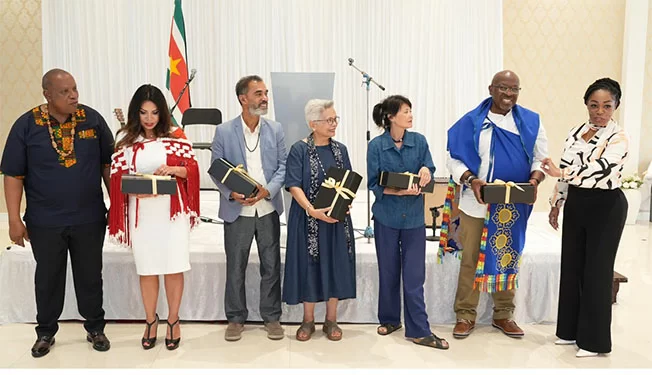
    Opening the discussions, Surinamese Ambassador Ricardo Panka, who appears at the far left of the event’s group photograph, emphasized that interconnectedness is not an end goal in itself, but the foundational bedrock upon which all productive collaboration and societal advancement is built. For Panka, durable, inclusive growth in Suriname can only be achieved when communities and individuals actively seek out connection, listen to one another, and actively bridge divides that threaten to pull the nation apart. “Connectedness is the foundation on which collaboration is built. And collaboration, in the end, is the engine that drives development,” Panka stated. He issued a call to all Surinamese people, regardless of where they reside, to keep building cross-community bridges, hold one another accountable when needed, and always ground those conversations in mutual respect and a commitment to Suriname’s shared national interest.

    Consul General Roseline Daan, featured at the far right of the event’s group photo frame, framed the conference as a direct response to an era of growing social and economic strain that demands more intentional collective action. She noted that public discourse too often centers on highlighting differences between groups, when shared priorities and collective responsibility are the only solid base for long-term, sustainable progress.

    Other speakers brought unique perspectives shaped by their distinct community backgrounds, all converging on the urgent need to build a more inclusive Surinamese society. Guest speaker Raj Mohan argued that the Surinamese nation is not confined to its geographic borders; instead, it lives and grows wherever Surinamese people make their homes. Rejecting the idea of a divide between Surinamese residing in the Netherlands and those based in Suriname, Mohan noted, “We form a single story that has stretched across oceans.”

    Head Captain Sylvester Aboikoni issued a warning that core values of respect, harmony and mutual understanding are increasingly coming under pressure from rising individualism, persistent economic hardship and growing societal tension. To strengthen overall social cohesion, he argued, these foundational values must be recentered as guiding priorities for the entire community.

    Diana Vlet, speaking on behalf of Suriname’s Indigenous community, pointed out that the contributions of Indigenous peoples to Suriname’s national development still do not receive adequate widespread recognition. She called for greater attention to Indigenous history and culture to be integrated into national school curricula and centered in national heritage institutions. True national connectedness, Vlet stressed, can only take root when all population groups are recognized as equal members of the Surinamese community.

    Cultural steward Harriëtte Mingoen drew an important distinction between multiculturalism and interculturalism to frame her argument: while multiculturalism simply places different cultures alongside one another without deeper engagement, interculturalism centers intentional encounter, collaborative work, and mutual learning between groups, all without requiring any community to abandon its unique identity.

    Carla Tlon, a scholar of Suriname’s Chinese diasporic community, drew attention to the underdocumented history of Surinamese people of Chinese descent. Many family histories of this community have yet to be formally recorded, she noted, even though centering these shared histories builds greater understanding and empathy across all segments of Surinamese society.

    Closing the conference, Ambassador Panka reiterated his call to strengthen cross-border ties between Surinamese communities across the globe. For Panka, the ultimate goal of the day’s discussions was clear: to deliver “less distance, more results” for the entire Surinamese community, wherever its members may live.

  • ‘We mourn with you’: PM extends condolences  after deadly boat crash

    ‘We mourn with you’: PM extends condolences  after deadly boat crash

    A deadly late-night marine collision off the coast of Anse Cochon, Saint Lucia, has left two women dead, 14 others injured, and two more unaccounted for, prompting a public statement of mourning and solidarity from the nation’s top leader.

    The tragic incident unfolded at approximately 11:55 p.m. Saturday when two vessels — the larger craft Ocean Angel and the smaller pirogue Mango Tours — collided head-on along opposite travel routes. Preliminary law enforcement findings confirm Mango Tours was moving south when it struck the northbound Ocean Angel. The impact sank the smaller pirogue and left the larger vessel with significant structural damage.

    In an official statement released Sunday, Prime Minister Philip J. Pierre expressed profound sorrow over the lives lost, naming the two identified victims: 21-year-old Mhakeida Nestor from La Fargue, Choiseul, and 25-year-old Debbie Dolor from Market Road, Soufriere.

    “On behalf of the Government and people of Saint Lucia, I extend my deepest condolences to the families and loved ones of Mhakeida Nestor and Debbie Dolor,” Pierre said. “We mourn with you during this time of immense grief and pray that you find strength and comfort in the support of your families, friends and communities.”

    The prime minister called on all Saint Lucians to hold not only the victims’ families but also the injured survivors and the relatives of the still-missing individuals in their thoughts and prayers. “Our thoughts are also with those who have been injured, and we wish them a full and speedy recovery,” he noted. “We remain especially mindful of the families anxiously awaiting news of their loved ones as search and rescue operations continue.”

    Pierre also extended public praise to the first responder teams that have led the emergency response effort, including officers from the Royal Saint Lucia Police Force, members of the Saint Lucia Fire Service, Coast Guard personnel, on-site medical teams, and every other volunteer and official involved in the search and recovery work. “Their professionalism, courage and dedication under extremely difficult circumstances are deeply appreciated,” he said.

    He confirmed that the national government will continue to provide full logistical and operational support to both ongoing search efforts and the official investigation into what caused the collision. As of the latest update from police, search operations for the two missing people remain active, with investigators working systematically to piece together the full sequence of events that led to the disaster.

  • ST. LUCIA: Two Killed in Anse Cochon Marine Collision

    ST. LUCIA: Two Killed in Anse Cochon Marine Collision

    A devastating late-night boat collision off the western coast of Saint Lucia has claimed the lives of two young women, left 14 others injured, and left two more unaccounted for, prompting an outpouring of grief from the country’s top leader. On Saturday night at roughly 11:55 p.m., the larger vessel Ocean Angel collided with the smaller pirogue Mango Tours in waters near Anse Cochon, a collision that proved fatal for two people onboard the smaller craft. The impact sent Mango Tours to the ocean floor, while the Ocean Angel suffered major structural damage that has not resulted in its sinking. Local law enforcement have publicly identified the two deceased victims: 21-year-old Mhakeida Nestor, who hails from La Fargue, Choiseul, and 25-year-old Debbie Dolor of Market Road, Soufrière. In the wake of the tragedy, Saint Lucia’s Prime Minister Philip J. Pierre has offered official condolences on behalf of the island nation’s government and general public. “On behalf of the Government and people of Saint Lucia, I extend my deepest condolences to the families and loved ones of Mhakeida Nestor and Debbie Dolor,” Pierre stated in remarks following the incident. “We mourn with you during this time of immense grief.” Beyond his sympathies for the families of the deceased, Pierre noted that his full attention and prayers are with the 14 injured individuals and the loved ones of the two missing people who are still waiting for word on their relatives’ fates. Early investigations led by the Royal Saint Lucia Police Force have confirmed the basic direction of both vessels at the time of impact: Mango Tours was traveling south through the coastal waters when it collided with the northbound Ocean Angel. Emergency response teams launched search efforts immediately after the collision, and continued active searching for the two missing people through Sunday. The prime minister publicly praised the fast and coordinated work of all first responders and emergency personnel who mobilized to the scene, including the Police Marine Unit, the Saint Lucia Fire Service, the national Coast Guard, local medical teams, and all other supporting agencies that joined the response effort. “The Government will continue to support the ongoing response and the investigations into the circumstances surrounding this tragic incident,” Pierre affirmed. As of the latest updates from law enforcement, both the search-and-rescue operation for the two missing people and the full official investigation into the root causes of the collision remain active and ongoing.

  • Teen in Custody After 48 Chickens Stolen From Antigua Grammar School

    Teen in Custody After 48 Chickens Stolen From Antigua Grammar School

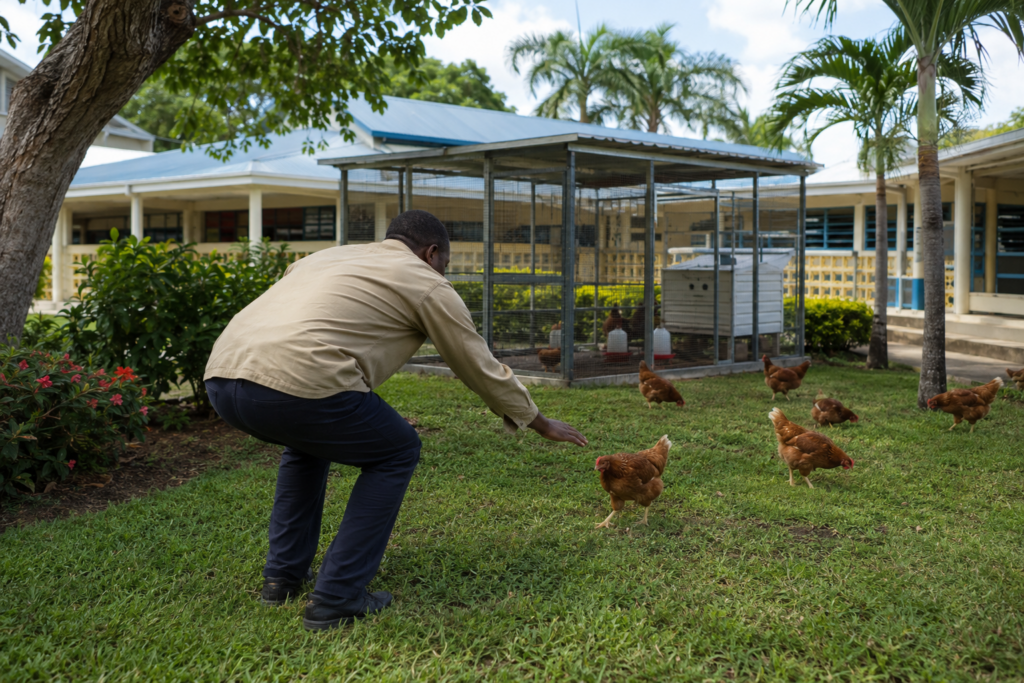
    A teenage suspect is currently being held by law enforcement in Antigua following a brazen theft of nearly 50 laying chickens from a well-known secondary school in the capital city of St. John’s. The incident, which unfolded over a 26-hour window between July 16 and 17, has raised questions about security at public educational facilities across the island.

    According to initial police reports, the school’s agricultural department locked up its plywood and galvanized steel poultry coop at approximately 9 a.m. on July 16. When a staff member arrived to carry out routine feeding and checks just over 26 hours later, at 11:30 a.m. the next day, they found the coop’s gate unsecured and the entire flock of layer chickens missing.

    Crime scene investigators who responded to the theft soon uncovered the thieves’ method of entry: perpetrators had forcibly pried loose a panel of plywood along the coop’s eastern wall, creating a gap large enough to remove all 48 birds. The stolen chickens have an estimated collective value of 2,880 Eastern Caribbean dollars, equal to roughly $1,067 USD, with each mature layer bird valued at 60 Eastern Caribbean dollars.

    Acting on a tip from members of the public, police launched a search of properties in the residential Kentish Road area shortly after the theft was reported. During that search, officers recovered 28 live brown chickens, which were later positively identified as the school’s property by a school staff member. The recovered birds have since been returned to Antigua Grammar School, after forensic photographers documented evidence at the recovery site.

    Following the recovery, law enforcement took an 18-year-old male resident of Kentish Road into custody for questioning in connection with the theft. As of the latest update, no formal charges have been filed against the suspect, and investigators are still working to locate the remaining 20 missing chickens. Forensic officers have completed processing of both the theft scene and recovery area, gathering evidence to build their case as the investigation continues.

  • Trainingscentrum kinderen met een beperking in Geyersvlijt wordt heropent

    Trainingscentrum kinderen met een beperking in Geyersvlijt wordt heropent

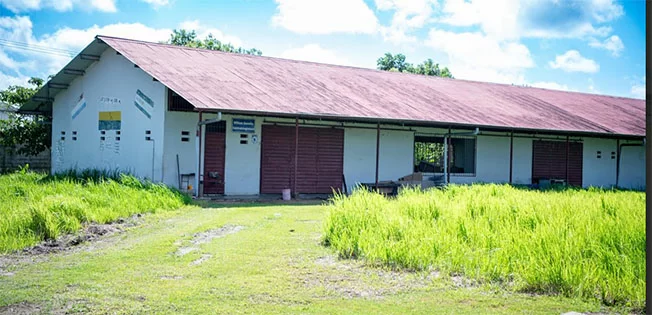
    After years of sitting idle and falling into disrepair, a long-shuttered training facility for children with disabilities in Geyersvlijt is set to get a new lease on life, following an official restoration initiative launched by Suriname’s Ministry of Social Affairs and Housing (Sozavo). The government body has confirmed that preliminary preparations are already underway, with a target reopening date set for the middle of 2027. Once fully restored, the center will once again serve as a dedicated hub for disabled children and young people, providing specialized education, vocational skills training, and tailored social support that many in this community currently lack access to.