
On the evening of October 23, local law enforcement in the Netherlands confirmed an alarming armed robbery incident that unfolded at the busy intersection of Hoogestraat and Waaldijkstraat at 22:14 local time. Two masked assailants, both armed with handguns, carried out a targeted heist at the crossroads, firing multiple gunshots during the confrontation before fleeing the scene with a stolen gold necklace. A spokesperson for the national police unit overseeing the investigation stated that responding patrol units recovered spent shell casings at the crime scene, confirming that the suspects discharged their firearms during the robbery. No injuries have been formally reported to authorities as of the latest public update, though investigators have not released any additional details about potential victims, the exact sequence of events, or the physical descriptions of the two suspects. Law enforcement officials are currently appealing to local residents who may have witnessed the incident or captured dashcam footage of the two masked men in the surrounding area in the hours before or after the robbery to contact the police tip line to support the ongoing manhunt.
分类: society
-

Independence message by the acting Commissioner of Police
Delivered on behalf of the entire Royal St. Vincent and the Grenadines Police Force, a special public address from Police Commissioner Trevor Bailey has been released to mark the 47th anniversary of St. Vincent and the Grenadines’ political independence, extending warm congratulations to all Vincentian citizens residing both domestically and across the global diaspora.
Bailey frames the independence milestone not merely as a moment for celebration, but as a critical opportunity for nationwide reflection on the national legacy inherited from prior generations, the shared obligations of current citizens, and the kind of nation that will be passed on to future cohorts. He acknowledges that communities across the archipelago are increasingly voicing legitimate, well-founded concerns spanning public security, economic stability, national identity, and collective developmental direction, all of which deserve thoughtful, inclusive engagement and decisive, accountable leadership.
The commissioner urges the public to recall the extraordinary adversity that accompanied the nation’s founding on October 27, 1979, when the country formally severed its constitutional ties to the United Kingdom to take full control of its political destiny. Just six months before independence, the La Soufrière volcanic eruption displaced thousands of residents, destroyed livelihoods, and plunged entire communities into long, arduous recovery efforts. The nation’s founding leaders embarked on the project of independent statehood with no guarantees of prosperity and no roadmap for the decades ahead, sustained only by the unshakable conviction that Vincentians themselves were best positioned to shape the nation’s future through their own labor, judgment, and shared aspirations. Bailey emphasizes that statehood brought full authority to manage national affairs, but never eliminated hardship, and the ongoing work of building the nation remains unfinished 47 years later.
He argues that the same resilient, community-focused spirit that carried the nation through its turbulent founding era remains a vital, active force in modern Vincentian life, embodied in the consistent, quiet dedication of ordinary citizens who step up to support their communities through every period of uncertainty. That proven national resilience, he notes, forms the unshakable foundation of public security, the core of local community bonds, and the most reliable promise of a strong future for the country.
Against a current global landscape marked by widespread geopolitical conflict, mounting economic headwinds, rapid technological shifts, rising transnational criminal activity, and escalating climate threats that disproportionately impact small island developing states, Bailey stresses that while St. Vincent and the Grenadines values close collaboration with regional neighbors and international partners, the ultimate responsibility for safeguarding and advancing the national interest rests entirely with Vincentian citizens themselves.
As the head of a police institution with a 190-year history dating back to 1834, Bailey outlines sweeping ongoing operational and administrative reforms within the Royal St. Vincent and the Grenadines Police Force: the agency is scaling up intelligence-led policing frameworks, strengthening investigative capacity for serious crimes, enhancing frontline supervision, and embedding stricter standards for professional accountability and public transparency. The goal, he states, is to build a law enforcement body that is firm and unwavering in upholding the law, strictly disciplined in the use of its powers, and fully worthy of the public’s trust. He also addresses widespread public anxiety over violent crime and illegal firearms, noting that a sustained, lawful, and effective response to these threats cannot rely on police action alone, but requires active, collaborative partnerships with communities: when residents share credible information about criminal activity, reject violent behavior, and back lawful public safety efforts, they directly reinforce the effectiveness of local policing.
The commissioner issues a special direct message to the nation’s youth, encouraging them to prioritize their education, build practical, marketable skills, practice mutual respect, and reject unlawful behavior, noting that the police force will continue to invest in youth development through dedicated police youth clubs, school engagement programs, and community outreach initiatives to nurture the next generation of responsible, capable citizens. He also pays formal tribute to serving police officers across the mainland and the Grenadine islands, as well as staff in specialized units, recognizing the long, often uncelebrated hours of difficult work, high-stakes emergency responses, and personal sacrifice that underpin their service, alongside extending gratitude to officers’ families, retired personnel, and fallen colleagues who have passed on.
Aligning with this year’s official national independence theme, “Hand in Hand, Uplifting Our Nation,” Bailey reaffirms that the full promise of independent statehood is not a completed achievement, but an ongoing, collective responsibility. He closes by re-stating the police force’s formal commitment to upholding public peace, protecting lives and property, defending lawful civil freedoms, and continuously improving public-facing services, before extending a final wish for a peaceful, prosperous, united future for all Vincentians, alongside a formal happy independence greeting to every citizen at home and abroad. -

Young man admits to fatal 2019 school stabbing
A 22-year-old individual who was 15 years old when he carried out a fatal stabbing of a fellow secondary school student in 2019 has been placed in pre-sentencing custody at Dodds Prison, after entering a guilty plea to non-capital murder before the No. 4 Supreme Court. The fatal victim, 16-year-old Temario Holder, lost his life on November 8, 2019, after sustaining multiple chest stab wounds that inflicted a catastrophic cardiac injury, according to evidence presented during the court hearing. The chain of events that led to the deadly confrontation unfolded across two levels of the school campus: it originated on the ground floor before escalating into a violent encounter in a first-floor corridor. Court documents detail that Holder, who held the position of a school prefect, came across the then 15-year-old defendant and two other peers gambling with dice in a school bathroom shortly after morning prayer services. Holder seized the gambling paraphernalia along with $20 in cash from the underage group, prompting the defendant to direct his two companions to recover the seized funds. The pair approached one of Holder’s close friends, who returned the $20, only for a supervising teacher to confiscate the cash immediately afterward, informing all involved that the original owner would need to collect the money directly from her office later that day. Hours later, around 1 p.m., an educator leading an Upper Fifth-form class heard the sound of a ferocious, loud argument breaking out between students. She rushed to the adjacent stairwell, where she spotted the 15-year-old defendant, who had skipped her scheduled class, wielding a long, silver-bladed knife and launching a full-tilt charge toward Holder while executing repeated, vicious stabbing motions, even as several other students tried to step in and stop him. In her official witness statement, the teacher noted that the unrelenting force of the stabbing motions left her temporarily paralyzed with shock, as she had previously known the defendant as an unusually quiet, reserved student who rarely spoke during class sessions that term. When she realized the altercation had turned into a life-or-death situation that she could not de-escalate on her own, she ran to alert the school principal for immediate assistance. One of Holder’s close friends who witnessed the attack firsthand testified that the victim was only trying to defend himself from the unprovoked assault. The witness recounted that he sprinted down the stairs to grab the defendant’s hand in an attempt to halt the stabbing, repeatedly yelling for him to stop and warning him he would be sent home, but the defendant shrugged him off, stating he did not care about any potential disciplinary consequences. The witness further stated that Holder attempted to run away from his attacker to find safety, but stumbled and fell twice, and the defendant stabbed him repeatedly during both falls before a different bystander finally managed to pull the assailant away. School staff immediately placed an emergency call for an ambulance, but when paramedics arrived on the scene, they confirmed Holder had no detectable vital signs. A uniformed police constable who happened to be on the school grounds handling an unrelated administrative matter spotted the defendant fleeing the campus while still clutching the murder weapon, and successfully subdued him before escorting him to the Holetown Police Station. During a formal recorded police interview conducted in the presence of his legal representative Shamar Bovell, as well as his mother and grandmother, the defendant declined to answer all 70 questions posed to him, responding to every query with the statement that he was not obligated to provide any answers. A subsequent post-mortem examination confirmed Holder suffered a minimum of 12 sharp-force incised wounds across his body. Acting Senior State Counsel Paul Prescod informed the court that the prosecution had rejected any proposal for the defendant to plead guilty to a lesser, reduced offense, as the full body of evidence clearly demonstrated that Holder had made repeated attempts to flee the scene and was actively pursued by his armed attacker. Senior Counsel Angella Mitchell-Gittens, representing the defendant, formally acknowledged and accepted all the facts of the case as outlined by the prosecution. The state prosecution submitted a formal request for the now 22-year-old defendant, who has no prior criminal convictions on his record, to be held on remand while the court prepares for his sentencing. Presiding Judge Laurie-Ann Smith-Bovell issued a formal order mandating the completion of a full probation assessment report, remanded the defendant to the custody of Dodds Prison, and scheduled the next court hearing for the matter, including final sentencing proceedings, to take place on January 25, 2027.
-

Missing Person Alert Pink – Shrakel Sylvester
The Commonwealth of Dominica Police Force has issued an official public appeal, urging local residents and any members of the public with relevant information to come forward to assist in the search for a missing teenage resident, 16-year-old Shrakel Sylvester. Law enforcement authorities have not released additional detailed background circumstances surrounding Sylvester’s disappearance at this stage, but they are prioritizing all available resources to trace the minor’s whereabouts and ensure her safety. Police representatives have emphasized that even small, seemingly trivial details that could help narrow down the search scope are highly valuable, and they encourage anyone who may have seen Shrakel Sylvester in recent days, or has information related to her movements, to contact the local police department immediately to support the ongoing search operation.
-

Attorneys welcome Magistrates’ Court reforms
Two prominent Barbadian legal practitioners have lauded the recently enacted Magistrates’ Court Amendment Bill, framing the legislative update as a long-overdue solution to the pervasive, costly disruptions that force full criminal trial restarts when a sitting magistrate cannot complete proceedings. Passed unanimously in national parliament this week, the reform package introduces two core mechanisms to address longstanding systemic frictions: formalized frameworks for virtual hearings, and targeted fixes for cascading delays triggered when magistrates are transferred, promoted, or leave their post mid-trial.
Senior Counsel Angella Mitchell-Gittens, a veteran litigator, emphasized that repeated trial restarts impose unnecessary strain on every stakeholder in the justice ecosystem: complainants, witnesses, defendants, and legal representatives alike. For complainants, the setback means reliving traumatic testimony after anticipating a resolution, while witnesses often face repeated summonses that disrupt work and personal schedules. For accused individuals, she noted, mid-trial judicial turnover that requires full re-hearings can constitute a violation of the fundamental right to a speedy trial, and may even be perceived as an abuse of due process. Mitchell-Gittens added that most legal professionals absorb the unplanned additional labor costs of re-running trials rather than passing duplicate fees on to clients who bear no responsibility for the judicial disruption, creating uncompensated burdens for local law firms. She also flagged a lesser-noted procedural risk: repeated witness appearances can lead to rehearsed, less authentic testimony that undermines the fairness of evidence-gathering, a dynamic that creates no benefits for any party to a case. She recalled one high-profile local case that had to be restarted three separate times after successive assigned magistrates departed the jurisdiction for unrelated postings.
Mitchell-Gittens singled out two provisions of the new bill as particularly transformative. The first grants the Chief Justice explicit authority to re-appoint former magistrates on a temporary basis to wrap up unfinished cases they had already begun hearing, even if those former judicial officers have since been promoted to higher courts or moved to other public sector roles. The second, a proposal floated by Minister of Legal Affairs Michael Lashley to extend island-wide jurisdiction to all magistrates, would eliminate the current requirement to restart cases when a judicial officer is transferred between district courts, such as moving from a Holetown bench to Oistins. While Mitchell-Gittens acknowledged the legislation will not eliminate every possible scenario that forces a trial restart, she characterized the full package as meaningful, incremental progress for Barbados’ lower court system.
Defense attorney Sade Harris also voiced strong support for the amendments, noting she has personally handled multiple cases that were mere days from final verdict when the assigned magistrate became unavailable, forcing full do-overs. She emphasized that repeated restarts take a severe mental toll on defendants who maintain their innocence, who are often forced to sit through full re-readings of accusations without being able to re-present their full defense. Extended gaps between trial segments also create practical hurdles for recalling witnesses, many of whom may have relocated or had fading memories of events by the time rescheduled proceedings begin.
Harris went on to recommend complementary administrative investments to maximize the impact of the new legal framework, including funding for additional full-time court stenographers and official court reporters to create comprehensive, verbatim records of all in-progress cases. These detailed records would allow any newly assigned magistrate to review full prior proceedings efficiently, reducing the need for full restarts even when the original judicial officer cannot return. She also highlighted the virtual hearing provisions of the bill as a major quality-of-life improvement for court users: many defendants on bail currently spend entire workdays waiting in overcrowded court facilities only for their case to be adjourned in a matter of minutes, while busy attorneys often waste hours traveling between separate court locations for short procedural mentions. Remote video hearings via platforms like Zoom would allow bail applicants to attend short scheduling appearances without traveling to the courthouse, and let attorneys join procedural calls from other courtrooms or their offices, cutting unnecessary wait times and drastically boosting overall court operational efficiency.
-

Safety Notice from Commonwealth of Dominica Police Force
The Law Enforcement Division of the Commonwealth of Dominica has formally released an official public safety notice, issued directly by the Dominica Police Force to all residents, visitors, and communities across the island nation. This public-facing advisory is designed to disseminate critical guidance, precautionary reminders, and actionable safety protocols to safeguard individuals, households, and public spaces across Dominica’s populated regions. The police force has emphasized that the notice is part of its ongoing community outreach and public protection mandate, with all relevant details, including specific safety measures, potential risk alerts, and contact information for local law enforcement units, to be distributed through official police channels, community bulletin boards, and local media outlets in the coming hours. The force encourages all members of the public to review the full notice carefully, follow all outlined guidance, and report any suspicious activity or safety concerns to their nearest local police station immediately to support collective community safety.
-

In het weekend: Wegomlegging Van ’t Hogerhuysstraat vanwege werkzaamheden
The Suriname Police Corps (KPS) has issued an official public advisory ahead of scheduled high-voltage power cable maintenance work that will disrupt regular traffic flow on a key Paramaribo thoroughfare overnight on Saturday, October 24 through Sunday, October 25. The planned maintenance window runs from 10:00 p.m. local time on October 24 straight through to 6:00 a.m. the following morning, a timeframe selected to minimize disruption to peak daytime commuter volumes on Van ’t Hogerhuysstraat. During this eight-hour work period, the entire eastbound carriageway of the street, covering the segment stretching between Havenlaan Zuid and Slangenhoutstraat, will be fully diverted away from its usual path to accommodate crews working on the critical high-voltage electrical infrastructure. Law enforcement officials are urging all local road users to plan their journeys in advance to account for the temporary traffic adjustments, select alternate routes where feasible to avoid the affected stretch of road entirely, and comply with all on-site directions issued by deployed police officers. The coordinated guidance is designed to keep traffic moving as smoothly as possible, prevent unnecessary gridlock, and ensure both work crews and passing motorists remain safe for the full duration of the cable upgrade operations.
-
Man charged with murder of 6-year old son
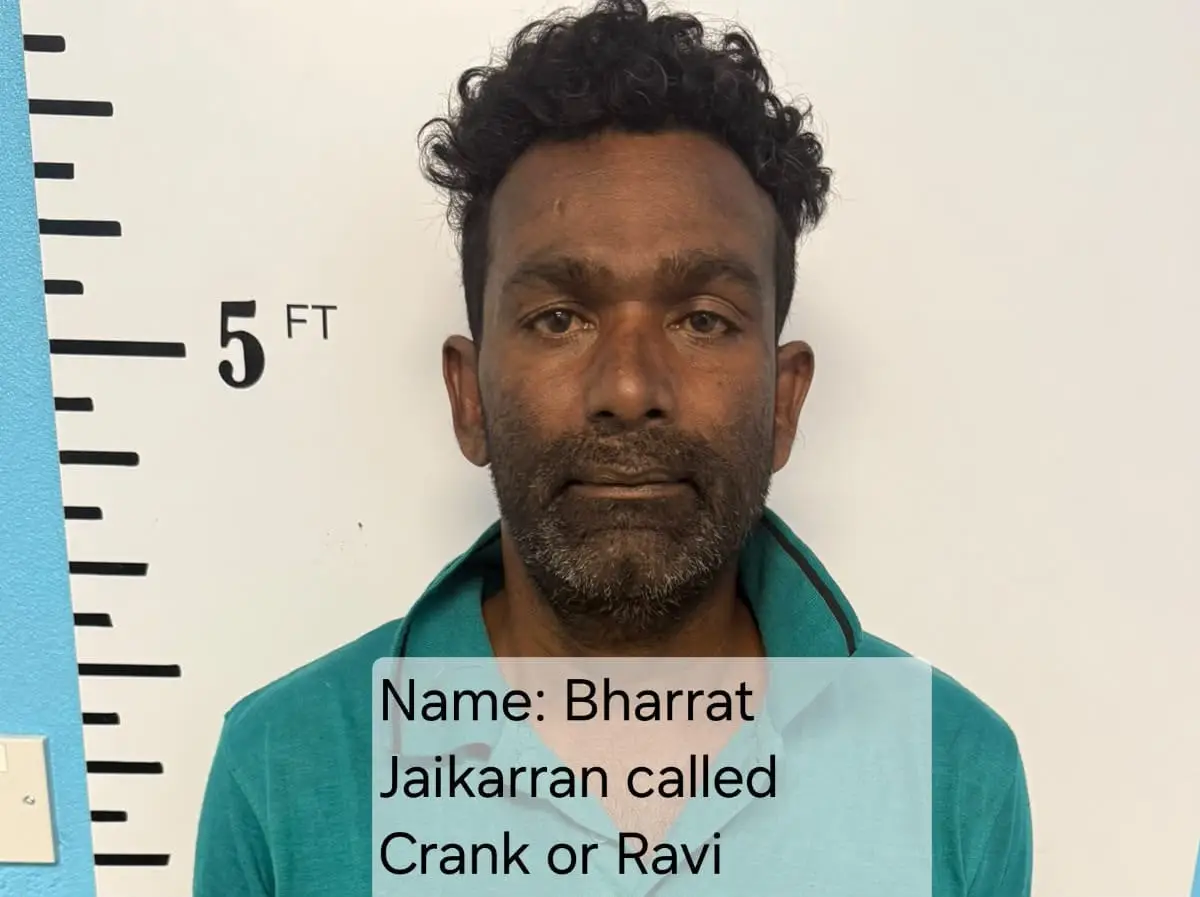
On the afternoon of October 23, 2026, local law enforcement officials in West Coast Berbice, Guyana, confirmed that 45-year-old cane harvester Bharrat “Viji” “Crank” Jaikarran, a resident of Plantation Hope, had been formally arraigned on a common law murder charge in connection with the brutal death of his six-year-old son, Orlando Jaikarran. According to police investigative accounts, the alleged fatal incident unfolded on October 15, 2026, at the Waterloo Main Canal in Bath, West Coast Berbice, where the young child was reportedly brought to the remote waterway and attacked with a cutlass, sustaining severe wounds to the neck. Jaikarran was taken into custody by the Guyana Police Force on October 20, five days after the child’s partial remains were recovered from the canal. Responding officers found the boy’s partly decomposed, headless body at the scene, with subsequent post-mortem preliminary checks confirming the victim’s head, sections of his left hand, and his right foot were all unaccounted for. Forensic teams also recovered multiple cutlasses from the surrounding area that are undergoing testing to determine if they were used as the alleged murder weapons. During the Friday arraignment hearing held at the Weldaad Magistrate’s Court, Magistrate Shareefah Parks formally read the full indictable murder charge to Jaikarran. Per standard legal procedures for non-bailable indictable offenses in Guyana, the defendant was not asked to enter a plea at this stage of proceedings. He has been ordered to be remanded to prison custody, with the full case adjourned to November 12, 2026, and administratively transferred to the Fort Wellington Magistrate’s Court for upcoming procedural hearings.
-

Digicel Strengthens Real Connections Through Sponsorship of National Youth Rally Special Drills Competition
As part of its long-running investment in local community uplift and youth leadership development across Antigua and Barbuda, regional telecommunications leader Digicel Antigua has formalized its sponsorship of the 2024 National Youth Rally Special Drills Competition, honoring top-performing participants with targeted recognition and financial support. Antigua Grammar School claimed the top prize at the widely attended national youth event, taking home a $1,500 award from Digicel in acknowledgment of the student team’s exceptional execution of precision drills, unwavering personal discipline, and seamless collaborative teamwork that set their performance apart from competing secondary school squads. The National Youth Rally, a longstanding national program, is designed to give young Antiguans and Barbudans a structured public platform to showcase practical life skills, demonstrate their personal commitment to collective progress, and reinforce core values of mutual respect, coordinated collaboration, and patriotic pride in their nation. The event’s Special Drills segment, in particular, tests teams on months of rigorous preparation, split-second synchronized coordination, and consistent perseverance through hours of repeated practice to reach peak performance standards. Speaking at the official award ceremony, Wenise Davis, Digicel’s Chief Executive Officer for the North West Indies region, emphasized the company’s core motivation behind the sponsorship: “This investment is far more than a one-time prize payout. Our goal is to light a spark that inspires the next generation of young leaders to keep chasing excellence in every area of their lives, and to keep showing up to make tangible, positive contributions to the growth of Antigua and Barbuda.” The award falls under Digicel’s broader Real Connections corporate social responsibility framework, which prioritizes targeted investments that strengthen neighborhood cohesion, amplify underrecognized youth achievements, and back community-led initiatives that unite diverse local groups to build a more prosperous, inclusive future for all residents of the twin-island nation.
-

AI, ethics, and Adompretur: inside the First International Tourism Journalism Forum
Santo Domingo, Dominican Republic – For decades, the global tourism industry has leaned heavily on polished marketing materials, sweeping aerial footage of unspoiled coastlines, and snappy brand taglines to lure visitors, but the glossy public-facing image of destination marketing often obscures far more nuanced, underreported realities: unequal community benefit, unregulated territorial development, and the growing risk of algorithm-driven misinformation distorting public understanding of travel spaces. To address these gaps head-on, the Dominican Association of Tourism Press (Adompretur) gathered over 100 specialized journalists, regional policy experts, and top hospitality industry leaders at Santo Domingo’s Hotel Dominican Fiesta last Friday for the landmark First International Tourism Journalism Forum, timed to align with the 30th anniversary of the Caribbean Tourism Exchange (BTC).
Operating under the guiding theme “Count, Connect, and Transform”, the event rejected the usual celebratory, industry-focused ceremonial format to confront the shifting, high-stakes responsibilities of travel media in an era flooded by AI-generated content and unvetted algorithmic noise. The morning’s opening keynote from award-winning Argentine travel journalist Fernando Milo set a reflective, action-oriented tone, challenging assembled reporters to move beyond shallow, advertorial-style promotional coverage to craft layered narratives that connect visiting travelers to the often-overlooked social, cultural, and environmental contexts that make destinations distinct, rather than reducing locations to interchangeable leisure backdrops.
That call for deeper, more representative coverage rippled through subsequent panel discussions centered on community-led tourism and sustainable territorial governance. Session participants highlighted successful, locally rooted sustainable development initiatives, including ongoing Japan International Cooperation Agency (JICA) supported projects across the Dominican Republic’s Cibao and Nordeste regions that prioritize preserving local cultural identity, responsible freshwater resource management, and equitable economic inclusion for nearby residents, pushing back against the homogenizing effects of unregulated mass tourism. Additional panels led by industry analysts Milka Hernández and Juan Lladó addressed persistent frictions in the domestic travel sector and gaps in public tourism governance, using lessons from the La Altagracia 2030 Strategic Plan to argue that environmental protection and meaningful community input are non-negotiable prerequisites for long-term, competitive tourism growth, not secondary afterthoughts.
Afternoon sessions shifted focus to the intersection of emerging technology and cross-border regional integration. Digital media expert Guillermo Molina Mueses broke down the dual nature of artificial intelligence for tourism reporting, noting its significant efficiency benefits for processing large datasets to identify industry trends, while emphasizing that unregulated AI use poses severe risks of spreading misinformation that can harm local communities, making rigorous human fact-checking and editorial oversight non-negotiable. A follow-up international panel featuring Mexican tourism analyst Armando de la Garza and Dominican digital strategy specialist Cristina Rosario outlined actionable strategies for travel media to use social and digital platforms to build more genuine, transparent connections with modern, ethically conscious travelers, rather than relying on outdated, overly curated promotional content. The day’s strategic discussions concluded with a forward-looking session on cross-border multi-destination tourism across Latin America and the Caribbean, where veteran tourism sector leaders Luis Felipe Aquino and Manuel Quiterio Cedeño argued that stronger institutional collaboration and jointly developed cross-border travel itineraries, anchored in shared cultural and historical ties, could act as a powerful driver of shared regional economic growth.
The forum’s highest-profile outcome was the unanimous formal adoption of the Santo Domingo Declaration on Tourism Journalism and Communication, a concrete 10-point charter designed to systematically upgrade standards for travel reporting across all of Latin America and the Caribbean. Moving far beyond vague, unenforceable aspirational statements, the manifesto establishes a clear operational framework to reposition tourism journalism from a de facto extension of destination marketing to a rigorous, ethically grounded journalistic discipline. The document enshrines non-negotiable editorial independence, drawing a clear line between impartial public interest reporting and paid sponsored promotional content, while calling for ongoing professional training for tourism journalists in specialized fields including spatial planning, data literacy, and tourism economics. On technological ethics, the declaration explicitly affirms that while AI is a valuable tool for accelerating data processing and supporting investigative reporting, all automated outputs must be subject to full human editorial review, fact verification, and ethical oversight. It also positions environmental stewardship, community-centered tourism, and transparent public governance as core mandatory pillars of travel reporting, urging journalists to amplify coverage of underrepresented emerging local destinations while holding public officials accountable for tourism-related infrastructure spending and environmental management. For regional collaboration, the charter lays out a roadmap for coordinated cross-border reporting and co-developed multi-destination travel narratives that highlight shared cultural heritage across the Caribbean and Latin America. Notably, the text includes a historic call for regional media solidarity, urging all participating news outlets to reject harmful, stereotypical coverage of Haiti, and to support responsible, forward-looking reporting that recognizes Haiti’s viable long-term potential for community-led sustainable tourism once conditions of safety, institutional stability, and robust local community protections are established.