分类: society

  • All Saints Road Detour in Effect Tonight for Infrastructure Works

    All Saints Road Detour in Effect Tonight for Infrastructure Works

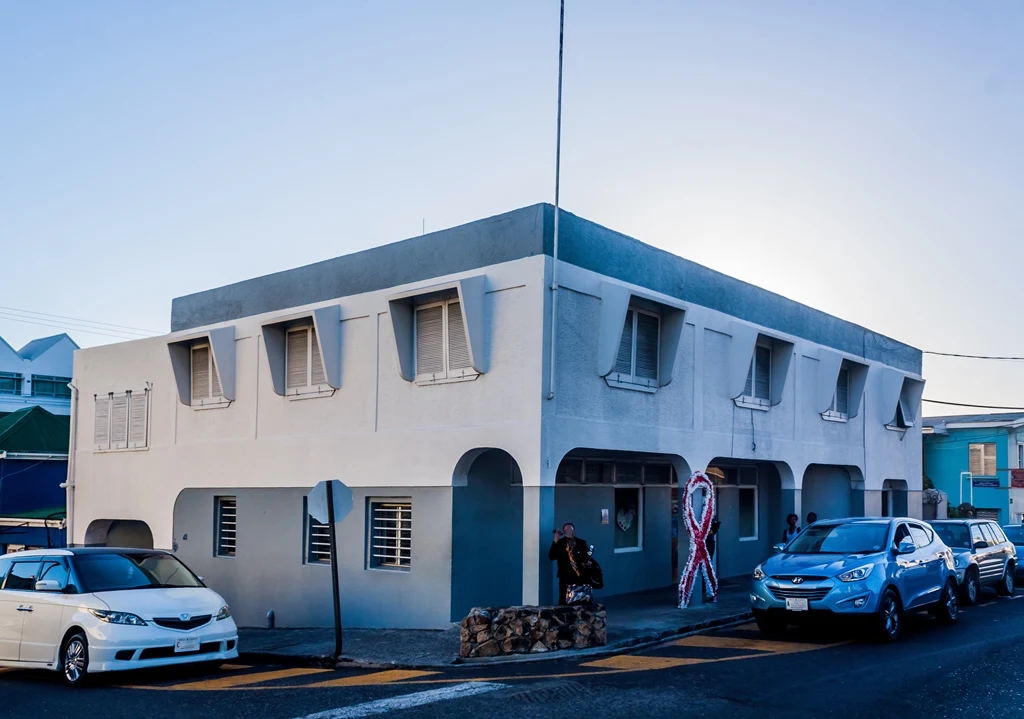
    The Antigua and Barbuda Ministry of Works has issued a public notification of upcoming major infrastructure improvements scheduled for a stretch of All Saints Road, located between Bottom Village and the Pentecostal Church. As part of the government-led All Saints Road Project, this overnight construction work will require a full detour of through traffic, with the diversion schedule set to take effect from 7:00 p.m. on Tuesday, April 28, 2026, through to 7:00 a.m. the following morning.

    For motorists traveling outbound from the main urban center toward All Saints, routing adjustments have been clearly mapped. Any driver approaching the Midway Service Station whose destination lies past the construction zone will be redirected onto the main thoroughfare running through Freeman’s Village to bypass the worksite. Inbound travelers heading toward the capital St. John’s face a different diversion: drivers approaching the All Saints Service Station with destinations beyond the closed stretch of road will be rerouted via Jonas Road to continue their journey.

    Notably, local residents who live in the immediate area surrounding the worksite will retain full access to their properties throughout the construction period, and all commercial operations along the affected corridor will remain open for business as usual.

    Officials have stressed that construction crews will be operating large, heavy-duty machinery in close proximity to the work zone, so all road users are strongly encouraged to adhere strictly to posted detour signs and instructions from on-site personnel to maintain maximum safety for everyone traveling through the area. Project stakeholders and regular commuters are asked to proactively adjust their travel timetables ahead of the scheduled work to account for potential minor delays caused by the diversion.

    Members of the public with questions about the road work or detour arrangement can reach out to the Project Implementation Management Unit directly via telephone at 562-9173 for additional information.

  • Septuagenarian Murdered in Orange Walk

    Septuagenarian Murdered in Orange Walk

    A 70-year-old local farmer has become the victim of a brutal homicide in Orange Walk, leaving his community and family reeling from the senseless violence. Francisco Garcia was reported missing before his mutilated body was discovered in a bushy clearing a short distance from his Santa Martha Road bungalow on Monday afternoon.

    The grim discovery was made by Garcia’s son, who grew concerned after multiple attempts to contact his father went unanswered. When he arrived at the property to check on Garcia, the son found clear signs of a forced break-in: the family home had been thoroughly ransacked by intruders.

    Law enforcement officers who responded to the scene found a black-handled machete suspected to be the murder weapon, which was recovered from the property’s yard with apparent blood residue. Investigators also documented broken glass louvres at the residence, confirming that several personal belongings were stolen during the incident. The missing items include an iPhone 11 smartphone, a three-burner cooking stove, two portable gas tanks, and a wheelbarrow.

    News of the murder has sparked grief and frustration among local residents, many of whom have taken to social media to express their reactions. A grieving relative of Garcia shared an emotional post on Facebook, writing, “How could they do this??? They took him away from us! Rest in peace Tio, Granny, Granpa and my dad welcoming you while we are at a loss!” Other community members have voiced growing concern over persistent violent crime in the area, with one Facebook user commenting, “Another Murder, when will all this murders end?”

    As of Tuesday, local law enforcement has launched a full investigation into the killing, working to identify and apprehend the perpetrator or perpetrators responsible for Garcia’s death. No suspects have been named publicly at this stage of the investigation.

  • Call for greater autism awareness in public spaces

    Call for greater autism awareness in public spaces

    Over the last 12 months, families of autistic children in Barbados have reported a sharp uptick in frustrating encounters in public spaces, especially grocery stores, reigniting demands for local businesses to adopt more flexible, compassionate policies and deepen public understanding of autism spectrum needs.

    Chantal Fields, Events and Coordination Chairman of the Autism Association of Barbados, shared these insights with local outlet Barbados TODAY on the sidelines of the organization’s annual Autism Awareness Walk, held Tuesday. While she acknowledged that general public awareness of autism has advanced in recent years, Fields emphasized that countless caregivers still face unnecessary barriers during routine outings.

    “I’ve had so many parents reach out to me with these complaints,” Fields said. “A little grace goes such a long way; people need to understand that not everyone can navigate a supermarket trip the same way.”

    She explained that one of the most common points of friction stems from widespread supermarket rules banning children from riding inside shopping baskets or trolleys — a safety measure many parents rely on to prevent elopement, a common behavior among autistic children that can put kids at severe risk in crowded, busy public spaces.

    “For example, some autistic individuals are prone to wandering off unexpectedly,” Fields explained. “That turns a simple trip to pick up groceries into a constant exercise in keeping your child contained. But when parents try to keep their child safe by placing them in a shopping trolley, many supermarkets now have signs prohibiting the practice, and staff will step in to stop them. For our families, this isn’t a convenience — it’s a safety issue.”

    Fields called on local businesses to adopt a more accommodating approach, noting that small adjustments could drastically reduce the daily burden carried by autism families. She even proposed a simple compromise: allowing children to ride in trolleys if parents can provide formal confirmation of their child’s autism diagnosis, to balance store policies with safety needs.

    “Every person on the autism spectrum functions differently, and some need that extra layer of support, whether that means containing a child who elopes or other small accommodations,” she said. “Just a little flexibility can make a world of difference.”

    Fields did highlight bright spots amid ongoing challenges, pointing to gradual improvements in workplace support for autism parents. A growing number of Barbadian employers have introduced more lenient scheduling policies, allowing caregivers to adjust shift times or step out for therapy appointments without fear of penalty. “A lot of parents have told me their workplaces have been really supportive,” she said.

    When it comes to inclusive education, however, progress remains in early stages. Fields noted that the Barbadian Ministry of Education is currently piloting new inclusive schooling frameworks, but the reforms are not yet fully rolled out. “It hasn’t been launched system-wide yet, it’s still in its pilot phase,” she explained. “It might not benefit families currently navigating the system, but it should create better outcomes for the next generation of autistic people coming through in the next five years.”

    Looking ahead, the Autism Association of Barbados is partnering with the Samuel Jackman Prescod Institute of Technology (SJPIT) to launch new skills-based training programs for autistic adults, covering in-demand vocational areas such as cooking and carpentry. The initiative is designed to help participants build employable skills and access sustainable work opportunities. “Opportunities are starting to open up, and people are becoming more receptive to including autistic individuals in the workforce,” Fields said.

    Overall, Fields assessed that while ongoing autism awareness campaigns have moved the needle on public knowledge, significant gaps in understanding remain. “It’s a mixed picture,” she said. “We’ve been doing consistent outreach and awareness work, and people are learning more, but there are still a lot of areas where understanding just hasn’t caught up.”

    Fields’ comments came during the association’s annual Autism Awareness Walk, which drew more than 300 supporters who gathered as early as 6:30 a.m. to participate. Participants began their route at the Social Empowerment Agency, winding through Lower Collymore Rock, Culloden Road, Beckles Road and Dalkeith Road, circling the Garrison, traveling along Highway 7, and returning to the starting point. The event concluded with a group cool-down session led by Spinny, serving as a visible public push for wider acceptance, awareness and practical support for autistic people and their families across Barbados.

  • Nurse beaten after leaving shelter pleads for extended victim stays

    Nurse beaten after leaving shelter pleads for extended victim stays

    A registered nurse and domestic violence survivor is pushing for policy changes to extend government-funded shelter stays for high-risk victims, sharing a harrowing account of assault that occurred just one week after she was forced to exit the temporary housing due to a strict three-month occupancy cap.

    Pamela McKenzie, a mother of three, opened up about her years trapped in an abusive marriage, saying her decision to seek official help came after her husband’s brother reportedly pointed a gun at her and her young son. She first reported the incident to local police, but relentless intimidation and threats from her in-laws left her fearing for their safety, prompting her to drop legal proceedings and turn to the country’s Department of Social Services for support. Social Services officials placed McKenzie and her son in a government-contracted domestic violence shelter, where she first witnessed the harsh consequences of the three-month stay limit firsthand.

    McKenzie recalled one elderly shelter resident who was literally left on the side of the road with all her belongings in plastic bags after her time expired. Two weeks before she spoke to reporters, McKenzie and her son hit their own three-month cap and were required to leave. Though she acknowledged shelter staff informed her of the time limit when she first checked in, she argued the arbitrary cutoff fails to account for individual circumstances: she was still processing severe trauma from her abuse and had not been able to secure stable employment, despite her qualification as a registered nurse. She also made unsubstantiated allegations as of press time that some residents, including foreign nationals, had been granted extensions to stay beyond the official limit, claims the Tribune could not independently verify.

    After being evicted from the shelter, McKenzie and her son couch-surfed with a friend, where she slept on the floor for weeks. She has since landed a job as a live-in caretaker, and her son has moved to Exuma to enroll in a job training program – a lucky outcome McKenzie says many other survivors do not get. She noted that other victims she has connected to through her experience have ended up homeless, living out of their vehicles or in flimsy, unsafe makeshift shelters. What disappoints her most, she added, is the complete lack of follow-up support from Social Services after she exited the shelter.

    In response to growing calls for reform, Social Services Minister Myles Laroda addressed the issue in December 2025, acknowledging the system is strained by soaring demand. Laroda explained that the government currently leases roughly 150 rooms from private providers for domestic violence shelter accommodation, not counting rooms at the dedicated Poinciana Inn Shelter, and every single room is currently occupied. Officials are currently in negotiations to lease two additional properties to expand capacity as demand for emergency shelter continues to climb, he confirmed.

    Laroda noted that the ministry does grant extensions for survivors whose situations have not stabilized enough for independent living. But he emphasized that shelter accommodation is intentionally designed as a short-term safety net, not a long-term housing solution. “We are telling individuals that, look, this is a temporary fix,” Laroda said. “We’ll try to assist you. We’ll try to assist you with finances and other stuff, to put you in a position to be on your own. Because, unlike the government housing programme, shelter assistance is supposed to be temporary.”

    For McKenzie, however, the current one-size-fits-all time limit puts survivors’ lives at unnecessary risk. She is urging the government to revise its policy to allow longer stays for survivors who remain unemployed or face ongoing threats of abuse, arguing the current system is failing the very people it is meant to protect.

  • Pastor Mario Moxey elected new Christian Council president

    Pastor Mario Moxey elected new Christian Council president

    In a decisive electoral outcome for one of the Bahamas’ most influential faith-based organizations, Pastor Mario Moxey has been voted in as the new president of the Bahamas Christian Council, wrapping up a competitive selection process with a clear mandate to lead the group through the next three years.

    Final vote counts released to local media confirm Moxey earned 169 votes, while his challenger Apostle Raymond Wells garnered just 58, delivering a landslide victory that solidifies broad support across the council’s membership. Moxey will succeed outgoing president Bishop Delton Fernander, who has steered the interdenominational body since 2017, and will hold the presidency for the 2026 to 2029 term.

    In his first public address following the announcement of the results, Moxey made unifying the nation’s diverse Christian communities and strengthening collective national collaboration the cornerstone of his upcoming leadership.

    “Our first and foremost priority is securing unity in the body of Christ across all denominations,” he said. “Beyond the church, we also aim to build unity across civic, religious and governmental spheres, so that all groups can work together toward the common good of the Bahamian people. This vision is summed up in our leadership theme: One Voice. One Church. One Nation.”

    Moxey noted that he will first convene his newly elected executive team to map out concrete policy priorities aligned with available organizational resources, before rolling out new initiatives. In an official statement confirming the election results, the Bahamas Christian Council formally endorsed Moxey’s appointment and the unity-centered mandate that will guide the body’s work over the next three years.

    “It is both a privilege and a calling to serve God by serving the people of The Bahamas, and in particular the Christian Churches that span our nation,” the council’s statement read. “The Church represents the largest block of citizenry across every sector of society, with approximately 90 percent of our population identifying as Christian. This is not merely a statistic — it is a profound responsibility.”

    Expanding on the council’s strategic direction under his leadership, Moxey emphasized that the Church is positioned to act as a core unifying force in Bahamian public life, rather than a marginal interest group.

    “The Church is not a minority voice trying to be heard. We are the majority voice that must choose to be the unifier,” he said. “As we unify the Church, we position ourselves to help unify the nation, offering spiritual leadership, moral clarity, and a renewed sense of purpose for our people.”

    A 16-year veteran of the Bahamas Christian Council, Moxey most recently served as the body’s vice president prior to his election. He said his decades of involvement with the organization have been rooted in a longstanding commitment to public service for his home country.

    “I’ve always had a desire to serve my country. That’s the reason why I was in the Christian Council, because I felt as though I needed to serve, I needed to contribute,” he explained. “Just as a result of tenure and being there, it’s time for natural elevation to take place, to serve at a higher level. It’s my privilege to represent the Christian community at this season.”

    Alongside Moxey’s appointment, the council announced the full slate of its new executive leadership team, which includes representatives from a wide cross-section of Christian denominations across the Bahamas, reflecting the body’s commitment to inclusive representation of the nation’s diverse faith community.

  • ‘Raising the age of consent does not address teen pregnancy’, says Fi We Children Foundation

    ‘Raising the age of consent does not address teen pregnancy’, says Fi We Children Foundation

    KINGSTON, Jamaica — In response to a recent legislative proposal from Jamaica’s opposition education spokesperson to raise the age of sexual consent as a fix for persistent teenage pregnancy rates, the local Fi We Children Foundation (FWCF) has pushed back, arguing that legal adjustment alone cannot resolve this complex social challenge and that policymakers must prioritize evidence-based reproductive health support for young people instead.

    The debate was ignited this week when Opposition Spokesman on Education Damion Crawford presented his call during Tuesday’s Sectoral Debate in Jamaica’s House of Representatives. Crawford urged the government to lift the current age of consent from 16 to 18 years, framing the change as a key measure to cut the country’s high teenage pregnancy incidence.

    Africka Stephens, executive founder of FWCF, pushed back against the proposal in a formal press briefing issued Wednesday, warning that the policy change would do more harm than good for Jamaican youth. “Given the realities of adolescent sexual behaviour in Jamaica, raising the age of consent may risk unnecessarily drawing more young people into the criminal justice system rather than protecting them,” Stephens explained. “Any policy discussion must be grounded in practicality, evidence and the lived experiences of Jamaican youth, not moral panic.”

    FWCF’s position draws on preliminary findings from its ongoing 2024/2025 Youth for Reproductive Justice Project, a research and outreach initiative funded by the European Union and the Council of Voluntary Social Services (CVSS). Through direct community engagement with adolescents across the country, the organization has documented that underage sexual activity is already a widespread reality: many young people begin sexual experimentation before they reach their teenage years, even among those below the current 16-year age of consent threshold.

    Most notably, FWCF’s work found that young people themselves are not calling for harsher criminalization of sexual activity. Instead, they are demanding accessible, stigma-free comprehensive sex education that directly addresses their practical questions and health concerns. Young people want safe, judgment-free spaces to talk about sexual and reproductive health with trusted adults — including medical providers, school guidance counsellors and family members, the foundation emphasized. Raising the age of consent to 18 does nothing to change the existing reality of adolescent sexual activity or reduce unintended pregnancy rates, FWCF added.

    The organization outlined what it argues are evidence-based interventions that would actually drive down teenage pregnancy: widespread access to comprehensive sex education in schools, youth-focused reproductive health centers distributed across every region of Jamaica, free or low-cost family planning resources, and stronger cross-sector collaboration between schools, families, and health care providers. This need is particularly acute in rural Jamaican communities, where access to reproductive health services remains severely limited, the foundation noted. It pointed to existing successful models, such as UNICEF’s Teen Hubs, which have already proven that youth-friendly reproductive health services deliver measurable positive outcomes for adolescents.

    FWCF stressed that teenage pregnancy is not a simple issue that can be resolved by adjusting the age of consent. A range of intersecting structural factors drive rates of unintended adolescent pregnancy, including widespread poverty, systemic social inequities, weak public health governance, limited access to basic health care, and a lack of supportive community and family systems for young people. Addressing these root causes must be the central priority for policymakers, the organization said.

    In closing, FWCF called on Jamaican lawmakers to abandon symbolic, politically popular legal changes that fail to tackle the underlying drivers of teenage pregnancy, and refocus policy on evidence-based interventions that meet the actual needs of young Jamaicans.

  • WATCH: Cooreville Gardens resident leads community effort to patch potholes

    WATCH: Cooreville Gardens resident leads community effort to patch potholes

    KINGSTON, Jamaica — When a sudden burst tire from a pothole caught her attention on a rainy evening, one Cooreville Gardens resident refused to wait for official intervention. Instead, Maureen Gordon rallied fellow local volunteers to launch a grassroots pothole patching project to make her neighborhood’s roads safer for everyone.

    Gordon shared the story of how the initiative got off the ground in an interview with Jamaica Observer Online. She was relaxing in her living room during a heavy downpour when she heard a loud crash outside. Realizing a driver had hit one of the area’s many large, rain-hidden potholes and suffered a blown tire, she made the decision to act. The next morning, she inspected the damaged road and committed to taking on the work herself.

    Gordon explained that she had already ordered construction materials for another personal project, and chose to repurpose those supplies to start patching potholes before the contracted worker she hired was even scheduled to arrive. For her, the project is rooted in a core belief about community interdependence. “We have to live for each other. We are all a chain link. Some people don’t understand that whatever I do, I do from my heart,” she said.

    Local drivers and people passing through the neighborhood have already praised Gordon’s proactive effort. She noted that unaddressed potholes are a hazard for more than just local residents: countless through traffic drivers hit these hidden dips during heavy rain, often leaving with costly vehicle damage. By patching as many problem spots as the volunteer group can, they are working to reduce that preventable harm for everyone who uses the road.

    The community-led project was documented on video by journalist Llewellyn Wynter.

  • Sweet relief!

    Sweet relief!

    For years, residents across two Jamaican communities have endured persistent foul odors, disrupted daily life, and public health risks caused by chronically malfunctioning sewage infrastructure. Now, they are finally set to get long-awaited relief after the government announced plans to permanently shutter both troubled facilities. Jamaica’s Minister of Water, Environment and Climate Change Matthew Samuda made the formal announcement Tuesday during his sectoral debate address to the House of Representatives, framing the decision as a fulfillment of a core promise to constituents who have advocated for change for years.

  • 18 to consent

    18 to consent

    During Tuesday’s 2026/27 Sectoral Debate in Jamaica’s House of Representatives, opposition education spokesperson Damion Crawford has issued a bold call to raise the country’s age of consent from 16 to 18, framing the policy shift as a critical response to an unaddressed teen pregnancy epidemic that is driving mass school dropout across the nation.

    Crawford’s proposal comes amid a scathing broader critique of Jamaica’s public education system, which he argues is systematically failing the country’s youth. His argument centers on staggering official data: local institutions record an average of 6,000 school-aged girls becoming pregnant every year, and pregnancy accounts for 49% of all female secondary school dropouts. Most teen mothers do not return to formal education after giving birth, ending their academic trajectories prematurely. Extrapolating from annual pregnancy rates over the full 12-year compulsory schooling cycle for students aged 6 to 17, Crawford estimates that as many as 78,000 current students are children born to teen mothers still enrolled in school.

    The push for an upward age adjustment comes at a pivotal legislative moment in Jamaica. The country last updated its age of consent in 1988, when lawmakers raised it from 14 to 16 via amendment to the Offences Against the Person Act, with the explicit goal of cutting teen pregnancy and protecting vulnerable girls in the 14 to 16 age bracket. Today, however, a parliamentary joint select committee reviewing the Child Diversion Act is currently considering a close-in-age exemption that would legalize consensual sexual relations between 15-year-old girls and 19-year-old men — a move Crawford implicitly pushes back against with his call for a higher baseline age of consent.

    Beyond the teen pregnancy crisis, Crawford laid bare a cascade of overlapping failures plaguing Jamaica’s education sector, starting with chronic absenteeism. Defining chronic absenteeism as missing at least 10% of the school year (19 instructional days), he reported that every administrative region in the country records chronic absenteeism rates above the warning threshold. Rates range from a low of 17% in Region One and 18% in Kingston’s Region Two to 35% in Region Six, with some deep rural regions posting absenteeism as high as 55%. Citing World Bank analysis, Crawford noted that absenteeism directly drives dropout: the lower secondary dropout rate sits at 25%, while upper secondary stands at 15%. For male students, 41% leave school due to flagging interest in academics — a number that has risen sharply from 19% of dropouts in 2010 to 32% in 2017, a trend Crawford attributes to declining public perception of education’s value.

    Crawford also pushed back against the Jamaican government’s recent claim that all schools have fully reopened following the passage of Hurricane Melissa in October last year. He argued the announcement ignores widespread “hidden absenteeism,” as many schools have adopted a staggered hybrid schedule that only brings students in-person for two days a week, leaving them learning remotely for three. This arrangement, he claimed, has resulted in catastrophic learning loss of between 40% and 60% for affected students.

    The opposition spokesperson went on to criticize multiple government policy choices that he says exacerbate the system’s struggles. He called out a failed student bus transportation system that leaves many students unable to reliably attend classes, and the recent elimination of a 20% duty concession on motor vehicles purchased by educators. Crawford noted that school leaders and guidance counsellors regularly travel to track down truant students and reconnect them to learning, making personal transportation a critical tool for retention. He also added that the government has not increased funding for the Programme of Advancement Through Health and Education, a key social safety net supporting low-income students.

    The most pressing systemic threat, Crawford argued, is an accelerating exodus of teaching staff that the government has failed to address. He reported that annual teacher resignations have jumped fivefold over the past decade, from 350 resignations a decade ago to 1,800 resignations in 2026 alone. In 2022, 145 math teachers — 10% of the country’s total active math teaching workforce — left the profession. Crawford slammed the government for lacking any meaningful teacher retention strategy, and noted that the administration’s recent proposal of a 2% salary increase for educators amounts to an insult to the profession that drives more teachers away.

  • Public urged to avoid non-native monkeys after St Elizabeth sightings

    Public urged to avoid non-native monkeys after St Elizabeth sightings

    KINGSTON, Jamaica — Invasive species have triggered a public safety alert in Jamaica this week, after non-native monkeys were documented and captured in multiple communities across the parish of St Elizabeth, prompting the country’s National Environment and Planning Agency (NEPA) to call for extreme public caution.

    Following confirmation of the sightings, NEPA released an official statement identifying the animals as white-faced capuchin monkeys, a species that is not indigenous to Jamaica’s ecosystems. The agency outlined a range of serious risks tied to the monkeys’ unauthorized presence: the primates can carry zoonotic pathogens capable of spreading to humans and domestic livestock, they disrupt local biodiversity by outcompeting native species for resources, and they pose a direct threat to agricultural crop production that supports local livelihoods.

    To prevent accidental exposure or harm, NEPA has issued a clear directive: the public must not approach, handle, or attempt to capture any of the animals on their own. Early reports of sightings and captures have come from six St Elizabeth communities: Lacovia, Elgin, Mountainside, Newell, Hounslow, and Malvern. Viral clips circulating across Jamaican social media platforms show groups of up to three monkeys, with unconfirmed reports indicating at least one animal has already been captured by local residents and may still be held privately.

    In response to the incident, NEPA has assembled a multi-agency response team that includes Jamaica’s Veterinary Services Division, the Jamaica Constabulary Force, and Hope Zoo. The partnership is working to locate all of the unregistered primates, secure them safely, and transfer the animals to quarantine facilities for mandatory veterinary health assessments. Agency representatives have also collaborated directly with local community leaders to coordinate response efforts and spread public safety messaging.

    Beyond the risks posed by the monkeys themselves, NEPA has issued an additional warning about potential illicit activity linked to the sightings. The agency is urging residents to be wary of individuals who falsely claim to represent government authorities in order to gain access to the captured monkeys for illegal private trade. Under Jamaica’s existing wildlife regulations, the importation, private possession, and unlicensed trade of protected wildlife are criminal offenses, most often tied to transnational illicit wildlife trafficking networks. Violations of the Endangered Species (Protection, Conservation and Regulation of Trade) Act carry maximum fines of up to JMD $2 million for convicted offenders.

    NEPA is asking any member of the public with information about the current location of the monkeys, or about how the animals entered Jamaica, to contact the agency directly, reach out to the Veterinary Services Division, or file a report with their local police station.