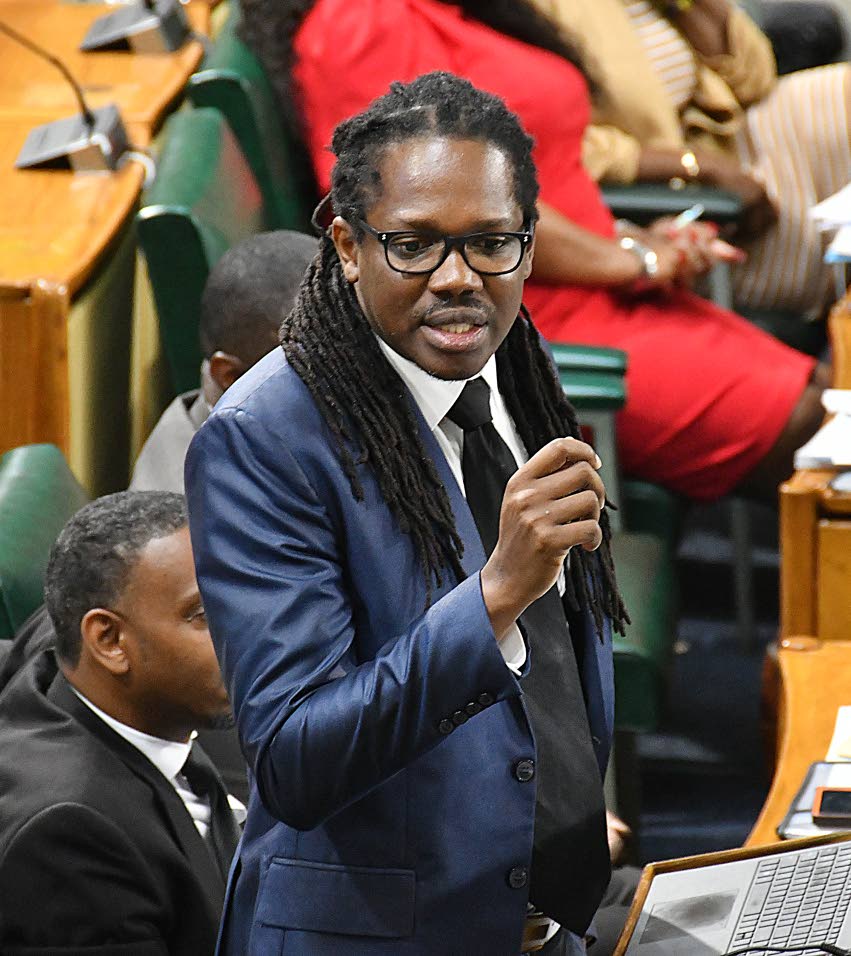
During Tuesday’s 2026/27 Sectoral Debate in Jamaica’s House of Representatives, opposition education spokesperson Damion Crawford has issued a bold call to raise the country’s age of consent from 16 to 18, framing the policy shift as a critical response to an unaddressed teen pregnancy epidemic that is driving mass school dropout across the nation.
Crawford’s proposal comes amid a scathing broader critique of Jamaica’s public education system, which he argues is systematically failing the country’s youth. His argument centers on staggering official data: local institutions record an average of 6,000 school-aged girls becoming pregnant every year, and pregnancy accounts for 49% of all female secondary school dropouts. Most teen mothers do not return to formal education after giving birth, ending their academic trajectories prematurely. Extrapolating from annual pregnancy rates over the full 12-year compulsory schooling cycle for students aged 6 to 17, Crawford estimates that as many as 78,000 current students are children born to teen mothers still enrolled in school.
The push for an upward age adjustment comes at a pivotal legislative moment in Jamaica. The country last updated its age of consent in 1988, when lawmakers raised it from 14 to 16 via amendment to the Offences Against the Person Act, with the explicit goal of cutting teen pregnancy and protecting vulnerable girls in the 14 to 16 age bracket. Today, however, a parliamentary joint select committee reviewing the Child Diversion Act is currently considering a close-in-age exemption that would legalize consensual sexual relations between 15-year-old girls and 19-year-old men — a move Crawford implicitly pushes back against with his call for a higher baseline age of consent.
Beyond the teen pregnancy crisis, Crawford laid bare a cascade of overlapping failures plaguing Jamaica’s education sector, starting with chronic absenteeism. Defining chronic absenteeism as missing at least 10% of the school year (19 instructional days), he reported that every administrative region in the country records chronic absenteeism rates above the warning threshold. Rates range from a low of 17% in Region One and 18% in Kingston’s Region Two to 35% in Region Six, with some deep rural regions posting absenteeism as high as 55%. Citing World Bank analysis, Crawford noted that absenteeism directly drives dropout: the lower secondary dropout rate sits at 25%, while upper secondary stands at 15%. For male students, 41% leave school due to flagging interest in academics — a number that has risen sharply from 19% of dropouts in 2010 to 32% in 2017, a trend Crawford attributes to declining public perception of education’s value.
Crawford also pushed back against the Jamaican government’s recent claim that all schools have fully reopened following the passage of Hurricane Melissa in October last year. He argued the announcement ignores widespread “hidden absenteeism,” as many schools have adopted a staggered hybrid schedule that only brings students in-person for two days a week, leaving them learning remotely for three. This arrangement, he claimed, has resulted in catastrophic learning loss of between 40% and 60% for affected students.
The opposition spokesperson went on to criticize multiple government policy choices that he says exacerbate the system’s struggles. He called out a failed student bus transportation system that leaves many students unable to reliably attend classes, and the recent elimination of a 20% duty concession on motor vehicles purchased by educators. Crawford noted that school leaders and guidance counsellors regularly travel to track down truant students and reconnect them to learning, making personal transportation a critical tool for retention. He also added that the government has not increased funding for the Programme of Advancement Through Health and Education, a key social safety net supporting low-income students.
The most pressing systemic threat, Crawford argued, is an accelerating exodus of teaching staff that the government has failed to address. He reported that annual teacher resignations have jumped fivefold over the past decade, from 350 resignations a decade ago to 1,800 resignations in 2026 alone. In 2022, 145 math teachers — 10% of the country’s total active math teaching workforce — left the profession. Crawford slammed the government for lacking any meaningful teacher retention strategy, and noted that the administration’s recent proposal of a 2% salary increase for educators amounts to an insult to the profession that drives more teachers away.