
分类: society

  • Police chief urges renewed fight against gun crime

    Police chief urges renewed fight against gun crime

    During the annual awards ceremony of The Barbados Police Service (TBPS), Commissioner Richard Boyce delivered a dual message of commendation and urgent call to action. Held at the Barbados Police Service Band headquarters on Tuesday, the event recognized officers for their exemplary service while simultaneously addressing the island’s persistent struggle with firearm-related crimes.

    Commissioner Boyce extended congratulations to all award recipients and emphasized that every officer’s contributions remained valued and acknowledged within the organization. He articulated a broader vision of policing that transcends conventional crime-fighting, characterizing the service as fundamentally “service-oriented” with responsibilities extending to community care and public assistance.

    “Our mandate encompasses not only criminal interventions but also the softer aspects of societal support,” Boyce explained. “This includes assisting citizens with crossing roads and addressing neighborhood nuisances such as nocturnal disturbances from animals. Essentially, we must respond comprehensively to all forms of public complaints.”

    Despite this holistic approach, the Commissioner identified gun violence as a particularly entrenched challenge, describing it as a “perennial problem” that continues to plague the nation. He acknowledged the cyclical nature of firearm policing, at times resembling a “revolving door,” but highlighted strategic reorganizations that have yielded significant operational successes.

    “Through concerted energy and collaborative strategy implementation, we have achieved considerable progress,” Boyce stated, citing consistent arrests in serious criminal cases including homicides and armed robberies. He specifically praised specialized units tasked with combating violent crime for consistently “coming out on top.”

    The Commissioner conveyed appreciation from both senior police leadership and government officials, including the Attorney General, recognizing the force’s exceptional performance. However, he stressed that current achievements represent not an endpoint but a foundation for intensified efforts.

    Boyce issued a compelling appeal for officers to deepen community engagement across commercial and residential districts, emphasizing that strengthened police-public partnerships are essential for addressing national security challenges. “Now is the time for every member to immerse themselves in communities,” he urged, calling for sustained excellence in service as police and citizens “join hands” to confront gun crime and other pressing societal issues.

  • Policeman unleashes blows on vagrant

    Policeman unleashes blows on vagrant

    A disturbing incident of police brutality unfolded on the streets of Georgetown, Guyana, on Tuesday, December 23, 2025, when a uniformed officer was captured violently assaulting an unarmed homeless man. The altercation occurred at the intersection of Main and Church Streets in broad daylight, witnessed by numerous pedestrians and documented by Demerara Waves journalists.

    The confrontation began when the law enforcement officer, utilizing a thick electrical wire as an improvised weapon, repeatedly struck the street dweller who was lying defenseless on his back. The violent episode continued until the officer became aware that his actions were being recorded, at which point he permitted the victim to leave the scene.

    Shockingly, when journalists confronted accompanying officers about the clear human rights violation, one officer responded with dismissive sarcasm, repeatedly muttering “human rights? human rights?” in apparent contempt. Another individual in civilian clothing attempted to interfere with the documentation process, demanding that journalists cease video recording the incident.

    Following the realization that the assault was being documented, multiple officers quickly dispersed from the area, some retreating through nearby market stalls in what appeared to be an effort to avoid further scrutiny. The incident has raised serious concerns about police conduct and accountability mechanisms within Guyana’s law enforcement system.

  • Steel houses

    Steel houses

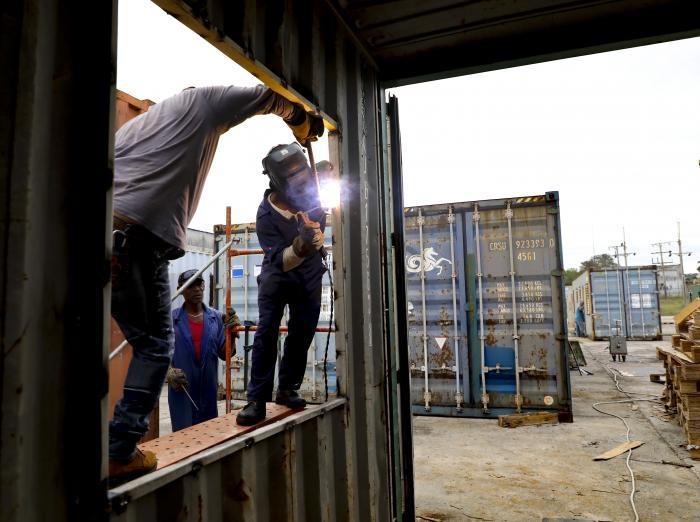
    In an ambitious response to Cuba’s persistent housing challenges, a groundbreaking initiative is transforming decommissioned shipping containers into functional modular homes. At the Metal Productions Business Unit in Guanabacoa, workers labor intensively to convert 29-square-meter steel boxes into habitable spaces, complete with living areas, bedrooms, compact kitchen-dining spaces, and bathrooms.

    The project utilizes approximately 3,500 used containers that originally arrived in Cuba carrying renewable energy equipment. Under the direction of Delilah Díaz Fernández, Housing Program director at the Ministry of Construction, these conversions represent a strategic approach to addressing the nation’s housing deficit, high construction costs, and material shortages.

    Each container home features seven windows and two doors to ensure adequate ventilation, along with interior veneer structures to mitigate Cuba’s intense heat. The units are lined with plywood and include basic electrical systems, though final power connections must be completed on-site. Anti-corrosive painting is incorporated into the finishing process to enhance durability.

    Financed through the State Budget, these homes are distinguished by their rapid construction timeline and relatively low cost compared to traditional building methods. The initiative specifically targets several beneficiary groups: workers from photovoltaic solar parks, victims of weather-related home collapses, and individuals in vulnerable socioeconomic circumstances awaiting housing solutions.

    Prospective homeowners must pay a bank-determined amount that varies based on materials and finishes used in each unit. Subsequent maintenance responsibilities fall to the owners once properties are transferred.

    The program faces operational challenges including intermittent power outages and fuel shortages that occasionally halt production. Despite these obstacles, the container conversion project continues advancing as part of Cuba’s broader strategy to develop sustainable urban housing models that effectively address shelter needs.

  • Social : Rain of wishes 2026 (Part.1)

    Social : Rain of wishes 2026 (Part.1)

    As 2025 concludes, Haiti’s governmental bodies, cultural institutions, and diplomatic missions have collectively issued heartfelt seasonal greetings, blending traditional holiday wishes with calls for national unity and resilience. The messages reveal a nation grappling with profound challenges while maintaining determined optimism for the coming year.

    The Ministry of Youth, Sports and Civic Action set the tone by reflecting on a year marked by “inspiring sporting exploits and major legal advances,” urging citizens to embrace values of sharing, solidarity, and hope as essential foundations for social cohesion. This sentiment was echoed across multiple ministries, with the Ministry of Commerce and Industry specifically encouraging responsibility during celebrations and collective efforts toward “a more dynamic and prosperous society.”

    Law enforcement authorities struck a particularly poignant note, with the Haitian National Police renewing its commitment to “protect citizens, uphold republican order, and work with much more professionalism for collective security” despite ongoing challenges. Their message explicitly wished for peace, stability, and solidarity in 2026.

    The diaspora’s perspective emerged through consular messages from Montreal, Chicago, Santiago, and Miami. Montreal’s Consul General Anès Lubin notably reframed traditional wishes, stating that “‘Strength and courage’ would be more appropriate this year than the traditional ‘Peace and prosperity.’” This acknowledgment of Haiti’s difficult circumstances was balanced with references to the nation’s historical resilience, urging compatriots to remember their “heritage of the experience of the power of great unity against great adversity.”

    International partners joined the chorus of seasonal messages, with the United States Embassy offering particularly empathetic wishes. Ambassador Henry T. Wooster acknowledged that “for many, this holiday season does not bring the simple joys of previous years,” expressing solidarity with “families affected by insecurity, displacement and daily difficulties” while wishing for “moments of calm, comfort, hope and light.”

    UN representative Carlos G. Ruiz Massieu of BINUH distilled the overarching aspiration into a single phrase: “For a year 2026 of progress towards Peace and stability in Haiti.” This sentiment connected institutional messages from cultural entities like MUPANAH museum and The Art Center, which emphasized adaptation and evolution through difficult times.

    The collective messages create a tapestry of cautious optimism, acknowledging present struggles while maintaining hope for national progress, security, and prosperity in the year ahead.

  • Remembering Jerry Lopez: The Heart of Albert Street

    Remembering Jerry Lopez: The Heart of Albert Street

    The bustling heart of downtown Belize City has fallen silent with the sudden passing of Jerry Lopez, the cherished fruit vendor whose presence graced Albert Street for nearly three decades. Lopez, 52, collapsed and died of natural causes on Monday evening mere steps from the iconic fruit stand that served as both his livelihood and the community’s social nucleus.

    For thirty years, Lopez transformed his modest produce stall into an urban institution—a welcoming oasis where strangers became friends over shared smiles and seasonal fruits. His father had established the family tradition in the 1970s, selling fruits before the historic Palace Theater, with Jerry eventually assuming the role and becoming what many describe as ‘the face of downtown.’

    Beyond his commercial offerings of plums, custard apples, sour sap, and craboo, Lopez distributed generosity freely—gifting produce to schoolchildren, offering shoulders to lean on, and weaving together the social fabric of the community. His encouragement inspired fellow vendor Cindy Joseph to establish her own powder bun business adjacent to his stand, exemplifying his role as both mentor and catalyst for local enterprise.

    The impact of his loss resonates through multiple layers of Belize City society. Prime Minister John Briceño offered official condolences via social media, while Deputy Mayor Eluide Miller characterized Lopez as ‘synonymous with downtown’ and integral to the city’s social fabric. Cassius Lopez, Jerry’s older brother, now contemplates continuing the family legacy while mourning the man who embodied their father’s physical presence and entrepreneurial spirit.

    Lopez’s passing has sparked grassroots movements advocating for permanent memorials, including proposals to rename King Street in his honor—a testament to his profound community influence. He is survived by a son, whose recent high school graduation Lopez celebrated with immense pride, marking one of his final familial milestones.

    As makeshift memorials bloom at his former stall, the city collectively remembers not merely a vendor, but the enduring heart of Albert Street—a man whose legacy transcends commerce and embodies the very essence of community connection.

  • Safety or Setback? Prefab Transport Rules Are Questioned

    Safety or Setback? Prefab Transport Rules Are Questioned

    The prefabricated housing sector confronts a severe operational crisis following the implementation of revised transportation regulations that restrict the movement of fully assembled modular homes on national highways. This regulatory shift has left numerous construction companies grappling with logistical gridlock, with multiple completed dwellings stranded and unable to reach their intended destinations.

    Transport Ministry CEO Chester Williams convened emergency discussions with industry representatives to address the mounting predicament. During these critical talks, Williams acknowledged the compliance of transport operators with previous permit requirements, citing documented evidence that properly lit convoys with adequate warning systems and escort vehicles accompanied recent shipments.

    Current regulations mandate that structures exceeding twenty feet in width must be disassembled before highway transport—a requirement that renders numerous already-constructed homes effectively immobile. Williams emphasized the impracticality of demanding deconstruction, noting this would essentially force builders to demolish finished properties and reconstruct them onsite, potentially doubling costs for consumers.

    Proposed interim solutions include implementing police-escorted nighttime transport operations for existing inventory. However, Williams clarified that any permanent regulatory modifications would require Cabinet-level authorization. Simultaneously, homebuilders have committed to developing public awareness campaigns through informational commercials and notices regarding safe transport practices for oversized loads.

    The regulatory review was prompted by recent highway incidents involving prefab home transports, though preliminary investigations suggest proper safety protocols were followed in both cases, indicating factors beyond transport procedures may have contributed to the accidents.

  • Belize’s Hidden Housing Industry Moves While You Sleep

    Belize’s Hidden Housing Industry Moves While You Sleep

    BELIZE CITY – While most citizens sleep, a massive industrial operation moves silently through Belize’s nighttime highways. The country’s prefabricated housing industry has developed a sophisticated nocturnal transport system that remains largely invisible to the public eye, yet represents a significant economic sector.

    Ronny Plett, Manager of Plett Home Builders, reveals that nighttime relocation has become the industry standard for safety and efficiency. “The general public and government officials remain largely unaware of the scale of this industry because transportation occurs exclusively during overnight hours,” Plett explained in an exclusive interview.

    The practice gained formal recognition eleven years ago when government authorities issued a directive encouraging nighttime moves. While initially met with limited compliance, several major companies including Plett Home Builders recognized the substantial advantages and continued the practice independently after the directive was retracted.

    Plett provided compelling statistics demonstrating the scale of this hidden industry: his company alone has transported over 3,000 homes during the past two decades without a single traffic incident. Industry-wide, approximately 200 homes are moved annually under cover of darkness.

    The safety and efficiency benefits are substantial. Daylight transport between Spanish Lookout and Belize City typically involves navigating around hundreds of vehicles, creating dangerous congestion. Nighttime operations reduce vehicle encounters to just three or four throughout the entire journey, significantly lowering accident risks while improving cost efficiency through faster completion times.

    This sophisticated nighttime logistics network represents an innovative solution to industrial transportation challenges in developing nations, demonstrating how private industry can self-regulate for improved safety outcomes without government mandate.

  • Strobe Light Overload: Safety Signal Losing Impact?

    Strobe Light Overload: Safety Signal Losing Impact?

    A growing proliferation of unauthorized strobe light usage on Belizean roads is creating potentially dangerous desensitization among drivers, according to transportation industry expert Ronny Plett. The manager of Plett’s Home Builders raised urgent concerns on Friday about the diminishing effectiveness of safety signals meant to alert motorists to oversized loads.

    Plett identified a troubling pattern where flashing strobes have become commonplace on various vehicles including semi-trucks and buses that aren’t transporting any special loads. This indiscriminate usage, he warns, conditions drivers to ignore the critical warning signals when they actually appear on legitimate wide-load transporters.

    ‘The widespread unnecessary flashing teaches people to become accustomed to them,’ Plett explained, noting this concerning trend has been steadily growing. ‘When moving a wide load now, people are conditioned to disrespect the strobe.’

    The transportation veteran called for stricter enforcement from regulatory departments, emphasizing that strobe lights should be activated exclusively during actual wide-load transportation operations. He stressed that immediate action is necessary to preserve the vital safety function these signals provide for both transportation workers and the general public.

  • Braids, Nails, and Holiday Cheer: Looking Beautiful Just in Time for Christmas

    Braids, Nails, and Holiday Cheer: Looking Beautiful Just in Time for Christmas

    Across Belize, a distinctive holiday tradition unfolds each December as women prioritize aesthetic preparations alongside seasonal celebrations. With merely two days remaining until Christmas, beauty salons nationwide are operating at maximum capacity, fulfilling appointments booked months in advance. This annual phenomenon represents both cultural expression and economic opportunity within the community.

    At Braids, Weave & Curls by Mich on Faber’s Road, proprietor Erica Howard demonstrates the extraordinary demand characterizing the holiday period. Howard reveals that Christmas reservations commence immediately following September’s seasonal rush, with her schedule completely filled through January 4th, 2026. The salon’s popularity stems from its specialization in traditional braiding techniques deeply rooted in African, Garifuna, and Mayan heritage, transforming hair artistry into cultural celebration.

    Howard observes heightened creativity during the festive season, noting clients frequently experiment with fashionable wigs and intricate braided styles. ‘Women appreciate looking their best,’ Howard explains. ‘The Christmas season provides that special occasion demanding fresh aesthetic transformations.’

    The Howard family operates a comprehensive beauty enterprise, with daughter Lissa managing Pretty Snatched nail services within the establishment. Lissa reports overwhelming demand for holiday-themed manicures featuring predominantly crimson and white polishes adorned with snowflake designs. ‘Everyone desires appearing their finest for Christmas celebrations—myself included,’ she acknowledges.

    Client Patricia Witty exemplifies first-time patrons inspired by friends’ salon experiences. ‘Numerous educators and acquaintances recommended this establishment,’ Witty comments. ‘Christmas festivities, photographic opportunities, and widespread participation motivated my initial braiding appointment.’

    Despite the exhausting schedule requiring work beyond midnight, Howard maintains profound gratitude for her profession’s opportunities. Particularly meaningful is collaborating with her hearing-impaired daughter Annelies, who has cultivated her own clientele specializing in cornrow techniques. The salon environment fosters communal bonding as stylists and clients collectively share in seasonal joy and creative collaboration.

    This Christmas beauty ritual transcends mere appearance enhancement, evolving into cherished cultural practice strengthening community connections through shared aesthetic experiences.

  • Authorities Target Drunk Driving Across Belize Ahead of Christmas

    Authorities Target Drunk Driving Across Belize Ahead of Christmas

    Belizean transportation authorities have launched an aggressive nationwide campaign against impaired driving as the country enters its peak Christmas celebration period. This heightened enforcement comes in response to historical patterns of alcohol-related traffic fatalities during the holiday season, including last December’s devastating three-vehicle collision that claimed ten lives.

    Chester Williams, Chief Executive Officer of the Ministry of Transport, confirmed the implementation of expanded enforcement measures across Belize’s highway network. “Over the past few weeks we have stepped up our enforcement efforts significantly,” Williams stated. “Our traffic wardens are conducting operations throughout the country during evenings and weekends, specifically targeting motorists with demonstrated propensity for traffic violations.”

    The campaign has already yielded multiple arrests for driving under the influence and other traffic offenses. Williams emphasized that enforcement will intensify further during the upcoming weekend, recognizing that the yuletide season typically correlates with increased alcohol consumption on roadways.

    Enforcement strategies include strategically positioned checkpoints and enhanced highway patrols that may cause temporary delays for motorists. Williams appealed for public patience, explaining that these inconveniences represent necessary sacrifices for roadway safety. “If you get held up in a line for a little while, just be patient. This is part of our effort to ensure your time on the highway is safe,” he noted.

    Transportation officials and police personnel will maintain continuous holiday coverage, requiring many to work while others celebrate. Williams characterized this as an inherent professional commitment for traffic safety personnel. The campaign operates in coordination with Belize’s police department, which has pledged complementary enforcement efforts.

    The central message remains unequivocal: “If you’re going to drink, don’t drive. If you’re going to drive, then don’t drink.” This directive forms the cornerstone of Belize’s comprehensive approach to preventing alcohol-related tragedies during what should be a joyful seasonal period.