分类: society

  • Woman, 86, dies in house fire

    Woman, 86, dies in house fire

    A devastating residential fire in the Laventille community has claimed the life of an 86-year-old wheelchair-dependent woman and left four of her relatives without a home, just one day after another destructive blaze left 12 people homeless in Tobago.

    The victim, identified as Elise Sarah Morris, was trapped inside the single-family home on Robinson Lane when the fire broke out on Thursday afternoon. At the time of the incident, Morris was alone in the property: her niece Alicia Morris, 42, who lived at the home with Elise and her three children aged 3, 10, and 15, had left to run an errand between 5 p.m. and 6 p.m., and the children were playing at a nearby neighbor’s residence.

    Alicia told local media outlet *Express* that she had arranged for someone to check on her aunt, who had recently developed memory issues and relied on a wheelchair for 15 years. Within 45 minutes of her leaving the property, she received an urgent call alerting her that her home was ablaze. By the time she rushed back, the entire structure was already engulfed in uncontrollable flames.

    One brave neighbor made two separate attempts to enter the burning building to rescue Elise, but was forced to retreat both times due to the extreme intensity of the fire. First responders eventually recovered the elderly woman’s body from beneath the structure, which featured a mixed concrete and timber floor plan.

    Alicia has ruled out electrical failure as a potential cause of the fire, noting that the property had been disconnected from the power grid for four months. While she could not confirm the exact origin of the blaze, she said the fire is believed to have started in Elise’s bedroom. Alicia told reporters that a passing motorist had stopped to light a candle for Elise shortly before the fire, and she suspects the candle may have accidentally fallen and ignited surrounding materials. An official investigative report from the local Fire Service is expected to be released next week, which will confirm the cause of the blaze.

    For the Morris family, the loss extends far beyond the destruction of property: the Robinson Lane home was a multi-generational family property where dozens of relatives grew up, holding decades of shared memories. Elise, who had no biological children of her own, raised Alicia from a young age, and Alicia described her as a maternal figure.

    Local councillor Adana Griffith-Gordon, who represents the Laventille area, visited the scene on Thursday and extended her formal condolences to the Morris family. She confirmed that initial emergency assistance has already been deployed to support the displaced family. The family was able to stay with a neighbor on Thursday night, and the Disaster Management Unit of the San Juan/Laventille Regional Corporation completed a full damage assessment on Friday morning.

    So far, the regional corporation has provided three mattresses for the displaced family, while local Member of Parliament Kareem Marcelle has contributed a food hamper and a temporary food assistance card. Griffith-Gordon’s office is currently working to secure long-term alternative accommodation for Alicia and her three children, noting that staying with friends and neighbors long-term is an unsustainable arrangement for a family of four. Marcelle has also reached out to Vandana Mohit, Minister of the People, Social Development and Family Services, as well as senior officials at the Ministry of Housing to request additional support. Griffith-Gordon confirmed that the Fire Service responded promptly to the emergency, though she could not provide an exact arrival time.

    Thursday’s fatal fire marks the second total loss of a family home to fire within a 48-hour period across Trinidad and Tobago. On Wednesday, an overnight blaze destroyed a home on Windward Road in Bad Rock, Belle Garden, Tobago, leaving 12 people – ten adults and two children – displaced.


  • 30 SoE murders

    30 SoE murders

    Trinidad and Tobago’s ongoing state of emergency (SoE), implemented to curb rising violent crime, has been marred by persistent gang-related violence, with 30 people murdered across the nation since the measure took effect last month. This official death toll was confirmed by Deputy Commissioner of Police (DCP) Suzette Martin, who spoke publicly following two fatal shootings that rocked the communities of San Juan and Valencia on Friday.

    While investigations into the motives of the two most recent killings remain in early stages, Martin noted that a large portion of the homicides recorded during the SoE can be tied to local gang activity, with others linked to other forms of organized criminal enterprise. She emphasized that law enforcement remains deeply troubled by the persistence of murder even under emergency public safety measures, telling local outlet *Trinidad Express*, “It just goes to show how lawless our land can be at times.”

    The 2026 state of emergency was formally approved on March 2 and came into force the following day, enacted in response to alarming crime rates recorded in the first two months of the year. As of Saturday evening, the total national homicide count for 2026 already stands at 92.

    Police officials have acknowledged that emergency measures have yielded mixed results across different crime categories. During a media briefing held last month at the Port of Spain Police Administration Building, Police Service media ambassador Owie Russell shared early crime data comparing the first three weeks of the current SoE (March 3 to March 23) to the same period of the previous emergency declaration. The data showed significant declines in several major offences: reported sexual offences dropped from 54 to 13, reported kidnappings for ransom fell to just one case, residential break-ins decreased from 74 to 50, and overall robberies plummeted from 125 to 51.

    However, Russell also confirmed a troubling uptick in home invasion incidents, noting that active investigations are ongoing into all unsolved cases.

    The push for a new state of emergency came after crime statistics released in the Senate laid bare the severity of the nation’s public safety crisis before the measure was enacted. In the first two months of 2026, before the SoE was declared, more than 1,200 serious criminal offences were reported across the country, while law enforcement clearance (detection) rates remained stuck at stubbornly low levels. Homeland Security Minister Roger Alexander told the Senate this week that provisional police data recorded 725 serious offences in January, with an additional 479 reported in February.

    The most recent violence unfolded in two separate incidents early Friday. In Valencia, 42-year-old Sherman Lambkin, widely known by the nickname “Gummy,” was gunned down inside a private residence after an armed gunman forced entry to the property. Police accounts confirm Lambkin was visiting a female acquaintance at her home around 2:45 a.m. when the attacker breached the front door and opened fire. The witness told investigators she saw Lambkin fall immediately after the first volley of shots, before the gunman approached the downed man and fired multiple additional fatal shots before fleeing the scene.

    Multiple specialized law enforcement units, including the Eastern Division Task Force, Homicide Region II, local criminal investigation teams from Valencia and Sangre Grande, and the national Crime Scene Unit, responded to the call just after 3 a.m. Responding officers found Lambkin lying supine on the kitchen floor of the small concrete home, where he was pronounced dead at 5 a.m.

    Hours earlier, in San Juan, 35-year-old Anand Joseph—also known as “Mamoo,” a resident of Laventille Road—was found shot to death inside a parked vehicle just a short distance from his home. Police preliminary investigations estimate Joseph was killed shortly after midnight on Friday. Both killings remain under active investigation.

  • Gordon: Be your brother’s keeper

    Gordon: Be your brother’s keeper

    On Good Friday, at the Cathedral of the Immaculate Conception in Port of Spain, Roman Catholic Archbishop Fr Jason Gordon delivered a stirring homily during the annual ‘Good Friday: The Passion of the Lord’ service, challenging congregants to examine their relationship with Jesus Christ and live out their faith through bold, ethical action.

    The service carried all the traditional hallmarks of Good Friday observance: many worshippers arrived wearing red, a color chosen to symbolize the blood Christ shed during his crucifixion, while all crosses in the cathedral were draped in red cloth. As one cross was slowly unveiled to the gentle, melodic strains of local steelpan music, attendees knelt forward one by one to kiss the wooden symbol in a moment of quiet devotion. The gathering also included intercessory prayers for the nation, its civic and political leaders, and the senior leadership of the regional church.

    Gordon opened his reflection by centering the well-known biblical story of Peter’s three denials of Jesus in the Garden of Gethsemane, arguing that the story is not just an ancient historical account but a mirror for modern believers. Confessing his personal affection for the disciple Peter, Gordon told the congregation: ‘We are Peter. We allow Christ to be crucified again today.’ He pressed attendees to set aside personal pride and ask whether they are willing to stand for their faith even when doing so is socially inconvenient, asking: ‘Every time we are called to the cross, do we say “I am here?”‘

    Gordon expanded this argument to address pressing modern social ills, pointing specifically to the ongoing crisis of domestic violence. He stressed that when communities stay silent about abuse that harms children, breaks apart families, and scars generations, they perpetuate the same rejection of Christ that Peter demonstrated two millennia ago. This silence extends beyond the home, he added: when employees witness unethical actions unfolding in workplaces and choose to stay silent out of self-interest, or when leaders with global power make harmful, self-serving decisions that harm vulnerable populations, they too reject Christ and perpetuate his crucifixion in the modern day.

    Drawing a parallel to the shared global experience of the COVID-19 pandemic, Gordon reminded attendees that the public health crisis stripped all people bare, stripping away many of the distractions and social constructs that people rely on to avoid self-examination. During the worst of the pandemic, large public gatherings like this Good Friday service were banned, with even small groups of five people restricted from gathering, a situation Gordon said echoed the fear and isolation Christ faced in the hours before his crucifixion. Just as the world was laid bare during that crisis, Gordon urged congregants to ‘strip themselves bare’ of their own pretensions, much like the stripped Good Friday altar, to draw closer to God. This call included an invitation to deep personal introspection, rooted in the core Christian belief that Christ bore the sins of all humanity during his crucifixion.

    Beyond calling out silence and inaction, Gordon issued a clear call to action: he urged believers to speak up openly about domestic violence when they see it, and to embrace the call to be ‘their brothers’ keepers’ in both domestic spaces and workplaces. He closed his homily by reminding the congregation to remain rooted in focus on Christ, through fervent prayer and authentic worship, both in times of crisis and in periods of peace and stability.

  • Alarm: Children as young as 11 years old were among the 145 people intoxicated by alcohol during Holy Week.

    Alarm: Children as young as 11 years old were among the 145 people intoxicated by alcohol during Holy Week.

    A major public safety operation staged over the 2026 Holy Week holiday in the Dominican Republic has revealed alarming rates of alcohol and food poisoning among revelers, including three underage people affected by excessive alcohol consumption. The country’s Emergency Operations Center (COE) published its latest update on Holy Saturday, confirming that 145 individuals have required medical treatment for alcohol poisoning. Among those impacted are three minors between the ages of 11 and 17, raising new concerns about underage access to alcohol during seasonal holiday gatherings. In addition to the alcohol poisoning cases, COE data also shows 86 people have sought and received medical care for food poisoning over the course of the holiday celebrations so far. The cross-agency safety operation, dubbed “Conscience for Life, Holy Week 2026,” was launched on the order of Dominican President Luis Abinader, kicking off on Thursday, April 2. A core component of the deployment is a dedicated road safety and public health prevention unit, which went active at 2:00 p.m. on opening day and is scheduled to remain in service until 6:00 p.m. on Sunday, April 5, when the full operation will wrap up. The operation was designed to mitigate common risks associated with Holy Week, a major holiday period that draws large public gatherings, increased travel, and widespread social celebrations across the country. The early poisoning data underscores the ongoing public health challenges facing authorities during peak seasonal holiday events, even with proactive prevention measures in place.

  • Abinader will deliver support to coffee growers affected by Hurricane Melissa

    Abinader will deliver support to coffee growers affected by Hurricane Melissa

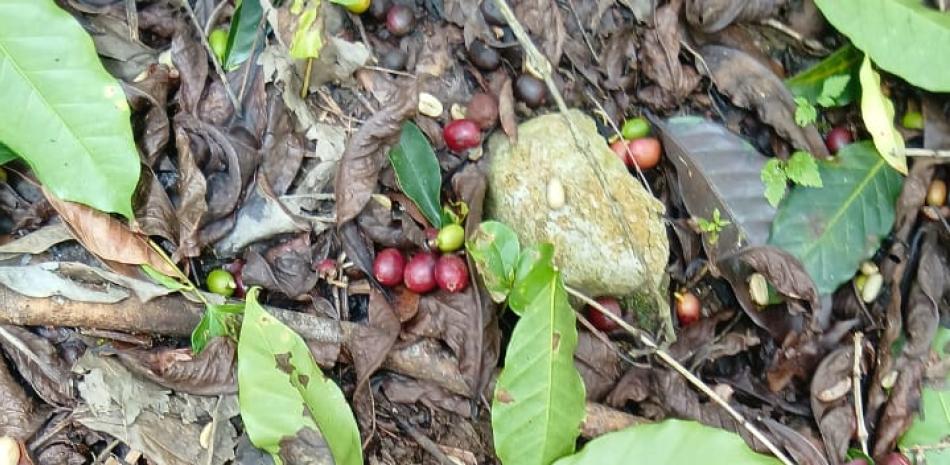
    In the southwestern Dominican province of Bahoruco, hundreds of coffee farmers who suffered catastrophic losses from 2023’s Hurricane Melissa are waiting for long-promised compensation from President Luis Abinader’s administration—but the rollout of the aid program has already been overshadowed by secrecy, inter-agency friction, and fears that eligible growers will be left out.

    The disbursement of relief funds is scheduled to take place April 7 and 8 at the headquarters of the Dominican Coffee Institute (INDOCAFE) in Neyba, the province’s largest municipality. The distribution will be led by a joint delegation of INDOCAFE staff and officials from the Dominican Republic’s Office of the Comptroller General, tasked with overseeing the transfer of public funds to affected producers.

    But basic details about the program remain undisclosed to the public: the total size of the relief package, and the full list of growers approved to receive compensation, have not been made available. Teodoro Peña Rivas, INDOCAFE’s interprovincial director for the region, has declined to share the roster of beneficiaries, stating he is following orders from the institute’s senior leadership in Santo Domingo.

    Peña Rivas—widely known by his nickname “Carlos Café” among local growing communities—has also refused to partner with the NUCASNE, the local advocacy group representing coffee and crop farmers in the Sierra de Neyba mountain region, where much of Bahoruco’s coffee cultivation is concentrated. Peña Rivas claimed he could not collaborate with the group because he had not received authorization from INDOCAFE’s national director, Leonidas Batista Díaz.

    This refusal directly contradicts communications shared directly with NUCASNE, however: Peña Rivas himself read a text message and played an audio recording from Batista Díaz that instructed the institute’s regional team to meet with Faustino Reyes Díaz, NUCASNE’s coordinator, to coordinate support for the affected producers.

    The conflicting directions and secrecy have fueled growing suspicion among local growers about the transparency of the relief program. Reyes Díaz told reporters he believes mid-level INDOCAFE technicians, with backing from the institute’s national leadership, have deliberately declined to complete official damage assessments for many affected farms, even when clear evidence of storm destruction exists. He warned that growers who suffered severe losses during Hurricane Melissa will be locked out of the compensation program entirely, and says he is already bracing for anger and disappointment among the farming community when aid is distributed.

    For Bahoruco’s coffee sector, which is a core source of employment and economic activity for the region, Hurricane Melissa caused widespread damage to crops and growing infrastructure in 2023. The promised compensation from the national government was intended to help small-scale producers rebuild their operations, but the emerging controversies have cast doubt on whether the aid will reach those who need it most.

  • GWI continues to pour millions down recurring city leaks near Bank of Guyana

    GWI continues to pour millions down recurring city leaks near Bank of Guyana

    For years, a stretch of over 100-year-old water mains along Georgetown’s Church Street has been a persistent, costly problem for Guyana’s state-owned water utility, Guyana Water Incorporated (GWI). Despite repeated public promises to fully replace the aging infrastructure years ago, the company has only carried out temporary patchwork repairs – racking up millions of Guyanese dollars in annual expenses for recurring leak repairs that could have been avoided with a full replacement.

    The problem is concentrated in a high-traffic central district near key Guyanese institutions: the National Library, the Bank of Guyana, and Guyana Stores. Local industry sources familiar with the issue confirm that the pipeline network suffered at least 12 major bursts in 2025 alone, with four more leaks already recorded in the first four months of 2026.

    Each leak comes with staggering hidden and direct costs for the utility. In 2025, data shows excavation, pipe repairs, and subsequent road restoration cost GWI more than GY$1 million per individual incident. When the Ministry of Public Works is unable to complete road repairs after GWI fixes a leak, the utility is forced to hire private contractors to restore the roadway for vehicle access, adding further unplanned expenses. Beyond direct repair costs, GWI also loses significant revenue every time a break occurs: workers must cut or reduce water pressure to complete repairs, which prevents residential water tanks from being refilled overnight, cutting into the utility’s billed water output.

    The persistent leaks and repeated repair work have also caused collateral damage to public infrastructure in the area. A section of the pedestrian sidewalk directly outside the National Library has been completely destroyed, weakened by ongoing water seepage from the burst pipes and repeated vehicle movement from repair crews and passing traffic that has eroded the damaged walking surface.

    Why has the full replacement project, promised repeatedly by GWI leadership, not moved forward? The main justification cited by officials has been concerns over traffic disruption in the already congested central business district.

    As far back as July 2025, GWI Chief Executive Officer Shaik Baksh publicly assured residents and stakeholders that the old water mains would be fully replaced before the end of that year. At the time, he explained the phased approach was designed to limit gridlock: “Because of the heavy traffic flow, we don’t want to disrupt traffic along that whole area so have to do phase by phase.” When the project did not break ground by the end of 2025, it remained unstarted into 2026.

    Speaking to Demerara Waves Online News on March 21, 2026, current Public Utilities Minister Deodat Indar repeated the same traffic concerns, noting that any full pipe replacement would require special traffic management arrangements to mitigate widespread disruption. “We have to schedule to work as there would be a major disruption of traffic,” Indar stated. When pressed, however, the minister was unable to provide any concrete timeline for when full replacement work would actually begin. The most recent leak in the area has already worsened, bringing renewed urgency to the long-unresolved problem, with no clear end in sight.

  • COE reports 66 alcohol poisonings; among the cases are three minors

    COE reports 66 alcohol poisonings; among the cases are three minors

    In the opening hours of the “Conscience for Life, Holy Week 2025-2026” public safety and health operation, regional emergency authorities have confirmed that dozens of people have sought and received medical care for alcohol-induced poisoning, alongside a smaller cluster of food poisoning cases. The first official situation update released by the local Emergency Operations Center (COE), compiled in coordination with the National Health Service, lays out the full early breakdown of incidents: across the monitored area, 66 people have been diagnosed with acute alcohol intoxication. Of those affected, three are underage minors aged between 14 and 17 years old, a detail that has amplified public health concerns around underage access to alcohol during the popular holiday period. Alongside the alcohol-related cases, an additional 19 cases of food poisoning have been logged by health officials in the same early window of the operation. In response to these early incident numbers, the COE has reissued a formal public appeal, urging all residents and visitors celebrating the Holy Week holiday to consume alcoholic drinks in moderation, implement consistent food safety precautions, and prioritize safeguards to prevent underage drinking and exposure to harmful substances during the festive season.

  • BRA tax clinics begin this weekend

    BRA tax clinics begin this weekend

    As the annual personal income tax filing peak period approaches, the Barbados Revenue Authority (BRA) is rolling out a widespread network of free in-person Tax Clinics starting April 4, designed to cut through confusion and help taxpayers complete their submissions correctly and on schedule.

    The first wave of assistance will open to the public this Saturday at two convenient central locations: Queen’s Park Steel Shed and the Rice’s Resource Centre. To expand access to residents across the island, additional clinic sites will be activated on every following Saturday through the end of April. These include the Valley Resource Centre, BRA’s existing offices at Holetown and Warrens Towers II, and a one-off clinic at the Briar Hall Resource Centre on the final Saturday of the month.

    All Saturday clinics will run from 9 a.m. to 3 p.m. local time across all participating locations, with one exception: the Queen’s Park Steel Shed location will close early at 1 p.m. on April 25. To accommodate taxpayers who cannot attend weekend sessions due to work or other commitments, BRA has added extended weekday clinics at Queen’s Park Steel Shed running from April 20 to 30. These weekday sessions also operate from 9 a.m. to 3 p.m., and will be closed on official bank holidays.

    Unlike general inquiry services, these targeted clinics are tailored to address two key needs for Barbadian residents: assistance filing 2024 Personal Income Tax returns, and support for residents applying for the Reverse Tax Credit. Every clinic will be staffed by fully trained BRA officers, who are prepared to walk attendees through step-by-step filing processes, clarify confusing regulatory requirements, answer individual questions, and resolve common filing errors before submissions are finalized.

    BRA officials are urging all taxpayers who have not yet completed their returns, or who have questions about the Reverse Tax Credit program, to take advantage of the free service well in advance of the filing deadline. The authority noted that accessing early support helps avoid the rushed, last-minute mistakes that often lead to processing delays or penalties, and ensures that eligible residents receive any applicable credits without unnecessary hold-ups.

    To make the most of their clinic visit, BRA advises all attendees to come prepared with two critical items: all relevant supporting financial documents for the tax year, and a valid form of government-issued photo identification. Up-to-date information on location changes, additional clinic dates, and program details is posted continuously on the official BRA website, which can be accessed at www.bra.gov.bb.

  • Teen granted bail on robbery, wounding charges

    Teen granted bail on robbery, wounding charges

    A teenage defendant has been released on $5,000 bail after facing two serious criminal charges before a Barbadian magistrate earlier this week.

    Sixteen-year-old Jaheim Remere Holder, a resident of Licorish Village in the My Lords Hill neighborhood of St Michael, made his first court appearance on Thursday before Magistrate Alison Burke at the District ‘A’ Traffic Court. As the charges against Holder are classified as indictable offences under local law, the defendant was not required to enter a formal plea during this initial hearing.

    The charges stem from a reported violent incident that took place on March 27, in which 52-year-old Oberon Padmore was allegedly the victim of the robbery and intentional wounding. Following the brief proceeding, Magistrate Burke granted Holder bail set at $5,000, and scheduled the next hearing in the case for June 18, 2026, to allow for further investigative and procedural preparations. The matter remains ongoing as the legal process moves forward.

  • Good Friday message of faith and renewal

    Good Friday message of faith and renewal

    Across the Caribbean island of Barbados, crowds of faithful worshippers filled local churches on Good Friday, coming together in quiet solemnity to mark one of Christianity’s most sacred observances. While the day centers on reflection on the crucifixion of Jesus Christ, messages of persistent hope and radical new beginnings echoed through sanctuary halls, uniting congregants in shared faith.

    At the historic Ann Gill Memorial Methodist Church, the air hung thick with contemplation, broken only by the soft strains of traditional hymns and the gentle cadence of collective prayer. Leading the service was Reverend Nicholas Chambers, whose sermon wove personal struggle, core Christian theology, and timeless encouragement into a cohesive message centered on perseverance, unshakable faith, and the promise of renewal that emerges even from life’s darkest chapters.

    Chambers opened his address by inviting every member of the congregation to turn inward, reflecting on their own personal battles and the universal human longing to bring seasons of hardship to a close. Grounding his teaching in these relatable, everyday experiences, he drew a striking parallel between modern struggles and the original events of Good Friday. He reminded those gathered that for Jesus’ disciples, his mother Mary, and the entire early community of followers, the crucifixion did not read as a sacred turning point—it looked like the final end of every hope they had held.

    “My dear friends, in life, all things come to an end, and for us today, as we celebrate Good Friday, for the disciples, Jesus’ mother, and for the nation of Israel, they thought that every good thing that they believed in came to an end,” Chambers told the assembled congregation.

    Yet the reverend emphasized that what appeared to be a final, crushing defeat was actually the starting line for something far greater than the community could have imagined. “But my dear brothers and sisters, even though they saw their master on a cross, even though they saw him and his body laid in a tomb, even though he himself said that it was finished, I want to submit to you that it was not finished simply in that moment. But it was finished to begin something new,” he said.

    Chambers challenged worshippers to carry this same perspective into their own daily lives, especially when navigating uncertainty, overwhelming hardship, or crippling despair. He explained that moments that feel like total endings often act as unrecognized turning points, paving the way for profound personal growth, deep transformation, and eventual victory over struggle.

    Drawing on the interconnected significance of Jesus’ crucifixion and resurrection, Chambers reminded attendees that the Good Friday story does not reach its conclusion at the cross. Instead, it extends forward through the promise of renewal and ultimate triumph over hardship. “I believe for us today as we celebrate Jesus’ death and his resurrection, and as we may be facing hopelessness and fear, we might be wondering, when will it be finished?” he said. “I want to submit to you that [in] life…that finish leads to victory.”

    He further encouraged believers to draw strength from Christ’s own journey of suffering and resurrection, noting that Jesus personally understands the full depth of human struggle and pain. “As we look at Jesus’ life and as we reflect on what he went through, we will have hope instead of hopelessness and courage instead of fear… because Jesus understands what it means to be at the end of the road,” Chambers said.