分类: society

  • Family mourns boy crushed to death: He didn’t run fast enough

    Family mourns boy crushed to death: He didn’t run fast enough

    A community in Five Rivers, Arouca remains enveloped in profound grief following a devastating accident that resulted in the death of eight-year-old Gideon Smart on December 30. The tragic incident occurred when a runaway delivery vehicle lost control on a steep incline, ultimately crashing into the family’s property where Gideon was playing.

    Martin Gardner, the boy’s stepfather, recounted the harrowing moments with visible anguish during an interview at the accident site. He described hearing a thunderous impact that shook their home, followed by the desperate screams of Gideon’s 11-year-old brother who witnessed the catastrophe. The runaway van had struck two derelict vehicles parked in the driveway, propelling them with such force that they pinned Gideon against the structure.

    Gardner managed to force open the front door, which had been jammed shut by the impact, to discover the older brother injured but conscious further up the driveway. Tragically, Gideon had been unable to move quickly enough while playing on an exercise bike despite his brother’s warnings to flee from the careening vehicle.

    The family remembers Gideon as an exceptionally helpful and cheerful child who frequently assisted in the family’s mechanic garage. He had been eagerly anticipating the New Year, particularly looking forward to caring for piglets the family planned to acquire. The yard, typically filled with neighborhood children during the Christmas holidays, now stands as a somber memorial marked by twisted metal and broken masonry.

    Local residents have gathered to offer condolences and support, with one neighbor acknowledging the particularly painful contrast between the festive season and the family’s devastating loss. The driver of the delivery van remains hospitalized after being extracted from the wreckage by emergency services. Preliminary reports indicate the vehicle began rolling while unloading construction materials uphill, with the driver attempting but failing to regain control on the treacherous slope.

    Gardner expressed both sorrow and frustration, noting that the driver had reportedly seen the children in the yard before the accident. The family awaits the release of Gideon’s body for funeral arrangements while questioning whether improved safety measures could prevent similar tragedies in the future.


  • Women playing more dominant role in human trafficking

    Women playing more dominant role in human trafficking

    KINGSTON, Jamaica — A disturbing shift in the criminal landscape of human trafficking is emerging, with women increasingly occupying dominant roles within trafficking syndicates. This revelation comes from Diahann Gordon Harrison, Jamaica’s Children’s Advocate and National Rapporteur on Trafficking in Persons, who delivered her findings during the 22nd Annual George Liele Lecture at Kingston’s Mamby Park Baptist Church.

    While men remain the primary perpetrators identified in trafficking cases, Gordon Harrison highlighted a significant trend: women are now actively participating as traffickers and key operatives within criminal organizations. These female offenders are leveraging their perceived nurturing qualities to facilitate recruitment, orientation of new victims, and operational management—effectively weaponizing empathy for criminal profit.

    Globally, statistics from the United Nations Office on Drugs and Crime (UNODC) substantiate this pattern, showing approximately 40% of convicted human traffickers are women—a substantially higher female participation rate than in other organized crime categories. Their involvement spans ownership structures, victim recruitment, housing supervision, monetary collection, and document forgery operations.

    This criminal evolution occurs despite women and girls remaining the majority of victims, particularly in sexual exploitation schemes. Traffickers strategically deploy women as recruiters capitalizing on their perceived trustworthiness to lure vulnerable targets.

    Gordon Harrison emphasized that human trafficking represents both a severe criminal enterprise—generating an estimated $150 billion annually as the world’s fastest-growing organized crime—and a profound human rights violation. The practice systematically dehumanizes victims, stripping them of individuality, dignity, and personal autonomy.

    Jamaica has implemented robust countermeasures including strengthened legal frameworks punishing perpetrators, victim protection protocols, and public education initiatives targeting schools and vulnerable communities. These efforts have yielded 17 convictions to date, with growing public vigilance leading to increased reporting of suspected cases to authorities.

    The Children’s Advocate concluded that while cultural change requires sustained effort, each prevented trafficking case represents a critical victory: “If you save even one potential victim, that is one less.”

  • St Mary to serve up fireworks at Pagee Beach

    St Mary to serve up fireworks at Pagee Beach

    The coastal community of St. Mary, Jamaica, is channeling resilience into celebration with an ambitious New Year’s Eve festival at Pagee Beach. Organized as a direct response to the devastation wrought by Hurricane Melissa, the event represents a concerted effort to uplift local spirits and stimulate economic recovery.

    Jointly orchestrated by the Pagee Fisherman Group and local Member of Parliament Omar Newell, this year’s festivities are designed to surpass the scale of the inaugural event. The program promises continuous entertainment from daytime through the night, commencing with family-centric activities aimed at delighting children. The musical lineup will feature performances from renowned St. Mary artist Yaksta among other performers.

    The celebration will reach its climax at midnight with a spectacular fireworks display illuminating the skies above Port Maria, symbolizing both the arrival of the new year and the community’s hopeful outlook. MP Newell emphasized the deeper significance of the event, describing it to Observer Online as “a beacon of hope” dedicated to restoring communal bonds and providing substantial support for local vendors and businesses impacted by the natural disaster.

    Newell further praised the Pagee Fisherman Group for their leadership in initiating the celebration and encouraged other community organizations to emulate this collaborative approach in rebuilding community pride and solidarity in the aftermath of the hurricane.

  • France pushes back plastic cup ban by four years

    France pushes back plastic cup ban by four years

    The French government has officially postponed its planned prohibition on disposable plastic cups, shifting the implementation deadline from January 2025 to 2030. This four-year extension follows an official review that identified significant challenges in finding technically feasible alternatives to plastic-based disposable drink containers.

    According to a decree published by the Ministry for Ecological Transition, the postponement was necessitated by the current limitations in replacing plastic materials while maintaining functionality and affordability. The ministry announced plans for a comprehensive progress assessment in 2028 to evaluate advancements in alternative materials before the ban takes full effect in 2030. Once implemented, businesses will receive a 12-month grace period to exhaust existing inventories.

    This decision represents the latest development in France’s decade-long campaign against single-use plastics, which has previously targeted plastic bags and packaging for fresh produce. The broader legislative framework, established through a 2020 environmental law, sets 2040 as the ultimate deadline for eliminating all single-use plastic products nationwide.

    Environmental organizations have strongly criticized the delay as a regression in anti-plastic efforts. Zero Waste France spokesperson Manon Richert characterized the move as “yet another step backwards in the fight against plastic pollution, under pressure from lobby groups.” Richert contested the technical feasibility argument, asserting that viable alternatives exist but suffer from insufficient investment and weak regulatory support.

    A coalition of environmental groups including Surfrider Foundation Europe and France Nature Environnement recently issued a critical assessment of France’s implementation of its 2020 anti-plastic law, noting numerous unimplemented measures and diluted enforcement. Concurrently, France’s consumer protection agency (DGCCRF) revealed in a 2023 report that approximately 20% of inspected companies were violating existing regulations on single-use plastics, including marketing falsely labeled “plastic-free” products and employing semantic loopholes to circumvent restrictions.

  • PNP extends condolences on the passing of sports journalist Donald Oliver

    PNP extends condolences on the passing of sports journalist Donald Oliver

    KINGSTON, Jamaica — The Jamaican sports community is mourning the profound loss of legendary sports journalist Donald Oliver, whose death has prompted an outpouring of tributes from across the nation’s political and media landscape. Opposition Sports Spokesperson Wavell Hinds led the commemorations, honoring Oliver not merely as a reporter but as an instrumental architect of Jamaica’s modern sports culture.

    In an emotionally charged statement, Hinds characterized Oliver as a transformative figure who fundamentally reshaped how Jamaicans engage with athletics. “Donald Oliver transcended conventional sports commentary,” Hinds asserted. “He embodied a profound advocacy for athletics and gave resonant voice to competitors whose narratives merited national attention. His distinctive reporting fused analytical clarity with palpable excitement, elevating sports journalism to a discipline of both intellectual rigor and emotional depth.”

    Hinds emphasized that Oliver’s legacy extends far beyond his on-air presence, highlighting his pivotal role in establishing ethical benchmarks and professional excellence within Jamaican sports media. As a mentor to emerging journalists, Oliver cultivated new generations of storytellers committed to journalistic integrity and narrative sophistication.

    “During an era where sports documentation proves crucial to preserving our athletic heritage,” Hinds reflected, “Donald’s work consistently emphasized the human dimension beneath every competition. He masterfully uncovered the personal struggles, triumphs, and transformational journeys that animate sporting events, treating each account with meticulous care and profound respect.”

    The People’s National Party has formally extended sympathies to Oliver’s family, colleagues, and Jamaica’s broader sports fraternity, recognizing his indelible contributions to both media professionalism and national identity formation through sports storytelling.

  • 407 fewer murders

    407 fewer murders

    Jamaica’s Police Commissioner Dr. Kevin Blake has presented year-end data demonstrating significant crime reduction achievements while contextualizing police-involved shootings. The Jamaica Constabulary Force (JCF) recorded 310 fatal shootings during 30 separate confrontations in 2025, according to figures from the Independent Commission of Investigations (INDECOM).

    Commissioner Blake emphasized that these incidents must be understood within the broader framework of dramatically increased police operations, which saw over 100,000 interactions between law enforcement and citizens throughout the year. The fatal shootings represent less than 0.3% of all police-citizen encounters, a statistic Blake characterizes as minimal given the operational context.

    The commissioner reiterated the JCF’s fundamental commitment to preserving life while acknowledging ongoing investigations into shooting incidents. “The Jamaica Constabulary Force’s preference is, and has always been, to preserve life and bring offenders before the court,” Blake stated, adding that data from 2025 unequivocally supports this position.

    Blake attributed Jamaica’s remarkable crime reduction to a multi-faceted strategy combining intelligence-led policing, targeted anti-gang operations, enhanced firearms interdiction, and substantial government support. The nation recorded 649 murders as of December 20, 2025—representing a 43% reduction nationally and 487 fewer murders compared to the same period in 2024.

    This substantial improvement marks a dramatic turnaround from 2017, when Jamaica recorded over 1,640 murders—the third-highest number in the country’s history. Blake highlighted that 2025’s achievements resulted from “long hours, difficult decisions, professionalism, and exceptional support from our stakeholders.”

    The commissioner also acknowledged challenges, noting slight increases in robberies and break-ins despite an overall 13% reduction in major crimes across all divisions. He emphasized that the progress represents a collaborative achievement involving government backing, financial resources, and institutional support from entities like the Police Service Commission.

    Blake concluded with an appeal to criminal elements: “We urge members of the public, particularly those engaged in criminal activity, to comply with police instructions. When confronted by law enforcement, escalation is a choice and a very dangerous one.” He expressed confidence that continued public cooperation would lead to even fewer fatal shootings in 2026.

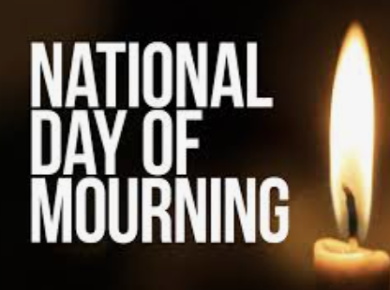
  • Suriname gov’t declares day of mourning after mass killing

    Suriname gov’t declares day of mourning after mass killing

    The South American nation of Suriname has designated Friday as an official day of national mourning following a devastating sequence of events that culminated in multiple fatalities and a custodial suicide. This solemn declaration comes in response to Sunday’s horrific incident in Commewijne district, where 42-year-old Dennis Aroma perpetrated a lethal stabbing spree claiming nine lives, including four of his own children, before taking his own life while in police custody.

    Government authorities have mandated that flags on all public buildings and Surinamese-flagged vessels be flown at half-mast from 6:00 AM until sunset. Citizens and businesses across the nation are encouraged to observe this day of reflection, while media outlets have been requested to adjust their programming to maintain a respectful atmosphere commensurate with the tragedy’s gravity.

    According to preliminary investigative reports, the suspect had been engaged in a telephone dispute with his estranged wife regarding child custody arrangements. The confrontation escalated dramatically when Aroma, described as mentally disturbed, launched a violent attack using a knife against eleven individuals. The assault resulted in nine fatalities, including his children, while two survivors—among them his eldest daughter—remain hospitalized with serious stab wounds.

    Law enforcement officials responding to the incident shot Aroma during his apprehension. After receiving medical treatment at Academic Hospital Paramaribo, he was transferred to an observation cell at Centrum Police Station as a precautionary measure. Tragically, authorities discovered him deceased in his cell on Monday morning, having apparently used his bandages to commit suicide.

    The case has triggered serious concerns regarding judicial system protocols. Prominent psychologist Headly Binderhagel contends that Aroma’s death represents systemic failures in oversight and accountability rather than an isolated incident. “A suicide in a police cell is not fate,” Binderhagel asserted. “It’s a warning sign that cannot be ignored.” He emphasized that the government bears responsibility for protecting detainees’ lives regardless of their crimes, noting that medical treatment alone proves insufficient for individuals in such vulnerable states.

    This tragedy has ignited conversations about mental health support, custodial safety measures, and judicial reform in Suriname, with many calling for transparent investigation and substantive policy changes to prevent similar occurrences.

  • Donald Oliver, award-winning sports journalist and Observer AV manager, has died

    Donald Oliver, award-winning sports journalist and Observer AV manager, has died

    The Jamaican media landscape is grappling with the unexpected loss of distinguished sports journalist Donald Oliver, who passed away suddenly on Tuesday morning at age 40 after experiencing chest pains. The award-winning broadcaster and producer had recently joined the Jamaica Observer Media Group as audiovisual manager in August 2025 following the closure of SportsMax.

    Oliver’s distinguished career spanned over two decades across Jamaica’s premier media houses, including CVM TV, TVJ and SportsMax, where he established himself as both a senior producer and prominent sports commentator. His professional excellence was formally recognized in 2015 when he received the Press Association of Jamaica’s Sports Journalist of the Year award.

    Vernon Davidson, Executive Editor at the Jamaica Observer, memorialized Oliver as both a consummate professional and exceptional human being. ‘I never met Donald before he joined us earlier this year, but I immediately recognized his profound knowledge across multiple sports disciplines,’ Davidson reflected. ‘His analytical contributions were consistently insightful and informative, and I was thrilled about how his expertise would enhance our sports coverage.’

    The news sent shockwaves through Jamaica’s close-knit media community. Colleague Leighton Levy, who collaborated with Oliver for nearly two decades, struggled to articulate his grief. ‘We were preparing for a Year in Review stream tonight,’ Levy revealed. ‘Just Sunday night we were testing equipment, sharing laughter and developing concepts together.’

    Levy remembered Oliver as an extraordinarily creative force in sports journalism—a ‘genius producer’ whose documentary work, including a celebrated piece on swimmer Alia Atkinson, would endure as part of Jamaica’s sporting heritage. ‘Donald didn’t merely record history; he fundamentally shaped how we comprehended it,’ Levy noted, drawing parallels to the recent passing of fellow sports media icon Hubert Lawrence in 2024. ‘Two giants, gone far too soon. Their voices articulated the narrative of Jamaican sports with unparalleled heart, intelligence and grace.’

  • Fitz-Henley pays tribute to late journalist Donald Oliver

    Fitz-Henley pays tribute to late journalist Donald Oliver

    KINGSTON, Jamaica — The Jamaican media community mourns the unexpected loss of journalist Donald Oliver, who passed away Tuesday morning at age 40 after experiencing chest pains. The tragic news prompted an emotional tribute from Senator Abka Fitz-Henley, State Minister in the Office of the Prime Minister, who expressed profound shock and sadness at Oliver’s sudden demise.

    In an official statement, Senator Fitz-Henley celebrated Oliver as both an exceptional journalist and morally upright individual, emphasizing that his professional approach was consistently devoid of malicious intent. The minister particularly highlighted Oliver’s extraordinary vocal abilities, noting his mastery of cadence and modulation to vividly transport audiences to the events he covered.

    While Oliver demonstrated particular excellence in sports broadcasting, Fitz-Henley stressed that his talents transcended any single genre, describing him as a remarkably versatile media professional. Just weeks before his passing, Oliver had traveled to St. Elizabeth to report on the aftermath of Hurricane Melissa, conducting interviews with government officials including MP Floyd Green to highlight the plight of affected communities.

    Beyond his technical skills, Oliver was remembered for his exceptional collegiality and absence of professional jealousy—a trait the minister noted as uncommon in competitive fields. Oliver consistently offered constructive advice and encouragement to colleagues seeking to improve their craft.

    Senator Fitz-Henley extended heartfelt condolences to Oliver’s family, friends, and colleagues, honoring him as “a Jamaican of substance who was excellent at his craft.” The minister concluded his tribute with a cricket metaphor: “An innings well-played, my friend,” acknowledging a life and career completed with distinction despite being cut short.

  • Why do libraries still matter today? Part 3

    Why do libraries still matter today? Part 3

    In an era dominated by digital isolation, libraries are reasserting their role as vital community anchors that foster human connection and social cohesion. This examination, part of a continuing series on library relevance, explores how these institutions actively combat societal fragmentation through purposeful community building initiatives.

    Libraries transcend their traditional identity as mere repositories of books, evolving into dynamic spaces that facilitate meaningful human interaction. Grounded in fundamental human rights principles, public libraries particularly exemplify commitments to diversity, inclusion, and equity. These values manifest practically through welcoming policies that extend access to all community members, including marginalized populations such as homeless individuals seeking refuge and intellectual engagement.

    The digital revolution, while delivering numerous benefits, has simultaneously exacerbated physical and mental health challenges through increased social isolation. Recognizing these contemporary issues, forward-thinking libraries are redesigning both physical spaces and programming to actively support community wellbeing. Within library walls, diverse interest groups flourish—from traditional book clubs to coding workshops, artistic gatherings, and cultural programs—creating organic connections through shared interests.

    At T.A. Marryshow Community College (TAMCC), library staff have institutionalized community building through structured engagement strategies. The library facilitates informal interaction via specially designed Fun & Games segments during key academic periods, including Christmas celebrations, Library Week, and pre-examination stress relief sessions. Beyond recreational activities, the library maintains classroom integration through practical educational sessions covering research skills, APA formatting, digital storytelling, and professional portfolio development.

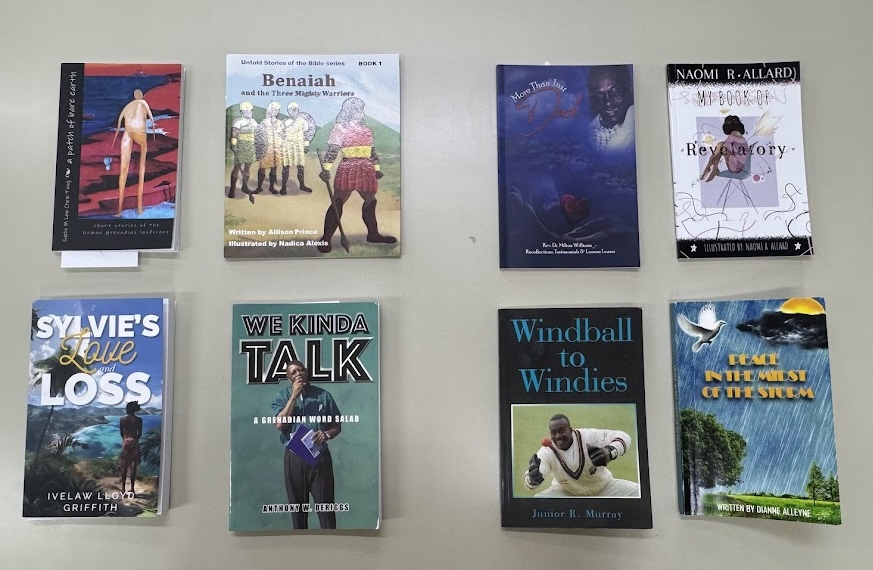
    Critically, TAMCC’s community commitment extends beyond campus boundaries through its ongoing outreach initiatives. The recently concluded seventh Gilda Campos Outreach program at St. George’s Methodist School exemplifies this external engagement, continuing a tradition that has previously served senior citizens’ homes, facilities for disabled persons, and other educational institutions. These hour-long sessions combine reading activities, musical interaction, games, and motivational speaking, supplemented by donations of books by Grenadian authors and essential stationery items.

    Ultimately, modern libraries function as social infrastructure that actively mitigates digital society’s shortcomings. By providing inclusive physical spaces, facilitating interest-based connections, and extending services to vulnerable populations, libraries demonstrate enduring relevance as institutions that fundamentally strengthen community bonds through the promotion of mutual respect and shared humanity.