分类: society

  • Soldier charged in girlfriend’s murder due in court Wednesday

    Soldier charged in girlfriend’s murder due in court Wednesday

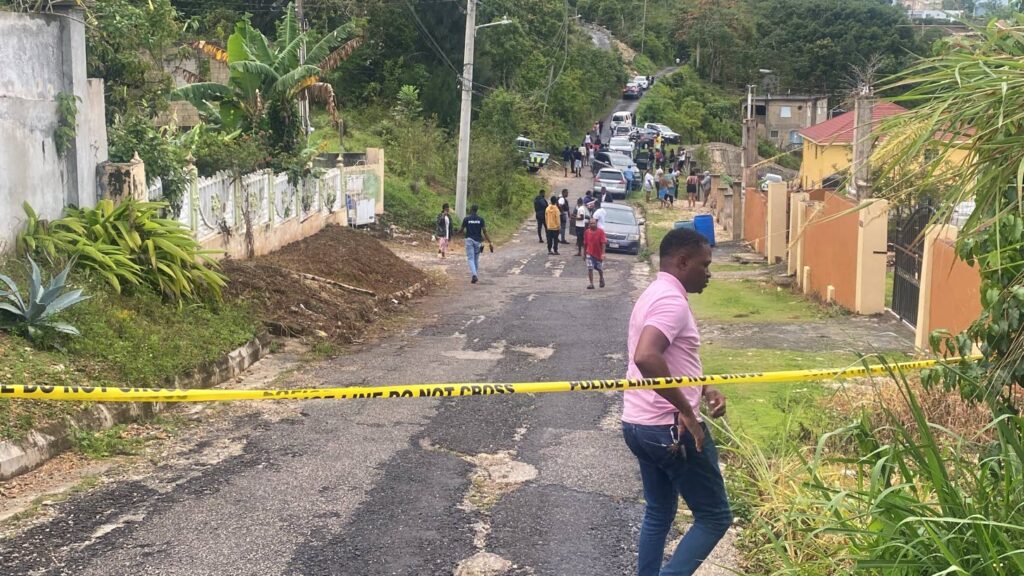
    MANDEVILLE, Jamaica — A 27-year-old active member of the Jamaica Defence Force is on track to appear in court for the first time Wednesday, nearly a week after the brutal killing of his 29-year-old partner Tanzanya Dunkley in the quiet Three Chains community just outside Mandeville, local law enforcement has confirmed. Damanice Tyrone Williamson, the accused soldier, was formally charged with murder Saturday evening, following a confession he gave to investigators over the weekend, according to a senior police source who spoke to local media Jamaica Observer.

    Court documents and police accounts detail a deadly confrontation that unfolded mid-afternoon last Friday. The conflict began when Dunkley made the decision to end her romantic relationship with Williamson, triggering a heated argument between the pair. In his confession, Williamson told detectives that an internal voice commanded him to kill Dunkley during the dispute. After he grabbed Dunkley’s mobile phone, the victim clung to him in an attempt to retrieve the device; at that point, Williamson grabbed a knife and cut her throat, law enforcement recounted.

    Minutes before the fatal attack, police say, Williamson sent Dunkley’s 12-year-old daughter to an upper floor of the family home, telling the child he needed to speak privately with her mother. Immediately after carrying out the killing, he fled the property. Neighbors told the Observer they heard loud screams coming from the residence around 3 p.m., and moments later spotted a man matching Williamson’s description running from the home, his clothing stained with what looked like fresh blood.

    The shocking murder has left the tight-knit Three Chains community reeling. Leonora Reid, a relative of the victim who arrived at the scene shortly after the killing, described the mood as one of collective grief. “The community is saddened and in mourning. Everybody is in mourning, because it is said that this has never happened here. And look at the people around you; everybody coming from near and far, because this is strange to people living in this area,” Reid told the Observer Friday.

    The brutal killing is not an isolated incident for Manchester Parish, however. Local authorities have recorded a steady rise in domestic violence-related offenses across the region in recent years. The growing public safety crisis has led police to repeatedly call for the establishment of a dedicated, specialized intervention centre to address domestic violence in south-central Jamaica, a proposal that has yet to be fully implemented as the parish grapples with rising violent crime tied to intimate partner conflict.

  • WATCH: Woman dead, man injured in Spur Tree Hill crash

    WATCH: Woman dead, man injured in Spur Tree Hill crash

    MANCHESTER, Jamaica — A devastating early-morning traffic incident on Spur Tree Hill has left one woman dead and a man in critical condition, after the heavy cargo vehicle they were riding in careened over a steep cliff edge Tuesday.

    Local residents confirmed the collision occurred just after 5 a.m., when the tractor-trailer, which was fully loaded with bags of cement, lost control and began rolling down the slope. The vehicle tumbled end-over-end multiple times during the fall, ejecting both of its only occupants before coming to a stop at the base of the precipice.

    Emergency response teams from the Mandeville Fire Station were quickly dispatched to the remote crash site to extricate the injured pair. First responders moved the two casualties out of the wreckage and rushed them to a nearby regional hospital for urgent care. Despite emergency efforts, the woman was officially pronounced dead by medical staff upon her arrival at the facility. The male occupant remains hospitalized, where clinical teams are fighting to stabilize his life-threatening injuries.

    Beyond the human cost of the crash, the incident has caused significant disruption to local transportation infrastructure. The falling vehicle struck and snapped a utility pole, bringing down multiple power and communication lines across the roadway. Crews have reduced the affected stretch of highway to a single-lane pass-through while repairs and cleanup work continue, creating long delays for motorists traveling through the Manchester area.

  • Equality Bahamas: Govt failing on gender-based violence

    Equality Bahamas: Govt failing on gender-based violence

    Bahamian gender equality advocacy group Equality Bahamas has issued sharp criticism of the current Davis administration, accusing leaders of sidelining gender-based violence (GBV) as a policy priority during their term, pointing to chronically underfunded support systems for survivors and the government’s ongoing refusal to outlaw marital rape.

    In an interview outlining the group’s concerns, Equality Bahamas Director Alicia Wallace charged that the administration has rejected even the most straightforward, low-barrier actions to address widespread GBV, despite consistent calls for reform from both local advocacy organizations and international human rights bodies. Unlike the government’s claim that entirely new policy frameworks are needed to tackle the crisis, Wallace noted that actionable, vetted recommendations have existed for years from global groups including the UN Committee on the Elimination of Discrimination against Women (CEDAW) and the UN Human Rights Council. Existing draft legislation only requires minor updates and final approval to move into law, she added.

    A core point of contention is the long-running push to criminalize marital rape, a reform that CEDAW has recommended since 2018. Even after a new draft bill was introduced to amend the country’s Sexual Offences Act, Wallace said the current administration deliberately excluded this critical provision. In public comments made in February 2025, Prime Minister Philip “Brave” Davis argued that broad “consensus” from across Bahamian society was required to move forward with the change, saying the government must reflect the will of all groups, not just gender equality advocates. That same month, Attorney General Ryan Pinder confirmed that the administration does not plan to introduce the legislation before the end of its current term, citing the issue’s political sensitivity.

    Notably, the prime minister’s own spouse, Ann Marie Davis, has publicly broken with the administration’s position, voicing full support for criminalizing marital rape and calling for policymakers to act immediately. Back in 2022, Davis made an unusually public rebuke of the status quo, saying: “We must agitate and hold our policy makers accountable. We want them to upgrade our laws and we really need that. Imagine, we are still living in a society where no does not mean no. How could that be? I tell you no and you think I mean yes. No, sir. Of course I’m talking about marital rape right. No means no.”

    Critics of the administration’s delay point to past examples where Bahamian governments have moved forward on politically divisive policies without full national consensus. For instance, the former Christie administration moved to regularize the gaming industry after a referendum on the issue failed, and the current Davis administration implemented cannabis reforms despite widespread opposition from religious groups.

    Wallace explained that the legal exception for marital rape is not just a technical oversight, but a reflection of deep systemic gender inequality. “It suggests that women’s identities and autonomy cease to exist in the context of marriage, and dangerously, that we become the property of men. This is at the root of all other issues of gender inequality and gender-based violence,” she said.

    Beyond criticizing the ruling party, Wallace also called out the Bahamian opposition for failing to uphold its oversight role, noting that the opposition has not used its legislative leverage to push for reform or back advocates’ demands as high-profile domestic and sexual violence cases continue to make headlines. “As story after story of domestic violence and sexual violence reach headlines, they have not reiterated recommendations, support our demands, or made their own interventions, completely wasting the leverage they had as an opposition,” she said.

    Other youth and community leaders echoed these concerns. Prodesta Moore, from the Bahamas Urban Youth Development Centre, emphasized that GBV and the lack of legal protections do not only affect adult women, but shape the lives of young people across every community. “Domestic violence and sexual assault continue to affect families across communities, with young people often directly or indirectly impacted. These are not just adult issues, they are youth issues,” Moore said. “They shape the environments our young people grow up in, the trauma they carry, and the futures they are trying to build.” Moore called for expanded protections for women and girls, broader public education and prevention programming, and more accessible support services for survivors.

    Khandi Gibson, a representative of local group FOAM, acknowledged that many women face unique barriers to leaving abusive relationships that extend beyond government policy, but confirmed that limited resources remain a crippling barrier to support, particularly for temporary housing and mental health counselling.

    The Bahamian Tribune reached out to four senior female government ministers — Labour and Public Service Minister Pia Glover-Rolle, Energy and Transport Minister Jobeth Coleby-Davis, Education Minister Glenys Hanna-Martin, and Housing and Urban Renewal State Minister Lisa Rahming — for comment on the administration’s unaddressed gender equity commitments. None responded to requests for comment before the publication deadline.

  • Treasure Beach gets major waste management boost with SPM, BREDS partnership

    Treasure Beach gets major waste management boost with SPM, BREDS partnership

    On a sunny Wednesday in St. Elizabeth, Jamaica, one of the island’s most beloved community-focused tourism destinations took a meaningful leap forward in environmental stewardship with the official launch of the “Let’s Keep Treasure Beach Clean” project. The initiative is the product of a collaborative partnership between SPM Waste Management Limited, one of Jamaica’s leading waste management service providers, and the BREDS Treasure Beach Foundation, a local non-profit organization dedicated to advancing community well-being and conservation in the area.

    The launch event was hosted at Kingfish Plaza, located in the scenic coastal district of Calabash Bay, drawing together local business owners, community leaders, government representatives, and residents to mark the start of the program. At its core, the project is designed to do two key things: boost compliance with sustainable waste management practices among both local households and commercial operators, and meet the rising infrastructure needs of Treasure Beach’s fast-growing community tourism sector, which draws thousands of eco-conscious travelers to the area each year.

    One of the most tangible first actions of the initiative was the unveiling of roughly 100 custom garbage drums, which will be distributed to a wide range of community stakeholders in the coming weeks. These new containers are engineered to improve waste containment across the region, cutting down on litter that can wash into coastal ecosystems and make regular waste collection routes far more efficient for sanitation teams.

    Speaking to assembled attendees at the launch, Mayor Richard Solomon emphasized that a consistently clean, unspoiled natural environment is the backbone of Treasure Beach’s ongoing appeal as a top tourism destination. “As our community continues to expand, especially in the small-scale cottage accommodation sector that is central to our tourism model, we cannot afford to let our guard down when it comes to protecting the landscapes and shorelines that draw visitors here,” Solomon told the crowd. “Keeping our home clean is a responsibility that falls on every single one of us, and it directly shapes both our economic prosperity and our quality of life.”

    Sheldon Smith, Regional Operations Manager at SPM Waste Management Limited, used his address to call for a lasting shift in how local residents think about waste disposal. Smith explained that improper disposal habits—including illegal dumping and incorrect waste sorting—place unnecessary extra strain on municipal and private waste collection systems, stretching resources thin and reducing service quality for the entire community. “Waste management isn’t just a job for sanitation trucks and collection officers,” Smith noted. “It starts with every individual making the right choice about how and where they throw away their trash. Every person has a part to play in keeping our shared community clean.”

    Jason Henzel, chairman of the BREDS Treasure Beach Foundation, framed the new initiative as a critical step to protecting the unique community-led tourism legacy that has made Treasure Beach a global model for sustainable travel. “Treasure Beach has been a standard-bearer for responsible community tourism for decades, built on the vision of early pioneers like Desmond Henry who saw the value of growing tourism without sacrificing our natural home,” Henzel said. “This partnership between the private sector and local community groups ensures that as we welcome more visitors and grow our local economy, we do it in a way that protects what makes this place special.”

    Delroy Williams, State Minister in Jamaica’s Ministry of Local Government and Community Development, also attended the launch and praised the cross-sector collaboration between the private company and local non-profit. Williams highlighted that the project aligns perfectly with the Jamaican government’s broader national goals to upgrade public services and improve community infrastructure across the island. He also shared that ongoing national economic growth will allow the government to allocate more resources to waste management and public service delivery in communities across Jamaica in the coming months.

    Overall, the launch of “Let’s Keep Treasure Beach Clean” represents a key investment in both long-term environmental protection and inclusive local economic development. It serves as a reminder of how cross-sector partnerships and active public participation can work together to preserve Jamaica’s unique natural and built environments for future generations.

  • Family holds out hope a year after father vanishes at sea

    Family holds out hope a year after father vanishes at sea

    It has been 365 days since 32-year-old Emmanuel Bain, a father of two young boys, vanished off the waters of the Bahamas, and his loved ones have refused to let go of the belief that he will come home alive.

    Bain, who owned a local car wash and was an experienced jet ski enthusiast with a lifelong passion for the ocean, was last spotted on April 6, 2025, near Coral Cay. According to family accounts, he went missing while attempting to recover his drifting jet ski. In the 12 months that have followed, his relatives have been trapped in agonizing uncertainty, with no clear answers about the circumstances that led to his disappearance.

    A core point of conflict has emerged between the family and law enforcement: a senior family member, who requested anonymity to speak freely about the sensitive case, claims that Bahamian police never launched an official search operation for Bain. The relative explained that Bain’s mother filed a missing person report with the Central Detective Unit just 24 hours after he was last seen, but the family has yet to receive any formal updates on the case’s progress from authorities. Even basic missing person outreach steps were never taken, the family alleges: “They never even posted a picture of him,” the relative said, referencing Royal Bahamas Police Force’s standard missing person public notices.

    Frustrated by the lack of official action, Bain’s relatives took matters into their own hands, organizing multiple independent search missions across coastal areas near Saunders Beach and the surrounding waters. Despite weeks of combing the shoreline and ocean, these private efforts turned up no clues that could help locate Bain or shed light on what happened to him the day he went missing.

    Before his disappearance, Bain led a quiet, rooted life in the community: he leaves behind a fiancé and two sons, aged five and seven. The endless uncertainty of his case has inflicted a devastating emotional toll on the entire family, a weight that has only grown heavier as the one-year anniversary passed without answers.

    Even after a full year without any sign of Bain, his family’s hope remains unshaken. They continue to gather daily to pray for his safe return, holding onto the dream that he will walk back into their lives. “Every day we sit down through here we pray he come walking through,” the relative shared. “We always say we pray he come walking through Nassau Street. That’s the things we asked for, we just want to see him.”

    When asked if the family has accepted the possibility that Bain may not have survived, the relative rejected that idea outright. “I don’t even want to believe that even though it’s been a year,” she said, emphasizing that the family will hold out hope until they have definitive answers.

    In response to the family’s allegations, The Bahamas Tribune reached out to Royal Bahamas Police Force press liaison Chief Superintendent Sheria King for comment. King stated that she had been advised the missing person case was never formally reported to police, a claim that Bain’s family continues to firmly dispute.

  • Politie vraagt hulp bij opsporing vermiste Natasha Nanaa

    Politie vraagt hulp bij opsporing vermiste Natasha Nanaa

    Authorities in Paramaribo, Suriname have issued an urgent public call for assistance in locating a 21-year-old woman who has been missing for more than two weeks. Natasha Nanaa, born December 22, 2004 and a resident of Ormosiastraat in the capital city, left her family home on Thursday, March 19, 2026, and has had no contact with loved ones since her departure.

    Law enforcement has released detailed identifying information to help members of the public recognize Nanaa. She is described as having brown skin, curly brown hair, a fuller build, and stands approximately 1.60 meters tall. Distinctive markers that set her apart include a noticeable mole on her lower right leg, a nose piercing on the left side, and an additional piercing through her upper gum. When she was last seen, Nanaa was wearing an all-black outfit consisting of black trousers, a black t-shirt, and black Birkenstock slide sandals.

    The case is currently being handled by the Suriname Police Force’s Serious Crime Combating Division, indicating that investigators are treating the missing person case with priority. Police are urging every member of the public who may have seen Nanaa, or holds any information about her current location, to reach out to authorities immediately. The public can share tips through multiple contact channels: the Flora police station via phone lines 531170 or 494900 (extension 105), the national police command center via the emergency line 115, or any nearest local police outpost.

  • Community Activist Raises Concerns Over Missing Teen’s Repeated Escapes and Whereabouts

    Community Activist Raises Concerns Over Missing Teen’s Repeated Escapes and Whereabouts

    The search for a missing teenager Tejornie has entered a new phase following a string of unconfirmed sightings across the island, with a prominent local community activist pressing public officials and medical institutions to step up coordinated intervention efforts to locate and secure the vulnerable youth.

    In a public statement released over the weekend, community organizer Mary John outlined multiple separate sightings of the teen recorded on Sunday alone. According to John’s account, witnesses spotted Tejornie in five distinct locations: near the salt pond adjacent to the desalination plant off Fort James Beach, across the residential neighborhood of Villa, in the Yorks district, along the busy thoroughfare of Central Street, and even moving around his parents’ own property during the quiet early hours of the morning for brief, unobserved visits.

    John emphasized that one of the most pressing unaddressed questions in the ongoing search is where Tejornie has been staying overnight. Pinpointing the teen’s resting location, she argued, is the single most critical piece of information needed to guarantee his personal safety and facilitate a safe, successful recovery before any harm can come to him.

    Beyond coordinating the public search effort, John also called for immediate procedural changes at the Sir Lester Bird Medical Centre. The activist explained that Tejornie remains in need of a full psychiatric evaluation before a planned potential transfer to the specialized Clarevue Psychiatric Hospital, and she urged hospital leadership to tighten security protocols to stop the teen from leaving the facility without authorization again.

    In John’s view, Tejornie’s specific mental health needs mean he must be placed in a structured, controlled clinical environment to allow his condition to stabilize. To accelerate the search, she has appealed to residents of high-traffic areas including Bay Street, Dredge Bay, Yorks, and Fort Road to proactively share the teen’s photograph across local social networks and community groups, and to report any information about his recent movements to search teams or local authorities immediately.

    As of press time, official law enforcement and government agencies have not issued any public comment confirming or denying the accuracy of the reported sightings shared by John.

  • King’s Autobody Honours Two Old Road Women for Community Service

    King’s Autobody Honours Two Old Road Women for Community Service

    Small local businesses often weave themselves into the fabric of the neighborhoods they serve, going beyond their core offerings to lift up the people who make their communities strong. This week, King’s Autobody Repairs carried on that tradition by shining a well-deserved spotlight on two extraordinary women from Old Road Village, celebrating their decades of selfless service and unwavering commitment to improving the lives of their neighbors.

    The first woman, whose years of quiet hard work and consistent kindness have left a lasting mark on the community, was recognized for her ongoing contributions to local life. The auto repair shop framed the honor as more than just an award—it was a heartfelt token of respect, meant to acknowledge the countless small acts of effort and care that often go unrecognized in daily community life.

    In a separate announcement, King’s Autobody Repairs highlighted the second woman’s decades of work in the local healthcare sector. The business offered high praise for her gentle care, deep compassion, and steady dedication to every resident of Old Road Village who has relied on her services over the years.

    For the local auto shop, these dual recognitions are far from a one-off publicity gesture. They are part of a sustained, intentional strategy of corporate giving back to the community that has supported the business for years. In posts shared about the initiative, King’s Autobody Repairs emphasized that its mission extends far beyond fixing damaged vehicles. At its core, the business is rooted in the well-being of Old Road Village, and it remains fully committed to lifting up local residents and honoring the unsung heroes who make the community what it is.

  • Anglican clergyman calls for hope and new possibilities this Easter

    Anglican clergyman calls for hope and new possibilities this Easter

    Against a backdrop of escalating global conflict and widespread personal hardship, a senior Anglican church leader in Barbados has centered his 2024 Easter Sunday address on a message of persistent hope, calling on local residents to push past despair and open themselves to unanticipated new opportunities.

    Speaking to a gathered congregation at St Bartholomew’s Anglican Church, Canon Wayne Isaacs framed the core Easter message of renewal as particularly urgent at this moment, pointing to the ongoing crises roiling multiple regions across the globe. He highlighted active conflicts in Ukraine, Iran, Nigeria, and Somalia as key examples of the turmoil that has left many people feeling drained and pessimistic about the future.

    In his address, Isaacs pushed back against growing cultural narratives of pessimism and what he termed pervasive “doom and gloom,” urging Christian attendees to reject defeatist mindsets and intentionally center positive aspects of daily life. He observed that too many people today fall into patterns of complaint, lose sight of hopeful outcomes, and let pride cloud their perspective, instead leaning into the timeless Easter theme of living hope.

    “Easter reminds us that heaviness may linger through the night, but joy arrives with the morning,” Isaacs told the congregation. “This holiday speaks directly to the new possibilities that can unfold in every life, and that promise is what sustains our hope. That means we do not have to stay trapped in our current state of unhappiness, despair, worry, or burden.”

    The church leader advised attendees to intentionally set aside negative thought patterns, choosing to truly live rather than simply exist from day to day. He warned against letting external forces or other people strip away the God-given peace, joy, and daily happiness that he said Christianity is meant to cultivate for believers.

    Isaacs closed his message by encouraging all Barbadians to build meaningful, purpose-driven lives: to wake each morning with clear intention, and to actively pursue the dreams that give life direction. He reminded parishioners that even in seasons when people feel empty, broken, or stuck, spiritual strength is available to help them overcome obstacles and step into the renewed life at the center of Easter faith.

  • OPINION: How Did We Get Here? Let the Children Play

    OPINION: How Did We Get Here? Let the Children Play

    For decades, childhood across much of the developed world has undergone a quiet but profound transformation. Where previous generations spent large swathes of their free time roaming neighborhoods, building forts, inventing backyard games and solving disputes on their own, today’s children are far more likely to have their days structured by adult-organized activities, screen time, and academic demands that bleed into after-school hours. This shift has not happened by accident, but it has left many experts and observers asking a critical question: how did we arrive at a point where unstructured, child-led play has become an afterthought in modern childhood?

    The roots of this change stretch across multiple areas of modern life. Changing parental attitudes, driven in part by widespread misperceptions about safety and a growing emphasis on academic achievement from an early age, have led many caregivers to limit unsupervised outdoor play. Parents today are far more likely to worry about stranger danger, even as data shows that rates of child abduction and harm have dropped dramatically over the past 30 years. At the same time, the pressure to build a competitive college application has pushed families to pack children’s schedules with sports teams, music lessons, tutoring and other “enrichment” activities that leave little room for free, self-directed play.

    Urban and suburban design has also played a major role. Many communities built over the past 50 years prioritize car travel over walking and biking, creating barriers to children moving independently between homes and parks. Cut off from easy access to safe public spaces, children have fewer opportunities to gather and play without adult transportation and supervision. The rise of digital entertainment has compounded this issue, with high-quality, engaging screen content keeping children indoors for hours on end, replacing the physical and social interaction that comes with outdoor play.

    The consequences of this decline in unstructured play are impossible to ignore. Research from child development experts across the globe has consistently linked free play to critical gains in executive function, emotional regulation, creativity, and social skills. When children direct their own play, they learn to negotiate, solve problems, manage conflicts, and think creatively – skills that no structured lesson or adult-led activity can teach as effectively. Studies have also linked reduced outdoor play to rising rates of childhood anxiety, depression, obesity, and attention deficit disorders, creating a public health crisis that affects children across all socioeconomic groups.

    This is not an argument that all structured activities are harmful, or that digital technology has no place in modern childhood. Many children thrive in organized sports and arts programs, and digital tools can offer valuable learning opportunities when used thoughtfully. The problem lies in the imbalance: we have squeezed almost all unstructured, child-led time out of childhood, leaving children constantly overstimulated or constantly directed, with no space to explore their own interests and develop on their own terms.

    It is time to reverse this trend. Communities need to invest in safe, accessible public spaces that are designed for children to play independently, from neighborhood parks to walking paths that connect residential areas. Schools need to push back against over-testing and excessive homework, restoring recess and unstructured break time that allows children to recharge and socialize. Parents need to challenge the cultural narrative that every moment of childhood needs to be productive or optimized for future success, and give children the space to just be children.

    At its core, play is not a waste of time. It is how children learn to navigate the world, build relationships, and develop the skills they need to become healthy, capable adults. If we want the next generation to thrive, we need to step back, and let the children play.