分类: society

  • Adriana King loses appeal; prosecution signals intention to drop charge

    Adriana King loses appeal; prosecution signals intention to drop charge

    After a years-long legal saga spanning nearly six years, the Office of the Director of Public Prosecutions (DPP) in St. Vincent and the Grenadines has formally confirmed its intent to drop all criminal charges against prominent educator and human rights advocate Adriana King, stemming from a 2021 protest against mandatory public sector COVID-19 vaccination rules. The development comes on the heels of a Wednesday Court of Appeal decision that overturned a May 2024 magistrate’s order which had permanently stayed the case over allegations of procedural delay.

    The three-judge appellate panel, led by President Justice of Appeal Trevor Ward KC, clarified during the Wednesday hearing that the DPP’s office had no intention of pursuing prosecution against King, even as it sought the higher court’s guidance to resolve a critical point of law: defining the exact parameters under which a lower court magistrate is legally permitted to issue a permanent case stay due to administrative delays. Justice Ward publicly commended the prosecution for its transparent position, noting the court would hold the DPP to its stated commitment to discontinue the matter.

    The lower court’s 2024 stay, issued by Magistrate John Ballah, had previously relied on informal Magistrate’s Court internal guidelines for delay-related case dismissals. The Court of Appeal explicitly ruled these documents are non-binding guidance, not enforceable legal thresholds for dismissing charges. A detailed review of the case timeline found that over two years of pre-trial proceedings, King’s legal team had requested five adjournments, the prosecution two, and the magistrate’s court one. King’s former legal representatives, led by prominent attorney Kay Bacchus-Baptiste, had filed the stay application in October 2023, then requested two additional adjournments before Ballah issued his ruling seven months later. The appellate panel unanimously concluded that no proven prejudice to King’s right to a fair trial had occurred due to the timeline, fully setting aside the lower court’s stay order. The case will now be remitted back to the magistrate’s court for formal discontinuation of the charge via a nolle prosequi filing.

    King, who represented herself during the Court of Appeal proceedings, was originally charged on August 5, 2021, in Kingstown with attempting to block then-Prime Minister Ralph Gonsalves from entering the House of Assembly during mass demonstrations against the proposed mandatory public sector COVID-19 vaccination legislation, which was later enacted into law. In a post-ruling interview with local outlet iWitness News, King shared that while she anticipated the appellate court’s decision, she expressed frustration that a nolle prosequi filing does not amount to a formal legal vindication of her innocence, leaving room for public doubt about her actions that day. She maintained the prosecution never possessed credible evidence to secure a conviction, noting the single supporting document was a witness statement from the current Commissioner of Police Trevor “Buju” Bailey, and that the exact wording of the charge had been repeatedly revised over years of proceedings to stretch the definition of her alleged conduct. She further emphasized that she was live-streaming on Facebook from near the local prison gates at the exact time the incident was said to have occurred, nowhere near the entrance to Parliament.

    The six-year legal battle inflicted severe personal and financial tolls on King, who was suspended from her public sector teaching post on half pay immediately after charges were filed. For four consecutive years, her reduced salary was insufficient to cover her mortgage payments, pushing her home loan into arrears, and derailing long-held plans for career advancement and international migration. She was also barred from traveling to Trinidad to attend her uncle’s funeral, a loss she described as one of the most painful of the entire experience. Though she received full back pay and all outstanding salary amounts at the end of April 2026, King highlighted that the non-monetary harms – lost professional opportunities, prolonged mental strain, and disrupted life plans – cannot be fully compensated.

    Rather than succumbing to the setbacks, King used the years of suspension to pursue extensive personal and professional development: she completed dressmaking courses, earned top marks in a human resource management certification program at the University of the West Indies, launched a small local business, and authored a widely used essay-writing textbook that is now adopted by schools across St. Vincent and the broader Caribbean. She is currently completing an occupational health and safety certification, and has emerged as a more vocal advocate for human rights, particularly for communities affected by systemic abuse of legal power. She noted her teenage daughter, who watched her navigate the years of hardship, now views her as a role model of integrity, and has even encouraged her to resume her popular weekly online public affairs program. King, who has long advocated for improved support for autistic students and special education needs, says she will continue her public advocacy work, and hopes to be remembered as a fearless defender of democratic rights and bodily autonomy for all citizens.


  • 12-year-old St George girl missing

    12-year-old St George girl missing

    Local law enforcement in the St. George parish has launched an active search for 12-year-old Ariel Holder, a resident of Crescent Drive in the Bridgecot Terrace neighborhood, who has been officially listed as a missing person. The teen was last confirmed in public view at approximately 4:30 p.m. on Wednesday, November 4, before her whereabouts became unaccounted for, prompting concerned family members to file a formal missing person report with authorities. To aid members of the public in identifying Ariel if they encounter her, police have released a detailed physical description: she stands roughly five feet five inches tall, has a medium build, and a brown complexion. Distinct facial features include a long face shape, broad forehead, small nose, and full thick lips, with her hair styled in single braids at the time of her disappearance. Witnesses confirm she was last spotted wearing a plain white vest paired with blue shorts that feature distinct white vertical stripes running down each outer side. The Royal Barbados Police Force is urging any community member who may have seen Ariel, has information about her movements on the day she went missing, or can share any details related to her current location to reach out immediately. Members of the public can submit tips anonymously or directly by contacting District ‘B’ Police Station at the phone numbers 430-7625 or 437-4311, the 24/7 Police Emergency line at 211, Crime Stoppers at 1-800-8477, or visit their closest local police precinct to relay relevant information. Authorities emphasize that even seemingly minor, unimportant details could prove critical to safely locating the missing adolescent and reuniting her with her family as quickly as possible.

  • Exporteurs slaan alarm over pesticiden in groenten en verwijten LVV ernstig falen

    Exporteurs slaan alarm over pesticiden in groenten en verwijten LVV ernstig falen

    On November 5, the Association of Suriname Agricultural Product Exporters (VEAPS) issued a urgent public warning regarding systemic failures in food safety oversight, leveling formal accusations against the national Ministry of Agriculture, Animal Husbandry and Fisheries (LVV) for grossly inadequate monitoring of pesticide use across the domestic vegetable supply chain.
    The outcry follows recent confirmed reports of Suriname-origin vegetable shipments being rejected in international markets for containing pesticide residue levels that far exceed globally recognized maximum residue limits (MRLs) — the legally permitted threshold for pesticide traces on food products. Exceeding these limits not only poses measurable short and long-term public health risks for consumers, depending on the specific chemical and level of exposure, but also inflicts lasting damage on the international reputation of Suriname’s agricultural exports, which risk losing access to lucrative regulated markets entirely if violations persist.
    VEAPS emphasized that this crisis is not a new, unforeseen issue. As far back as 2019, in response to tightened European Union import requirements for fresh fruits and vegetables, the LVV led a multi-stakeholder collaborative initiative alongside export representatives, farmer organizations, and international technical experts from the African, Caribbean and Pacific Group of States’ technical cooperation body COLEAD (previously known as COLEACP). The partnership developed a comprehensive action plan to prepare Suriname for a scheduled EU regulatory audit in October 2019, which included full reviews of LVV’s internal inspection protocols, the operations of its Plant Protection and Quality Assurance division, and compliance checks for registered export businesses. A core component of this framework was the rollout of mandatory producer identification codes, paired with targeted training programs for smallholder farmers on good agricultural practices, including safe, regulated pesticide application. The system was designed to establish full end-to-end traceability for all agricultural products, allowing regulators to quickly identify non-compliant producers and enforce targeted, effective oversight rather than generic, unenforced rules.
    However, VEAPS documented that this carefully built, internationally supported system began to be systematically dismantled after the 2020 national government transition, with no meaningful efforts to restore full functionality even following the 2025 general elections. The exporters’ group accused successive post-2020 administrations of sidelining food safety as a policy priority, replacing qualified technical experts in critical regulatory positions with politically connected appointees through a patronage system the organization described as “friends and family” hiring, which has completely undermined consistent policy implementation.
    VEAPS explicitly rejected the LVV’s official justification for ongoing inaction: that the absence of a fully updated modern pesticide law prevents meaningful enforcement. The association pointed out that no such modern pesticide legislation existed in 2019 either, yet the ministry under then-Agriculture Minister Rabin Parmessar made steady, tangible progress on the action plan, culminating in the passage of a revised, updated Plant Protection Act in March 2020. VEAPS noted that all required expertise, policy frameworks, and pre-built systems remain available, and the LVV only needs to update and activate these existing resources rather than launching a costly, time-consuming policy drafting process from scratch.
    The association also criticized the LVV’s current leadership for deliberately delaying the implementation of the National Food Safety Institute of Suriname (NIVS), a statutory body formally approved by the National Assembly in 2021. The NIVS was mandated to serve as the central national hub for food safety incident reporting, cross-agency inspection coordination, and unified enforcement of safety standards, while allowing existing specialized inspection services and accredited laboratories to retain their operational roles. VEAPS stated that the LVV’s current leadership is inexplicably attempting to revise unrelated existing legislation instead of operationalizing the already legally authorized NIVS, creating unnecessary regulatory gridlock.
    Compounding these grievances, VEAPS reported that its leadership has submitted repeated formal requests for a meeting with the sitting Agriculture Minister over the past eight months, all of which have been ignored. The association stressed that sustained, structured collaboration between regulators, smallholder farmers, export operators, and independent technical experts is non-negotiable to resolve the ongoing food safety gaps.
    VEAPS is now demanding the LVV take immediate, concrete action: scale up targeted educational outreach for smallholder farmers on responsible pesticide use, ramp up unannounced inspection of domestic vegetable production sites, fully restore the producer code and end-to-end traceability system, and prioritize full implementation of the long-delayed national food safety policy. The organization emphasized that the stakes extend far beyond lost export revenue: ordinary Surinamese consumers have every right to expect that fresh produce sold on local domestic markets meets established safety standards, and the export-dependent agricultural sector requires a trusted, internationally recognized oversight system to retain and expand access to global markets.

  • DSC alumni and students volunteer to transform hospital space with mural

    DSC alumni and students volunteer to transform hospital space with mural

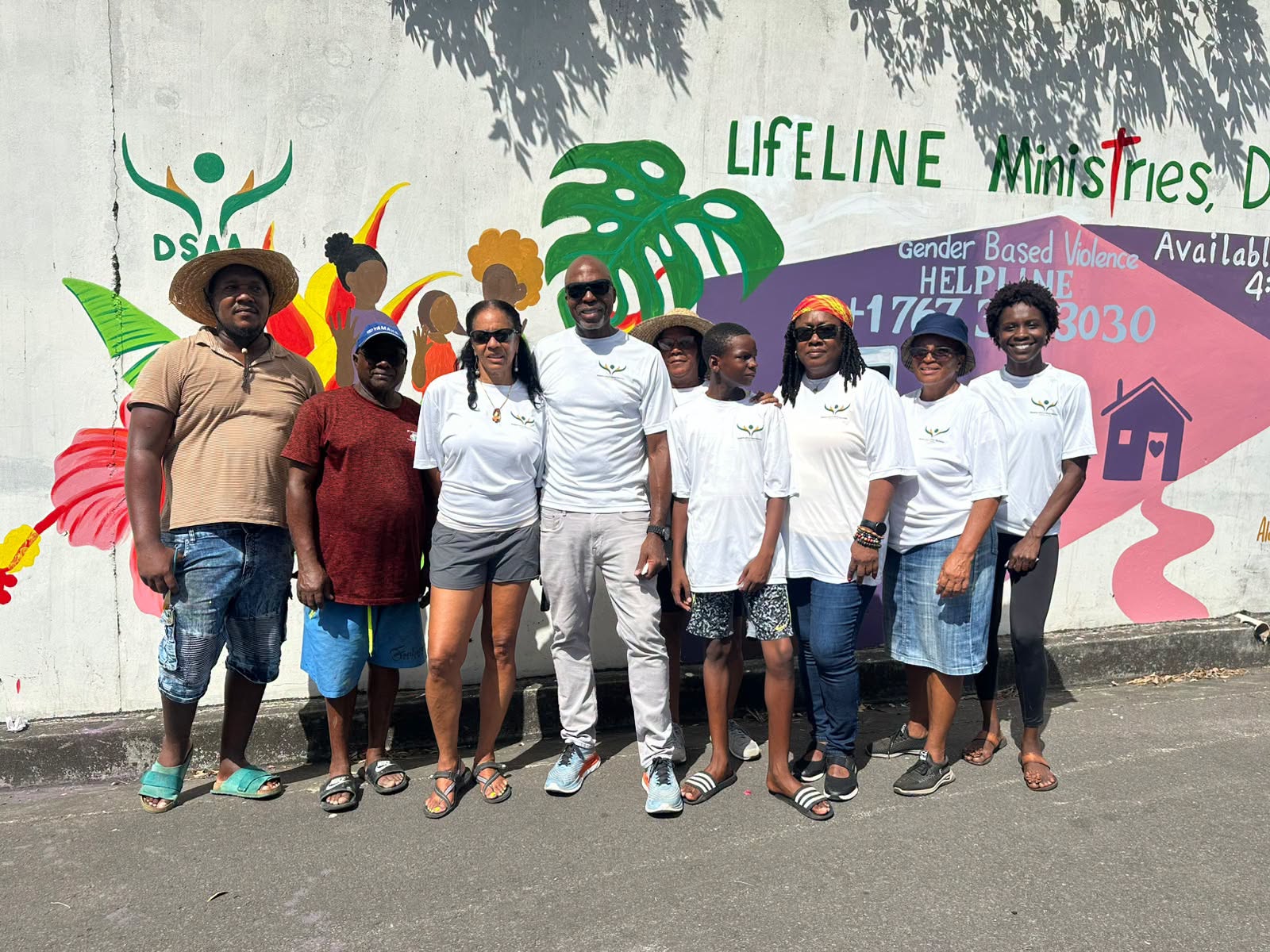
    Against the backdrop of Dominica’s annual National Community Day of Service, a cohort of volunteers from the Dominica State College Alumni Association (DSAA) and current DSC student volunteers joined hands with local faith-based organization Lifeline Ministries to deliver a tangible public welfare upgrade for the Dominica China Friendship Hospital (DCFH) in the capital city of Roseau. The four-hour community service initiative, which ran smoothly from 10 a.m. to 2 p.m., centered on designing and painting a vibrant, uplifting mural for a high-traffic shared public area of the hospital that serves patients, visiting family members, and frontline medical and administrative staff alike. The DSAA’s Membership and Engagement Committee deliberately anchored the mural project to the national service observance, ensuring the association’s efforts aligned with hundreds of parallel community improvement projects unfolding across every parish of Dominica that day. Many of the student volunteers who took part in the hospital mural had previously contributed to the DSAA’s popular “White Sunset with a Hint of Creole” event held the prior October, marking a sustained pattern of ongoing student engagement with the association’s public-focused programming. DSAA President Wayne Liburd emphasized that the collaborative project delivered a meaningful, long-lasting contribution to the hospital and the thousands of local residents who rely on its care services, noting his organization’s pride in partnering with both student volunteers and Lifeline Ministries for the initiative. Dr. Rosette Rabess, DSAA Board Secretary and head of the Membership and Engagement Committee, went on to highlight that the mural was far more than a decorative paint project: it stood as a visible testament to the transformative impact that intergenerational collaboration between college alumni and current students can deliver for grassroots community support. The hospital mural is just one component of the DSAA’s broader 2026 community engagement roadmap, which also includes the upcoming Family and Friends Fun Day at Rosalie River, a ongoing book and stationery donation drive for local primary schools, and additional volunteer opportunities for both alumni and enrolled students. The association has opened a public registration portal for any DSAA alumni interested in participating in future service events at sifocolalumni.raklet.com/Apply, and reaffirmed that active, free membership is open to all current Dominica State College students who have completed at least one full academic year of study at the institution.

  • All Saints Road works to bring single-lane traffic and detours from 7 p.m. Thursday

    All Saints Road works to bring single-lane traffic and detours from 7 p.m. Thursday

    The Ministry of Works for Antigua and Barbuda has issued an official public advisory notifying residents, commuters, and local business operators of imminent large-scale infrastructure upgrades slated for a section of All Saints Road, positioned in the immediate vicinity of the Sunshine Laundromat. Scheduled to kick off at 7:00 p.m. on Thursday, November 5, 2026, the construction initiative will remain in active operation until all project milestones are fully completed. To mitigate disruption to regional mobility, traffic management teams will enforce a single-lane alternating access system across the work zone, alongside clearly marked detour routes for through traffic. Trained flag personnel will be stationed at key access points to coordinate vehicle movement and prevent bottlenecks, while standardized directional signage will be posted along both inbound and outbound stretches of the affected corridor to guide motorists safely around active work areas. Critically, all permanent residents residing within blocks of the construction site will retain full, unrestricted local access to their properties at all stages of the project. Road safety officials are urging all passing motorists to exercise heightened caution, strictly follow posted guidance and on-site staff directions, and account for the presence of heavy construction machinery operating within close proximity to public travel routes. Local authorities have confirmed that every commercial business located along the impacted segment of All Saints Road will remain fully operational throughout the entire construction timeline, with no mandated closures tied to the infrastructure upgrades. This work forms a core component of the government’s broader, multi-phase All Saints Road Project, designed to upgrade longstanding roadway infrastructure to improve long-term safety, durability, and travel efficiency for the surrounding community. All affected stakeholders are being advised to proactively adjust their regular travel schedules to build in extra time for potential minor delays during the construction period. Members of the public with questions or requiring additional project details may place telephonic inquiries directly to the Project Implementation Management Unit at the contact number 562-9173 during standard operating hours.

  • LETTER: You Advertised the Vacancy, Now Tell Applicants When It Has Been Filled

    LETTER: You Advertised the Vacancy, Now Tell Applicants When It Has Been Filled

    Navigating the modern job application journey is a uniquely bittersweet experience for millions of working professionals: each submitted resume encapsulates months of carefully curated career milestones, late nights refining tailored cover letters, and tangible hopes for financial stability, skill growth, and a more fulfilling professional future. But a pervasive, unaddressed pain point continues to erode that optimism for legions of job seekers: the total radio silence from hiring teams long after they hit “submit” on their applications.
    For many candidates, the process of applying for a single role demands significant, uncompensated labor: updating tailored resumes to align with every job requirement, tracking down professional references, compiling portfolios of past work, and often rearranging personal schedules to meet strict application deadlines. All too often, that substantial investment of time and emotional energy is met with zero acknowledgement, no status update, and no confirmation even that the role they applied for has been filled. Weeks stretch into months, leaving candidates in a frustrating limbo, unable to move on fully to other opportunities or make informed decisions about their career next steps, as they endlessly wonder if their submission is still under review, if the hiring process was put on hold, or if the role was awarded to another candidate months prior.
    Advocates for more ethical hiring practices emphasize that this gap in communication does not demand extensive, resource-heavy overhauls for human resources teams. There is no requirement to share granular details about why a candidate was not selected, or to disclose the name or qualifications of the final hire. Even a 2-sentence automated email confirming receipt of an application, or a short, standardized note notifying a candidate that the role has been filled, is enough to demonstrate basic professionalism, respect, and recognition of the hours of effort a candidate poured into their submission.
    The recruitment process is far more than a narrow exercise of selecting the single most qualified person for an open position: it acts as a very public, high-stakes showcase of an organization’s core values, internal culture, and operational standards. How a company treats the hundreds of applicants who do not receive a final offer leaves a permanent, widely shared impression of its management priorities, and can shape how top talent, future customers, and even industry partners perceive the brand for years to come. Crucially, candidates who are not selected for a given opening are rarely unskilled or unqualified: hiring decisions are shaped by a complex web of internal priorities, budget constraints, team dynamic needs, and last-minute role adjustments that have nothing to do with a candidate’s individual merit. A rejection outcome does not justify writing off that candidate as unworthy of basic transparency, especially since many of those rejected applicants may be ideal fits for future open roles at the same organization.
    This call for improved communication is not a demand for special treatment, or a request that HR teams write personalized justifications for every single hiring decision they make. It is a straightforward appeal for baseline workplace courtesy that extends the same respect job seekers are expected to show hiring teams throughout the application process. A job application is never just a generic digital form: it is a physical manifestation of a person’s ambition, their time, their hard work, and their hope for a better future. That level of investment deserves far more than total silence.
    As organizations across every industry increasingly tout their commitments to operational professionalism, transparent governance, workplace accountability, and high-quality stakeholder service, those stated values must not stop at interactions with paying customers or existing employees. They must be embedded into every step of the recruitment lifecycle, too. At the end of the day, no hiring team can extend a job offer to every person who applies for a role — but every single candidate who took time out of their life to submit a thoughtful application absolutely deserves the basic courtesy of a response. Silence should never be the accepted default standard for professional communication in hiring.

  • Labour Department steps into NWU-WASCO wage dispute

    Labour Department steps into NWU-WASCO wage dispute

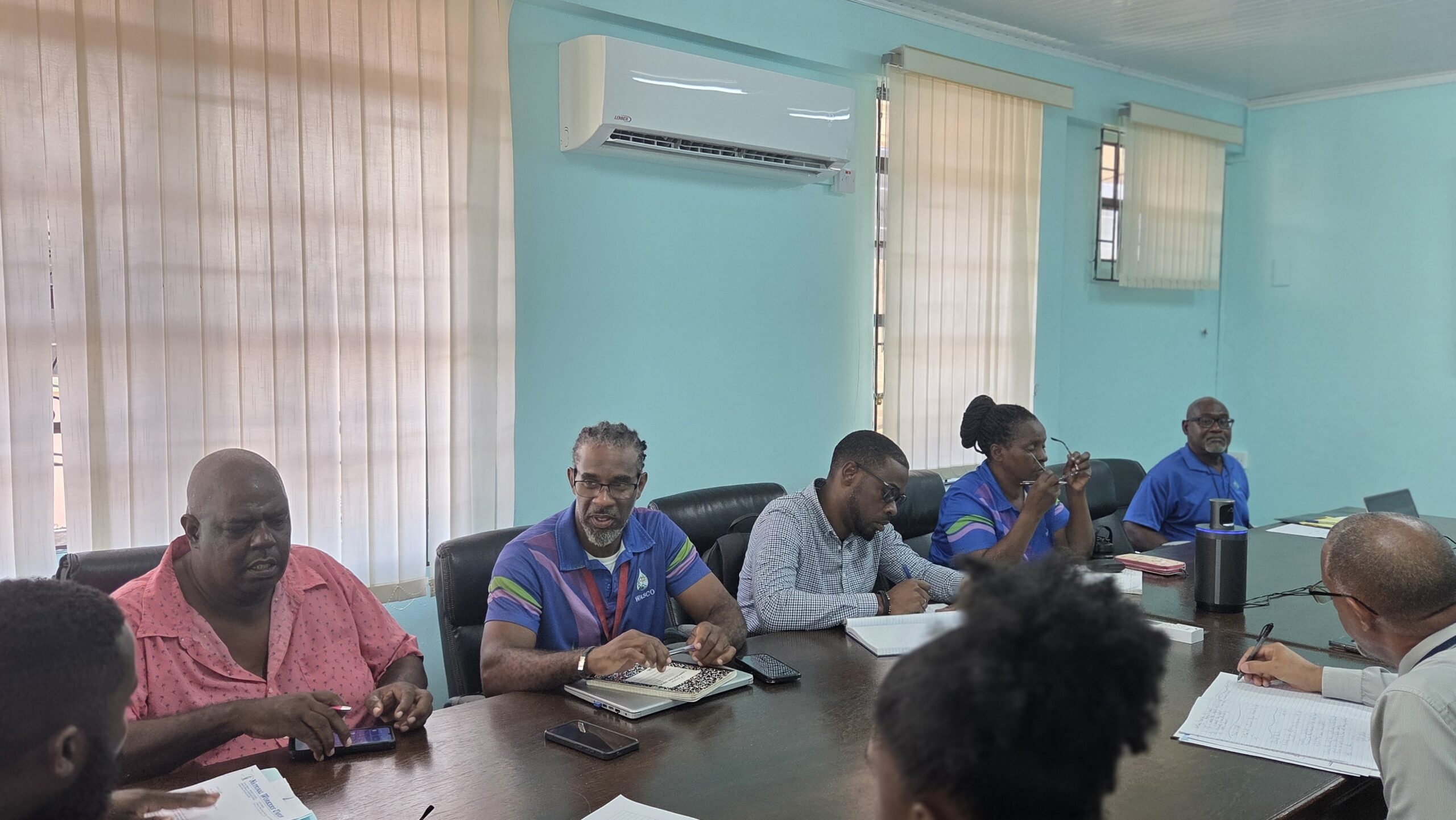
    After extended collective bargaining discussions between the National Workers Union (NWU) and Water and Sewerage Company Inc. (WASCO) collapsed into a full impasse over contested pay adjustment proposals, the Department of Labour has officially stepped in to mediate the stalled negotiations. In an official public statement issued by the department, representatives confirmed that it convened a formal facilitated session for both bargaining parties on October 27, led by Deputy Labour Commissioner Nicolai Lansiquot, to de-escalate tensions and restart constructive dialogue. The core sticking point that derailed earlier rounds of talks is a wage hike proposal tabled by WASCO, which union representatives have rejected as insufficient to meet the needs of their represented members. During the mediated session, the labour department’s facilitation team guided both sides to evaluate a full spectrum of contextual factors to ground their negotiations in pragmatic, mutually respectful terms, including soaring local cost of living metrics, current national inflation rates, the critical public service value of frontline WASCO staff work, and the utility provider’s long-term financial and operational capacity to sustain pay increases without disrupting access to clean water and wastewater services for communities. Department officials emphasized that their core mediation mandate is to forge a fair, sustainable middle ground that honors workers’ legitimate compensation expectations while safeguarding the operational and fiscal stability of the essential public utility. Moving forward, the Department of Labour will develop targeted, evidence-based formal recommendations for both the union and WASCO leadership to review as they resume negotiations to finalize a mutually acceptable collective bargaining agreement.

  • New Bus Association Splits from BBA

    New Bus Association Splits from BBA

    On November 5, 2026, a newly launched collective of independent public transit providers, the United Bus Operators Association (UBOA), formally announced its official split from the longstanding Belize Bus Association (BBA), citing widespread member discontent with the existing industry body as the core catalyst for forming a separate representative entity. The fledgling association already boasts roughly 33 registered members, and UBOA president Michael Frazer confirmed that nearly 70% of its current roster previously held active membership in the BBA.
    Frazer emphasized the new group’s core priorities: partnering constructively with all relevant stakeholders to elevate the overall standard of Belize’s public bus network, and delivering tangible, improved operating conditions for independent transit operators. He extended a public reassurance to commuters across the country that the association’s top operational goal is to deploy a far more reliable fleet of serviceable buses on national routes, and noted that UBOA is actively advocating for targeted government support to turn that vision into reality. Rather than requesting direct cash handouts, Frazer explained, the group is pushing for targeted policy concessions such as full duty exemptions on imported, higher-quality buses to help operators upgrade their fleets sustainably.
    The launch of UBOA unfolds against the backdrop of the national government’s ongoing rollout of its planned National Bus Company (NBC), a public-private partnership framework designed to modernize the country’s public transit ecosystem. Frazer clarified that UBOA has no opposition to the modernization agenda — including the planned introduction of electric buses under the NBC banner — but is advocating for independent operators to be granted equal access to the same support and incentives being extended to the new national entity, rather than being sidelined from sector-wide upgrades.
    Minister of Transportation Louis Zabaneh responded to the emergence of the new association by reaffirming the government’s open, inclusive policy of collaboration with all licensed bus operators, regardless of which industry association they choose to affiliate with. Zabaneh explicitly pushed back against unsubstantiated claims that the government has been prioritizing operators based on political alignment, pointing to the active participation of operators affiliated with the opposition United Democratic Party in the NBC program as concrete proof that the modernization initiative is entirely non-partisan.
    In an official public statement released the same day, the BBA extended a cordial welcome to the new UBOA, but pushed back sharply on the narrative surrounding membership shifts between the two groups. The BBA clarified that its total pre-split membership stood at 31 operators, 17 of whom had joined the NBC partnership program, leaving 14 active members in its ranks. The association argued that only a small handful of smaller, previously inactive members had moved over to UBOA, and revealed that its core active membership had actually grown to 18 operators following its annual general meeting held on November 1, 2026, framing its own position as stronger than ever amid the sector restructuring.

  • NTUCB Condemns Violence Against Woman Officer at San Ignacio Police Station

    NTUCB Condemns Violence Against Woman Officer at San Ignacio Police Station

    On November 5, 2026, the National Trade Union Congress of Belize (NTUCB) issued a formal, strongly worded statement decrying the 2024 incident of non-consensual sexual touching and physical assault targeting female Belize Police Department officer Luanna Gillett at the San Ignacio Police Station, calling for full, meaningful accountability for the harm inflicted on the on-duty public servant.
    The union highlighted that Durman Dawson, a former fellow officer of Gillett, has already been convicted on assault-related harm charges for the attack. The NTUCB emphasized that a person sworn to uphold national laws who perpetrates such violent, degrading acts represents a profound betrayal of personal professional duty, basic human dignity, and the public’s implicit trust in law enforcement institutions.
    The NTUCB sharply criticized the staggering 32-month (two years and eight months) gap between the February 2024 incident and the final conviction verdict, noting that drawn-out, unnecessarily prolonged judicial proceedings amplify the trauma of survivors and steadily erode public faith in the accessibility and timeliness of formal justice systems, a principle the union summed up with the longstanding maxim: “Justice delayed is justice diminished.”
    To ground its demands in global regulatory standards, the NTUCB referenced the International Labour Organization’s 2019 Violence and Harassment Convention (No. 190), which explicitly classifies workplace sexual harassment as a form of targeted gender-based violence that inflicts cascading physical, psychological, sexual, and economic harm on affected workers.
    While the union affirmed full respect for the Belizean judiciary’s independent authority to hand down a lawful, appropriate sentence for Dawson’s conviction, it urged the court to weigh the full severity of the proven offense, documented victim impact statements, and all established aggravating and mitigating factors when determining the final penalty.
    The NTUCB formally declared its full solidarity with Gillett across her intersecting identities as a woman, frontline public worker, and law enforcement officer. The organization also issued a broad call to all employers across Belize, including the Belize Police Department, to implement strengthened, enforceable safeguards against workplace sexual harassment, physical violence, and retaliation against survivors, paired with tangible, practical support systems for workers who experience harm. The union concluded its statement by rejecting common trivializations of workplace abuse, noting that sexual harassment is not a trivial “misunderstanding,” non-consensual physical contact is never acceptable, and misuse of institutional authority is not a privileged entitlement, stressing that gender-based violence against women can never be normalized or excused in any professional setting.

  • COMMENTARY: In Response to Philosopher-At-Large, Kenny Green

    COMMENTARY: In Response to Philosopher-At-Large, Kenny Green

    In a detailed public response addressing recent claims made by prominent local commentator Kenny Green, self-styled “Philosopher-At-Large”, former Dominica Association of Industry and Commerce (DAIC) board member Yvor Nassief has laid out the full context behind his recent resignation, rejecting allegations that he orchestrated the departure of former DAIC President Olive Strachan to install Vice President Tahera Musgrave Robinson in the top role. Nassief emphasized his choice to step down was a personal, principle-driven decision, rooted in what he described as repeated institutional inaction and fecklessness under Strachan’s leadership that undermined the private sector’s core interests. At the core of Nassief’s grievances was the botched 2026 electoral voter list rollout, which confirmed that as of October 14, 2026, only 60% of the total number of voters who cast ballots in the 2019 general election were registered to participate in upcoming polls. Nassief noted that a cross-party 3-month extension to complete the voter registration process was a reasonable, widely supported request among all DAIC board members with the sole exception of Strachan, who refused to sign any formal advocacy letter on the matter. He also clarified that the letter requesting the extension was neither written nor signed by Gregor Nassief, a point Green had previously misrepresented. Nassief went on to outline three high-profile incidents that cemented his decision to resign. First, he criticized the DAIC leadership’s refusal to push back against widespread public misinformation that the government’s 2026 budget decision to end cascading VAT on excise taxes would lower prices for most basic goods – a claim Green had amplified, which Nassief said created a false public expectation that would later be weaponized to unfairly paint the private sector as greedy for failing to deliver non-existent savings. Second, Strachan declined to advocate for strict protections for AID Bank client confidentiality after the Prime Minister publicly referenced sensitive borrower data in public remarks, a move Nassief argued violated fundamental financial privacy norms. Third, Nassief raised alarm seven months prior to his resignation over an un-tendered consultancy contract awarded to a firm linked to a sitting government minister for the Saudi-funded Roseau Improvement Project, a arrangement he decried as “incestuous and plantation-style”, noting the DAIC board under Strachan refused to launch even a basic inquiry into the procurement process. Pushing back against Green’s framing of Strachan’s MBE honor from Queen Elizabeth as an unimpeachable, above-reproach credential, Nassief dismissed the argument as a relic of outdated plantation-era mentality, noting his own family had arrived in Dominica 100 years after the abolition of slavery, with his Lebanese immigrant grandfather among the first local merchants to sell affordable footwear to rural residents and extend fair credit to small rural shopkeepers, lifting living standards for communities long neglected by the old Roseau merchant class. He also called out Green, a former DAIC president himself, for remaining silent during a previous scandal where then-Tourism Minister Robbie Tonge stayed in office even after the collapse of his family-owned First Domestic insurance firm left dozens of local hoteliers unable to access payouts to rebuild storm-damaged properties. Rejecting Green’s framing of a “politically agnostic” chamber as one that avoids public confrontation with the government, Nassief argued true neutrality means advocating for private sector interests “without fear or favor” across all branches of government, opposition, and civil society, rather than burying one’s head in the sand to avoid rocking the boat. He concluded that Green’s attempt to smear his motives and discredit current DAIC leadership was “cheap and shameful”, noting that only the DAIC board and Strachan herself could explain the circumstances of her subsequent resignation, not outside commentators seeking to discredit legitimate internal governance debates.