分类: society

  • Areas of daily traffic pain

    Areas of daily traffic pain

    A comprehensive parliamentary investigation has revealed severe systemic failures in Trinidad and Tobago’s traffic management system, with Wrightson Road in Port of Spain emerging as a critical pain point. The Joint Select Committee’s final hearing on traffic efficiency uncovered multiple dimensions of the transportation crisis affecting major corridors across the nation.

    The inquiry identified several problematic zones including Chaguaramas, the southbound lane of Uriah Butler Highway, and various districts in South Trinidad and Chaguanas. Committee member Phillip Alexander highlighted the daily gridlock on Wrightson Road between 3-6 PM, demanding accountability from the Port Authority of Trinidad and Tobago (PATT) regarding its impact on traffic flow.

    Alexander proposed strategic interventions including staggered port operating hours, scheduled heavy vehicle movements, and enhanced collaboration with business stakeholders. He specifically recommended restricting trucks over five tonnes during peak periods and implementing gate closures at strategic times.

    Port of Port of Spain acting CEO Candice Baptiste defended the facility’s operations, revealing that 92% of truck movements occur outside peak hours with an average throughput of 17 trucks hourly. Baptiste cautioned against rigid scheduling, emphasizing the port’s role as an interconnected ecosystem that cannot control cargo reception timelines. She warned that restrictive measures might impose additional costs on businesses and logistics providers.

    Transport Ministry engineers presented a broader perspective, identifying Chaguaramas port operations and seasonal festival traffic as compounding factors. Chief Engineer Anande Piggott described Chaguanas as a particularly complex case where commercial growth has dramatically outpaced road infrastructure development. The proliferation of unauthorized taxi stands emerged as a persistent challenge, with relocation efforts often disadvantaging vulnerable commuters and students.

    Transport Commissioner Clive Clarke attributed the crisis to deficient development planning, noting that road infrastructure has failed to keep pace with commercial expansion and vehicle population growth. He emphasized that strengthened law enforcement, including rigorous driver licensing and vehicle inspections, could significantly alleviate congestion.

    Officials acknowledged institutional challenges including staffing shortages that hamper inter-agency coordination. The ministry emphasized ongoing efforts to modernize transportation infrastructure through police collaboration and public consultation processes. Chief Traffic Warden Neville Sankar revealed critical manpower deficiencies, noting complete absence of traffic wardens in Tobago and insufficient coverage in Trinidad.

    The committee concluded that solving Trinidad’s traffic woes requires multi-faceted approaches addressing infrastructure deficits, enforcement mechanisms, and behavioral changes among motorists.


  • Red Cross expands emergency coverage for Holy Week 2026

    Red Cross expands emergency coverage for Holy Week 2026

    SANTO DOMINGO – In a major preparatory move for Holy Week 2026, the Dominican Red Cross, under the leadership of Bruno Benítez, has unveiled an unprecedented national safety initiative dubbed ‘Operation Awareness for Life.’ The comprehensive plan will deploy over 10,000 trained personnel across the nation to bolster emergency response capabilities during one of the country’s busiest travel periods.

    The operation’s infrastructure will be extensive, featuring a network of 790 strategically positioned first aid stations. Approximately 350 of these units will be established along highways and major thoroughfares, with additional stations deployed at popular beaches, toll plazas, and other identified high-traffic zones. To enhance coordination, authorities are establishing specialized provincial command centers. These hubs are designed to drastically improve emergency response times, streamline information management, and facilitate region-specific crisis control measures.

    Benítez emphasized the holistic integration of all operational tiers, noting that coordination centers, specialized crisis management teams, and robust communication networks will work in unison to guarantee real-time emergency intervention. Furthermore, he confirmed that the organization’s critical blood bank services will maintain full operational capacity throughout the holiday period. Beyond blood collection, Benítez took the opportunity to highlight the Red Cross’s broader mandate, which encompasses emergency medical care, large-scale disaster response, and community-based programs aimed at building long-term public resilience.

  • Government unveils Puerto Plata land use plan, Cable Car upgrade

    Government unveils Puerto Plata land use plan, Cable Car upgrade

    PUERTO PLATA – In a significant announcement at the Puerto Plata Business Forum 2026, Minister José Ignacio Paliza revealed comprehensive development initiatives for the region, centering on a new Municipal Land Use Plan designed to foster sustainable urban expansion. This strategic blueprint aims to promote compact city development, safeguard natural resources, and enhance the quality of public services for residents.

    Complementing this urban vision, the government is set to initiate a tender process for the modernization of the iconic Puerto Plata Cable Car system. The planned upgrades are projected to significantly increase its passenger capacity and drastically reduce travel time, boosting both tourist accessibility and local transportation efficiency.

    Minister Paliza positioned these local projects within the broader national framework of the ambitious Meta RD 2036 plan. This national strategy targets a doubling of the Dominican Republic’s economy within a ten-year horizon. Paliza presented compelling economic indicators to underscore current momentum, including a national workforce exceeding 5.1 million people, the creation of 133,000 new jobs in 2025 alone, declining poverty metrics, and a substantial influx of foreign investment surpassing US$5 billion.

    Highlighting Puerto Plata as a paradigm of this national development model, Paliza cited the multifaceted Punta Bergantín project. This large-scale development encompasses luxury hotel accommodations, a new academic campus, and a state-of-the-art film production studio. Further underscoring the commitment to infrastructure, he detailed the Amber Highway project, a new transport corridor engineered to connect Santiago and Puerto Plata in under thirty minutes.

    Government authorities emphasized that these interconnected initiatives represent a cohesive, long-term strategy to elevate the nation’s global competitiveness, stimulate sustained economic growth, and fundamentally improve the quality of life for its citizens by the target year of 2036.

  • Mandatory dashcams, GPS for PSVs, AG urges

    Mandatory dashcams, GPS for PSVs, AG urges

    In a decisive parliamentary address during the Budget debate, Barbados Attorney General Wilfred Abrahams issued a forceful call for stringent new safety regulations requiring all public service vehicles (PSVs) to install dashboard cameras and GPS tracking systems. The Christ Church representative emphasized that previous governmental efforts to reform the sector through voluntary engagement had proven insufficient against persistent road safety violations and disciplinary breaches.

    Abrahams articulated growing concerns about escalating violence and dangerous driving practices within the transport sector, positioning these issues within broader national anxieties about public safety and criminal activity. “The hot topic is violence and criminality and trying to get Barbados back to what we know it’s supposed to be,” he stated, noting that the PSV sector increasingly operates under a “philosophy that the laws do not apply to us.”

    The Attorney General detailed the Mia Mottley administration’s exhaustive efforts to foster cooperation through dialogue, education, and negotiation. “We have talked about it for a long time. We have tried to encourage, we’ve tried to engage, we’ve tried to educate, we’ve tried to negotiate,” Abrahams recounted. “Nobody can now say that the government has not bent over backwards to meet the PSV sector where it is.”

    With voluntary measures failing to produce adequate compliance, Abrahams asserted that mandatory technological oversight represents the necessary next step. He specified that vehicles should be equipped with dual-facing cameras (forward and backward) alongside GPS tracking to ensure comprehensive accountability throughout operators’ routes. “They must be accountable for the persons they have in that van from the time they leave on their route to the time that they come back,” he emphasized.

    While carefully avoiding blanket condemnation of PSV operators, Abrahams maintained that the sector had reached an inflection point where regulatory enforcement had become unavoidable. “I am not laying blame… up to this point in time, we have tried,” he concluded, signaling a shift from persuasive approaches to mandatory compliance requirements.

  • Conflicting Details Cloud Fatal Camalote Shooting

    Conflicting Details Cloud Fatal Camalote Shooting

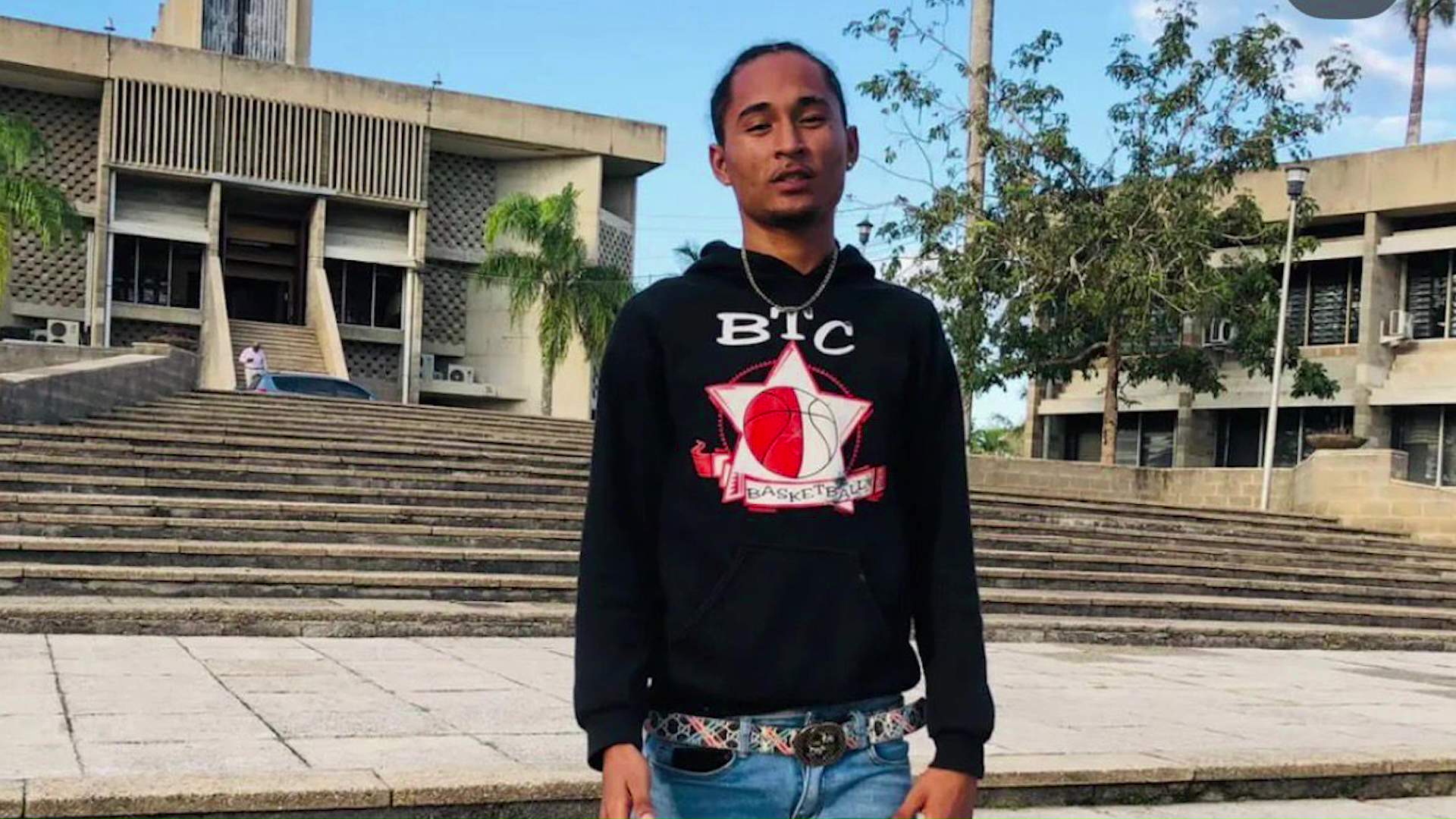
    A cloud of uncertainty hangs over Camalote Village, Belize, as police investigators work to unravel the contradictory circumstances surrounding the fatal shooting of 20-year-old Andy Suazo on Tuesday afternoon. The young call center employee’s sudden death has left his mother, Andrea Azueta, grappling with profound grief while desperately seeking answers about her son’s final moments.

    According to authorities, the central mystery revolves around whether Suazo’s gunshot wound was self-inflicted or resulted from criminal activity. The investigation continues as conflicting narratives emerge from the scene where Suazo was socializing before his death.

    In an emotional interview, Azueta recounted her son’s final hours, describing how he had unexpectedly called to say he would spend the night with her—an unusual occurrence that now carries haunting significance. The family had spent the morning together purchasing produce and preparing lunch, including Suazo’s favorite fish dish, before he briefly left with promises to return for the meal.

    Suazo, a 2023 high school graduate described by his mother as an ‘overachiever,’ had shown particular promise in music composition and recording. His original song entitled ‘Momma,’ which detailed their family’s struggles and resilience, has become a painful reminder of his unrealized potential and the dreams that died with him.

    While many grieving families demand justice, Azueta’s plea is singularly focused on truth. ‘All mothers will get up here and say they want justice. I don’t want justice. All I want is the truth,’ she stated, emphasizing her need for closure regardless of the investigation’s outcome.

    The Belize Police Department continues to piece together the events leading to Suazo’s death as the community mourns the loss of a young man remembered for his bright future and musical talents.

  • Belize Recognizes Fourteen Outstanding Women

    Belize Recognizes Fourteen Outstanding Women

    BELIZE CITY – In a vibrant celebration of female empowerment, Belize recognized fourteen exceptional women during the 21st Outstanding Women’s Awards Ceremony on March 18, 2026. The National Women’s Commission highlighted these leaders for their transformative contributions to national development across education, entrepreneurship, and youth advocacy.

    The ceremony, a cornerstone of Women’s Month observances, adopted the compelling theme “Balance the Scales,” emphasizing the ongoing pursuit of gender equality and equitable opportunities nationwide. What began as a modest recognition program has evolved into a comprehensive platform showcasing the expanding influence of women’s leadership throughout Belizean society.

    This year’s awards signaled a significant generational shift, with five young recipients demonstrating that impactful leadership transcends age boundaries. Among them was sixteen-year-old Kallij Pop, recognized for her advocacy work in children’s rights and autism awareness. “As a young woman, I believe it’s crucial that our opinions and ideas are shared with the world,” Pop stated, reflecting on her international exchange experience that informed her community projects.

    Thea Garcia-Ramirez, Minister of Human Development and Gender Affairs, praised the commission for maintaining this tradition of honoring women’s contributions to Belizean development. “The categories have evolved to recognize women from specific sectors, including the girl child category which highlights emerging leaders,” she noted.

    Executive Director Eleanor Murillo emphasized the significance of this year’s youth representation: “Having five young awardees demonstrates that not only women but our young girls are doing exceptional work within their communities.”

    Special Envoy Rosanna Briceño underscored the importance of recognizing often-overlooked contributors: “Countless women perform vital work quietly without recognition. This ceremony brings together these unsung heroes from across the country and acknowledges their profound impact.” Briceño also hinted at future inclusivity, expressing hopes to eventually recognize men who support gender equality initiatives.

    The event served as both a celebration of achievement and a call to action, encouraging continued efforts toward removing barriers and investing in Belize’s next generation of leaders. The awards ceremony reinforced the nation’s commitment to creating environments where both women and men can flourish equally.

  • Thea Answers Corozal Civic Center Critics

    Thea Answers Corozal Civic Center Critics

    COROZAL — A contentious debate has erupted regarding the state of the Corozal Civic Center, with local residents expressing outrage over its deteriorating condition barely a year after a substantial $115,000 renovation project. The facility’s apparent decline has prompted serious questions about the effectiveness and value of the recent repairs.

    Area Representative Thea Garcia-Ramirez has mounted a vigorous defense against mounting criticism. She contends that critics fail to appreciate the severely dilapidated condition her administration inherited from previous leadership. According to Garcia-Ramirez, the building required comprehensive structural rehabilitation far beyond superficial improvements.

    The funding structure itself reveals a collaborative effort: $100,000 originated from Belize Water Services (BWS) while the remaining $15,000 was raised through community initiatives including traditional food sales and raffle events organized by concerned Corozalenos.

    Detailing the extensive work completed, Garcia-Ramirez explained that the project addressed critical structural issues including rusted support beams that required sandblasting, replacement, and repainting. The renovation encompassed complete interior and exterior painting, plumbing system overhauls, and bathroom refurbishments alongside roof repairs.

    “When the fundamental structure of a building is compromised, $115,000 represents merely a drop in the bucket,” Garcia-Ramirez stated. “This allocation couldn’t possibly deliver a brand new facility. While the results aren’t perfect, they represent the optimal outcome achievable within our constrained resources.”

    The official emphasized her commitment to maintaining operations through whatever means available until comprehensive reconstruction becomes feasible, rejecting suggestions that no action should have been taken without sufficient funds for complete replacement.

  • Coalition opposes prison project on Beata Island

    Coalition opposes prison project on Beata Island

    SANTO DOMINGO – A formidable environmental alliance has issued a stern rejection of legislative proposals to construct a massive penitentiary facility within the ecologically sensitive Beata Island, declaring such development would constitute both legal violations and severe ecological harm.

    The Coalition for the Defense of Protected Areas emphasized that the island forms an integral component of Jaragua National Park, among the nation’s most significant conservation zones. This designation renders any construction activity fundamentally incompatible with existing environmental statutes and constitutional provisions safeguarding natural heritage. Coalition representatives characterized the initiative as fundamentally contradictory to national conservation strategies, potentially meeting the legal threshold for environmental criminal offenses.

    Currently under consideration in the Dominican Republic’s Chamber of Deputies, the controversial legislation proposes establishing a ‘model correctional facility’ designed to accommodate approximately 10,000 inmates. Environmental experts highlight that protected territories receive explicit constitutional protection as inalienable and inviolable lands, creating insurmountable legal barriers to such development projects.

    In their decisive response, the coalition has urgently appealed to governmental authorities, legislative bodies, and civil society to collectively oppose the initiative. They caution that advancing this project would establish dangerous precedents while directly threatening the country’s fragile ecosystems and the foundational legal architecture supporting environmental preservation efforts. The group demands immediate withdrawal of the proposal to prevent irreversible damage to one of the Caribbean’s most biodiverse regions.

  • Griffith: New parenting models needing

    Griffith: New parenting models needing

    In a compelling address at the National Parenting Seminar, Barbados’ Minister of Youth, Sports and Community Empowerment Charles Griffith issued a powerful appeal for a fundamental reimagining of parenting strategies across the nation. The event, organized by the Community Development Department at the Hilton Barbados Resort, brought together social workers, educators, and child development advocates to address critical challenges in contemporary parenting practices. Minister Griffith challenged attendees to develop innovative approaches that engage future parents long before they assume parental responsibilities, marking a significant departure from conventional reactive models. Drawing from his ministerial experience, Griffith highlighted disturbing patterns among at-risk youth, questioning why intervention efforts often occur too late in adolescent development. He invoked the wisdom of a former colleague’s observation that ‘it is easier to bend a child than to break a man,’ emphasizing the superior effectiveness of preventive measures over corrective actions. The minister stressed the crucial importance of emotional connectivity within families, sharing his personal practice of concluding every conversation with his 36-year-old son with affirmations of love—a experience many Barbadian youth have never encountered. Griffith particularly emphasized the necessity of involving fathers beyond biological contributions, warning against the reduction of men to mere ‘sperm donors’ in family structures. He further cautioned that traditional seminar-based approaches would likely prove insufficient, urging development of ‘totally new concepts’ to reach individuals grappling with parenting challenges in their daily lives.

  • Mother Seeks Truth After Son Dies in Shooting

    Mother Seeks Truth After Son Dies in Shooting

    A community in Camalote Village is grappling with uncertainty following the tragic death of Andy Suazo, a young man fatally wounded in a shooting incident under mysterious circumstances. The event occurred while Suazo was socializing with a friend on a local property, where a firearm discharged and struck him in the upper torso. Despite being rushed to medical facilities, Suazo succumbed to his injuries.

    Law enforcement authorities have launched a comprehensive investigation to determine whether the shooting resulted from accidental discharge or self-inflicted action. The absence of clear answers has compounded the grief of those closest to the victim.

    At the heart of this tragedy stands Andrea Azueda, Suazo’s mother, who raised him primarily as a single parent since becoming a mother at age fifteen through a high-risk pregnancy. She remembers her son as a humble and intellectually gifted individual with profound musical talents—a young artist who composed original songs, including one that poetically documented their life journey together.

    Azueda recounts spending quality family time with her son during what would become their final hours together, completely unaware of the impending tragedy. Rather than demanding punitive justice, she emphasizes her desperate need for closure and transparency. “All I want is the truth,” she stated. “I want answers… If it was an accident, if it was self-inflicted, whatever. Because a dead man tells no tale.”

    The bereaved mother has made a heartfelt public appeal for anyone present during the incident to come forward with information that might provide clarity regarding her son’s untimely death.