分类: society

  • Anika Chadee from Piparo among 11 detained

    Anika Chadee from Piparo among 11 detained

    In a move timed alongside parliamentary debate over a three-month extension of the country’s state of emergency, Trinidad and Tobago’s state authorities have issued 11 new preventive detention orders (PDOs) targeting alleged members and leaders of transnational and local organized criminal networks. The orders, covering legal notices 410 through 420, were published shortly before 8 p.m. on Wednesday, and bear the signature of Homeland Security Minister Roger Alexander, in full compliance with Paragraph 2 of the Schedule to the 2026 Emergency Powers Regulations.

    Under Regulation 14 of the same legislation, PDOs are authorized to hold individuals preventively when intelligence indicates their actions would threaten public safety. The signatures on the 11 new orders were finalized between May 19 and June 5 of this year. All 11 detainees have been publicly identified by authorities: Akeem Cole, Akino Warner, Akeema Ferguson, Eric Goring, Wayne Havelock, Curtis Isaac, Jasiniho Boneo, Nicholas Sumner, Mark Williams, Shane Dindial, and Anika Chadee. Two of the 11 detainees are women, while three are accused of holding top leadership positions in their respective criminal operations.

    According to official legal notices, all detainees are tied to organized criminal groups active across multiple Trinidadian districts, including Port of Spain, Morvant, Tunapuna, Central Trinidad, Claxton Bay, Couva, Chaguanas, Gasparillo, Marabella, and Piparo. The two women detained face specific, serious allegations tied to enabling violent criminal activity. Akeema Ferguson, also known by the alias “Kima” and a resident of Longdenville and Edinburgh 500, is accused of providing real-time surveillance intelligence to a criminal syndicate during armed home invasion operations across Central Trinidad. The second woman, Anika Chadee of Piparo, is alleged to have participated in a criminal group’s plots to acquire additional firearms and carry out a public attack, after authorities previously seized a weapon and ammunition from her home.

    Three detainees are flagged as senior gang leaders. Akino Warner, widely known as “Boogsie”, is named as the head of the notorious Bayshore 3 Gang. Wayne Havelock, who uses multiple aliases including “Joey” and “Haveblock”, is identified as the leader of a large-scale organized criminal group and narcotics trafficking network active across Claxton Bay, St Margaret’s, Couva, and Chaguanas. Shane Dindial, also of Piparo, is the third accused leadership associate, with a prior history of murder investigation and a recent offense of illegal firearm possession; intelligence indicates he was seeking to acquire a second weapon to carry out a public attack.

    Multiple other detainees are described as armed enforcers or shooters for their respective gangs. Eric Goring of St Joseph is an alleged enforcer for the Bangladesh Gang, a group linked to shootings, assaults, home invasions, and drug and firearms trafficking. Goring is also accused of participating in targeted attacks against rival gang factions. Curtis Isaac, also known as “Donkey” and “Road” from North Malick, Morvant, serves as an armed shooter and enforcer for the Seven Gang, and is accused of patrolling rival territory, protecting gang turf, and targeting opposing members amid ongoing violent conflict in the Morvant area. Jasiniho Boneo, alias “Elmo” of Tunapuna, is named as a core operative and armed enforcer for the ABG Resistance group, and is tied to a March 22 armed crime spree across Tunapuna and El Dorado, as well as a plot to target a commercial establishment near the Tunapuna Market.

    Lower-ranking gang members facing detention include Akeem Cole, a member of the 6 Gang based in Clifton Towers, Mt Hope, and East Dry River. The 6 Gang is accused of running extortion rackets, trafficking narcotics and illegal firearms, carrying out armed robberies, and plotting retaliatory attacks against its bitter rival, the Seven Gang, following the killing of a 6 Gang member known as “Dappa Six”. Nicholas Sumner (alias “Izy” and “Mr Spin It”) and Mark Williams are both listed as members of the SIXX Gang operating out of East Dry River, a syndicate linked to armed robbery, motor vehicle theft, and firearms offenses. The two men are accused of planning new armed robberies to raise funds for ongoing gang operations and support for members already incarcerated.

    Havelock, the Claxton Bay-based network leader, faces particularly severe allegations: authorities claim he oversees a smuggling operation that uses maritime routes, mangrove channels, and unregistered vessels to move narcotics and firearms across borders. He is also accused of authorizing contract killings and retaliatory attacks against both rival gang members and law enforcement officers. His counterpart Warner, leader of Bayshore 3 Gang, is tied to both local and international trafficking of narcotics and firearms, with intelligence linking his network to a recent large-scale narcotics seizure intended for both domestic and international distribution.


  • Beyond Sustainability: OECS launches communications campaign

    Beyond Sustainability: OECS launches communications campaign

    With the official implementation phase of the Organization of Eastern Caribbean States (OECS) Programme for Educational Advancement and Relevant Learning (PEARL) scheduled to conclude on 30 June 2026, the OECS Commission has announced the launch of a new Communication for Development (C4D) initiative named *The OECS PEARL Legacy*.

    Over the course of its implementation, the PEARL initiative has delivered transformative progress across the region’s education sector: it has upgraded critical educational infrastructure, updated outdated curricula to meet modern learning standards, overhauled frameworks for Special Education Needs (SEN) and Early Childhood Education (ECE), and built robust digital learning ecosystems accessible across all participating member states. Now, the new C4D campaign marks a strategic shift from centralized regional project management to a grassroots, community-driven social movement, formally handing ownership of the initiative’s gains to residents of the eight OECS member states that have participated in PEARL. The core goal of this transition is to mobilize key education stakeholders to lead continued, organic evolution of the regional education system.

    Targeting a broad cross-section of education actors—including national policymakers, administrative and technical education leaders, school principals, classroom teachers, parents, and primary caregivers—the campaign does not only aim to secure the long-term sustainability of PEARL’s existing achievements. It also seeks to catalyze a broader regeneration of Eastern Caribbean education, enabling the system to grow and thrive from the ground up, led by the communities it serves.

    The C4D strategy centers on six high-priority interventions designed to embed and expand PEARL’s impact. First, it works to empower national education leaders to translate regional education frameworks into local policy and everyday classroom practice. Second, it prioritizes protecting frontline educators from professional burnout by actively promoting the “de-implementation” of low-impact, non-essential administrative tasks that drain educator time and energy. Third, it positions the OECS Learning Hub—home to the OECS Harmonised Primary Curriculum—as a culturally attuned, high-quality educational resource for regional classrooms, encouraging students and teachers to use learning tools designed specifically for the Eastern Caribbean context rather than relying on generic, one-size-fits-all artificial intelligence alternatives. Fourth, it advocates for long-term sustained fiscal prioritization of ECE, SEN, and curriculum and assessment reform, to ensure every child across the region has an equitable opportunity to succeed. Fifth, it reframes high-stakes national and regional diagnostic assessments as routine “educational health checks”—tools for growth that are non-punitive and essential to improving learning outcomes—to reduce widespread anxiety around these evaluations. Sixth, it works to secure the long-term future of the MyPD teacher professional development platform by highlighting its direct, measurable impact on broader social progress across the region.

    To reshape how member state institutions and local communities perceive and support the future of regional education, the campaign deploys a diverse suite of targeted communication resources. These range from visual tools such as branded posters and data-driven infographics to multimedia content including educational videos and live online interactive broadcasts. It will also roll out strategic stakeholder surveys, regular stakeholder newsletters, and official press releases to keep communities and partners updated.

    Running across June, July, and August 2026, the campaign’s messaging will be distributed through a mixed network of traditional and digital channels to maximize accessibility for all stakeholders. Distribution channels include in-person community and stakeholder meetings, email outreach, major social media platforms, regional radio and television broadcasts, and local print newspapers.

    Preparations are currently underway for the official PEARL project closeout conference, scheduled to take place in St. Lucia from 24 to 26 June 2026, alongside additional upcoming engagement and information events. The OECS Commission has encouraged all education stakeholders across the region to follow official OECS social media platforms, as well as the social and official channels of local Ministries of Education, for the latest updates on upcoming opportunities. The commission also extends an open invitation to media organizations, independent journalists, and members of the public to participate in this historic transition of regional education leadership.

  • Ministry of Education actively resolving teacher salary delays

    Ministry of Education actively resolving teacher salary delays

    A public dispute over persistent teacher salary delays has emerged in Grenada, after the president of the Grenada Union of Teachers (GUT) accused the Ministry of Education of failing to resolve long-standing payment irregularities for the country’s educators. In an official response delivered at a post-Cabinet press briefing this Wednesday, Permanent Secretary for Educational Administration Lorraine St Louis-Nedd pushed back on the criticism, reaffirming that the government views teachers as a core priority and is working aggressively to clear all outstanding pay issues.

    The conflict centers on a list of affected educators submitted by GUT to the ministry on May 19, 2026, which identified 17 teachers experiencing salary gaps between September 2025 and April 2026. St Louis-Nedd clarified a key detail that counters initial framing of the issue: none of the teachers on the list have been completely removed from the national payroll, and all currently receive regular pay. The problems instead involve missed installments or partial payments across specific pay cycles.

    After receiving the GUT’s submission, the Ministry of Education launched a full joint audit with the Ministry of Finance, the Accountant General’s Division, and local financial institutions to resolve each case. By the time of the briefing, 11 of the 17 flagged issues had already been fully resolved, with six of those settled before the union formally submitted its list. Four additional cases are currently in active processing and are projected to be finalized during the first June pay cycle. The two remaining cases involve more complex administrative errors, but officials expect to clear those by the end of June.

    St Louis-Nedd explained that salary processing is a multi-agency responsibility in Grenada, meaning the Ministry of Education does not directly issue teacher pay. The appointment and payroll workflow also involves the Department of Public Administration, the Public Service Commission, and the Ministry of Finance, creating multiple points where errors can occur. The audit identified four main root causes for the delays: incorrect banking information leading to misdirected payments, administrative backlogs in processing new appointments, technical system errors, and incorrect salary classification that placed educators on the wrong pay grade.

    Four of the outstanding cases stemmed from payments sent to incorrect bank accounts, a mistake that can happen either from data entry errors or inaccurate information submitted by the employee. Recovering misdirected funds requires coordination between the Accountant General’s Division and local banks before a corrected payment can be issued to the affected teacher. St Louis-Nedd highlighted one particularly complex case where a misdirected payment was spent by the unintended recipient, who could not be immediately located to recover the funds, leading to extended delays.

    Beyond the 17 cases flagged by GUT, the ministry also acknowledged that six new teachers hired earlier in 2026 have not yet begun receiving salaries. St Louis-Nedd confirmed that all required processing steps are underway, and those educators can expect to receive their first pay checks this month.

    The briefing also addressed the rollout of a recently negotiated 4% salary increase for all teachers, agreed to as part of a collective bargaining agreement signed in March 2026. The increase was originally scheduled to take effect in January 2026. To date, payroll records show that only one teacher has not yet received the base pay increase, which is expected to be issued in the next pay cycle. Forty-seven teachers are still waiting for retroactive pay covering the period from January to the present, out of a total of nearly 1,700 teachers across the system. All of those outstanding retroactive payments are projected to be settled by the end of June.

    To prevent similar delays from occurring in the future, the government has introduced two new procedural changes. The Ministry of Education has launched a dedicated Employee Payroll Issue Reporting Form, which allows teachers to submit claims of pay discrepancies directly via email to a dedicated ministry inbox, where specialized staff will review claims and provide regular status updates. The Ministry of Finance has also added a new bank account validation requirement for all new appointments and requests to change banking details. Employees must now submit official bank documentation that includes their full name, address, and active account number; teachers with online banking can submit downloaded account information instead of visiting a bank branch in person to get physical documentation.

    Looking forward, St Louis-Nedd said the ministry has secured Cabinet support to work across relevant government departments to streamline end-to-end administrative workflows, specifically targeting long delays that have historically affected the pay of newly hired and reappointed teachers. “Historically, lengthy delays for new entrants to the profession were accepted as the norm, but that is clearly no longer acceptable,” she stated.

    The ministry concluded by emphasizing its commitment to supporting Grenada’s teaching workforce, noting that educators are central to the country’s long-term national development. Officials reiterated that they are on track to resolve every outstanding salary issue within the announced timelines, and the new reporting and validation processes will reduce the frequency of future pay irregularities.

  • Suriname geeft kinderarbeid ‘rode kaart’

    Suriname geeft kinderarbeid ‘rode kaart’

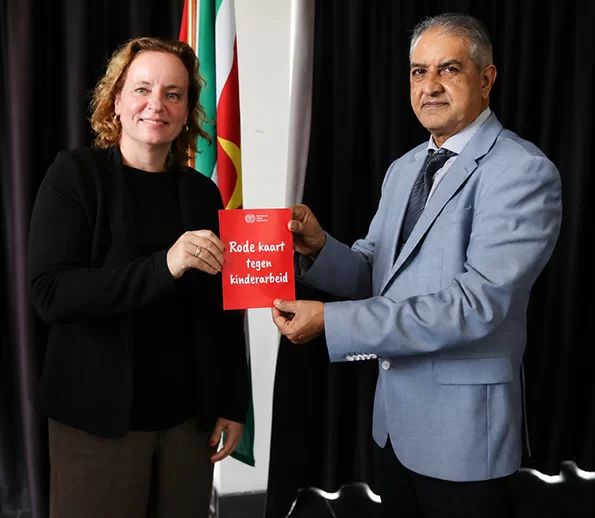
    On June 12, the annual World Day Against Child Labor, Suriname has launched a nationwide call to action, urging all sectors of society to show a symbolic ‘red card’ to the exploitative practice of child labor. Centered around the campaign theme ‘Red Card Against Child Labor’, this initiative aims to galvanize public attention around protecting children from economic exploitation and work that undermines their physical, cognitive and social development.

    In an official press statement released by the Welfare and Labor Directorate under Suriname’s Ministry of Health, the symbolic red card is defined as a clear, uncompromising rejection of all forms of child labor that strip children of their right to education, stunt their growth, and rob them of the carefree childhood every young person is entitled to. A public photograph released alongside the announcement shows Suriname’s Vice Minister of Health, Welfare and Labor Raj Jadnanansing joining a senior official from the International Labour Organization (ILO) in holding up a red card to mark the campaign launch.

    To turn this public commitment into actionable policy, the Surinamese government already took concrete legislative steps in May of this year to establish a formal commission mandated under Article 16 of the country’s Law on Employment of Children and Young Persons. This newly formed commission will conduct in-depth field investigations into the social circumstances of children trapped in child labor, then deliver evidence-based recommendations for targeted support to affected children and strengthen assistance for vulnerable families at the root of the issue.

    Parallel to the commission’s establishment, representatives from Suriname’s government, employer associations, labor unions, and civil society organizations have already reached consensus on two draft state decrees that classify light permissible work and prohibited hazardous work for children and young persons. These new regulatory documents will flesh out the framework of the existing 2015 child labor law, closing gaps in current regulation and strengthening legal protections for children against economic exploitation.

    The Welfare and Labor Directorate emphasized in its statement that eliminating child labor cannot be achieved by the government alone. It requires coordinated collective action from state institutions, private sector employers, organized labor, civil society groups, and local families. Investing in accessible quality education, expanding comprehensive social protection systems, and raising public awareness of the harms of child labor are the core strategies Suriname will leverage to further reduce child labor prevalence across the country.

    World Day Against Child Labor, marked every June 12 globally, sees hundreds of awareness-raising activities hosted in countries around the world. The day serves as a global reminder that more than 160 million children worldwide still remain trapped in work that threatens their health, safety, and long-term development, requiring sustained global and national action to address the crisis.

  • AUA Launches Free Virtual Bootcamp for Aspiring Doctors

    AUA Launches Free Virtual Bootcamp for Aspiring Doctors

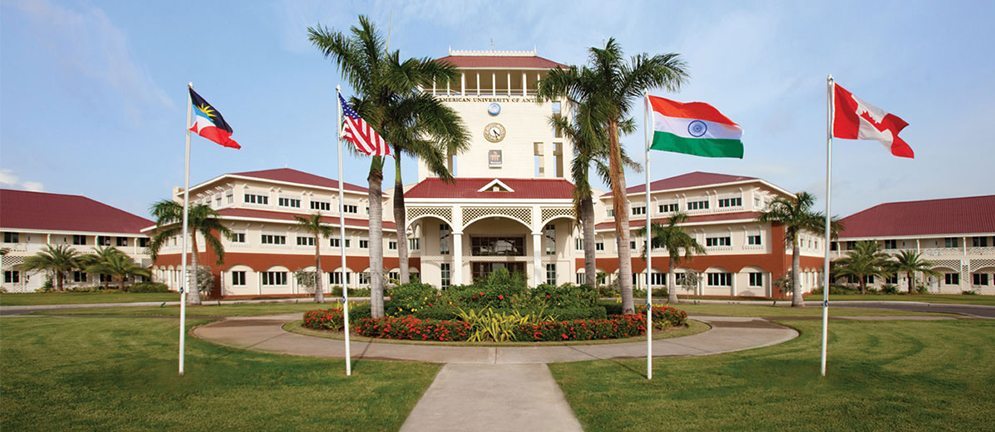
    For high school graduates harboring ambitions of building a career in the medical field, a new, no-cost opportunity has emerged to demystify the fast-track route to a medical degree. The American University of Antigua College of Arts and Sciences (AUACAS) has launched a six-part virtual bootcamp, delivered entirely via the Zoom video conferencing platform, designed to walk aspiring doctors through its accelerated pathway into medical study.

    The structured program is scheduled to run over a two-week window, kicking off on June 16 and concluding its final session on July 1. Unlike generic pre-med informational events, this bootcamp is tailored specifically to help recent secondary school graduates understand the structure and benefits of AUACAS’s unique articulated program: completion of an Associate of Science in Health Sciences that allows for seamless, direct transition into the American University of Antigua College of Medicine through the institution’s Fast Track admissions track.

    Participants who successfully finish all six sessions of the bootcamp will walk away with more than just insider knowledge. The university is offering a range of tangible incentives to participants, including an official certificate of completion, a $750 USD tuition grant that can be applied to tuition costs once a student officially enrolls in the program, a personalized readiness assessment to help students gauge their preparation for rigorous medical study, and one-on-one guidance from an experienced AUACAS admissions counselor to answer questions about applications, prerequisites, and program logistics.

    Registration for the bootcamp is completely free of charge, and university organizers are actively encouraging parents to join their students in the sessions to learn more about the pathway and the opportunities it unlocks. Anyone interested in securing a spot can complete their registration online through the university’s admissions portal, or reach out directly to the AUACAS admissions office for additional details about the session schedule and program structure.

  • Director of Education Urges CSEC Awardees to Pair Academic Success With Integrity

    Director of Education Urges CSEC Awardees to Pair Academic Success With Integrity

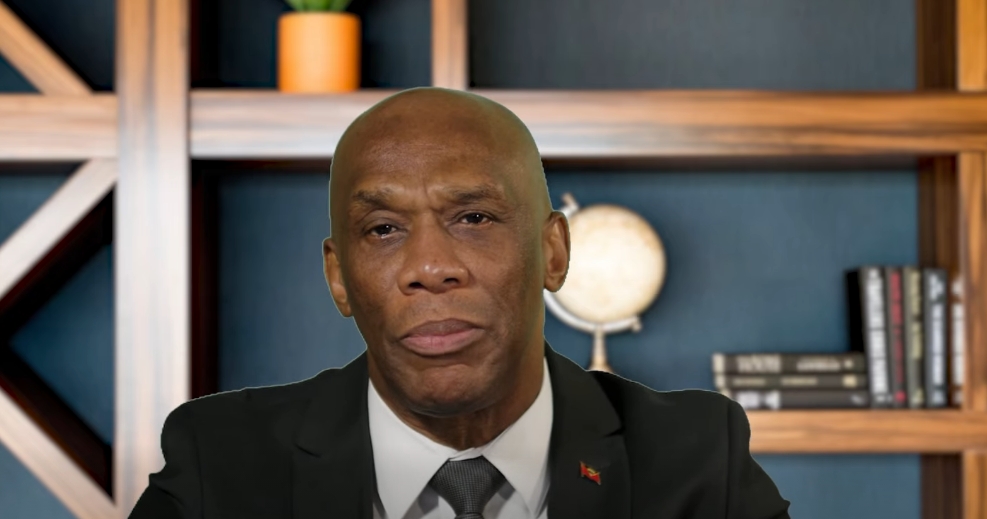
    At the 40th anniversary National CSEC Awards Ceremony, held this year under the forward-looking theme “Architects of Tomorrow”, Director of Education Clare Brown has issued a compelling call to Antigua and Barbuda’s highest-performing Caribbean Secondary Education Certificate (CSEC) students. Instead of framing academic success as a final destination, Brown challenged the awardees to leverage their outstanding 2025 examination results as a stepping stone for ethical leadership, community service, and sustainable national development.

    Opening his address to the gathering of top scholars, Brown extended warm congratulations to the students on their remarkable accomplishments, before emphasizing that true educational excellence stretches far beyond numerical grades and test scores. Looking across the room of honorees, he shared a optimistic vision of the nation’s future, noting that the assembled students represent the next generation of Antigua and Barbuda’s doctors, engineers, educators, entrepreneurs, innovators, and public servants.

    Brown stressed that the elite standing these students have earned did not come by luck or random circumstance. Their success, he argued, is the product of intentional discipline in the face of widespread distractions, unwavering persistence when academic or personal obstacles arose, and deliberate courage to make the sacrifices required to reach their goals. “Your performance in the 2025 examinations has earned you a place among our nation’s finest scholars,” Brown told the awardees. “This distinction is not an accident of circumstance. It is the result of discipline when distractions beckoned, persistence when obstacles emerged, and courage when success demanded sacrifice.”

    Beyond celebrating individual academic achievement, Brown highlighted that these top students are already active contributors to shaping the long-term trajectory of Antigua and Barbuda. “The future is not built by chance,” he said. “It is built by minds that dare to imagine, hearts that refuse to quit and individuals who transform opportunity into achievement.”

    Even as he praised the students’ hard-won scholastic success, Brown urged the honorees to avoid narrowing their focus solely to grades and academic advancement. He argued that intellectual brilliance alone pales in comparison to achievement rooted in strong moral character. “As important as academic excellence is, it is not enough on its own,” he said. “A brilliant mind can achieve much. A noble character can achieve even more.”

    Brown encouraged the students to anchor all their future accomplishments in three core values: unwavering integrity, genuine compassion for others, and a sustained commitment to lifting up communities across the nation. He reminded the gathering that the true marker of success is not measured by how far an individual climbs, but by how many people they empower and uplift along their journey. “The true measure of excellence is not simply how high you rise, but how many lives you uplift along the way,” he said.

    The education director also advised students to cultivate long-term resilience as they move forward to pursue higher education and professional careers, noting that setbacks and unforeseen challenges are an inevitable part of any meaningful path. “There will be moments when the road ahead appears uncertain and the destination distant,” he said. “Do not surrender your dreams to your difficulties. Greatness is often born in the space between challenge and perseverance.”

    In his closing remarks, Brown encouraged the awardees to carry the values of Antigua and Barbuda with distinction in all their future endeavors, and to keep building on the foundational success they have already earned. “Today we celebrate your achievements. Tomorrow we will witness the impact of your contributions,” he said.

    This year’s ceremony marked a major milestone: four decades of recognizing top CSEC performers across Antigua and Barbuda. Along with honoring students who earned regional merit placements, the event awarded honors to scholars in four distinction tiers: Platinum, Gold, Silver, and Bronze.

  • RHA wage talks moving to next stage

    RHA wage talks moving to next stage

    The head of one of the Caribbean region’s leading public sector trade unions has moved to quash swirling rumors and misinformation surrounding stalled wage talks for public health workers, confirming that negotiations have hit a long-awaited key turning point.

    Felisha Thomas, president of the Public Services Association (PSA), made the clarifying remarks in an official statement shared to the union’s Facebook page on Wednesday, pushing back against growing online and offline commentary that claimed the organization had sidelined employees of regional health authorities (RHAs) and left their salary demands out of ongoing bargaining processes. Thomas dismissed these claims as deliberate bad-faith attempts to stoke internal conflict and manufacture unnecessary anxiety among frontline and administrative health workers.

    “Let me state clearly and unequivocally: the PSA has not forgotten RHA workers, nor have you been left out of negotiations,” Thomas emphasized in her address.

    The collective bargaining process for RHA employees was formally launched by the union back in January 2026, when PSA tabled its formal proposals to authorities. The union’s demands include a 10% across-the-board base salary increase, as well as the permanent consolidation of the existing Cost-of-Living Allowance (COLA) into workers’ base pay.

    Thomas confirmed that since the submission of these proposals, the process has adhered strictly to the long-standing, standardized administrative framework that has guided all prior RHA wage negotiations. Under the established rules, after the union submits its demands, regional health authorities must first conduct detailed financial modeling to calculate three core cost components: the ongoing annual recurrent expenditure that would come from implementing the revised salary scale, the value of back pay owed to currently active RHA employees, and the total arrears due to retired RHA workers who are covered by the current negotiating period.

    These granular calculations, which are drawn directly from data on the total number of active and retired workers impacted by the new salary terms, are a non-negotiable prerequisite for moving the proposal up the administrative chain of command. Once finalized by the RHAs, the data is passed to the Ministry of Health for review before being forwarded to the Human Resource Advisory Committee, which issues formal guidance on next steps for implementation.

    In a major update for workers, Thomas confirmed that the Ministry of Health has now completed all required calculations and formally submitted the full package of documentation to the Chief Personnel Officer (CPO) for the next phase of review. “This represents a significant milestone in the process and confirms that negotiations continue to progress through the established channels,” Thomas said.

    The PSA president acknowledged that workers are eager for a resolution to the years-long wait for salary adjustments, but noted that the union cannot skip mandatory administrative procedures to speed up the process unilaterally. Even so, she stressed that union representatives have maintained constant engagement with government officials at every stage of the process, and are monitoring every development closely to keep the process moving forward.

    Thomas once again pushed back against outside attempts to create frustration among RHA staff, reiterating that the current timeline and process match exactly the framework that has been used to complete and implement all previous RHA wage agreements.

    Based on the progress achieved so far, the PSA expects that the CPO will issue formal implementation instructions in the near future, paving the way for final arrangements including the rollout of revised salaries.

    “The PSA remains fully committed to securing a fair and equitable outcome for all RHA workers. We recognise the invaluable contribution made by healthcare professionals, administrative staff, technical personnel, support workers and all employees who continue to deliver critical services throughout the health sector,” Thomas said.

    She closed by urging union members to ignore unfounded speculation and deliberate misinformation designed to split workers and distract from the ongoing bargaining process, reaffirming that the PSA will continue to prioritize RHA workers’ interests and provide timely updates as the negotiation process moves forward.

  • Hope for the Future in Antigua and Barbuda Engages Community on Protecting Children from Unhealthy Food Marketing

    Hope for the Future in Antigua and Barbuda Engages Community on Protecting Children from Unhealthy Food Marketing

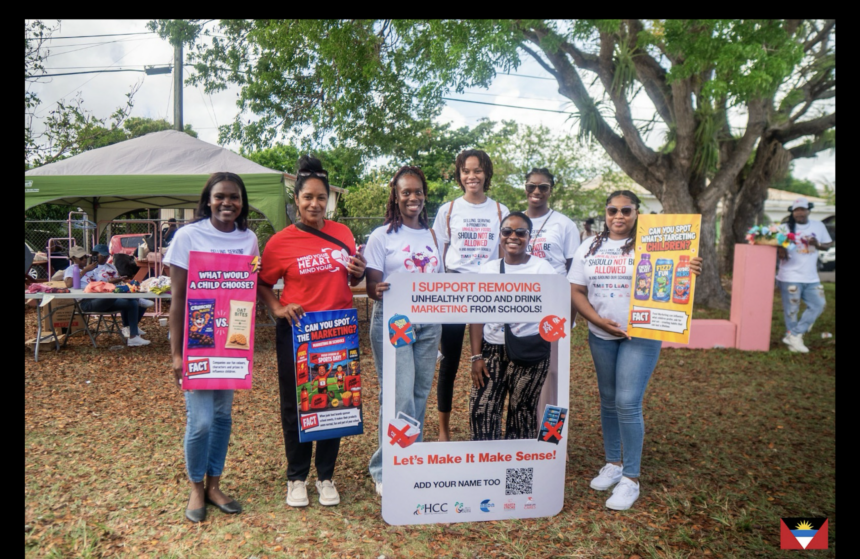
    Across the small twin-island nation of Antigua and Barbuda, a growing public health movement named Hope for the Future is bringing together local community leaders, educators, healthcare workers, and parents to address an often-overlooked threat to child well-being: pervasive marketing of unhealthy, high-sugar, high-fat processed foods aimed directly at young people.

    The initiative, rooted in local public health advocacy, emerged in response to mounting data showing rising rates of childhood obesity, type 2 diabetes, and dental decay across the country, trends that public health officials link directly to aggressive advertising of nutrient-poor food and beverage products on social media, local television, in-store displays near school routes, and community events. Unlike broad national policy pushes that can feel distant to local residents, Hope for the Future centers community engagement at every step: organizers host interactive town halls in parishes across both islands, run parent education workshops that break down how marketing tactics target developing brains, and partner with local schools to teach children how to identify misleading advertising claims.

    Community participants have welcomed the approach, with many parents noting they had not previously recognized how ubiquitous unhealthy food marketing is in spaces their children frequent every day. Local healthcare providers have also backed the effort, emphasizing that preventative action to reduce children’s exposure to these marketing tactics can cut long-term public health costs and improve lifelong health outcomes for the next generation. Organizers say the next phase of the initiative will include developing community-led guidelines for local businesses to limit child-targeted unhealthy food marketing, and pushing for broader regional policy changes to support local restrictions, with the ultimate goal of building a healthier environment for Antigua and Barbuda’s children.

  • Nation’s Brightest Students Honoured at 40th National CSEC Awards

    Nation’s Brightest Students Honoured at 40th National CSEC Awards

    On Thursday, Antigua and Barbuda’s most exceptional secondary school graduates took center stage as the Ministry of Education, Science and Technology hosted the 40th National CSEC Awards Ceremony, a milestone event celebrating standout performance in the 2025 Caribbean Secondary Education Certificate (CSEC) examinations.

    Organized under the forward-looking theme “Architects of Tomorrow,” the ceremony drew a cross-section of attendees: celebrated students, proud family members, dedicated educators, and senior government officials, all gathered to recognize the young people who earned extraordinary exam scores and regional-level distinctions. The annual event does more than honor individual success—it also highlights the collective work of educators and guardians that underpins student achievement, a mission it has carried forward for four decades.

    Topping the 2025 leaderboard was Kaylei John-Baptiste, a student at Antigua’s Baptist Academy, who claimed the prestigious title of National CSEC Student of the Year. Her historic academic feat included passing all 20 registered subjects, with 18 of those results earning the highest possible Grade One mark. Following closely behind in the national rankings was Kha-lique Harris of St. Joseph’s Academy, who secured second place, while Nayima Lewis—another Baptist Academy student—took third place after notching 16 Grade One passes across her 20 subjects.

    Beyond national honors, the ceremony also spotlighted students who earned spots on the Caribbean region’s overall merit lists for individual subject areas. Standout regional performances included Asia Roberts of Antigua Girls’ High School, who claimed second place across the entire Caribbean for English A; Anwar Stilston of St. Joseph’s Academy, who ranked first regionally in Music; and Khaliq Harris, who secured second place in Industrial Technology.

    Dozens more graduating students were recognized with tiered awards—Platinum, Gold, Silver, and Bronze—handed out based on the number of Grade One passes each student earned, aligned with eligibility criteria set by the Ministry of Education.

    Clare Brown, the nation’s Director of Education, delivered the keynote address to the assembled group, where he commended the awardees for their relentless dedication and persistent effort through the examination cycle. “Your performance in the 2025 CSEC examinations has earned you a place among our nation’s finest scholars,” Brown told the honorees, urging them to maintain their commitment to excellence in all future academic and professional pursuits.

    He also emphasized that strong academic results must be paired with unwavering personal integrity and strong moral character, noting that the long-term trajectory of Antigua and Barbuda will be defined by the choices these young leaders make and the contributions they offer to their communities and the nation in the coming years.

    As the 2025 ceremony wrapped up, organizers reflected on the 40-year legacy of the National CSEC Awards Programme, which has grown alongside Antigua and Barbuda’s education system to consistently celebrate academic excellence and honor the shared investment of students, teachers, and families in advancing national educational success.

  • Police-DPP collaboration helped secure murder conviction for Henry boys’ killers

    Police-DPP collaboration helped secure murder conviction for Henry boys’ killers

    Nearly six years after the brutal killings of cousins Joel and Isaiah Henry in Guyana’s remote West Berbice backlands, a jury has returned guilty verdicts against two accused murderers — a outcome law enforcement officials attribute to unprecedented close coordination between national investigative and prosecutorial bodies. On Thursday, Deputy Police Commissioner Wendell Blanhum, head of the Guyana Police Force’s (GPF) Criminal Investigations Department, framed the conviction of Anil Sancharra (also known by aliases “Dan Pole” and “Rasta”) and Vinod Gopaul (known as “Magga”) as a landmark example of productive collaboration between the GPF and the office of the Director of Public Prosecutions (DPP).

    The case dates back to September 6, 2020, when the mutilated bodies of 16-year-old Joel and 18-year-old Isaiah Henry were discovered in the Cotton Tree backlands. The state’s star witness was Akash Singh, a former murder co-accused who turned state evidence. During the trial, Singh told the court the two teenage cousins had been targeted after being accused of damaging multiple illegal marijuana plants growing in the backlands area. Singh admitted he assisted the convicted pair in disposing of the cutlasses used in the killing, though investigators never recovered the weapons from the canal where Singh stated they were dumped. He has repeatedly rejected claims he was offered leniency in exchange for false testimony against Sancharra and Gopaul.

    The 2020 killings sparked widespread public fury across Guyana. For days following the discovery of the bodies, violent protests erupted along the West Berbice public road and other key routes along the country’s east-west corridor, leaving vehicles and private properties burned, and leaving multiple commuters robbed and assaulted. Political opposition leaders and human rights activists amplified public calls for justice, demanding that highly trained independent forensic experts be brought in to support the investigation, amid widespread distrust in local law enforcement’s ability to resolve the high-profile case. In response, Guyana’s government invited a five-member team of senior investigators from the Caribbean Regional Security System (RSS) to review the GPF’s work. The RSS team ultimately concluded the local police force had conducted adequate preliminary work and retained the capacity to solve the triple homicide that also included the death of Haresh Singh, who was killed and his motorcycle burned in the chaotic aftermath of the Henry boys’ murder.

    Speaking at the opening of a joint GPF-DPP training program — sponsored by the Partnership of the Caribbean and European Union (PACE) Justice Project, co-funded by the European Union and the United Nations Development Programme — Blanhum highlighted that the investigation unfolded against the backdrop of intense national pressure for accountability. “That investigation was conducted under incredibly difficult, high-pressure circumstances, where a national public outcry for justice was palpable. Yet, our investigators stayed focused on their core functions of evidence-gathering and case-building,” Blanhum told attendees. He emphasized that the guilty verdict would not have been possible without the DPP’s seamless support across every stage of the probe and prosecution, noting that the combined effort produced a case so strong that the 12-member jury returned a conviction after finding the pair guilty beyond a reasonable doubt.

    Sentencing for Sancharra and Gopaul is scheduled for June 26, when Justice Simone Morris-Ramlall will issue her ruling after reviewing ordered probation and psychological assessment reports. The convicted men were represented throughout the trial by defense attorney Dexter Todd. For communities still reeling from the 2020 violence, the guilty verdict brings a long-awaited step toward closure six years after the tragedy that shook the nation.