Nearly six years after the brutal killings of cousins Joel and Isaiah Henry in Guyana’s remote West Berbice backlands, a jury has returned guilty verdicts against two accused murderers — a outcome law enforcement officials attribute to unprecedented close coordination between national investigative and prosecutorial bodies. On Thursday, Deputy Police Commissioner Wendell Blanhum, head of the Guyana Police Force’s (GPF) Criminal Investigations Department, framed the conviction of Anil Sancharra (also known by aliases “Dan Pole” and “Rasta”) and Vinod Gopaul (known as “Magga”) as a landmark example of productive collaboration between the GPF and the office of the Director of Public Prosecutions (DPP).
The case dates back to September 6, 2020, when the mutilated bodies of 16-year-old Joel and 18-year-old Isaiah Henry were discovered in the Cotton Tree backlands. The state’s star witness was Akash Singh, a former murder co-accused who turned state evidence. During the trial, Singh told the court the two teenage cousins had been targeted after being accused of damaging multiple illegal marijuana plants growing in the backlands area. Singh admitted he assisted the convicted pair in disposing of the cutlasses used in the killing, though investigators never recovered the weapons from the canal where Singh stated they were dumped. He has repeatedly rejected claims he was offered leniency in exchange for false testimony against Sancharra and Gopaul.
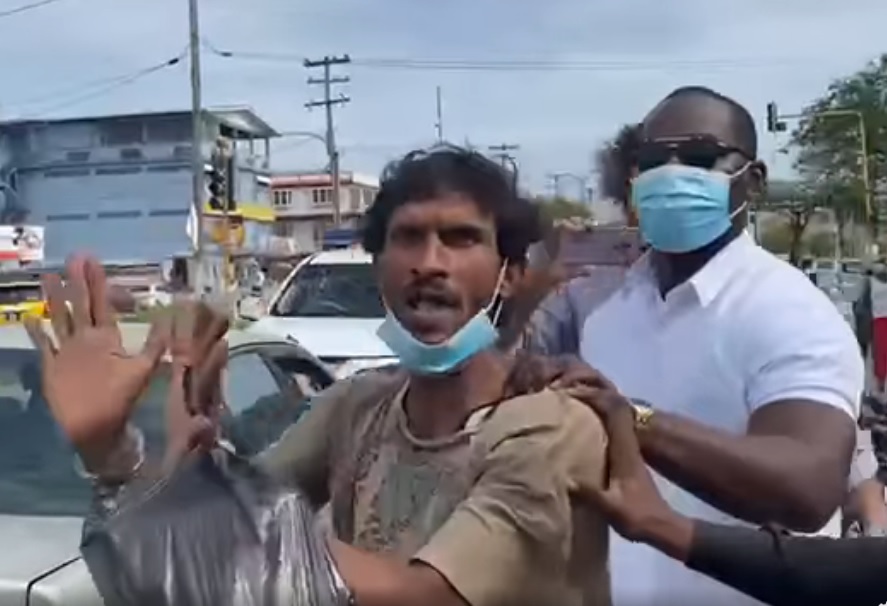
The 2020 killings sparked widespread public fury across Guyana. For days following the discovery of the bodies, violent protests erupted along the West Berbice public road and other key routes along the country’s east-west corridor, leaving vehicles and private properties burned, and leaving multiple commuters robbed and assaulted. Political opposition leaders and human rights activists amplified public calls for justice, demanding that highly trained independent forensic experts be brought in to support the investigation, amid widespread distrust in local law enforcement’s ability to resolve the high-profile case. In response, Guyana’s government invited a five-member team of senior investigators from the Caribbean Regional Security System (RSS) to review the GPF’s work. The RSS team ultimately concluded the local police force had conducted adequate preliminary work and retained the capacity to solve the triple homicide that also included the death of Haresh Singh, who was killed and his motorcycle burned in the chaotic aftermath of the Henry boys’ murder.
Speaking at the opening of a joint GPF-DPP training program — sponsored by the Partnership of the Caribbean and European Union (PACE) Justice Project, co-funded by the European Union and the United Nations Development Programme — Blanhum highlighted that the investigation unfolded against the backdrop of intense national pressure for accountability. “That investigation was conducted under incredibly difficult, high-pressure circumstances, where a national public outcry for justice was palpable. Yet, our investigators stayed focused on their core functions of evidence-gathering and case-building,” Blanhum told attendees. He emphasized that the guilty verdict would not have been possible without the DPP’s seamless support across every stage of the probe and prosecution, noting that the combined effort produced a case so strong that the 12-member jury returned a conviction after finding the pair guilty beyond a reasonable doubt.
Sentencing for Sancharra and Gopaul is scheduled for June 26, when Justice Simone Morris-Ramlall will issue her ruling after reviewing ordered probation and psychological assessment reports. The convicted men were represented throughout the trial by defense attorney Dexter Todd. For communities still reeling from the 2020 violence, the guilty verdict brings a long-awaited step toward closure six years after the tragedy that shook the nation.