
分类: society

  • Schools cleared for reopening, new guidelines ‘coming’

    Schools cleared for reopening, new guidelines ‘coming’

    As Barbados prepares to welcome the start of the Trinity school term this coming Monday, the country’s Ministry of Education Transformation has announced new steps to safeguard environmental health standards across all school campuses, responding to disruptive incidents earlier this year that forced multiple school closures. Minister of Education Chad Blackman confirmed that a dedicated interdepartmental team has been assembled to draft formal, nationwide protocols that will set binding standards for maintaining clean, safe learning environments, with a full public unveiling of the framework expected in the near future.

    The catalyst for this policy push came in March, when six primary and secondary schools across Barbados — St Bartholomew Primary, St Paul’s Primary, Charles F Broome Memorial Primary, Mount Tabor Primary, Christ Church Girls’ School, and Hilda Skeene Primary — experienced serious environmental hazards that upended normal teaching and learning operations. The widespread issues forced some campuses to send students home early, while others were forced to suspend classes entirely for multiple days, prompting outcry from educators and families.

    The Barbados Union of Teachers (BUT) had previously publicly called for a standardized national set of guidelines to address environmental health risks in schools, arguing that consistent rules for routine cleaning, sanitation, regular infrastructure inspections, and preventive maintenance were critical to avoiding repeated disruptions. Minister Blackman, speaking to Barbados TODAY on the sidelines of the Barbados National Student Council’s Elections held at the Lloyd Erskine Sandiford Centre, confirmed the ministry had answered that call, noting that the working group has already made substantial progress on the policy framework.

    Beyond updating internal protocols for campus maintenance, Blackman also issued a direct appeal to private businesses and private property owners located adjacent to school grounds, urging them to take greater responsibility for maintaining clean, pest-free surroundings. He emphasized that unkempt adjacent properties — ranging from food retail outlets to parking lots and vacant lots — often create conditions that attract pests such as rodents, which can easily cross onto school property and put student and staff health at risk.

    “Our schools have been kept clean. We’ve intensified our cleaning efforts and we’re ramping up even further, but we also want to use this and, as Minister of Education, really plead with our stakeholders outside of the school to keep their facilities clean because it impacts our schools, it impacts learning, it impacts teaching,” Blackman stated.

    The minister also offered a formal assurance that all six schools affected by the March environmental incidents have undergone full professional sanitization and remediation work, and are fully prepared to welcome students and staff back for the new term. He added that ministry inspectors have confirmed all remediated campuses meet full health and safety standards, but reiterated that unregulated conditions on adjacent private property remain an ongoing, uncontrollable risk that requires cooperation from local business owners to mitigate.

  • Notification Emergency Rain Relief Bonus: How to find out if you were selected to receive it

    Notification Emergency Rain Relief Bonus: How to find out if you were selected to receive it

    After widespread severe flooding impacted communities across the Dominican Republic, the national government rolled out a targeted Emergency Bonus to support hard-hit households, and public interest has surged around how residents can confirm if they are selected to receive the one-time aid.

    Officials from the Directorate of Social Development Supérate, the agency managing the relief program, clarified key details in an interview with local publication HOY, emphasizing that the benefit does not operate through an open voluntary application process. Unlike many public assistance programs that require applicants to submit their own requests, eligible households are pre-identified through existing data collected by the Single System of Beneficiaries (Siuben), the country’s centralized national registry for public aid recipients.

    The pre-selection process follows a structured technical workflow, agency representatives explained: after Siuben completes on-the-ground surveys of impacted areas, evaluates household needs, and validates eligibility data, pre-approved beneficiary households are contacted directly through official government communication channels.

    The notification process relies on multiple accessible channels to ensure no eligible household misses out on the support, according to authorities. The most common method is direct digital or phone outreach: selected residents receive alerts via text message (SMS) or phone calls from the program’s official contact center, using the phone number each household previously registered in the Siuben system. These communications not only confirm selection but also share specific details about payment timing and collection methods where available.

    For communities that suffered the worst flood damage, mobile outreach teams are deployed door-to-door to confirm eligibility in person, eliminating barriers for residents who may have inconsistent phone service or outdated contact information on file. The program also hosts in-person orientation and aid distribution days, where beneficiaries can verify their identity in person and collect their payments on-site.

    As a temporary emergency relief measure, the Emergency Bonus was specifically designed to support households impacted by severe atmospheric events including flash floods, hurricanes, and other climate-driven crises, falling under the broader umbrella of services provided by the Supérate social development program.

    It is not a permanent, universal subsidy available to all residents; instead, the framework was built to enable fast, targeted, data-backed response to sudden crises, ensuring aid reaches the households that need it most rather than opening the program to broad, unvetted applications. In this latest round of post-flood relief, the benefit will be distributed to approximately 10,000 impacted families, with each approved household receiving a one-time payment of 7,000 Dominican pesos.

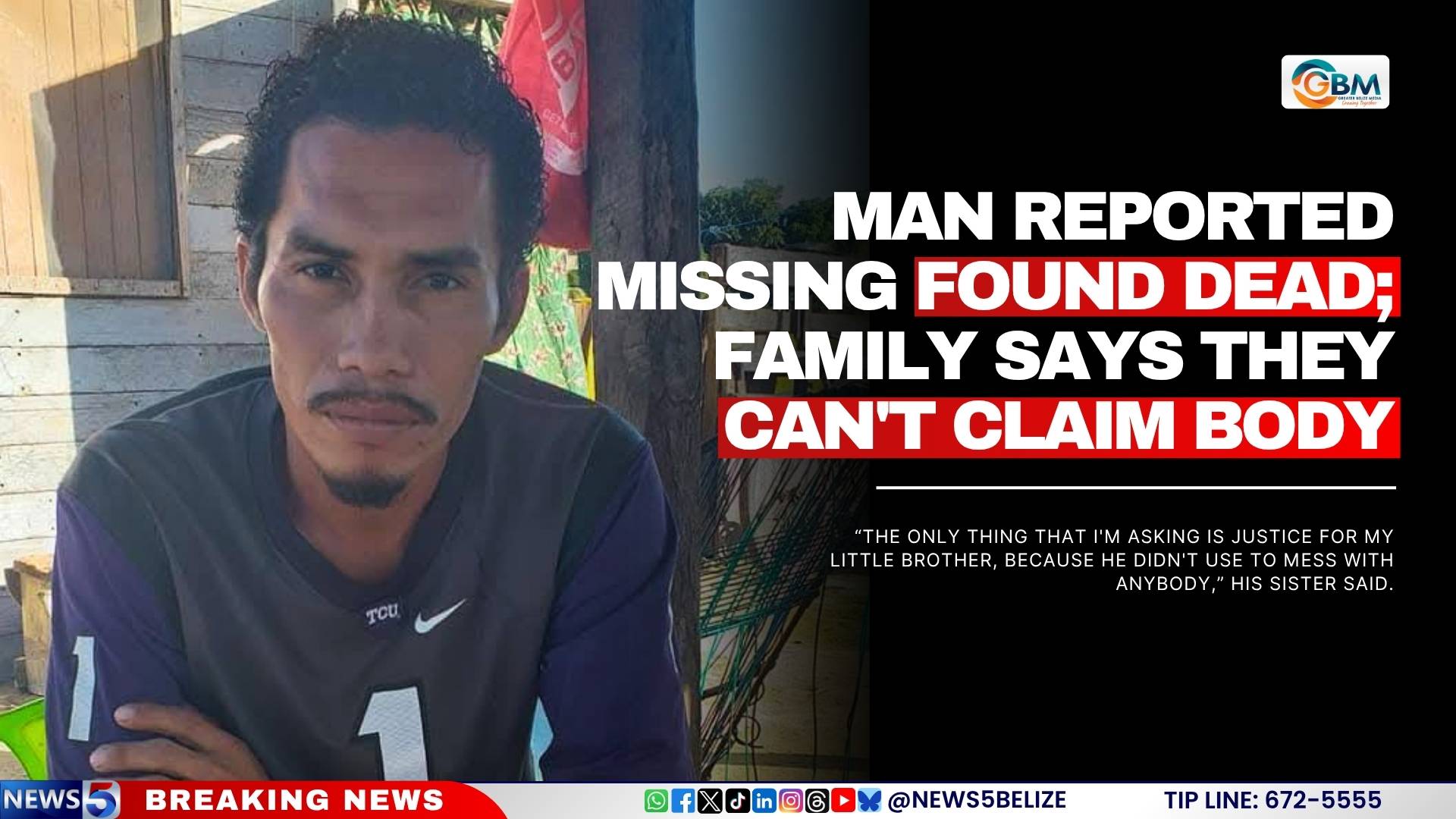
  • Man Reported Missing Found Dead; Family Says They Can’t Claim Body

    Man Reported Missing Found Dead; Family Says They Can’t Claim Body

    A disturbing case out of Belize’s Dangriga District has left a local family trapped in limbo, nearly three weeks after 46-year-old Jericho Humes first vanished under suspicious circumstances from his Dangriga Town home. The father of three was last seen alive on April 1, when he was dropped off at his workplace, but what followed has unfolded into a nightmare of uncertainty, grief and bureaucratic barriers for his surviving relatives.

    Days after Humes’ disappearance, family members grew alarmed when he failed to return home and decided to check his residence. What they found only deepened their fears: the home had been ransacked, with windows shattered, a front door forced open, clothing strewn across the floors, and a pot of cooking rice left sitting out until it spoiled. One of Humes’ favorite caps was also found partially burned, a puzzling and ominous detail that offered no clear answers about what had happened to him.

    Nearly a week after he went missing, the case took a terrifying turn when Humes’ niece received a series of disturbing calls from a phone number registered in Mexico. The caller claimed to be holding Humes hostage and demanded a ransom of $10,000 for his safe release. Along with the ransom demand, the caller sent a photograph showing a knife pressed to a man’s neck and shared audio recordings of what they claimed was Humes. The niece immediately turned all of this evidence over to local law enforcement. At the time, Assistant Superintendent of Police Stacy Smith told reporters that investigators had shared the photo with Humes’ brother, who insisted the man pictured was not Jericho. Law enforcement classified the incident as an ongoing missing person investigation, and downplayed the kidnapping claim at that stage.

    Now, more than two weeks later, the family has received the devastating confirmation they had long feared: Jericho Humes is dead. In an interview with local outlet News Five on Thursday, Humes’ sister Arseneia Humes shared that police contacted the family last week to ask them to identify a body that had been found in an advanced state of decomposition. With the body’s face unrecognizable, Arseneia confirmed it was her brother based on his distinctive tattoos, a harrowing experience she described in an interview.

    What has made this unbearable tragedy even worse, the family says, is the complete lack of transparency from law enforcement and a bureaucratic rule that is keeping them from laying their loved one to rest. Arseneia explained that police have refused to share any basic details about the recovery of Humes’ body: the family has not been told where the remains were found, when they were discovered, or under what circumstances. More crucially, authorities have refused to release Humes’ body to the family for burial unless they can provide a facial photo that matches the visible identifying markings on the remains – a requirement the family cannot fulfill, given the state of the body.

    Authorities have suggested DNA testing via a saliva sample as an alternative path to formal identification, but the family says they have been told results could take up to four months to process. The grieving relatives have also pressed police for information about the potential cause of death, asking whether Humes suffered gunshot or stab wounds, but law enforcement has not confirmed any details. For the family, the months-long wait for answers and the inability to bury their loved one has added immeasurable pain to their loss.

    Speaking to reporters, Arseneia called for accountability and answers, saying her brother was not a person who had conflicts with others. “The only thing that I’m asking is justice for my little brother, because he didn’t use to mess with anybody,” she said. As of Friday, the investigation into Humes’ death remains ongoing, with no updates from Belizean police on new leads or changes to the identification process.

  • Antiguan Kelton Mich Dalso Called to Bar in St. Lucia

    Antiguan Kelton Mich Dalso Called to Bar in St. Lucia

    A rising legal professional from Antigua and Barbuda, Kelton Mich Dalso, is set to reach a landmark career milestone in April 2026 when he is formally called to the Bar of the Eastern Caribbean Supreme Court’s St. Lucia Circuit, based in the country’s capital city of Castries.

    Dalso’s qualification to practice across the Caribbean regional court system comes through the framework of the Caribbean Community (CARICOM), anchored in the revised Treaty of Chaguaramas. This foundational treaty established the CARICOM Single Market and Economy (CSME), an integration agreement that Antigua and Barbuda has officially signed onto, allowing eligible legal practitioners from member states to practice across participating jurisdictions.

    This upcoming call to the regional Eastern Caribbean bar follows Dalso’s recent admission to practice in the United Kingdom. As first reported by The Times of London on 28 November 2025, Dalso was among the new practitioners admitted to the Bar of England and Wales during the traditional Michaelmas Call ceremony and reception held at London’s prestigious Gray’s Inn, one of the four historic Inns of Court that regulate bar entry in the UK.

    Dalso’s path to dual admission has been marked by consistent academic and professional achievement. He earned his Bachelor of Laws with Honours (LLB Hons) in August 2020, before going on to complete the required Bar Training Course at the University of the West of England (UWE), where he graduated with a merit classification, a mark of strong academic performance in the rigorous vocational program for barristers.

    Beyond his core qualifications as a barrister, Dalso has built out additional expertise in alternative dispute resolution: he holds professional certifications as a mediator, arbitrator, and advanced negotiator, expanding his capacity to handle a broad range of legal matters both in and out of the courtroom.

    Witnessing the upcoming 2026 call ceremony, a momentous and historic occasion for Dalso’s legal career, will be his wife and two of his sons, who will share in the celebration of his years of preparation and achievement.

  • Government enforces Crown Lands eviction

    Government enforces Crown Lands eviction

    A growing conflict over public land governance has emerged in Grenada after national authorities issued urgent 7-day eviction notices to dozens of residents living illegally on unapproved Crown land in the Gwankai district of South St George. The enforcement action, which marks a sharp shift in the government’s approach to longstanding squatter issues, has upended the lives of long-term occupants, many of whom have built homes and put down roots on the land over the course of years or even decades.

    Many affected residents say they believed they were following proper legal protocols to secure formal ownership of their properties, leaving them blindsided by the sudden eviction orders. One long-term occupant, who has resided on his plot for nearly 10 years and constructed a permanent concrete home there, told reporters he submitted a formal ownership application in 2022 but never received any feedback on his request prior to the April 7 eviction notice granting just one week to leave. Another resident echoed that frustration, noting that repeated trips to the national Ministry of Agriculture and Lands yielded no clear updates on the status of her land application before enforcement began.

    The dispute has pulled back the curtain on a long-simmering tension between widespread informal land occupation across the country and the state’s formal legal authority over public Crown lands. It has also prompted fresh scrutiny of the government’s backlog of unprocessed land applications and the lack of transparent communication with applicants before punitive action is taken.

    In an official public address on land policy released Thursday, Javan Williams, Permanent Secretary for the Ministry of Agriculture and Lands, made clear that the government is pursuing a new, stricter course of enforcement aligned with existing legal frameworks. Williams warned residents to adjust their expectations around access to Crown land, emphasizing that the ministry is committed to managing all public property in strict adherence to national law. He noted that while many people submit legitimate applications for Crown land allotment, a growing number of individuals have simply moved onto and occupied government property without any formal approval, reminding the public that squatting remains a criminal offense under Grenadian law.

    Williams referenced the Prevention of Squatting on Crown Lands Rules, Statutory Rule and Order (SRO) 5 of 2007, which lays out the official protocols for serving eviction notices to illegal occupants. Per the regulations, eviction notices must be delivered to squatters in person whenever possible; if occupants cannot be located or served within 48 hours of the notice being issued, authorities are permitted to post the notice in a clearly visible location on the occupied land or any structure built on the site.

    Williams confirmed that enforcement teams conduct formal investigations into suspected squatting cases before any notices are issued, but acknowledged that noncompliance with eviction orders has become an increasingly challenging issue. He added that some occupants have gone so far as to remove posted eviction notices to avoid compliance, and issued a formal warning against both the removal of official notices and the construction of unapproved structures on public Crown land.

    The permanent secretary also outlined the legal penalties residents face if they ignore eviction orders. Under the current law, any squatter who fails to comply with a properly served eviction notice commits a criminal offense, punishable by a fine of up to 1,000 Eastern Caribbean dollars (EC$) or a jail sentence of up to three months upon summary conviction.

    According to Williams, this expanded enforcement push is part of a broader government policy shift aimed at addressing a decades-long, complex problem of widespread illegal squatting. For years, he explained, many people have deliberately occupied public or privately held land, operating under the assumption that they will eventually be granted amnesty or formal approval. “We want to advise persons, let us all follow the law because we now are seriously invoking the eviction section of the SRO 5, 2007,” Williams stated.

    Williams acknowledged that some Gwankai residents have submitted formal applications for land allotment, but stressed that submitting an application does not grant automatic right to occupy the land. Under Grenadian law, after an application is received, a formal land survey must be completed and the request must be reviewed and approved by the national Cabinet. Only after a written authorization is issued following Cabinet approval does an individual gain legal right to use the Crown land. Any occupation prior to that formal approval, Williams emphasized, is considered illegal squatting.

    “Under the law, the Cabinet is the sole authority to direct an allotment. So, if you are not allotted a piece of Crown land, then you are deemed a squatter,” Williams added.

    The unfolding situation in Gwankai is already emerging as a critical early test of the Grenadian government’s commitment to bringing formal order to Crown land management across the country, and of how communities with longstanding informal settlements will respond to the new stricter enforcement regime. For the residents facing eviction, the conflict is far more than a policy debate: it is a fight to keep their homes, their livelihoods, and the years of financial and personal investment they have put into their properties. For the government, by contrast, the priority is upholding the rule of law and reasserting formal control over public land, amid longstanding public concerns about unregulated squatting and inefficiencies in the formal land allocation process.

    The outcome of the Gwankai dispute is expected to set a major precedent for how similar informal occupation cases will be handled across Grenada in the coming years, particularly in communities where informal settlement has outpaced formal land approval for decades.

  • One Man Detained After Alleged Sexual Assault

    One Man Detained After Alleged Sexual Assault

    Local law enforcement agencies have launched a probe into a reported sexual assault of a 22-year-old woman in Orange Walk, with one suspect already taken into custody as of April 17, 2026.

    Details released by police outline that the alleged incident unfolded on the Wednesday preceding the announcement. The victim told investigating officers that she was present at her private residence when her male neighbor arrived at her door, asking if she would make him a cup of noodles. Agreeing to his request, she let him enter her home to wait for the food to be prepared.

    It was during his time inside the residence that the neighbor is accused of carrying out the sexual assault, according to official police accounts. As of the latest update, formal charges have not been filed against the detained man. Law enforcement has confirmed that the investigation remains active, with detectives continuing to collect evidence, interview witnesses, and build a case ahead of potential legal proceedings.

  • Two arrested with illegal guns, ammo-police

    Two arrested with illegal guns, ammo-police

    In a coordinated law enforcement operation carried out Thursday afternoon in the Berbice region of Guyana, two 23-year-old men have been taken into custody following the recovery of two illegal 9mm handguns and a single round of ammunition, authorities confirmed in an update published Friday. Guyanese law enforcement agencies reported that the seizure unfolded shortly after 4 p.m. in the Dukestown area of Corriverton, when agents from the Customs Anti-Narcotic Unit (CANU) were conducting patrols near the local seawall along the Corentyne River.

    During their observation of the area, CANU teams spotted a small wooden craft carrying four unidentified men on the river, while two additional men waited on the seawall shore, each holding a sealed black box. As soon as the uniformed law enforcement agents approached the pair and identified themselves as authorities, the two men immediately discarded their boxes and made an attempt to escape on foot. At the same time, the four men on the wooden boat accelerated the vessel and fled further up the Corentyne River, evading capture so far.

    Responding officers quickly pursued the two fleeing suspects on shore and successfully apprehended both within a short time frame. Investigators then opened the discarded boxes in the presence of the arrested men, revealing two unregistered 9mm ZORAKI pistols and one live round of ammunition matched to the weapons.

    The two suspects, a local businessman who resides in Dukestown and a day laborer from nearby Springlands, Corriverton, were transported to the Springlands Police Station to be processed. The seized firearms and ammunition have been placed into police custody as material evidence for the ongoing investigation. As of Friday afternoon’s official update, both men remain in detention, with law enforcement yet to announce formal charges. Investigations are still ongoing to determine the origin of the illegal weapons, their intended use, and the identities and whereabouts of the four men who escaped on the river.

  • 20-Year-Old Shot in Corozal

    20-Year-Old Shot in Corozal

    A violent shooting incident in Corozal District has left a 20-year-old man fighting for his life in hospital, sparking a full attempted murder investigation by local law enforcement. The attack unfolded on the evening of April 16, 2026, targeting construction worker Wilbert Jonathan Vellos shortly after he dropped a friend off at their home.

    According to initial official accounts from Corozal Police, the incident occurred just after 9:25 p.m. Vellos had finished driving his acquaintance, Christopher August, to August’s residential address and was still parked in front of the property when a single unknown assailant approached the vehicle and opened fire. The gunman struck Vellos multiple times across his body, leaving him critically wounded.

    In a frightening turn of events, the suspect immediately turned their firearm on August, who had remained outside the vehicle after being dropped off, and pulled the trigger. Fortunately for August, the weapon misfired – a stroke of luck that allowed him to escape the scene quickly without sustaining any injuries. First responders rushed the injured Vellos to Corozal Community Hospital by 9:30 p.m., where he remains in care as of the latest update.

    Local law enforcement has confirmed that the investigation into the attempted murder is still active, with officers working to identify the gunman and establish a motive for the targeted attack. No further details about potential suspects or leads have been released to the public at this early stage of the probe.

  • Two injured in collision involving electric, hybrid vehicles

    Two injured in collision involving electric, hybrid vehicles

    A low-speed collision between an electric passenger vehicle and a hybrid car left two people with minor injuries on a wet roadway in St. George early Friday, prompting local emergency responders to issue a public warning for drivers navigating changing road conditions amid wet weather.

    The crash unfolded close to the intersection of Windsor and Brighton streets just after 8 a.m., according to Station Officer Roger Bourne from the Bridgetown Fire Station, the first emergency unit dispatched to manage the scene. When crews arrived, both vehicles had already sustained damage from the impact on the slick, moisture-covered surface, which had reduced tire traction significantly.

    To eliminate potential safety hazards such as unexpected electrical fires, fire and rescue teams deployed specialized stabilizing gear to secure both damaged vehicles. As an extra precaution, responders disconnected the high-voltage battery pack on board the hybrid vehicle before beginning any further on-site work. Bourne confirmed in a post-incident statement that the crash did not result in any life-threatening or serious harm to the people involved.

    “All injuries are minor, mostly soft tissue bruising caused by seatbelt tension during the sudden impact,” Bourne explained. Two ambulance teams—one operated by the government emergency medical service, and a second from a local urgent care provider—arrived promptly to assess and treat the two vehicle occupants. Both patients were recorded as being in stable condition at the scene, and they opted to seek additional follow-up medical care after being cleared from the crash site.

    Bourne emphasized that wet pavement conditions were the key contributing factor to Friday’s collision, noting that a separate, similar crash had already occurred just a short distance away along the same road corridor earlier that same morning, also tied to slippery surfaces. He issued a sharp reminder to all motorists driving through the region amid current wet weather to adjust their driving habits to match changing road conditions.

    “As I drove to the incident, it was immediately obvious how slick the road surface was. When you transition from a stretch of dry pavement into a wet patch, traction drops off much faster than many drivers expect,” Bourne said. “We all have places to be and often find ourselves in a hurry, but it’s critical to slow down and give yourself extra reaction time. A little extra caution goes a long way to preventing these avoidable crashes.”

  • From Lock-Up to Lift-Up

    From Lock-Up to Lift-Up

    Scheduled to launch in April 2026, a groundbreaking partnership between the Government of Belize and the United Nations Development Programme (UNDP) is set to reshape the nation’s approach to supporting vulnerable and justice-involved young people, centered on a full transformation of the New Beginnings Youth Development Centre.

    Officially named the “Strengthening Youth Governance and Institutional Resilience for Peacebuilding in Belize”, the initiative moves beyond the traditional punitive model of youth detention that has long perpetuated cycles of reoffending. Instead, it prioritizes a forward-looking, person-centered framework that shifts the system’s core focus from locking young people up to guiding them toward stable, productive futures. The project aligns directly with Belize’s ongoing national justice reform efforts under the PACE Justice Programme, which has advocated for diversion practices and rehabilitation over harsh, mandatory penalties for young offenders.

    At the center of the reform is the overhaul of the New Beginnings Youth Development Centre, where a decades-old “lock-up” punitive model will be replaced by programming rooted in trauma-informed care, community reintegration, and long-term life skills building. The core goal of the transformation is to break the intergenerational cycle of offending that leaves young people trapped in the justice system, providing them with targeted support to get back on track and contribute to their communities.

    Backed by BZD $100,000 in catalytic seed funding from UNDP, the initiative will roll out a suite of evidence-based programming and structural improvements. Key components include enhanced individualized case management for every young person at the facility, customized transition plans to support smooth re-entry into community life, ongoing aftercare to prevent relapse, specialized trauma-informed training for all facility staff, expanded mental health counseling services, and updated, stricter safeguards to protect the rights and well-being of residents.

    Thea Garcia-Ramirez, Belize’s Minister of Human Development, emphasized that the reform is a long-overdue shift to building public systems that actually serve young people, rather than punish them. The initiative prioritizes marginalized youth, including those in state care and those who have had interactions with the criminal justice system.

    Amilin Mendez, UNDP’s representative for the project, summed up the core philosophy behind the work: the initiative is not just about managing at-risk youth – it is about building systems that believe in young people’s capacity to change and grow, creating lasting positive outcomes for both individuals and the entire nation.