分类: society

  • Taxi drivers ‘barely breaking even’

    Taxi drivers ‘barely breaking even’

    For two straight years, Jamaica’s taxi operators have tightened their belts, absorbing frozen fares while the island’s economy navigated one crisis after another. Today, that unending financial pressure has reached a breaking point: many operators now struggle to cover basic operating costs, and dozens have already lost their vehicles to loan repossession. The latest surge in global fuel prices, triggered by ongoing geopolitical tensions in the Middle East, has completely shattered their fragile hopes of finally securing the delayed fare adjustment they have waited years for. Adding to their anxiety, recent discussions among local officials about potential work-from-home mandates to cut national fuel consumption have left the industry bracing for even steeper losses.

    Lorraine Finnikin, president of the All Voice Taxi Association, outlined the sector’s crisis during a recent press conference, warning that reduced commuter travel from work-from-home policies would deliver a fatal blow to already strained operator earnings. The conference came after Energy Minister Daryl Vaz publicly warned Jamaicans to prepare for sharp fuel price increases, confirming the government can no longer afford to cover billions in fuel subsidies to keep consumer costs low.

    Vaz has since announced a new pricing framework for the state-owned refinery Petrojam Limited, tied directly to global market fluctuations. Under the new tiered system, consumers began seeing higher petroleum prices as early as this week, a change that has hit fuel-reliant taxi operators particularly hard.

    Finnikin explained that the last fare adjustment for Jamaica’s route taxis and rural stage carriages came in October 2023, when a 19% hike was implemented as the first phase of an approved 35% total increase designed to offset rising operating costs. The remaining 16% increase was scheduled to roll out in 2024, but implementation has been delayed indefinitely. Over the past three weeks alone, operators have seen their costs skyrocket, pushing many to the edge of insolvency.

    To illustrate the scale of the fuel cost increase, Finnikin shared data with the Jamaica Observer: for a Probox, one of the most common taxi vehicles in Jamaica, daily fuel costs jumped from between J$5,500 and J$6,000 before the latest Middle East crisis to between J$7,300 and J$8,600 today — a daily increase of up to J$2,600 just for fuel. Beyond fuel, operators are also facing steep jumps in other overhead costs, including stationery supplies for licensing and documentation, and vehicle maintenance. Some maintenance parts and services, particularly engine lubricants, have increased in price by as much as 80% in recent months. While these maintenance costs are not incurred daily, they still add a massive extra burden to operators already struggling with daily fuel costs.

    “The gas is really killing us,” Finnikin said. “The worst part is that we cannot increase our fares, so daily incomes have stayed exactly the same, and operators have to cover the extra fuel costs out of their existing earnings. For years, we have been operating at barely break-even levels — this extra cost is pushing many under.”

    Work-from-home proposals have added a new layer of fear, Finnikin noted, because most operators upgraded their vehicles over the past five years to meet new industry standards, and more than 70% of those upgrades were financed through loans. With commercial banks offering few accessible loan options for small operators, most have turned to micro lenders that charge exorbitant interest rates, requiring steep weekly repayments. Over the past four weeks alone, Finnikin said rural association leaders have reported a sharp rise in vehicle repossessions as operators can no longer cover both weekly loan payments and inflated fuel costs. If current conditions continue, the country could see mass repossessions that put hundreds of operators out of work, he warned.

    While a small number of operators have responded by illegally raising fares to cover costs, Finnikin has urged members to hold off and remain patient — but he cautioned that the sector can only absorb so much strain before widespread collapse occurs. Over the past two years, operators have repeatedly delayed their demand for the final 16% fare hike in response to broader economic conditions. When inflation began falling to a stable 4% by mid-June 2025, operators were confident the hike would finally be approved — but the general election was called shortly after, and no government would implement a fare increase ahead of a vote, so operators once again tightened their belts to wait.

    Operators shifted their hopes to a November 2025 implementation, but that hope was washed away when Category 5 Hurricane Melissa made landfall on October 28, 2025, devastating infrastructure and destabilizing the national economy. By late November, the Bank of Jamaica and the Planning Institute of Jamaica (PIOJ) warned of broad price increases for goods and services across the first quarter of 2026, a shift that directly impacts the transportation sector, the largest mover of goods and people across the island. After Hurricane Melissa, prices began rising as early as December 2025, and while operators hoped post-hurricane recovery would stabilize inflation quickly, the Middle East conflict delivered another crippling blow. Now, operators are clinging to the promise of a definitive timeline for the fare increase from Minister Vaz, who said last month that a timeline would be released within weeks. As of last Wednesday’s post-Cabinet media briefing, Vaz confirmed no final decision has been made on movement curtailment measures to address rising fuel costs.

  • From St Andrew to St James

    From St Andrew to St James

    Nearly eight months after Category 5 Hurricane Melissa devastated large swathes of Jamaica, the island nation’s flagship post-storm housing recovery initiative is navigating unforeseen demand and supply chain bottlenecks, according to on-the-ground reports from participating suppliers and government officials in St James.

    The Restoration of Owner or Occupant Family Shelters (ROOFS) programme — a $10 billion cornerstone of the national Shelter Recovery Programme — was launched to deliver targeted financial assistance to homeowners whose properties suffered minor, major or severe damage during the October 2023 storm. Administered through the Ministry of Labour and Social Security, the initiative allows approved beneficiaries to redeem grant funds for building materials or cash at pre-vetted participating retail outlets, using a unique QR or digital code sent directly to their mobile phones.

    But in St James, one of the parishes hardest hit by the hurricane, participating hardware stores are already reporting unexpected strains on operations. CC Fair Deal Hardware, a participating outlet based in Cornwall Courts, has seen a flood of beneficiaries traveling from outside the parish to redeem their grants — some coming from as far as St Andrew, St Ann and Westmoreland, according to a senior store representative who requested anonymity.

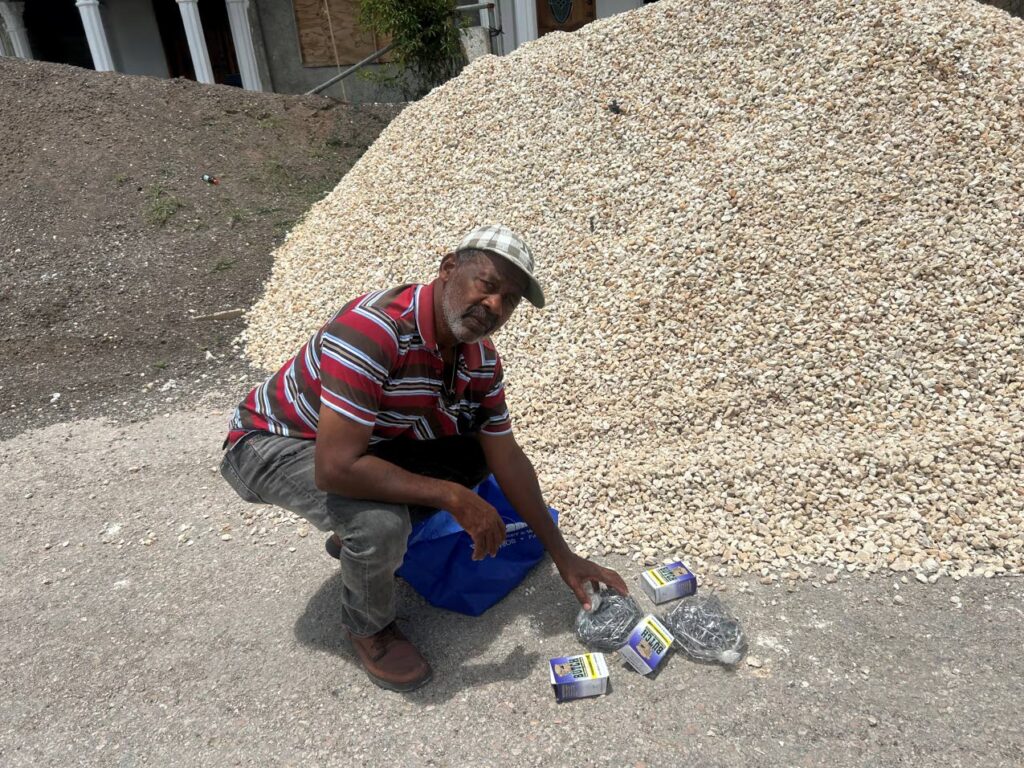
    “Today alone, we had a beneficiary travel all the way from St Andrew to pick up her supplies here,” the representative shared, adding that the constant stream of out-of-parish patrons has kept the store’s team working at full capacity. Still, the outlet has struggled to meet consistent demand for key construction inputs, including cement and concrete blocks. Many beneficiaries have also reported being unable to source specialized roofing materials such as roof capping and shingles, as few participating hardware stores stock these products in bulk. CC Fair Deal Hardware, for example, only carries basic roofing supplies like zinc sheets and waterproof sealant. To manage the overwhelming demand, the store now only processes ROOFS grant redemptions from Tuesday through Friday, suspending processing on weekends to keep up with regular commercial customers.

    In contrast, another participating St James outlet, Tools and Parts Supplies, told reporters it has so far managed to keep up with demand for core building materials. The store has implemented a separate queuing system for ROOFS beneficiaries, allowing regular patrons to complete their purchases without delays while recovery clients wait to be served.

    Government officials in the St James Ministry of Labour office acknowledged the growing strains on existing retail partners, confirming that plans are already underway to expand the network of participating hardware stores to reduce overcrowding and cut travel distances for beneficiaries. As demand for materials continues to rise, officials note that adding more outlets will cut down on the long trips many beneficiaries currently make to access approved suppliers — for example, residents of northern St James communities like Goodwill often travel to Falmouth in Trelawny rather than all the way to Montego Bay, a workaround that will become unnecessary as more local outlets join the programme.

    A ministry representative, who also requested anonymity, explained that phased approvals of beneficiaries have been intentional to avoid overwhelming the limited supply capacity of local hardware stores, which still must serve their regular commercial and residential customer bases. “It’s been thousands of people already, and we haven’t even hit the halfway mark of assessments,” the representative said. “It’s a good thing we didn’t send out approval texts to everyone at once — no hardware store could stock enough material to meet that sudden demand all at once.”

    While most participating stores have adapted by implementing pre-order and curbside pickup systems — where beneficiaries place orders in advance and are called to collect supplies once they are sourced — one major participating outlet has already exited the programme due to unresolved operational challenges. Officials did not share further details on the discontinued partnership.

    The government is also working to expand the number of approved cash redemption outlets, which currently only has two locations across St James: one on Barnett Street and another in the Fairview district. Assessments of damaged properties are still ongoing, eight months after the hurricane, as dozens of property owners who were out of the country or off-island in Kingston during the storm have only recently returned to file claims. Officials report that the volume of new assessment requests in April 2024 matches the level seen immediately after the storm in November 2023, meaning demand for ROOFS programme services will continue to rise in the coming months.

  • Trelawny stakeholders rue lack of cement

    Trelawny stakeholders rue lack of cement

    Weeks after Category 5 Hurricane Melissa swept across Jamaica on October 28, leaving a trail of damaged homes and infrastructure in its wake, homeowners and construction teams in the parish of Trelawny are facing an unexpected new barrier to rebuilding: widespread cement shortages at local hardware outlets that are pushing critical repair projects back by days or even weeks.

    For many residents already grappling with storm damage, the lack of cement has upended carefully laid reconstruction plans. One anonymous young homeowner from south Trelawny, who spoke with the Jamaica Observer last Friday at a Falmouth hardware, explained that her planned weekend roof replacement — a project that would swap her storm-damaged zinc roof for a more durable concrete slab — had to be postponed indefinitely because her construction crew could not source the necessary cement. She noted that she had been able to acquire most other building materials gradually, but chose not to stockpile cement ahead of time due to the cool, damp conditions in her area, which could cause the product to solidify and spoil before use.

    Local hardware operators across Trelawny have confirmed the ongoing supply gaps. Alex Chen, proprietor of the well-known Just In Hardware in Falmouth, told reporters that his location has been completely out of cement for two full weeks, despite maintaining full stock of all other construction materials to meet post-hurricane repair demand. Hugh Grant, who runs Grant’s Hardware in the nearby Albert Town community, acknowledged that cement has been out of stock at his business since the storm passed, though he stopped short of calling the situation a widespread shortage, noting only that his most recent scheduled shipment has not yet arrived.

    But another Albert Town hardware owner, Lloyd Gillings, described the current situation as an outright crisis that has already cost his business significant revenue. Gillings told reporters that suppliers are now rationing cement, limiting most small businesses to purchases of just five bags at a time, and some suppliers are even forcing customers to buy additional unrelated products to access any cement stock at all. “The big companies get priority for what cement is available, and they won’t even take our orders because they can’t fulfill them,” he explained, adding that he recently had to visit three separate locations across two parishes to source just 150 bags of cement for a small new construction project he is launching in Knockpatrick, Manchester.

    Veteran Trelawny building contractor Orville Webb noted that most other post-hurricane supply bottlenecks for materials like zinc sheeting and nails have eased in recent weeks, with stock levels returning to normal. But he echoed the concerns about cement, explaining that he was shocked to find no stock during a recent trip to a Falmouth hardware, and ultimately had to pay a third-party transporter to bring the product from another location to keep his projects on schedule. “It looks like the shortage is only going to get worse before it gets better,” Webb warned.

    For some residents, the cement shortage compounds already devastating post-storm struggles. Elisha Steel, a Scarlett Hall resident who was already denied support from the government’s Restoration of Owner or Occupant Family Shelters (ROOFS) hurricane recovery program after assessors refused to climb his damaged roof to survey the damage, is now facing a $400,000 repair bill he cannot complete because he cannot source the full volume of cement he needs. “Everywhere I go in Falmouth, there’s either no cement at all, or they won’t sell me the full amount I need,” Steel lamented.

    Caribbean Cement Company Limited, Jamaica’s leading cement supplier, addressed the supply issues in an official statement, acknowledging that some customers have experienced delivery delays but denying that there is any overall shortage of the product. The company confirmed that it is currently operating at full production capacity, and explained that recent heavy rainfall left raw materials with excess moisture, causing minor temporary operational disruptions. The company added that those operational issues have now been fully resolved, and deliveries are in the process of being normalized across the island.

    Beyond the immediate supply challenges, the hurricane has spurred new calls for better disaster preparedness among Jamaican business owners. Speaking recently at the 2025/2026 Western Campus Seminar hosted by the University of Technology Jamaica at Sea Gardens Beach Resort, Jason Russell, president of the Montego Bay Chamber of Commerce and Industry, advised business owners to set aside dedicated emergency disaster recovery funds to cover immediate repair costs, pointing to long delays that often hold up insurance claim payouts. “We can’t just sit around waiting for insurance to pay out after a storm. Insurance won’t reopen your business tomorrow; the claims process takes a very long time more often than not,” Russell explained, noting that his own hotel sustained damage during Hurricane Melissa and received no insurance payout, but was able to resume operations quickly because the business had saved emergency reserve funds.

    Photos from across Trelawny illustrate the scope of the supply gap: the warehouse at Falmouth’s Just In Hardware sits completely empty of cement stock, while Herma Gillings displays the handful of remaining bags left at the Albert Town hardware she operates with her husband Lloyd.

  • Tarps still up, patience wearing thin in Westmoreland

    Tarps still up, patience wearing thin in Westmoreland

    It has been 16 weeks since Hurricane Melissa tore through Jamaica’s Westmoreland parish, leaving a trail of destroyed homes and damaged infrastructure in its wake. Today, hundreds of residents remain trapped in a prolonged state of displacement, their dwellings still capped by makeshift tarpaulin roofs—some frayed by months of harsh tropical weather, others newly placed after failures, all standing as quiet markers of a glacial recovery process. For most homeowners waiting to fully repair their properties, the path to reconstruction is blocked by two common bottlenecks: delayed insurance settlements and slow disbursement of government relief funding. But an unforeseen barrier has emerged as the most frustrating obstacle for many: restricted access to building materials through the island’s flagship relief scheme, the Restoration of Owner or Occupant Family Shelters (ROOFS) Programme.

    Designed to deliver targeted financial assistance via vouchers to homeowners based on the assessed level of damage to their properties—categorized as minor, major, or severe—the initiative has been thrown into chaos by growing allegations of opaque and potentially biased supplier selection. Local residents and business owners alike are raising alarms that political patronage may be shaping which hardware stores are approved to participate in the programme. This screening process has locked out multiple well-stocked, locally established suppliers, creating a crippling imbalance across the parish’s construction supply market: approved vendors are overwhelmed by demand and facing crippling stock shortages, while non-participating outlets sit with full inventories but cannot accept the government vouchers that most recovery-dependent residents rely on.

    One of the largest excluded suppliers is Clarke’s Hardware, a decades-old staple serving communities across western Jamaica and based in George’s Plain. Owner Lorna Clarke told reporters that her team took proactive steps well in advance to ramp up inventory ahead of the post-hurricane construction boom, diversifying their supplier network to avoid the shortages plaguing other businesses. “We have different suppliers, so we don’t have that problem. If one has none, we contact the next,” Clarke explained to the Jamaica Observer. Despite having consistent stock of all required building materials, Clarke’s has been locked out of the programme, leaving both the business and its long-term customers strained.

    Clarke, who has been working nonstop since the hurricane to both serve customers and repair her own storm-damaged home, says that the exclusion has left local residents deeply frustrated. Many of her regular customers must now travel long distances to reach the nearest approved vendor, only to find that those outlets have no materials in stock. “When they go to those locations they are not getting through because they have no supplies. They have to be checking all over,” she said. What makes the exclusion even more confounding, Clarke argues, is that her business is equipped to deliver materials to remote, hard-to-reach communities across Hanover, Bluefields, Beeston Spring and other areas where access to construction supplies is already limited. The lack of access to a nearby well-stocked supplier has pushed some residents to drain personal savings to pay for materials out of pocket. Shauna-kay Malcolm, a registered farmer, told reporters she opted to use her own cash at non-approved Nepaul’s Hardware in Savanna-la-Mar rather than wait for relief, while other customers reported no delays getting materials from the same non-participating outlet.

    Central Westmoreland Member of Parliament Dwayne Vaz has pushed back against claims that his office influenced the selection of participating vendors, placing full responsibility for the list with the Ministry of Labour and Social Security. “The choices were made directly from the Ministry, I had nothing to do with it,” Vaz contended, noting that he has directed excluded suppliers to the ministry, and several have been added to the programme after reaching out directly to Minister Pearnel Charles Jr. Even so, Vaz acknowledges that the current supplier list is deeply flawed, forcing residents to travel excessive distances to redeem their vouchers and driving up delivery costs unnecessarily. He also highlighted a second critical flaw in the programme’s implementation: once a voucher is scanned at an approved vendor that lacks stock, the full balance is deducted immediately, leaving residents unable to use the voucher at any other location even while they wait weeks for materials to arrive.

    For local residents like Angela Green of Georges Plain, the logistical failures add unnecessary cost and delay to an already stressful recovery. Green told the Sunday Observer that she is forced to travel five miles to Savanna-la-Mar or 52 miles to Retreat to redeem her voucher, while Clarke’s Hardware—her closest local option—sits just three miles from her home, fully stocked and unable to accept her voucher. As weeks stretch into months with tarpaulins still covering damaged roofs and residents waiting for materials to rebuild, a growing sense of abandonment has taken hold across the parish.

    Calls are now mounting from community stakeholders and residents for urgent intervention, including greater transparency in supplier selection and independent oversight of the ROOFS programme. Stakeholders argue that government officials need to conduct on-the-ground assessments to adjust the supplier list to match local needs, noting that the controversy is not just about access to construction materials. For the hundreds of Westmoreland families still waiting to rebuild their lives after Hurricane Melissa, the crisis is also a test of fairness, efficiency, and the government’s commitment to ensuring relief reaches the communities that need it most.

  • WATCH: ‘Greybeard’, beloved retired police detective, laid to rest

    WATCH: ‘Greybeard’, beloved retired police detective, laid to rest

    CLARENDON, Jamaica — On a somber Saturday in central Jamaica, dozens of people spanning two connected communities — fellow law enforcement officers from the Jamaica Constabulary Force (JCF), and the late detective’s loved ones — came together at Grace Baptist Church, located on Sewell Crescent in the busy town of May Pen, to pay their final respects to a decorated decades-long servant of Jamaica’s public safety.

    The honoree was retired Detective Inspector George Washington Williams, who was widely known to colleagues and friends by his warm, affectionate nickname “Greybeard.” Williams passed away on February 2, 2026, while residing in the United Kingdom, following 12 years of retirement after an extraordinary four-decade career in policing.

    After the farewell service, Williams’ remains were laid to rest in the family burial plot in Somerset, a quiet community in the parish of Manchester, not far from where he served much of his later career.

    Speaking on behalf of Jamaica’s top law enforcement official, Commissioner of Police Kevin Blake, Area 3 Police Division Commander Assistant Commissioner of Police Christopher Phillips delivered a moving tribute that highlighted Williams’ far-reaching impact on policing across Jamaica. Over his 37-plus years of service, Williams held assignments across nearly every major branch of the JCF, leaving his mark on units from Kingston Western and St Thomas Criminal Investigation Bureau to the Security Intelligence Branch, the Narcotics Division, and the elite Major Investigation Task Force. He also held operational posts in the parishes of Clarendon, Manchester, and St Catherine’s South, building a reputation as a reliable and dedicated officer across the island.

    “Throughout his entire tenure, he served the people of Jamaica with unwavering diligence and deep passion,” Phillips shared during the service, noting that Williams’ contributions were repeatedly recognized by the force over his career. The retired inspector collected an extraordinary 73 professional commendations for his work, and was awarded the Medal of Honour for Long Service and Good Conduct in 1995, with a second bar to the medal granted in 2006 to mark his continued distinguished service.

    Photographs from the service, capturing Williams’ family members in attendance and Phillips delivering his tribute, were captured by photojournalist Llewellyn Wynter, who also documented the event in on-site video.

  • Two Pitbulls Reported Missing in Bolans as Owners Appeal for Help

    Two Pitbulls Reported Missing in Bolans as Owners Appeal for Help

    A community-wide search is underway for two missing pitbulls in Bolans village, with the animals’ owners stepping up their efforts to bring the beloved pets home safely and calling on local residents to help with any information they can provide.

    The two missing dogs, named Raptor and Catalyea, were last spotted wandering in the Bolans region, and details of their appearance and circumstances have been shared widely across local online platforms to boost visibility of the search. Three-year-old Raptor is a medium-sized pitbull with a distinct light golden coat. Described as naturally friendly by his owners, he was wearing a plain black collar when he went missing. Catalyea, the younger of the two dogs at 18 months old, is a smaller pitbull with a rich chocolate-brown coat. She was outfitted with a multicolored black, red and yellow collar at the time of her disappearance.

    Public alerts shared across social media and local community groups note that both dogs are approachable and gentle with people. This key detail has sparked a specific concern among the owners: that a well-meaning local resident may have taken the two stray-looking dogs in, without realizing they are already beloved pets reported missing from their home.

    With the search entering its active phase, the owners are urgently asking anyone who has spotted the two dogs, or has information about where they might be staying, to come forward with any details that can help reunite the pair with their family.

  • Wegenautoriteit start onderhoud primaire wegen; SRD 125 miljoen uitgetrokken

    Wegenautoriteit start onderhoud primaire wegen; SRD 125 miljoen uitgetrokken

    The Suriname Road Authority is preparing to kick off a large-scale rehabilitation program for key primary road networks across three key regions of the country: Greater Paramaribo, Nickerie, and Para. The ambitious infrastructure initiative has been allocated a total budget of 125 million Surinamese dollars, marking one of the most significant public works investments in the country’s road sector in recent years.

    Three local contracting firms have been selected to carry out the construction and maintenance work, with each assigned responsibility for a specific district. Baitali Group will lead projects in Nickerie, Caremco Holding NV will handle upgrades across Greater Paramaribo, and I-Roads NV will oversee works in Para. The public tender process for the program was completed back in February, and all formal construction contracts have already been finalized and signed by all involved parties, clearing the way for work to begin.

    According to Ridgeley Kasantirto, Director of the Suriname Road Authority, the comprehensive maintenance work has become an urgent necessity. Years of heavy use have left large sections of the country’s primary road network suffering from severe deterioration, including widespread road subsidence and persistent rutting that creates major safety hazards for motorists and slows traffic flow. Kasantirto confirmed that all roads selected for inclusion in the program were identified based on rigorous technical assessments of their current condition, and independent third-party consultants will be on-site throughout the project to monitor construction quality and ensure full compliance with project specifications. This oversight is designed to deliver a long-lasting, high-quality upgrade that avoids the need for premature repeated repairs.

    The Suriname Road Authority, which manages approximately 890 kilometers of the country’s primary road infrastructure, anticipates that on-site construction work will get underway within the next three to four weeks. Once completed, the overhaul program is expected to deliver widespread benefits: it will drastically improve overall road safety, cut down on travel time by smoothing traffic flow, and create the more reliable transport infrastructure needed to support long-term regional economic development across the three districts.

  • St Andrew man to face court on drug charges

    St Andrew man to face court on drug charges

    A major drug trafficking crackdown by Barbadian law enforcement has resulted in felony charges against a 31-year-old local man, who is set to face justice this weekend at the District ‘A’ Magistrates’ Court.

    Identified by authorities as Justin Tevin Archer, a resident of Bawdens Hill, St Andrew, the suspect faces two separate drug-related offenses: acts preparatory to cannabis trafficking and the actual trafficking of the controlled substance. According to official statements from the Barbados Police Service Narcotics Unit, the alleged offenses are believed to have occurred over a three-day window between February 9 and February 12, 2026.

    Investigators seized a staggering 737.20 kilogrammes of suspected cannabis during operations connected to the case. Law enforcement estimates the illicit haul has a combined street value of just over $11,795,200, marking one of the more substantial drug seizures the Narcotics Unit has recently disrupted.

    Archer’s first court appearance is scheduled for Saturday, where formal judicial proceedings will get underway as the case moves through Barbados’ legal system.

  • Brome on bail over assisting offender charge

    Brome on bail over assisting offender charge

    A 34-year-old resident of Hannay’s Village, St Lucy, Jefferson Tremayne Brome, has secured his release on $10,000 bail following a Friday appearance at the District ‘A’ Criminal Court Number 1.

    He stood before Chief Magistrate Douglas Frederick to answer an allegation that he aided known offender Darion Hackett between two key dates, March 15 and April 1, 2026. As the charge against Brome falls into the category of an indictable offense, legal protocol meant he was not required to enter a formal plea during this initial hearing.

    Following the brief hearing, the court scheduled Brome’s next remand appearance for July 30, when the case will be revisited and further legal proceedings will be determined. No additional details about the nature of the assistance allegedly provided or the circumstances of the underlying offense connected to Hackett were released during the initial court appearance.

  • LETTER: Hope Deferred: The Forgotten Cohort of 2025 Midwifery Graduates

    LETTER: Hope Deferred: The Forgotten Cohort of 2025 Midwifery Graduates

    A public letter signed “A Voice for the Voiceless” has exposed a growing crisis in Antigua and Barbuda’s maternal healthcare sector, where dozens of fully trained newly graduated midwives have been stuck for months without the professional licenses required to practice, even as the nation publicly acknowledges a critical shortage of midwifery staff.

    The affected cohort of midwifery students began their specialized training in January 2024. Over 18 months, they navigated the dual challenge of rigorous academic coursework and hands-on clinical requirements, logging hundreds of hours assisting in deliveries to meet the strict eligibility criteria for their final certification exams. After completing the program in August 2025, the group sat for their licensing exams that December and received preliminary passing results in January 2026. All successful candidates submitted their formal licensure applications shortly after, but more than four months later, no licenses have been issued, and no official timeline has been provided to clear the backlog.

    The situation is even more uncertain for graduates who needed to retake portions of their exams earlier this year. To date, these candidates have not received any examination results at all. Repeated inquiries from the midwives to the Antigua and Barbuda Nursing Council and the Ministry of Health have gone unanswered or generated only unhelpful, vague responses, leaving the newly trained professionals feeling disrespected and abandoned. Many are forced to continue working lower-paying roles as general registered nurses, unable to put the advanced specialized skills they spent a year and a half mastering to use.

    This administrative logjam extends beyond first-time license applicants, too. Currently practicing midwives who submitted applications for license renewal are also facing lengthy, unexplained delays, putting additional unnecessary strain on an already stretched maternal healthcare system. The letter also highlights longstanding structural flaws in the current licensing framework: outdated paper permits that degrade quickly, calling for a shift to durable, standardized plastic identification cards aligned with other professional licensing standards, such as driver’s licenses, to better reflect the professionalism and critical importance of the midwifery field.

    What makes the current gridlock especially concerning, the letter argues, is that a new cohort of midwifery students has already begun their training. The writers question how regulators can justify recruiting and investing in new midwives when the system has failed to move forward with qualified candidates who have already completed all requirements. At present, the thousands of hours of hard work, personal sacrifice from the graduates, and public investment in their training are going unused, at a direct cost to the nation’s healthcare capacity.

    The letter frames the issue as far more than a routine administrative backlog. Delays in getting new midwives into practice and keeping existing practicing midwives actively licensed directly undermines the quality of care that expectant mothers and newborns across Antigua and Barbuda can access. Quoting the biblical proverb that “Hope deferred makes the heart sick,” the writers note that the graduates’ hope of a smooth, timely transition into their dream profession has been worn down by ongoing silence and delay.

    In closing, the letter calls on regulators and government officials to act immediately: to release full public transparency around the licensing backlog, publish the outstanding examination results for retake candidates, and speed up processing of all pending first-time and renewal midwifery licenses to address both the needs of the qualified professionals and the national demand for more maternal healthcare staff.