分类: society

  • Delicate They were going to work and ended up in the hospital: accident on the Hato Mayor-San Pedro highway leaves 18 injured

    Delicate They were going to work and ended up in the hospital: accident on the Hato Mayor-San Pedro highway leaves 18 injured

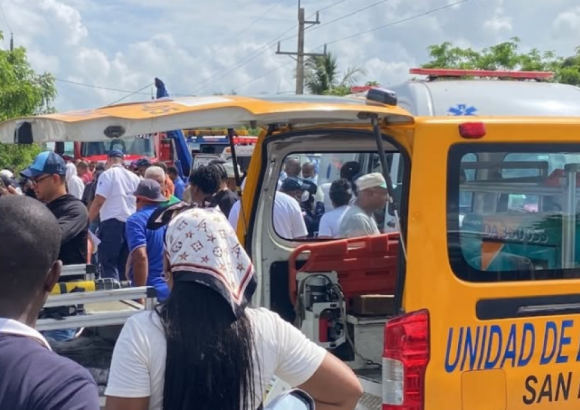
    A serious multi-vehicle incident left at least 18 people with injuries early Saturday on a key intercity highway linking the Dominican Republic towns of Hato Mayor and San Pedro de Macorís. The crash involved a public passenger bus operated by the San Pedro de Macorís municipal government.

    All of the injured victims were municipal program staff and participants traveling together from San Pedro de Macorís to Hato Mayor. They had been en route to a scheduled community work day organized as part of the national Supérate social development initiative when the collision occurred.

    Local emergency response teams from the Dominican Civil Defense quickly arrived at the crash site to manage rescue operations. Responders confirmed that two passengers had become trapped in the wreckage of the bus after the impact, forcing rescue crews to deploy specialized vehicle extrication tools to extract the pinned individuals. Both of these rescued passengers remain in critical condition as they receive care.

    Following initial on-site triage, all 18 injured people were transferred immediately to nearby regional medical facilities, where they are currently under ongoing observation and treatment from local clinical teams.

  • WATCH: St Elizabeth police appeal for use of domestic violence centre amid deadly family dispute

    WATCH: St Elizabeth police appeal for use of domestic violence centre amid deadly family dispute

    ST ELIZABETH, Jamaica — A brutal early-morning attack that left one young man dead and two other family members critically injured has spurred top local law enforcement to urge parish residents to pursue peaceful solutions for personal and domestic conflicts, rather than letting tensions escalate into lethal violence. The incident unfolded Saturday in the quiet community of Stephenson Town, located near Southfield in the parish of St Elizabeth, when a 19-year-old local resident allegedly attacked his two brothers and their mother with a machete at their shared family home. According to official police accounts, the violence broke out shortly before 1 a.m. 31-year-old Travis Williams, a local laborer and Stephenson Town resident, suffered multiple severe slash wounds across his body and was pronounced dead at the scene. The 19-year-old suspect’s 14-year-old brother and 43-year-old mother were rushed to nearby medical facilities with life-threatening injuries, and remained in critical condition following the attack. Law enforcement officials took the 19-year-old suspect into custody shortly after the incident. On Sunday, Superintendent Coleridge Minto, head of the St Elizabeth Police Division, spoke publicly about the tragedy to highlight a gap that many residents are missing: a free, professional support resource already available to help de-escalate domestic and interpersonal conflicts before they turn deadly. Minto emphasized that this fatal attack is just the latest in a disturbing trend of violence driven by unresolved personal disputes sweeping the parish so far this year. To date, St Elizabeth has recorded 14 homicide cases in the current year, and nearly 60% of those deaths can be traced back to interpersonal conflict or domestic abuse, according to police data. “The most recent murder stems from a family dispute. I continue to speak to persons in the parish that the division has a domestic violence intervention centre, it is located in Santa Cruz right at the police station and so persons who have conflicts, disputes that they are unable to solve, we encourage them and appeal to them to seek the services of the police,” Minto stated during his Sunday address in Santa Cruz. The intervention center, Minto confirmed, staffs a team of fully trained professionals specifically prepared to support families and individuals navigating contentious domestic conflicts. “There are trained individuals at this location that are willing and ready to assist persons with domestic disputes, it is quite unfortunate this situation which unfolded,” he added. Minto’s public appeal comes as local law enforcement works to curb the rising tide of preventable violence linked to unresolved domestic tension in the parish, pushing residents to reach out for support rather than resorting to violence when disputes arise.

  • INACIF Report: The discovery of carbon monoxide gives a new direction to the investigation into the deaths of mother and son in Piantini.

    INACIF Report: The discovery of carbon monoxide gives a new direction to the investigation into the deaths of mother and son in Piantini.

    A high-profile double death case in the Dominican Republic’s capital has taken a critical turn, after official toxicology results from the National Institute of Forensic Sciences (INACIF) have upended initial assumptions about what killed the two victims. The case centers on Raysa Juliza Serrano Guzmán and her minor son Jadin Nael Cornelio, whose bodies were discovered inside a residential apartment in the Arpel 07 tower of Santo Domingo’s upscale Piantini neighborhood, in the National District. After conducting specialized testing via the Conway microdiffusion method, INACIF’s Forensic Toxicology Department confirmed that carbon monoxide was present in blood samples taken from both Guzmán and Cornelio, according to two official reports released by the institute. This toxicological finding marks a breakthrough piece of evidence for the ongoing probe being carried out by the Dominican National Police and the Public Prosecutor’s Office, which has been working to pin down the exact circumstances that led to the pair’s deaths. While the official reports definitively verify carbon monoxide exposure in the victims’ systems, investigating authorities have not yet resolved a key outstanding question: where the toxic gas originated from. The incident left a third person injured: 22-year-old Carolín Milagros Pérez, who was Jadin Nael Cornelio’s romantic partner. Pérez was rushed to a private local medical facility in serious condition immediately after the incident was discovered, but she made an unexpectedly strong recovery and was eventually discharged from care. Prior to the release of INACIF’s toxicology findings, investigators’ leading working hypothesis was that the deaths were caused by food poisoning. That theory has now been formally ruled out, redirecting the entire investigation to the new line of inquiry centered on carbon monoxide exposure.

  • WATCH: Bike crash ends in flames on North South Highway

    WATCH: Bike crash ends in flames on North South Highway

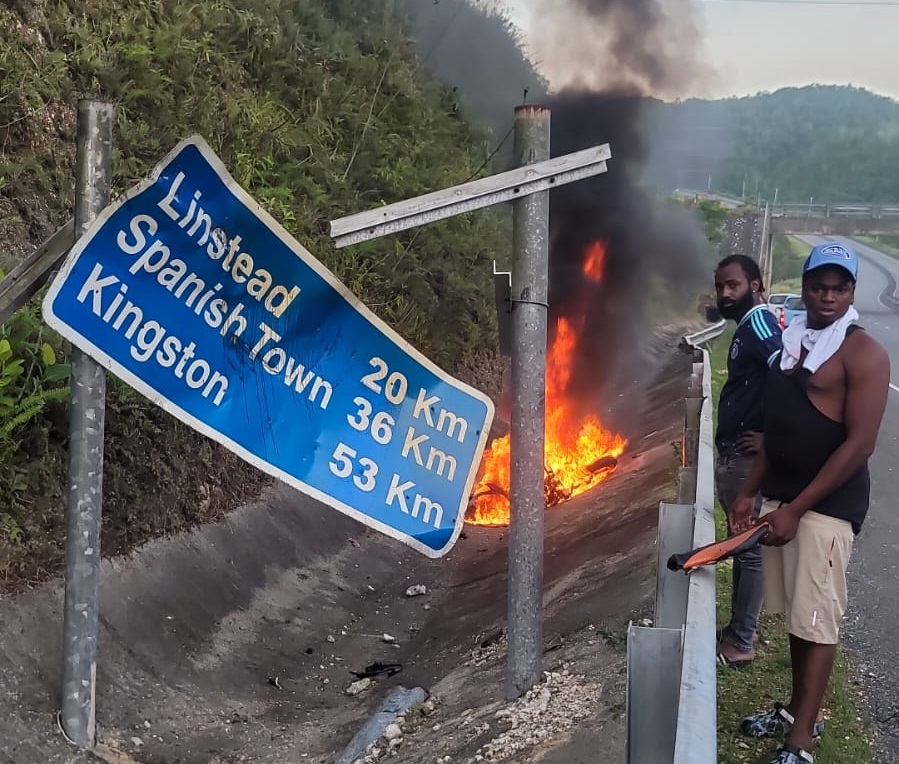
    A dramatic early incident unfolded on Jamaica’s North South Highway Sunday, when a collision left one motorcyclist hospitalized and his vehicle engulfed in flames. The crash occurred just steps from the Moneague toll exit, in the vicinity of St Catherine, as the victim rode alongside a larger group of fellow motorcyclists.

    According to initial on-scene reports, the motorcyclist lost control of his vehicle and collided forcefully with a roadside traffic sign, knocking the structure completely off its foundation. Moments after the impact, the motorcycle caught fire, sending flames billowing across the shoulder of the highway.

    Local law enforcement officers who were present or arrived quickly at the scene stepped in to aid the injured rider, transporting him directly to nearby Linstead Hospital for urgent medical care. As of the first public updates following the incident, medical authorities have not released any detailed information about the motorcyclist’s current condition or the extent of his injuries. Raw footage captured at the crash site shortly after the collision has been made available for public viewing.

  • 22 killed in 22 fatal crashes in May – ITA

    22 killed in 22 fatal crashes in May – ITA

    New monthly traffic safety data published by the Island Traffic Authority (ITA) has revealed that 22 people lost their lives across 22 separate fatal road crashes across the island during the month of May 2026.

    When broken down by parish, the western parish of St James logged the highest death toll at four fatalities. Neighboring Westmoreland followed closely behind with three road-related deaths over the 30-day period. Five parishes — Hanover, Manchester, Clarendon, St Catherine and St Mary — each recorded two fatalities each. Single fatal incidents were reported in Trelawny, St Elizabeth, St Ann, Kingston and St Thomas. Notably, two parishes, St Andrew and Portland, finished the month with zero road fatalities.

    Against the May 2025 crash statistics, the ITA’s data shows a promising downward trend in road deaths: overall fatalities have dropped by 29% compared to the same period last year, while the total number of fatal crashes has fallen by 27% year-on-year.

    A breakdown of victim demographics shows that motorcyclists made up the largest single share of May 2026 fatalities, accounting for 32% of all deaths, equal to seven lives lost. Pedestrians were the second most affected group, responsible for 27% of fatalities (six deaths in total). Both private motor vehicle drivers and passengers each accounted for 18% of the month’s death toll, with four fatalities recorded in each group.

    In an additional observation, the ITA confirmed that no multi-vehicle collision incidents resulted in fatalities during the entire month of May 2026.

  • Woman dies after safety cord left off in Brazil rope jump

    Woman dies after safety cord left off in Brazil rope jump

    A fatal rope jumping accident in southeastern Brazil has left a young woman dead and three men in police custody, after extreme sports enthusiasts failed to secure a safety line before launching the victim off a 40-meter high bridge, local law enforcement confirmed Sunday.

    The tragedy unfolded Saturday on the Skeleton Bridge, located in the inland region of Sao Paulo state. Graphic video footage of the incident, which has since spread widely across social media platforms, captures the disturbing sequence of events: two men hoist 21-year-old Maria Eduarda Rodrigues de Freitas above their shoulders and push her off the bridge span, while nearby spectators spot the missing safety gear and scream out a frantic warning: “Guys, the cord!”

    In an official statement provided to AFP, police confirmed that critical safety equipment was never properly attached to de Freitas before the jump, and the victim did not survive the nearly 131-foot fall. Authorities have taken three men into custody on charges of “homicide with dolus eventualis,” a legal classification indicating the suspects were fully aware their actions carried a high risk of death but chose to proceed with the activity regardless.

    Investigations remain ongoing, with police working to document all contributing circumstances of the accident and assign full legal liability. Local Brazilian media has confirmed the victim’s identity, and reports indicate de Freitas shared a lighthearted pre-accident post to her Instagram account shortly before the jump, captioning a photo of the bridge site: “Who was the crazy person who let me come jump off a bridge???”

    Prior footage of rope jumping activities organized on the Skeleton Bridge by local adventure group Entre Cordas shows all participants wearing thick, secured safety cords around their waists before being launched, highlighting the fatal deviation from standard safety protocols in this incident.

    Rope jumping, the extreme sport involved in the accident, is distinct from the more widely known bungee jumping: it uses a far less elastic cord, designed to let participants swing back and forth below the jump point rather than bouncing upward after the initial fall. The sport was pioneered by American adventurer Dan Osman, who himself died in a 1998 rope jumping accident at the age of 35.

  • Two French tourists killed and five others injured in traffic accident in Samaná

    Two French tourists killed and five others injured in traffic accident in Samaná

    A devastating head-on traffic collision in the Dominican Republic’s Samaná Province has claimed the lives of two French citizens and left multiple people with injuries, according to official preliminary accounts of the incident. The crash unfolded Saturday night on the key Sánchez–Samaná highway in the El Catey community, a stretch of road that links the province’s most popular tourism hubs, when a tourist minibus carrying passengers collided directly with a pickup truck.

    Local authorities have formally identified the two deceased victims as Jean Phillippe Champeaux and Severine Yvette Claudette Leuk. Medical examiners’ reports detail the fatal injuries each sustained: Champeaux died from extensive blunt force trauma to his closed skull and abdomen, while Leuk passed away due to catastrophic head damage, including a basal skull fracture.

    Multiple other people were hurt in the impact, including the driver of the tourist minibus, Jorge Thomas Dishmey Amparo. Two other casualties include Victoriana Altagracia and her 14-year-old daughter, who were riding a motorcycle near the collision site when the crash occurred and also suffered injuries. Additionally, two Haitian nationals are among those wounded, though their full identities remain unknown as of Monday, as neither individual carried official identification at the time of the incident.

    Preliminary investigations into the crash point to reckless driving as the likely cause: authorities say the pickup truck attempted an unsafe overtaking maneuver that put it directly in the path of the oncoming tourist minibus, triggering the fatal collision. Formal investigations are still ongoing to confirm all contributing factors and the full sequence of events leading to the tragedy.

    Following the fatal crash, regional observers and community leaders have renewed longstanding concerns about inadequate road safety protocols on Dominican highways, especially along corridors that see heavy traffic from tourists visiting popular coastal and scenic destinations across the country.

  • Six killed as helicopters collide in Rio de Janeiro

    Six killed as helicopters collide in Rio de Janeiro

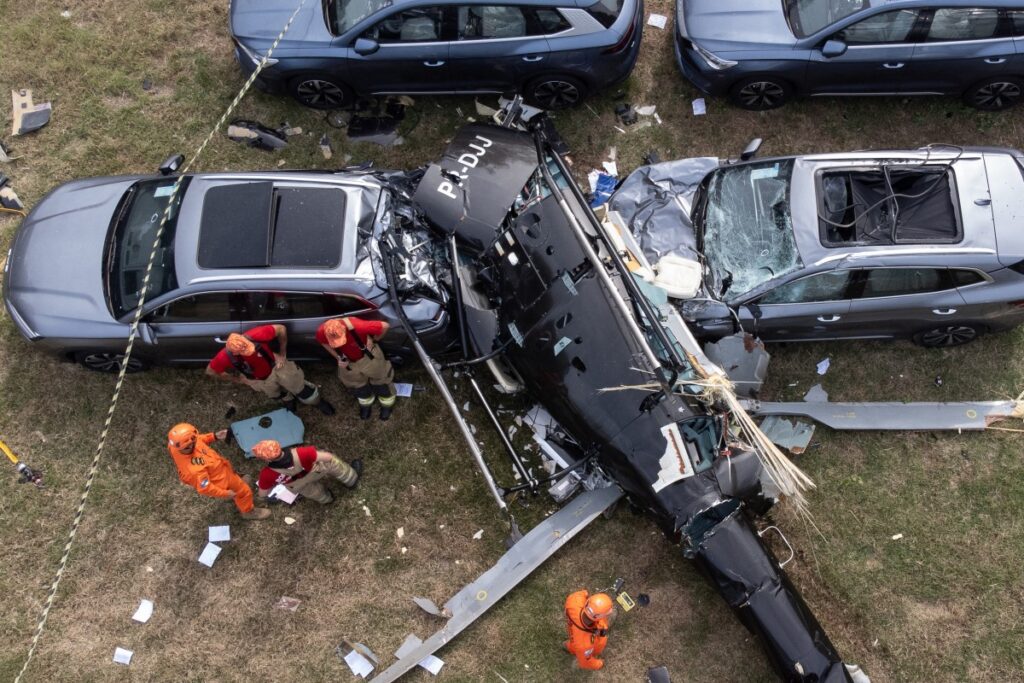
    RIO DE JANEIRO, Brazil — A devastating mid-air collision between two helicopters left at least six people dead Sunday in Rio de Janeiro’s western suburb of Recreio dos Bandeirantes, local fire department officials confirmed. Both aircraft plummeted into the open-air parking lot of a local electric vehicle dealership after the crash, triggering an intense blaze that consumed at least 20 parked cars.

    Early official statements from Rio’s fire department confirm all six fatalities were crew members on board the two collided helicopters. Rio de Janeiro Mayor Eduardo Cavaliere also confirmed that one of the aircraft carried foreign nationals, though he declined to release additional details including nationalities or identities of those on board as of Sunday afternoon.

    Speaking to reporters on the scene, fire service spokesperson Lieutenant Colonel Fabio Contreiras noted that investigators still lack a clear timeline of how the accident unfolded. “Aircraft debris is scattered across hundreds of meters of the surrounding area, so all details we have at this moment remain preliminary,” Contreiras explained. “To piece together an accurate account of what led to the collision, we need to recover on-board flight recordings and review witness footage captured at the scene.”

    Search and recovery teams documented one helicopter, carrying five crew members, that came to rest among the dealership’s electric vehicles and was immediately engulfed in flames; all five people on board were pronounced dead at the scene. The second helicopter, which crashed roughly 100 meters from the dealership lot, carried only a pilot, who also did not survive the impact.

    Local media published images from the crash site within hours, showing a thick column of black smoke billowing hundreds of meters above the dealership, as multiple vehicles burned continuously through the initial response effort.

    In a surprising silver lining, Contreiras emphasized that the crash location, an open parking lot away from crowded residential areas, prevented a far deadlier outcome. “Given the density of surrounding homes in this part of the suburb, the accident could have resulted in far greater loss of life on the ground,” he said.

    First responders faced unique challenges tackling the blaze, Contreiras added, due to the large number of electric vehicles that caught fire. Lithium-ion batteries that power most electric vehicles create unusual hazards for fire crews: when ignited, they release toxic fumes, drive up blaze temperatures far faster than traditional fuel fires, and require vastly more water to fully extinguish. “Putting out a single electric vehicle battery fire requires three to four times the water needed for a conventional gasoline car fire,” Contreiras noted.

    This collision marks the latest in a string of aviation accidents in Brazil, a continental-sized nation that ranks as the world’s fifth largest by geographic area, where small aircraft are a common mode of transit across vast distances. Just one month prior, a small fixed-wing plane crashed into a residential building in the southeastern Brazilian city of Belo Horizonte, killing both the pilot and co-pilot on board.

    Preliminary data from Brazil’s Center for Investigation and Prevention of Aeronautical Accidents (CENIPA) shows that 84 aviation accidents have been recorded across the country in 2026 prior to Sunday’s collision, with 25 total fatalities recorded in those incidents.

  • T&TEC crew hailed after rescuing baby from burning building

    T&TEC crew hailed after rescuing baby from burning building

    A team of frontline utility workers from Trinidad and Tobago has earned widespread public praise and the title of heroes after pulling a newborn infant and multiple other trapped people out of an engulfed residential or commercial structure in Port of Spain, the country’s capital. The quick-thinking, brave group belongs to the Distribution North Emergency Crew of the Trinidad and Tobago Electricity Commission (T&TEC), the state-owned power provider that has publicly celebrated its employees’ life-saving actions in an official announcement.

    In the formal statement released to the public, the national power commission highlighted that it holds extreme pride in the emergency team, who dropped their routine tasks and reacted without hesitation to the unfolding emergency to assist with the rescue operation. When confronted with the extreme hazards of a working structure fire, the crew demonstrated decisive judgment and prioritized saving human life over their own personal safety, traits that the commission says it is honored to recognize. “We commend them for their quick thinking and selfless action in the face of danger,” the statement reads.

    The full roster of the heroic crew has been released to the public: it includes lead engineer Crystal Moe, senior field supervisors Odell Wickham and Gary Cyrille, crew supervisor Vidyanand Kanhai, three line maintenance workers A Robert Nicholls, Akeem Demming and Xavier Lake, and aerial lift operator Eric Williams. T&TEC has also announced plans to share official photographs of the full team with the public once all members return to their regular assigned duties after the rescue operation.

    As of the latest update, additional details about the root cause of the blaze, the extent of damage to the building, and the current medical condition of the people rescued by the crew have not yet been released to media outlets or the general public.

  • Veteran engineer calls for drainage network overhaul

    Veteran engineer calls for drainage network overhaul

    With more than five decades of professional experience spanning major infrastructure projects across three Caribbean nations, a decorated veteran civil engineer has delivered a stark warning about the critical state of Barbados’ stormwater drainage networks, linking decades of faulty policy to accelerating road decay and growing flood vulnerability across the island.

    Andrew Hutchinson, whose career covers civil, structural and environmental engineering with deep expertise in stormwater management, watershed modeling and rainwater harvesting, shared his decades of on-the-ground insights during a recent Friday webinar focused on how poor drainage systems undermine urban infrastructure. His assessment pulls back the curtain on longstanding systemic flaws that have left Barbados ill-prepared to handle intense seasonal rainfall.

    Hutchinson argues that substandard drainage is not a minor infrastructure issue—it is the single leading driver of road deterioration across the entire island. Rating the country’s current road drainage infrastructure just 2.5 to 3 out of 10, he emphasized that policymakers and planners have repeatedly failed to recognize drainage’s outsized role in preserving road integrity.

    The roots of the current crisis stretch back to road expansion projects carried out in the 1980s, Hutchinson explained. Instead of acquiring additional land to build out full, functional drainage networks, project leaders opted to remove existing drains and replace them with narrow kerbs and slipper drains. This cost-cutting shortcut effectively turned the roads themselves into makeshift drainage channels. When heavy rains hit, water cannot run off the road surface into designated storage ditches, leaving water pooled on pavement until it overtops kerbs and floods adjacent private and public land.

    This short-sighted policy has created generational damage to Barbados’ road network, the engineer added. Compounding the problem, the Barbados Water Authority regularly excavates trenches to install utility connections, and often fails to properly restore the road surface after work is complete, creating additional weak points that break down faster when exposed to standing rainwater.

    Hutchinson pointed to the ABC Highway as a proven model of what proper drainage design can achieve. Unlike nearly all other major roads on the island, the ABC Highway includes purpose-built stormwater ditches that capture runoff, store it temporarily, and allow it to gradually drain into underground wells, fitted with grates to block debris from clogging the system. Even after heavy downpours, the system works as intended, keeping road surfaces clear and preventing downstream flooding.

    Beyond large-scale infrastructure design, Hutchinson stressed that every stormwater project requires rigorous hydrological analysis tailored to the size of the local watershed, and encouraged widespread adoption of specialized modeling software like HydroCAD to guide design decisions. For any watershed larger than 10 hectares, engineers must use modeling to calculate precipitation rates for 24-hour storm events and decide whether to design for 10-year or 25-year storm events to ensure long-term resilience. A core, often overlooked, factor in this modeling is the time of concentration— the period it takes a drop of water to travel from the farthest point of a watershed to the infrastructure point of interest, such as a culvert. Getting this calculation wrong leads to undersized, ineffective drainage systems that fail during heavy rain, he explained.

    To address the current crisis, Hutchinson has put forward a range of actionable solutions, starting with expanded adoption of low-impact development drainage systems that boost water infiltration and slow runoff. Options like GeoWeb permeable surfaces and grassed parking lots, he noted, create durable, usable surfaces that can even handle heavy truck traffic while allowing rainwater to soak into the ground rather than running off. For areas with limited open space, Hutchinson recommended the installation of small check dams in natural gullies and underground stormwater chambers in dense urban areas, which provide critical extra storage and infiltration without requiring above-ground ditches or ponds that take up valuable space. He highlighted existing successful examples of this approach on the island: underground storm chambers are already in use near Kensington Oval and along Highway 5, where there was no room for above-ground storage infrastructure.

    During the webinar’s question-and-answer session, Hutchinson doubled down on his call for widespread deployment of natural and built water storage solutions across Barbados, including expanded check dams, retention ponds, detention areas and rainwater harvesting systems. These interventions, he argued, could dramatically reduce the severe flooding that regularly hits urban centers including Holetown, Speightstown and Bridgetown, while also recharging the island’s depleted aquifers and boosting long-term water security for all Barbadians. When asked if the island needs to prioritize expanded water storage, he answered simply: “I would say yes to all of the above.”