分类: society

  • Jamaican-born instructor marks 30 years teaching yoga in New York

    Jamaican-born instructor marks 30 years teaching yoga in New York

    Long before yoga moved from a niche practice to a mainstream wellness trend embraced by millions, Michael Eaton was already a devoted student and teacher of the ancient Indian discipline. For Eaton, a devout Rastafarian who has called New York City home for more than four decades, yoga is far more than the challenging, limb-stretching postures that dominate popular depictions of the practice.

    In an interview with Observer Online, Eaton explained what draws him to yoga year after year. “The most satisfying aspect of being a student of yoga is that it brings a lot of awareness to your life, and as far as teaching it, I just love it,” he said.

    As a certified yoga instructor, Eaton has built a 30-year teaching career rooted in New York’s dynamic, multicultural landscape. He first began leading classes shortly after immigrating to the U.S. from Jamaica, launching his teaching journey in Brooklyn, before relocating more than 20 years ago to Staten Island, where he still teaches today. Born in St Ann, Jamaica and raised in Barbican, St Andrew, Eaton arrived in the United States over 40 years ago with almost no familiarity with yoga. It was not long after his arrival that he found a formative mentor in Dharma Mittra, the Brazilian yoga pioneer widely known as the “guru of modern yoga,” whose iconic Master Yoga Chart remains a staple reference for practitioners and instructors worldwide.

    Across every neighborhood he has taught in, Eaton’s classes reflect the extraordinary demographic diversity that defines New York City. Recalling his decades of teaching across the five boroughs, he noted: “I taught in Brooklyn, a Russian neighbourhood and most of the students were white. I taught in a different neighbourhood in Brooklyn and it was a mixture of different nationalities; on Staten Island, I have Koreans, Chinese, Japanese, Russians, Vietnamese, whites and blacks. Sometimes, you really don’t know who will show up to a class.”

    This open, inclusive approach has earned Eaton widespread appreciation from both students and community partners. Most recently, he led a well-received class at the Unitarian Church of Staten Island this past April. Impressed by the turnout and the event’s ability to connect local residents across different backgrounds, church administrators asked Eaton to return for an additional community-focused class in May.

    For Eaton, this invitation reinforced a core belief he has held throughout his decades of teaching: yoga is a powerful tool for bringing people together, beyond its well-documented physical benefits. “That’s a great feeling, ‘cause yoga is more than just stretching. It heals the mind just as it does the body and brings people together,” he said.

    Beyond his work as an instructor, Eaton is also an active music producer, and he says yoga has shaped every part of his life, including his creative career, by instilling greater personal discipline. He outlined the holistic framework yoga brings to daily life, explaining: “It offers more blood circulation, more oxygen to your body and it also has codes to live by— ethics codes called Yamas (first of the eight limbs of yoga) and Niyamas (the spiritual focus of yoga), and it also prescribes a vegetarian diet.”

  • Blow after blow

    Blow after blow

    For the people of Jamaica’s Westmoreland parish, the cascading cycle of hardship shows no sign of slowing. Just months after surviving the devastating impact of Category 5 Hurricane Melissa, which left countless homes destroyed and communities without power for weeks, residents are now grappling with a fresh crisis: skyrocketing fuel and living costs amplified by global unrest in the Middle East. What was already an uphill battle to rebuild has become an overwhelming struggle, leaving many wondering when their streak of misfortune will end.

    The latest fuel price adjustment from state refinery Petrojam delivered a harsh blow to motorists across the island last week, with both grades of gasoline jumping by $4.50 per litre. The increase pushed the price of 90-octane fuel to $188.57 per litre, while 87-octane now sells for $181.13. As drivers pulled into gas stations across Westmoreland on Thursday, many reacted with frustration and despair, noting they had barely begun to pick up the pieces from the hurricane before this new financial strain hit.

    “Hurricane Melissa mashed me up, and now gas a mash me up bad,” one local taxi operator told the Jamaica Observer. The driver lost the roof of his home and the small side shop he relied on for extra income during the storm. Before the recent price hikes, he typically spent around $3,500 daily on fuel to keep his taxi running. Now, that cost has climbed to at least $5,000 a day, pushing his weekly fuel expenditure over $20,000 – all while he has been unable to raise the fares he charges passengers. With the cost of vehicle parts like tires and batteries also rising sharply, the operator says he and other transport workers are desperate for permission to increase fares to keep up. “It hard, but you have to gwaan because we can’t sit down,” he explained.

    For Cave resident David Israel, the financial pressure is compounded by the costly repairs his home needs after storm damage. To restore safety to his property, he must hire electricians to rewire his home – and post-storm demand has pushed service prices sharply higher. “Everything is compounding since Melissa, and if you’re really not self-motivated and have a driven spirit to just get up back on your feet and move and not being hopeless, it will break your spirit,” he said. Though he feels the constant string of setbacks is frustrating, Israel says he remains committed to rebuilding his life.

    A local teacher in Westmoreland has turned to drastic creative measures to cut back on fuel spending. Rationing trips, carpooling when possible, and walking instead of driving have become routine – and increasingly, he is simply staying home to avoid unnecessary costs. Where he once could make a $7,000 fuel purchase last a full week, that same amount is now exhausted in just two days. While he would welcome a return to work-from-home arrangements to cut down on travel, he notes the shift would only transfer costs to his monthly utility bill, which has already climbed 50% in recent months. “If it’s work from home, we have to be careful how we do that, but I can understand the need to restrict general road movement,” he said.

    Another Cave resident, who identified herself only as Mrs James, says she is relieved to have restored electricity after months running a costly generator. Before power was restored, operating her generator cost roughly $19,000 a week – an expense she is glad to leave behind. But she was shocked to receive a $6,800 electricity bill just two weeks after service was restored. On a minimum wage income, she must now cover that bill, water costs, and school fees for her children, all while still recovering from losing her small business and livestock in the hurricane. “We are just hopeful that some better days are coming, but, to me, it just seems like it’s getting worse than how we expect,” she said.

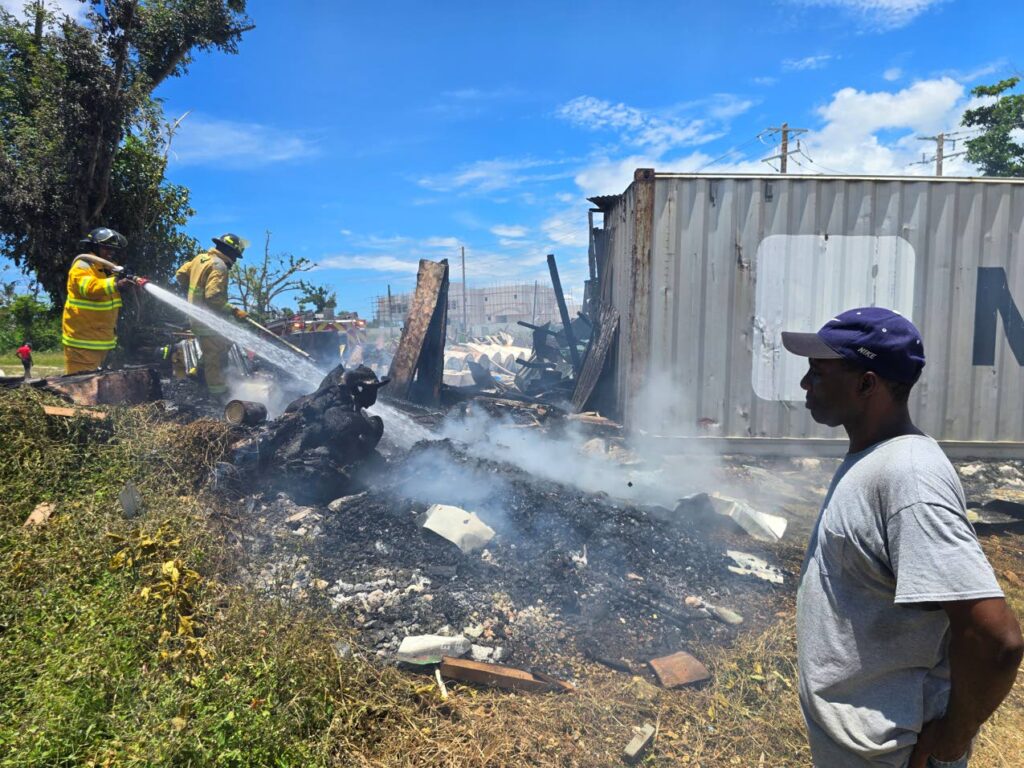
    For one local business owner, the struggle has reached a new low. Delpert Rodney, a haberdashery owner in Belmont, lost his entire store during Hurricane Melissa. He managed to salvage a small portion of his inventory and store it in a temporary back room as he worked to restart his business. Last Thursday, that remaining stock was completely destroyed in an unexpected fire. “We were at ground zero after Hurricane Melissa, and this happened. It’s really heartbreaking right now,” Rodney said. Just as his business was starting to recover, he has been set back to zero. Even so, he remains resolute: “I’m of the view that once you don’t give up, there is always room for going forward. Once you give up, then everything is dead, but once you keep trying and putting the pieces back together, you will be good.”

    As construction crews work across the parish to repair storm-damaged buildings, many residents are left waiting for relief to match the steady stream of new hardships that have continued to hit their recovering community.

  • Behaviour breakdownExpert warns of deeper social issues behind youth challenges

    Behaviour breakdownExpert warns of deeper social issues behind youth challenges

    Jamaica is facing a deepening public health and social crisis marked by surging rates of harmful behavioural issues among children and young people, prompting leading mental health experts and education officials to push for coordinated, national-level intervention to address the growing emergency. International clinical behavioural psychology specialist Dr. Coretta Brown Johnson has sounded the alarm after reviewing recent registry data, warning that ongoing trends are deeply concerning and demand consistent, concentrated action across every sector of Jamaican society. While existing national policies targeting youth wellbeing are already in place, Dr. Brown Johnson argues that these frameworks have not been sufficiently evaluated or effectively implemented across the full spectrum of young people’s daily environments, from classrooms to household and community settings, requiring urgent review and targeted adjustment to boost impact.

    Official data collected by Jamaica’s National Children’s Registry confirms the scale of the crisis: through the first three months of 2026, the total number of reported youth behavioural incidents has already reached 1,733, with cases climbing steadily month over month from 506 in January to 550 in February and 677 by March 26. This sustained upward trajectory is not a new development; over the past five years, incident counts have remained persistently high, fluctuating from 5,284 in 2020 to an all-time peak of 6,800 in 2023, before a small dip and a rebound to 6,649 in 2025. Bullying, a particularly harmful behavioural issue that often precedes more severe violence, is also growing at an alarming rate: 49 bullying cases were recorded through March 26 this year, with 22 incidents reported in January alone, and annual cases jumping from 130 in 2022 to 167 in 2025.

    Recent high-profile violent incidents involving school-aged youth have amplified public and expert anxiety over the crisis. In one fatal case, a 17-year-old student from Ocho Rios High School has been charged with the murder of 16-year-old classmate Devonie Shearer, who was attacked on school grounds on March 4. Another fatal stabbing took the life of a Seaforth High School student in Morant Bay following a personal dispute, while a widely circulated video captured multiple Jamaica College students brutally assaulting a peer they accused of theft, leading to the arrest of a student at the campus.

    Dr. Brown Johnson emphasizes that these visible behavioural crises stem from deeper, interconnected systemic failures rather than isolated individual misconduct, tracing root causes to breakdowns in core socialization institutions: the family, school systems, and broader community and cultural environments. “A child is impacted by all elements within his or her environment,” she explained in an interview with the Jamaica Observer. She detailed how economic instability in households creates cascading harm: when caregivers lack the resources to support a child’s basic needs and school participation, the outcome often includes poor academic focus, low self-esteem, lost educational opportunity, and eventually engagement in harmful or criminal behaviour. Adverse childhood experiences, she added, leave lasting damage to children’s psychological, emotional and social development, which frequently emerges as observable behavioural challenges later on. “If a child does not feel safe, they will eventually take matters into their own hands; if they are not intrinsically valued pre and postnatally, many issues can arise,” she said.

    A key contributing factor that Dr. Brown Johnson highlights is the widespread lack of consistent, clear boundary-setting for children from early childhood. Behaviours eventually categorized as “beyond parental control” rarely develop overnight, she explains, instead growing gradually when discipline and expectations are inconsistent across caregivers and institutions. Adults bear the responsibility of acting as consistent “boundary creators” and “boundary holders” to help children learn self-regulation and understand that actions carry predictable consequences, she argues. For example, unpunished repeated truancy sets a harmful pattern that persists into adulthood, making swift, proportionate and consistent consequences critical for shifting long-term behaviour. “A child should be made to understand the impact of repeated action, whether positive or negative,” she stressed.

    Schools, as core socialization institutions that interact with children daily, have a critical role to play in early identification and intervention, Dr. Brown Johnson adds. She calls for systematic behavioural tracking in schools that mirrors the existing rigorous tracking of academic progress, allowing staff to identify at-risk students early and deploy targeted support before minor issues escalate into chronic, harmful behaviours. This approach would require investment in evidence-based intervention programs and improved cross-stakeholder communication to drive sustainable resolutions.

    Jamaica’s Minister of Education Dr. Dana Morris Dixon has echoed these concerns, describing recent student violence as both “concerning and disturbing.” She agrees that school-based behavioural challenges cannot be separated from broader social and economic conditions in households and communities, noting that schools cannot resolve the crisis alone, and require consistent, active support from families and Jamaican society as a whole.

    Speaking during a sitting of the joint select committee reviewing the Child Diversion Act, Dr. Morris Dixon noted that while stronger intervention is needed for troubling student behaviour, not all incidents require processing through the formal criminal justice system. Her comments came as the committee debated proposals to use the existing Child Diversion Programme to address common school-related behavioural issues, including fights, bullying, and petty theft, which have been increasingly tied to broader student violence concerns. She added that welfare-focused interventions are already being rolled out under the Child Care and Protection Act, led by the Child Protection and Family Services Agency, which works directly with at-risk families and schools to provide targeted support.

  • Deadline for dignity

    Deadline for dignity

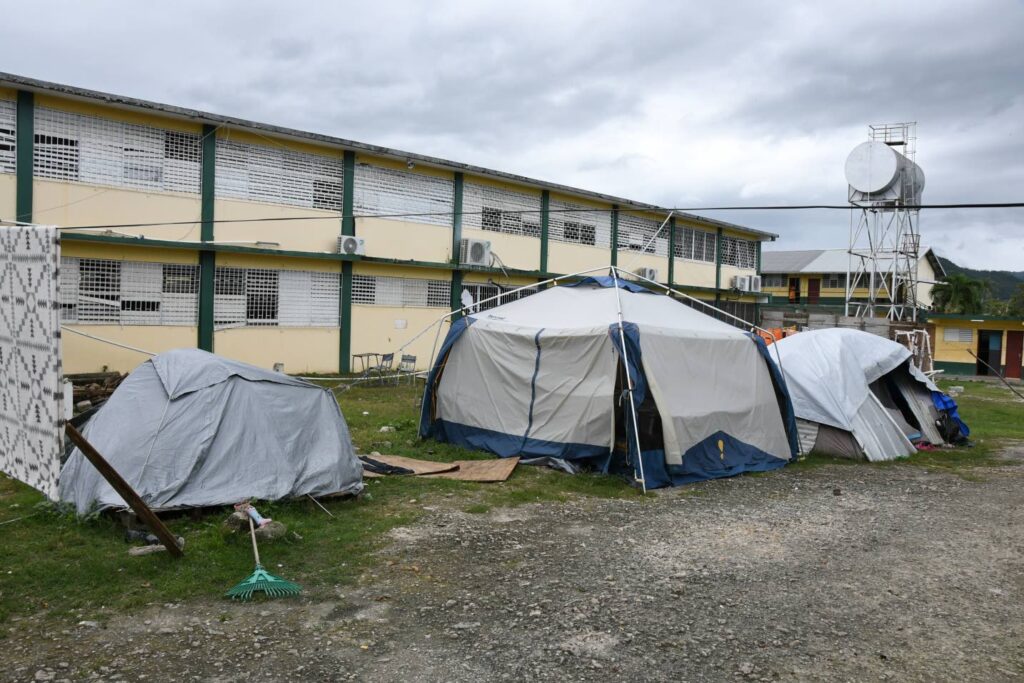
    For most Jamaicans, May 8 is nothing more than an ordinary date on the annual calendar. But for 41 displaced people hosted at the Petersfield High School shelter in the parish of Westmoreland, the upcoming date stands as a long-awaited turning point: the end of nearly six months of temporary housing after Hurricane Melissa destroyed their homes, and the chance to finally step back into a space they can call their own.

    Since the Category 5 storm made landfall on October 28, 2025, these displaced Jamaicans have lived in converted classrooms at the school. For many, this experience was entirely uncharted, who never expected to lose their homes and spend half a year navigating the uncertainty of shelter life. Left jobless by the storm and with no relatives able to host them, repeated efforts to secure alternative housing have ended in disappointment, leaving them subject to growing friction with the school community, including students who have repeatedly called for them to leave the campus.

    Now, a government commitment to relocate all remaining school-based shelter residents to appropriate accommodation by May 8, 2026 has given this group a renewed spark of hope. During a recent visit from the Jamaica Observer, shelter residents shared that they are counting down the days to regain their independence and dignity, and praying this long-promised transition will finally deliver on better living arrangements.

    The pledge comes from Jamaica’s Ministry of Local Government and Community Development, which confirmed the relocation timeline as part of the country’s ongoing national post-hurricane recovery effort. The announcement followed unsubstantiated public reports of inappropriate sexual behavior by shelter residents occurring in front of enrolled students, putting pressure on officials to resolve the prolonged coexistence of displaced families and school operations. Ministry officials emphasized the final relocation phase is rooted in a commitment to restoring normalcy for two groups: the displaced families who have lost their homes, and the school communities that have accommodated them for months. The Petersfield High shelter has been prioritized for relocation, as it remains the largest active school-based shelter in the country, hosting roughly half of the 81 total displaced people still living in school shelters across Jamaica.

    To support a smooth transition, the government is rolling out a range of tailored housing solutions to match the specific needs of each displaced family. These include prefabricated modular housing units purchased by the state, targeted rental assistance for eligible families, and custom accommodation arrangements for households with unique circumstances.

    For 22-year-old Sherese Jones, who entered shelter life for the first time after the storm, having a private space of her own would be life-changing for her and her unemployed mother. Jones, who worked as a waitress at a local hotel before the storm, lost her job immediately after Melissa hit. Her mother had worked as a caregiver for an elderly woman who passed away just weeks before the hurricane, and neither woman has been able to secure new steady income despite repeated attempts to find work.

    “It’s not the life I would have chosen, but we have to make do with what we have,” Jones told the Sunday Observer. As a woman who once prided herself on being independent, she said the hardest part of shelter life is losing the privacy and freedom that comes with having your own home. “I never want to stay in a shelter again. Shelter life isn’t easy, especially when you’ve never had to live like that before. I used to be able to take care of myself, but now I’m out of work and I have to rely on others for help.” She added that life before the storm allowed her small, simple joys: “Before, I could take a day off, treat myself, and buy the little things I wanted. Now I can’t do that, I just have to stay here.” Jones also shared that she has endured verbal harassment from students at the school, which compounds the hardship of her situation: “Sometimes the kids bother us, saying we need to get out of their school. They can be rude. We know this school is for the children, but it still hurts, and I just want to get my dignity back.” Even so, the government’s relocation promise has given her hope that normalcy is finally within reach.

    Tishnae Haywood, a mother of six who currently lives with three of her children at the Petersfield shelter, said she tried to arrange her own alternative housing after the storm, but the makeshift plywood structure she built was deemed unsafe by officials because it lacked basic amenities like a bathroom and could not withstand future storms. Haywood arranged for her other three children to live with their father, but could not find space for herself and her three youngest children. Like Jones, she is currently unemployed, and prioritizes keeping her children safe over seeking work, leaving her with no ability to secure private housing on her own.

    Haywood said she is optimistic that the upcoming relocation will bring a fresh start for her family, even if it is not a permanent solution immediately. “I’m looking forward to having my own place, even if it’s just enough space to put a mattress down. I just want my kids to be able to run around and make noise like kids should, that’s all I want,” she said. Haywood acknowledged that she has been let down by past unfulfilled promises of housing assistance, but she is choosing to give the government the benefit of the doubt this time: “It wasn’t the government that sent Hurricane Melissa here. They’re trying to help us any way they can, so I’m going to trust them for now.” Until the move, she made a public plea to Jamaicans to extend empathy to displaced shelter residents, many of whom are unable to work due to age, disability, or storm-related job loss. “We’re trying our best. A lot of us can’t work because of our situation. I’m begging people to stop criticizing us. Everyone carries their own burden. God didn’t build the world in one day, so we can’t rebuild our lives in a week or a month. It takes time, and we’re already doing everything we can,” she said.

    J Anthony Clarke, shelter manager and dean of discipline at Petersfield High, said the school administration has deep sympathy for the displaced residents and has worked to make their stay as comfortable as possible over the past six months. Even so, he welcomed the upcoming relocation, noting that the classrooms used as shelter space require significant renovations that have been delayed by the ongoing occupation. He added that both shelter residents and government officials are aligned on the need for the move, and all residents are eager to leave for more stable housing. “We currently have 16 families, including children, totaling 41 people here. Getting back to normal won’t be completely smooth, but they’re all looking forward to moving into permanent homes,” Clarke said. He acknowledged that the road to relocation has been long, but noted that a Category 5 storm causes catastrophic damage that takes time to recover from: “I understand the government needed to take the time to make sure any new housing they provide can withstand another Category 5 storm. We’re not putting people back in flood-prone areas, and we’re making sure their new homes are stronger and more stable than the ones they lost. We want them to leave the shelter with their dignity and their pride intact.”

    Bryan McGwyther, a local landscaper who lost his employer-provided accommodation when the storm hit, said he would be grateful for even a temporary rental home while he waits for permanent housing. McGwyther spent three days living amid the rubble of his destroyed home after the storm before agreeing to move to the shelter. “I have some savings, and I still work when I can, I just need a place to stay,” he said. He never expected to spend six months in shelter, and said he welcomes the upcoming relocation: “I hope that when I leave here, I get a place that I can call my own, where I can get back to building a good life for myself.”

    Pauline Williams, an elderly domestic worker who has partially lost her sight to cataracts, lost her home in the storm along with her children’s homes, leaving her with no other option but shelter. She made a direct plea to the government for support, noting that she and many other elderly or disabled residents are not able to secure housing on their own. “Help us, even just with materials like steel and concrete to build. We can’t stay here forever,” she said. “We’re waiting patiently, because we have no other option. We’re looking forward to May 8.”

    As the countdown to the relocation deadline begins, the entire community of Petersfield High shelter is holding onto hope that the government’s promise will finally deliver the fresh start they have waited half a year for.

  • Fashion, film and purpose to take centre stage at The Devil Wears Prada 2 premiere

    Fashion, film and purpose to take centre stage at The Devil Wears Prada 2 premiere

    KINGSTON, Jamaica — A unique fusion of high style, cinematic entertainment and charitable giving is set to take over one of Kingston’s most popular cinemas later this month, as the local non-profit Women’s Leadership Initiative (WLI) prepares to host a star-studded red carpet premiere of *The Devil Wears Prada 2* at the Carib 5 cinema on April 30.

    Event organisers shared details of the occasion, noting that the evening will kick off with an opening cocktail reception at 7:30 pm, designed to blend the glitz and energy of a high-fashion runway with meaningful fundraising for grassroots community projects. Attendees are encouraged to dress in their most polished, “runway magazine-ready” ensembles to match the glamorous theme, all while contributing to causes that lift up vulnerable communities across the island.

    Founded in November 2003, WLI has built its reputation over two decades driving tangible progress across four core mission pillars: public health access, early childhood education, mentorship for young people, and advocacy for gender equity and community empowerment. Unlike many large non-profits that operate at a national level disconnected from local needs, WLI has prioritized hands-on, long-term interventions that create lasting improvement for Jamaican communities.

    Operating under the umbrella of its parent organization, the United Way of Jamaica, WLI has already delivered critical support to female smallholder farmers in the parish of St Elizabeth who are still rebuilding their livelihoods after devastating losses from recent hurricanes. Most recently, the group successfully wrapped up another installment of its widely praised “Conversations with Boys” program, which offers targeted guidance and social support to young men making the critical transition from primary to secondary education — a period that often shapes long-term life outcomes for at-risk youth.

    Mentorship sits at the very center of WLI’s long-term mission, and the organization continues to actively support the 2025 cohort of the COJO mentorship initiative, a program that was a deeply held passion project of the late Jamaican community leader Marcia Erskine. At the core of WLI’s ongoing fundraising work is the VOUCH program, which backs the development and daily operations of two key local institutions: the Sylvia Foote Basic School and its connected nursery, and the Mary Issa Clinic, both of which deliver essential free and low-cost services to residents of the surrounding neighborhood.

    A statement from WLI released to the press on Sunday confirmed that all proceeds generated from ticket sales and donations at the premiere event will go directly toward funding these ongoing community initiatives. This structure ensures that every moment of Hollywood-style glamour at the event translates directly to measurable, on-the-ground change for Jamaicans in need.

    The upcoming charity premiere has received broad support from a roster of leading Jamaican corporate sponsors, including the Jamaica Observer, Select Brands, Edgechem, Sagicor Group Jamaica, Barita Investments Limited, InnerHub Consulting Services Ltd, Allied Insurance Brokers, Popeyes Jamaica, Island Grill, Palace Amusement Company, and SEAR 274.

  • From teen shadow to advocate

    From teen shadow to advocate

    At 19 years old, Jezzell Reid leapt at a chance to serve as a one-on-one shadow for a 16-year-old boy living with autism — an experience that would shape her career, broaden her perspective, and push her to advocate for systemic change in Jamaica’s special education ecosystem. Now 26, Reid works as an academic coach at Kingston Online Learning Centre while completing a journalism degree at the University of the West Indies, and after six years working as a shadow, she is amplifying a long-unheard call: the dedicated classroom and care aides who support students with special needs are drastically undervalued and underpaid, even as demand for their services skyrockets.

    Reid first encountered the shadow role through Youth Reaching Youth, an outreach program run by Swallowfield Gospel Chapel in Kingston. The initiative supports young people who left high school without earning official external certification, helping them prepare for the Caribbean Secondary Education Certificate (CSEC), Caribbean Advanced Proficiency Examination (CAPE), and trade credentials through the HEART/NSTA Trust. When the program shared that a local family was urgently searching for a shadow, Reid’s lifelong habit of community work with vulnerable youth made saying yes an easy decision.

    “That’s the path the Lord led me on,” Reid shared in an interview with the Jamaica Observer. “I already work with troubled kids and teens in my community through my youth club, but I was guided to work with special needs children, and that journey changed everything.”

    The experience gave Reid unprecedented insight into the daily experiences of neurodivergent people, challenging the stereotypes she had absorbed from popular media. “TV depicts them in such a narrow way, but when you actually get to build a relationship with them, you realize they’re some of the kindest, most genuine people you’ll ever meet,” she explained. “They just express love differently, and sometimes that feels overwhelming to people who don’t understand, but that’s just who they are.”

    Because of their small age gap — Reid is just five years older than her first student — the pair built a bond like siblings, which made supporting him through the challenges of autism feel natural. Over the years, they shared laughter on field trips, captured memories in photos, debriefed daily activities, and navigated every obstacle that came their way. Reid pushed back against the common Jamaican stigma that frames neurodivergent behavior as simply unmotivated misbehavior, choosing instead to meet her student where he was, give him space to grow, and let his personality shine.

    That approach delivered one of Reid’s proudest career moments: watching her student and his team take home a gold medal at the Jamaica Cultural Development Commission (JCDC) competition for a drumming performance. “He’s normally such a stoic kid, he rarely smiles openly, but there he was, grinning from ear to ear,” she recalled. “Knowing I got to be part of that journey, to play a small role in that success, that’s a feeling that will stay with me forever.”

    While Reid’s own experience as a shadow was deeply rewarding, it also opened her eyes to the harsh realities many of her fellow aides face. Unlike her, many shadows rely on this work as their primary source of income, yet are paid far below a living wage, even as their responsibilities often extend far beyond the school classroom. Some shadows are required to stay with students after school until parents finish work, effectively acting as surrogate caregivers for hours beyond the standard school day — yet their efforts are rarely recognized or compensated fairly.

    Reid’s call for reform aligns with a recent public petition that demands Jamaican government intervention to guarantee fair pay for school shadows. The petition outlines that despite increasing professional requirements for the role, many shadows currently earn less than the national minimum wage, which currently sits at $16,000 per 40-hour workweek and is set to rise to only $17,000 in July. Petitioners argue the current system is unjust, unsustainable, and violates both Jamaican labor laws and the government’s own commitment to educational equity.

    Shadows are officially deployed through the Ministry of Education’s Special Education Unit, which provides specialized support for students aged 3 to 21 with a wide range of needs, including autism, hearing and visual impairments, learning and intellectual disabilities, emotional and behavioral disorders, and gifted learning needs. Data from past government statements confirms the depth of the gap: in 2024, then-Education Minister Fayval Williams noted there were roughly 500 shadows in the national education system, and improving compensation was a stated priority — but little progress has been delivered to date.

    Past reporting highlights the disparities in shadow pay: a 2022 interview with then-Jamaica Independent Schools’ Association (JISA) President Dr. Andre Dyer found that parents who pay for shadows out of pocket spend between $30,000 and $90,000 per month, depending on the aide’s qualifications, while shadows at subsidized schools often earn as little as $15,000 per month, well below the living wage threshold.

    For her final-year research project at the University of the West Indies, Reid conducted an original study on supply and demand for special education shadows in Jamaica, confirming a critical gap between the growing number of students who need one-on-one support and the number of people willing to take on the role. Reid argues that fair compensation is the most critical first step to closing this gap: it would not only ensure shadows can earn a reliable living wage, but also guarantee that more students who need support can actually access it.

    “Every kid needs someone in their corner,” Reid emphasized. “A lot of the time, parents are working as hard as they can just to pay school fees, so the only consistent person a student has is their shadow, if they’re lucky enough to have one. There’s clear demand for this work, but demand alone doesn’t make people willing to take the job. Workers need to be paid a fair wage to show up and do this important work.”

    Today, Reid continues her work supporting students as an academic coach at Kingston Online Learning Centre, which serves grades 1 to 12 through a U.S.-aligned curriculum, while carrying forward her advocacy to create a fairer, more inclusive education system for all Jamaican students and the workers who support them.

  • Judge sets near four-decade sentence for revenge killing

    Judge sets near four-decade sentence for revenge killing

    In a landmark ruling that underscores the Caribbean nation’s firm stance against proliferating gun crime, a Barbados High Court judge has sentenced convicted killer Shawayne Williams to 38 years and 138 days behind bars, emphasizing that judicial institutions have a non-negotiable role to play in curbing violent armed offenses and safeguarding communities.

    Justice Laurie-Anne Smith-Bovell handed down the sentence this week, noting that courts must align their rulings with the public’s urgent demand to tackle the national crisis of gun violence. Williams, a resident of White Hall, St Michael, was found guilty by a unanimous jury verdict for the fatal shooting of Tavon Alleyne – cousin of global pop icon and Barbados’ National Hero Rihanna. The attack took place near Alleyne’s home in Eden Lodge, St Michael, on Boxing Day 2017.

    During the sentencing remarks, Justice Smith-Bovell referenced the landmark Director of Public Prosecutions Reference No. 1 of 2003 to anchor her decision, stating: “This court has a duty to protect the public as far as it can from the wanton violence perpetrated by some of our young people. Public concern about illegal firearms and violence and the need for general deterrence must be reflected in the sentences passed by the courts. The public are entitled to expect the courts to play their part in fighting the proliferation of firearms and violence. These courts serve the public interest.”

    Details presented during the trial laid out the sequence of the fatal attack: at approximately 7 p.m. on the day of the killing, Alleyne arrived via taxi and pulled over on the main road. Moments after he stepped out of the vehicle, multiple gunshots rang out, leaving Alleyne dead on the ground from multiple gunshot wounds. One eyewitness who observed a male suspect fleeing the scene positively identified the runner as Williams. A second witness corroborated the account, confirming Williams had been in the neighborhood earlier that evening, disappeared just before the shooting, and returned to the area shortly after the gunfire stopped.

    Outlining the multiple aggravating factors that justified a harsh sentence, Justice Smith-Bovell outlined several key details that elevated the severity of the crime. First, the killing included clear elements of premeditation and coordination: Williams brought an illegal firearm to the scene, and evidence suggested he received advance communication to be in the area exactly when Alleyne arrived, indicating an organized ambush. Second, Alleyne was unarmed when he was attacked, leaving him no chance to defend himself. Third, the shooting was confirmed to be an act of retaliation for a previous non-fatal shooting of Williams by a third party. Additional aggravating factors included the use of an illegal firearm that was never recovered by law enforcement, and the fact that the attack unfolded in a public residential area, putting innocent bystanders – including residents of the nearby home and the taxi driver, who later found bullet holes in his vehicle – at grave risk of injury or death.

    To reach the final sentence, Justice Smith-Bovell set an initial starting term of 39 years, adding two extra years to account for Williams’ damaging presentence report, documented history of prior convictions for serious bodily harm and assault causing actual bodily harm, ongoing illegal drug use, and the assessed high risk he would reoffend if released. The judge then deducted 774 days of pre-sentencing remand time Williams had already served, plus an additional six-month credit for delays in processing the case, resulting in the final term of 38 years and 138 days to be served at Barbados’ Dodds Prison.

    In addition to the custodial sentence, Justice Smith-Bovell ordered Williams to participate in a structured suite of rehabilitative programs during his incarceration. Based on psychological and psychiatric assessments, Williams is required to enroll in basic academic and vocational skills training to prepare him for potential reintegration into society after his sentence is complete, as well as any psychotherapeutic programs that mental health professionals or prison authorities deem necessary for his rehabilitation.

    The prosecution was led by Acting Director of Public Prosecutions Alliston Seale SC and State Counsel Paul Prescod, while Williams was represented in court by Senior Counsel Angella Mitchell-Gittens.

  • Govt makes youth protection pledge at child abuse awareness walk

    Govt makes youth protection pledge at child abuse awareness walk

    Hundreds of attendees, including staff from Barbados’ Social Empowerment Agency and a lively cohort of local children, gathered in the Warrens district last week, decked out in coordinated blue attire, for the fifth iteration of the national Child Abuse Prevention and Awareness Walk. The event, which kicked off from the parking lot of the Ministry of People Empowerment and Elder Affairs’ Warrens office complex, drew community members from across the island united behind a shared mission to end child maltreatment and amplify public awareness of this pressing social issue.

    In his opening keynote address to the assembled crowd, Minister Adrian Forde, head of the Ministry of People Empowerment and Elder Affairs, made clear that the island’s government maintains an unwavering, unequivocal commitment to protecting Barbados’ youngest generation. Far from being a purely symbolic gathering, Forde emphasized that the walk reflected a deeper national priority: the long-term stability and global competitiveness of Barbados hinges entirely on how well the country safeguards its children today.

    “These little children that we see before us, their lives must be protected in a special way and that is why we are here,” Forde told attendees. “It is not only for us to talk the talk and walk the walk as we are doing this morning, but equally to do the do as it relates to ensuring that those in the dawn of their lives are protected and given the opportunity to become firm craftsmen of their fate.”

    Forde outlined that beyond public awareness campaigns like the annual walk, the current administration has prioritized tangible, robust policy action to strengthen child protection across the island. A core pillar of this work has been sweeping legislative reform: he highlighted updated child justice and child protection frameworks as foundational to the government’s mission, noting that these new protections align with recently passed legislation designed to safeguard vulnerable elderly residents from abuse. This joined-up approach to protecting at-risk groups across all age cohorts, he explained, embodies the administration’s core governing principle: that every member of Barbadian society deserves to be seen and heard.

    The minister issued a clear call to collective action for all Barbadians, urging community members to remain vigilant and proactive in identifying and reporting signs of child abuse, neglect, and abandonment. “We have asked persons that if they see something, they say something. If they hear something that they are suspicious of — abuse, neglect, abandonment — that they equally say something,” he said. “Appreciate the fact that these little ones are under our care and each one of us is duty-bound to look after their lives.”

    As participants prepared to set off on the awareness walk, Forde reiterated that the ultimate goal of all government and community efforts is to make space for young Barbadians to pursue their dreams, in a safe and supportive national environment. He stressed that even a single child lost to abuse or neglect represents a failure the island cannot afford, committing the government to continuing progress across legislative and social interventions to protect youth.

    “We are going to do everything from a legislative perspective to a social perspective to ensure that these little ones have a tangible space in this country,” Forde said. “That is their dream. We are here to fulfill their dream; we are duty-bound to fulfill our dream. Recognize that our young people, those in the dawn of their lives, are the most important gift to our country.”

  • Police warn public against joining gangs

    Police warn public against joining gangs

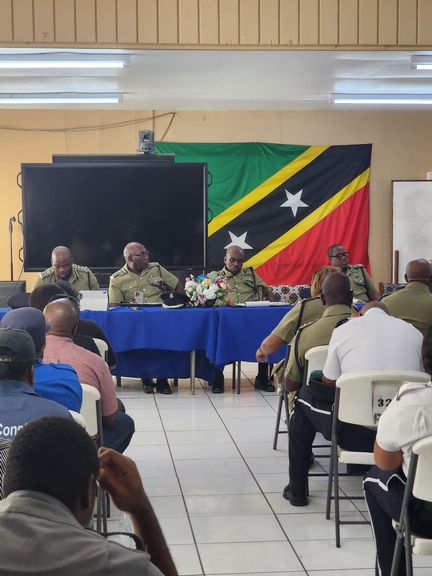
    BASSETERRE, St. Kitts — In the wake of a sharp uptick in fatal shooting incidents across the Federation of St. Kitts and Nevis that has left three young men dead in recent weeks, national law enforcement authorities have launched a renewed public outreach campaign, issuing a clear reminder that gang association of any kind constitutes a severe criminal offense under recently updated national legislation.

    The string of gang-linked violence has prompted the Royal St. Christopher and Nevis Police Force High Command to ramp up anti-gang enforcement operations and publicly outline the harsh legal consequences tied to gang involvement, leaning on sweeping amendments to the country’s Gang (Prohibition and Prevention) Act that were enacted in 2025. These legislative changes dramatically increased criminal penalties for gang-related activity to curb rising organized crime in the country.

    Per the updated legal framework, nearly all forms of gang connection are outlawed: establishing a gang, holding active membership, and even attempting to join a criminal gang are all criminal offenses. The maximum prison sentence for those convicted of basic gang membership reaches 30 years, while gang leaders and individuals who coordinate ongoing gang criminal activity can face up to 40 years of incarceration.

    The amended legislation also criminalizes a broad scope of gang-enabling activities that often fly under the public radar. This includes recruiting new members, pressuring or coercing people into joining gangs, and blocking members who wish to leave these organizations. Even indirect assistance to gangs — such as hiding gang members from authorities, supplying illegal firearms, ammunition or other critical resources used for criminal activity — carries lengthy prison sentences for accomplices.

    A key new offense added in the 2025 amendments is retaliatory gang violence against people who resist gang recruitment, leave gangs, or cooperate with police investigations. Any acts of violence, intimidation or harassment targeting these individuals carry a maximum penalty of 40 years in prison, matching the strictest penalties for top gang leaders. Additionally, the legislation now punishes impersonating a law enforcement officer to advance gang activity with up to 30 years behind bars.

    Beyond lengthy prison terms, the law allows for fines as high as EC$100,000, permits courts to order the seizure and forfeiture of any assets tied to gang-related criminal operations. This specific provision is designed to target and dismantle the financial infrastructure that allows organized criminal gangs to operate and expand in the federation.

    In their official public statement, the Royal St. Christopher and Nevis Police Force stressed that all forms of gang association carry severe, life-altering consequences that extend far beyond immediate criminal charges. Authorities are urging all residents to cut off any ties to gangs and avoid any association with these criminal groups. Law enforcement is also calling on community members to step forward to report suspected gang activity, emphasizing that public cooperation is critical to keeping local communities safe and reversing the recent rise in gang violence.

  • Wanted: Miguel Mikey Robertson

    Wanted: Miguel Mikey Robertson

    Law enforcement authorities in Barbados are turning to the public for critical support in a ongoing investigation, issuing an official appeal to track down a man identified as Miguel “Mikey” Robertson, who is currently wanted for questioning linked to severe criminal activity.

    The Barbados Police Service (TBPS) has released key details to help community members identify Robertson. According to the official release, the suspect’s last confirmed residence was #11 Hilton Row, located in the Princess Royal Pine neighborhood of St Michael. Investigators have also shared physical descriptors: Robertson stands roughly five feet six inches tall, has a dark complexion, and maintains a slim build.

    As part of standard police procedure, TBPS has extended a formal advisory to Robertson himself: he is permitted to voluntarily surrender at the Criminal Investigations Department headquarters based at the Black Rock Police Station in Black Rock, St Michael, provided he is accompanied by a legal representative.

    For members of the public who may have information about Robertson’s current location, authorities have outlined multiple accessible channels to submit tips. Anyone with relevant details can reach out directly to the CID team at Black Rock Police Station via phone at 417-7505 or 417-7500, call the national police emergency line at 211, contact the anonymous crime tip hotline Crime Stoppers at 1-800-8477, or visit any closest local police station to share information in person.

    In a key reminder for all residents, TBPS stressed that knowingly sheltering or providing any form of assistance to a wanted individual is classified as a serious criminal offense under Barbados law. Any person found to have aided Robertson after this public appeal will face prosecution, authorities confirmed. This official appeal was issued as a public notice from the Barbados Police Service.