分类: society

  • A Lesson in Nature: Sandals Foundation Takes Students on Mindfulness Nature Trail for Earth Day

    A Lesson in Nature: Sandals Foundation Takes Students on Mindfulness Nature Trail for Earth Day

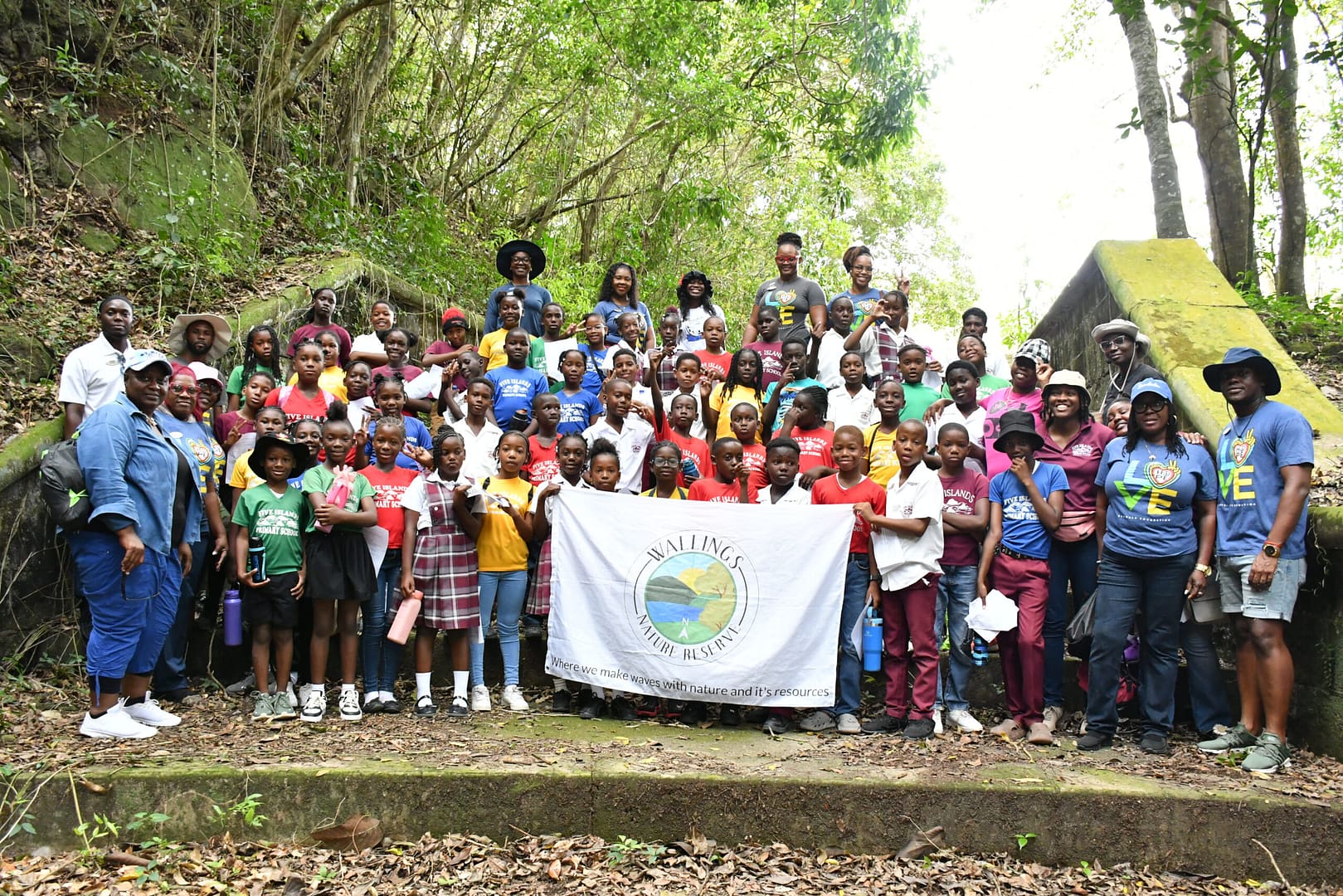
    To mark this year’s Earth Day, the Sandals Foundation brought environmental education and mental wellness together through a region-wide mindfulness nature trail program, pulling more than 300 primary school students from nine Caribbean islands out of their classrooms and into local ecosystems. Among the participants were more than 50 pupils from Antigua’s Five Islands Primary School, who explored two iconic local natural sites—Wallings Dam and the Johnson’s Point coastline—to deepen their connection to the region’s native biodiversity.

    During the guided outings, students took part in a structured sequence of activities designed to blend intentional mindfulness practice with hands-on environmental learning: guided breathing exercises, slow-paced nature walks, sensory observation activities, and group discussions focused on conservation. The program was built around two core goals: helping young people understand the proven mental and physical healing benefits of time spent in nature, and empowering them to adopt small, daily habits that protect local natural resources.

    Heidi Clarke, Executive Director of the Sandals Foundation, explained the unique vision behind the combined programming. “By pairing mindfulness practice with environmental education, we set out to encourage students to slow down, embrace the present moment, reflect on their relationship to the natural world, and develop a genuine appreciation for the beauty that surrounds them,” Clarke said. “We also wanted to help young people recognize the personal responsibility and collective power they hold to protect the natural resources that sustain their communities.”

    For one fourth-grade student who joined the Antigua outing, the experience was both entertaining and transformative. She shared that discovering Antigua’s natural treasures, from learning about native plant species to uncovering the history of the Wallings reservoir and dam, made the day feel fun while also expanding her understanding of the island’s natural heritage.

    The initiative was just as meaningful for the team of 10 Sandals Foundation ambassadors from Sandals Grande Antigua Resort and Spa, who volunteered to support the event. Led by Public Relation Manager Leon Norville, the team walked away inspired by the day’s energy. “The excitement and curiosity from both students and adult volunteers was incredibly motivating,” Norville said. “Watching how engaged young people were throughout the entire tour made all the work that went into this initiative deeply rewarding.” He also credited Tour Operator Refica Attwood of the Wallings Nature Reserve for bringing the island’s ecological history, native flora, and Indigenous cultural stories to life for participants, adding immeasurable value to the experience.

    Annetta Alexander-Hunt, a fourth-grade teacher who accompanied the Five Islands Primary School group, highlighted the long-term educational impact of the outdoor excursion beyond a single day of fun. Alexander-Hunt explained that the outing gave students a far deeper appreciation for the ingenuity of historic water management infrastructure like Wallings Dam, a lesson that feels particularly urgent amid recurring drought conditions across the Caribbean. It also helped students grasp the critical ecological role of mangrove forests in protecting coastlines from erosion and supporting vulnerable marine ecosystems. “The educational resource materials we received during the tour will help us reinforce these lessons back in the classroom, extending the impact of this field experience long after the day ends,” she noted.

    Across the region, the 300+ participating students visited a range of protected natural spaces, from national parks and mangrove forests to managed conservation areas and Beaches Resorts native gardens. A key unstated benefit of the program was giving students a intentional break from constant digital engagement, creating space to decompress from screen time and form an unmediated connection to the natural world.

    This Earth Day initiative is just one part of the Sandals Foundation’s decades-long broader conservation work across the Caribbean. To date, the organization has engaged more than 177,500 people in environmental education programming, planted over 28,000 native trees, outplanted more than 38,000 corals to restore damaged reef systems, supported monitoring programs that have enabled the safe hatching of more than 221,000 sea turtle eggs, and provided critical support to 23 marine and terrestrial protected areas across the region.

    Founded in March 2009 to expand on the philanthropic work Sandals Resorts International had carried out for decades prior, the Sandals Foundation is a registered nonprofit across multiple North American and European jurisdictions: it is a registered charity with Jamaica’s Department of Co-operatives and Friendly Societies, a CRA-registered charity in Canada, a 501(c)(3) tax-exempt organization in the United States, and a registered charity with the Charity Commission for England and Wales. The foundation focuses its work on three core priority areas: education, community development, and environmental conservation. Critically, 100 percent of all public donations go directly to community-focused programs across the Caribbean. More information about the organization’s work is available at www.sandalsfoundation.org.


  • 2 MORE HELD  IN GUN HEIST

    2 MORE HELD IN GUN HEIST

    A shocking killing of a serving Trinidadian police officer has moved into a new procedural phase, as law enforcement officials have confirmed that two additional civilian men will face criminal charges connected to the murder of Municipal Police Corporal Anuska Eversley and the theft of weapons from the San Fernando Municipal Police Station. The incident, which took place early last Sunday, has already sparked institutional upheaval and raised urgent questions about internal oversight within the country’s municipal police service.

    Trinidad and Tobago Police Service (TTPS) Commissioner Allister Guevarro announced the upcoming charges in an official audio statement released to the public this week. The new charges come after formal consultations with Director of Public Prosecutions Roger Gaspard, SC. The two soon-to-be-accused are a 24-year-old scrap iron dealer and a 20-year-old construction worker, both residents of Claxton Bay. They will be prosecuted jointly alongside a 28-year-old municipal police officer who has already been taken into custody, marking him as the only currently charged uniformed officer in the case, Guevarro clarified.

    All three suspects will face four identical counts: murder, robbery with violence, firearms trafficking, and illegal possession of ammunition, according to Guevarro. The pending charges are the product of days of coordinated investigative work and evidence recovery operations carried out across multiple districts in the country. During these searches, investigating officers seized a large cache of illegal weapons: more than 40 firearms, hundreds of rounds of ammunition, and multiple high-capacity magazines were recovered from locations across Claxton Bay, Gasparillo, and surrounding communities. The formal process of laying charges is currently being handled by Assistant Superintendent Maraj of the TTPS Homicide Bureau of Investigations. Once this paperwork is finalized, all three men will be brought before a Master of the High Court to answer the charges against them.

    Guevarro emphasized that the investigation remains ongoing, with the TTPS actively pursuing additional leads to identify every person connected to the crime. “Our investigators remain focused on identifying any additional facilitators, recovering any outstanding items and bringing every responsible individual before the courts,” he said, adding that the service will continue to share public updates while protecting the integrity of the ongoing probe. In response to widespread public concern following the killing of the 28-year-old mother of three, Guevarro reaffirmed the service’s commitment to delivering accountability: “The TTPS remains resolute in meeting that expectation.”

    Eversley’s body was discovered at the San Fernando Municipal Police Station just after 4:30 a.m. last Sunday. A post-mortem examination confirmed she died after being beaten, strangled, and stabbed. To date, police have detained 10 people in total in connection with her death and the linked weapons theft. Preliminary investigative findings, senior law enforcement sources told local outlet the Express, point to a ring of municipal officers that allegedly supplied stolen firearms and ammunition to the criminal underworld. Sources added that this illegal activity is believed to have been operating unchecked for between six and eight months, a revelation that has exposed critical gaps in institutional oversight within the municipal police service.

    In the wake of these revelations, institutional changes have already been implemented. Assistant Commissioner of Police Wayne Mystar has been tapped to replace Surrendra Sagramsingh, the long-serving Municipal Assistant Commissioner of Police who has led the Trinidad and Tobago Municipal Police Service (TTMPS) for the past six years. Sagramsingh was placed on immediate administrative leave earlier this week, a decision he confirmed in a phone interview with the Express.

    “Well, yes. I’ve been sent on administrative leave for the course of the investigation,” Sagramsingh told reporters. He explained that the administrative measure was framed as a step to protect the transparency of the probe. “Because of the investigation ongoing and they wouldn’t want me to be around performing duty, and to ensure transparency in case they see a connection.” Sagramsingh added that he had accepted the leadership’s decision. The order placing him on leave was formalized in an April 21, 2026 letter from acting permanent secretary Peter Mitchell, which explicitly states the leave is a precautionary step taken to protect the investigation’s integrity, and that the measure does not constitute a finding of misconduct or personal liability on Sagramsingh’s part.

  • Court rules police  killings unlawful

    Court rules police killings unlawful

    Nearly six years after a fatal police operation left five young men dead in Trinidad and Tobago’s Laventille neighborhood, a High Court judge has delivered a landmark ruling that the shootings were unlawful, holding state authorities accountable and mandating millions in compensation for the victims’ grieving families.

    Justice Marcia Ayers-Caesar issued the historic judgment this week, upholding civil claims brought on behalf of the five victims: 22-year-old Mechack Douglas, 19-year-old Shaundell St Clair, 15-year-old Shakeem Francois, 23-year-old Nicholas Barker, and 17-year-old Kudiem Phillip. The fatal incident dates back to October 25, 2018, when the group had gathered behind a residential property on Upper Wharton Street, Trou Macaque Road.

    Court evidence laid out a starkly different account of the encounter than the official narrative advanced by law enforcement. According to testimony accepted by the judge, Douglas was playing cards and listening to music with friends when officers from the Inter-Agency Task Force (IATF) entered the private yard. The officers allegedly taunted Douglas before shooting him in the chest. St Clair attempted to flee the scene but was chased, beaten with a service firearm, and then shot dead. Francois, Barker, and Phillip were also killed during the operation, while a sixth man present managed to escape and hide.

    State attorneys had argued that the five men opened fire on officers first, sparking a defensive shootout that justified the use of lethal force. But Justice Ayers-Caesar outright rejected this version of events, ruling it wholly unreliable and unsupported by the physical evidence presented to the court.

    Multiple key findings undermined the law enforcement narrative. Autopsy reports confirmed that both Douglas and St Clair were shot at close range directly in the chest, a detail that directly contradicted police claims of a exchanged gunfight at a distance. The judge also drew attention to two firearms that officers claimed they recovered from the scene as weapons belonging to the victims. She pointed out a striking irregularity: “It is passing strange that neither weapon had a trace amount of blood, dirt, or any appearance as if they had been used at all.”

    Beyond the lack of physical evidence to back the state’s case, Ayers-Caesar highlighted pervasive inconsistencies in the statements given by the officers involved in the operation. She also issued sharp criticism of the official investigation conducted by the Trinidad and Tobago Police Service (TTPS), noting that involved officers were never interviewed separately to cross-verify their accounts, and independent witnesses were never properly questioned.

    These investigative failures led the judge to draw a serious conclusion: “The inadequacy of the investigation on the part of the TTPS to take any steps to properly and thoroughly investigate this matter can only lead one to conclude that there may have been attempts to cover up what actually took place.”

    Having established that the killings were not legally justified, Justice Ayers-Caesar ruled that the officers’ conduct amounted to three actionable civil wrongs: assault and battery, and misfeasance—improper and harmful conduct—in public office. She explicitly found that the officers acted in bad faith, demonstrating reckless indifference to whether their actions complied with the law. “The unauthorised killing of the men on the date in question, coupled with the incredulous defence which they have put forward, clearly shows that the party of officers acted in bad faith,” she wrote in her ruling.

    In total, the judge ordered the state to pay more than $4 million in damages to the victims’ families. Each victim’s estate receives $125,000 in general damages for assault and battery, plus an additional $75,000 for misfeasance in public office. Extra aggravated and vindicatory damages were also awarded to underscore the court’s strong condemnation of the officers’ unlawful conduct.

    Senior Counsel Lee Merry led the legal team representing the families, alongside attorney Ajesh Sumessar. The Office of the Attorney General, which defended the state in the civil action, was represented by attorneys Stefan Jaikaran and Janine Joseph.

  • Police officer charged with wounding 61-y-o farmer

    Police officer charged with wounding 61-y-o farmer

    A criminal case with significant public attention is unfolding in Kingstown, where a serving 31-year-old police officer has been formally charged with unlawful wounding following an alleged attack on a 60-year-old local farmer. According to official police allegations, the defendant, Patrick Franklyn, who resides in Questelles, is accused of assaulting the Vermont-based farmer on April 18. Prosecutors claim that Franklyn struck the older man on the right side of his face, a blow that forced the farmer to fall to the ground and sustain additional head trauma from the impact.

    Franklyn made his first court appearance before Senior Magistrate Tammika McKenzie at the Kingstown Magistrate Court this Thursday, where he entered a formal not guilty plea to the single wounding charge brought against him. Following the arraignment, the court granted Franklyn pretrial release on bail set at 2,900 Eastern Caribbean dollars, on the condition that he secure a third-party surety to guarantee his compliance with bail conditions.

    As part of the release terms, Magistrate McKenzie imposed several key restrictions on Franklyn ahead of his trial. He is strictly prohibited from making any direct or indirect contact with the alleged victim, who is recognized as the virtual complainant in the case. He has also been ordered to sign in at the Questelles Police Station every Friday to confirm he remains in the area. To prevent any attempt to flee the jurisdiction ahead of proceedings, the court further issued an order for stop notices to be posted at all official ports of entry and exit across the country.
    The case is scheduled to move to trial on September 28, with all parties set to present evidence and arguments before the court at that time.

  • Lloyd  Pool herkozen als voorzitter ABPLAZ en wijst op urgente problemen personeel

    Lloyd Pool herkozen als voorzitter ABPLAZ en wijst op urgente problemen personeel

    On April 25, a decisive union election at the Academic Hospital Paramaribo delivered a clear mandate to incumbent leader Lloyd Pool, who won a new term as chair of the General Union of Staff of the State-Owned Academic Hospital Paramaribo (ABPLAZ) by a wide margin. Pool secured 403 votes, outpacing challenger Mireille Tolud, who garnered 121 votes, in balloting and vote counting held at the hospital’s on-site auditorium.

    This re-election will kick off Pool’s tenth consecutive year leading the labor organization, a tenure that reflects sustained trust from union members. In his first remarks after the result was confirmed, Pool extended gratitude to voters for their continued confidence in his leadership. “Today you have once again shown that ABPLAZ retains your full support,” he told attendees. “We have put in hard work over past years, but we will redouble our efforts to deliver for every member moving forward. Progress can only happen when we stand together, and that is the approach we will keep.”

    Despite the clear election victory, Pool did not shy away from outlining the major challenges the union will face in his new term, identifying fair compensation for hospital staff as the most pressing issue the organization must tackle. “The core problem is funding,” he explained. “Hospital employees are not paid in line with their contributions and the cost of living, which has driven a steady outflow of skilled workers to other sectors or countries. Staff should earn enough to be able to build stable lives and own homes, and that is our non-negotiable priority.”

    Beyond higher base wages, Pool also pledged to push for measurable improvements to workplace conditions and expanded secondary benefits for all ABPLAZ members. For years, the union has also been advancing a land subdivision project that will provide affordable housing opportunities for hospital staff, a initiative that has been developed in partnership with external stakeholders. Pool announced that the union will once again formally request government support to unblock the project and move it to official, full-scale development.

    In closing, Pool emphasized that widespread recognition of healthcare workers’ critical contributions remains just as important as policy and wage gains. “Every single healthcare worker plays an irreplaceable role in our community,” he said. “My hope is that we can achieve fair wages and the public recognition our staff deserve, which will stop the outflow of skilled talent that is hurting our hospital and the patients who rely on it.”

  • News 5 Facebook Poll Shows Overwhelming Rejection of New Bus Fares

    News 5 Facebook Poll Shows Overwhelming Rejection of New Bus Fares

    Scheduled to go into effect this coming Monday, a government-approved bus fare increase in Belize has sparked widespread public anger, with a recent informal social media poll showing nearly unanimous opposition from daily commuters who rely on public transit.

    The new pricing structure, approved by Belize’s Cabinet and the Ministry of Transport, grants the Belize Bus Association (BBA) permission to raise rates to 18 cents per mile for regular routes and 20 cents per mile for express services. While the per-mile increase appears modest at first glance, the cumulative cost adds up sharply for passengers making long-distance trips on a daily basis. The southern long-distance route between Punta Gorda and Belize City — a 160-mile one-way trip — will see regular one-way fares capped at $39, jumping to $78 for a round trip. Express service on the same route will cost commuters $87 round trip, a notable jump from previous pricing. For the 89-mile Corozal to Belize City run, regular service will cost $15.25 one-way ($30.50 round trip), while express trips will run $18.50 one-way ($37 round trip), with similar increases rolled out across all regional routes.

    News Five, a Belizean media outlet, conducted an informal non-scientific public poll on its Facebook page to gauge public sentiment on the new fares. The poll drew more than 2,000 responses, with 96% of participants indicating outright opposition to the price hike. Online criticism quickly went viral, with many commuters highlighting that most people rely on public buses precisely because they cannot afford private vehicle ownership and fuel costs. Many respondents also called out the poor quality of the current bus fleet, noting that decades-old, poorly maintained vehicles offer an uncomfortable ride that does not justify higher pricing.

    On-the-ground interviews with commuters at the Belize City Bus Terminal echoed most of these online complaints. While a small number of short-distance travelers said the small 50-cent increase would be manageable, most daily long-distance commuters expressed frustration. “Not fully prepared but I will have to be whether I like it or not,” one regular commuter from Hattieville who travels to Belmopan for work told reporters, adding that most riders would accept small increases only if the government followed through on long-promised upgrades to bus infrastructure. A retired commuter echoed this concern, noting that many aging buses offer such a poor quality ride that passengers arrive at their destinations sore, and no upgrades have been delivered to match higher costs.

    Belize’s Transport Minister Dr. Louis Zabaneh acknowledged that public criticism of the new fares is entirely legitimate. He explained that Cabinet approved the increase after BBA operators, particularly those operating northern routes, threatened to launch a full strike that would have disrupted transit across the country, a outcome government officials deemed far more damaging to commuters than the moderate fare hike. “Nobody wants to pay more for any of their needs including for transportation, but Cabinet had to make a decision to avoid a total shutdown of service,” Zabaneh noted.

    Not all bus providers will be raising fares, however. The state-owned National Bus Company has confirmed that it will keep its current pricing in place for the foreseeable future, leaving cost-sensitive commuters with limited alternative options for cheaper travel.

  • National Bus Company Keeps Rates Unchanged

    National Bus Company Keeps Rates Unchanged

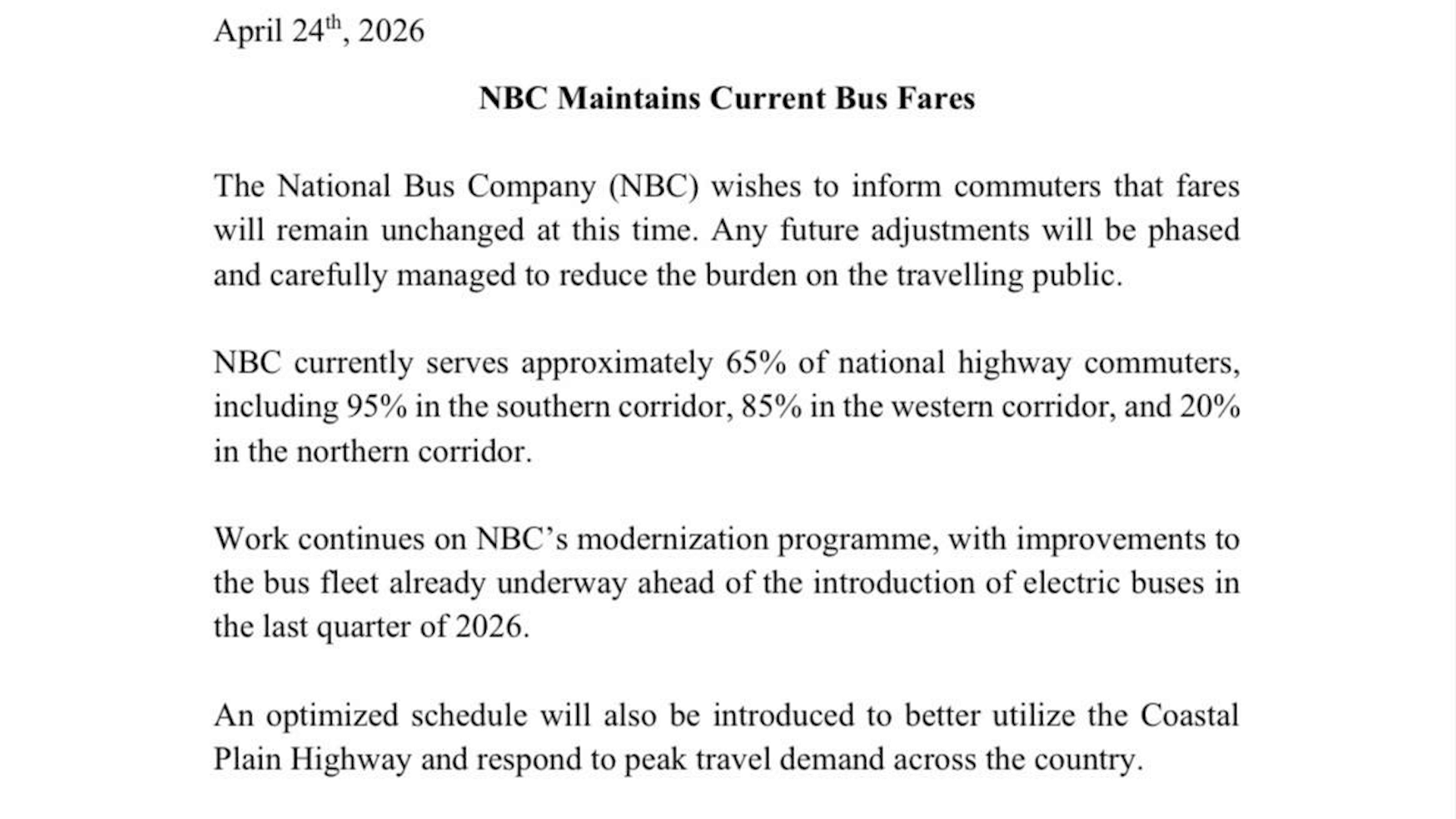
    In a much-anticipated announcement that has brought relief to tens of thousands of daily commuters across Belize, the National Bus Company (NBC) confirmed on April 24, 2026 that it will hold current ticket rates steady for the immediate future, even as other regional operators have moved forward with approved fare increases. This decision comes at a time when widespread speculation about rising bus fares has left daily commuters, particularly those in the country’s busy southern corridor, bracing for added monthly travel costs.

    As the dominant provider of intercity highway bus service across Belize, NBC carries approximately 65% of all national highway commuters, serving between 8,000 and 12,000 passengers daily depending on the day of the week. Its market share is especially pronounced in the critical southern route, which runs from Punta Gorda through Independence, Dangriga, and Belmopan before reaching Belize City, with upcoming routing adjustments along the coastal road expected to cut travel time for passengers. In this corridor, NBC controls 95% of the commuter market, meaning nearly all travelers along the high-traffic route will avoid the recently approved fare hikes that had been set to take effect. The company also holds an 85% market share on the western corridor connecting Belize City to Belmopan, San Ignacio, and the western border at Benque Viejo del Carmen. Its smallest footprint is in the northern corridor leading to Orange Walk, Corozal, and the northern border, where it only serves 20% of commuters, with most northern service provided by private operators affiliated with the Belize Bus Association (BBA).

    Belize’s Transport Minister Dr. Louis Zabaneh confirmed that the formal NBC press release, published this afternoon, explicitly notes that the rate freeze is not a permanent policy. The company has retained the right to revisit pricing if global and domestic fuel prices continue their upward trajectory. Dr. Zabaneh praised NBC’s decision, framing the temporary rate hold as a responsible step to prioritize the needs of commuters who rely on public transit for daily travel to work, school, and essential services.

    When asked whether commuters could expect rate reductions if fuel prices decline in the future, Dr. Zabaneh acknowledged that standard economic dynamics make downward price adjustments far less common than increases, a phenomenon widely referred to as sticky prices. He added that long-term fare stability for NBC will not come from fluctuating fuel markets, but from the company’s planned transition to a brand-new fleet of electric buses. Operating an electric bus costs only 25% of the operating cost of a traditional diesel bus when measuring energy expenses, he explained, meaning the shift to electric technology will create permanent long-term cost savings that can be passed on to commuters. For private operators that have already implemented fare increases to offset rising fuel costs, Dr. Zabaneh noted that operators have little remaining capital to invest in upgrading outdated fleets, but he agreed fully with widespread public expectations that improved service and newer vehicles should accompany any future price increases.

    The decision to freeze fares has sparked immediate pushback from the Belize Bus Association, the industry group representing the country’s 14 private bus operators that mostly serve the northern corridor. In a statement released just before this evening’s news broadcast, the BBA pushed back against public narratives surrounding the recent fare hikes, placing blame for the industry-wide price adjustments squarely on NBC and the government agencies that regulate the sector.

    The BBA argues that NBC operates under direct control of the Ministry of Transport, creating an inherent conflict of interest that skews both fare policy decisions and public messaging around the recent increases. The association claims that NBC has long charged the highest fares in the Belizean bus industry, while private BBA operators maintained lower rates for years, absorbing rising fuel and maintenance costs out of pocket to avoid passing burdens onto commuters. According to the BBA, the recent fare adjustment for its members was not an arbitrary price hike, but a forced alignment with NBC’s existing higher price structure after the government rejected repeated requests for fuel tax relief and operating subsidies.

    The association further alleges that government officials are attempting to deflect public anger over higher fares by positioning NBC as a responsible, commuter-friendly alternative, while allowing private operators to bear the brunt of public criticism—even as commuters across the country face higher travel costs overall. The BBA emphasizes that it remains the largest provider of bus service in the northern corridor, and that the Belizean public deserves full transparency about the policy decisions that led to the current fare landscape.

  • Zabaneh Says NBC Considering Coastal Plain Highway Run

    Zabaneh Says NBC Considering Coastal Plain Highway Run

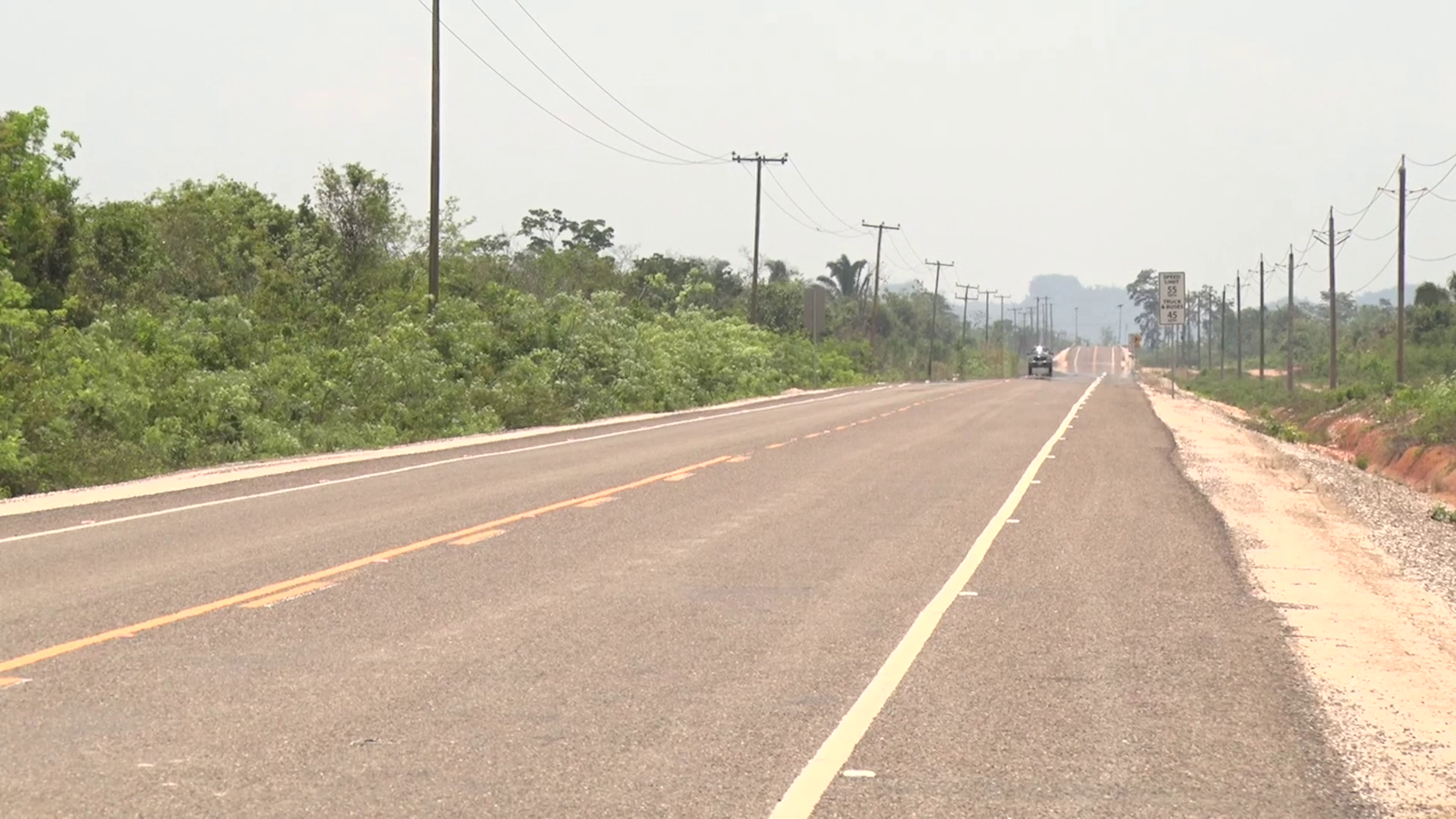
    For thousands of southern Belizean commuters who currently endure longer, more crowded trips to Belize City via the capital Belmopan, a much-anticipated travel upgrade could be just weeks away. Belize’s Transport Minister Dr. Louis Zabaneh has confirmed that the National Bus Company (NBC) is actively evaluating the launch of a new bus route that would traverse the largely underused Coastal Plain Highway, a major infrastructure project completed with a $158 million investment combining grant funding and government expenditure.

    In a recent interview following the announcement, Minister Zabaneh laid out a clear timeline and rationale for the proposed change, noting that the new service could launch as early as mid-May 2026. A key priority for the department is giving current commuters sufficient time to review the proposed changes and submit feedback before implementation. Once the route launches, the policy will remain flexible: officials will adjust schedules or service frequency based on real-world usage if any issues arise.

    According to the minister, the route is targeted at the significant share of southern commuters who currently must travel through Belmopan to reach Belize City. By shifting to the Coastal Plain Highway, these travelers could cut their one-way commute by roughly an hour, a change that would dramatically reduce daily travel time for workers, students, and other frequent visitors to the city.

    Beyond improving commuters’ daily experiences, Zabaneh emphasized that the new route would unlock greater value from the country’s existing infrastructure investment. The upgraded Coastal Plain Highway has been completed for some time, but it has not seen the traffic volumes that planners projected, leaving the multi-million-dollar upgrade significantly underutilized. Launching a dedicated bus route through the corridor is seen as a strategic step to put public infrastructure to work for the communities it was built to serve, while addressing growing demand for more efficient north-south travel options across southern Belize.

  • He Left to Collect Pay… But Ends Up Dead on Roadside

    He Left to Collect Pay… But Ends Up Dead on Roadside

    A tight-knit rural community in southern Belize is reeling from an unexpected and brutal act of violence that has left a local family shattered and searching for justice, after a 45-year-old beloved laborer left his home to collect long-overdue pay and never came back.

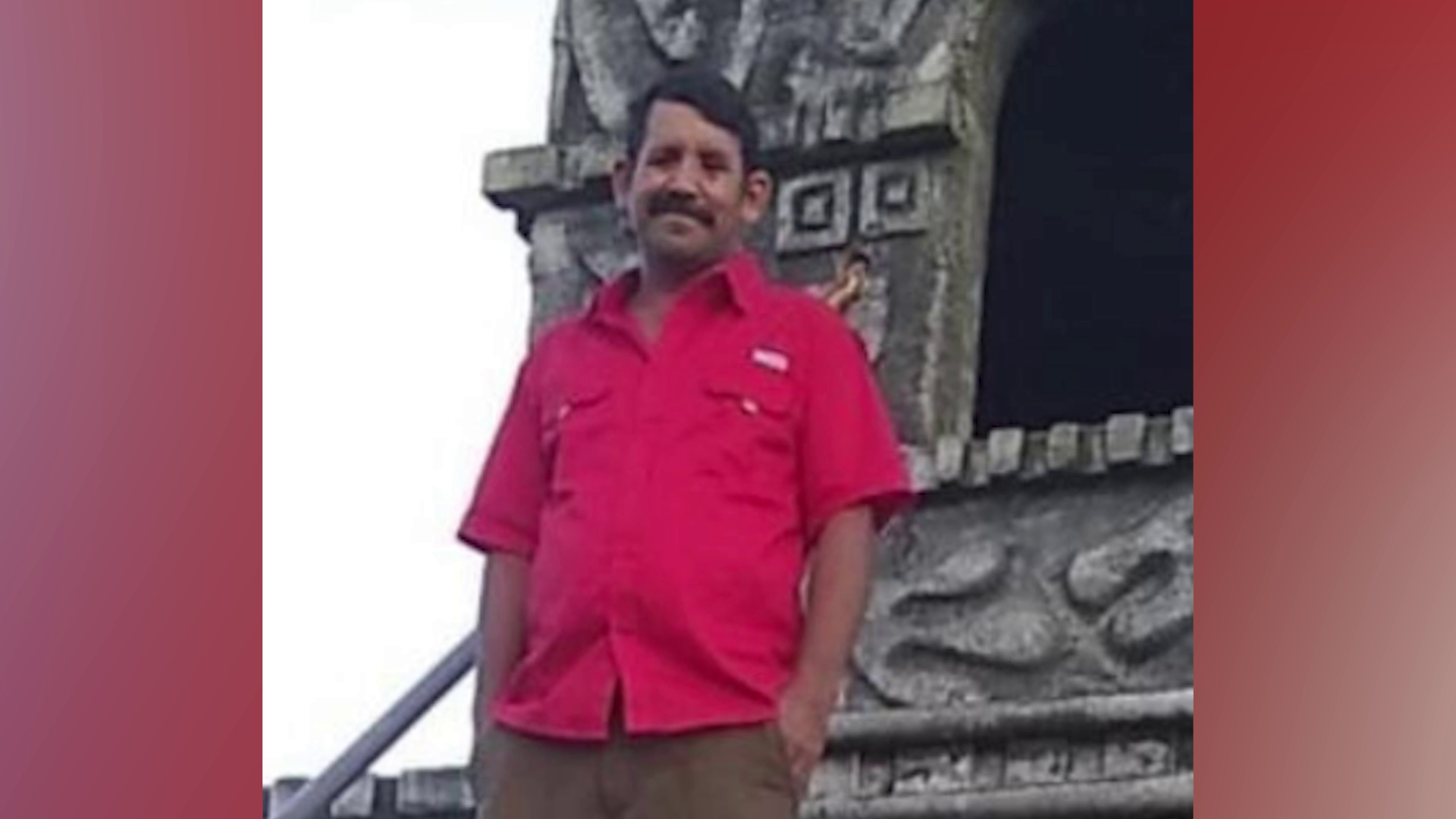
    Louis Alberto Martinez, a well-known and dependable construction worker and handyman from Santa Cruz Village, was found dead from gunshot and stab wounds just after sunrise on April 24, 2026, along a quiet stretch of the Thomas Vincent Ramos Highway near Maya King in South Stann Creek. The violent killing has upended the peace of a community unaccustomed to such tragedy.

    Martinez’s niece, Thresia Ritchie, described the devastating moment she learned of her uncle’s death. “I normally get up for work by 2 a.m., and I always keep an eye out for him, since he’s always the first one up too,” Ritchie explained in an interview with News Five. “I got the call just after six, in the middle of my work prep. The officer said, ‘Miss Ritchie, I don’t know how you’ll take this, but we think it’s your uncle here, and we need you to come identify the body.’ When I got there, it was him – we identified him by his clothes. From what we know, he left home yesterday between 4:30 and 5 to collect his pay, and we didn’t hear anything else until they found him this morning.”

    Per family accounts, Martinez had been pressing to receive the owed payment for two full days before his death. For days, the person who owed him had put him off, telling him to come back repeatedly. “He told my mom, ‘I don’t have any money on me. Can you give me five dollars? I don’t want to go out there with an empty pocket,’” Ritchie recalled. “My mom gave him the five dollars, and that was the last time she spoke to him or saw him alive.”

    Investigators confirmed that Martinez’s body was located near the 21-mile mark of the highway, with clear evidence of both stabbing and gunshot trauma. Assistant Superintendent of Police Stacy Smith, the staff officer overseeing the case, confirmed that law enforcement has launched a full investigation into the killing, focused on tracing Martinez’s movements after he left his home. “What we have gathered so far is that Mr. Martinez left his residence around 4:30 PM the day before his body was found, heading to collect outstanding payment from an employer,” Smith stated. “We are currently working to map every step of his journey after that point, to advance the ongoing investigation.”

    For residents of Santa Cruz Village, the killing is a shocking deviation from the community’s normally quiet, peaceful way of life. Village Chairman Vincent Scott, who assisted first responders with securing the crime scene Thursday morning, noted that spent bullet casings were found at the site alongside Martinez’s body. “This is a working village – everyone heads out to work in the morning and comes home in the evening,” Scott explained. “This isn’t a gang-affected area, and Louis wasn’t involved in any gang activity at all. He was just a regular, hardworking man who went out to do what he had to do. An incident like this makes all of us wonder what could have happened. We’re waiting for police to get to the bottom of it.”

    Tonight, Martinez’s family is mourning the loss of a man they described as the steady, reliable heartbeat of their household. Though they are devastated, Ritchie says the family holds out hope that law enforcement will solve the case and deliver the justice they are searching for. “I have faith in the officers working on this case,” Ritchie said. “All we want is for this to go smoothly. There’s nothing else we can do right now.”

    This report comes from Shane Williams, reporting for News Five.

  • Police Seek Identity After Another Body is Found Near Port

    Police Seek Identity After Another Body is Found Near Port

    Months marked by two brutal teen killings in the coastal zone surrounding the Port of Belize have entered another chapter of uncertainty, as law enforcement officials launched a new death investigation following the discovery of a third corpse in the same general area this week.

    The grim find was reported to authorities at 12:44 p.m. on April 24, 2026, when a local fisherman plying his trade near the shoreline stumbled across the heavily decomposed remains of an adult male, according to Assistant Superintendent Stacy Smith, a staff officer with the Belize Police Department.

    Unlike the two earlier teen homicide cases that sent waves of concern through Belize City, the latest discovery shows no outward signs of trauma or foul play at this preliminary stage of the probe, Smith confirmed. An official autopsy has been scheduled to confirm the cause of death and resolve lingering questions about how the man died.

    Investigators’ top priority right now is pinpointing the identity of the deceased, a process that they hope will be accelerated by the relatively intact clothing found on the body. The unknown man was wearing a plain black T-shirt, khaki trousers, and a pair of black-and-white Nike athletic sneakers when he was found, details police released to the public in hopes of prompting tips from anyone who recognizes the description.

    The body was recovered along the shoreline behind Port of Belize Limited, an industrial zone that has now seen three bodies recovered from its surrounding dykes and coastal areas within a single calendar month. While the location of the latest find is near the sites of the two earlier teen killings, Smith noted that the recovery locations differ slightly: the latest corpse was found on the shore, while the previous two were discovered on nearby inland areas.

    Smith emphasized that every unexplained death draws full attention from the police department, regardless of the preliminary circumstances. In the wake of the two homicides earlier this month, law enforcement has already stepped up patrols and expanded investigative operations across the high-concern zone around the port, actions that will continue as the probe into this latest death moves forward.