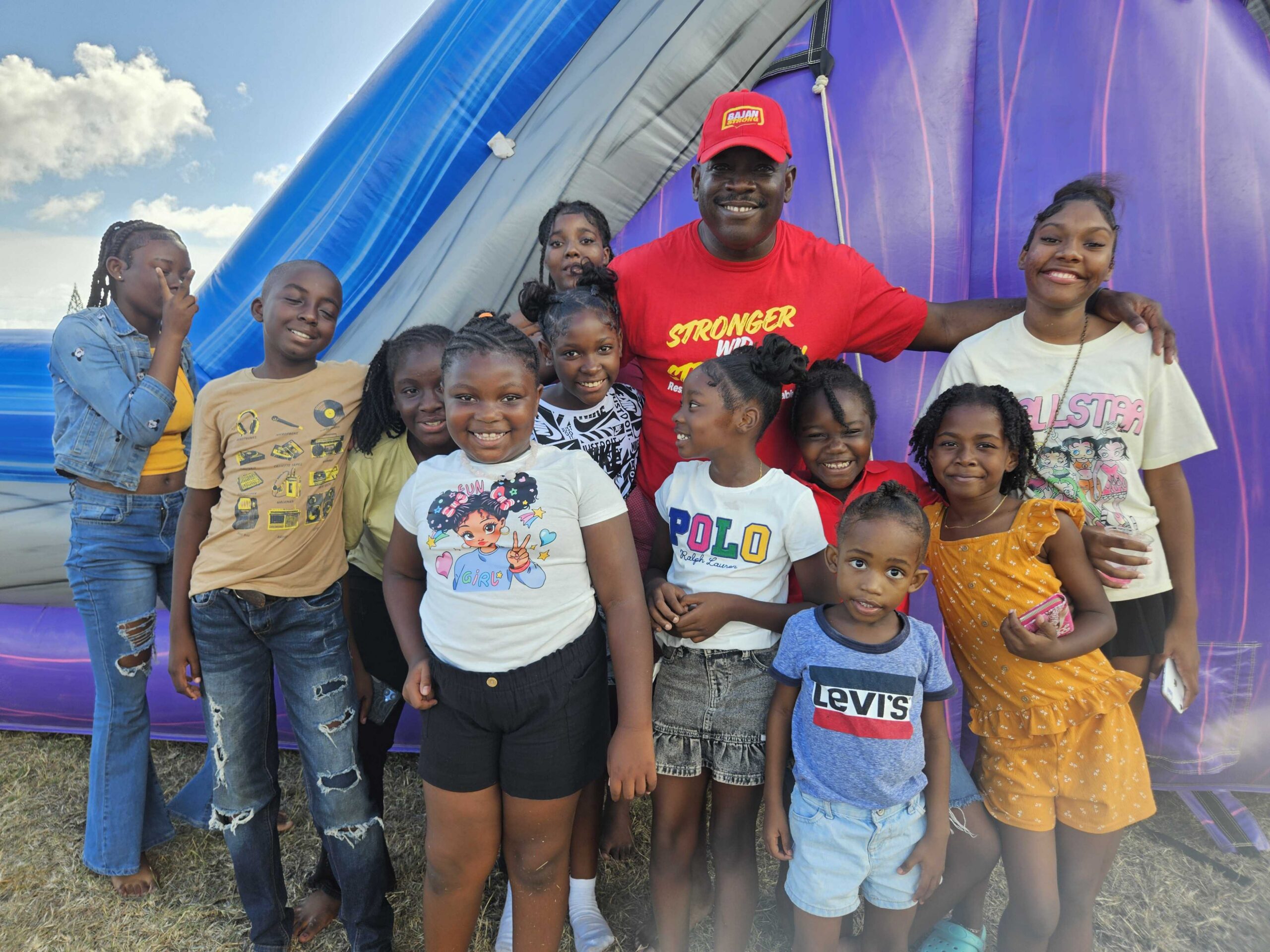
On Barbados’ annual National Heroes Day this Tuesday, residents of the Christ Church East Central constituency did not let the cancellation of a long-standing traditional event dim their festive spirit, thanks to a rapid, community-focused response from their local representative. When the Barbados Labour Party was forced to call off its yearly Heroes Day Picnic and Rally – a gathering that typically draws crowds to the island’s East Coast – Member of Parliament Ryan Straughn moved quickly to organize an alternative family fun day in the Wotton neighborhood. The last-minute event far exceeded expectations, drawing hundreds of residents from across the constituency who turned out to connect with neighbors, celebrate the national holiday, and enjoy a full slate of family-friendly activities. Attendees were treated to upbeat live music, open karaoke sessions, inflatable jumping tents for children, and a spread of local culinary favorites that created a warm, lively, and inclusive festive atmosphere. In an interview on-site, Straughn shared that the impromptu event quickly came together after organizers had to completely restructure their original holiday plans. “From all reports, we’ve had a good time. The food is great. The entertainment is nice,” he said, emphasizing that the laid-back, interactive tone of the day helped bring neighbors closer than the larger, more formal annual rally often allowed. Straughn himself joined in the recreational fun, racing a dozen young attendees to the popular jumping tent as part of the day’s focus on intergenerational connection. He called the gathering a “good, wholesome family event” that aligned perfectly with the unifying spirit of National Heroes Day. Beyond the fun and festivities, Straughn highlighted that the event carried a meaningful, deeper message about the role of community in building strong, cohesive societies. “Community life and family life is critical to social cohesion,” he explained, expanding on the ongoing local initiative to encourage neighborhood watch and collective responsibility for public safety. The representative noted that this outreach encourages residents to speak up when they observe potential risks, a practice that directly helps protect the safety of children and all family members. He stressed that safeguarding young people cannot fall solely to parents or official authorities; it requires shared commitment across entire communities. “That is why it is critical that as stakeholders, as parents, guardians, families, that we need to make sure that we safeguard the best interests of our children for the love for the future,” Straughn added. For attendees, the day served as both a joyful national holiday celebration and a powerful reminder of how strong local bonds can turn unexpected setbacks into meaningful community building opportunities.
分类: society
-

‘No pressure’: St Rose takes on task of rebuilding SLNYC
Stepping into one of the most high-profile roles for young leadership in Saint Lucia, newly installed president of the Saint Lucia National Youth Council (NYC) Bernell St Rose is defying expectations with a remarkable level of poise, even when others expect her to feel overwhelmed by the weight of the role.
When reflecting on the pressure of the presidency, St Rose downplays the stress, noting that her experience competing as a Carnival Queen contestant in 2023 brought far more pressure than leading the nation’s peak youth body. That calm, she suggests, was forged not only during her pageant run but also through her prior tenure leading the Soufrière Youth and Sports Council, where she cut her teeth on grassroots youth work.
Two months into her term, St Rose has already mapped out the urgent challenges that demand her executive’s attention, against a backdrop of growing systemic hardships facing young Saint Lucians: soaring living costs, unpredictable employment markets, restricted access to startup capital, and rising social instability. Most critically, she acknowledges that the NYC has lost the trust of young people across the island in recent years, a gap she is determined to close.
Her core mission, she outlined in an interview with local publication St Lucia Times, is to rebuild public pride and trust in the organisation as a credible representative body that listens to young people’s needs and delivers tangible solutions. “Honestly, my journey has been eye-opening, to say the least, but also rewarding,” St Rose told the outlet. “I came in knowing what the challenges of NYC were, and knowing the extent of work and time that would have to be invested into NYC to make it what it’s supposed to be.”
Among the most pressing issues is the widespread disengagement of young people from civic and community life, including the declining culture of volunteerism across the country. Another top priority is addressing the escalating mental health crisis among Saint Lucia’s youth: the council plans to create dedicated safe, supportive spaces where young people can grow without fear of judgment, surrounded by positive reinforcement to counter the widespread negative narratives impacting the nation.
St Rose also flagged that strengthening student councils across all Saint Lucian schools will be a central pillar of her administration’s work. Truancy and falling youth participation in school governance have already been flagged as national concerns by Education Minister Kenson Casimir and Prime Minister Philip J. Pierre. To address this gap, the NYC has already opened formal discussions with the Ministry of Education, and is preparing for a national tour of schools in May to embed stronger, more effective student leadership structures. “We understand that we need to meet young people where they are, and where they are right now is at school,” St Rose explained.
Past iterations of the NYC executive have drawn criticism for losing momentum and failing to deliver on campaign promises after the first year in office. But St Rose says her administration will chart a different path, pointing to her proven track record of delivering results at the Soufrière Youth and Sports Council, as well as new partnerships with the Saint Lucian private sector to support youth programs across financial literacy, sports, and advocacy.
“We’re here on a whole new plane, with a whole different perspective, in just re-energising and revitalising the youth space in Saint Lucia,” she said.
Far from being intimidated by the high expectations placed on her leadership, St Rose remains completely unfazed. This is not because she underestimates the scale of the work ahead, but because she entered the role with full awareness of what it would demand, and is confident she has the preparation and drive to deliver on her promises. “I know what I came into,” she said. “I feel confident being at the helm that I can do what I was set out to do.”
-
CMPI issues warning on youth violence
A prominent Caribbean peace advocacy organization is sounding the alarm over Barbados’ escalating gun violence crisis, warning that without immediate, coordinated cross-sector action to address the underlying drivers of bloodshed, the island nation could face irreversible social breakdown.
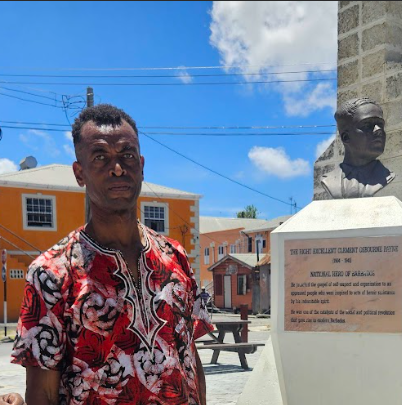
During a press briefing held in downtown Bridgetown’s Golden Square, Ian Marshall, a long-time educator and active member of the Caribbean Movement for Peace and Integration (CMPI), emphasized that the worsening violence—disproportionately impacting young men—requires a unified, collaborative response from all of the country’s core public institutions.
Marshall argued that piecemeal blame-shifting between different groups will not deliver meaningful progress. “Too often, we point fingers: society blames parents, parents blame community leaders, everyone points to politicians and police. But solving this crisis demands every stakeholder step up to the table. Only a holistic, collective approach can turn the tide,” he explained.
So far this year, Barbados has recorded more than 20 homicides, with a sharp spike in fatal shootings linked to illegal firearms. Recent weeks have seen multiple public shootings, including brazen, daylight attacks in populated community spaces, confirming both the growing accessibility of illegal guns and the rapid spread of violence across neighborhoods once considered safe.
Marshall called the steady loss of young lives a devastating national tragedy, noting that ongoing violence poses a direct threat to Barbados’ long-term social cohesion and economic stability. “It is an incalculable loss when young Black men are lost to this violence, especially at a moment when we need the energy and contribution of all young people to build a stronger, more equitable nation. Without young men and women playing their part in national development, Barbados has no viable future,” he said.
A key point of Marshall’s call to action is the urgent need for early intervention within the national education system, where he said problematic behavioral patterns first emerge, often as early as primary school. “We have been flagging emerging issues in primary schools for years. When we fail to address these problems at their root, they do not go away—they grow into far more serious, violent challenges as young people age,” he noted.
While Marshall acknowledged that law enforcement has a critical role to play in curbing immediate violence, he stressed that policing alone cannot resolve the deeper crisis. He explained that most offenders who end up in the criminal justice system first exhibited unaddressed behavioral challenges during their early school years. “Police are only called in at the end of the process. Law enforcement leaders themselves will tell you that the patterns of violence we see today trace back to primary and secondary schools, where these issues first took root,” Marshall said.
Beyond early intervention, he called for a fundamental shift in educational priorities, arguing that schools need to expand their focus beyond core academic subjects to embed life skills, critical thinking, and strong cultural identity into student learning. “We cannot fixate solely on test scores in English and mathematics. We need to teach young people how to navigate life, how to reason through conflict, and how to think critically about the world around them,” he said. Marshall added that reconnecting youth to Barbados’ full historical context is essential to helping them understand and address the modern social challenges they face.
He traced the current cycle of violence to deep historical roots, noting: “Barbadian society was built on a foundation of colonial violence, and that pattern of harm has persisted through generations. Today’s youth are just adopting new, more deadly methods to act on that legacy.”
The veteran educator also highlighted systemic gaps in student support, pointing to chronic resource shortages that leave schools ill-equipped to address the social and emotional needs of at-risk youth. “We need more trained staff, more targeted programming, and the necessary resources to meet young people where they are. We can’t expect under-resourced schools to solve a national crisis on their own,” he said.
Marshall also voiced concern over the steady erosion of the shared social values that once bound Barbadian communities together. “We’ve moved sharply away from the core values we once held dear, the values we taught and passed down to each new generation. Those values are eroding day by day, and it’s past time we ask as a nation: where did we go wrong?”
-
Fire Destroys About 13 Structures in San Pedro Columbia
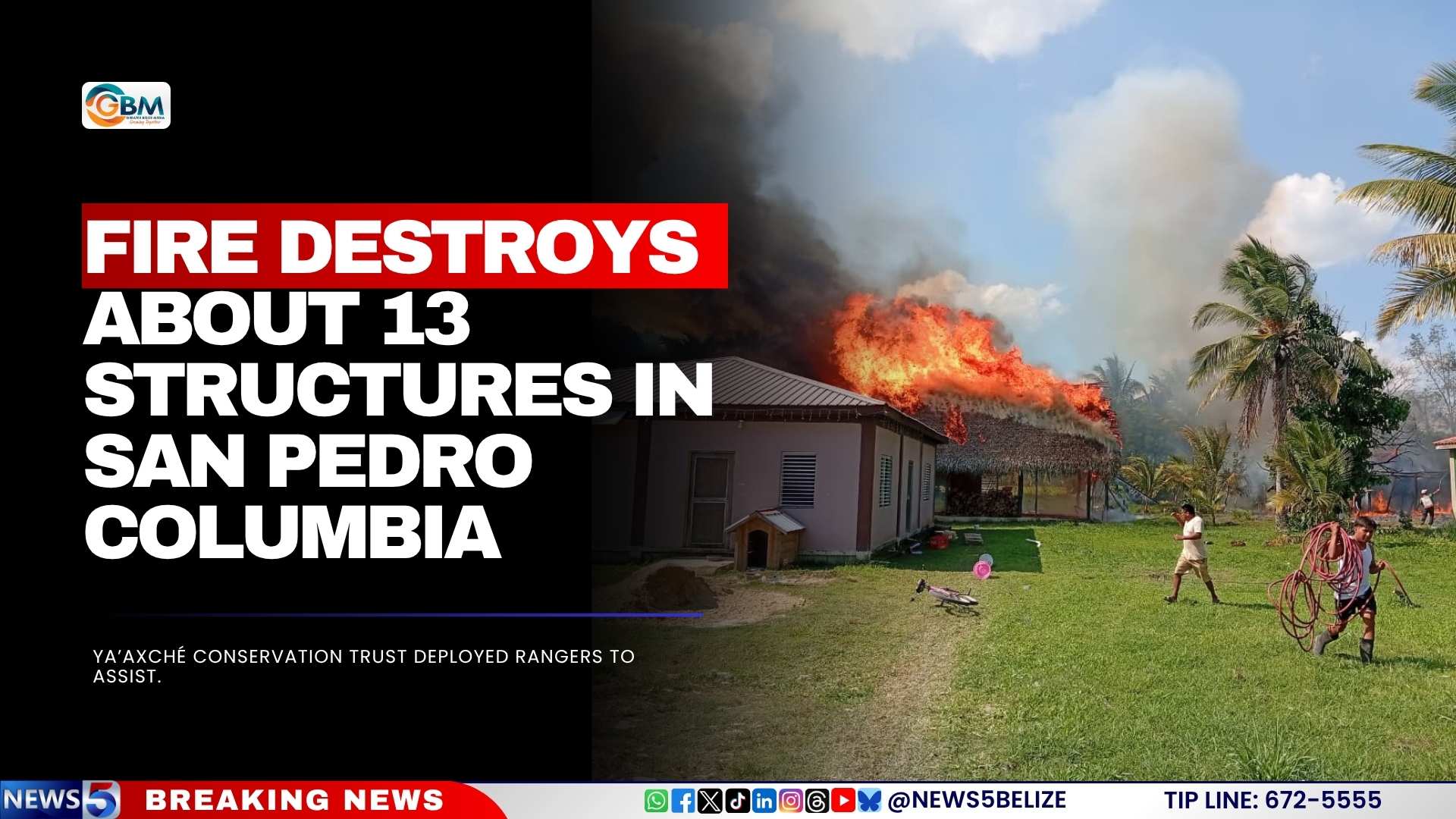
On April 28, 2026, a rapidly spreading wildfire tore through the rural village of San Pedro Columbia in Toledo District, destroying approximately 13 local structures and displacing at least 10 families, with community leaders now calling for urgent humanitarian support to aid recovery efforts.
Local village chairman Abner Cal shared details of the disaster with regional outlet News 5, explaining that unfavorable conditions supercharged the blaze’s spread. Strong crosswinds sweeping through the community, combined with the large number of traditional thatched-roof buildings — which are highly susceptible to ignition — allowed the fire to move across the landscape far faster than emergency responders could initially organize a containment effort.
Despite the lack of immediate formal fire resources, Cal highlighted that villagers mobilized quickly to form a grassroots response, working together to corral the fire and stop it from spreading to additional parts of the village. As of initial reporting, the blaze has been contained, but the damage left in its path is extensive. Cal confirmed that the fire burned across an area stretching roughly a quarter of a mile, destroying every structure in its path through the residential community.
Preliminary investigations into the cause of the fire point to an origin in the kitchen of one of the village’s local churches, before the wind carried embers to adjacent buildings and ignited the larger blaze. No injuries have been reported as of the latest update, but the material damage has upended the lives of dozens of villagers.
Local conservation organization Ya’axché Conservation Trust has already joined the response effort, deploying a team of its rangers to the village to support containment and initial recovery work. Assessments are still ongoing to determine the full financial value of damaged and destroyed property, as displaced families begin the long process of rebuilding their homes and lives.
With most affected families losing their homes and nearly all their personal possessions in the fast-moving blaze, community leaders have issued a formal appeal for donations, shelter support, and building materials from regional donors and government agencies to speed the recovery process.
-
Renewed call for two new national heroes
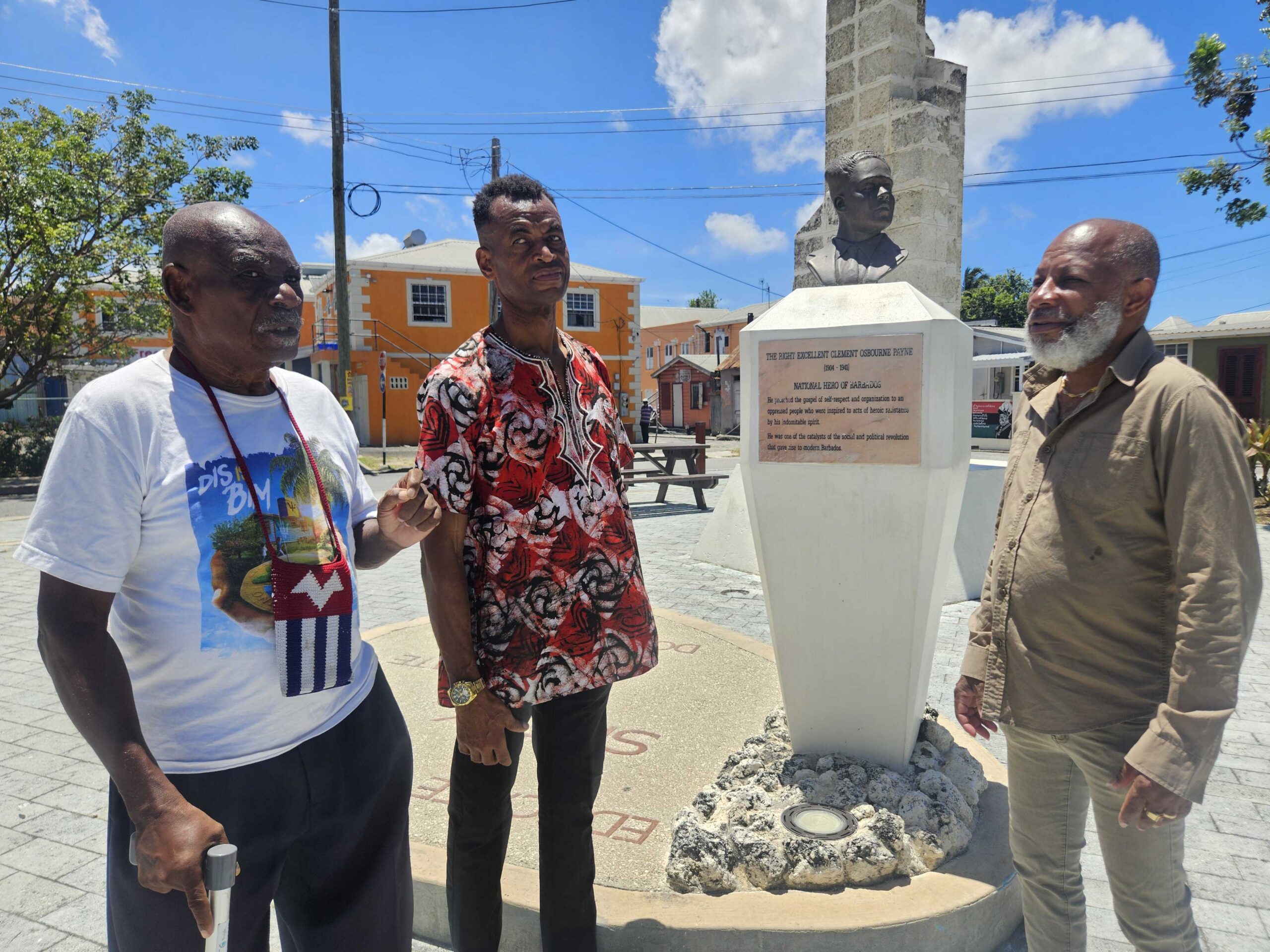
On Barbados’ annual National Heroes Day, a prominent regional activist has reignited longstanding public demands to expand the island nation’s roll of honoured national figures and officially rename a major St. Michael traffic circle to recognize two underrepresented trailblazers of Barbadian history. David Denny, General Secretary of the Caribbean Movement for Peace and Integration, made the formal appeal during a press gathering convened Tuesday at the Clement Payne Monument, framing the push as a critical step to more fully reflect Barbados’ journey of social and political emancipation.
Denny opened his remarks by grounding the appeal in the legacy of Clement Payne, the iconic labor organizer whose work laid the groundwork for the 1937 Barbados labour uprising. Payne, who arrived in Barbados to organize exploited working people, educated, mobilized, and unified workers across the island, Denny explained. His movement directly spurred the formation of the country’s first formal political parties, trade unions, and grassroots working-class advocacy groups that remain central to Barbadian public life today. It is against this backdrop, Denny argued, that one of Payne’s closest and most influential collaborators has been unfairly overlooked for national recognition.
“Today I am using this occasion, when we gather to honor the heroes who built our nation, to call for Israel Lovell to be officially named a National Hero of Barbados,” Denny said. “His tireless work, unwavering commitment to the 1937 labor movement, and critical contributions to our fight for working-class justice make him fully deserving of this highest national honor.”
Beyond Lovell’s recognition, Denny also renewed multi-decade calls to honor Nanny Grigg, a revolutionary female anti-slavery organizer who played a pivotal, under-documented role in the 1816 Bussa Rebellion, Barbados’ largest mass uprising against chattel slavery. Denny highlighted that Grigg dedicated her work to educating enslaved people across the island, sharing news of the successful Haitian Revolution — the first successful slave revolt in modern history — to fuel hope and organize for emancipation.
Barbados already officially recognizes Bussa, the leader of the 1816 rebellion, as the “father of Barbadian emancipation,” Denny noted. On that basis, the Caribbean Movement for Peace and Integration is calling on the Mia Mottley administration to grant Nanny Grigg National Hero status, framing her as the rightful “mother of Barbados” for her foundational contributions to the fight for freedom.
In addition to updating the National Heroes list, Denny is calling for official action to rename a prominent public space to reflect the new recognition. Currently called the J.T.C. Ramsay Roundabout, the busy St. Michael intersection is already colloquially known to most Barbadians as the Bussa Roundabout. Denny argued that the government should formalize the public’s common usage and expand it, renaming the circle the Bussa and Nanny Grigg Roundabout. This change, he said, would give long-overdue public recognition to Grigg’s pivotal role in Barbadian history and help correct the historical erasure of women’s contributions to the nation’s emancipation.
Denny emphasized that these proposals are not isolated demands, but part of a broader movement to deepen national awareness of Barbados’ full history and expand public participation in National Heroes Day celebrations. “We will continue to stand behind this day as a core national celebration, and we will do whatever it takes to create space for the Barbadian people to honor the full range of leaders who built our nation,” he said.
Calls to expand Barbados’ National Heroes roster have circulated for decades among historians, cultural commentators, and grassroots activists, who have repeatedly argued that the current list of 10 honorees fails to capture the full diversity and breadth of the country’s social and political development. Under the country’s National Heroes Act, Barbados currently recognizes 11 National Heroes, with the most recent addition being global music icon and diplomat Robyn Rihanna Fenty, who was conferred the honor on November 30, 2021, during the country’s transition to a republic.
-

‘It Was a Warning Bite’: Expert Says Croc Was Not Trying to Kill
A late-night swimming incident left an American woman injured in a crocodile attack off the coast of Caye Caulker earlier this week, and a leading reptile expert is now breaking down why the encounter unfolded, pushing back against common assumptions about unprovoked crocodile aggression.
Marisa Tellez, executive director of the Crocodile Research Coalition and a seasoned crocodile behavior specialist, says the Monday attack was not an attempt by the animal to kill or consume the swimmer. Instead, she categorizes the incident as what she calls a “warning bite” — a defensive reaction triggered by overlapping environmental and biological factors, not unprovoked malicious behavior from the reptile.
Local law enforcement confirmed the attack took place shortly after 3:30 a.m., when the victim entered the water for an unplanned late-night swim. Tellez emphasizes that this timing was far from coincidental. “This is crocodile feeding time,” she explained. “This is when they are naturally more active, and when they hear splashing from a person in the water, they may initially mistake the movement for prey. The bite is an investigative reaction, not a killing strike.”
Beyond feeding time, a second seasonal factor amplified the risk of an encounter, Tellez notes. The attack occurred during peak nesting season for local crocodiles, a period when female crocodiles become highly defensive of their nesting sites. Tellez’s own long-term research in the Caye Caulker area confirms that the exact spot where the woman was swimming is a well-established common nesting ground for female crocodiles protecting their eggs and upcoming hatchlings.
In the wake of the incident, Tellez is calling on tourists and local residents alike to avoid casting the crocodile as an aggressive villain, pointing out that most crocodile attacks can be traced back to human behavior, lack of awareness, or widespread misinformation about crocodile biology rather than inherent violence from the animals.
She also issued a key public safety warning: feeding wild crocodiles in the area is an extremely dangerous practice that conditions the reptiles to associate human activity with feeding opportunities, which drastically increases the risk of future negative encounters between people and crocodiles. Tellez’s comments come as local community leaders prepare to update public safety signage around popular swimming areas to highlight the risks of swimming during peak crocodile activity periods.
-

Croc Expert: ‘Be More Afraid of People Than Crocs’
In the coastal nation of Belize, reports of crocodile attacks on humans have stirred widespread anxiety among locals and visitors alike, but a leading reptile researcher is pushing back against common misconceptions, arguing that the public should be far more wary of dangerous human activity than encounters with these ancient aquatic predators.
Marisa Tellez, a leading figure with the Crocodile Research Coalition, explains that while crocodile attacks are not unheard of in Belize’s coastal and lagoon ecosystems, such incidents are far rarer than popular perception would suggest. Even so, every reported encounter leaves a ripple of fear across coastal communities popular with both locals and tourists. Tellez notes that this instinctive fear is completely understandable, but says that education about crocodile behavior is the most effective tool for staying safe during an unexpected face-to-face meeting with one of the reptiles.
Contrary to many people’s automatic reaction to a crocodile sighting, Tellez says that panic is the most dangerous response a person can have when sharing the water with a crocodile. She points out that crocodiles are naturally stealthy ambush predators; if an animal intends to attack, it will not reveal its presence ahead of time. Her safety advice may sound counterintuitive to many: the best action is to swim slowly and calmly away from the area. Splashing wildly, a common reaction when people panic, actually draws crocodiles closer, because the chaotic movement signals that the splashing creature could be injured — an easy target for a hungry predator.
To put the risk of crocodile encounters in broader perspective, Tellez cites local incident data: the last recorded fatal or harmful crocodile encounter on the popular tourist island of Caye Caulker occurred more than three years ago. She then poses a provocative question to challenge public priorities: when was the last reported stabbing or murder in Belize? What should rational observers actually fear more: a human perpetrator of violence on the street, or the remote possibility of a crocodile attack in the water?
In blunt terms that cut through widespread public anxiety, Tellez summarizes her statistical argument: “Statistically, you should be more afraid of the two-legged crocodile on the street than the four-legged one in the lagoon.” Her remarks come as Belize’s coastal communities balance growing tourism, native wildlife conservation, and public safety, aiming to help residents and visitors make rational, informed risk assessments rather than giving in to unfounded fear.
-
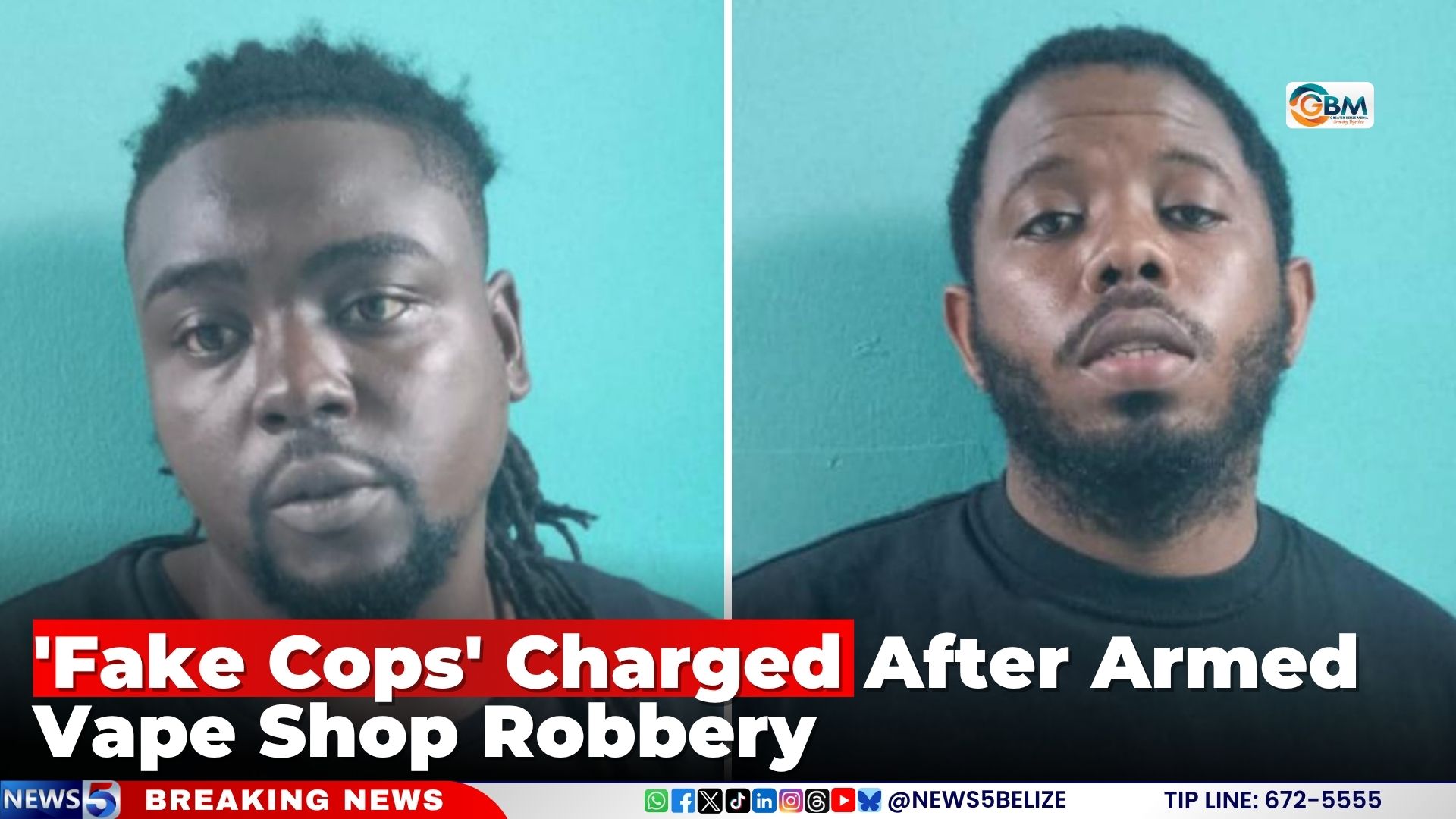
‘Fake Cops’ Charged After Armed Vape Shop Robbery
In a bold, pre-planned crime that unfolded in broad daylight in Belize City, two men who impersonated law enforcement officers to rob a local vape shop have been taken into custody, facing multiple criminal charges after a high-speed pursuit that ended with a full recovery of stolen goods and illegal weapons.
The incident occurred just after 6 p.m. on Monday, April 27, at a retail vape shop located on Daly Street in central Belize City. According to official police accounts, the two suspects planned the heist to exploit the shop’s controlled entry protocol, arriving at the location on a single motorcycle with full-face helmets that concealed their identities. Dressed in camouflage uniforms designed to mimic standard police tactical gear, the pair did not raise any initial red flags for staff. The 28-year-old on-duty shop attendant, Dylan Vasquez, allowed the men entry after they approached the door, unaware of the violent crime about to unfold.
Within moments of entering, the attackers revealed their weapons. One suspect held a loaded 9mm pistol to Vasquez’s neck to intimidate him and prevent any resistance, while the second suspect moved behind the sales counter to steal assets. Investigators confirmed the robbers made off with more than $20,000 in cash that had just been counted and prepared for deposit following a large recent vehicle sale, along with dozens of disposable vaping products.
Eyewitnesses working at adjacent businesses reported that the pair fled the shop immediately after the robbery, speeding away on their motorcycle. But officers from the Belize City Police Department, who had been dispatched within minutes of the silent alarm being triggered, were already positioned nearby and launched a rapid pursuit. During the chase through city streets, one of the suspects allegedly fired multiple shots at pursuing officers in an attempt to escape capture.
Police ultimately cornered and arrested both suspects, identifying them as 27-year-old Kenroy Amani Daly and 26-year-old Ahkeem Rashawn Danderson. Along with recovering all of the stolen cash and stolen vape products, law enforcement seized two unregistered 9mm pistols and loaded magazines holding a total of 19 live rounds of ammunition.
Formal charges have already been filed against both men: each faces counts of robbery and falsely impersonating a police officer. Daly, the suspect accused of firing on police and holding the gun to the attendant’s neck, faces an additional charge of aggravated assault for the threats against the employee and the pursuing officers. Both are currently held in police custody awaiting an upcoming court hearing to answer for the alleged offenses.
-
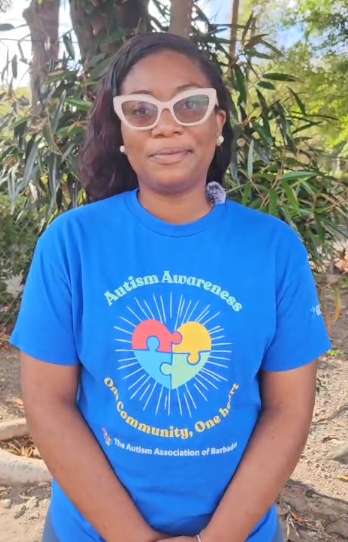
Calls for greater autism awareness in public spaces
A rising tide of complaints from families of autistic children across Barbados, centered on rigid policies in high-traffic public spaces such as supermarkets, has reignited advocacy for greater flexibility, public awareness, and empathy from local business operators. Chantal Fields, Events and Coordination Chairman of the Autism Association of Barbados, outlined the ongoing everyday challenges faced by autistic people and their caregivers during an interview with Barbados TODAY, held on the sidelines of the organization’s annual Autism Awareness Walk earlier this week.
Fields emphasized that while public understanding of autism has grown incrementally in recent years, many families still encounter unnecessary barriers during routine outings. A core point of frustration is supermarket policies that ban children from riding inside shopping baskets, a safety measure many caregivers rely on to manage autistic children who are prone to elopement, or unexpected wandering.
“Many parents have reached out to me about this issue,” Fields explained. “A little bit of grace goes a long way, because not everyone can navigate a supermarket trip the same way. For autistic children prone to wandering, a trip to pick up groceries turns into a constant effort to keep them safe. Restricting the use of shopping carts as a safety space directly undermines that effort.”
Fields proposed a common-sense compromise that balances business concerns with family safety: “Businesses don’t have to drop their rules entirely. Even allowing the practice for caregivers who can show verification of their child’s autism would be a huge step forward. Everyone on the autism spectrum functions differently, and a small accommodation can drastically cut the burden on families.”
Despite these ongoing public access challenges, Fields highlighted incremental progress in other areas of daily life. In the workplace, a growing number of Barbadian employers have adopted more flexible policies to support parents of autistic children, allowing adjusted shift times to accommodate therapy appointments and excused leave for care-related needs. “Many parents have told me their workplaces have been really supportive,” she noted. “That flexibility makes a world of difference for families balancing care and work.”
In the education sector, however, systemic change remains in its early stages. Fields said the Ministry of Education has begun rolling out pilot programs for more inclusive schooling, but widespread implementation is still years away, meaning current families will not see the full benefits of these reforms. “The ministry is putting in the work, but it’s still at the pilot stage,” she said. “It won’t help many of the families currently navigating the system, but it will create better outcomes for the next generation.”
Looking toward long-term improvement, the Autism Association of Barbados has partnered with the Samuel Jackman Prescod Institute of Technology (SJPIT) to launch new skills-based training programs for autistic adults, focused on employable trades such as cooking and carpentry. The initiative aims to expand employment opportunities and increase economic independence for autistic people across the island. Fields noted that public receptiveness to these efforts has grown, with slowly opening opportunities for autistic people to participate fully in Barbadian society.
Fields’ comments came as more than 300 community supporters gathered before dawn on Tuesday for the annual Autism Awareness Walk. Participants started at the Social Empowerment Agency, traversed a marked route through Lower Collymore Rock, Culloden Road, Beckles Road, Dalkeith Road, circled the historic Garrison district, continued along Highway 7, and returned to the starting point. The event concluded with a community cool-down session, reinforcing the association’s core mission: building widespread public acceptance, practical support, and understanding for autistic people and their families across Barbados.
-
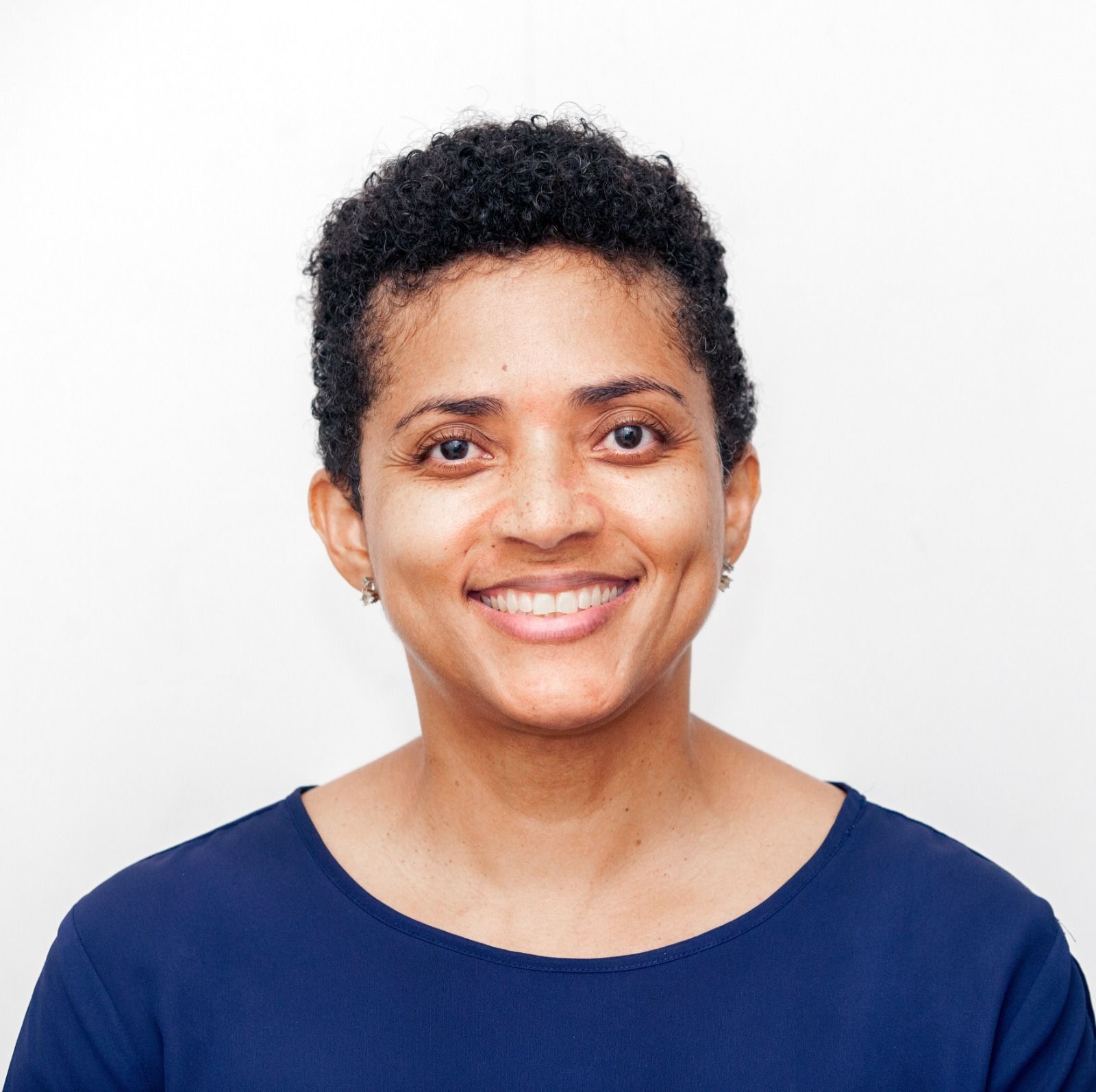
Mental health key to workplace safety — NMHC
As the Caribbean island of Barbados marks the annual World Day for Safety and Health at Work, the country’s National Mental Health Commission (NMHC) is delivering a critical wake-up call to all local employers: mental health cannot be sidelined as an add-on to workplace safety protocols—it is foundational to occupational safety itself.
Dr. Maisha Emmanuel, chair of the NMHC, laid out the commission’s stance in a public statement, stressing that any conversation about safe, healthy work environments must integrate mental and psychosocial well-being alongside long-standing physical safety protections. She explained that common work-related issues including chronic stress, occupational burnout, workplace harassment, and on-the-job violence are every bit as much occupational health hazards as traditional dangers such as exposure to toxic chemicals, poorly maintained machinery, or inadequate ergonomic design.
The commission’s argument highlights the direct causal link between poor workplace mental health and elevated safety risks. Unmanaged stress, clinical anxiety, and depression all impair core cognitive functions: they reduce focus, slow response times, cloud critical judgment, and diminish a worker’s ability to assess their surrounding environment. Each of these impairments is a known precursor to workplace accidents and injuries. Workers navigating untreated mental health challenges are far more likely to make costly errors, experience preventable incidents, and fail to respond effectively when emergency situations arise.
Dr. Emmanuel noted that the problem is far from abstract for Barbadian workers, with thousands currently grappling with psychosocial hazards on the job. Excessive unmanageable workloads, extended shift hours, pervasive workplace bullying, lack of managerial support, and persistent job insecurity have become common experiences for many across the island’s labor force. “These psychosocial hazards are as real and dangerous as any physical hazard, and they must be addressed with the same seriousness and urgency,” she emphasized.
To turn the commission’s call into action, the NMHC has outlined a series of concrete steps employers can implement immediately to improve workplace mental health and safety. First, organizations should conduct full systematic assessments to identify psychosocial risks specific to their workplaces, then roll out targeted measures to prevent and mitigate those hazards. Employers must also prioritize widespread mental health literacy, expand access to support resources, and build inclusive workplace cultures where workers feel comfortable disclosing mental health concerns without fear of stigma, retaliation, or discrimination.
Key actionable recommendations from the commission include adjusting workload distribution to prevent endemic burnout, defining clear job roles and performance expectations to reduce worker uncertainty, offering flexible work arrangements where feasible to support healthier work-life balance, enacting and enforcing strict zero-tolerance policies for workplace bullying and harassment, providing specialized training for managers to recognize early signs of mental health strain and support struggling team members, and guaranteeing all staff access to confidential Employee Assistance Programmes and affordable specialized mental health services.
The message is not directed solely at employers, however. The NMHC also reminded workers that protecting collective and individual mental health at work is a shared responsibility. For employees, the commission recommends speaking up about harmful stressors when they arise, setting clear healthy boundaries around work and personal time, taking regular scheduled breaks to avoid fatigue, building supportive connections with colleagues, practicing evidence-based stress management techniques, and reaching out for professional support early if mental health challenges begin to impact daily work and well-being.
In closing, Dr. Emmanuel reaffirmed the core principle of the commission’s campaign: “A safe workplace protects both physical and mental health. Every worker in Barbados has the right to return home safe and healthy — in body and mind — every day. On this World Day for Safety and Health at Work, let us commit to creating workplaces where mental health is valued, protected, and supported as the essential component of workplace safety.”